


Contentstack is an enterprise-focused headless content management system (CMS) and composable digital experience platform (DXP) provider. It enables businesses to manage content centrally and deliver omnichannel digital experiences across web, mobile, and emerging channels – from websites and apps to kiosks, voice assistants, and augmented reality.
As a pioneer in the headless CMS space and a founding member of the MACH Alliance (a consortium advocating Microservices-based, API-first, Cloud-native, Headless technology), Contentstack has been at the forefront of the shift from monolithic digital suites to agile, composable architectures.
The company serves a wide range of industries, including retail, media, travel and hospitality, financial services, manufacturing, and technology. Global brands such as ASICS, Chase, Holiday Inn, Mattel, McDonald’s, Mitsubishi, Shell and many others trust Contentstack to power their critical content and digital customer experiences with uncompromising scale and reliability.
Contentstack’s core value proposition lies in its ability to bridge the gap between marketing and IT teams. Its cloud-native platform allows developers and content creators to collaborate seamlessly, accelerating the delivery of personalized and scalable customer experiences.
By decoupling the content backend from front-end presentation (the “headless” approach), Contentstack gives enterprises the freedom to use any design or technology for front-end development while ensuring content is consistent across channels. This empowers marketing teams to create and update content independently, while developers integrate content via flexible APIs and robust integration framework.
In essence, Contentstack offers enterprises a way to innovate digital experiences “at the speed of their imagination” – adapting content quickly to market needs – without being slowed down by legacy CMS constraints. Famous for its “Care Without Compromise” support ethos, Contentstack has achieved one of the highest customer satisfaction ratings in the industry, underscoring its commitment to customer success as part of its value proposition.
Founding Story of Contentstack
Contentstack’s story has its roots in an earlier digital transformation venture. The platform was initially conceived within Raw Engineering, a digital solutions consultancy founded by Neha Sampat in the late 2000s. During the early 2010s, Raw Engineering developed a suite of cloud-based tools under the Built.io brand – including integration-platform services and a content management tool. By 2014, the team had created a modern CMS product (later known as Contentstack) as part of this multi-product company.
The idea for Contentstack was born out of direct experience: the founders and engineers repeatedly encountered the limitations of traditional, monolithic CMS suites when helping clients go digital. They recognized the need for a more modern, flexible way to manage content that could keep up with the rise of mobile and cloud technologies.
In 2018, a pivotal moment came. Raw Engineering’s integration platform (Built.io Flow) was acquired by Software AG, a global tech firm. At the same time, Neha Sampat (CEO) and her co-founders Nishant Patel and Matthew Baier decided to spin off Contentstack as an independent company, focusing solely on the headless CMS and digital experience opportunity.
Contentstack officially launched as its own entity in January 2018, though its product had already been battle-tested with customers for a few years prior. The spin-off allowed the new company to concentrate on the CMS platform’s growth and innovation, backed initially by the proceeds of the Built.io sale and years of bootstrapped development.
This founding story – “from services to product” – set the stage for Contentstack’s rapid growth in the emerging composable DXP market.
Founders of Contentstack
Contentstack was co-founded by a trio of entrepreneurs with complementary backgrounds and a shared vision for the future of digital content.
Neha Sampat, Contentstack’s CEO, is a three-time tech founder who earlier co-founded Raw Engineering and Built.io. With a non-technical background in marketing and communications, Neha brought a user-centric and business-savvy perspective to the venture. She famously bootstrapped her prior companies for over a decade, and her leadership emphasizes challenging the status quo and bridging the divide between technical and business teams.
Under her guidance, Contentstack’s mission crystalized around giving brands “creative freedom” through modern CMS and composable architecture, freeing them from the limits of legacy systems.
Neha’s entrepreneurial journey – from starting a PR firm in her youth to leading a high-growth SaaS company – has been profiled as an inspiration for women in tech, especially as she succeeded in raising significant venture funding in an industry where female CEOs are underrepresented. By 2025, she had grown Contentstack to over 500 employees worldwide and $169M in funding raised.

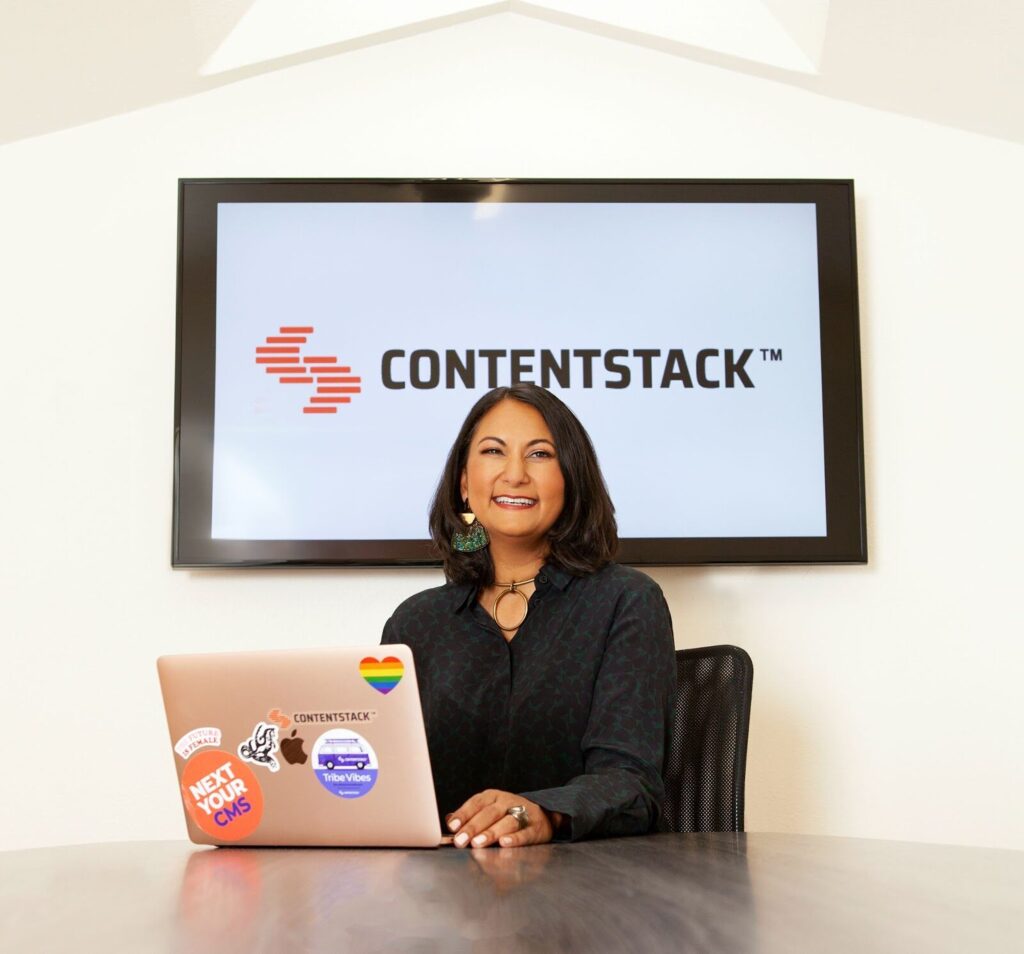
Nishant Patel, Contentstack’s Chief Technology Officer and technical co-founder, was the engineering mastermind behind the product’s development. Previously the CTO of Raw Engineering, Nishant identified the gap in the market for a “more modern, API-based content management system” as companies moved to cloud and needed agility in content delivery.
He led the build-out of the headless CMS platform, pouring in lessons learned from prior integration and content projects. Nishant’s vision was to create a CMS that developers would love – one that is language-agnostic, extensible, and could integrate easily with other services – while also meeting the needs of content editors for ease-of-use. This dual focus on developer flexibility and editor experience became a hallmark of Contentstack’s platform.


Matthew Baier, the third co-founder (serving as early COO and CMO), brought deep enterprise software experience to the team. Trained originally as an astrophysicist, Matthew had built a career at major tech firms like Salesforce, Oracle, and Sun Microsystems before teaming up with Neha and Nishant.
He was instrumental in turning Contentstack’s technology into a go-to-market strategy, helping to position the company in the nascent headless CMS market around 2018. Matthew’s product and marketing leadership, combined with his involvement in the MACH Alliance advisory board, helped Contentstack gain industry thought leadership early on.


Together, the founding team’s vision was clear: to liberate enterprises from legacy content suites and enable a new era of composable, customizable digital experiences. They often remark that if no solution exists to a digital experience problem, they will build it – a philosophy that continues to drive Contentstack’s innovation.
Business Model of Contentstack
Contentstack operates a Software-as-a-Service (SaaS) business model centered on its cloud-native content platform. The company creates value by providing a scalable content hub that enterprises use to build digital experiences more efficiently, and it captures value primarily through subscription fees for its software.

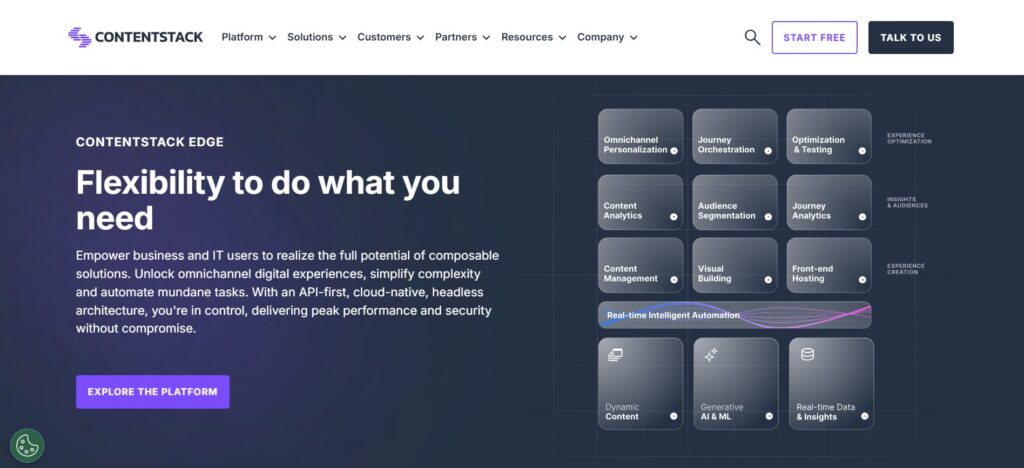
Customers typically sign up for annual or multi-year licensing agreements that give them access to the Contentstack platform, which is delivered as a multi-tenant cloud service with high availability. The platform’s modular tiered plans (often tailored to enterprise needs) bundle varying levels of content entries, API calls, user seats, and features – allowing Contentstack to serve both mid-sized teams and large Fortune 500 companies with a usage-appropriate pricing model.
While exact pricing is custom-negotiated per enterprise contract, it’s known that even the base plans are enterprise-grade (with no “free” tier), reflecting Contentstack’s focus on medium to large organizations’ requirements.
To deliver its service, Contentstack leverages a cloud-agnostic infrastructure. Notably, the platform can be deployed on multiple clouds – it supports both Amazon Web Services and Microsoft Azure data centers in regions like the US and Europe, offering customers flexibility and compliance with regional data needs. Content is delivered via Contentstack’s global Content Delivery Networks (CDNs) for speed.
The company also invests heavily in customer success and support (“Care Without Compromise”), ensuring that clients realize value quickly and continuously from the platform. This high-touch approach (including assigned customer success managers, training via Contentstack Academy, and 24/7 support for top tiers) is an integral part of the business model to drive customer retention and expansion.
In terms of value delivery and creation, Contentstack positions itself not just as a CMS vendor but as an innovation partner. It often works closely with a network of implementation partners (digital agencies and system integrators in its Catalyst partner program) to deliver end-to-end solutions to clients.
This ecosystem approach extends Contentstack’s reach and ensures that customers can get ancillary services (like front-end development, e-commerce integration, or strategy consulting) through validated partners, thereby increasing the overall value delivered. Contentstack’s own role is to continuously enhance its platform capabilities (e.g. adding automation, personalization, and AI features) so that clients can unify more of their digital experience stack on Contentstack over time, driving higher subscription value.
The success of this model is evident in the company’s strong retention metrics – Contentstack boasts a 97% customer retention rate as of its Series C, indicating that clients typically stick with and grow on the platform.
Revenue Streams of Contentstack
Contentstack’s monetization strategy is largely based on recurring subscription revenue.
The primary revenue stream comes from SaaS licensing fees paid by customers for access to the Contentstack platform. These fees are generally structured as annual subscriptions and scale up based on factors such as the number of content “stacks” (repositories), volume of content items and API calls, number of user accounts, and additional modules or environments required.
Contentstack offers multiple pricing tiers (often described as Grow, Scale, etc.), and many advanced features are available in higher tiers or as add-ons. For example, capabilities like unlimited environments, advanced live preview, or certain workflow and governance features might be included only in top-tier plans. This tiered model allows Contentstack to capture more value from large enterprises with complex needs, while still providing a predictable cost structure.
In addition to pure software licensing, Contentstack may derive secondary revenue streams from premium support and services. All customers receive standard support, but enterprise clients often opt for enhanced support packages (such as dedicated technical account managers or faster SLAs) which come at an added cost.
The company also provides professional services in certain cases – for instance, expert assistance with initial project implementation or content migration – though much of the implementation work is handled by Contentstack’s partners rather than in-house, aligning with its scalable ecosystem strategy.
Contentstack’s Marketplace and integration hub are other parts of the offering; while most integrations are free or community-driven, some may funnel customers into paid partnerships (for example, using a third-party translation service that has its own fees). However, these are not direct revenue for Contentstack except insofar as they make the platform more sticky and valuable.
Another emerging revenue contributor is Contentstack’s automation and hosting add-ons. The company introduced Contentstack Launch, a front-end hosting service for websites and apps using its CMS, which is included in certain plans or available as an add-on. This effectively lets customers host their digital front-end on a managed service by Contentstack, potentially adding to subscription revenue.
The recent acquisition of a customer data platform (Lytics, discussed later) also opens potential new revenue opportunities, as Contentstack could upsell data and personalization services to its CMS client base. While Contentstack does not publicly break out its financials, industry observers estimate the company’s annual revenue to be well into eight figures; one third-party analysis put it at over $120 million per year (unverified) based on growth and customer count.
Overall, by focusing on subscription revenue, high customer retention, and expansion within its accounts (adding new projects, sites, or features), Contentstack has built a strong recurring revenue engine in the fast-growing DXP market.
Funding History of Contentstack
Contentstack has attracted substantial venture capital investment to fuel its growth, with three major funding rounds completed since its inception. The table below summarizes Contentstack’s funding history, including the dates, round designations, amounts raised, and key investors involved:
| Date | Funding Round | Amount (USD) | Key Investors |
|---|---|---|---|
| October 2019 | Series A | $31.5 million | Lead: Insight Partners; Participants: Illuminate Ventures, GingerBread Capital. |
| June 2021 | Series B | $57.5 million | Lead: Insight Partners; Participants: Illuminate Ventures, GingerBread Capital, Georgian. |
| November 2022 | Series C | $80.0 million | Co-Leads: Georgian & Insight Partners; Participant: Illuminate Ventures. |
Table: Contentstack Funding Rounds and Investors. Total capital raised to date is approximately $169 million.
Contentstack’s investors represent a mix of venture capital and strategic backers. Insight Partners, a prominent global software VC, led the Series A and B rounds and has been a consistent supporter, signaling confidence in Contentstack’s team and market opportunity. Illuminate Ventures and GingerBread Capital participated from the seed/early stage – notably, these firms are known for backing startups with diverse leadership (GingerBread was founded by a prominent female investor, aligning with Contentstack’s female-led founding team).
By the Series B in 2021, Georgian (a growth-stage fund based in Toronto) joined as a new investor. Georgian’s involvement brought not only capital but also expertise in AI and data-driven software, which complemented Contentstack’s product evolution (Georgian even provided an AI technology platform to boost Contentstack’s innovation as per the Series B announcement).
The Series C in late 2022 was a major milestone – a sizable $80 million round co-led by Georgian and Insight Partners. All the major existing investors doubled down, underscoring Contentstack’s strong performance and the growing demand for composable DXP solutions. By this time, Contentstack’s total funding reached $169 million. The proceeds from these rounds have been used to scale the company’s product development, global sales, and partner ecosystem. For instance, the Series B funding was explicitly aimed at international expansion (opening new offices in Europe) and hiring, as well as incorporating more AI/ML capabilities into the platform. The Series C has been used to accelerate Contentstack’s push into the enterprise segment and support strategic moves like acquisitions.
Looking forward, Contentstack’s healthy funding stack and backing by top-tier investors position it well for the next phase of growth. Industry analysts have speculated that the company could be an IPO candidate in the coming years, given its market traction and the involvement of investors experienced in taking companies public (for example, Contentstack’s CFO as of 2025 was hired from Squarespace, where she helped navigate an IPO). For now, the focus remains on using the capital effectively to expand product capabilities and global market reach.
Competitors of Contentstack
In the headless CMS and DXP markets, Contentstack faces competition from both modern “pure-play” headless CMS providers and established digital experience suite vendors:
Contentful
Perhaps Contentstack’s most direct competitor, Contentful is another leading pure-play headless CMS SaaS for enterprises. Both platforms target organizations seeking agile, multi-channel content management. (Contentful itself acknowledges competing with platforms like Contentstack, Storyblok, and Sanity in the headless CMS arena.) Contentful has strong adoption among developers and was earlier to market (founded 2013), making it a common alternative considered by enterprises for headless content solutions.
Adobe Experience Manager (AEM)
Adobe’s AEM is part of the Adobe Experience Cloud and represents the traditional enterprise CMS/DXP. It is a comprehensive suite including content management, digital asset management, analytics, and more. Many large companies have historically used AEM or similar legacy suites. Contentstack positions itself as a modern, more flexible alternative to these monolithic systems, emphasizing agility over the heavy all-in-one approach of Adobe. In competitive deals, Contentstack often pitches its faster implementation and lower total cost of ownership against Adobe’s legacy footprint.
Sitecore
Sitecore Experience Platform is another incumbent in the DXP space that offers an integrated CMS, commerce, and marketing suite. Sitecore has in recent years introduced headless and composable options, but it originated as an on-premise, .NET-based CMS. Contentstack frequently competes with Sitecore when organizations are “re-platforming” from older CMS architecture to a MACH (Microservices, API-first, Cloud, Headless) stack. In fact, Contentstack’s own materials highlight its cloud-native roots versus Sitecore’s legacy architecture, pointing out the benefits of not having to manage infrastructure or version upgrades.
Acquia (Drupal)
Acquia, the company behind Drupal CMS, provides a cloud platform and DXP capabilities for the popular open-source Drupal. Large enterprises using Drupal may compare moving to Contentstack’s SaaS model versus continuing with Acquia’s Drupal Cloud. While Drupal is powerful, it traditionally requires significant developer management; Contentstack offers a fully managed SaaS alternative. Acquia has also acquired companies to bolster its DXP offering (e.g., a customer data platform), which parallels Contentstack’s move into that domain.
Bloomreach
Bloomreach is a digital experience platform focused on commerce, combining a headless CMS (born from the Hippo CMS open-source project) with e-commerce search and personalization. It is often mentioned as a top Contentful/Contentstack alternative for companies specifically in retail and e-commerce. Bloomreach’s strength is its built-in AI-powered product discovery and marketing tools, whereas Contentstack often integrates with third-party commerce and search services in a composable way.
Other Headless CMS Players
The headless CMS market has several other notable players that sometimes compete with Contentstack, especially in mid-market deals or specific niches. Storyblok and Sanity are examples of newer headless CMS platforms gaining traction (Storyblok for its user-friendly visual editor, Sanity for its developer-customizable approach). Kentico Kontent.ai (rebranded from Kentico Cloud) is another SaaS headless CMS targeting enterprises, and Hygraph (GraphCMS) specializes in GraphQL-based content APIs. While these competitors each have strengths, Contentstack differentiates itself by its complete focus on enterprise requirements (security, scalability, 24/7 support) and a broader vision of an extensible “content experience platform” rather than just a content repository.
In summary, Contentstack’s competitive landscape ranges from legacy suite vendors like Adobe, Sitecore, and Oracle (against whom it stresses agility and cost-effectiveness) to fellow headless CMS specialists like Contentful and others (against whom it highlights its richer enterprise features, support, and now integrated personalization capabilities). The company’s strategy has been to coexist and integrate in the broader ecosystem – for instance, partnering with commerce or search providers rather than competing with them – while outpacing traditional CMS products in innovation.
(Table: Selected Contentstack Competitors)
| Competitor | Category | Notes on Competition |
|---|---|---|
| Contentful | Headless CMS (SaaS) | Market-leading headless CMS; similar target customers as Contentstack. Competes on developer experience and global scale. |
| Adobe Experience Manager (AEM) | Traditional DXP Suite | Legacy enterprise CMS suite by Adobe. Contentstack offers a more agile, API-first alternative to AEM for omnichannel content delivery. |
| Sitecore Experience Platform | Traditional DXP Suite | Integrated CMS/marketing suite. Contentstack often replaces Sitecore in “digital transformation” projects, highlighting easier cloud deployment and MACH compliance. |
| Acquia (Drupal) | Open-Source DXP (Cloud) | Drupal-based platform with DXP features. Competes when organizations consider moving from self-managed Drupal to a SaaS headless platform. |
| Bloomreach | Commerce-focused DXP | Combines headless content with e-commerce search/personalizationg2.com. Competes in retail sector; Contentstack integrates with commerce tools to counter this. |
| Storyblok, Sanity, Kontent.ai | Headless CMS (SaaS) | Other notable headless CMS providers. Contentstack differentiates via its enterprise support, advanced features (automation, integrations), and larger partner ecosystem. |
Competitive Advantage of Contentstack
Contentstack’s competitive advantages stem from both its technology approach and its philosophy of customer care. What sets Contentstack apart in the market can be summarized in several key points:
Composable Architecture Pioneer
Contentstack was an early mover in embracing MACH principles (Microservices, API-first, Cloud-native, Headless) and composable architecture, which gives it a credibility edge. It is a founding member of the MACH Alliance, underscoring its commitment to open tech ecosystems. This means Contentstack’s platform was designed from the ground up to integrate – not a legacy system retrofitted for APIs. The advantage is evident in its robust Integrations Framework and now the Automation Hub, which tackle the notorious “integration hell” by making it easier to connect Contentstack with other enterprise systems in real time. Enterprises choosing Contentstack gain a future-proof content platform that can plug into any stack, avoiding vendor lock-in.
Enterprise-Grade Reliability and Scale
Contentstack has proven its scalability with demanding, globally distributed use cases. Nearly half of its customers are large enterprises (42% with over $1B in revenue), and the platform serves billions of content requests across 70+ countries. Contentstack offers enterprise features like dual cloud deployment (AWS and Azure), high availability, and compliance certifications (ISO 27001, SOC 2, GDPR, etc.) out of the box. This focus on reliability and performance sets it apart from some smaller headless CMS rivals. One testament to its robustness is the 95%+ customer retention and satisfaction – clients rarely churn because the platform delivers on uptime and support promises.
“Care Without Compromise” Support
Contentstack has made customer support a differentiator. Its Care Without Compromise™ program is renowned for providing exceptional, white-glove support to customers and even extends across vendor boundaries. In fact, Contentstack created the industry’s first cross-vendor support framework by involving technology and agency partners (Catalysts) in a unified support experience for joint customers. This means a client encountering an issue at the intersection of Contentstack and, say, a commerce integration can get coordinated support. Such a level of care is unusual in the software industry and has helped Contentstack earn a top Net Promoter Score and awards for its workplace culture. As a result, clients often cite the company’s responsive partnership mentality as a major reason for choosing and sticking with Contentstack.
Continuous Innovation (Automation & AI)
Contentstack’s pace of innovation is another edge. The company has added capabilities like Automation Hub (to automate and orchestrate content workflows across apps) and launched a Marketplace of pre-built integrations, addressing enterprise needs for speed and extensibility. In 2023, Contentstack introduced generative AI enhancements – leveraging AI to assist in content creation and insights – directly within the CMS interface. It also developed a personalization engine (now greatly boosted by the Lytics acquisition) that allows users to deliver tailored content experiences. Analysts have noted that Contentstack delivers new features at “record speeds,” positioning it as a vendor that is often first-to-market with useful advancements. This agility in rolling out new functionality (while some competitors are slowed by older architecture) gives Contentstack a forward-looking appeal, especially for companies wanting to experiment with technologies like AI-driven content or omnichannel personalization.
Focus on Collaboration and Usability
From the beginning, Contentstack differentiated by focusing on both developers and business users. It was one of the first headless CMS platforms to provide a truly user-friendly editorial interface (rich text editing, live preview, modular content blocks) and powerful developer tools (robust APIs, SDKs, CLI, GraphQL support) in one package. This balanced approach means marketing teams find Contentstack easier to adopt than many developer-centric headless systems, and development teams still enjoy full flexibility. The platform’s “agile CMS” approach – enabling parallel work streams, modular content, and quick iterations – helps enterprise teams collaborate without stepping on each other’s toes. Many competitors either excel in developer experience or editor experience; Contentstack strives to excel in both, which is a notable advantage for organizations requiring cross-functional collaboration on content.
In summary, Contentstack sets itself apart through a combination of technical excellence (modern architecture, integration capabilities, performance), customer-centric service, and innovative features that anticipate where the digital experience market is heading (such as embracing AI and data for personalization).
These strengths have been recognized by industry analysts – for example, Forrester’s 2023 DXP Wave applauded Contentstack’s strong vision and advanced feature set in AI and personalization. While no company is without challenges (analysts also noted Contentstack’s need to broaden its product portfolio, something it is actively doing via partnerships and acquisitions), Contentstack’s competitive advantages have positioned it as a leading contender in the headless CMS and composable DXP space.
Product Portfolio of Contentstack
Contentstack’s product portfolio has expanded from a single core CMS to a broader suite of offerings that together form its Composable Digital Experience Platform. The main components of Contentstack’s product portfolio include:
Contentstack Headless CMS (Core Platform)
At the center is the core Contentstack content management system – a cloud-based headless CMS that allows creation, management, and delivery of content via APIs. This includes the intuitive web-based editorial interface for content creators, content modeling tools (content types, modular blocks), asset management, versioning, and all the core CMS capabilities. The core also encompasses the high-performance Content Delivery APIs (REST and GraphQL) and Content Management APIs for developers. In essence, this is the primary product that customers sign up for, and it’s available in tiered editions (with Scale being the top enterprise tier, including the full feature set).
Contentstack Automation Hub (Automate)
An add-on module focused on workflow automation and integrations. Automation Hub provides an interface to create and run automated workflows (using “if-this-then-that” style logic) that connect Contentstack to other systems. For example, a workflow could automatically send a Slack notification when new content is published, or translate content via an AI service when a field is updated. This Hub comes with a library of pre-built “recipes” and can significantly reduce manual effort and custom coding for integrations. It’s especially useful in enterprise environments with complex content operations.
Contentstack Marketplace and Apps
The Marketplace is a catalog of integrations and extensions that clients can plug into their Contentstack instance. These range from official integrations (like with Algolia search, Brightcove video, or Google Analytics) to community-contributed apps. Notable categories include analytics dashboards embedded in the CMS, SEO optimization plugins, translation connectors (e.g., Smartling, Translations.com), and e-commerce connectors (e.g., commercetools, Shopify apps). Customers on any plan can browse and install these apps, many of which are free; some may require accounts with the third-party service. The Marketplace thus functions as a product offering that continuously adds value, as new integrations are rolled out without requiring a core platform update.
Contentstack Launch
This is Contentstack’s front-end hosting service, introduced to provide a seamless deployment option for sites and applications. Launch allows teams to host their web front-ends (such as a Next.js application) on Contentstack’s managed infrastructure, complete with build automation and global CDN. It integrates with the CMS so that, for example, when content is published, a rebuild/deployment can be triggered automatically. At Grow and higher tiers, a certain number of Launch projects may be included, with more available as add-ons. Launch is essentially Contentstack’s answer to platforms like Netlify or Vercel, but tailored for Contentstack-managed projects.
Contentstack AI
Under this umbrella, Contentstack has started offering AI-powered features within the CMS. This currently includes generative AI assistants that can help authors draft or improve content (by suggesting headlines, summarizing text, translating content, etc.). It also includes AI-driven content insights – for instance, identifying content that performs well or recommending content assets for reuse. While these features are relatively new, they are becoming a distinct part of the product suite, showcasing how Contentstack helps customers leverage AI in their content processes without needing separate AI tools.
Personalization & Customer Data (Contentstack + Lytics)
In 2023, Contentstack acquired Lytics, a real-time Customer Data Platform. This has effectively added a whole new capability to the portfolio: customer data management and personalization. Post-acquisition, Lytics’ products (which include audience segmentation, behavioral data collection, and activation tools) remain available as standalone offerings, but they are being integrated into Contentstack’s DXP. The unified solution enables clients to do things like segment their audience based on behavior and target each segment with personalized content variations in Contentstack. Over time, Contentstack plans to merge pricing and packaging of the CMS and CDP, but even now a customer can opt to use Lytics alongside Contentstack via standard integrations. This addition positions Contentstack as not just managing content, but also helping manage customer data and experiences, which is a big leap in product scope.
Ancillary Tools and SDKs
Though not “products” sold separately, it’s worth noting Contentstack provides various tools like a CLI (command-line interface for developers to manage content or migrations via scripts), mobile SDKs for delivering content in apps (iOS, Android SDKs), and a GUI Live Preview tool for content authors to see changes in context. These tools round out the portfolio by addressing specific use cases (e.g., developers can programmatically import large volumes of content using the CLI, etc.).
The table below summarizes key components of Contentstack’s product portfolio:
| Product / Module | Description & Purpose |
|---|---|
| Contentstack CMS (Core) | Headless CMS platform for creating, managing, and delivering content via APIs. Includes editorial interface, content modeling, asset management, and content delivery network. Core of the composable DXP. |
| Automation Hub (Automate) | Workflow automation and integration engine. Allows creation of automated processes and connects Contentstack to external apps (e.g., trigger tasks, sync data) via pre-built recipes. Streamlines complex content operations across systems. |
| Marketplace & Apps | Library of plug-in integrations and extensions. Features apps for analytics, e-commerce, translation, and more. Enhances the platform’s functionality without custom development. |
| Contentstack Launch | Front-end hosting service for websites/apps. Provides managed deployment and hosting integrated with the CMS (automatic builds, global CDN). Simplifies DevOps for headless implementations. |
| Contentstack AI | AI-powered content capabilities embedded in the CMS. Offers generative AI assistance for content creation/editing and potentially AI insights. Aims to increase author productivity and intelligence of content. |
| Personalization & CDP (Lytics) | Customer Data Platform (from Lytics acquisition) and personalization engine. Collects and unifies first-party customer data, enables audience segmentation, and delivers personalized content experiences in combination with Contentstack. Adds data-driven experience capabilities to Contentstack’s DXP. |
Overall, Contentstack’s product portfolio has evolved from a single product to a multifaceted platform, reflecting the company’s ambition to provide an end-to-end solution for digital content and experience management. By maintaining a modular architecture, Contentstack allows customers to adopt just the CMS or the full suite (CMS + Automation + Personalization, etc.) as needed. This flexibility is appreciated by enterprises that may want to start with core content management and gradually embrace more advanced components. As the digital experience space continues to mature, Contentstack’s portfolio is likely to expand further, potentially including more analytics or commerce-centric modules through integration or acquisition, all while keeping the core platform agile and composable.
Future Outlook
As Contentstack moves forward, its future outlook appears robust and filled with opportunity, guided by clear strategic directions:
1. Expansion as a Full Digital Experience Platform: Having started with content management, Contentstack is now firmly positioning itself as a Composable DXP provider. The integration of customer data and personalization through Lytics is a major step toward offering a complete solution for digital experiences. In the coming years, we can expect Contentstack to deepen this integration – possibly rebranding or tightly coupling the CDP and CMS into one unified Experience Platform. This would put Contentstack in an even stronger position to challenge the “megavendors” (Adobe, Salesforce, etc.) by offering an alternative that is modular yet integrated by design. The ultimate vision hinted by leadership is to build “the world’s most modern and composable DXP” that can plug into any enterprise’s stack and incrementally enhance it. Achieving this would likely involve further development of in-house personalization tools, AI-driven content optimization, and perhaps acquiring or natively building components like A/B testing or journey orchestration to round out the DXP capabilities.
2. Continued Innovation (AI and Beyond): The AI wave is only growing, and Contentstack is well-poised to ride it. Future releases will likely embed more AI and machine learning to assist both content creators and developers – think intelligent content suggestions, automated content audits, predictive analytics on what content resonates with which audience, etc. Given that Contentstack’s founder has framed the company as “the only adaptive DXP built for an AI era”, a long-standing commitment to innovation is clear. In practical terms, this could mean partnering with AI providers or developing proprietary AI models tuned for content operations. We may also see features that leverage AI for personalization more autonomously (e.g. automatically choosing the best content variant for a user segment based on behavior data, something the integration with Lytics can facilitate).
3. Scaling Globally and Industry-Wide: Contentstack will continue its global expansion, both in terms of market presence and customer acquisition. The company is likely to invest more in regions like Asia-Pacific and Latin America, where digital transformation is accelerating. This might involve opening new offices or data center regions (to cater to data residency needs in places like the Middle East or Asia) and tailoring marketing to those locales. Additionally, Contentstack might pursue specific industry solutions – for example, packaging its offerings to appeal to healthcare (with HIPAA compliance), government (with accessibility and security focus), or other verticals where it sees traction. Its strategic partnerships will also fuel entry into new markets as partners bring Contentstack into their clients.
4. Ecosystem and MACH Advocacy: As a trailblazer in composable technology, Contentstack will likely continue leading industry advocacy through the MACH Alliance and similar bodies. This includes working on setting standards for interoperability, possibly contributing to open-source projects, and ensuring that as the ecosystem grows, Contentstack’s voice is influential in how composable stacks evolve. This thought leadership role increases the company’s visibility and ensures it remains synonymous with the modern approach to digital experiences. We can expect Contentstack to be present (virtually or physically) at major industry forums, to release insightful content (whitepapers, reports like their recent “Forrester Wave” reprints), and to highlight success stories that exemplify the benefits of their approach over legacy systems.
5. Financial Growth and Possible IPO: With $169M raised and strong revenue growth, Contentstack’s financial trajectory points toward continued growth and possibly an exit or IPO in the longer term. The hiring of seasoned executives (such as the new CFO with IPO experience) suggests the company is ensuring it has the right leadership in place for substantial scale. While there is no official statement about going public, the company’s profile – high growth, large market, significant funding – fits the mold of a future public tech company if market conditions are favorable. In the meantime, Contentstack will focus on sustainable growth: improving key metrics like Annual Recurring Revenue (ARR), keeping customer retention high, and moving toward profitability. The total addressable market for content and experience platforms is expanding, especially as every enterprise prioritizes digital engagement, so Contentstack’s challenge will be execution and differentiation as competitors also evolve.
6. Ongoing Challenges and How Contentstack Will Address Them: It’s also part of the outlook to acknowledge areas to watch. Analysts have noted that Contentstack, despite its strengths, relied on partners for some capabilities (e.g., e-commerce, A/B testing) leading up to 2024. The acquisition of Lytics addresses the data piece, but Contentstack might explore adding or natively building other components (for instance, a commerce or marketplace integration strategy akin to how Salesforce acquired pieces to form its cloud). The company will likely maintain its strategy of integration over invention in areas outside its core; so we might see deeper alliances with commerce vendors rather than Contentstack building a commerce engine. This aligns with the composable philosophy: let each tool excel at its specialty. Contentstack’s role is to glue them together seamlessly.
In conclusion, the future outlook for Contentstack is one of scaling influence and capability. The company’s vision is to keep enabling enterprises to “reimagine possible” in digital experiences (a mantra it often touts). As enterprises increasingly demand flexibility and speed, Contentstack’s approach is well aligned with those needs. The next few years will likely see Contentstack solidify its position as a leader in composable digital experiences, either as a dominant independent company or potentially as an attractive acquisition target for larger software firms aiming to modernize their portfolio. In either scenario, Contentstack’s brand – built on innovation, customer success, and challenging the old ways – will continue to shine as it writes the next chapters of its story.
Also Read: Anthropic – Founders, Business Model, Funding & Competitors
To read more content like this, subscribe to our newsletter
Go to the full page to view and submit the form.