


Coca-Cola’s Open Happiness was a bold global brand campaign launched in January 2009. It built on the earlier “Coke Side of Life” platform and invited people worldwide to “pause and refresh themselves with a Coke, to ‘open happiness’ and enjoy life’s simple pleasures.”. The tagline Enjoy life’s simple pleasures became the campaign slogan.
Designed by Coca-Cola’s longtime creative partner Wieden+Kennedy, Open Happiness emphasized positivity and shared human moments amid the economic downturn of 2009. By linking the simple act of drinking a Coke with joy and optimism, the campaign aimed to reinforce Coca-Cola’s brand heritage and drive consumer engagement.
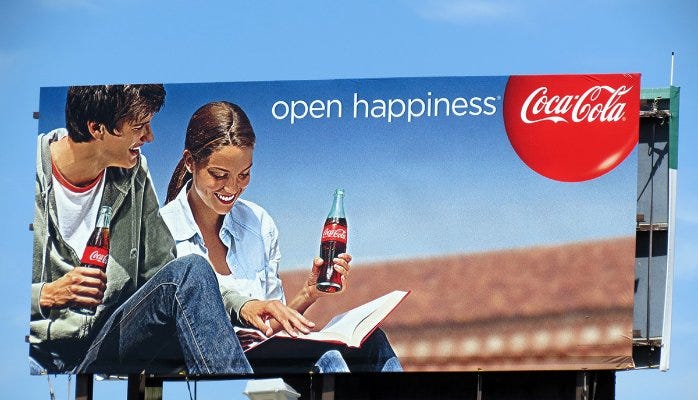
Image suggestion: A Coca-Cola billboard or ad featuring the red Coke logo and the “Open Happiness” tagline, perhaps with smiling people.
Objectives and Messaging
The campaign’s core message was that Coca-Cola provides a small moment of joy or happiness in everyday life. Company executives framed it as taking “a small break from the day to connect with others,” by enjoying “an ice-cold Coca-Cola”. In their press launch, Coca-Cola CMO Katie Bayne explicitly said: “We’re inviting people to do more often – open a Coke and share a little happiness.”.
This echoed the research Coca-Cola commissioned: a 2010 “Happiness Barometer” study in 16 countries found that real-world interactions and simple pleasures (like sharing a Coke) overwhelmingly bring joy compared to virtual activities. As Senior Brand Director Cristina Bondolowski summarized, “nothing beats quality time with loved ones or simple pleasures such as sharing a Coke with our nearest and dearest to bring happiness in our lives.”.
Open Happiness thus positioned the product not just as a drink, but as an everyday vehicle for positive emotions and social connection.

Strategy and Global Launch
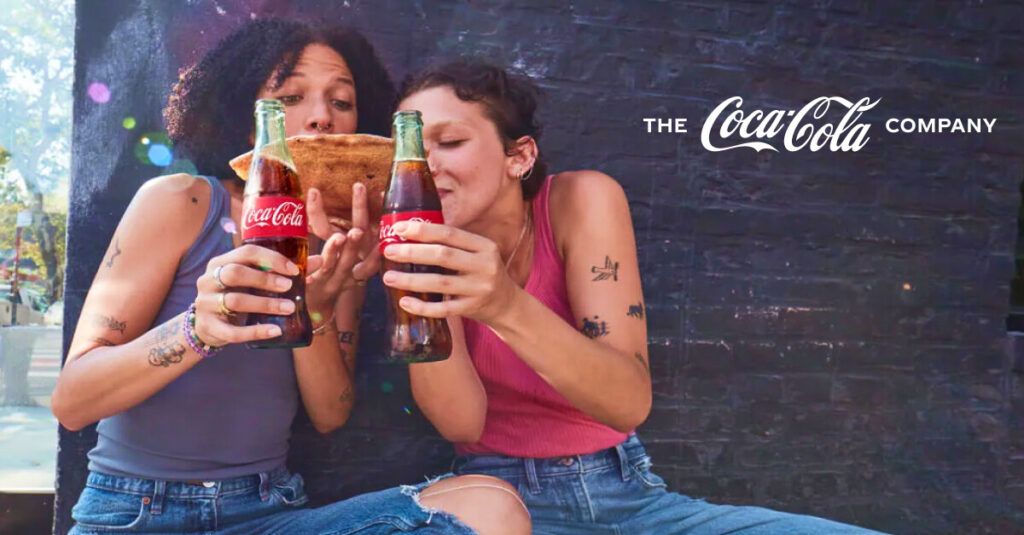
Coca-Cola rolled out Open Happiness as a fully integrated global campaign in early 2009. It debuted on January 21, 2009 with a high-profile television spot on American Idol in the U.S., and was followed by commercials during the Super Bowl XLIII and the Academy Awards broadcast. This ensured massive visibility from the outset. The company described Open Happiness as “the platform for all integrated marketing for brand Coca-Cola globally”.
In practice this meant synchronized advertising across TV, print, outdoor, in-store displays, promotions and digital channels worldwide. For example, new point-of-sale materials, outdoor posters, and online content all carried the Open Happiness imagery. The campaign was designed to “work at every level – from national advertising all the way down to coolers and store shelves,” with a clear call to action wherever consumers encountered the product.

Musical elements were central to the launch. Coca-Cola commissioned a new “Open Happiness” theme song by a star ensemble (Cee-Lo Green, Patrick Stump, Brendon Urie, Travie McCoy and Janelle Monáe) The upbeat track was featured in ads and released as a single. Coca-Cola also planned localized versions of the song – for instance, in May 2009 Lebanese singer Nancy Ajram recorded an Arabic version titled “Eftah Tefrah” for Middle East markets, and Hong Kong pop star Joey Yung sang a Cantonese version. By mid-2009 the music had been adapted across Asia and beyond, underscoring the campaign’s global reach.

On the creative side, Open Happiness ads all stressed human stories and vibrant visuals. The advertising showed diverse people from around the world opening a Coke and celebrating everyday joys – sharing with friends, pausing at work, family meals, etc. As one case study notes, the campaign “invited people to take a break, open a Coke, and enjoy a moment of happiness,” tying Coke’s taste to positive feelings and shared experiences. The familiar contour Coke bottle (and its “smile-like silhouette”) was featured in ads to reinforce brand identity. In sum, the strategy married a simple optimistic message with eye-catching global execution.
Creative Campaign Elements
Television and Print Ads: Open Happiness launched with several high-impact TV spots. For example, one popular ad showed strangers in various countries spontaneously singing, or celebrating small events – all connected by Coca-Cola bottles. The creative focused on inclusivity and warmth. Each spot ended with the punchline “Open Happiness,” often superimposed on a Coke logo. Print and outdoor ads used joyful imagery (a child with ice cream, friends at a BBQ, etc.) with the same tagline.

Music and Social Media: The multi-artist theme song became a signature of the campaign, played in TV and online. Coca-Cola leveraged music to engage younger audiences via digital channels. The company also seeded short “Open Happiness” viral videos and encouraged user sharing. This emotional storytelling approach was key: as Coca-Cola stated, the campaign’s core idea was that “Happiness is contagious. When you see people smiling, you want to smile,” and they aimed to spread that authenticity.
Brand Slogans: Officially, the slogan was “Enjoy life’s simple pleasures”, complementing the Open Happiness logo. Coca-Cola’s own materials emphasized that year after year, people found “the great taste of Coke” to be a simple pleasure that “still [puts] a smile on faces around the world”.
Experiential Activations
Beyond traditional media, Coca-Cola extended Open Happiness into live events and “surprise” marketing. Two especially memorable stunts were the Happiness Machine and Happiness Truck activations.
-
Happiness Machine (2010): In January 2010, Coca-Cola placed a rigged vending machine on a college campus (St. John’s University, NY). When students inserted coins, the machine dispensed not just soda but also flowers, pizzas, and oversized sandwiches, creating spontaneous delight. Hidden cameras captured the reactions. This “Happiness Machine” video quickly went viral (over 2.2 million YouTube views by mid-2010) and won a Gold CLIO Award. Coca-Cola said it exemplified the campaign’s aim to give “doses of happiness” and genuine surprise.

-
Happiness Truck (2011): In February 2011, Coca-Cola took the campaign to the streets of Rio de Janeiro with a giant red truck. The back of the truck had a big “PUSH” button; when passersby pressed it, it dispensed free Coca-Cola and fun gifts (soccer balls, beach balls, a surfboard, sunglasses, and more). Hundreds of Brazilians gathered, enjoying unexpected prizes. A hidden camera recorded the joyous scenes, and Coca-Cola posted the footage online. The results were impressive: the Happiness Truck video garnered over 1.7 million views and thousands of social shares and likes. Overall the stunt reached “over 400,000 Brazilians” and generated 200 million social media impressions globally.
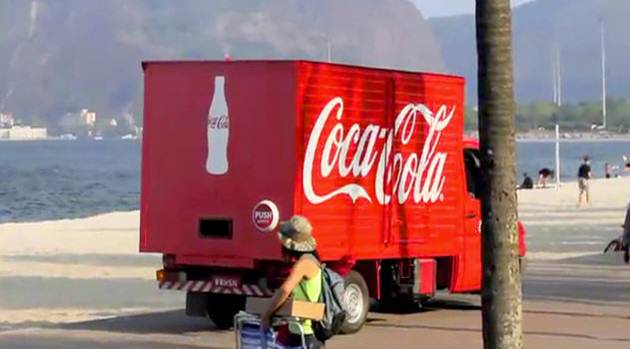


These experiential elements reinforced the message tangibly: Coca-Cola became literally the conduit of happiness in ordinary places. As Coca-Cola’s global brand managers noted, actions like these brought “authentic, unscripted, and contagious” joy – exactly the feeling Open Happiness sold.
Results and Impact
Open Happiness helped invigorate Coca-Cola’s brand and sales during a tough economic period. By 2009’s end, Coca-Cola reported healthy growth: global unit case volume was up 5% for Q4 (3% full year), with brand Coca-Cola volume up 4% in Q4 alone. The company explicitly credited the “combined power of the global ‘Open Happiness’ campaign and the strength of holiday programs” for driving Brand Coca-Cola’s volume increase in late 2009. Profits and unit sales rose, particularly in emerging markets; for example, Brand Coca-Cola units grew 22% in India and 13% in China in Q4 2009. Overall, 2009 saw Coca-Cola’s profits jump 17% year-over-year. (In Britain, Coca-Cola Great Britain even revived the slogan in 2010 as “Open a Coke, Open Happiness” for a local campaign.)
On the consumer side, the campaign boosted engagement and positive sentiment. The Happiness Machine and Truck videos together attracted millions of views and became case studies in emotional marketing. The Coke press release noted that its Happiness Machine video reached a larger audience when it aired on American Idol’s finale, spreading smiles across the country. The jingle also caught on: the five-note theme of Open Happiness became one of Coca-Cola’s most recognizable jingles, sampled and remembered globally.
By the time Coca-Cola eventually refreshed its brand slogan, Open Happiness had run for seven years. In January 2016 Coca-Cola introduced a new tagline, “Taste the Feeling,” marking the end of the Open Happiness era. The shift acknowledged that over time the simple “happiness” theme had been widely copied by many advertisers, and the company wanted a more product-centric message going forward. Nevertheless, Open Happiness left a strong legacy: it reinforced Coca-Cola’s image as a feel-good brand, integrated multi-channel storytelling worldwide, and delivered both measurable sales gains and lasting brand affinity. As one marketer observed, Open Happiness “was about connecting the product with the good feelings that people associate with shared experiences.”
Conclusion
Coca-Cola’s Open Happiness campaign is a textbook example of emotional branding and integrated marketing. It emerged at a pivotal moment (post-2008 recession) and used a simple, universal idea – happiness – to refresh one of the world’s best-known brands. By combining upbeat creative (songs, TV spots) with real-world activations (Happiness Truck, Vending Machine) and global consistency, the campaign succeeded in reinforcing positive brand associations and driving growth. Its multi-year run until 2016 underscores the campaign’s longevity. Ultimately, Open Happiness taught that in a crowded market, selling an emotion (“joy, togetherness, optimism”) can be as powerful as selling the product itself.
Also Read: Case Study Analysis: Pepsi’s “The Choice of a New Generation”
Also Read: A Case Study on Coca-Cola’s “Hilltop” Campaign
To read more content like this, subscribe to our newsletter
Go to the full page to view and submit the form.