


Lovevery is a Boise, Idaho–based early childhood products company founded in 2015 by Jessica Rolph and Roderick Morris. The company is best known for its stage-based Play Kits, which deliver Montessori-inspired learning toys for children from birth through age four.
A Certified B Corporation, Lovevery emphasizes research-backed design and sustainability in its toys and content. Since launching its first product in 2017, Lovevery has grown rapidly, expanding into more than thirty global markets with offices in Boise, Amsterdam and Hong Kong.
Its integrated business model combines direct-to-consumer subscriptions with retail partnerships (e.g. Target and Walmart) and digital platforms, making it a notable player in both the U.S. and international early-education markets.
Founding Story of Lovevery
Lovevery’s origin traces back to co-founder Jessica Rolph’s experiences as a new parent. In 2010, Rolph and her husband found standard baby toys “junky-looking” and not developmentally appropriate, sparking her interest in early childhood research.
In 2015 Rolph teamed up with longtime friend Roderick Morris (a former tech executive) to create Lovevery, aiming to build beautiful yet brain-boosting toys and guides that keep pace with infants’ developmental stages. Their vision was to design a complete early-learning platform rather than just a toy line.
They began by focusing on a single flagship product – The Play Gym, a sophisticated Montessori-style floor mat with detachable activity arch – which they spent nearly two years developing using $2 million in seed funding.

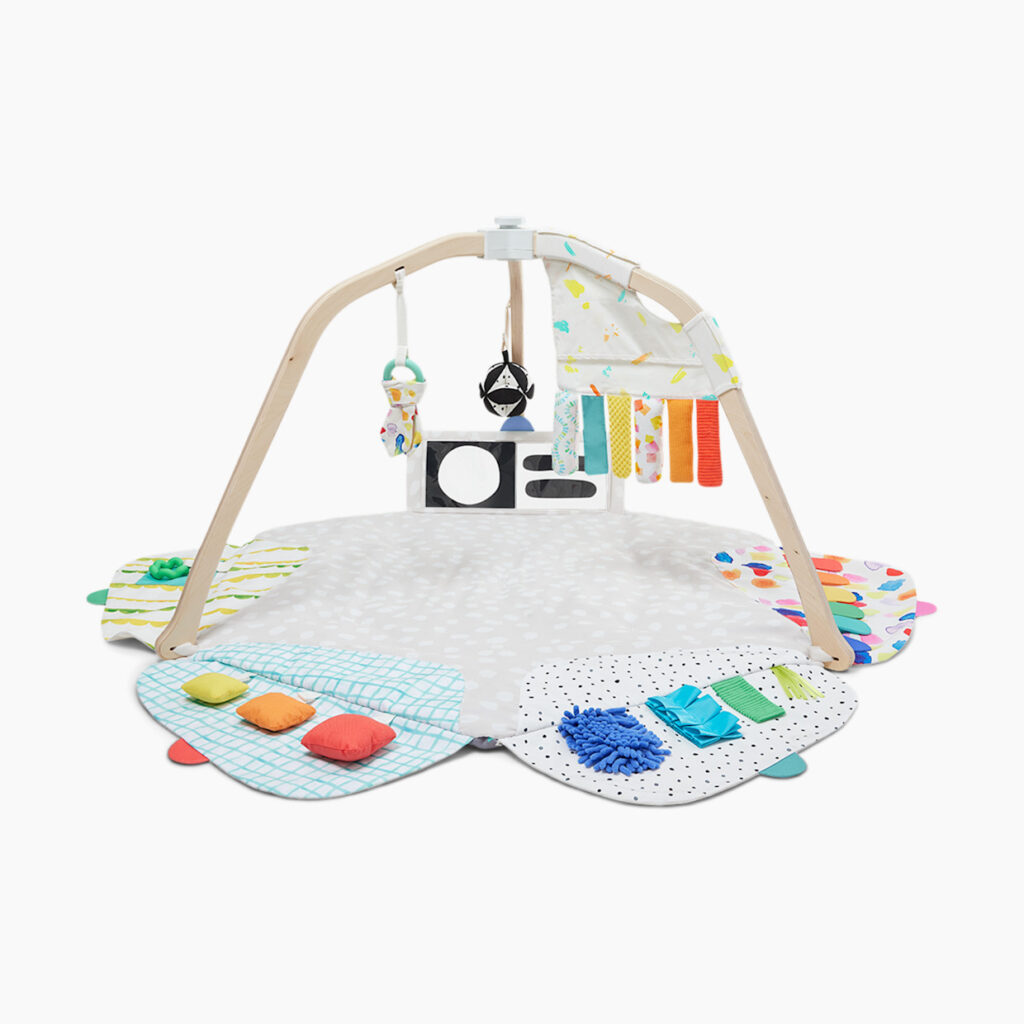
In 2017 Lovevery launched The Play Gym at a premium price of $140, emphasizing its research-based design and high-quality materials (triple the price of competing play mats). The innovative play gym resonated with parents, becoming the #1 selling activity gym on Amazon in 2018 despite its higher price point.
Founders of Lovevery
Lovevery was cofounded by Jessica Rolph and Roderick Morris.
Rolph previously co-founded the organic baby-food company Happy Family Organics in 2005. Her background in consumer products and passion for design and child development guided Lovevery’s product philosophy.

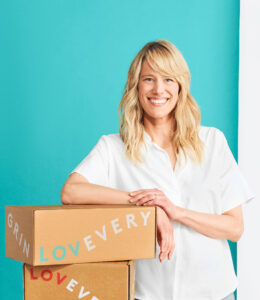
Morris brought a decade of experience in technology and operations, including leadership roles at Opower (an energy software company).


Together the two leveraged their complementary skills – Rolph in product innovation and brand-building, Morris in technology and scaling – to grow Lovevery from a startup into a high-growth DTC brand.
Today Rolph serves as CEO and Morris as President, continuing to drive Lovevery’s vision of empowering parents through play. Both have recruited experienced executives (e.g. from Mattel and Rent the Runway) as Lovevery expanded its product and retail offerings.
Business Model of Lovevery
Lovevery’s business model centers on a direct-to-consumer (DTC) subscription service supported by one-time product sales and complementary digital content.
At its core is the recurring Play Kits subscription: every 2–3 months, subscribers receive a curated box of age-appropriate toys, books, and a play guide tailored to their child’s developmental stage. This subscription provides predictable recurring revenue; as of 2023 Lovevery had over 220,000 active subscribers generating roughly $100 million in annual recurring revenue.
In fact, subscription revenue accounts for about 70% of Lovevery’s sales. The remaining revenue comes from one-time sales of products (e.g. The Play Gym and other standalone toys), retail partnerships, and ancillary services.
To reach customers, Lovevery combines its DTC e-commerce platform with wholesale distribution. After proving product-market fit online, the company negotiated retail deals: The Play Gym went on sale via Target.com in 2019, followed by a broader in-store Target launch of Play Gym and select kits in 2024. In 2025 Lovevery expanded into Walmart stores with a new collection, illustrating its omni-channel approach.
This hybrid model – building a strong brand and customer base online first, then leveraging that success to partner with big-box retailers – has been key to scaling the business.
In addition to physical toys, Lovevery invests in digital platforms to complement its products. It offers free expert-backed content through The Lovevery App (mobile), which provides week-by-week guidance, activities and parenting tips for all subscribers and free trial users.
In late 2024 Lovevery launched a novel “Play Finder” visual search feature in its app, using on-device AI to recognize Lovevery toys and suggest play activities. The company has also introduced paid Course Packs – on-demand online lesson modules for common parenting transitions (e.g. potty training, new sibling, speech milestones) – monetizing Lovevery’s child-development expertise.
This diversified model – combining subscription boxes, standalone toys, apps, and courses – allows Lovevery to deepen customer engagement and create multiple revenue streams while reinforcing its mission of comprehensive early childhood support.
Revenue Streams of Lovevery
Lovevery generates revenue through several channels:
-
Play Kits Subscription: The primary stream is the periodic subscription box for children (birth to age 4). Families pay $120–150 (US pricing) every few months for each kit, with subscription lengths varying from several months to multi-year plans. This recurring billing is the lifeblood of the business, providing steady cash flow and high customer lifetime value.
-
One-Time Product Sales: Beyond kits, Lovevery sells individual products. For example, The Play Gym (an activity mat and arch) is sold as a standalone item (it had a $140 MSRP at launch). Lovevery also offers supplementary products like block sets, play mats, puzzles, and book bundles that parents can purchase outside of the subscription. In 2022-23 Lovevery introduced specialized bundles of board books aligned to developmental stages, and in mid-2024 it launched a three-part Reading Skill Set to teach phonics and reading.
-
Retail Partnerships: Lovevery’s products are now sold through major retailers (Target, Walmart) and online marketplaces. Retail sales generate one-time revenues from customers who may not subscribe, and also serve as marketing channels that raise brand awareness.
-
Digital Services: The Lovevery App is offered free to subscribers (with optional free trials for new customers) and includes daily activities, tips and the new visual search tool. Lovevery’s Course Packs are paid digital products (prices range roughly $50–100 each) that address topics like potty training, sleep, and sibling adjustment. These courses add a software/content revenue stream.
-
Global Expansion: As Lovevery has expanded into new markets, it has begun to earn revenue internationally. For instance, in Australia and Singapore consumers can subscribe to Play Kits (priced in local currency). The company’s global growth contributes additional revenue in foreign markets.
Overall, Lovevery’s revenue sources are heavily weighted toward recurring subscriptions, complemented by product and content sales. This hybrid approach offers the advantage of predictable growth while still capturing transactional opportunities.
Funding and Funding Rounds of Lovevery
Lovevery’s growth has been fueled by venture financing. Key funding milestones include:
In October 2019 Lovevery closed a $20M Series B round led by Maveron, with follow-on funding from GV (Google Ventures), the Chan Zuckerberg Initiative and others. At that time Crunchbase reported Lovevery had raised $26M in total, suggesting an earlier $6M seed/Series A round (before 2019) had been completed, though details of the earlier round are scarce.
In October 2021 Lovevery announced a $100M Series C led by The Chernin Group, valuing the company around $800 million. This round included most existing investors (CZI, GV, Reach Capital) and significantly boosted Lovevery’s capital for expansion. Public data indicate Lovevery has raised roughly $126–132 million to date.
The infusion of funds enabled Lovevery to scale its product development, marketing, and global rollout. After the Series C, the company stated that it was adding leadership talent and expanding its tech and content teams. No further equity funding rounds are publicly known through 2025, and Lovevery has reportedly remained private (with speculation of potential acquisition discussions in 2025).
Competitors of Lovevery
Lovevery operates in the competitive children’s educational toys and subscription box market. Its direct competitors include both specialized DTC subscription services and established toy companies. Notable rivals are:
1) KiwiCo

Website – https://www.kiwico.com/
A leading global subscription box company offering themed STEM and art projects for kids. KiwiCo (headquartered in California) has a broad age range (from babies to teens) and international distribution. It has similar revenue scale (~$25–100M) and about 100–250 employees.
2) Learning Resources
Website – https://www.learningresources.com/
A manufacturer of educational toys and classroom tools (math, science, building sets). Learning Resources is sized similarly (100–250 employees, $25–100M revenue) and targets early learning, making it directly comparable to Lovevery’s school-readiness focus.
3) Melissa & Doug


Website – https://www.melissaanddoug.com/
A large traditional toy company (wooden puzzles, arts and crafts, pretend play) with nationwide retail presence. It is much larger (approx. 1,000–5,000 employees, $500M–$1B revenue) and competes on the general toy market rather than specialized subscriptions, but overlaps in the developmental toy segment.
4) ThinkFun

Website – https://www.thinkfun.com
Producer of educational puzzles and games for children, with smaller scale (25–100 employees, $5–25M revenue). ThinkFun’s focus on learning-through-play has some overlap with Lovevery’s mission.
-
Other Subscription Services – Companies like Monti Kids (Montessori-based subscription, now paused operations as of 2023) and Monkibox (UK-based early-years box) have existed as competitors in the niche, although some have struggled. Additionally, non-DTC competitors include classroom resource brands and mass-market retailers.
According to industry analytics, Lovevery ranks among the top 10 competitors in its sector (by revenue and headcount). Lovevery’s revenue (~$226M in 2023) was lower than giants like KiwiCo (and far below Melissa & Doug), but the Lovevery brand is a leading name in high-end early learning. A competitor comparison is summarized below:
| Competitor | Core Offering | Employees | Revenue (est.) | Notes |
|---|---|---|---|---|
| Learning Resources | Educational learning toys & classroom materials | 100–250 | $25–100M | Early-childhood focus; direct competitor in educational toys. |
| KiwiCo | Monthly STEM/STEAM subscription crates for kids | 100–250 | $25–100M | Global reach (200+ countries); multi-age range; innovative kits. |
| Melissa & Doug | Wooden toys, puzzles, pretend-play kits | 1,000–5,000 | $500–1,000M | Established retail presence; broad toy portfolio. |
| ThinkFun | STEM and logic games for kids | 25–100 | $5–25M | Niche focus on educational puzzles and STEM games. |
The broader toy market also includes players like Amazon, Walmart/Target’s in-house brands, and international educational brands (e.g. Ravensburger in Europe). However, Lovevery’s combination of subscription model, expert curriculum, and multimedia support helps distinguish it from general toy retailers.
Competitive Advantage of Lovevery
Lovevery’s competitive edge stems from its research-backed, design-driven approach and integrated ecosystem for parents. Unlike many toy companies, Lovevery bases each product line on developmental science. Its toys and Play Kits follow a Montessori-inspired model that emphasizes independent, play-based learning. Each kit is developed in consultation with child development experts, allowing Lovevery to market products as pedagogically effective (this expertise is central to its brand story). The high-quality, aesthetically pleasing design of its toys (often winning design awards) also sets Lovevery apart from cheaper mass-market toys. This “premium pricing with a purpose” strategy has helped Lovevery justify higher price points by educating parents on developmental value.
Another advantage is Lovevery’s customer engagement and brand loyalty. By building a strong direct relationship through subscriptions and digital content, Lovevery has cultivated a loyal customer base. For example, gift marketing and social media have created word-of-mouth buzz (one founder recalls gifting influencers product and celebrity parents organically sharing it). The company’s own survey reported that 86% of app users felt more confident as parents thanks to Lovevery’s guidance. Lovevery’s focus on community and education (through guides, blogs, emails) builds trust with young families.
Global reach and B-Corp ethos also contribute. Lovevery is a certified B Corporation, reflecting commitments to quality, sustainability, and social mission. It has tailored its offerings for international markets – localizing guides and launching the app in multiple languages – which broadens its consumer base. Its 2024 expansion statistics underscore this: over 350,000 active subscribers worldwide (20% outside the U.S.). With teams in Amsterdam, Hong Kong and Boise, Lovevery can operate as a truly global brand. These factors—science-driven products, strong brand identity, and global infrastructure—give Lovevery an advantage in the competitive early-learning sector.
Products and Services of Lovevery
Lovevery’s product suite centers on stage-based Play Kits and related support tools. Key offerings include:
-
Play Kits (Subscription Boxes): Delivered every 2–3 months, each Play Kit is tailored to a specific age range (e.g. “The Looker” for 0–4 months, up to kits for age 3 and 4). The kits contain multiple Montessori-inspired toys, a hardcover board book, and a play guide for parents explaining the developmental purpose of each item. There are 18 distinct Play Kits in the lineup for ages 0–4 years, covering milestones from newborn sensory development to preschool skills. Each kit retails for roughly $80–$150 depending on content.
-
The Play Gym: Lovevery’s original flagship product is an activity mat and arch for newborns. It includes sensory toys (e.g. black-and-white patterns, rattles) designed for a baby’s first 3–4 months. The Play Gym was launched in 2017 and has since been redesigned for target retail. In 2024 The Play Gym (and The Looker 2-4 month kit) became available nationwide at Target stores.
-
Reading and Book Bundles: In mid-2024 Lovevery introduced a three-part Reading Skill Set to teach children phonics and decoding through playful games and books. Separately, in 2022 Lovevery launched “stage-based book bundles” – curated sets of board books to build early literacy aligned with developmental milestones. These offerings extend Lovevery’s curriculum into early reading.
-
Adult Course Packs: Lovevery offers digital Course Packs addressing parenting topics like potty training, sleep, early speech and feeding. These are one-time purchases granting access to video lessons, activities, and expert tips. (Examples include “Potty Time,” “Tummy Time,” etc. available on lovevery.com.) These courses complement the physical products by helping parents navigate each life stage.
-
Mobile App – The Lovevery App: This free app provides subscribers with daily activities, articles, and Q&A with experts. In late 2024 Lovevery internationalized the app (offering localized content in the UK, EU and Australia) and added the Play Finder visual search feature (point your camera at a Lovevery toy and get activity ideas). The app serves as a companion tool, increasing the utility of Lovevery’s products through ongoing content.
-
Single Items and Specialty Toys: Lovevery sells certain toys and kits à la carte through its online shop and retailers. These include items like a developmental block set, a wooden rain-making toy, and small shakers or chew toys. Many of these have won design awards (e.g. the Play Gym’s red dot award) for their educational innovation.
Table: Sample Lovevery Offerings
| Product / Service | Age Range | Description |
|---|---|---|
| The Play Gym | 0–3 months | Activity mat with adjustable arch; includes high-contrast cards and rattles. |
| The Looker Play Kit | 0–4 months | Play Kit #1: sensory toys (e.g. black-and-white mittens, blocks), board book, parent guide. |
| Subsequent Play Kits | 6–12, 12–24, 24–36, 36–48 months | Follow-up kits include puzzles, blocks, art supplies, etc. matched to each age. |
| Reading Skill Set | 3–5 years | Three-kit phonics curriculum to teach reading (launched 2024). |
| Course Packs | Newborn–Toddlers | Online lessons on potty training, sleep, new sibling, feeding, etc. |
| The Lovevery App | Parents (all stages) | Weekly developmental tips, Q&A, and new Visual Search (Play Finder) feature. |
| Target Exclusives | Various ages | Special toy collections released exclusively for retail partners (e.g. Target). |
Each Lovevery Play Kit is supported by a detailed Play Guide and an online content hub. These include videos demonstrating activities, blog articles on developmental topics, and weekly subscriber emails. Lovevery continually refreshes its offerings through new kit designs (e.g. special kits for age 3 and 4 launched during UK/EU expansion) and by adding to its educational catalog, keeping the product line current and research-driven.
Conclusion
Lovevery has rapidly evolved from a niche startup into a major early-childhood brand. Its founding vision – combining beautiful design with child-development science – has allowed it to carve out a unique market position. By 2023 Lovevery had scaled to over $226 million in annual revenue, driven largely by a loyal subscriber base and expanded product line. The company now operates globally, serving over 30 markets with physical kits, digital tools, and content.
Looking ahead, Lovevery faces the challenges of sustaining growth. Recent reports indicate 2024 revenue fell to around $110 million, reflecting market fluctuations. The company has adjusted its operations in response, including reported staff reductions as it reassessed its technology investments. Nevertheless, Lovevery’s fundamentals remain strong: a differentiated product curriculum, multi-channel business model, and ongoing R&D pipeline (new kits and app features). Its competitive advantages – especially the fusion of Montessori principles with e-commerce and expert-backed support – continue to resonate with its customer base.
As of 2025, Lovevery remains privately held, having raised over $120 million in venture funding. Management has expressed optimism about reaching profitability soon, leveraging the brand’s high customer satisfaction and market momentum. With continued international expansion (recent launches in Australia and Singapore, app rollouts in Europe and Australia) and a deepening product ecosystem, Lovevery is poised to remain a leading player in the global early-learning toy market. Its story illustrates how mission-driven design, strong customer engagement and strategic scaling can build a consumer brand that spans continents, while staying focused on the developmental needs of children and the peace of mind of parents.
Also Read: BillionToOne – Founders, Business Model, Funding & Competitors
To read more content like this, subscribe to our newsletter
Go to the full page to view and submit the form.