


Packaging accounts for about 40 percent of all plastic produced, and most of it never sees a second life according to an analysis by Our World in Data.
According to market-research firm Spherical Insights, that waste is turning into a $294 billion market opportunity, with sustainable-packaging sales growing roughly 8 percent a year.
Regulators are locking in the shift—Europe’s 2024 law requires 40 percent of transport packaging to be reused by 2030, closing the door on business-as-usual, according to the Council of the European Union.
In this review, we spotlight six companies that convert eco-action into marketing advantage—and show you how to adapt their playbook.
How we chose the innovators: a clear-cut, four-point scorecard
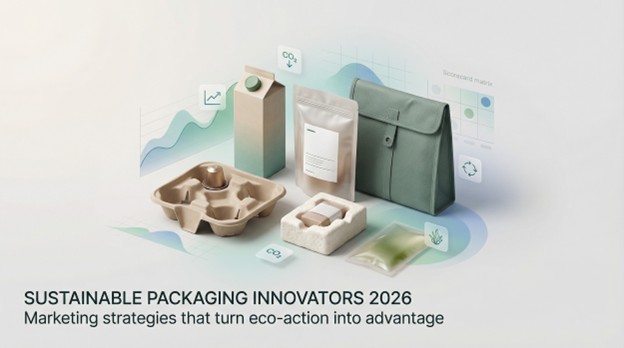

Before the company spotlights, we outline the yardstick. Transparency keeps hype in check, so we asked one question: which packaging players cut real waste and share proof customers trust?
We answered with a balanced scorecard built on four equal pillars:
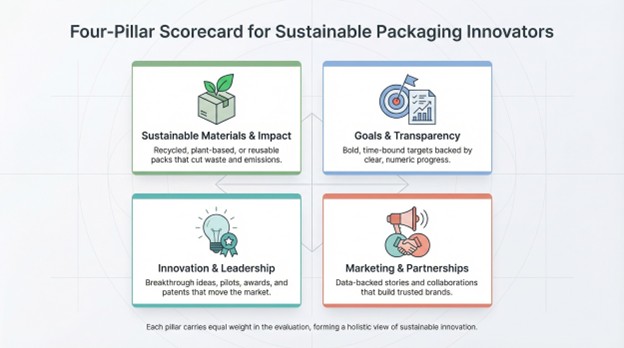
Sustainable materials and impact. Do products rely on recycled fibre, plant-based resin, or reuse loops—and do those choices measurably reduce waste or emissions?
Goals and transparency. Does the company publish bold, time-bound targets and report progress with hard numbers?
Innovation and industry leadership. Are there breakthrough ideas, patents, pilot programs, or third-party awards that show the firm is shaping the market rather than following it?
Marketing strategy and partnerships. How well does the brand convert its eco wins into credibility through precise claims, data-backed storytelling, and collaborations that lift the sector?
Each pillar earns a 1-to-10 score per company. The totals feed Table 1, our quick-scan scorecard that sits just after the profiles—use it as a cheat sheet when you vet suppliers.
Most importantly, the criteria work together. Strong materials with weak messaging (or slick ads with no substance) land a middling rank; only balanced excellence rises to the top.
Zenpack: sustainable packaging strategy consulting and design
Zenpack is more than a box supplier. The California studio blends industrial design, manufacturing, and logistics so brands embed sustainability from day one.
At project kickoff, the team maps materials, carbon hotspots, and consumer touchpoints. That holistic view yields packaging that ships flat, assembles fast, and delights in the unboxing, while relying on recycled fibre, soy inks, and FSC-certified board.
Clients often say, “It feels like having a sustainability department on speed dial.” Zenpack proves the point by offering full-scale packaging strategy consulting alongside design, letting marketers present life-cycle data instead of vague claims.
Proof shows in the wild. The Cambio Roasters coffee-pod kit replaces plastic clamshells with molded pulp and doubles as a countertop recycling bin. iF Design judges called it “circular thinking made tangible,” and shoppers enjoy folding the tray into its own return box.

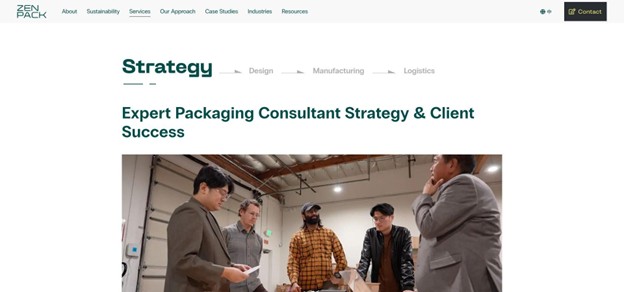
Communication is Zenpack’s key advantage. Blog guides, LinkedIn case studies, and behind-the-scenes videos demystify material choices and carbon math. That transparency builds trust and turns every launch into a mini masterclass on better packaging.
For brands seeking a partner to architect the plan and craft the piece, Zenpack sets the benchmark. The company proves sustainable can look premium, and data-driven storytelling can rival any glossy campaign.
Smurfit WestRock: scaling circular packaging on two continents
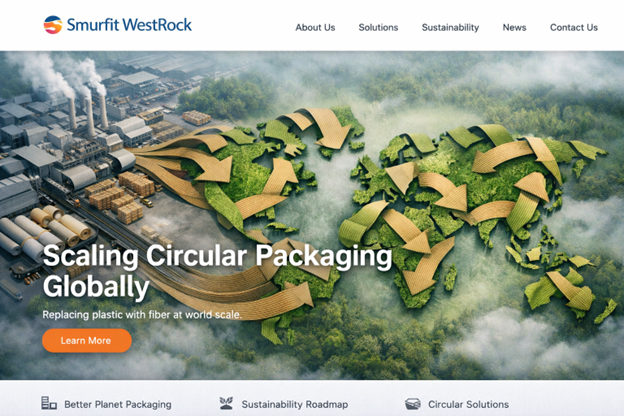

When Europe’s Smurfit Kappa joined U.S. giant WestRock in 2024, the new group became the world’s largest paper-based packaging supplier overnight. The merger also aligned two robust sustainability roadmaps, giving the company enough clout to replace single-use plastic with fibre at global scale.
Smurfit WestRock’s Better Planet Packaging program drives the mission. Engineers reimagine burger trays and e-commerce mailers in recyclable or compostable board, then invite brand partners into design sprints that swap plastic layers for barrier coatings. Clients leave with market-ready prototypes and a solution to looming regulations.
The balance sheet backs the vision. The group issued USD 2 billion in green bonds to fund biomass boilers, hydrogen trials, and recycling capacity. Those investments flow into a net-zero transition plan that targets steep Scope 1 and 2 reductions well before 2050.
Marketing stays rooted in data: tonnes of CO₂ avoided, hectares of certified forest managed, and case studies showing a paper wine shipper that cut breakage and carbon in one move. The matter-of-fact tone builds credibility and positions Smurfit WestRock as the dependable workhorse brands trust when legislation tightens and consumers demand plastic-free answers.
Tetra Pak: cartons that protect what’s good and the planet
Tetra Pak built its reputation on aseptic cartons that keep milk and juice fresh without refrigeration. The same technology now drives climate gains.
Each package is mainly certified paperboard, a renewable material that lowers weight and emissions compared with glass or PET. Plant-based polymers on caps and coatings push fossil plastics aside while maintaining shelf life.

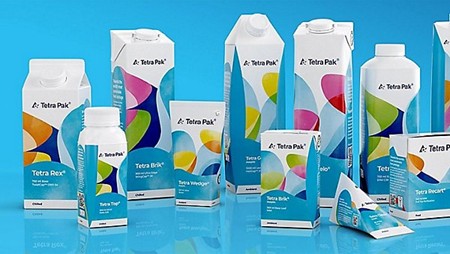
Progress shows in numbers. Since 2019, Tetra Pak reports a double-digit drop in value-chain emissions and the delivery of more than five billion plant-based cartons and caps. The company has also invested tens of millions of euros in collection and sorting partnerships, because a recyclable pack only delivers value when it is recycled.
Marketing connects data to daily life. Snack-size infographics remind consumers to “flip, flatten, and drop” cartons into the right bin. For buyers, detailed life-cycle assessments stack carton footprints against bottles, giving procurement teams proof to defend the switch.
The outcome is a package that feels familiar on the shelf yet forward-thinking in the boardroom, letting brands boost sustainability without asking shoppers to change habits.
Amcor: pushing plastics into the circular economy
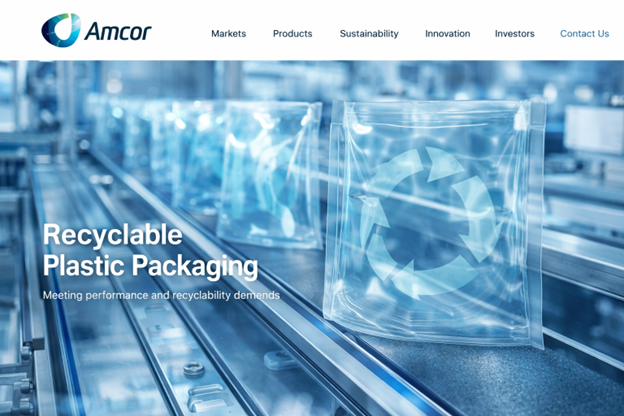
Plastic faces scrutiny, yet billions of shoppers still depend on pouches and medical films that paper cannot match. Amcor accepts the challenge and works to keep plastics in a closed loop instead of a landfill.
The pledge is direct: by 2025 every Amcor package will be recyclable, reusable, or compostable. Engineers are transforming multilayer laminates into mono-material films that earn How2Recycle approval, and the company has invested more than USD 150 million in chemical-recycling ventures that reclaim hard-to-sort waste.
Progress is public. The 2025 interim report shows an average of 36 percent recycled content in rigid packaging and a twelve-percent cut in energy use since 2019. Pilot products like AmLite HeatFlex—a high-barrier food pouch that drops into standard PE recycling streams—turn potential scrutiny into proof.
Amcor’s commercial team amplifies success through partnerships. Joint releases with global brands highlight a fully recyclable snack bag or a bottle blown from 100 percent rPET, letting customers borrow Amcor’s technical credibility while Amcor taps their consumer reach.
The takeaway is simple: when performance demands plastic, Amcor supplies a version ready for tomorrow’s recycling system rather than yesterday’s trash heap.
Notpla: seaweed tech that turns plastic problems into edible solutions
Notpla began as a university project handing marathon runners water bubbles they could bite and swallow. Today, the London startup swaps grease-proof burger boxes and sachets for seaweed-based coatings.
The material looks and performs like plastic but breaks down in a backyard compost pile, or, in the case of Ooho capsules, dissolves on your tongue. That leap won Notpla the 2022 Earthshot Prize and helped secure fresh funding for a trans-Atlantic scale-up.


Impact grows quickly when your raw material stretches a metre per day without fertiliser or freshwater. Each switch to a Notpla liner removes the hidden PFAS or PLA films that send many “paper” packs to landfill. Early pilots with Just Eat and Hellmann’s sauce sachets have already replaced more than five million single-use items.
Marketing relies on show-and-tell. Videos of people eating their water bottle go viral, and founder TED talks break down the chemistry in plain English. The mix of spectacle and substance keeps journalists calling and investors lining up, extending Notpla’s reach far beyond its headcount.
For brands, the draw is twofold: an eye-catching story consumers remember and a certified home-compostable solution regulators applaud. If you need a plastic-free headline that delivers, seaweed might be your new favourite fibre.
LimeLoop: reusable mailers that track their own carbon savings
E-commerce boxes pile up fast, and most curbside bins can’t keep pace. LimeLoop solves the mess by swapping single-use cardboard for a durable pouch that ships, returns, and ships again.
Each mailer lasts for up to 25 trips, cutting packaging waste by as much as 90 percent and reducing water use along the way. A prepaid label hides under a tear-off strip, so shoppers slip the empty sleeve straight back into the postal stream without an app or store visit.

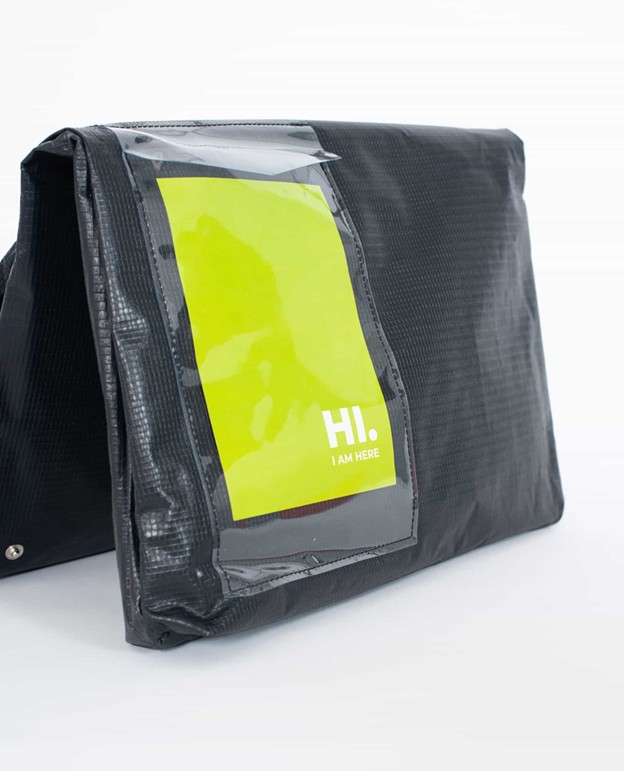
Every pouch carries a unique ID that plugs into LimeLoop’s dashboard. Retailers view real-time tracking and live counters of carbon, trees, and gallons saved, turning sustainability from a feel-good idea into a line item a CFO can verify.
Marketing leans on that visibility. Brands embed LimeLoop impact widgets on product pages, showing customers the exact emissions they avoid by choosing reuse, a detail that consistently lifts conversion rates.
As parcel volumes climb, LimeLoop delivers a rare win-win. Operations teams trim material costs over time, and marketers secure a measurable green story customers love to share.
Matching materials to missions: a quick-scan comparison
No single material fits every brief. Each option has perks, trade-offs, and best-fit use cases. The matrix distils the essentials so you can shortlist candidates without digging through datasheets.
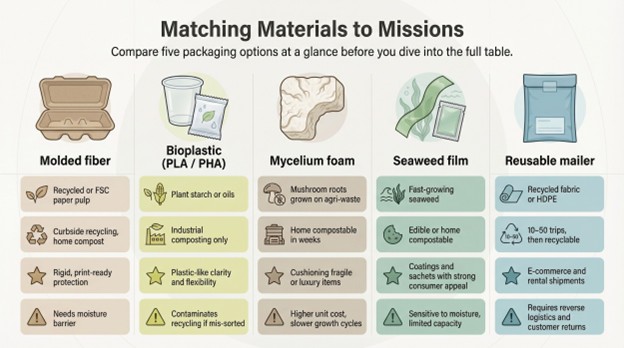
| Material | Source and renewability | End-of-life | Standout strengths | Watch-outs | Sample use cases |
| Molded fiber | Recycled or FSC paper pulp | Widely curbside-recyclable, backyard-compostable | Rigid, print-ready, low carbon footprint | Needs moisture barrier, can add shipping weight | Electronics inserts, meal-kit trays |
| Bioplastic (PLA / PHA) | Plant starch or oils | Industrial composting (limited sites) | Clear or flexible like PET, gives “plastic-free” appeal | Contaminates recycling if mis-sorted, slower breakdown in cold soil | Produce bags, flow-wrap snack bars |
| Mycelium foam | Mushroom roots grown on agri-waste | Home-compostable in weeks | Cushions like EPS yet soil-friendly, low-energy production | Higher unit cost, lead time for growth phase | Fragile or luxury goods cushioning |
| Seaweed film | Fast-growing algae | Edible or home-compostable | Zero microplastics, safe for marine life, strong consumer appeal | Sensitive to moisture, capacity still scaling | Sauce sachets, takeaway box lining |
| Reusable mailer | Recycled fabric or HDPE | 10–50 trips, then recyclable | Cuts waste by up to 90 percent, provides trackable impact data | Requires reverse logistics and customer returns | Fashion e-commerce, rental subscriptions |
Conclusion
Sustainable packaging has crossed the tipping point. What began as a compliance exercise is now a measurable driver of brand trust, cost resilience, and long-term growth. The six innovators in this review show that progress happens when materials, metrics, and messaging move together.
The common thread is balance. Zenpack and Smurfit WestRock prove that strategy and scale can coexist. Tetra Pak and Amcor show how incumbents evolve without breaking supply chains. Notpla and LimeLoop remind us that bold ideas—when backed by real data—can reshape customer expectations almost overnight.
For marketers and procurement leaders alike, the lesson is clear: don’t chase materials in isolation. Start with your business constraints, test in-market, and demand proof at every step. The brands winning in 2026 aren’t just reducing waste—they’re translating sustainability into stories customers believe and systems finance teams can defend.
Use this list as a starting point, not a finish line. The fastest gains often come from pilots, partnerships, and transparency that turns packaging from a cost center into a competitive advantage.
FAQ: Sustainable packaging in practice
What qualifies packaging as “sustainable” in 2026?
There’s no single label. Sustainable packaging reduces environmental impact across its full life cycle—materials, manufacturing, transport, and end-of-life—while offering transparent data to back up claims. Recyclable, compostable, reusable, or renewable solutions can all qualify when used in the right context.
Is paper always better than plastic?
Not always. Paper generally performs well on renewability and recycling, but it can increase weight or require barrier coatings. In some food and medical applications, lightweight recyclable plastics can result in a lower overall carbon footprint. The best choice depends on use case, infrastructure, and volume.
How can brands avoid greenwashing claims?
Stick to specifics. Use measurable metrics (CO₂ reduced, recycled content percentage, reuse cycles), reference third-party standards or certifications, and avoid vague terms like “eco-friendly.” If trade-offs exist, acknowledge them—credibility grows with honesty.
What’s the fastest way to test a new packaging format?
Run a pilot. Limited-SKU trials or regional rollouts reveal real-world performance, customer response, and operational friction. Many suppliers featured here offer pilot programs or prototype runs designed specifically for fast validation.
Do consumers actually care about sustainable packaging?
Yes—but clarity matters. Consumers respond best when sustainability benefits are simple and visible: reusable mailers with return labels, cartons with recycling instructions, or packaging that looks and feels different on shelf. Overly technical claims tend to underperform.
To read more content like this, explore The Brand Hopper
Subscribe to our newsletter
Go to the full page to view and submit the form.