



A traditional public relations crisis is usually obvious. Examples include a controversial message gaining traction, a public product failure, or a CEO misstepping in an interview. Notifications are triggered, response teams convene, and containment strategies are implemented. The situation is public and visible, demanding immediate action.
However, a more subtle form of crisis operates in silence. It generates no significant social media backlash or press coverage. Instead, it is detected through a sharp decline in key performance indicators: inbox placement plummets and associated revenue drops precipitously.
This “silent crisis” often stems from email deliverability issues, such as domain blacklisting. When a domain is flagged, communications can be blocked before reaching the inbox. To prevent this, implementing a consistent email warm up strategy has become a fundamental requirement for modern senders. By establishing a history of positive interactions, businesses can insulate their infrastructure against the sudden triggers of Spamhaus and other filters.
Brand strategists must now monitor this technical infrastructure because it is a critical component of safeguarding brand reputation and performance, not just an IT issue.
The Algorithmic Judgment of Brand Worth
In the physical world, brand reputation is built on human perception, including trust, sentiment, and loyalty. In the digital ecosystem, however, algorithms adjudicate your reputation long before a human ever interacts with your content.
Before your designed newsletter or high-stakes product launch email reaches a customer’s inbox, it must pass through a series of digital checkpoints. These checkpoints don’t care about your brand heritage or creative awards. They care about your sender reputation.
If your digital behavior is flagged as suspicious, perhaps due to a sudden spike in volume, poor list hygiene, or a technical misconfiguration, the internet’s gatekeepers won’t hesitate to shut the door. They simply shut the door.
Understanding Spamhaus Zen: How Domains Get Filtered
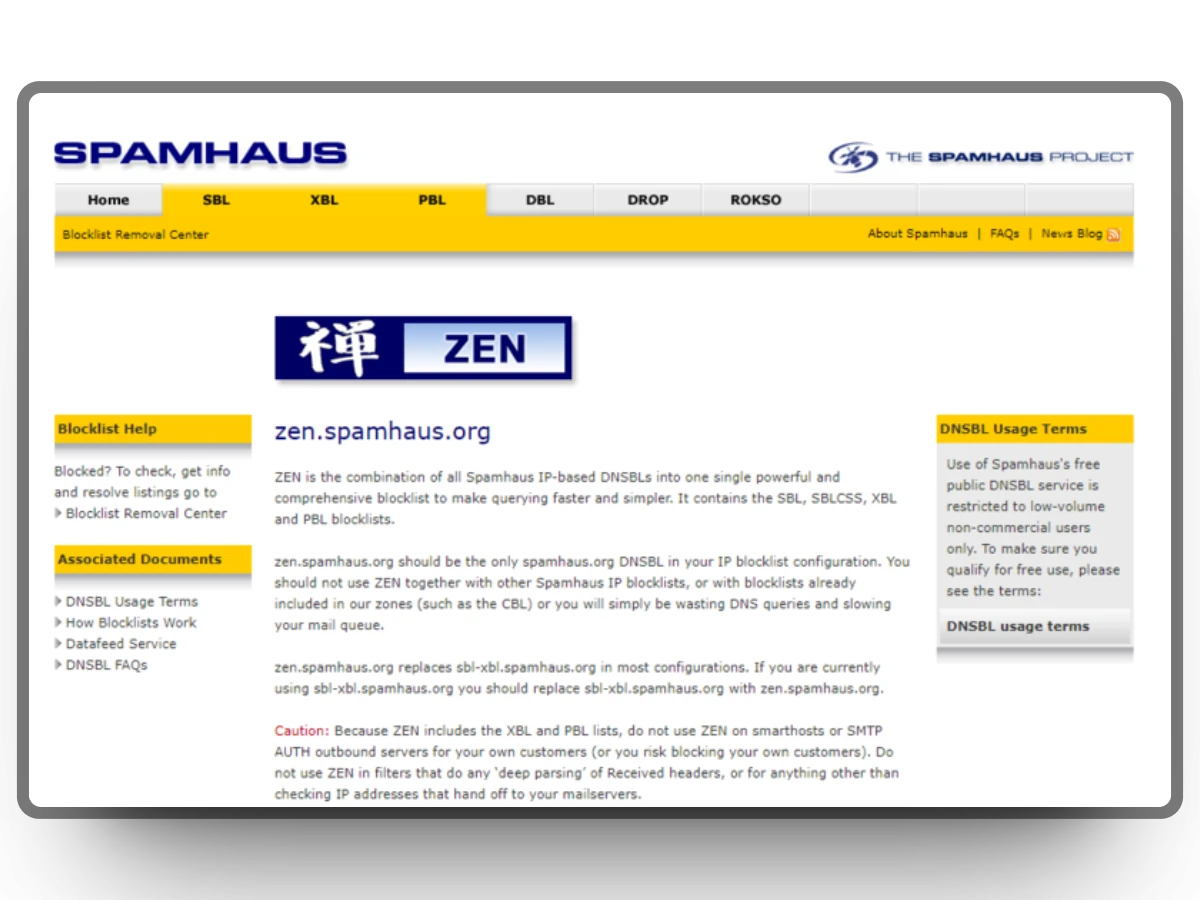
Spamhaus is an international nonprofit organization that tracks spam and cyber threats. Their datasets are used by the majority of the world’s Internet Service Providers (ISPs), government networks, and corporate email servers to decide what traffic to accept and what to block.
Specifically, the Spamhaus Zen list functions as the definitive “Global Credit Score” for your domain and IP address. Just as a low FICO score can prevent a consumer from getting a mortgage regardless of their actual income, a listing on Spamhaus Zen prevents your emails from being delivered, regardless of the quality of your content.
Being on the Zen list tells Google, Microsoft, and Yahoo that your infrastructure is compromised or negligent. Once a brand is on this list, access to the inbox is effectively frozen, regardless of whether you are a Fortune 500 company or a boutique agency. The damage is immediate, causing a halt in communication that can result in millions of dollars in lost potential revenue per day.

The Power of Reputation: Staying Ahead of the Blocklist
The secret to navigating Spamhaus Zen isn’t just knowing how to get off the list, but knowing how to never appear on it in the first place. This is where building a bulletproof sender reputation becomes a business priority.
Instead of hoping for the best with a new or cold IP, savvy companies useautomated deliverability platforms like Warmy.io to engineer trust with ISPs. By simulating authentic, high-quality email traffic, you create a “safety cushion” that prevents Spamhaus from flagging your account as a threat.
This proactive approach works through three main mechanisms:
-
Dynamic Volume Scaling: Rather than blasting thousands of emails at once—a major red flag for Spamhaus—professional warm-up tools scale your volume intelligently. This mimics the organic growth of a legitimate business operation.
-
Engagement Simulation: Deliverability isn’t just about sending; it’s about response. By generating real opens and interactions, you signal to filtering algorithms that your messages are valuable to recipients, effectively neutralizing “spammy” reputation markers.
-
Infrastructure Validation: A consistent warm-up period verifies your SPF, DKIM, and DMARC settings in a live environment, ensuring that your technical setup is as solid as your content before you go to market.
How Good Brands Get Blacklisted
The most dangerous misconception among marketers is the belief that blacklists are only for scammers and malicious actors. “We are a legitimate business,” the logic goes, “so we have nothing to worry about.”
This hubris is dangerous. The algorithms that feed lists like Spamhaus Zen are behavioral, not intent-based. They do not know you are a “good company.” They only see data patterns.
Legitimate brands trigger these alarms constantly through common strategic errors:
- Aggressive Scaling: Doubling sending volume overnight during a holiday sale.
- Poor Hygiene: Hitting “spam traps”, abandoned email addresses that ISPs use as listening posts to catch negligent senders.
- Cold Outreach: Sending emails to purchased lists that have not opted in, triggering high complaint rates.
When these patterns emerge, the system assumes the worst. It protects the ecosystem by cutting off the sender.
Strategic Patience in a High-Speed World
For brand managers, email warm up protocols may seem constraining. In a business culture driven by speed and quarterly goals, slowing down deliberately seems counterproductive. However, this discipline is essential for long-term email deliverability.
Failing to meet the technical requirements of these systems ensures that your message will never reach your audience.
The priority is to protect your sending reputation. Monitor your domain’s standing on blocklists such as Spamhaus and adhere to established warm-up guidelines for new infrastructure. In digital channels, brands that cannot deliver their messages effectively cease to be heard.
To read more content like this, explore The Brand Hopper
Subscribe to our newsletter
Go to the full page to view and submit the form.