


In the hyper-competitive world of automotive manufacturing, few brand stories are as compelling as BYD (Build Your Dreams). What began in 1995 as a bootstrapped rechargeable battery startup with just 20 employees has transformed into the world’s largest manufacturer of plug-in hybrid and fully electric vehicles.
But behind the sprawling factories, the proprietary Blade Battery technology, and the aggressive global expansion lies a pivotal question that business analysts and marketers frequently ask: Who actually owns BYD?
Understanding BYD’s ownership structure is crucial to understanding the brand’s aggressive strategy, its vertical integration, and its rapid dethroning of legacy automakers. Here is the comprehensive breakdown of BYD’s corporate governance, top shareholders, and how its investor base shapes its global brand strategy in 2026.
The Power of Founder-Led Governance
Unlike many legacy automakers governed by sprawling, fragmented boards, BYD is a fiercely founder-led enterprise. This concentration of power has been the ultimate catalyst for the brand’s agility and long-term strategic bets.
Wang Chuanfu: The Architect and Visionary

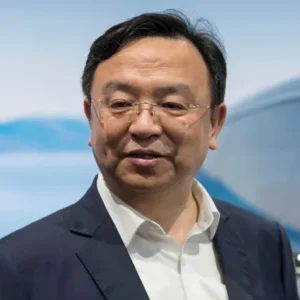
At the helm of BYD is Wang Chuanfu, the company’s founder, Chairman, and Chief Executive Officer. A battery chemist by trade, Wang recognized a gap in the market in the mid-90s when Japanese manufacturers began shifting away from nickel-cadmium batteries.
-
Ownership Stake: As of early 2026, Wang Chuanfu remains the single largest individual shareholder, holding approximately 17% to 17.6% of the company.
-
Strategic Impact: This dominant stake gives him decisive voting power and control over the company’s direction. Because Wang does not have to constantly bow to the short-term whims of activist investors, he was able to push through highly ambitious, long-term brand strategies—such as the complete cessation of internal combustion engine (ICE) vehicle production in March 2022 and the heavy R&D investment into the proprietary Blade Battery.
Lu Xiangyang: The Crucial Co-Founder
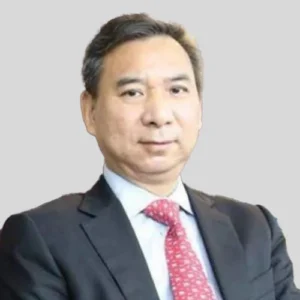
Wang didn’t build the empire alone. His cousin, Lu Xiangyang, provided the crucial initial loan of RMB 2.5 million to get Shenzhen BYD Battery Company off the ground in 1995.
-
Ownership Stake: Lu remains a massive power player in BYD’s corporate structure. He holds a direct personal stake, while his investment firm, Youngy Investment Holding Group Co., Ltd., holds an additional ~5.11% of the company. Combined, his influence sits closely behind Wang’s, making the two founders the undisputed controllers of the BYD brand.
The Berkshire Hathaway Era (and the 2025 Exit)
For nearly two decades, the BYD brand story in Western markets was inextricably linked to one legendary investor: Warren Buffett.
In September 2008, at the urging of his partner Charlie Munger and investor Li Lu, Buffett’s Berkshire Hathaway invested $232 million to acquire a nearly 10% stake in BYD (purchased at around HK$8 per share).
The Halo Effect on the Brand:
This investment provided BYD with an invaluable “halo effect.” At a time when Chinese automakers were viewed with deep skepticism globally, Buffett’s backing served as the ultimate stamp of credibility. It legitimized the brand in the eyes of the international financial community and accelerated its global expansion.
The Exit Strategy:
After holding the stock for 17 years, Berkshire Hathaway began trimming its position in August 2022. By September 2025, Berkshire Hathaway completely exited its BYD investment. The exit was not a vote of no confidence in the brand, but rather a standard portfolio reallocation and profit-taking exercise. Buffett’s firm walked away with a staggering estimated return of nearly 3,890%, marking it as one of the most lucrative tech/auto investments in modern financial history.
The Institutional Heavyweights
With Berkshire Hathaway out of the picture, the institutional ownership landscape of BYD has shifted toward massive global asset managers. BYD trades on the Hong Kong Stock Exchange (1211.HK) and the Shenzhen Stock Exchange (002594.SZ), allowing foreign institutions to participate heavily in its growth.
As of 2026, the institutional breakdown features the traditional titans of Wall Street:
| Institutional Investor | Approximate Ownership Stake |
| Youngy Investment Holding Group | ~5.11% |
| BlackRock, Inc. | ~2.75% – 3.09% |
| The Vanguard Group, Inc. | ~1.60% – 1.90% |
| Baillie Gifford & Co. | ~1.20% – 1.30% |
| FMR LLC (Fidelity) | ~0.60% – 1.10% |
Note: Institutional ownership percentages fluctuate daily based on market trading and quarterly SEC/HKEX filings.
The heavy presence of BlackRock, Vanguard, and Baillie Gifford indicates strong, sustained international trust in BYD’s ability to dominate the global transition to New Energy Vehicles (NEVs).
Dispelling the Myth: Is BYD State-Owned?
A common misconception in Western markets is that BYD is a Chinese State-Owned Enterprise (SOE). This is factually incorrect.
BYD is a publicly traded, private enterprise. While state-affiliated financial institutions (such as the China Investment Corp or the China Social Security Fund) do hold minor minority stakes (ranging from 1% to 3%), they act as passive institutional investors rather than controlling entities.
However, like all major corporations operating in China, BYD benefits from national industrial policies, consumer EV subsidies, and governmental infrastructure projects (such as municipal contracts for their electric buses). But from a corporate governance standpoint, Wang Chuanfu and his executive board pull the strings, not the state.
Subsidiary Ownership: BYD Electronic
To fully grasp BYD’s empire, one must look beyond cars. A massive pillar of the brand’s revenue comes from BYD Electronic (International) Company Limited, which was spun off and listed on the Hong Kong Stock Exchange in 2007.
-
Who owns BYD Electronic? The parent company, BYD Company Limited, holds a commanding 65.76% majority stake in BYD Electronic.
-
What do they do? They are one of the world’s largest Original Equipment Manufacturers (OEM) and Original Design Manufacturers (ODM). They assemble smartphones, laptops, and tablets for massive global brands, including manufacturing most of Huawei’s smartphones and serving as a key assembly partner for Apple’s iPads.
How Ownership Drives BYD’s Brand Strategy
For marketers and brand strategists, BYD’s ownership structure is the secret sauce behind its competitive moat.
-
Vertical Integration: Because Wang Chuanfu has concentrated voting power, he successfully built a vertically integrated brand. BYD doesn’t just assemble cars; they mine lithium, manufacture their own microchips, and build their own batteries. When global supply chains collapsed during the early 2020s, BYD thrived because they owned their entire production ecosystem.
-
Patience Over Quarterly Panic: Institutional investors often demand short-term profitability. BYD’s founder-led structure allowed the brand to spend decades (and billions of dollars) developing electric buses and hybrid tech before the consumer market was entirely ready.
-
Rapid Pivot Capabilities: The shift from being a “battery company” to an “auto company” to an “all-electric auto company” requires aggressive pivoting. Founder control allowed BYD to entirely kill off its profitable gas-powered vehicle line in 2022 without facing a board rebellion, purely to align the brand entirely with the future of green energy.
The Bottom Line
BYD is not a state-owned monolith, nor is it heavily fragmented. It is a strategically aggressive, private enterprise governed by a visionary founder, backed by the largest asset managers in the world, and validated by one of the most successful early investments in Warren Buffett’s career. As BYD continues to challenge legacy brands globally, its tightly controlled ownership structure remains its most formidable asset.
Also Read: How Volkswagen Lost Its Way
To read more content like this, subscribe to our newsletter
Go to the full page to view and submit the form.