


In the world of consumer packaged goods, few brands have demonstrated the kind of staying power that Betty Crocker has achieved over more than a century. Born in 1921 as a promotional device for the Washburn-Crosby Company — the flour milling giant that would later become General Mills — Betty Crocker has evolved from a simple customer service signature into one of the most recognised food brand identities in the world. What began as a contest for a flour sack pincushion has quietly become a masterclass in brand-building, consumer psychology, and marketing evolution. Today, Betty Crocker products are sold in over 130 countries, and the brand’s cookbook remains one of the best-selling cookbooks in American publishing history.
The story of how Betty Crocker came to be is itself a stroke of marketing genius. When Washburn-Crosby ran a promotional contest in 1921, they received thousands of completed entry forms — many signed by women. The company felt that responses to consumers deserved a feminine, personable signature rather than a male executive’s name. So, combining the surname of a recently retired director, William Crocker, with the friendly first name Betty, they created a persona. She was not a real person, but to millions of American housewives over the following decades, she might as well have been. That decision to humanise a corporate brand through a fictional character set the stage for nearly every marketing innovation the brand would go on to pursue.
General Mills acquired Washburn-Crosby in 1928 and with it the Betty Crocker name, quickly recognising the commercial and emotional power the persona carried. Through the 1930s, 40s, and 50s, Betty Crocker became a fixture in American kitchens — advising women through radio broadcasts, publishing recipe pamphlets, and eventually authoring a cookbook that sold over 75 million copies. The brand grew beyond flour into baking mixes, frostings, side dishes, desserts, and packaged meals. Each product launch was never just a product launch; it was an extension of a trusted friend’s recommendation, carefully crafted to feel personal and practical.
What makes Betty Crocker’s marketing journey so instructive is not merely its longevity, but its adaptability. The brand has survived the feminist movement’s challenge to its housewife-centred messaging, the rise of health consciousness, the dominance of digital media, and a profound shift in how consumers relate to food brands. Each era required reinvention, and Betty Crocker — guided by General Mills’ marketing leadership — consistently managed to evolve without abandoning the core emotional equity it had spent decades building. The brand has been updated, modernised, and at times controversially reimagined, but it has never entirely stepped away from its founding promise: helping people cook with confidence and warmth.
This article examines the most significant and instructive marketing strategies that have defined Betty Crocker’s rise and resilience. From the invention of a fictional persona to a savvy digital content strategy, from cause marketing during wartime to modern multicultural outreach, Betty Crocker’s playbook offers lessons that are as relevant today as they were in the early twentieth century. Whether you are a marketing professional, a brand strategist, or simply someone fascinated by how companies build lasting emotional connections with consumers, the Betty Crocker story is worth studying closely.
Marketing Strategies of Betty Crocker
1. The Fictional Persona Strategy: Giving a Brand a Human Face
Perhaps the single most consequential marketing decision in Betty Crocker’s history was the creation of a fictional human persona at the brand’s core. In an era when most food companies communicated through dry, corporate channels, the invention of “Betty Crocker” as a warm, knowledgeable, approachable woman was revolutionary. It gave consumers not just a product, but a relationship. And relationships, as any seasoned marketer will tell you, are far harder to abandon than product preferences.
The character was brought to life in layers over the years. In 1924, Betty Crocker’s voice was heard for the first time on radio — first on a local Minneapolis station and later nationally — through a programme called The Betty Crocker Cooking School of the Air. At its peak in the 1930s, this programme had over one million listeners. Women wrote in by the thousands, seeking advice on recipes, nutrition, and homemaking. Betty Crocker’s team responded to every letter, signing each reply with “her” name. It was one of the earliest examples of what we now call community management — building trust and loyalty through two-way conversation at scale.
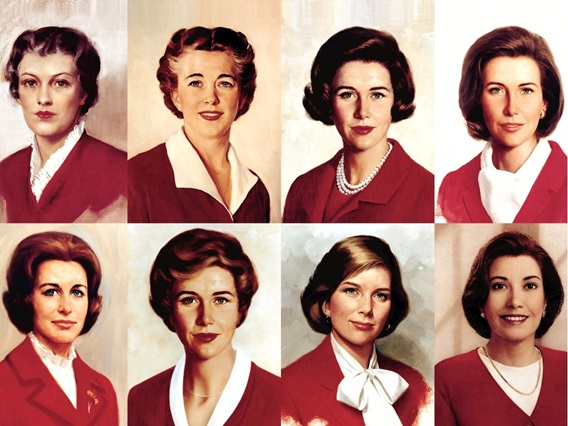
The persona was also given a visual identity. In 1936, the first official portrait of Betty Crocker was painted, depicting a dignified, friendly woman with a warm smile. Since then, the portrait has been updated eight times — most recently in 1996 — to keep pace with changing cultural ideals of womanhood. Each update was a media moment in itself, generating press coverage and consumer engagement. The 1996 portrait was notably created by morphing photographs of 75 real women from diverse backgrounds, signalling the brand’s effort to be more inclusive. It was a bold, public statement about representation, delivered long before “diversity in marketing” became an industry buzzword.

What this strategy demonstrates is the enduring power of anthropomorphism in brand building. By making the brand feel like a person — one with a voice, a face, a set of values, and a genuine desire to help — Betty Crocker built emotional loyalty that no coupon programme or product innovation alone could have achieved. Modern brands from Wendy’s to Duolingo have borrowed from this playbook, giving corporate entities distinct personalities that consumers interact with as they would a human being. Betty Crocker did it first, and did it best, at a time when the concept had no name.
We have an interesting case study related to this topic. Read here: Case Study | Branding Brief – Updating Betty Crocker
2. Community Building and Long-Running Loyalty Programmes
Long before loyalty schemes became standard practice in retail and FMCG marketing, Betty Crocker was running one of the most successful and beloved loyalty programmes in consumer goods history. The Betty Crocker Coupon Programme, launched in 1929, invited consumers to save “points” — initially in the form of coupons found on Gold Medal Flour bags — and redeem them for household items from a printed catalogue. It was called the Betty Crocker Catalogue, and for many American families, saving up those points and flipping through that catalogue was a cherished ritual.

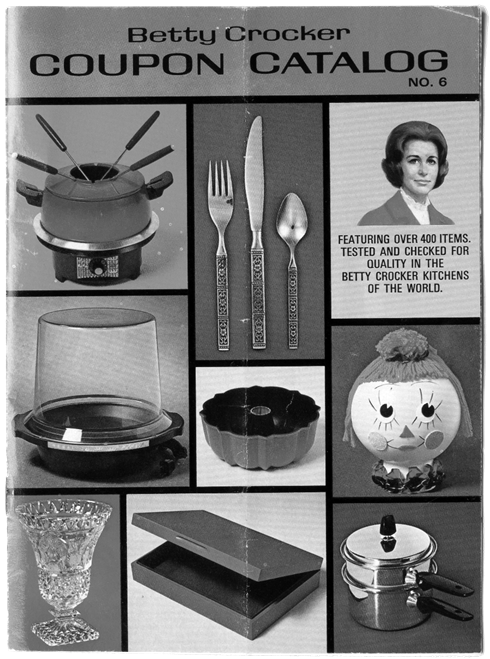
At its height, an estimated 90 percent of American households were participating in the Betty Crocker points programme. The catalogue itself became a cultural institution, featuring everything from kitchen gadgets to fine china. The programme ran for an extraordinary 77 years, finally being discontinued in 2006 — not because it had failed, but because the consumer landscape had shifted sufficiently that digital engagement had begun to outperform physical catalogues. The longevity of the programme is a testament to how well it understood the psychology of loyal consumers: small, consistent rewards create habitual purchasing and a sense of earned belonging.
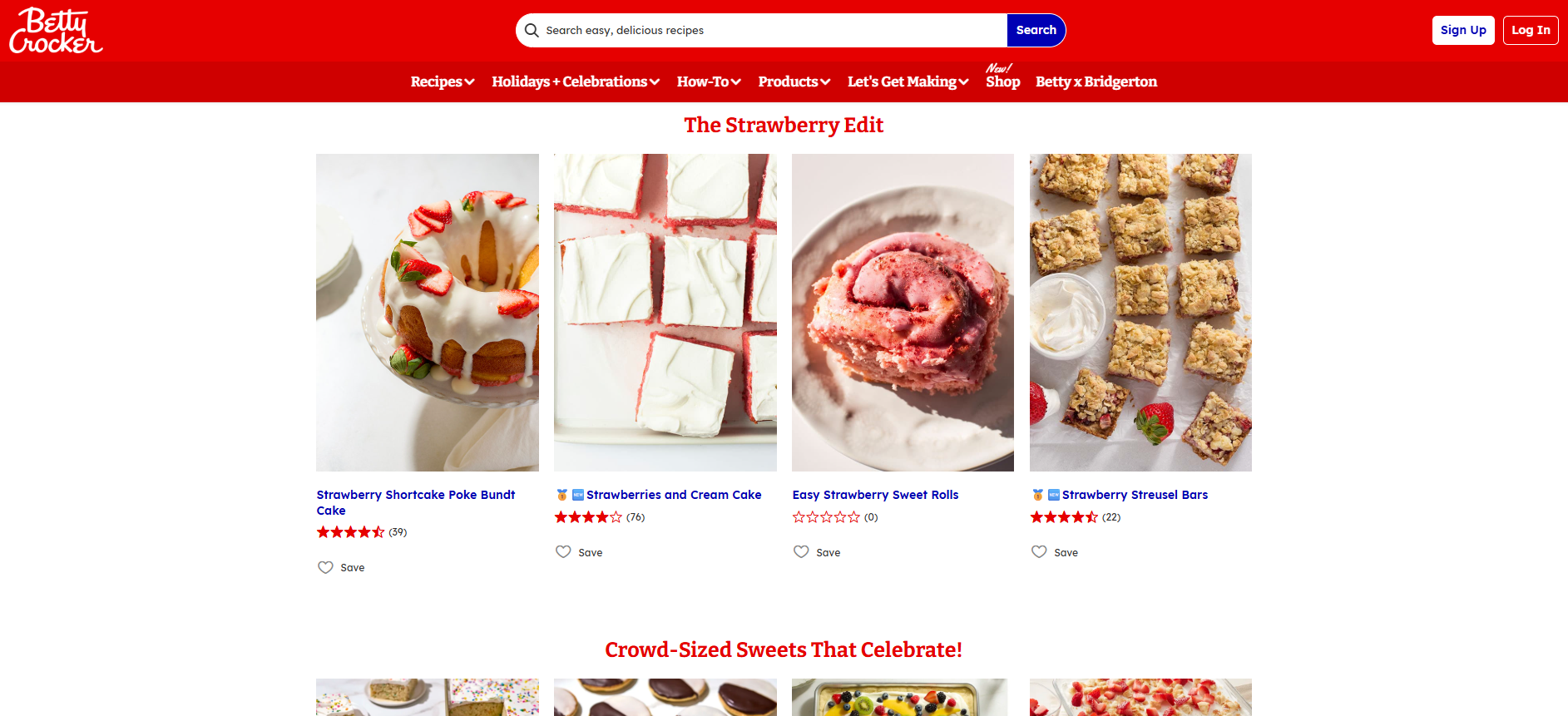
When the physical catalogue was retired, Betty Crocker pivoted intelligently to digital community building. The brand’s website, BettyCrocker.com, evolved into a recipe platform and content hub that draws tens of millions of visitors annually. The site features user ratings, personal recipe boxes, and curated seasonal collections — essentially a digital evolution of the intimacy the catalogue once fostered. The brand also built one of the early food brand communities online, where consumers could exchange recipes, ask questions, and share modifications. This pivot preserved the community spirit of the original programme while reaching a new generation of home cooks who lived on the internet.

More recently, Betty Crocker has extended community-building into social platforms. The brand’s Facebook page, which counts millions of followers, functions as a gathering place for baking enthusiasts, holiday bakers, and weeknight cooks. Comment sections on recipe videos regularly generate thousands of interactions, with users sharing their own tips and results. The fundamental insight — that food is social, and that a brand that facilitates connection around food will earn loyalty — has remained consistent from 1929 to today. The channel has changed; the strategy has not.
3. Content Marketing and the Recipe-First Approach
Decades before “content marketing” entered the lexicon of marketing professionals, Betty Crocker was practising it with remarkable sophistication. The brand understood early on that the most effective way to sell baking ingredients and mixes was not to advertise the product, but to provide genuine value to consumers in the form of trusted, tested recipes. If consumers used Betty Crocker’s recipes and achieved success in the kitchen, they would reach naturally for Betty Crocker products. The recipe was the advertisement.
The Betty Crocker Cookbook, first published in 1950, stands as perhaps the most successful piece of content marketing ever produced in the food industry. It has sold over 75 million copies, gone through more than a dozen editions, and is widely cited as the best-selling cookbook in the United States after the Bible. It was not simply a recipe book; it was a complete guide to the domestic kitchen, covering techniques, nutrition, entertaining, and cooking for different life stages. General Mills distributed it through a variety of channels, including direct mail and retail, but crucially it sold itself — because it was genuinely useful. The content earned trust, and trust sold products.

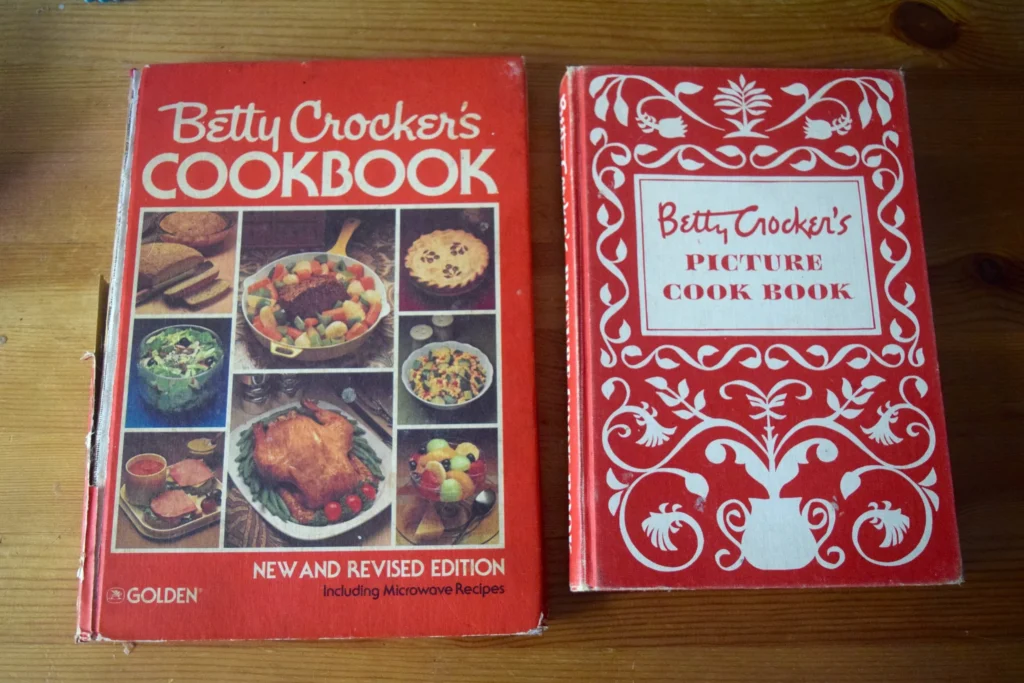
In the digital era, Betty Crocker translated this philosophy to the web with exceptional results. BettyCrocker.com is structured almost entirely around content — recipes are the primary draw, with product placements integrated naturally rather than pushed aggressively. The website is one of the highest-traffic food content destinations in the United States, competing directly with dedicated food media properties like Allrecipes and Food Network. Each recipe page is meticulously optimised for search, capturing consumers at the exact moment of intent — when they type “easy chocolate cake recipe” or “what to make with Bisquick” into Google. The brand’s content engine effectively turns search engines into a sales channel.
On YouTube and social media, Betty Crocker has adapted recipe content to short-form and visual formats. Recipe videos, seasonal how-to guides, and baking tutorials generate millions of views. The brand has also partnered with food influencers and creators to extend its recipe content into new communities, co-creating content that feels native to platforms like TikTok and Instagram rather than advertorial. The core principle — lead with value, let the product follow — has remained the brand’s north star across every content medium it has inhabited.
4. Emotional Marketing and Nostalgia
Few emotional territories are as potent in food marketing as nostalgia, and Betty Crocker has mined it masterfully over its hundred-year history. The brand occupies a unique position: for many Americans, Betty Crocker is not just a product line, it is a memory. It is the smell of a birthday cake made from a box, a holiday cookie exchange, a grandmother’s kitchen. This accumulated emotional equity is extraordinarily difficult to build from scratch — and equally difficult for competitors to replicate.
Betty Crocker has been deliberate about activating this nostalgia in its marketing, particularly during the holiday season. Its annual holiday baking campaigns, consistently centred on themes of family, togetherness, and tradition, are some of the most widely recognised seasonal marketing in the food industry. The creative direction across these campaigns tends to favour warm lighting, intergenerational family moments, and the imagery of finished baked goods being shared rather than consumed individually. The message is rarely about the product’s attributes; it is about what baking together means. This emotional reframing turns a box of cake mix into a vehicle for connection.
During the COVID-19 pandemic, Betty Crocker’s emotional positioning proved particularly prescient and commercially effective. As millions of people around the world turned to baking as a form of comfort and creative expression — the so-called “sourdough moment” — Betty Crocker was one of the primary beneficiaries. General Mills reported significant increases in baking mix sales, and Betty Crocker’s social channels saw surges in engagement as consumers sought out easy, reliable recipes for comfort foods. The brand amplified this by creating content explicitly themed around baking as self-care and family bonding — leaning into the emotional moment without exploiting it. It was a masterful reading of cultural mood.
The brand has also been careful to modernise its nostalgic framing without losing its warmth. Campaigns now reflect a more diverse set of family structures and cultural backgrounds, acknowledging that “home” and “tradition” mean different things to different people. The 2018 Betty Crocker campaign “Mix It Up” featured families from a range of cultural backgrounds preparing their own beloved recipes, positioning the brand’s products as the ingredient that adapts to every tradition rather than imposing a single one. It was a subtle but significant evolution — nostalgia made inclusive.
5. Product Innovation and the Psychology of the Consumer
One of the most celebrated stories in marketing history involves Betty Crocker cake mixes and the power of consumer psychology. When General Mills introduced instant cake mixes in the early 1950s — products where all a consumer had to do was add water — they expected an immediate sensation. Instead, sales were disappointing. Research commissioned by the company, with contributions from motivational psychologist Ernest Dichter, revealed the counterintuitive reason: the mixes were too easy. Housewives felt guilty about serving a cake that required almost no effort, fearing it did not reflect genuine care for their families.
General Mills’ response was to reformulate the mix to require the addition of a fresh egg. The change made the mix marginally more complicated, but it gave consumers a sense of ownership and creative participation in the baking process. Sales soared. This insight — that consumers want to feel that they have contributed something meaningful, even in a convenience product — became foundational to how Betty Crocker positioned its product lines for decades. It also anticipated by many years the academic work on the “IKEA effect,” which documents how people place greater value on things they have had a hand in creating.
Beyond this foundational insight, Betty Crocker has consistently used product innovation as a marketing tool, launching new lines that meet consumers where their lives are going. The introduction of gluten-free baking mixes in the 2010s was not merely a product extension; it was a signal to an underserved and passionately loyal consumer segment that Betty Crocker saw them. Similarly, the launch of organic and “simpler ingredients” product lines addressed the growing consumer demand for transparency in food manufacturing. Each innovation was accompanied by targeted marketing to the relevant consumer community, turning health-conscious and dietary-restricted consumers into advocates.


Most recently, Betty Crocker has experimented with products that push the brand beyond its baking heartland into snacking and meal preparation. Partnerships with other General Mills brands and co-branded products have introduced Betty Crocker to younger, more convenience-driven consumers. The brand’s willingness to innovate without abandoning its core identity — trusted, approachable, homemade-feel — is a key reason it has remained commercially vital across multiple generations of consumers. Innovation, in Betty Crocker’s case, has always been in service of emotional consistency.
6. Digital Transformation and Social Media Strategy
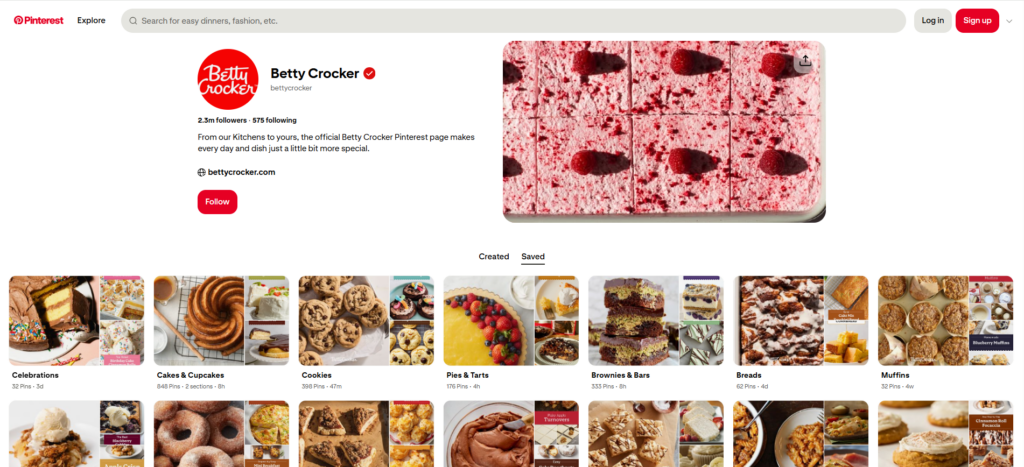
Betty Crocker’s navigation of the digital era is a case study in how heritage brands can reinvent themselves online without losing the qualities that made them beloved offline. While many legacy food brands have struggled to translate their equity into social media relevance, Betty Crocker has consistently ranked among the most-followed and most-engaged food brands across multiple platforms. In 2010, Betty Crocker was reported to be the second most-followed brand on Pinterest, trailing only Whole Foods — a remarkable achievement for a brand that sells cake mix rather than premium lifestyle products.
Pinterest proved to be a natural home for Betty Crocker. The platform’s visual, aspirational, and utility-driven character aligned perfectly with what the brand had always offered: beautiful food, practical recipes, and seasonal inspiration. Betty Crocker’s Pinterest strategy was built on volume, variety, and discoverability — creating boards organised by occasion, ingredient, dietary need, and season, ensuring that the brand appeared whenever a consumer went searching for cooking ideas. The brand essentially turned Pinterest into an always-on discovery engine, capturing consumers at the consideration stage of their meal planning process.

On Instagram, Betty Crocker invested heavily in food photography and short video content, adapting its aesthetic for a younger, more visually sophisticated audience. Collaborations with food bloggers, lifestyle influencers, and professional food photographers gave the brand’s feed a contemporary feel without feeling disconnected from its warmth and accessibility. The brand was also an early mover on Instagram Stories and Reels, using these formats for quick recipe demonstrations, behind-the-scenes baking content, and user-generated content reposts. This gave the brand’s social presence a human, participatory quality that was consistent with the persona Betty Crocker had always cultivated.
TikTok has presented both a challenge and an opportunity for Betty Crocker. The platform’s younger demographic and its bias towards spontaneous, lo-fi content is a departure from the polished recipe videos that dominate the brand’s YouTube channel. Betty Crocker’s response has been to partner with Gen Z food creators — including bakers who use Betty Crocker products in unexpected, creative, and occasionally irreverent ways — rather than attempting to control the narrative. This approach has generated organic reach that paid advertising rarely achieves, introducing the brand to consumers who might otherwise see it as their grandmother’s pantry staple rather than a legitimate kitchen companion.
7. Multicultural and Inclusive Marketing
One of the most significant shifts in Betty Crocker’s modern marketing posture has been its embrace of multicultural audiences. For much of its history, the brand’s advertising reflected a narrow demographic: white, middle-class, suburban American households. As the United States grew more diverse, and as multicultural consumers gained purchasing power that marketers could no longer afford to ignore, Betty Crocker adapted its approach with a sincerity that went beyond surface-level representation.
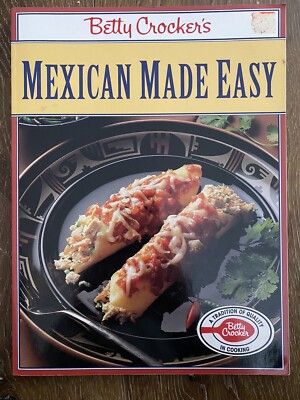
The brand’s most notable early effort in multicultural marketing was the publication of speciality cookbooks tailored to specific cultural communities. The Betty Crocker’s Mexican Made Easy cookbook and subsequent editions targeting other cultural cuisines acknowledged that American kitchens were not monolithic — and that a brand which helped people cook their food, not just white Anglo-American comfort food, would earn broader loyalty. These publications were backed by targeted media buys in Spanish-language outlets and community publications, ensuring they reached their intended audiences rather than simply existing as performative gestures.

General Mills also adapted Betty Crocker’s digital content strategy for multicultural audiences. The brand maintains Spanish-language content across its platforms, including dedicated recipe sections for Hispanic consumers on its website. Social media campaigns have featured bilingual content and partnered with Hispanic food creators and influencers, recognising that food culture and family traditions are deeply intertwined in Hispanic communities in ways that made authentic engagement essential. A campaign centred on quinceañera cakes and culturally significant baked goods garnered significant organic engagement in Spanish-speaking communities, demonstrating that cultural specificity outperforms generic inclusivity.
The brand’s 1996 portrait update — blending the faces of 75 women from diverse backgrounds to create the new image of Betty Crocker — remains one of the boldest and most discussed acts of inclusive branding in corporate history. While it generated some controversy at the time, it was ultimately embraced as an honest acknowledgement that Betty Crocker belonged to all American women, not just one. That spirit has informed subsequent marketing decisions: casting choices in television advertising, the diversity of families depicted in holiday campaigns, and the cultural range of recipes featured in flagship content all reflect a brand that understands its customer base has never been one-dimensional.
8. Cause Marketing and Social Responsibility
Betty Crocker’s relationship with cause marketing dates back to the Second World War, making it one of the earliest corporate practitioners of what we now recognise as brand purpose. When wartime rationing made traditional baking difficult, Betty Crocker did not go quiet — she adapted. The brand published recipe pamphlets specifically designed to help American housewives bake satisfying food under rationing restrictions, using less sugar, butter, and eggs. This was not merely a PR exercise; it was a genuine service to consumers facing real hardship, and it cemented Betty Crocker’s reputation as a brand that showed up for people when times were hard.
This foundational instinct — to be useful, not just commercial, in moments of national challenge — has recurred throughout the brand’s history. The brand has maintained ongoing partnerships with hunger-relief organisations, most notably through General Mills’ long-running commitment to No Kid Hungry, which seeks to end childhood hunger in the United States. Betty Crocker products have been integrated into fundraising campaigns where a portion of sales supports the cause, and the brand’s recipe content has included sections on affordable, nutritious cooking — a form of cause-aligned content that serves low-income consumers directly.
Environmental responsibility has become an increasingly prominent part of Betty Crocker’s social positioning in recent years, consistent with General Mills’ broader corporate sustainability commitments. Packaging reduction initiatives, commitments to sustainably sourced ingredients, and campaigns encouraging consumers to reduce food waste by using up pantry staples have all been communicated under the Betty Crocker banner. The brand has leaned into its role as a pantry staple to make the case that cooking at home — which Betty Crocker facilitates — is inherently more sustainable than restaurant dining or food delivery. This is a clever alignment of brand behaviour with an emerging consumer value.
What the cause marketing strategy reveals, ultimately, is that Betty Crocker has always understood its brand as being about more than baking. It is about domestic life, family wellbeing, and the dignity of home cooking. When that framing is applied to social causes — hunger, sustainability, cultural inclusion — the brand’s involvement feels natural rather than opportunistic. That coherence between brand identity and cause alignment is the hallmark of effective purpose-driven marketing, and it is something Betty Crocker has practised, in one form or another, for over eighty years.
Conclusion
Betty Crocker’s century-long marketing journey is a rare example of a brand that has managed to be both consistent and evolutionary — holding onto the emotional core that consumers love while continuously reinventing the way that core is expressed. From the invention of a fictional persona to a Pinterest-first digital strategy, from wartime recipe pamphlets to cause-aligned campaigns with national hunger charities, the brand has demonstrated that genuine consumer empathy — understanding what people need, feel, and aspire to in their kitchens and lives — is the most durable marketing advantage of all. In an age when brand trust is increasingly difficult to build and trivially easy to lose, the Betty Crocker story remains one of the most instructive in the history of modern marketing.
Also Read: The Legacy of Pillsbury: Exploring Flavors & Marketing Strategies
To read more content like this, subscribe to our newsletter
Go to the full page to view and submit the form.