



American Express, commonly known as Amex, is a multinational financial services company headquartered in New York City. Founded in 1850, it has evolved from an express and freight-forwarding business into one of the world’s best-known payments and financial-services brands.
The company began as an express mail business in Buffalo, New York. It expanded into financial services in the 19th century, including money orders in 1882 and Travelers Cheques in 1891, which became one of its best-known innovations.
American Express entered the card industry in 1958, when it launched its first charge card. Historically, charge cards generally required customers to pay their balance in full, although Amex today offers products with revolving and installment-payment features.
The iconic Green Card was introduced in 1969. American Express subsequently expanded its portfolio with Gold, Platinum and the invitation-only Centurion Card, which was launched in 1999.
American Express operates an integrated payments model in which it issues cards, operates its payment network and works directly with merchants and partners. This gives the company access to transaction data and allows it to build a closely integrated Membership model around cards, rewards, lending, travel and other services.
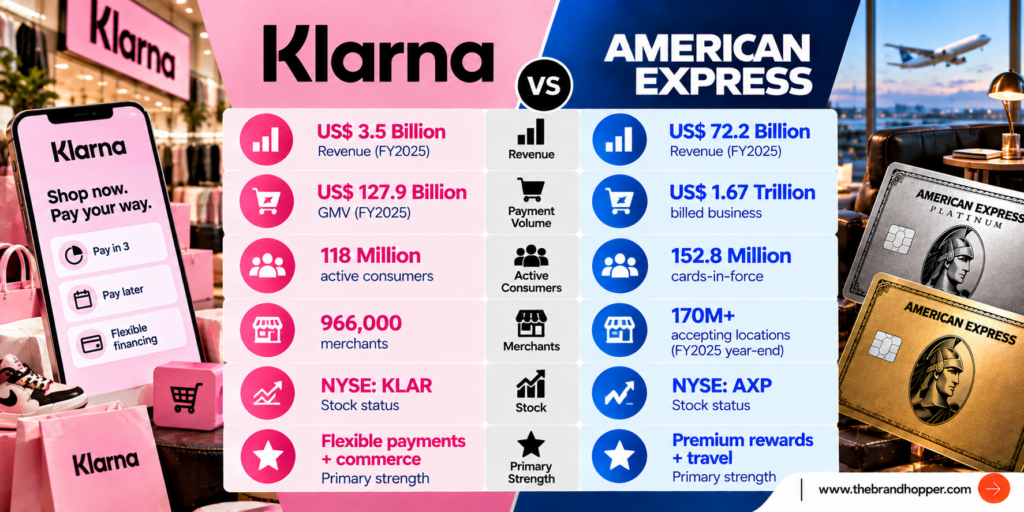
American Express has also been expanding its merchant acceptance. It had more than 170 million merchant locations accepting Amex at the end of 2025, and in September 2026 the company said acceptance had surpassed 190 million locations worldwide.
The company has a major presence in commercial payments, providing corporate cards, expense-management solutions, travel services and other products to businesses ranging from small companies to multinational corporations.
Innovation remains central to Amex’s strategy, with investments in digital payments, mobile experiences, fraud prevention, personalization, digital wallets and artificial intelligence.
American Express is also known for its customer-service model and Membership Rewards ecosystem. Its premium positioning is supported by travel benefits, merchant offers, concierge services and other Membership benefits.
For FY2025, American Express reported $72.2 billion in total revenues net of interest expense, up 10% year over year, with record net card fee revenue of approximately $10 billion and diluted EPS of $15.38.
The company’s latest reported quarter as of October 5, 2026 was Q2 2026. Revenue net of interest expense reached $19.637 billion, up 10%, while net income was $3.110 billion and billed business reached $455.8 billion. Amex raised its FY2026 revenue-growth guidance to 10%.
Top Competitors and Alternatives of American Express
American Express competes across several different markets rather than against one single type of company.
Its competitors include global payment networks such as Visa and Mastercard, large banks such as JPMorgan Chase and Bank of America, card issuers such as Capital One, and fintech companies such as PayPal, Affirm, Stripe and Klarna.
1. Visa
Website: Visa
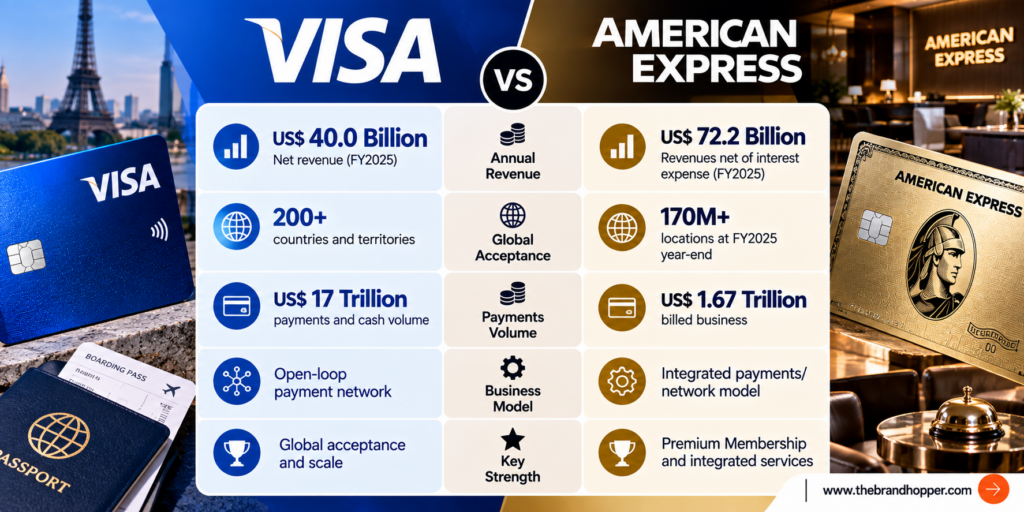
Visa is one of American Express’s most important competitors because of its enormous global acceptance network. Visa operates a four-party/open-loop model, with cards generally issued by banks and other financial institutions.
Visa’s network reaches more than 200 countries and territories, giving it a significantly broader acceptance footprint than Amex historically had.
For FY2025, Visa reported $40.0 billion in net revenue, up 11%. Its total payments and cash volume reached approximately $17 trillion, while Visa-branded transactions reached 329 billion during the year.
Visa’s scale, acceptance, tokenization capabilities, digital-wallet integrations and payment infrastructure make it one of the strongest alternatives to American Express.
2. Mastercard
Website: Mastercard
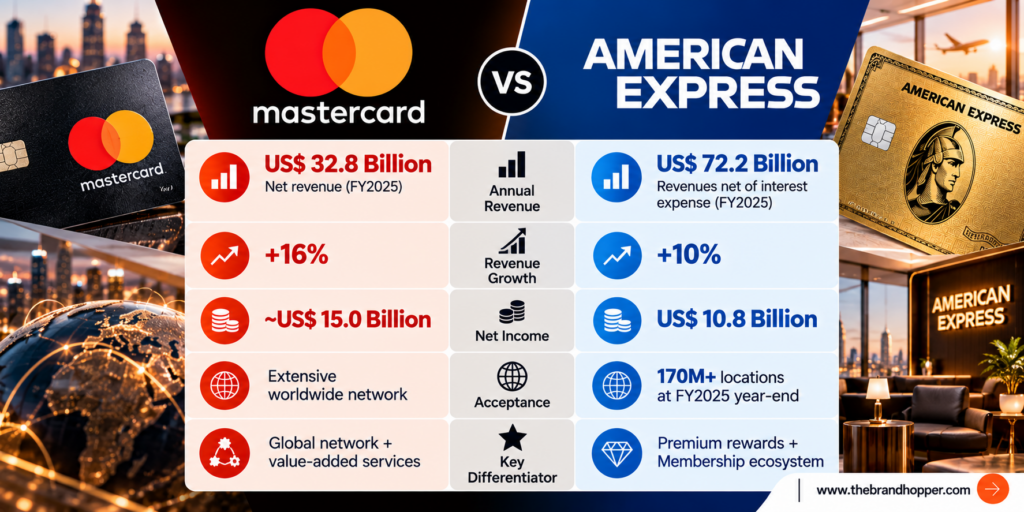
Mastercard competes with American Express through its enormous global acceptance network and relationships with banks, fintech companies and merchants.
Like Visa, Mastercard primarily operates an open-loop network, while banks and other financial institutions generally issue Mastercard-branded cards.
For FY2025, Mastercard reported $32.8 billion in net revenue, up 16%, and approximately $15.0 billion in GAAP net income, also up 16%.
Mastercard has also expanded beyond traditional card payments through value-added services, cybersecurity, fraud prevention, open banking and other payment technologies.
3. Discover / Capital One
Website: Discover
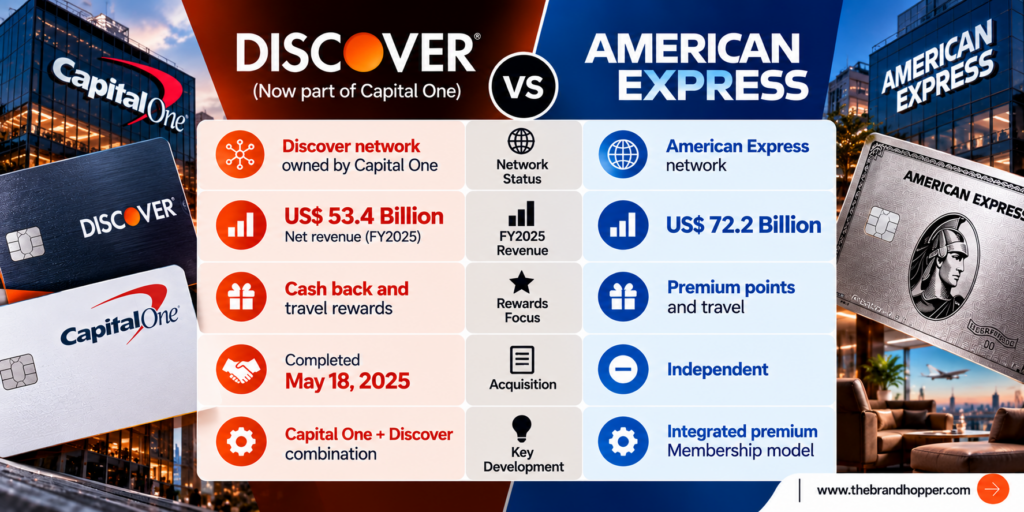
Discover has historically competed with American Express through cash-back cards, consumer lending and its proprietary payment network.
The competitive landscape changed substantially when Capital One completed its acquisition of Discover on May 18, 2025. The transaction was originally announced in February 2024 at an implied value of approximately $35.3 billion, but Capital One recorded $51.8 billion of purchase consideration at closing under acquisition accounting.
Discover’s card products and network continue to operate under the Discover brand, while Capital One now owns the Discover network, PULSE debit network and related infrastructure.
Capital One reported $53.4 billion in FY2025 total net revenue and $2.5 billion in net income. The results include Discover’s operations from the May 18 closing date through the end of 2025.
Discover remains relevant to Amex because the combined Capital One-Discover organization has increased scale across consumer lending, cards and payments.
4. Chase (JPMorgan Chase)
Website: Chase
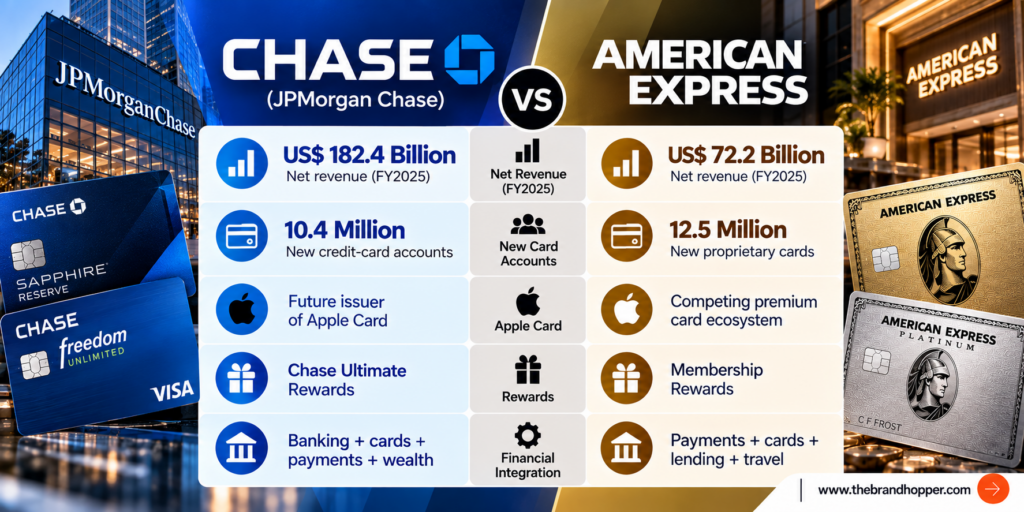
JPMorgan Chase competes with American Express through a combination of credit cards, banking, payments, travel rewards and wealth-management services.
Its Chase Sapphire Reserve and Sapphire Preferred cards compete directly with Amex’s premium travel products, while Chase Ultimate Rewards is one of the industry’s major transferable-points ecosystems.
JPMorgan Chase reported $182.4 billion in 2025 net revenue, while its Consumer & Community Banking business continued to add customers at a significant rate. The company added 10.4 million new credit-card accounts during 2025.
Chase is also becoming the future issuer of Apple Card. Apple and JPMorgan Chase announced in January 2026 that Chase would become the new issuer, with the transition expected to take approximately 24 months and subject to regulatory approvals.
5. Citibank (Citigroup)
Website: Citigroup
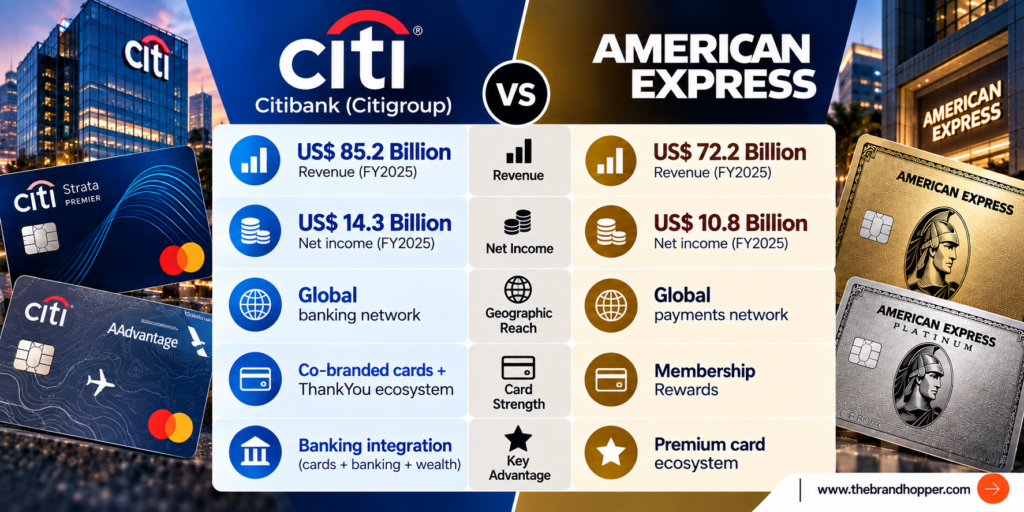
Citigroup competes with American Express through consumer credit cards, banking services and major co-branded relationships.
Its card portfolio includes products such as the Citi Strata Premier, Citi Double Cash and co-branded cards connected to major travel and entertainment brands.
Citigroup reported $85.225 billion in 2025 revenues, net of interest expense, and $14.306 billion in net income attributable to Citigroup.
Citi’s global banking footprint also gives it an advantage for customers looking to combine credit cards with deposits, wealth management and other banking products.
6. Capital One
Website: Capital One
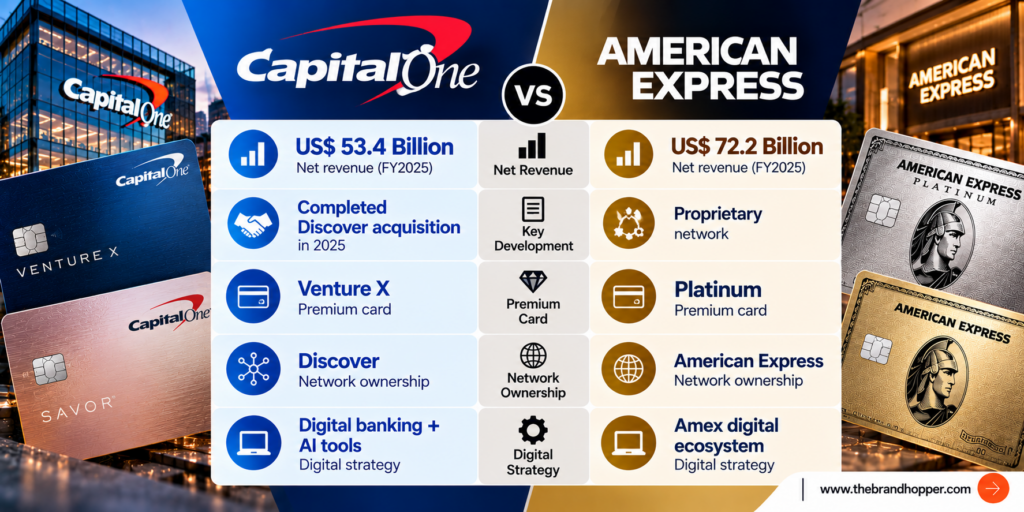
Capital One competes with American Express through consumer credit cards, travel rewards, cash-back products and banking services.
The Venture X Rewards card has become a significant competitor to premium products such as the Amex Platinum and Chase Sapphire Reserve, particularly through its combination of travel credits, lounge access and transferable rewards.
Capital One reported $53.4 billion in FY2025 total net revenue, up 37%, and $2.5 billion in net income. The results were heavily affected by the acquisition and integration of Discover.
Capital One now owns the Discover payment network, giving the company a more vertically integrated payments platform and making the combined organization a more significant competitor to the major card networks.
7. Bank of America
Website: Bank of America
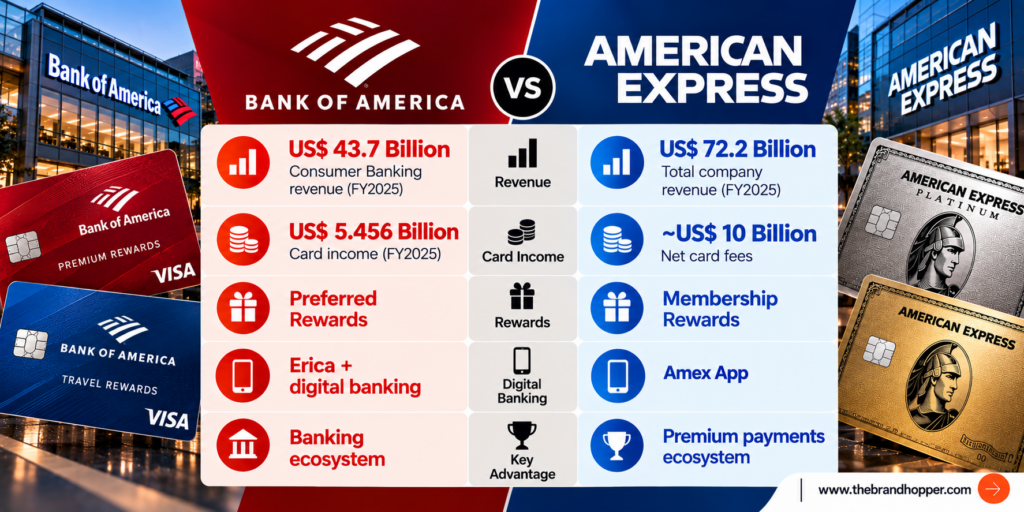
Bank of America competes with American Express through consumer credit cards, business cards, banking services and its Preferred Rewards ecosystem.
The bank’s consumer card portfolio includes products such as the Customized Cash Rewards and Travel Rewards cards.
Bank of America’s Consumer Banking segment generated $43.673 billion in 2025 revenue, while Consumer Banking net income was $12.245 billion. Card income was $5.456 billion.
Its ability to connect cards with deposits, investments, mortgages and Merrill wealth-management services is a major competitive advantage.
8. Wells Fargo
Website: Wells Fargo
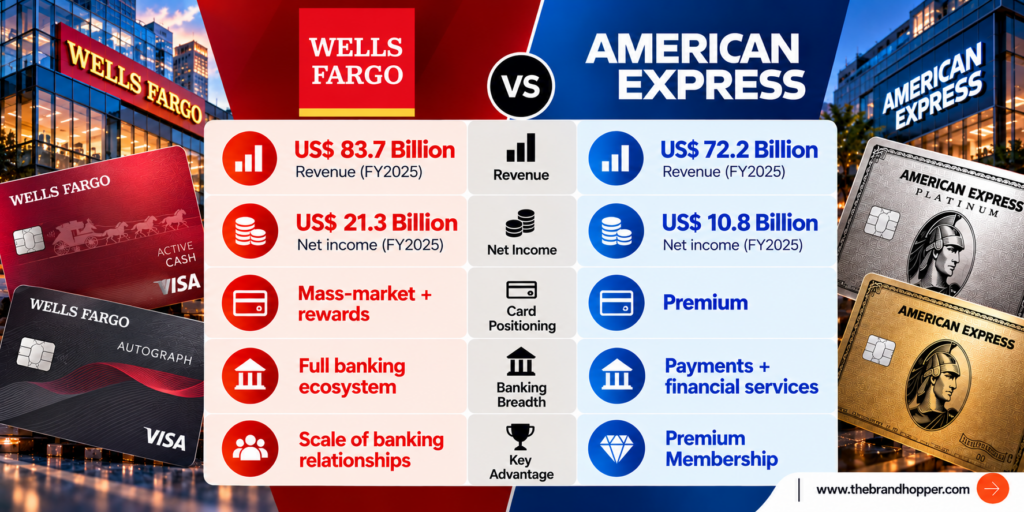
Wells Fargo competes with American Express through consumer credit cards, commercial cards and its broader banking ecosystem.
Its card portfolio includes products such as the Active Cash and Autograph cards, which target everyday spending and travel-oriented customers.
Wells Fargo reported $83.7 billion in 2025 revenue and $21.3 billion in net income. The previous $123.5 billion revenue figure was incorrect.
Its combination of cards, deposits, mortgages, wealth management and investment services allows Wells Fargo to compete through a broader financial relationship rather than through cards alone.
9. PayPal
Website: PayPal
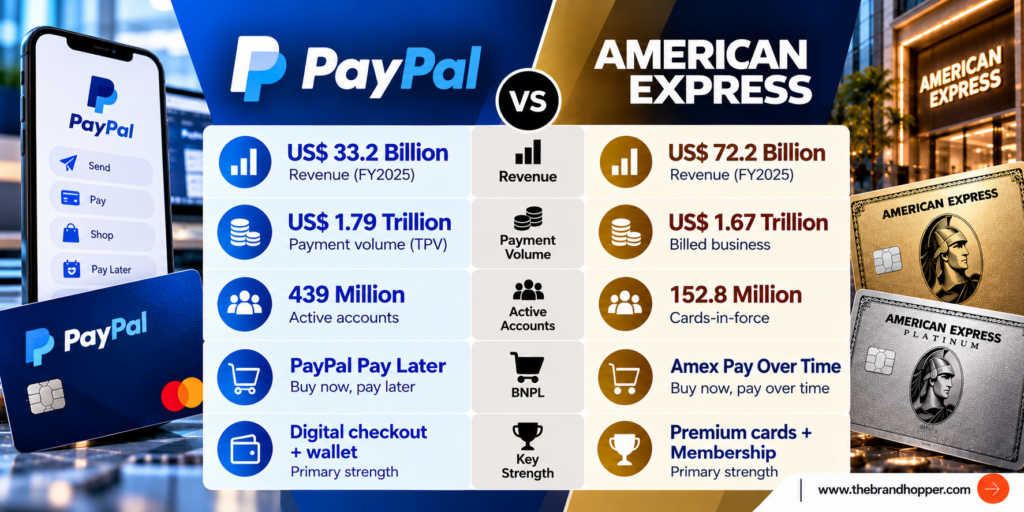
PayPal competes with American Express primarily in digital payments, online checkout and consumer financial services.
Its platform allows consumers to connect bank accounts and cards while giving merchants another way to accept payments online and in-store.
PayPal reported $33.2 billion in FY2025 net revenue, up 4%. Total payment volume reached approximately $1.79 trillion, up 7%, while PayPal ended the year with 439 million active accounts.
Venmo, PayPal’s digital-wallet ecosystem, and its Buy Now Pay Later products also give PayPal exposure to spending occasions that traditionally relied on cards.
10. Apple Card
Website: Apple Card
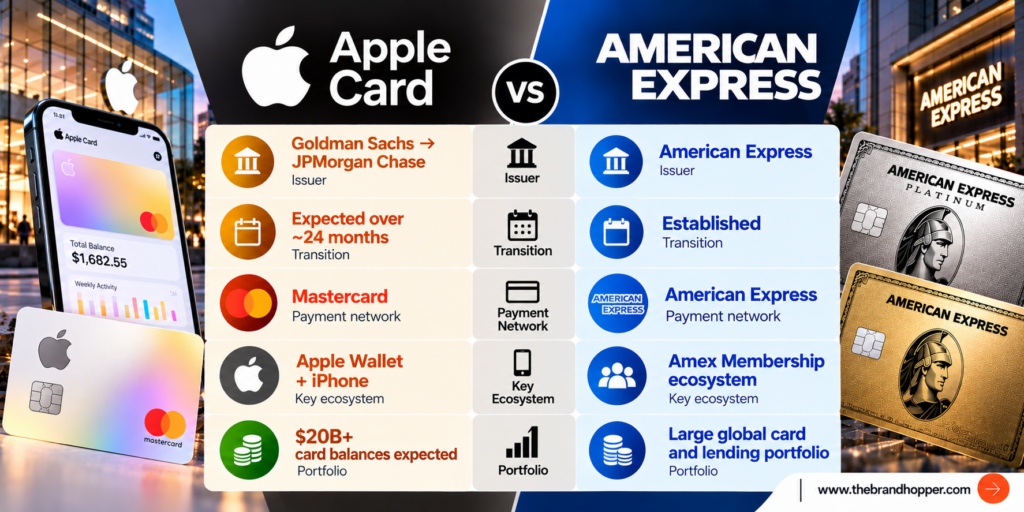
Apple Card competes with premium and digital-first card products through its integration with the Apple Wallet and iPhone ecosystem.
Launched in 2019 with Goldman Sachs as issuer and Mastercard as the payment network, Apple Card emphasizes Daily Cash, spending insights and tight integration with Apple’s devices.
In January 2026, Apple and JPMorgan Chase announced that Chase would become the future issuer of Apple Card. The transition is expected to take approximately 24 months, so Goldman Sachs remains involved during the transition period. Mastercard will remain the payment network.
The portfolio is expected to bring more than $20 billion of card balances onto Chase’s platform. JPMorgan also recognized a $2.2 billion provision for credit losses in Q4 2025 related to the forward purchase commitment.
11. UnionPay International
Website: UnionPay International
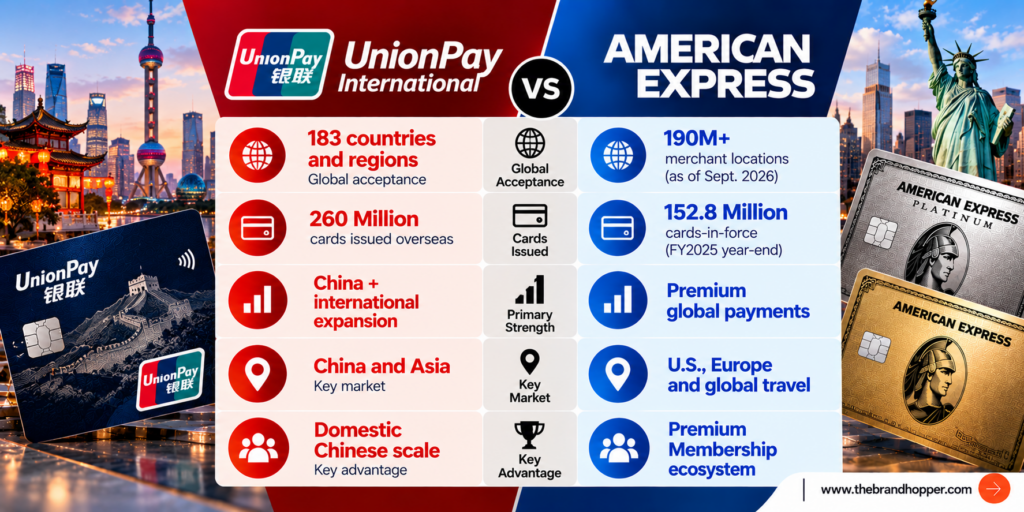
UnionPay is one of the world’s largest payment networks and is particularly dominant in the Chinese market.
Its international network has expanded considerably. UnionPay currently says its cards can be used across 183 countries and regions, while approximately 260 million UnionPay cards have been issued outside mainland China.
UnionPay is particularly relevant to American Express in international travel, especially among Chinese consumers and travelers.
Some older industry sources have quoted much larger global card-issuance figures, but because those figures can represent cumulative cards issued rather than active cards in circulation, they should not be presented as a current active-card figure.
12. Barclays
Website: Barclays
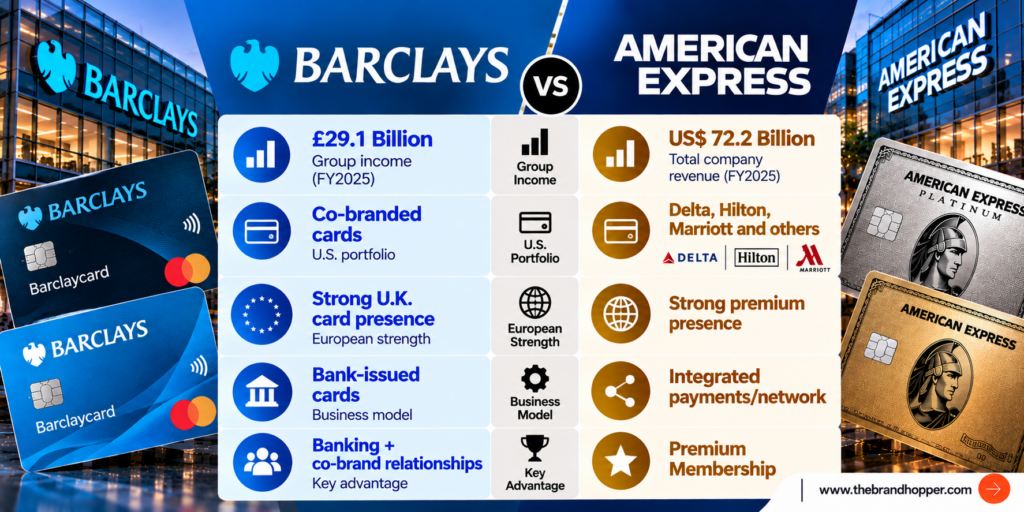
Barclays competes with American Express through its Barclaycard business in the U.K. and its U.S. consumer and co-branded card operations.
Its U.S. business includes co-branded relationships across areas such as airlines, travel and entertainment.
Barclays reported £29.1 billion of Group income in FY2025, up 9% year over year. Its U.S. Consumer Bank income increased 11%, helped by business growth and the acquisition of the General Motors co-branded card portfolio.
Barclays therefore competes with Amex particularly strongly in the U.K., European consumer-card market and U.S. co-branded-card segment.
13. U.S. Bancorp (U.S. Bank)
Website: U.S. Bank
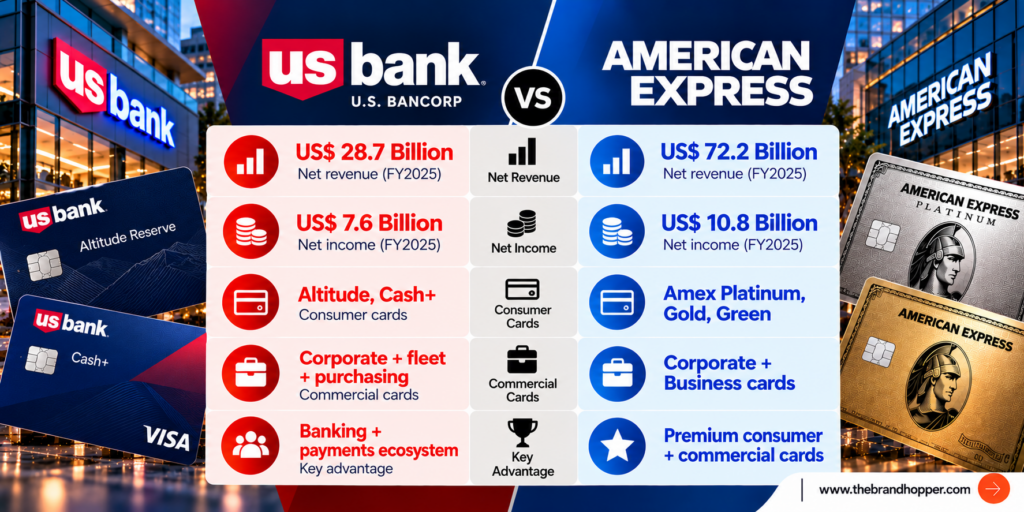
U.S. Bancorp competes with American Express across consumer cards, commercial cards, payments and banking services.
Its portfolio includes products such as the U.S. Bank Altitude Reserve and Cash+ cards, alongside commercial and corporate card solutions.
U.S. Bancorp reported $28.656 billion in FY2025 total net revenue and $7.570 billion in net income attributable to U.S. Bancorp.
Its payment-services business, commercial-card relationships and Elavon merchant-acquiring business provide additional areas of competition with Amex.
14. Synchrony Financial
Website: Synchrony
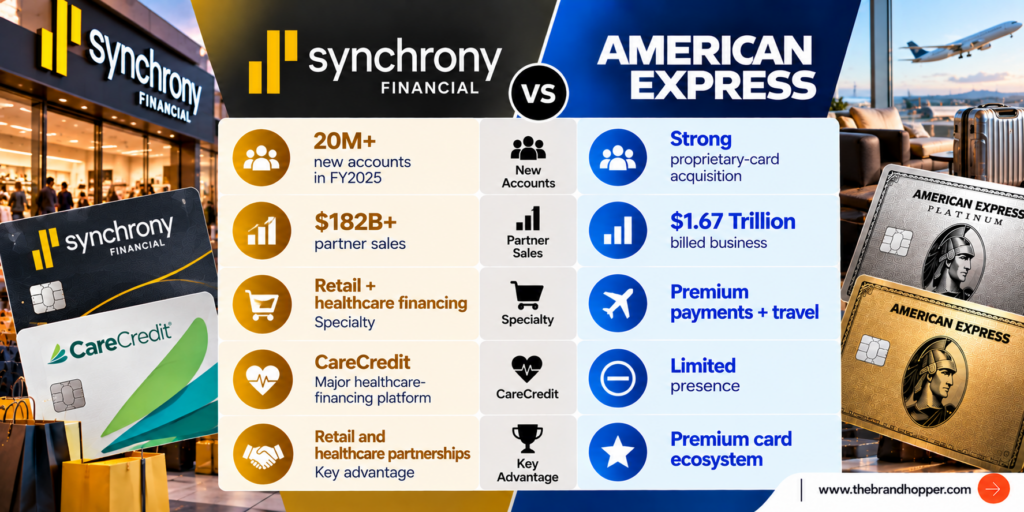
Synchrony Financial is a major U.S. provider of private-label and co-branded credit cards.
Its business is concentrated in retail, healthcare and specialty financing rather than the premium travel-card segment where American Express is strongest.
Synchrony added more than 20 million new accounts in 2025, engaged nearly 70 million existing customers and generated more than $182 billion in sales for its partners. Full-year net earnings were $3.6 billion.
Its CareCredit business is particularly important because it provides healthcare financing, a category where American Express has a much smaller presence.
15. Affirm
Website: Affirm
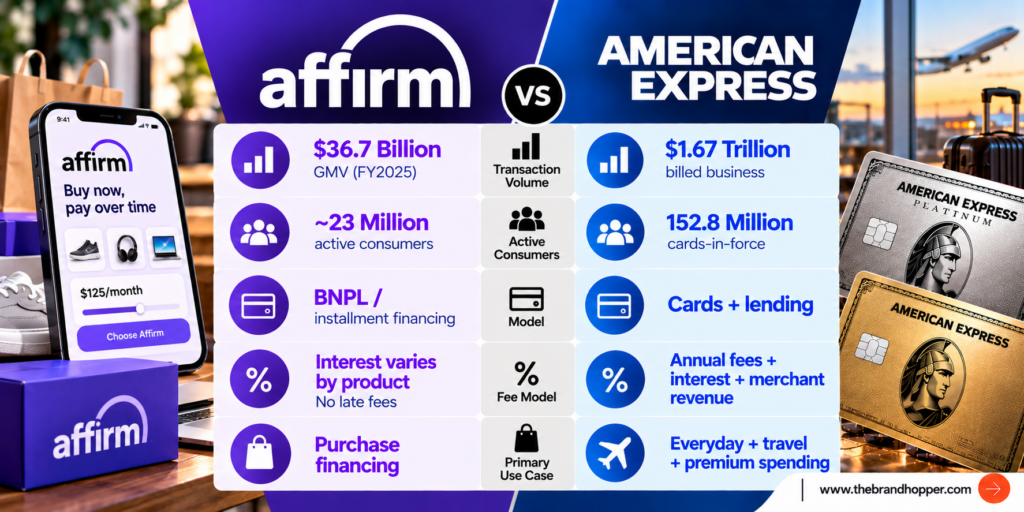
Affirm competes with American Express through Buy Now Pay Later and installment financing.
Instead of relying primarily on traditional revolving credit, Affirm allows consumers to finance individual purchases through installment products.
For FY2025, Affirm reported $36.7 billion in GMV and approximately 23 million active consumers. The company emphasizes that it does not charge late fees, although financing can carry interest depending on the product and consumer.
Affirm therefore competes with Amex most directly at the point of purchase, particularly for larger retail transactions.
16. Stripe
Website: Stripe
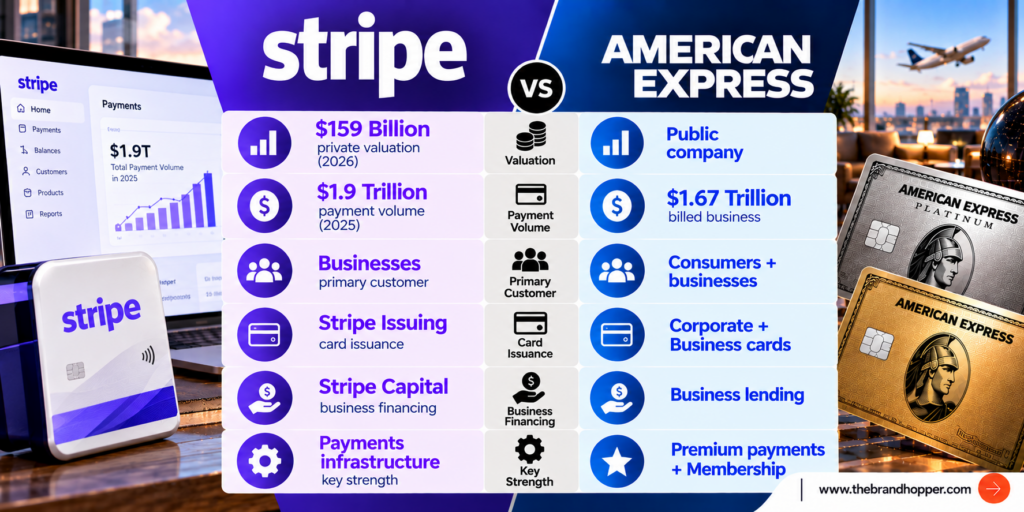
Stripe competes with American Express primarily in business payments and financial infrastructure, rather than as a direct consumer-card substitute.
Its platform allows businesses to accept payments, manage subscriptions, issue cards, provide financing and embed financial services into their own products.
In 2025, businesses running on Stripe generated approximately $1.9 trillion in total payment volume, up 34% from 2024. Stripe also announced a tender offer in February 2026 that valued the company at $159 billion.
Stripe does not publicly disclose a comparable annual revenue figure, so estimates such as “$5 billion revenue” should not be presented as an official company figure.
Stripe Issuing, Stripe Capital and other financial products create competitive overlap with American Express’s commercial-card and business-financial-services businesses.
17. Klarna
Website: Klarna
Klarna is a Swedish fintech and payments company that competes with traditional credit cards through BNPL, flexible payments and digital commerce.
Klarna offers installment and deferred-payment products and has expanded beyond BNPL into banking, cards and broader commerce services.
Klarna completed its initial public offering in September 2025, with its shares beginning to trade on the New York Stock Exchange on September 10 under the ticker KLAR.
For FY2025, Klarna reported $3.5 billion in revenue, $127.9 billion in GMV, 118 million active consumers and 966,000 merchants.
Klarna therefore represents a significant structural alternative to traditional card spending, particularly in online retail and younger consumer segments.
Competitor Summary: American Express vs Key Rivals
The table below provides a high-level comparison of American Express with its major competitors across payment networks, banks, card issuers and fintech companies.
The revenue figures should not be interpreted as directly comparable accounting measures, because payment networks, banks, card issuers and fintech companies report different types of revenue.
| Competitor | Headquarters | Primary Strength | Latest Full-Year Metric |
|---|---|---|---|
| Visa | San Francisco, CA | Global acceptance; $17T payments/cash volume | $40.0B net revenue |
| Mastercard | Purchase, NY | Payments + value-added services | $32.8B net revenue |
| Discover / Capital One | McLean, VA | Consumer cards + Discover network | $53.4B Capital One net revenue |
| Chase (JPMorgan) | New York, NY | Banking + Ultimate Rewards + cards | $182.4B net revenue |
| Citigroup | New York, NY | Global banking + co-branded cards | $85.2B revenue, net of interest expense |
| Capital One | McLean, VA | Venture X + Discover network | $53.4B net revenue |
| Bank of America | Charlotte, NC | Preferred Rewards + banking ecosystem | $43.7B Consumer Banking revenue |
| Wells Fargo | San Francisco, CA | Banking + consumer cards | $83.7B revenue |
| PayPal | San Jose, CA | Digital payments + Venmo + BNPL | $33.2B net revenue |
| Apple Card | Cupertino, CA | Apple Wallet + Daily Cash | $20B+ card balances expected to transition to Chase |
| UnionPay | Shanghai, China | Chinese market + global network | 183 countries/regions |
| Barclays | London, UK | Barclaycard + co-branded cards | £29.1B Group income |
| U.S. Bancorp | Minneapolis, MN | Commercial cards + payments | $28.7B net revenue |
| Synchrony Financial | Stamford, CT | Private-label + healthcare cards | $3.6B net earnings |
| Affirm | San Francisco, CA | BNPL + installment financing | $36.7B GMV |
| Stripe | San Francisco, CA | Business payments infrastructure | $1.9T payment volume |
| Klarna | Stockholm, Sweden | BNPL + digital commerce | $3.5B revenue |
| American Express | New York, NY | Premium cards + Membership | $72.2B revenues net of interest expense |
Conclusion
American Express has evolved from an express company founded in 1850 into one of the world’s largest premium payments and financial-services brands.
Its FY2025 performance was strong, with $72.2 billion in revenues net of interest expense, approximately $10 billion in net card fee revenue, and $15.38 diluted EPS.
The momentum continued into 2026. In Q2 2026, Amex generated $19.6 billion in revenue net of interest expense, up 10%, while billed business increased 9% to $455.8 billion.
The competitive landscape, however, is becoming more complex.
Visa and Mastercard continue to dominate global payment-network scale, while JPMorgan Chase, Capital One, Citi, Bank of America and Wells Fargo compete through banking relationships and large card portfolios.
The completed Capital One-Discover combination has also created a more significant integrated card and payments competitor.
Meanwhile, PayPal, Stripe, Affirm and Klarna represent a different type of competition by changing how consumers and businesses make, receive and finance payments.
The future issuer transition of Apple Card to JPMorgan Chase could further strengthen competition in the premium and digitally integrated card market.
Despite this competition, American Express retains several distinctive advantages: its closed-loop/integrated payments model, premium customer base, Membership Rewards ecosystem, merchant relationships, travel proposition and commercial-payments franchise.
The company’s continued expansion of merchant acceptance is also reducing one of its historical disadvantages. By September 2026, Amex said its cards were accepted at more than 190 million merchant locations worldwide.
For consumers and businesses, the choice ultimately depends on the proposition they value most: Visa and Mastercard for network ubiquity, banks such as Chase and Capital One for integrated financial ecosystems, fintechs such as PayPal and Stripe for digital payments, BNPL providers such as Affirm and Klarna for flexible financing, or American Express for premium Membership, rewards, travel and service.
FAQs
Q1. Who is American Express’s biggest competitor?
A: Visa is Amex’s biggest competitor by global payment-network scale. Visa processed about $17 trillion in payments and cash volume in FY2025, compared with Amex’s roughly $1.67 trillion in billed business.
In the premium credit-card segment, however, JPMorgan Chase is a more direct competitor through products such as Sapphire Reserve and Sapphire Preferred.
Q2. Why is American Express accepted at fewer merchants than Visa or Mastercard?
A: Historically, Amex acceptance was lower partly because merchants generally paid higher acceptance costs and Amex had a smaller network than Visa and Mastercard.
That gap has narrowed significantly. American Express says its cards are now accepted at more than 190 million merchant locations worldwide, while U.S. acceptance has reached 99% of locations that accept credit cards.
Q3. What happened to Discover Financial — is it still a competitor?
A: Discover Financial Services was acquired by Capital One on May 18, 2025. The $35.3 billion figure was the originally announced transaction value; Capital One subsequently completed the acquisition and integrated Discover into its operations.
The Discover brand and network continue to exist under Capital One, making the combined company a more significant competitor in cards and payments.
Q4. How does American Express make money compared with Visa and Mastercard?
A: American Express generates revenue primarily from merchant discount revenue, card fees, net interest income and other payment-related businesses. Its FY2025 net card fee revenue reached a record $10 billion, while total revenues net of interest expense were about $72 billion.
Visa and Mastercard primarily operate payment networks and generally do not carry the same consumer lending exposure as Amex. Their revenue comes largely from network, data-processing and value-added services.
Q5. What are the best alternatives to American Express for travel rewards?
A: The strongest alternatives include Chase Sapphire Reserve/Preferred, Capital One Venture X and Citi Strata Premier.
These cards compete with Amex through transferable rewards, travel credits, airport-lounge access and travel protections, while Visa and Mastercard acceptance can provide broader merchant coverage.
Q6. How does American Express revenue compare with competitors?
A: American Express generated approximately $72 billion in FY2025 revenues net of interest expense, ahead of Visa’s $40 billion net revenue and Mastercard’s $32.8 billion net revenue.
However, the figures are not directly comparable because Visa and Mastercard are payment networks, while Amex combines payments, card issuing, lending, card fees and other financial services.
Q7. Is Buy Now Pay Later (BNPL) a threat to American Express?
Yes, BNPL is a meaningful competitive pressure, particularly for online retail and larger purchases.
Affirm had approximately 28 million active consumers and more than $50 billion in LTM GMV as of June 30, 2026, while Klarna reported 118 million active consumers and $127.9 billion of FY2025 GMV.
Amex competes with installment products such as Plan It and Pay Over Time, giving Card Members ways to spread eligible purchases over time.
Q8. What makes American Express different from other credit-card companies?
A: Amex combines a payment network, card issuing, lending, premium rewards and Membership services within one ecosystem.
Its major differentiators include Membership Rewards, premium cards, airport-lounge benefits, travel services, merchant offers and strong customer service. Membership Rewards currently lists 20 transfer partners — 16 airlines and 4 hotel programs on the U.S. transfer portal.
The model is also increasingly supported by Amex’s expanding merchant network, which surpassed 190 million accepting locations globally in September 2026.
Also Read: Marketing Strategy and Marketing Mix of American Express
To read more content like this, subscribe to our newsletter
Go to the full page to view and submit the form.