


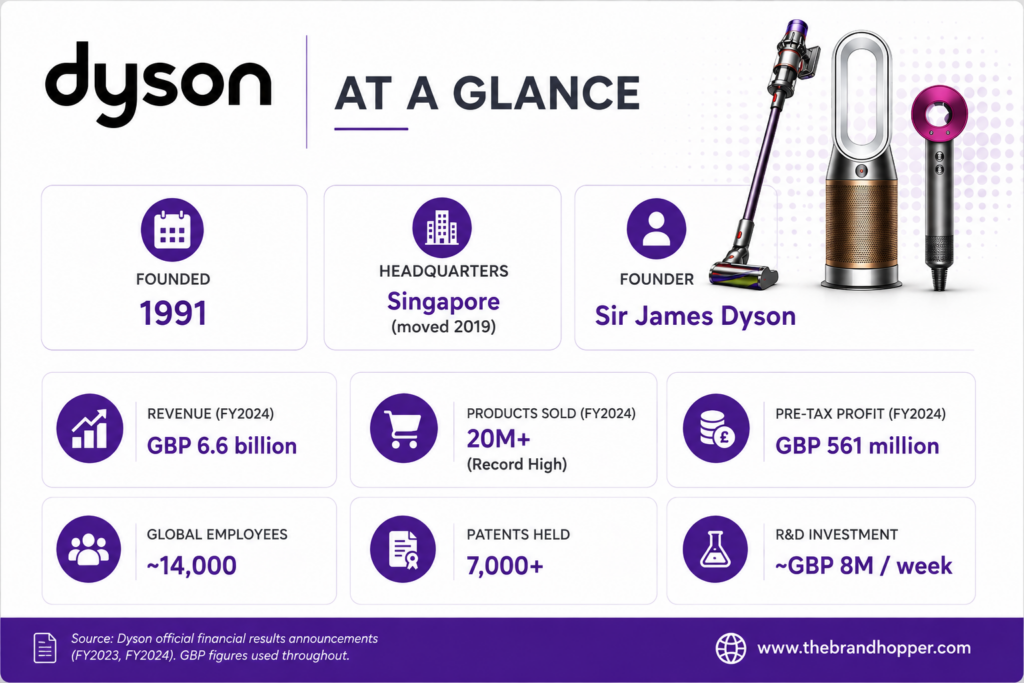
Dyson is one of the world’s most recognisable technology and home appliance brands — but its story is less about luck and more about obsessive engineering. Founded by Sir James Dyson in 1991 after nearly five years of iteration across 5,127 prototypes, Dyson has grown from a single-product British startup into a £6.6 billion global empire spanning vacuum cleaners, hair care, air purification, lighting, and audio.
Today, Dyson sells more than 20 million products annually across 85+ countries, invests approximately £8 million every week in research and development, and holds over 7,000 patents. Yet the company faces new pressures: declining revenues in FY2024 (despite record unit volumes), significant job cuts, and intense competition from rivals including SharkNinja and Xiaomi. This comprehensive guide examines Dyson’s origins, its marketing strategies, product portfolio, financial performance, controversies, and what the future holds for one of Britain’s most storied engineering companies.

The Origin Story of Dyson: 5,127 Prototypes and a Revolutionary Idea
James Dyson’s journey to creating the world’s first commercially successful bagless vacuum cleaner is one of the most compelling founding stories in modern business. It begins not with a eureka moment, but with frustration — and relentless problem-solving that lasted nearly five years.
1. From Sea Trucks to the Ballbarrow (1970–1977)
Before Dyson became a household name, James Dyson was an industrial designer with a talent for rethinking everyday objects. After graduating from the Royal College of Art (RCA) in London in 1970, he worked with engineer Jeremy Fry to develop the Sea Truck — a high-speed flat-bottomed boat used for military and commercial applications.
In 1974, he designed the Ballbarrow, a wheelbarrow that replaced the traditional wheel with a large plastic ball, solving the problem of conventional wheels sinking into soft or muddy ground. The Ballbarrow won the Building Design Innovation Award in 1977 and sold tens of thousands of units. It was Dyson’s first lesson in a principle that would define his career: redesign the core mechanism, not just the aesthetics.
2. The Cyclone Vacuum Concept (1978–1993)
In 1978, while vacuuming his home in Bath with a Hoover Junior, Dyson noticed the suction fading as the bag filled with dust. The product was fundamentally flawed: the very thing it collected reduced its ability to collect more. Frustrated, he visited a local sawmill and observed a centrifugal cyclone separator — a large industrial cone that spun sawdust out of the air without a bag or filter. He wondered: could the same principle work in a domestic vacuum cleaner?
He returned to his workshed in Bathford, Somerset, and began building prototypes. Prototype one was terrible. So were prototypes two through 5,127. Over four years and nine months, Dyson rebuilt his design thousands of times — refining the cyclone angle, testing materials, reworking the motor, and iterating on ergonomics. He remortgaged his house twice to fund the work and sold his Ballbarrow business to cover ongoing costs. His wife Deirdre, an art teacher, supported the family financially throughout.
By 1983, Dyson had a working prototype — the G-Force — which he licensed to a Japanese manufacturer, Apex Inc., when British and American manufacturers showed no interest. It sold in Japan for the equivalent of approximately GBP 2,000, becoming a design icon and status symbol. With the royalties, Dyson founded Dyson Appliances Ltd in 1991 and launched the DC01 — the world’s first bagless dual-cyclone vacuum cleaner — in the UK in 1993, priced at GBP 199.99.
The DC01 outsold every rival vacuum in the UK within 18 months. By 1995, it was the best-selling vacuum cleaner in Britain. Not a single pound of conventional advertising achieved this — the product simply performed better, and word spread accordingly. That principle has guided Dyson ever since.
James Dyson: The Visionary Founder

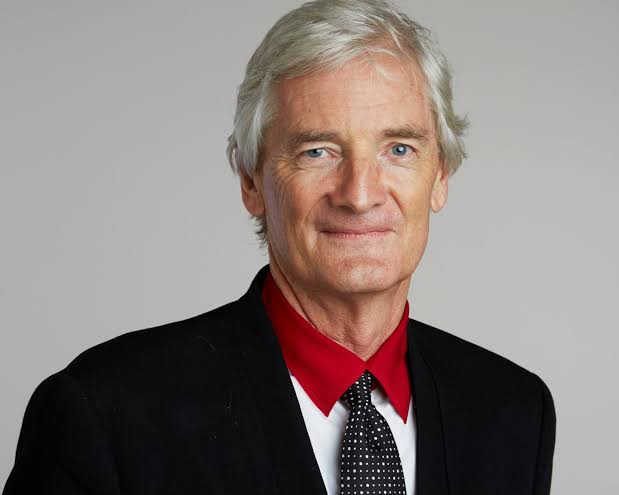
Sir James Dyson was born on 2 May 1947 in Cromer, Norfolk, England. He attended Gresham’s School before studying furniture and interior design at the Byam Shaw School of Art, then engineering design at the Royal College of Art (1966–1970). His educational background straddled the arts and engineering — a combination that would define every product he created.
Dyson’s philosophy has always been that failure is the path to mastery. He is widely quoted on the value of iteration: “I made 5,127 prototypes of my vacuum before I got it right. There were 5,126 failures. But I learned from each one.” This attitude — treat every failure as data, not defeat — became the DNA of Dyson’s R&D culture and remains one of its most powerful marketing narratives.
James Dyson was appointed a Commander of the Order of the British Empire (CBE) in 1995 and was awarded a knighthood in 2007 (Knight Bachelor) for services to British business. He has consistently featured among the wealthiest individuals in the UK, with an estimated net worth exceeding GBP 16 billion according to the Sunday Times Rich List. He remains directly involved in Dyson’s product development, describing himself as a “designer-engineer” rather than a businessman.
Beyond the company, Dyson founded the James Dyson Foundation, an educational charity promoting engineering and design among young people globally. The foundation funds engineering education programmes and school outreach across the UK and internationally, and administers the annual James Dyson Award.
Dyson’s Product Portfolio: Engineering Across Six Categories
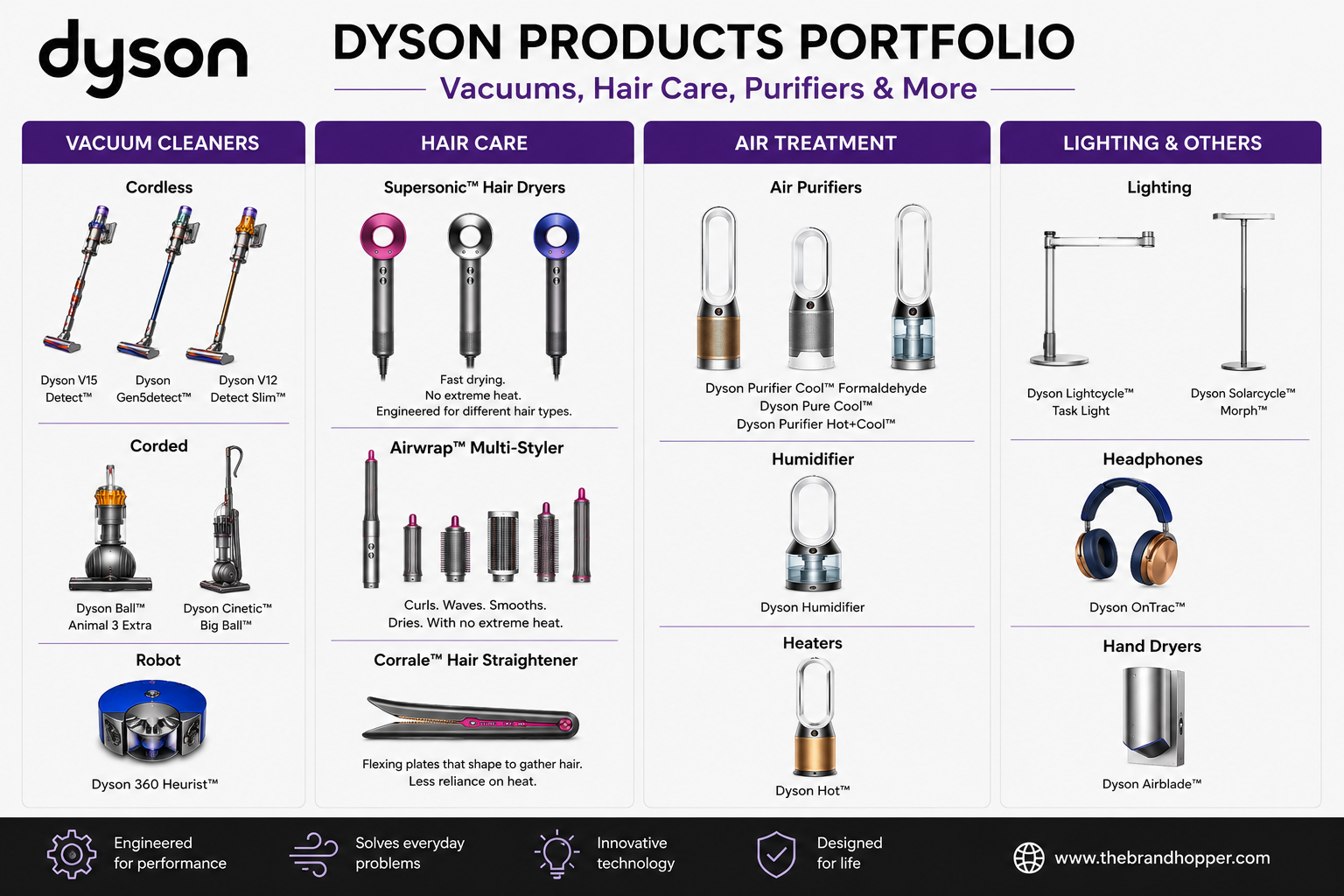
What began as a single vacuum cleaner has expanded into one of the most diverse premium appliance portfolios in the world. Dyson now operates across six major product categories, each defined by proprietary technology developed entirely in-house and protected by a portfolio of more than 7,000 patents.

1. Vacuum Cleaners
Vacuum cleaners remain Dyson’s highest-revenue category and the product line that built the brand. Key products include the V15 Detect (featuring a green laser mounted at a precise angle that illuminates microscopic dust and debris invisible to the naked eye, triggering automatic suction adjustment), the V12 Detect Slim (a lighter form factor for everyday use), and the Gen5 Detect (Dyson’s 2024 flagship, the first Dyson vacuum with a one-press trigger mechanism replacing the traditional hold-to-run button — a significant ergonomic advancement for long cleaning sessions). The V8 and Ball Multi Floor range serve entry-level premium buyers. The 360 Vis Nav is Dyson’s flagship robotic vacuum, using a 360-degree wide-angle camera and obstacle-detection AI to map rooms and clean autonomously, with intelligent object avoidance.
2. Hair Care
Hair care has been Dyson’s fastest-growing and culturally most significant segment since the Supersonic hair dryer launched in 2016. The category now spans four hero products. The Supersonic Nural (2024) is the most significant update to the Supersonic platform in eight years — it incorporates neural sensors embedded in the nozzle attachment that detect the distance from the scalp and attachment type, automatically adjusting heat output in real time to prevent damage. The Airwrap Multi-Styler (originally 2018, subsequently updated) uses the Coanda effect to attract and wrap hair around the barrel without extreme heat; it regularly sells out globally and commands waiting lists. The Airstrait (Spring 2023) is a groundbreaking innovation in the straightener category — it straightens hair using controlled airflow rather than heated plates, working on wet hair straight from the shower. The Corrale is a wireless straightener with flexing copper plates that shape around hair for even heat distribution with 30% less damage than conventional straighteners.
3. Air Treatment
Dyson’s air purification range draws on its motor and cyclone expertise to dominate the premium purifier segment. Products include the Purifier Hot+Cool (heating, cooling, and HEPA H13 filtration in one), the Purifier Big+Quiet Formaldehyde (Dyson’s most powerful home purifier, targeting formaldehyde specifically using a catalytic filter that continuously destroys it), and the Purifier Cool Autoreact. All products include real-time air quality sensing, LCD or app-connected displays showing particle counts, VOC levels, and humidity, and are compatible with the MyDyson app and voice assistants. Dyson publishes independent, validated air quality data gathered from its purifier network — establishing scientific credibility in a category often plagued by unverified marketing claims.
4. Lighting
The Solarcycle Morph and Lightcycle Morph represent Dyson’s premium intelligent lighting range. Using LED technology that precisely mimics the colour temperature of natural daylight based on the time of day, the user’s geographic location, and age-adjusted recommendations for eye sensitivity, these lights are positioned as health-conscious tools for focus, relaxation, and sleep. They connect to the MyDyson app and are compatible with Apple HomeKit, Amazon Alexa, and Google Home.
5. Audio & Wearable Technology
Dyson made its most significant product category expansion in years when it launched OnTrac in August 2024 — over-ear headphones priced at USD 599, placing them squarely in competition with Sony’s WH-1000XM5 (USD 349) and Bose QuietComfort Ultra (USD 429). The OnTrac offers 55 hours of total battery life (the longest in its class), active noise cancellation, and a fully modular design with interchangeable ear cushions and outer caps available in over 2,000 colour combinations — positioning the product as a fashion and technology statement simultaneously. In 2023, Dyson launched the Dyson Zone — headphones with an integrated detachable air purification visor that filters particulates and NO2 from the air the wearer breathes. While the Zone targeted urban commuters and health-conscious consumers, OnTrac is audio-first, signalling Dyson’s intent to compete seriously in the premium consumer audio market.
6. Commercial & Professional Products
Dyson Professional supplies its Airblade hand dryer technology (found in airports and premium commercial facilities globally) and professional versions of its hair care tools (Supersonic Professional Edition) to salons, hotels, gyms, and corporate clients. This B2B channel functions as both a revenue stream and a brand experience touchpoint — millions of consumers first encounter Dyson technology in a professional setting before purchasing for home use.
Dyson’s Marketing Strategies: Engineering as the Campaign
Dyson spends comparatively less on traditional advertising than its category peers. Its marketing strategy is built on a fundamental conviction: a demonstrably superior product — combined with a powerful founder narrative, strategic experiential touchpoints, and a carefully built creator ecosystem — is the most effective form of marketing available to a technology brand.
1. Innovation as Marketing: The Product IS the Advertisement
Dyson rarely leads with emotional lifestyle imagery in the conventional advertising sense. Instead, it leads with engineering demonstrations. When the V15 Detect launched, the campaign centred on a green laser that revealed dust invisible to the human eye and a piezoelectric sensor that counted particles in real time.
When the Supersonic Nural launched, neural sensors that auto-adjusted heat in milliseconds were the centrepiece. When the Airstrait launched, the mechanism of straightening wet hair with airflow — rather than plates — was the entire story. This means Dyson’s marketing is inseparable from its R&D programme. The engineering breakthrough IS the headline, making every product launch a natural media story rather than a manufactured advertisement.
2. Premium Pricing as a Quality Signal
Dyson prices its products 30–50% above the nearest comparable rival across virtually every category. A Dyson Airwrap retails at GBP 479–549; comparable stylers from GHD or Revlon cost GBP 30–150. A Dyson V15 Detect costs GBP 599–699 versus GBP 150–350 for a Shark cordless vacuum. OnTrac headphones retail at USD 599 versus USD 349 for Sony’s flagship.
This is deliberate: Dyson uses price as a quality signal, leveraging the well-established consumer psychology principle that premium-priced products are perceived as superior. Discounting is rare and carefully managed — Dyson participates in seasonal promotions but avoids the race-to-the-bottom discount culture that erodes brand equity in the consumer electronics category.
3. Direct-to-Consumer (DTC) First Strategy
Dyson has aggressively expanded its direct sales channel through dyson.com and its proprietary Dyson Demo stores. The DTC model gives Dyson full control over the customer experience, pricing integrity, first-party data collection, and margin capture. Dyson’s FY2024 results explicitly noted a deliberate “rebalancing from direct retail” as a strategic priority — meaning Dyson is actively reducing its dependency on third-party retailers in favour of channels it fully controls.
In a DTC environment, Dyson can tell the complete engineering story, present product comparisons on its own terms, and build direct relationships with customers that generate lifetime value beyond a single purchase.
4. Experiential Retail: The Dyson Demo Store Model
Dyson operates dedicated Demo stores in major global cities — London’s Oxford Street, Singapore’s Orchard Road, New York, Shanghai, Sydney, Tokyo, and more. Unlike standard retail environments, Demo stores are purpose-built for hands-on engagement: customers test hair dryers on their own hair in front of illuminated mirrors, vacuum demonstration surfaces with the latest cordless models, and view real-time air purification data on connected screens.
Staff are product specialists trained as engineers, not commission-based salespeople. This experiential model dramatically reduces return rates, builds advocacy, and repositions Dyson as a destination — a brand consumers seek out rather than simply stumble across on a retail shelf.
5. Influencer and Creator Marketing (Beauty Category)
Dyson’s Airwrap achieved a remarkable marketing outcome at launch: it became a global phenomenon without traditional advertising. The mechanism was organic adoption by professional hair stylists and beauty content creators on YouTube, Instagram, and later TikTok, who shared before-and-after results that competitors could not replicate.
Waiting lists for the Airwrap reached 12+ months in multiple markets. Dyson has since formalised this influencer ecosystem — partnering with top-tier beauty creators for early product access, exclusive content partnerships, and priority seeding ahead of major launches. For the Supersonic Nural (2024), Dyson seeded products to leading beauty influencers weeks before public launch, generating millions of organic views before any paid media ran.
6. The James Dyson Award: Engineering as Brand Equity
Launched in 2002 and administered by the James Dyson Foundation, the James Dyson Award is an annual international competition inviting engineering and design students to “design something that solves a problem.” Winners receive up to GBP 30,000 in prize money across national and international categories. The Award has received over 50,000 entries from 33+ countries and generates substantial global press coverage in engineering, design, and general news media. For Dyson, the strategic benefits are threefold: powerful brand goodwill (Dyson as champion of engineering talent), consistent media coverage in high-value editorial environments, and a direct pipeline to the world’s most creative young engineer-designers — potential future Dyson employees and collaborators.
7. The Founder Narrative: 5,127 Failures as Brand Story
Few brands anywhere possess a founder story as commercially powerful as Dyson’s. The account of a determined engineer spending five years building 5,127 prototypes — while remortgaging his home, being rejected by every British manufacturer, and eventually having to licence his invention to Japan — is a story of authentic, verifiable perseverance.
Dyson’s communications consistently return to this narrative, explicitly (James Dyson himself fronts major campaigns) and implicitly (every product launch is framed through the lens of engineering tenacity). Competitors may be able to reverse-engineer product features. They cannot reverse-engineer the story.
8. Sustainability Through Engineering Efficiency
Dyson has committed to carbon-neutral operations by 2025 and embeds sustainability credentials into every major product launch — specific energy efficiency claims, HEPA filtration certifications, product longevity design (the OnTrac headphones feature fully modular and replaceable components to extend product life), and published lifecycle analyses. The company also publishes independently validated air quality data collected from its purifier network, establishing scientific authority in the health-tech space.
While Dyson faces fair criticism that some of its products (particularly high-wattage hair tools) carry a significant energy footprint, the brand’s positioning of sustainability through engineering excellence — making products more efficient rather than asking consumers to sacrifice performance — resonates strongly with its premium target demographic.
Dyson’s Marketing Mix: The 4Ps in Detail
1. Product
Dyson’s product philosophy is rooted in identifying consumer frustrations that existing products ignore, then applying original engineering to solve them completely. Every product line carries proprietary technology that is genuinely differentiated: the Dyson Digital Motor (V9 variant in the Supersonic spins at 110,000 rpm, versus 20,000–30,000 rpm in conventional hair dryer motors), the V15 Detect’s piezoelectric sensor (counts and sizes dust particles, adjusting suction automatically), the Airstrait’s Coanda-controlled airflow channels, and the Gen5’s one-press trigger mechanism.
Dyson files hundreds of patents per year — 7,000+ in its active portfolio — and designs the majority of key components in-house rather than using off-the-shelf parts from shared supply chains.
2. Price
Dyson’s pricing strategy is premium and deliberately consistent. The company avoids the erosive discounting that commoditises competitor brands, participating selectively in seasonal events (Black Friday, key gifting periods) with controlled reductions of 10–20% on selected lines. Dyson also operates a certified refurbished programme through its own website, offering discounted products without compromising the flagship price architecture.
| Product | Dyson Price (approx.) | Nearest Rival | Rival Price |
| V15 Detect (cordless vacuum) | GBP 599-699 | Shark Stratos | GBP 250-350 |
| Supersonic Nural (hair dryer) | GBP 399 | GHD Air | GBP 99 |
| Airwrap Multi-Styler | GBP 479-549 | Revlon One-Step | GBP 25-50 |
| OnTrac Headphones | USD 599 | Sony WH-1000XM5 | USD 349 |
| Purifier Hot+Cool (flagship) | GBP 549-699 | Blueair Blue 3210 | GBP 150-200 |
| Gen5 Detect (cordless vacuum) | GBP 649-749 | Miele Triflex HX2 | GBP 399-499 |
3. Place
Dyson’s distribution strategy is deliberately selective to maintain brand control. Direct channels — dyson.com (global e-commerce) and Dyson Demo stores — are the priority for flagship product experiences. Retail partners offer the broader range: in the UK through John Lewis, Currys, Argos, and AO.com; in the US through Best Buy, Target, and Walmart (selected ranges); across Asia through Harvey Norman, JD.com, Lazada, and Tmall.
Dyson operates 50+ Demo store locations globally (including flagship stores in London, Singapore, New York, Shanghai, Tokyo, and Sydney). The Dyson Professional division distributes hand dryers and professional hair tools to commercial environments — hotels, salons, airports, and corporate facilities — turning public-facing spaces into effective product demonstrations at no paid media cost.
4. Promotion
Dyson’s promotional strategy concentrates on: (a) product-led digital content — YouTube channels showcasing engineering demonstrations, teardowns, and real-world performance tests; (b) structured influencer partnerships across beauty and lifestyle on Instagram, YouTube, and TikTok; (c) PR-driven launch events offering hands-on product experience to global press; (d) James Dyson Award media coverage generating high-quality editorial placements in engineering, design, and general news media; and (e) experiential retail at Demo stores. Television advertising is used selectively for new category launches in key markets.
Dyson’s social media following spans tens of millions globally, with beauty category content on TikTok and Instagram consistently generating significant organic reach and earned media.
Dyson Financial Performance: Record Volumes, Revenue Challenge
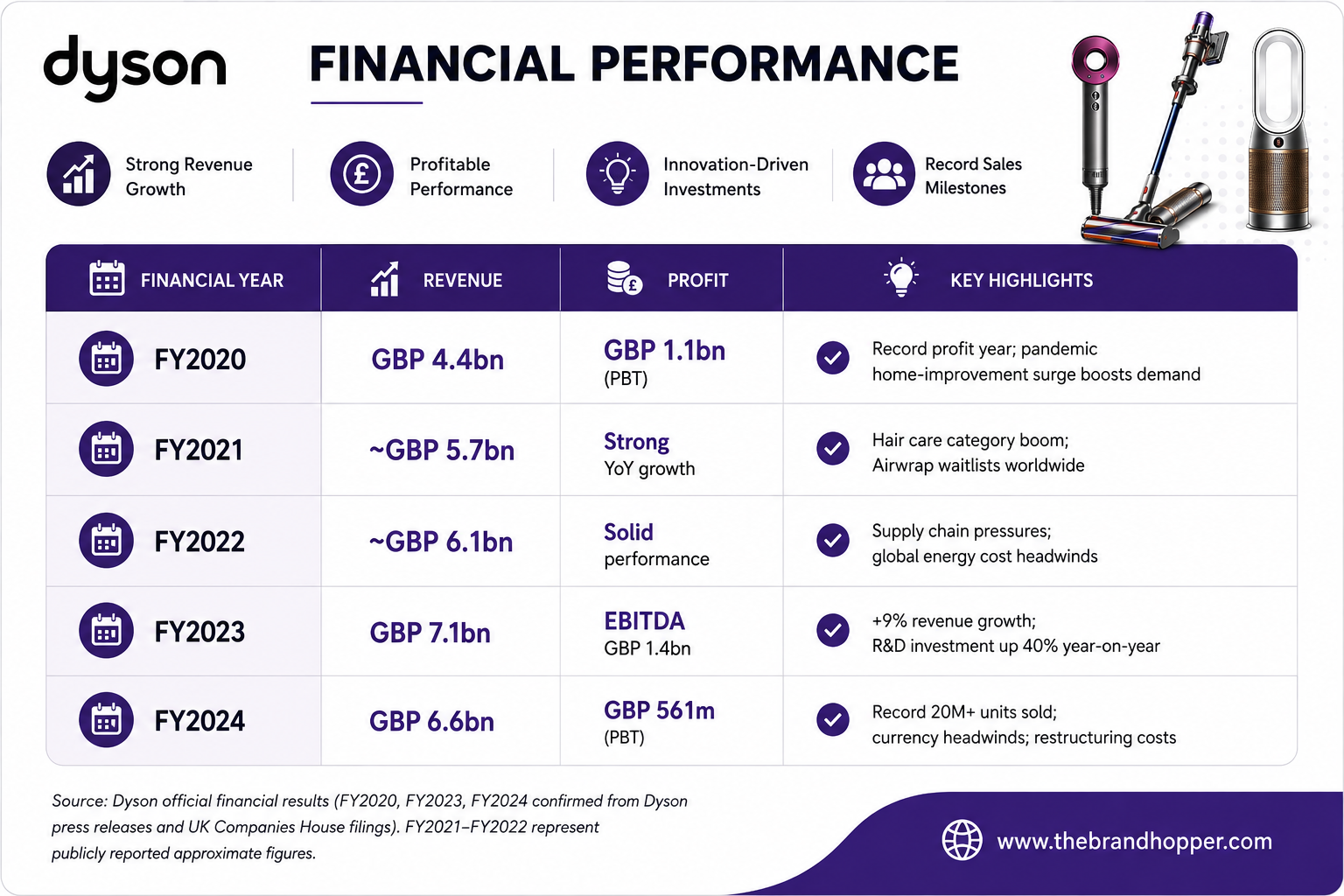
Dyson is a privately held company registered in Singapore. While not publicly listed, it voluntarily releases annual financial results through its UK subsidiary (Dyson Technology Ltd) and via press releases. The following data is sourced directly from Dyson’s official results announcements.
Understanding the FY2024 Revenue Decline
FY2024 marked Dyson’s first revenue decline since 2002 — ending more than two decades of unbroken growth. Revenue fell from GBP 7.1 billion to GBP 6.6 billion (approximately 7%), and pre-tax profit fell by roughly 47% from approximately GBP 1.1 billion to GBP 561 million. Yet Dyson sold more than 20 million products — a company record — confirming that the decline was not volume-driven.
CEO Hanno Kirner attributed the decline to three converging factors: severe currency headwinds in Asian markets and Turkey (where revenues generated locally translated unfavourably into sterling), a major fire at Dyson’s Philippines manufacturing facility that disrupted beauty product supply chains for a significant period of FY2024, and costs associated with the global restructuring programme — approximately 1,000 UK redundancies announced in July 2024, followed by further cuts in Singapore in September 2024. Kirner described FY2024 as “a difficult but necessary year of transformation for Dyson,” stating the company had become “a leaner, reinvigorated, and more productive company.”
Looking ahead, Dyson has confirmed plans to launch more new products in 2025 than in any previous year in its history — approximately 13 product launches — underpinned by R&D investment of approximately GBP 8 million per week, up from GBP 7 million per week in prior years.
Controversies and Challenges of Dyson
Despite its engineering credentials and global commercial success, Dyson has navigated several significant controversies that have shaped public perception and tested the brand.
1. The Brexit Contradiction
James Dyson was one of the most prominent public advocates for Brexit in the UK, writing editorials arguing that leaving the EU would liberate British business from regulatory constraints and open new global trading opportunities. In January 2019 — fewer than three years after the 2016 referendum result — Dyson moved its corporate headquarters from Malmesbury, Wiltshire, to Singapore.
Dyson stated the decision was driven by proximity to Asian manufacturing and future growth markets, not Brexit. Critics, politicians, and media commentators — including those who had prominently cited Dyson as evidence of British industrial confidence — labelled the move a stark contradiction. The episode became one of the most cited examples of the gap between public Brexit advocacy and corporate decision-making.
2. Mass Redundancies (2024)
In July 2024, Dyson announced approximately 1,000 UK job cuts — reducing its UK workforce by roughly 40% of its remaining headcount. A second wave of redundancies in Singapore followed in September 2024. The cuts affected R&D, commercial, and support roles.
The announcements came despite Dyson simultaneously reporting record product volumes in FY2024, prompting criticism from trade unions and employees that the redundancies were financially opportunistic rather than genuinely necessary for business transformation. Concern was also expressed about the long-term implications for UK engineering talent and capability.
3. Product Reliability Criticism
Dyson products, despite their premium pricing, have attracted persistent reliability criticism. Commonly reported issues include battery degradation in V-series cordless vacuums (particularly older V6 and V8 models, which saw performance decline notably within 2–3 years of heavy use), motor failures, and connectivity issues in newer smart-enabled products.
Consumer organisations including Which? in the UK and Consumer Reports in the US have periodically rated competitors such as Shark and Miele higher on long-term reliability metrics at significantly lower price points. Dyson has invested in reliability improvements across newer product generations, with the Gen5 and current V15 range receiving generally more positive durability reviews.
4. Intellectual Property Disputes
Dyson has one of the most extensive IP litigation histories in the consumer appliance sector. Notable cases include a 2014 High Court victory against Samsung (Dyson alleged Samsung had copied its Ball vacuum steering mechanism — the court agreed), and a significant 2017 loss to Vax (Dyson claimed Vax had copied its cyclone technology; the judge ruled Dyson’s relevant patents invalid).
Dyson has also faced counterclaims and criticism for aggressive IP enforcement against smaller competitors. The company remains one of the most litigious in its sector globally.
5. EU Energy Label Controversy
Dyson filed legal challenges against the EU’s vacuum cleaner energy labelling regulations, arguing that the testing methodology — which assessed suction performance with an empty dustbin — was unrealistic and systematically disadvantaged Dyson’s cyclone technology (which maintains suction as it fills).
The European Court of Justice ruled in Dyson’s favour in 2019, though the case generated significant commentary about the intersection of commercial interest and regulatory advocacy. Critics noted that Dyson’s cyclone vacuums had themselves benefited from earlier EU regulations that penalised high-wattage competitors.
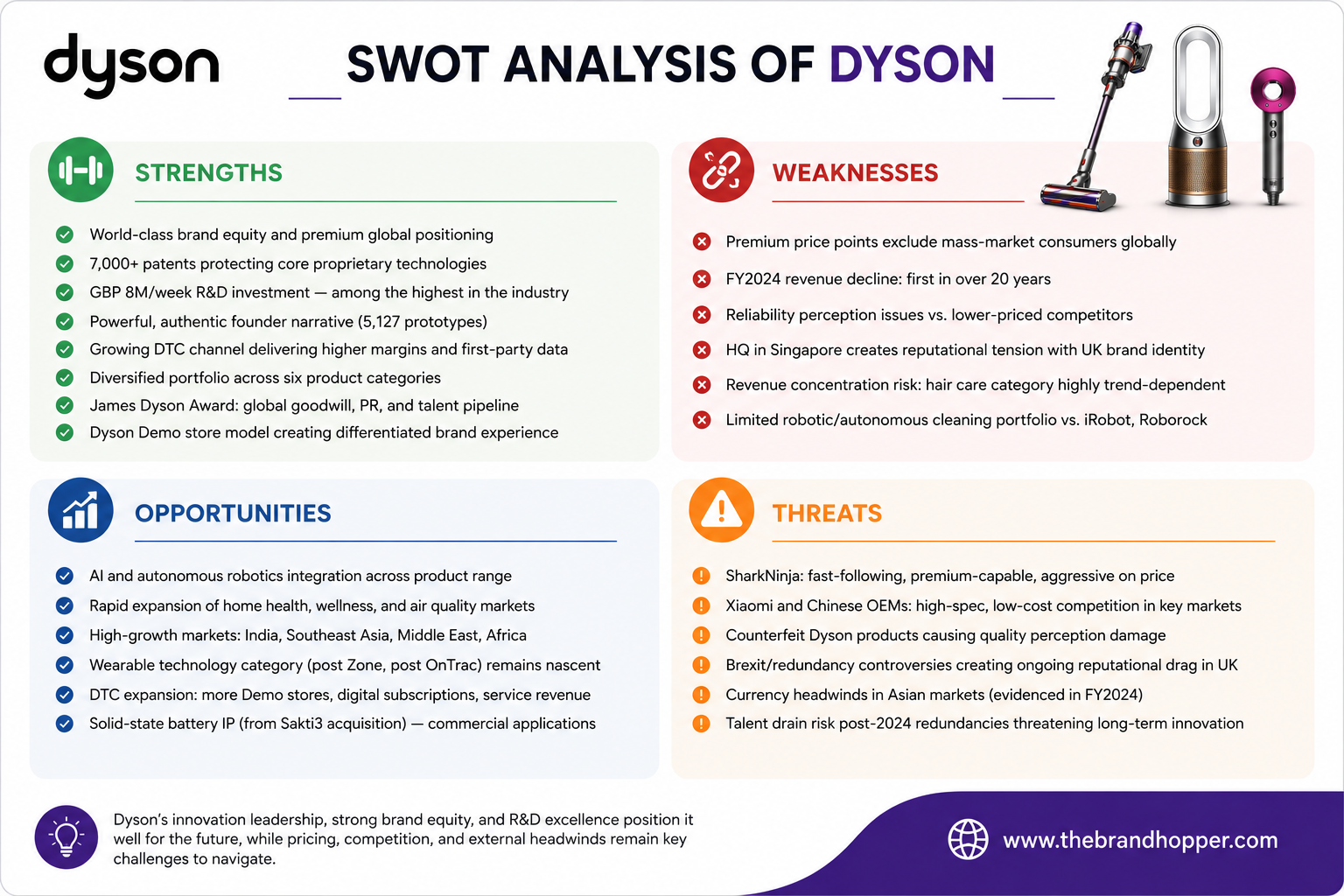
SWOT Analysis: Dyson’s Strategic Position
The Future of Dyson: More Products, Robotics, and Wearable Ambition
Despite the FY2024 challenges, Dyson’s strategic outlook is ambitious. CEO Hanno Kirner has confirmed the company will launch more new products in 2025 than at any point in its history, supported by the highest sustained R&D investment the company has ever committed. Key areas of development include:
1. Autonomous Robotics
Dyson has invested heavily in autonomous domestic robotics. The 360 Vis Nav robot vacuum — using 360-degree camera vision and AI-based obstacle mapping — represents the current state of the art in Dyson’s robotic range. But Dyson’s internal R&D programme has reportedly extended significantly beyond floor cleaning: research into domestic robot assistants capable of basic household tasks — loading dishwashers, sorting objects, navigating complex home environments — has been confirmed through academic publications and patent filings, though no commercial product timeline has been announced. The robotics programme is expected to be one of Dyson’s most significant long-term investment areas.
2. AI-Integrated Appliances
The Supersonic Nural (2024) introduced neural sensing to the Dyson product range — embedded sensors that detect hair type, distance, and attachment in real time, adjusting heat output automatically. Expect this AI-integration philosophy to expand across categories: cordless vacuums that learn home layouts and optimise cleaning paths, air purifiers that predict air quality events using external weather and pollution data, and hair care tools that personalise settings based on historical usage profiles.
3. Solid-State Battery Technology
In 2015, Dyson acquired Sakti3, a solid-state battery startup based in Ann Arbor, Michigan, for approximately USD 90 million. While Dyson’s electric vehicle project — the N526 high-end EV — was cancelled in October 2019 after GBP 500 million of investment (James Dyson cited an “unviable business case” rather than technical failure), the underlying battery research continues. Solid-state batteries promise significantly higher energy density, longer cycle life, and faster charging than conventional lithium-ion cells — which could transform the performance and weight of Dyson’s cordless appliance range if successfully commercialised.
4. Wearable Technology
The Dyson Zone (2023) and OnTrac (2024) signal clear intent to build a meaningful wearable technology business. The convergence of audio performance, modular design, health-conscious air quality features, and fashion customisation creates a category that Dyson — with its engineering heritage, premium brand equity, and existing direct-to-consumer infrastructure — is well positioned to develop. Further wearable products incorporating health monitoring, noise management, or personalised environmental sensing are expected as Dyson matures its position in this space.
Frequently Asked Questions (FAQs) About Dyson
Q: Who invented the bagless vacuum cleaner?
A: Sir James Dyson invented the first commercially successful bagless vacuum cleaner. Inspired by a cyclone separator at a sawmill in 1978, he spent nearly five years and 5,127 prototypes perfecting the technology before launching the DC01 in the UK in 1993. Within 18 months of launch, the DC01 outsold every rival vacuum cleaner on the British market.
Q: Why are Dyson products so expensive?
A: Dyson’s premium pricing reflects genuine engineering differentiation, not marketing alone. The company invests approximately GBP 8 million per week in R&D, holds 7,000+ patents, designs most key components in-house, and consistently brings genuinely new technology to market (laser dust detection, neural heat sensing, solid-state cyclone separation). The pricing also functions as a brand quality signal — research in consumer psychology confirms that premium-priced products are perceived as higher quality, and Dyson’s strategy deliberately leverages this effect.
Q: Where are Dyson products manufactured?
A: The majority of Dyson products are manufactured in Malaysia and Singapore, with some production previously in the Philippines (the Philippines facility faced significant disruption following a fire in 2024). R&D is conducted primarily at Dyson’s Malmesbury, Wiltshire campus in the UK (retaining approximately 2,500 staff post-2024 redundancies) and at its Singapore headquarters.
Q: What is Dyson’s best-selling product?
A: The Dyson Airwrap Multi-Styler is arguably Dyson’s most culturally significant product — it achieved near-viral status from its 2018 launch and has consistently faced demand that outpaces global supply. The V15 Detect cordless vacuum is one of Dyson’s highest-revenue products globally. The Supersonic, first launched in 2016 and significantly updated as the Supersonic Nural in 2024, is widely regarded as the world’s best-selling premium hair dryer.
Q: Did Dyson move its headquarters out of the UK?
A: Yes. In January 2019, Dyson relocated its corporate headquarters from Malmesbury, Wiltshire, to Singapore. The move came three years after the Brexit referendum, which James Dyson had publicly and prominently supported. Dyson denied any connection between the two events, citing proximity to Asian manufacturing and growth markets. The company retains significant R&D and design operations in Malmesbury, employing approximately 2,500 UK-based staff as of FY2024.
Q: What is the James Dyson Award?
A: The James Dyson Award is an annual international design and engineering competition open to current and recent university students, administered by the James Dyson Foundation. Participants are invited to “design something that solves a problem.” National winners and an overall international winner receive prize money of up to GBP 30,000. First launched in 2002, the Award has received over 50,000 entries from 33+ countries and has helped surface inventions that have subsequently entered commercial development.
Q: What happened to Dyson’s revenue and profit in FY2024?
A: In FY2024, Dyson’s revenue fell approximately 7% to GBP 6.6 billion (from GBP 7.1 billion in FY2023), and pre-tax profit declined approximately 47% to GBP 561 million — despite the company selling a record 20 million+ products. The declines were attributed to currency headwinds in Asian markets and Turkey, a fire at the Philippines manufacturing facility disrupting beauty product supply, and costs from a global restructuring programme that included approximately 1,000 UK redundancies. Dyson described FY2024 as a “difficult but necessary year of transformation.”
Q: Is Dyson developing technology beyond home appliances?
A: Yes. Dyson has clear ambitions in autonomous domestic robotics (extending well beyond robot vacuums into domestic assistant technology), AI-integrated appliances (following the neural sensing Supersonic Nural), wearable technology (Dyson Zone in 2023, OnTrac in 2024), and solid-state battery development via its 2015 acquisition of Sakti3 for approximately USD 90 million. CEO Hanno Kirner has confirmed Dyson will launch more products in 2025 than in any prior year, with robotics and wet floor cleaning cited as priority investment areas.
Conclusion: The Engineering Imperative
Dyson’s rise from a single frustrated engineer in a Somerset workshed to a GBP 6.6 billion global empire is a story of engineering principle meeting commercial discipline. The 5,127-prototype journey is not merely a brand anecdote — it is the operating system of the entire company: identify a deep consumer frustration, apply original engineering to solve it completely, and refuse to launch until the solution is genuinely better than everything else available.
The challenges of FY2024 — declining revenue, halved profits, significant job cuts in the UK and Singapore — are real and material. But Dyson has navigated adversity before: rejected by every British manufacturer in the early 1980s, dismissed by UK retailers, and criticised severely for its Singapore headquarters move in 2019. Each time, the company has responded through the lab rather than the boardroom.
With more product launches planned in 2025 than at any point in its history, and with genuine growth vectors in autonomous robotics, wearable technology, AI-integrated appliances, and solid-state batteries, Dyson’s long-term story is far from concluded. The question is whether its engineering-led culture can survive the pressures of global scale, intensifying competition from well-resourced rivals like SharkNinja and Xiaomi, and the ongoing tension between its British heritage and its increasingly global commercial identity. If history is any guide, the answer will come from the lab — not the press release.
Also Read: The Man Your Man Could Smell Like: Case Study on Old Spice Branding Campaign
Also Read: Painting a Picture of Rivals: Top 10 Competitors of Asian Paints in India
Also Read: From One Screen to a Cinema Empire: The Story of PVR Cinemas’ Growth and Success
To read more content like this, subscribe to our newsletter
Go to the full page to view and submit the form.