


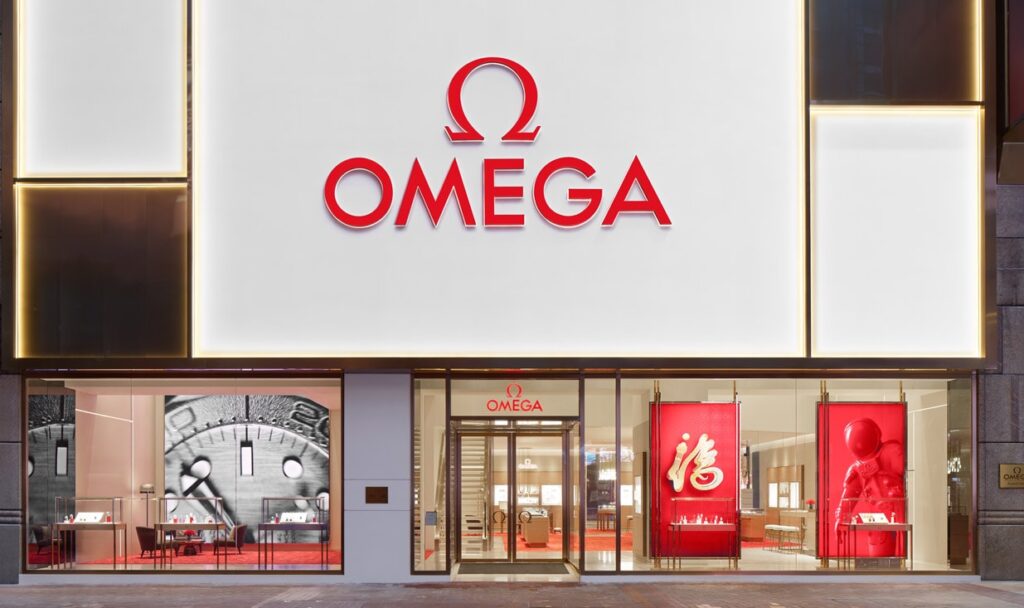
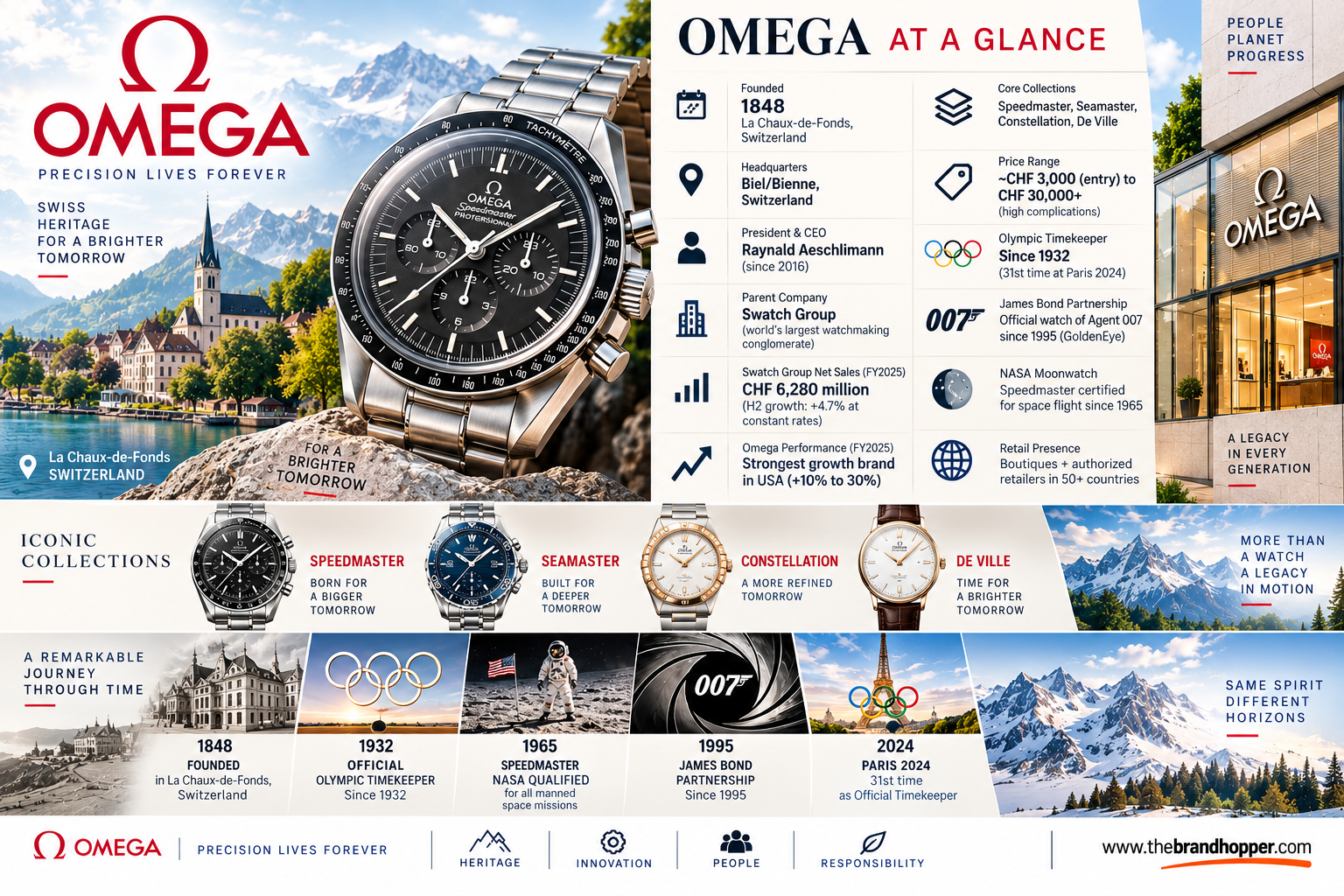
Omega is not just a watchmaker. It is a keeper of historic moments — on the Moon, at the Olympics, in the hands of secret agents, and on the wrists of generations of discerning buyers. Founded in 1848 in La Chaux-de-Fonds, Switzerland, by Louis Brandt, Omega has spent more than 175 years crafting timepieces that stand at the intersection of Swiss precision, bold storytelling, and aspirational luxury.
Today, Omega sits at the pinnacle of the Swatch Group portfolio — the world’s largest watchmaking conglomerate — as its most prestigious brand. Its watches span from entry-level luxury at around $3,000 to grand complications exceeding $30,000, yet the brand maintains a coherent identity built on three pillars: technical mastery, cultural icon status, and emotional storytelling.
This article uncovers the full depth of Omega’s marketing strategies and marketing mix, drawing on verified FY2025 Swatch Group data, the brand’s latest campaigns, and its enduring partnerships to explain why Omega continues to win in one of the world’s most competitive luxury markets.

STP Analysis of Omega
The STP (Segmentation, Targeting, Positioning) framework is central to understanding how Omega consistently attracts its ideal customer while sustaining a premium brand halo across diverse global markets.
Segmentation
Omega segments its market along three primary dimensions.
Demographically, it targets men and women aged 28 to 55, with high disposable incomes, professional achievement, and an affinity for Swiss craftsmanship.
Psychographically, its core customer seeks prestige and heritage alongside tangible technical quality — someone who appreciates the story behind the timepiece as much as its accuracy.
Behaviourally, Omega serves both first-time luxury watch buyers (drawn to the Seamaster or Constellation as an entry point) and serious collectors who pursue limited-edition Speedmasters and Master Chronometer complications.
Geographic segmentation is also critical: the USA has been the standout Omega growth market in FY2024–2025 (growth of 10% to 30% per Swatch Group reporting), while Japan, India, and the Middle East are rising priority markets. China, once a key growth driver, remains challenged by shifting consumer preferences and broader macroeconomic headwinds as of the latest Swatch Group reporting period.
Targeting
Omega’s primary target is the upper-middle to high-income professional: the successful entrepreneur, executive, astronaut-at-heart, or sports champion who wants a watch that reflects both achievement and adventure.
Omega targets this segment with its flagship Speedmaster (for the explorer mindset), Seamaster (for the sports and ocean enthusiast), Constellation (for the urban professional), and De Ville (for the formal occasion wearer).
Secondary targeting reaches aspirational buyers in the $3,000–$6,000 range who seek their first Swiss luxury timepiece, and ultra-high-net-worth collectors who seek limited-edition Master Chronometer complications at $15,000+.
This dual-track targeting ensures Omega can sustain volume at the accessible luxury end while protecting its prestige at the top.
Positioning
Omega positions itself as the watch that has been to the Moon, to the Olympics, and into the hands of the world’s most iconic fictional spy — and that still belongs on your wrist today.
Its positioning statement can be distilled as: “The choice of pioneers, champions, and icons.” This is backed by verifiable technical credentials (Master Chronometer certification, Co-Axial escapement), a century of Olympic timekeeping, and a cultural footprint that no competitor in its price tier can fully replicate.
Critically, Omega’s positioning sits above Longines and Tissot (both Swatch Group stable-mates) but is accessible to a wider audience than Patek Philippe or Audemars Piguet — occupying the premium sweet spot of attainable prestige in the global luxury watch market.
Marketing Strategies of Omega
Omega’s marketing playbook is one of the most sophisticated in the luxury watch industry. It combines deep heritage narratives with modern digital engagement, elite event sponsorships with intimate retail experiences, and global ambassador programmes with hyper-local market activation. Below, we examine each strategy in detail.
1. Product Positioning and Brand Identity
Omega’s brand identity rests on a single, powerful idea: that precision matters — not just in a watch, but in the moments that define history. The brand does not compete purely on luxury aesthetics; it competes on earned authority. Every major Omega collection is anchored in a real-world proving ground: the Speedmaster in space, the Seamaster in the ocean (and in cinema), the Constellation in competitive sports.
This identity is reinforced through the Master Chronometer certification — the most stringent chronometric standard in the Swiss watch industry. To earn this certification, each movement must pass a series of eight demanding tests conducted by METAS (the Swiss Federal Institute of Metrology), including tests for magnetic resistance, precision across five positions, power reserve accuracy, and water resistance. The certification is printed on every qualifying watch’s dial and caseback, turning Omega’s marketing claim into a government-verified fact.

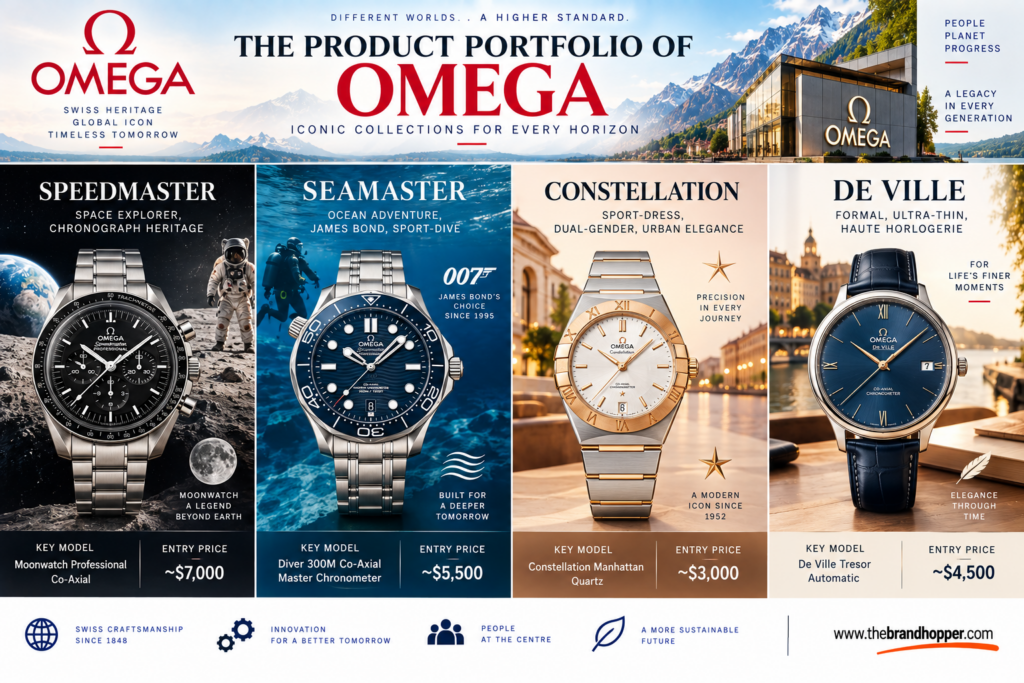
Omega’s iconic collections cater to distinct identities without fracturing the brand. The Speedmaster appeals to the explorer and collector. The Seamaster speaks to aquatic elegance and sporting adventure. The Constellation attracts the urban professional seeking refined symmetry. And the De Ville serves the connoisseur of formal dress watches. Together, they create a family of watches that covers life’s defining occasions.
2. Heritage Marketing: The Moonwatch Legacy
No marketing asset in the luxury watch industry is as powerful as the Speedmaster’s space heritage. In 1965, NASA officially certified the Omega Speedmaster Professional for all manned space missions after rigorous testing. When astronaut Ed White performed the first American spacewalk that same year, the Speedmaster went with him. And in 1969, when Buzz Aldrin stepped onto the lunar surface during the Apollo 11 mission, the Omega Speedmaster became the first watch worn on the Moon — earning it the name “Moonwatch” for all time.

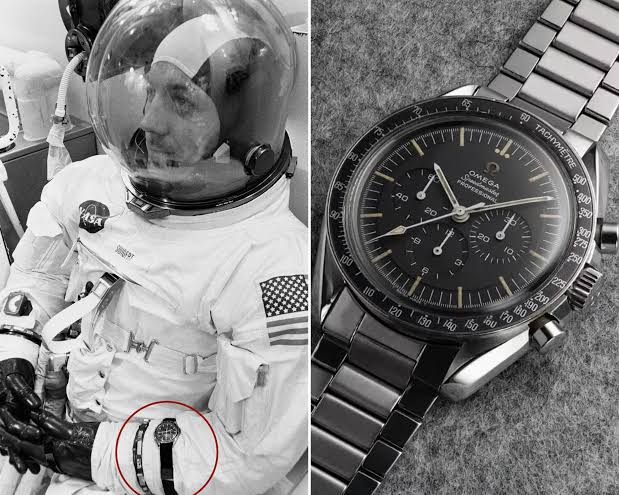
Omega leverages this heritage with extraordinary precision. The Speedmaster Moonwatch Professional remains in continuous production, largely unchanged in its silhouette since 1969, as a deliberate tribute to the original NASA-certified watch. In 2024 and 2025, Omega has continued to release new Speedmaster variations — including anniversary models, bi-compax configurations, and satin-brushed case treatments — all while preserving the case dimensions and mechanical character that made the original irreplaceable.
Heritage marketing extends to partnerships with space agencies and cultural commemorations. Omega regularly works with NASA, the European Space Agency (ESA), and astronauts across programmes to reaffirm the Speedmaster’s ongoing relevance in modern space exploration. This is not nostalgia marketing; it is ongoing proof of relevance, updated with each new generation of space travel.
3. Event Sponsorships: The Olympic Partnership
Omega’s partnership with the Olympic Games, which began in 1932 in Los Angeles, is one of the longest-running and most credibility-building sponsorships in the history of sports marketing. At the Paris 2024 Olympic Games — the 31st time Omega served as official timekeeper — the brand deployed its most advanced timekeeping technology ever, demonstrating that this partnership is as much a research and development platform as it is a marketing activation.

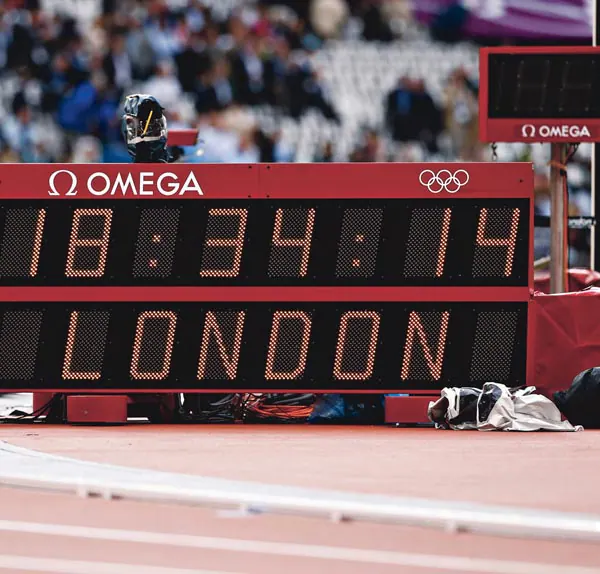
For Paris 2024, Omega deployed 550 on-site timing professionals supported by 900 trained volunteers. The operation used 200 kilometres of cables and optical fibre, 200 sport-specific scoreboards, 85 public scoreboards, and 350 tonnes of equipment across 329 events in 32 sports. Its Scan ‘O’ Vision MYRIA next-generation photofinish camera recorded 40,000 digital images per second — enabling the measurement of Noah Lyles’s Men’s 100m gold medal win by just five milliseconds over his nearest rival, the narrowest of margins in the world’s most-watched race.
Omega’s timekeeping technology at Paris 2024 accurately measured 132 Olympic records and 38 world records — every one of which carried an Omega timestamp. The brand also generated an estimated 120 million social video views during the Paris 2024 Games through real-time timekeeping content, athlete features, and behind-the-scenes technology reveals.

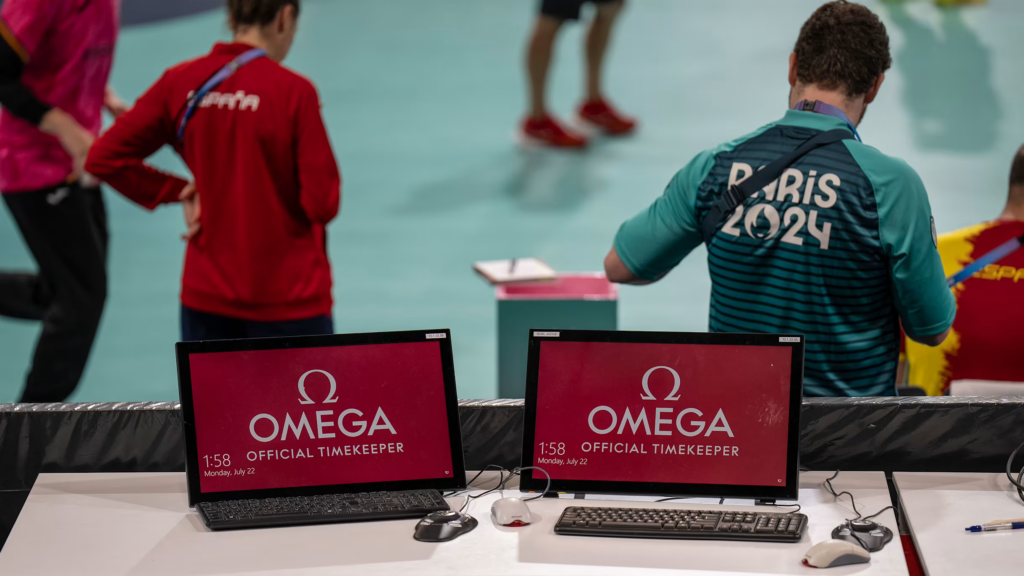
Beyond the Olympics, Omega maintains its timekeeping role at the Paralympic Games, the Commonwealth Games, and numerous global sports events including golf’s major championships (The Masters, The Open Championship, Ryder Cup) and sailing’s premier regattas. This breadth of sporting engagement creates year-round media impressions that reinforce Omega’s identity as the ultimate precision timekeeper.
The ROI of the Olympic partnership is not simply measured in television impressions — it is measured in the implicit certification that Omega’s technology is trusted by the world’s greatest athletes to decide gold medals. When a swimmer or runner trusts Omega to adjudicate the most important moment of their sporting life, it creates a brand endorsement no advertising budget alone could purchase.
4. Celebrity Endorsements and the James Bond Factor
Omega’s celebrity ambassador programme is one of the most carefully curated in the luxury goods industry. Unlike some brands that chase viral relevance, Omega selects ambassadors who embody its core attributes: precision, achievement, confidence, and a certain timeless elegance. The roster spans Hollywood, world sport, and emerging cultural figures — creating a balanced global brand presence across age groups, geographies, and aspirational identities.
George Clooney has been one of Omega’s most enduring brand faces, embodying the suave, accomplished man of the world that the Speedmaster and Seamaster speak to. Nicole Kidman, an ambassador since 2005, brings intellectual depth and cinematic prestige to the Constellation and De Ville collections. In 2023, Jonathan Bailey — one of the most sought-after actors of his generation — joined the roster, targeting younger, culturally engaged audiences with fresh energy. Aaron Taylor-Johnson, appointed in 2025, adds cinematic masculinity for the next chapter of the brand’s storytelling.

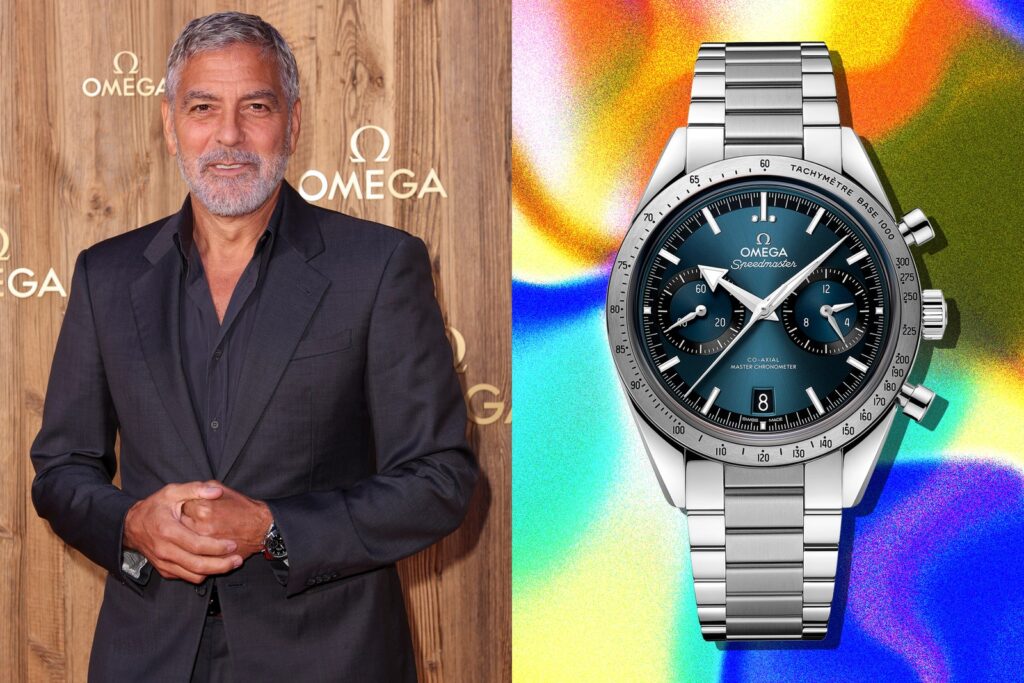
Omega’s 2025 ambassador family was further expanded with figures including Ashley Graham, Tems, and Ariana DeBose — a deliberate broadening of the brand’s human representation across body type, ethnicity, and cultural background. This reflects Omega’s ambition to lead in diversity of brand representation without abandoning the prestige and aspiration at its core.
In sport, Omega’s ambassador roster includes Olympic champions Gianmarco Tamberi (Men’s High Jump, Paris 2024 defending champion) and Yulimar Rojas (Women’s Triple Jump world-record holder and Olympic champion), who embody the fusion of athletic excellence and Omega’s precision heritage. Golf ambassadors including Sergio García, Danny Willett, and Michelle Wie West extend Omega’s reach into one of the world’s premier luxury lifestyle sports.


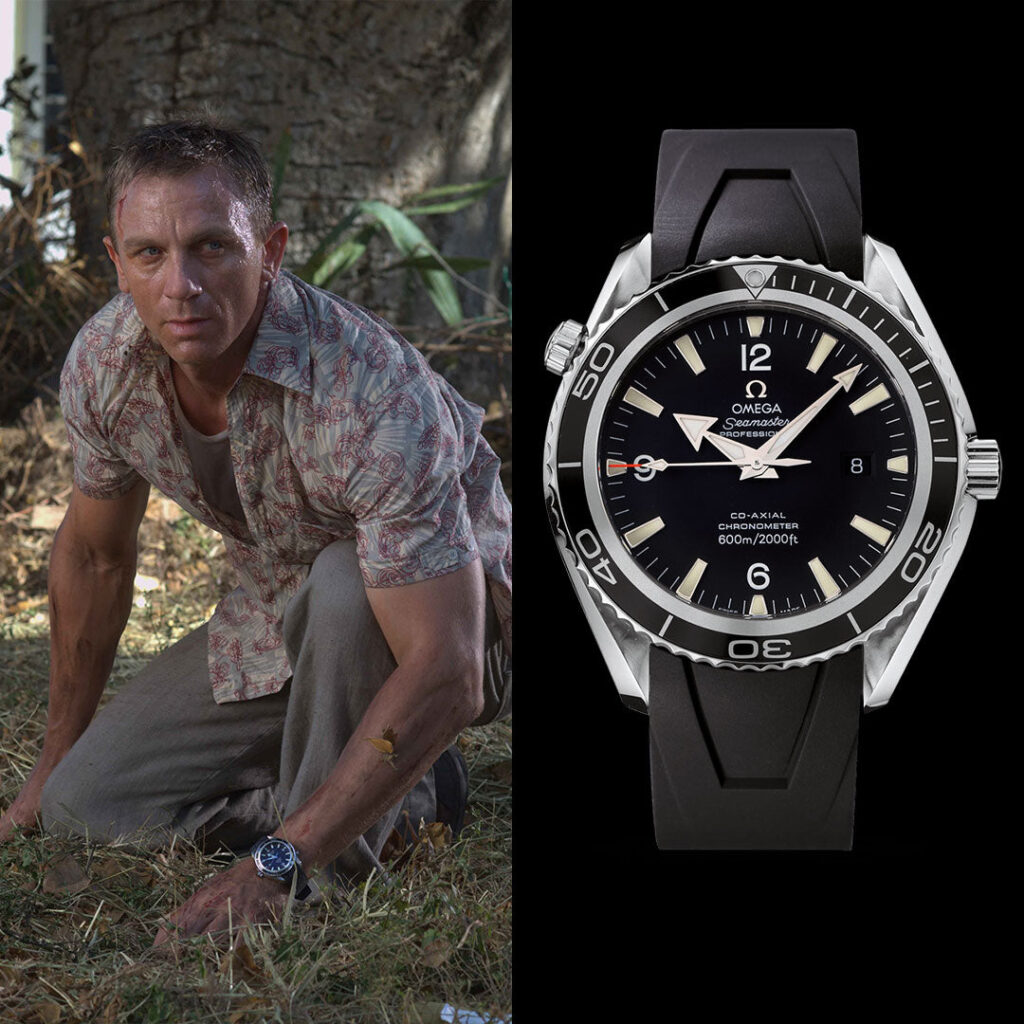
But no ambassador relationship in Omega’s portfolio rivals the power of James Bond. Since 1995’s GoldenEye, every actor to play Agent 007 has worn an Omega Seamaster — from Pierce Brosnan to Daniel Craig. This three-decade relationship is the longest-running product placement agreement in cinema history by value and visibility. The Seamaster Diver 300M Chronograph worn by Daniel Craig in the Bond films has driven significant commercial interest. In 2024, Omega released the first James Bond Seamaster Diver 300M Chronograph available to the public, directly monetising the fictional endorsement into a real commercial collection.

5. Limited Editions and Collaborative Collections
Omega’s limited edition strategy is one of the most commercially and culturally effective in the watch industry. By releasing carefully timed limited editions tied to anniversaries, partnerships, and cultural milestones, Omega creates urgency, drives secondary market premiums, and generates sustained media coverage — all without the brand having to advertise directly.
In 2024, Omega launched a series of Olympic-themed Seamasters for Paris 2024, a reverse-panda Speedmaster that instantly became a collector’s favourite, and a major refresh of the Speedmaster 38 collection — one of the year’s most discussed watch launches across enthusiast media. Each limited edition is produced in specific quantities, clearly communicated, with serial-numbered casebacks — ensuring the perceived and actual scarcity that drives secondary market demand.
Omega also collaborates with external partners to expand its cultural reach. Its long-running collaborations with Swatch Group sister brand Swatch — producing the “MoonSwatch” in 2022 (and subsequent drops) — created one of the most commercially disruptive watch launches in recent years. The MoonSwatch, priced at around CHF 260 and featuring a Speedmaster aesthetic in Swatch’s bioceramic material, generated queues outside Swatch boutiques globally and introduced the Omega Speedmaster design language to a generation of first-time luxury watch aspirants. While sold as a Swatch product, the MoonSwatch lifted Omega’s desirability significantly among a younger demographic.
Additionally, Omega partners with entities including SailGP (sailing), Formula One race circuits (through its broader event exposure), and luxury hotels and lifestyle brands for co-branded activations. These collaborations create contextual touchpoints in the lives of Omega’s target consumer — at the moments when aspiration is most naturally activated.
6. Digital Marketing and Social Media Engagement
Omega runs one of the most visually sophisticated social media programmes in the luxury watch category. Its Instagram, YouTube, Facebook, and WeChat channels collectively reach tens of millions of followers with a consistent aesthetic: cinematic photography, architectural proportions, underwater and space environments, and a visual palette of deep blues, polished steel, and warm gold.

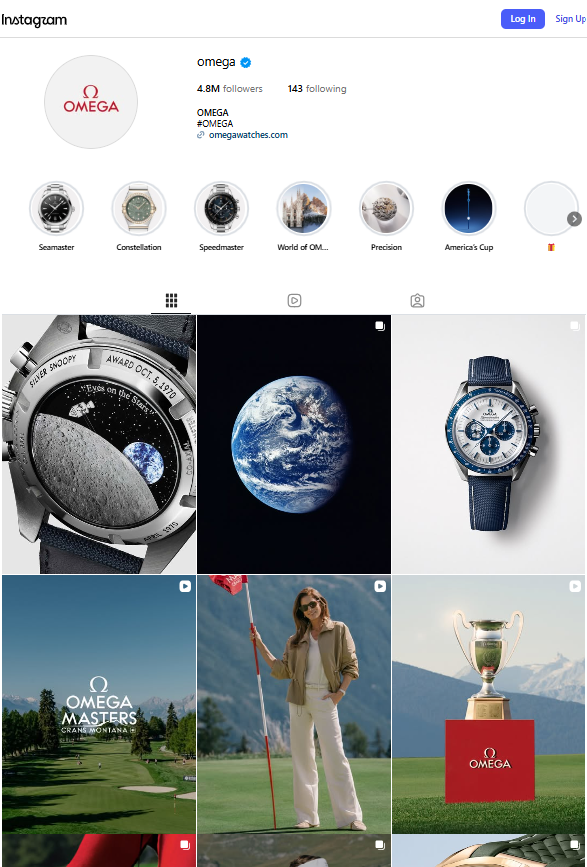
During Paris 2024, Omega’s real-time social media strategy generated an estimated 120 million video views across global channels — combining timekeeping content, athlete stories, technology reveals, and behind-the-scenes access to the Olympic Games. This kind of real-time, event-activated content marketing delivers earned media value that far exceeds equivalent paid media spend, and places Omega in organic conversations that paid advertising cannot access.
Omega also runs user-generated campaigns, such as the #OmegaMyChoice initiative, which invites owners and enthusiasts to share their own stories of wearing the watch in meaningful moments. This user-generated layer adds authenticity and emotional depth to a brand narrative that could otherwise risk appearing remote and aspirational-only. By celebrating real wearers alongside celebrity ambassadors, Omega creates a brand community rather than just a brand audience.
The brand’s official website, omegawatches.com, provides immersive 3D product viewers, movement animations, heritage documentation, and an e-commerce platform. Customers can explore the full collection, reserve boutique appointments, and purchase directly in select markets. The site is translated into over 20 languages, with local pricing and availability, supporting Omega’s presence in more than 50 countries.

7. Retail Experience and Boutiques
Omega’s global boutique network is a critical marketing asset, providing physical proof of the brand’s positioning as a world-class luxury marque. Boutiques are located in key luxury corridors — Fifth Avenue (New York), Bond Street (London), Place Vendôme (Paris), Ginza (Tokyo), and major shopping districts across the Middle East, Southeast Asia, and the Americas — ensuring Omega is seen alongside the world’s most prestigious brand addresses.
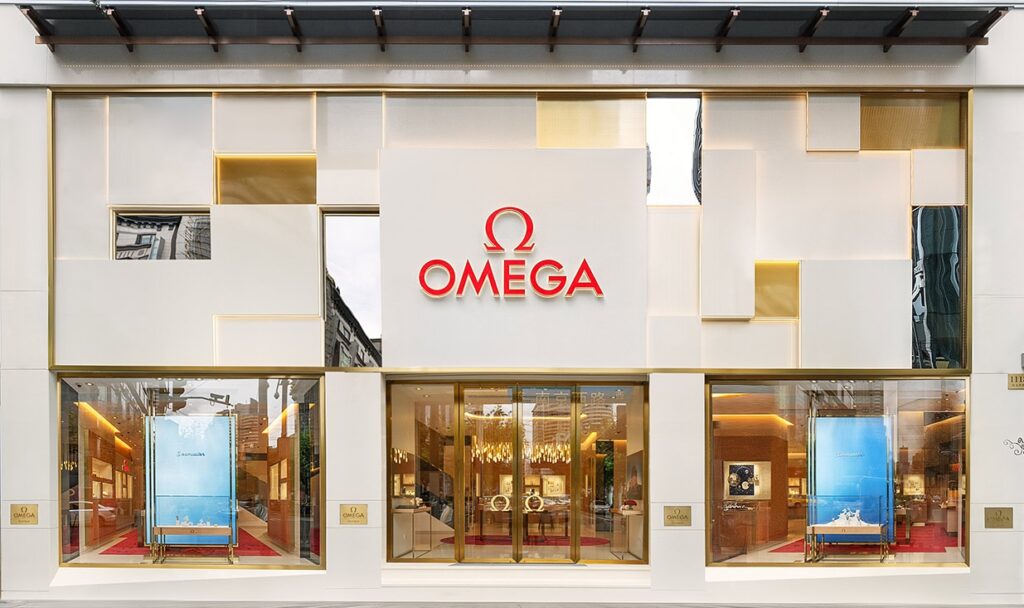
Each boutique is designed around Omega’s signature design language: polished stone floors, precision-lit display cases, dark wood and stainless steel accents, and large-format photography or video installations reinforcing the brand’s space and Olympic heritage. The effect is immersive — entering an Omega boutique is intended to feel like stepping into the world of the brand, not just a retail environment.
Within each boutique, sales consultants are trained as brand storytellers as much as sales professionals. They are equipped to discuss the history of every collection, explain the technical merits of the Co-Axial escapement and Master Chronometer certification, and guide customers through personalisation and engraving options. Many boutiques host “watch talks” and exclusive preview events — building community among local collectors and reinforcing Omega’s role as a cultural touchstone in the luxury category.
Beyond company-owned boutiques, Omega distributes through a curated network of authorized retailers globally, with strict requirements for boutique-within-store presentation standards in multi-brand environments. This controlled distribution strategy protects brand equity and ensures the purchase experience meets Omega’s premium standards at every touchpoint.
8. Sustainability and Responsible Watchmaking
Sustainability is an increasingly important dimension of Omega’s brand strategy, both in its manufacturing operations and in its consumer communications. The brand is part of Swatch Group’s broader sustainability framework, which encompasses responsible sourcing of materials, energy efficiency in Swiss manufacturing facilities, and recycling initiatives across packaging and components.
Omega has committed to reducing the carbon footprint of its watchmaking operations and sources materials with attention to ethical supply chains — including the cobalt, steel, and gold used in its movements and cases. The brand has also introduced the use of recycled and certified materials in packaging, moving away from single-use plastics across its global retail and e-commerce operations.
Notably, Omega’s association with ocean conservation aligns naturally with its Seamaster DNA. The brand has supported initiatives related to marine ecosystem protection and clean ocean advocacy, translating its underwater heritage into a credible environmental positioning. This connection between product and purpose gives Omega’s sustainability narrative an authenticity that pure corporate initiatives often lack.
As luxury consumers — particularly Millennials and Gen Z buyers entering the market — increasingly weight environmental and social responsibility in their brand choices, Omega’s sustainability credentials are becoming a more prominent part of its marketing narrative, particularly in digital content, boutique storytelling, and event programming.
Marketing Mix of Omega (4Ps)
The marketing mix provides a structural view of how Omega translates its strategy into commercial decisions across Product, Price, Place, and Promotion.
Product
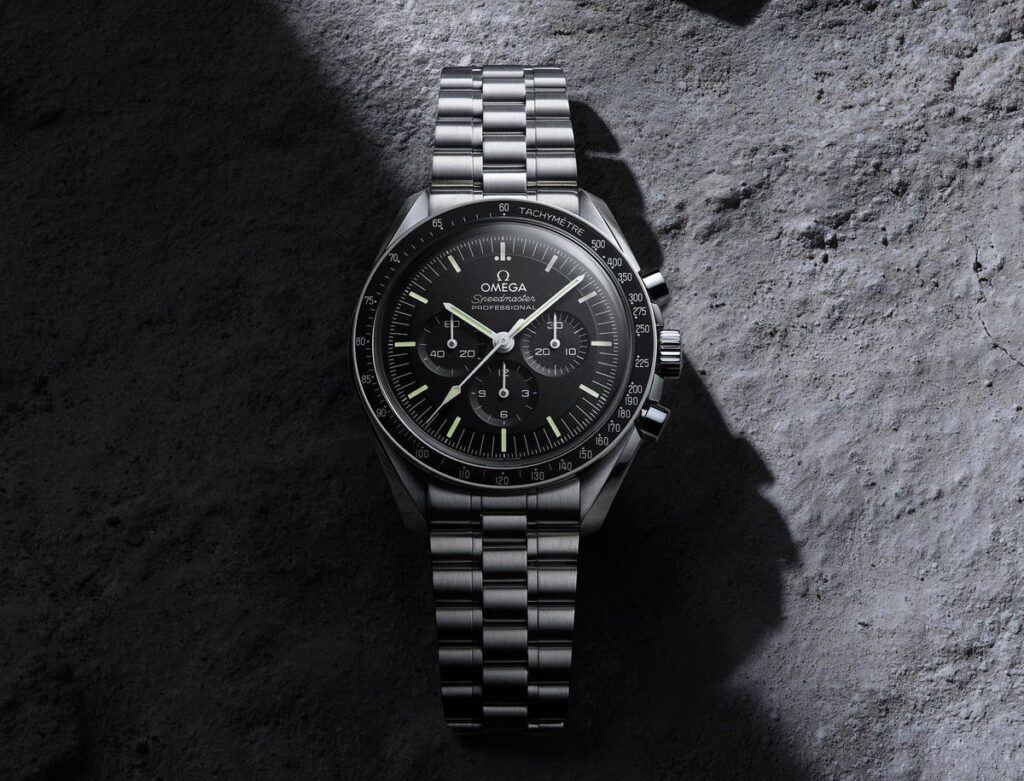
Omega’s product portfolio is anchored in four heritage collections, each with a distinct identity and broad sub-collection range. The Speedmaster is Omega’s most iconic collection — the Moonwatch, born in 1957 as a racing chronograph and certified by NASA in 1965. Today’s Speedmaster Professional Moonwatch retains its original hand-wound Cal. 1861 / Cal. 3861 movement architecture, available in stainless steel, Canopus Gold, and Sedna Gold variants.
The Seamaster is Omega’s best-selling collection and the most publicly visible thanks to its role in the James Bond films. The Seamaster Diver 300M is a world-class professional dive watch (300m water resistance, Co-Axial Master Chronometer calibre) in versions from stainless steel at around $5,500 to Sedna Gold at $35,000+. The Aqua Terra is the Seamaster’s refined daily-wear variant, offering a thinner case and more formal aesthetic while retaining outstanding water resistance.
The Constellation is Omega’s sport-dress collection, distinguished by its characteristic “claws” bezel design first introduced in 1982. It is a long-time favourite among women’s watches and dual-gender collections, with the Constellation Manhattan offering a refined, cushion-shaped case and integrated bracelet. The De Ville rounds out the lineup as Omega’s most formal dress collection — home to its ultra-thin movements and tourbillon complications.
Across all collections, Omega’s technical differentiators are consistent: the Co-Axial escapement (developed by George Daniels, exclusively licensed by Omega in 1999), Master Chronometer certification, and the highest level of in-house movement development in the accessible luxury segment. Omega is one of the only watch brands at its price point to develop and manufacture its own movements entirely in Switzerland under one roof.
Price
Omega employs a premium pricing strategy that reflects its Swiss manufacture heritage, Master Chronometer certification, and luxury brand positioning. Its pricing is carefully calibrated to sit above the entry-level Swiss luxury tier (Longines, Tissot, Hamilton) and below the ultra-high-end prestige tier (Patek Philippe, Audemars Piguet, Richard Mille) — occupying what industry analysts call the “aspirational luxury” sweet spot.
Entry-level Omega watches (stainless steel Constellation quartz, Seamaster Aqua Terra) typically begin around CHF 2,500–3,500, making Omega accessible to upper-middle-class professionals taking their first step into Swiss luxury. The mainstream collection range (Seamaster Diver 300M, Speedmaster Co-Axial) sits between CHF 5,000 and CHF 10,000. High complications, limited editions, and precious-metal variants extend the price ceiling to CHF 30,000 and beyond for Tourbillons and Grand Complication pieces.
Omega does not discount through authorized retail channels, maintaining strict price integrity globally. The secondary market for Omega watches — particularly the Speedmaster Moonwatch and limited-edition Seamasters — trades at or above retail, reflecting genuine collector demand and the brand’s ability to maintain price positioning across the luxury category cycle.
Strategic pricing across multiple product tiers also serves a critical marketing function: it creates a clear aspirational ladder. The customer who buys a CHF 3,000 Constellation today is primed to eventually own a CHF 7,000 Speedmaster Moonwatch and beyond. This price architecture ensures lifetime customer value within the Omega ecosystem.
Place
Omega distributes through a deliberately selective, multi-channel retail strategy that balances global reach with local brand control. Its primary channel is its global network of Omega boutiques — brand-owned and operated stores in the world’s premier luxury shopping destinations, from Rodeo Drive (Beverly Hills) to the Champs-Élysées (Paris) to Causeway Bay (Hong Kong). These boutiques serve as brand embassies: every element, from lighting to staff training, is controlled by Omega to ensure a consistent, premium experience.
Authorized multi-brand retailers — luxury department stores such as Harrods (London), Galeries Lafayette (Paris), and Nordstrom (USA), as well as specialist watch retailers — form the second tier of distribution. Omega requires these partners to maintain dedicated Omega shop-in-shop areas with approved display furniture, brand imagery, and staff trained in Omega product knowledge.
E-commerce is an increasingly important third channel. Omega’s omegawatches.com platform supports direct-to-consumer sales in key markets, with the full collection available online, 3D product views, movement animations, and virtual boutique appointment booking. Online sales grew meaningfully during and after the pandemic period, and Omega has invested significantly in omnichannel integration — allowing customers to research online, experience in-boutique, and complete transactions through their preferred channel.
Omega’s distribution footprint spans more than 50 countries, with the strongest concentration in Western Europe, North America, Japan, China, India, and the Middle East — markets that align with Swatch Group’s FY2024–2025 growth geography. Importantly, Omega does not distribute through travel retail beyond curated airport boutiques, protecting its pricing and brand positioning from the deep discounting environment of duty-free mass retail.
Promotion
Omega’s promotional strategy operates across five interlocking layers: global brand storytelling (Olympic timekeeping, space heritage, James Bond), ambassador campaigns (celebrity and athlete endorsements), event marketing (sports sponsorships, watch fairs, boutique events), digital content (social media, YouTube, e-mail), and earned media (collector press, horological publications, cultural coverage).
Global brand storytelling is Omega’s most powerful promotional tool and requires no advertising spend per impression. The Moonwatch heritage, the Olympic timekeeping, and the James Bond association together generate hundreds of millions of organic media impressions annually through editorial coverage, social conversation, and cultural reference. These are assets built over decades that create compounding brand equity returns.
Ambassador campaigns translate the brand’s aspirational positioning into faces and stories that connect with specific demographics and geographies. George Clooney campaigns skew toward mature, brand-loyal audiences in Western markets; Jonathan Bailey and Aaron Taylor-Johnson engage a younger global audience; Nicole Kidman brings intellectual prestige and female luxury consumer resonance; Gianmarco Tamberi and Yulimar Rojas connect the brand directly to Olympic-level sporting achievement.
Event marketing at trade level — Watches and Wonders Geneva (formerly SIHH) being the pre-eminent showcase — generates specialist press coverage and collector anticipation for each year’s new references. Omega’s Watches and Wonders presentations are among the most closely watched by watch media globally, demonstrating how trade PR translates into consumer pull-through.
Digital promotion is built around content pillars: heritage stories, product craftsmanship features, ambassador lifestyle content, technical deep-dives (movement animations, manufacturing tours), and timekeeping event content. This content mix serves the spectrum from casual discovery to serious collector research, ensuring Omega is present at every stage of the luxury watch purchase journey.
Omega’s Competitive Positioning in the Luxury Watch Market
The luxury watch market is intensely competitive, with Swiss brands competing on heritage, technical innovation, distribution control, and cultural capital. Omega’s primary competitive peer set includes Rolex (the market leader by brand recognition and secondary market values), Cartier, IWC Schaffhausen, Breitling, and TAG Heuer at the sport-luxury intersection, and Longines at the accessible end of the premium Swiss spectrum.
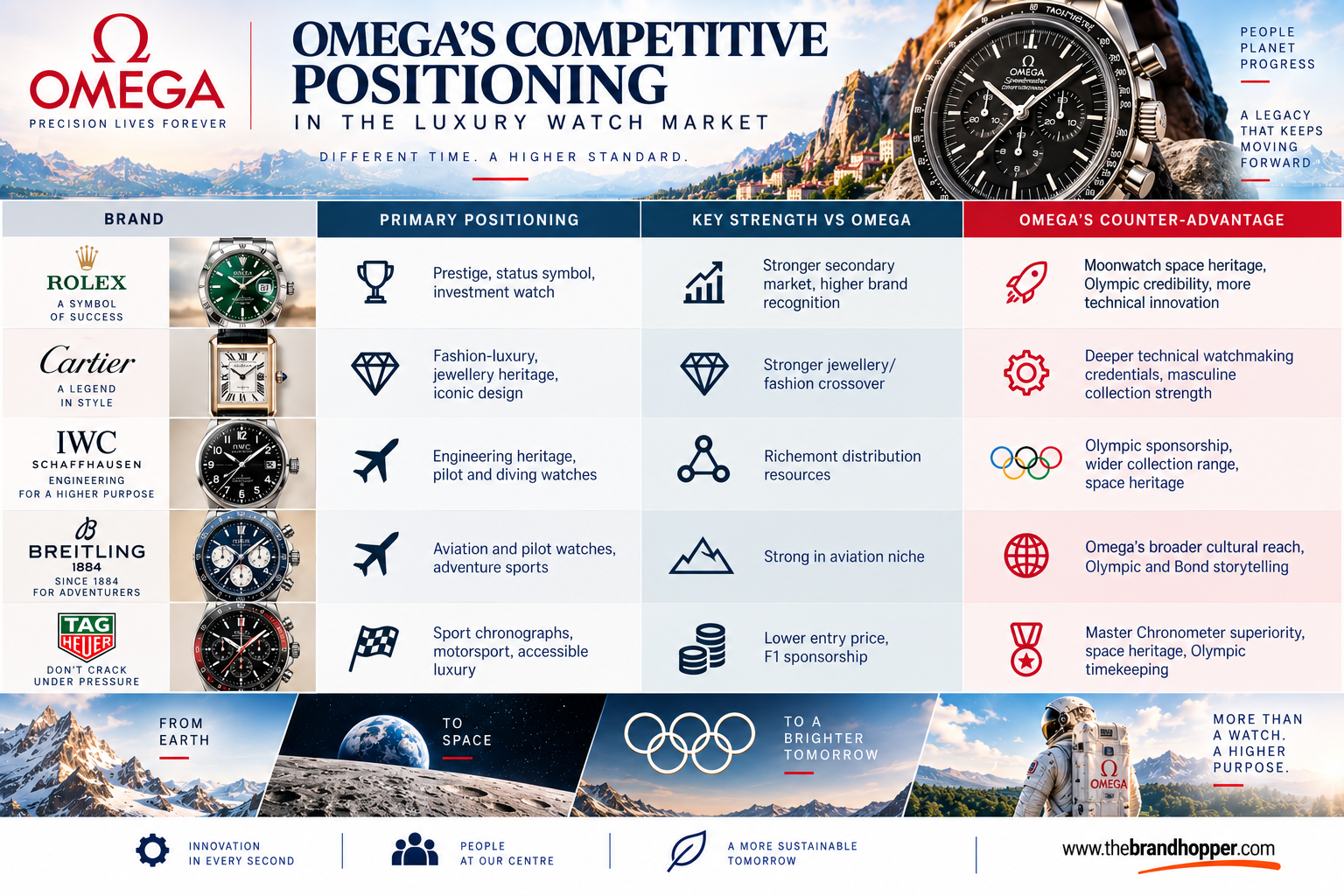
Omega’s unique competitive advantage is the depth and verifiability of its brand stories. Rolex has broader mass-market status; Omega has deeper cultural credentials. Rolex cannot claim the Moon; Omega can. TAG Heuer times motorsport; Omega times the Olympic Games — a far larger global audience. James Bond wears Omega; no other watch brand has a comparable three-decade cinematic product placement at that visibility level. These advantages are not advertising claims — they are historical facts, and that distinction is what makes them so durable in a market saturated with brand communications.
Key Takeaways: What Marketers Can Learn from Omega
1. Earn your brand story, then never stop telling it. Omega’s association with space, sport, and cinema is not manufactured — it is earned through real partnerships, certified achievements, and genuine relationships built over decades. The lesson: build marketing assets, not just marketing campaigns.
2. Technical credibility is the foundation of luxury storytelling. Omega does not simply claim precision — it has government-certified independent proof in the form of METAS Master Chronometer standards. In luxury, verifiable claims beat unverifiable ones every time.
3. Price architecture enables lifetime value. Omega’s ladder from CHF 3,000 to CHF 30,000+ creates a customer journey, not just a transaction. Each entry-level buyer is a potential future collector.
4. Selective distribution protects brand equity. By controlling the environment in which Omega is bought and experienced, the brand ensures that price integrity and aspirational positioning are maintained across every market.
5. Ambassadors should embody the brand, not just endorse it. Omega’s ambassador roster — from Clooney’s suave achievement to Bailey’s cultural moment to Tamberi’s athletic precision — reflects genuine brand fit, not just celebrity reach.
6. Long-term partnerships compound in value. The Olympic partnership started in 1932. The Bond partnership started in 1995. These are not sponsorships—they are brand defining assets that would take decades to recreate from scratch.
Frequently Asked Questions (FAQs) about Omega’s Marketing Strategy
Q1. What is Omega’s core marketing strategy?
A: Omega’s core marketing strategy is built around three pillars: earned brand authority (through Olympic timekeeping, space heritage, and James Bond), premium product positioning (backed by technical credentials including Master Chronometer certification), and aspirational storytelling through carefully selected celebrity ambassadors and long-term cultural partnerships. The brand consistently communicates precision, adventure, and timeless elegance across every touchpoint.
Q2. Who owns Omega watches?
A: Omega is owned by Swatch Group, the world’s largest watchmaking conglomerate, which is headquartered in Biel/Bienne, Switzerland. Swatch Group also owns other prestigious watch brands including Breguet, Blancpain, Harry Winston, Jaquet Droz, Gläshutte Original, Longines, Rado, Tissot, and Swatch, among others. Omega is widely considered the group’s most prestigious and commercially significant brand.
Q3. How did Omega’s association with James Bond start?
A: Omega became the official watch of James Bond in 1995, with the release of GoldenEye starring Pierce Brosnan. Bond previously wore Rolex and Seiko in earlier films. Since GoldenEye, every Bond actor has worn an Omega Seamaster — making this the longest-running and most prominent product placement in the history of cinema. In 2024, Omega released the first public-sale James Bond Seamaster Diver 300M Chronograph, directly commercialising the fictional partnership.
Q4. What is the Omega Speedmaster Moonwatch and why is it significant?
A: The Speedmaster Moonwatch is the Omega Speedmaster Professional — the watch NASA certified in 1965 for all manned space missions. It was worn by Buzz Aldrin on the lunar surface during the Apollo 11 mission in 1969, making it the first watch on the Moon. Today it is still produced in a form largely faithful to the original, making it simultaneously a piece of living watchmaking history and an active luxury product. Its association with the Moon gives Omega a brand story that no competitor can claim or replicate.
Q5. What is Omega’s role at the Olympic Games?
A: Omega has been the official timekeeper of the Olympic Games since 1932 — a partnership spanning over 90 years and dozens of Summer and Winter Games. At Paris 2024, Omega served as timekeeper for the 31st time, deploying 550 on-site professionals, 200 km of cables, 40,000-frames-per-second photofinish cameras, and measuring 132 Olympic records and 38 world records. The partnership is not just a sponsorship — it is an operational role in which Omega’s technology is trusted to determine the outcome of athletic competitions.
Q6. What is Master Chronometer certification?
A: Master Chronometer is the highest precision and quality certification available for Swiss watches, developed by Omega in collaboration with METAS (the Swiss Federal Institute of Metrology). To earn certification, each movement must pass eight rigorous tests, including magnetic resistance to 15,000 gauss, precision across five positions, water resistance, and power reserve accuracy. The certification is independently issued by METAS — a government body — making it a verified third-party quality endorsement rather than a self-declared claim.
Q7. Who are Omega’s current brand ambassadors?
A: As of 2025, Omega’s brand ambassador family includes George Clooney and Nicole Kidman (long-standing ambassadors), Jonathan Bailey (appointed 2023), and Aaron Taylor-Johnson (appointed 2025). The 2025 roster was expanded with Ashley Graham, Tems, and Ariana DeBose. Sports ambassadors include Olympic champions Gianmarco Tamberi and Yulimar Rojas, and golf ambassadors including Sergio García, Danny Willett, and Michelle Wie West. Agent 007 (James Bond) also serves as a fictional but commercially significant brand association.
Q8. How does Omega use digital marketing?
A: Omega runs a sophisticated multi-platform digital strategy across Instagram, YouTube, Facebook, WeChat, and its owned website omegawatches.com. Key activities include cinematic product photography, movement animation films, heritage documentary content, ambassador lifestyle campaigns, and real-time event activation (notably achieving an estimated 120 million video views during the Paris 2024 Olympic Games). The brand also runs user-generated campaigns such as #OmegaMyChoice and uses its website as a full-service e-commerce and brand experience platform.
Q9. How does Omega price its watches?
A: Omega uses a tiered premium pricing strategy. Entry-level models (Constellation quartz, stainless steel Aqua Terra) begin around CHF 2,500–3,500. Core mainstream models (Seamaster Diver 300M, Speedmaster Co-Axial) typically fall in the CHF 5,000–10,000 range. High-complication, precious-metal, and limited-edition references can exceed CHF 20,000–30,000. Omega does not discount through authorized channels, maintaining strict price integrity to protect brand equity and support secondary market values.
Q10. What is Omega’s competitive advantage over Rolex?
A: Rolex and Omega target overlapping but distinct audiences. Rolex leads in brand recognition, secondary market investment value, and mainstream prestige status. Omega’s competitive advantages include deeper technical credentials (in-house Co-Axial movement, Master Chronometer certification), a richer cultural storytelling portfolio (Moon, Olympics, Bond), more technical innovation per price point, and a broader collection range at the accessible luxury tier. Omega also tends to offer more design variety and collector-oriented limited editions than Rolex, giving watch enthusiasts a more dynamic product calendar.
Conclusion
Omega’s marketing strategy is a masterclass in earned authority. Its most powerful marketing assets — the Moon, the Olympics, James Bond — are not advertisements. They are verified historical facts and living institutional relationships that compound in value with every passing year. In a luxury market defined by intangible values and emotional resonance, Omega has created a portfolio of brand stories that are simultaneously factual, emotional, and culturally irreplaceable.
As Swatch Group navigates a challenging macro environment — with FY2025 net sales of CHF 6,280 million reflecting the headwinds of a normalising luxury market post-pandemic — Omega continues to outperform within the group, posting record results in the USA and strong momentum in Japan, India, and the Middle East. Its marketing strategy is directly correlated with this resilience: brands with deep heritage and multiple cultural anchor points weather market cycles better than brands defined solely by fashion or status.
For investors, marketers, and watch enthusiasts alike, Omega offers a powerful case study in how technical credibility, long-term cultural partnerships, aspirational pricing architecture, and elite distribution can be combined to build a brand that transcends the luxury watch category and becomes a genuine piece of world cultural heritage — one tick at a time.
Also Read: Marketing Strategies and Marketing Mix of Audemars Piguet
To read more content like this, subscribe to our newsletter
Go to the full page to view and submit the form.