


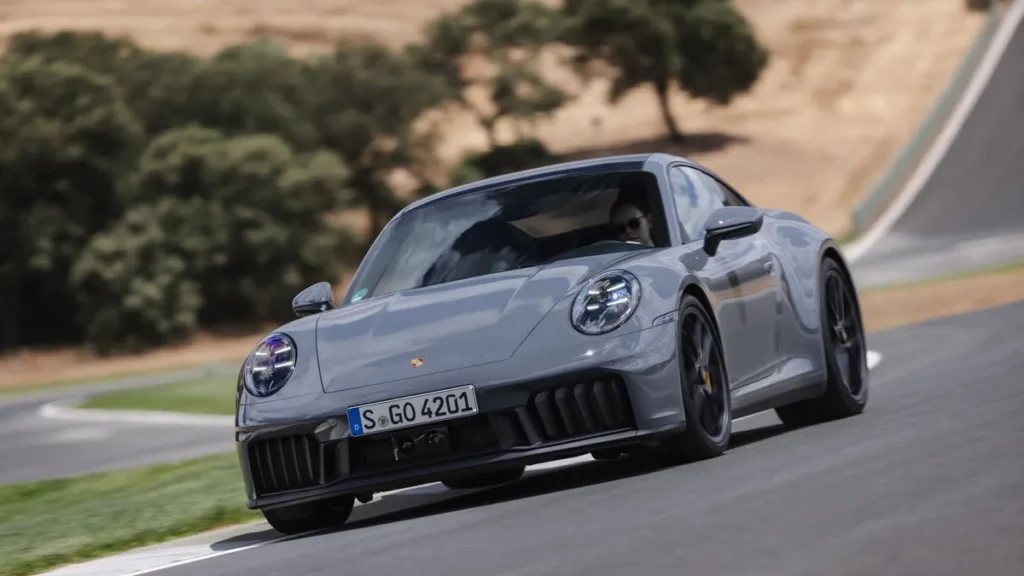
Few automotive brands have earned the respect and admiration that Porsche has built over nearly a century of engineering and motorsport success. In fiscal year 2025, Porsche reported revenue of €36.3 billion and delivered 279,449 vehicles worldwide. However, operating profit fell to €413 million, with a return on sales of 1.1%. Product strategy changes, restructuring costs, tariffs, and challenging market conditions affected its performance.
The 911, Cayenne, Panamera, Taycan, and Macan are more than just cars. They represent Porsche’s blend of performance, luxury, and driving experience. Porsche’s motorsport heritage is equally impressive, with more than 30,000 race victories and 19 overall wins at the 24 Hours of Le Mans.
But Porsche is not alone in the performance and luxury car market. Several major brands compete with it across sports cars, luxury grand tourers, performance SUVs, and electric vehicles. Ferrari reported €7.146 billion in revenue and €1.600 billion in net profit in 2025, with 13,640 cars shipped. Lamborghini delivered a record 10,747 vehicles and generated €3.197 billion in revenue. Tesla also remains a major force in electric performance. Its 2025 revenue reached $94.8 billion, and its approach to electric vehicles has changed customer expectations across the automotive industry.

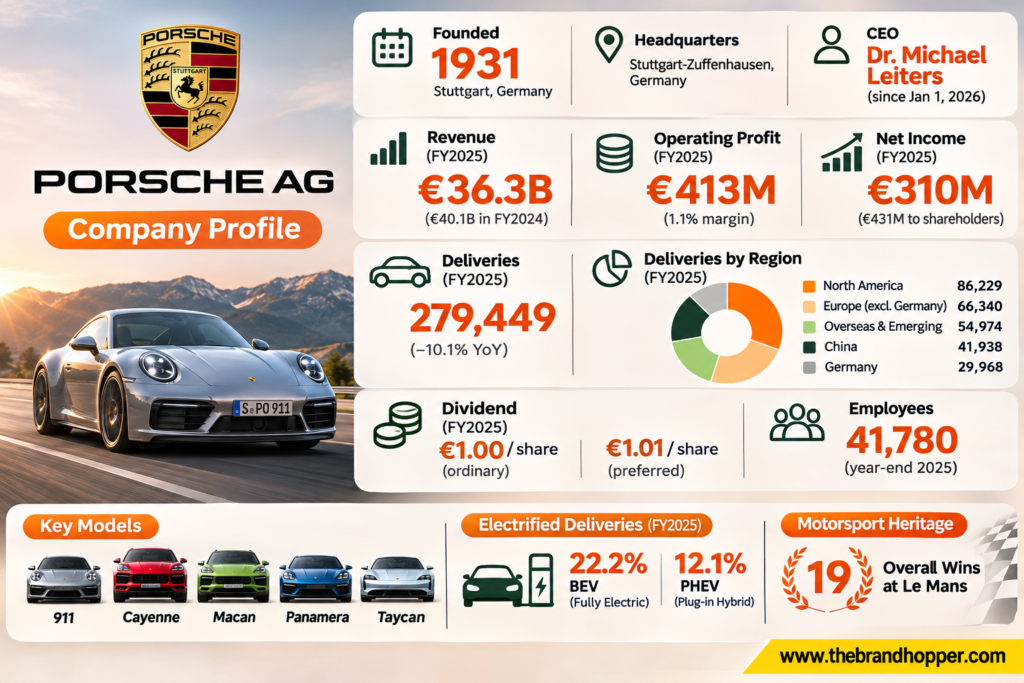
This article explores 17 major competitors challenging Porsche. It covers their latest financial results, key models, market positioning, and areas of competition with Porsche. Whether you’re comparing cars, studying the luxury automotive market, or simply interested in performance vehicles, this guide examines the brands competing with the Stuttgart marque.
Top 17 Competitors of Porsche
The following profiles examine each competitor’s brand heritage, latest performance data, key models competing with Porsche’s range, and the strategic dynamics that define their rivalry with the Stuttgart marque.
| Competitor | Latest Revenue / Deliveries | Primary Competitive Overlap |
|---|---|---|
| Ferrari | €7.15B revenue; 13,640 shipments (2025) | Sports cars, GT, supercar positioning |
| Lamborghini | €3.20B revenue; 10,747 deliveries (2025) | Super SUV, supercar, exclusivity |
| Bentley | 10,131 deliveries (2025) | Luxury GT, Panamera, Cayenne overlap |
| Aston Martin | £1.26B revenue; 5,448 wholesale units (2025) | GT, sports car, luxury touring |
| Jaguar | Part of JLR; group FY2025/26 revenue £22.9B | Sports car (F-Type era), electric luxury |
| Rolls-Royce | 5,664 deliveries (2025, -0.8%) | Ultra-luxury (above Panamera) |
| BMW / BMW M | €133.45B group revenue (2025); 2.464M deliveries | German performance, sports sedans, SUVs |
| Mercedes-Benz / AMG | €132.2B group revenue (2025) | German luxury-performance, GT-class |
| Audi / Audi Sport | Part of VW Group (Porsche sibling) | Premium German rival, R8 vs. 911 |
| McLaren Automotive | ~£600M est. (private) | British mid-engine supercar, 911 Turbo+ |
| Maserati | Part of Stellantis; 2024 deliveries fell sharply | Italian GT, Panamera rival |
| Tesla | $94.8B revenue; 1.636M deliveries (2025) | Premium EV, Taycan & Macan direct rival |
| Lotus Cars | Part of Geely; Eletre, Emeya EV launch | British lightweight sports car tradition |
| Alfa Romeo | Part of Stellantis | Italian performance, Giulia vs. Panamera |
| Cadillac | Part of GM; CT5-V Blackwing flagship | American performance flagship, F1 debut |
| Lexus F | Part of Toyota Group | Japanese luxury-performance, LC 500 |
| Bugatti (Bugatti Rimac) | Ultra-exclusive; <100 units/yr | Extreme performance flagship, heritage |
1. Ferrari


Ferrari is one of Porsche’s closest rivals in the performance car market. The Italian brand is known for its racing heritage, exclusivity, and high-performance sports cars.
In 2025, Ferrari reported €7.146 billion in revenue, €2.110 billion in EBIT, and €1.600 billion in net profit. It shipped 13,640 cars worldwide and achieved an EBIT margin of 29.5%.
Ferrari and Porsche compete in several sports car segments. Ferrari’s 296 and 849 Testarossa models compete with high-performance Porsche 911 variants, while Ferrari’s grand tourers appeal to buyers looking for luxury and performance.
Ferrari also entered the luxury utility vehicle segment with the Purosangue, launched in 2023. Although Ferrari does not describe it as an SUV, it competes for buyers considering high-performance luxury vehicles such as the Porsche Cayenne Turbo GT and Cayenne Turbo E-Hybrid.
Ferrari is also preparing to enter the fully electric market. Its first electric model, the Ferrari Luce, is scheduled for its world premiere in 2026, bringing it into closer competition with electric performance cars such as the Porsche Taycan.
The main difference between Ferrari and Porsche is their approach to exclusivity and volume. Ferrari keeps production relatively limited to protect its brand appeal, while Porsche serves a much larger global market.
For buyers, the choice often comes down to personal preference. Ferrari offers Italian design, racing heritage, and exclusivity, while Porsche is known for engineering precision, performance, and everyday usability.
2. Lamborghini

Lamborghini is one of Porsche’s most dramatic rivals. The Italian brand is known for its bold designs, powerful engines, and eye-catching cars.
Based in Sant’Agata Bolognese, Italy, Lamborghini is owned by Audi, which is part of the Volkswagen Group. In 2025, Lamborghini delivered a record 10,747 vehicles and generated €3.197 billion in revenue. Its operating profit was €768 million, with an operating margin of 24%.
Lamborghini and Porsche compete most directly in the high-performance SUV segment. The Lamborghini Urus competes with the Porsche Cayenne Turbo models, appealing to buyers who want luxury, power, and sporty driving in an SUV.
Lamborghini’s sports car lineup includes the Temerario and the V12 hybrid Revuelto. The Revuelto delivers more than 1,000 horsepower and represents Lamborghini’s approach to combining traditional supercar performance with hybrid technology.
Lamborghini’s design and brand image are more dramatic than Porsche’s. It appeals to buyers who want a car that stands out and offers an especially bold driving experience.
Both brands belong to the Volkswagen Group, but they compete for many of the same luxury performance customers. They also share some corporate resources and technology.
Lamborghini is also expanding its electrification strategy. The Urus SE is a plug-in hybrid, while the Lanzador concept previews the brand’s future direction for electric performance vehicles.
Although Porsche and Lamborghini share the same parent company, they remain strong competitors in the luxury and performance car market.
3. Bentley


Bentley Motors is based in Crewe, England, and is part of the Volkswagen Group. It competes with Porsche in the luxury grand touring and high-performance SUV markets.
Bentley delivered 10,131 vehicles in 2025, down from 10,643 in 2024. Lower demand in key markets, including China, and changes in its product lineup affected sales.
Bentley and Porsche compete through models such as the Continental GT and Panamera. The Continental GT focuses on handcrafted luxury, comfort, and personalisation, while the Panamera offers a more sports car-inspired driving experience.
The Bentley Bentayga also competes with the Porsche Cayenne Turbo models. The Bentayga focuses more on luxury, rear-seat comfort, and customisation, while the Cayenne places greater emphasis on sporty driving dynamics.
Bentley’s long-term strategy includes introducing new models and moving towards electrification. Its first fully electric vehicle is planned as part of this transition.
Both brands benefit from being part of the Volkswagen Group and share some development resources. However, they target different customer preferences and price points.
For buyers, the choice often comes down to priorities. Porsche offers sportier handling and driver involvement, while Bentley focuses on handcrafted British luxury and comfort.
4. Aston Martin


Aston Martin is a British luxury sports car brand known for its elegant design, grand touring cars, and its association with James Bond films. It competes with Porsche despite being a smaller company and facing financial challenges.
In 2024, Aston Martin reported revenue of approximately £1.58 billion, down from £1.63 billion in 2023. Wholesale volumes fell 9% to 6,030 vehicles, and the company recorded a net loss of around £323.5 million.
Despite lower sales, its average selling price increased by 6% to a record £245,000. This reflects continued demand for its premium models and special editions.
Aston Martin competes with Porsche in the sports car and grand touring segments. The DB12 is positioned as a luxury performance car, offering strong V8 performance and comfort for long journeys.
The Aston Martin Vantage also competes with Porsche sports cars, including the 911 Carrera. It appeals to buyers who prefer British design and a powerful V8 engine.
Aston Martin is also developing hybrid and electric technologies. The company has partnered with Lucid Motors for electric drivetrain technology and is working on future electrified models.
Its Formula 1 involvement also helps strengthen its brand visibility and motorsport image.
For buyers, the choice between Porsche and Aston Martin often comes down to preference. Porsche is known for its precise handling and engineering, while Aston Martin offers British styling, exclusivity, and a distinctive grand touring experience.
5. Jaguar

Jaguar is a British luxury car brand owned by Jaguar Land Rover (JLR), which is part of India’s Tata Motors. The brand is undergoing a major transformation as it moves towards an all-electric luxury lineup.
JLR reported £22.9 billion in revenue for FY2025/26, down 20.9% year-on-year. Its performance was affected by tariffs, a cyber incident, and Jaguar’s planned model transition. Most of JLR’s business comes from its Land Rover brands.
Jaguar ended production of its previous petrol-powered lineup in late 2024 as part of its move towards electric vehicles. The Type 00 concept, unveiled in December 2024, previews the design direction of its future electric cars.
Jaguar has said its new production model will be unveiled in FY2026/27. The brand plans to move into a more premium market, with prices expected to start above £100,000.
In the past, Jaguar competed with Porsche through models such as the F-Type sports car and F-Pace SVR performance SUV. The F-Type rivalled the Porsche 911, while the F-Pace SVR competed with high-performance Cayenne models.
These traditional competitors are being phased out as Jaguar prepares for its electric relaunch. Its future competition with Porsche will likely focus more on luxury electric vehicles and grand touring cars.
Jaguar’s new strategy is ambitious. The brand is giving up its previous models and customer base to focus on a smaller, more exclusive electric luxury market.
If successful, Jaguar could become a stronger competitor to Porsche in the premium electric vehicle segment. Its relaunch will be an important development to watch in the luxury car market.
6. Rolls-Royce

Rolls-Royce Motor Cars is owned by BMW Group and is based in Goodwood, England. It is known for its handcrafted luxury, quiet ride, and highly personalised vehicles.
Rolls-Royce delivered 5,664 vehicles worldwide in 2025, slightly down from 5,712 in 2024. Despite the decline, demand for its highly customised and exclusive models remains strong.
Rolls-Royce and Porsche compete in the luxury touring and premium SUV markets, although they target different price levels. The Rolls-Royce Cullinan competes with high-end SUVs such as the Porsche Cayenne Turbo GT, offering a much greater focus on luxury and personalisation.
The Rolls-Royce Ghost and Phantom also appeal to buyers considering premium luxury sedans. They sit above models such as the Porsche Panamera in terms of price, craftsmanship, and prestige.
Rolls-Royce is also moving towards electric vehicles. The Spectre, launched in 2023, is the brand’s first fully electric car and offers a quiet, luxurious driving experience.
The Spectre competes with electric performance cars such as the Porsche Taycan, though it is positioned at a much higher price point. While the Taycan focuses on performance and driving dynamics, the Spectre emphasises comfort, luxury, and bespoke craftsmanship.
Rolls-Royce’s future electric models could create more competition with Porsche in the luxury EV market. Both brands are investing in electrification, but their priorities remain different.
7. BMW / BMW M


The BMW Group is the parent company of BMW, MINI, and Rolls-Royce Motor Cars. It is one of Porsche’s major competitors in the premium performance and luxury car market.
In 2025, BMW Group reported revenue of €133.45 billion, down from €142.38 billion in 2024. Profit before tax fell 35.8% to €10.97 billion, reflecting challenging market conditions, costs related to its new electric vehicle platform, and a brake system supplier recall.
BMW Group delivered approximately 2.464 million vehicles in 2025, up 0.5% year-on-year. Its electric vehicle sales also grew, with battery-electric deliveries reaching 426,594 units.
BMW and Porsche compete across several vehicle segments. BMW M models, including the M2 and M3, are alternatives to Porsche sports cars for buyers who want performance and everyday usability.
The BMW M5, now available as a plug-in hybrid, competes with the Porsche Panamera Turbo E-Hybrid. The BMW X5 M and X6 M also compete with high-performance Porsche Cayenne models.
BMW’s electric models, such as the i4 M50 and i7 M70, compete with Porsche’s electric performance cars, including the Taycan.
BMW is also developing its Neue Klasse electric vehicle platform. It will support new electric models and future high-performance cars from BMW M, increasing competition with Porsche’s electric lineup.
For buyers, BMW offers a wider range of models and more accessible options. Porsche focuses more strongly on its sports car identity, driving experience, and the heritage of the 911.
8. Mercedes-Benz / Mercedes-AMG
Mercedes-Benz Group is the parent company of Mercedes-Benz, Mercedes-AMG, and Mercedes-Maybach. It is one of Porsche’s major competitors in the luxury and performance car market.
In 2025, Mercedes-Benz Group reported revenue of €132.2 billion, down from €145.6 billion in 2024. The decline was affected by weaker demand in China, market pressures, and ongoing investment in electric vehicles.
Mercedes-Benz Cars sold approximately 1.8 million passenger cars in 2025. Its sales figures should not be directly compared with BMW Group’s total deliveries, which include BMW, MINI, and Rolls-Royce.
Mercedes-AMG is one of Porsche’s closest competitors. The AMG GT 63 and GT 63 S E Performance compete with the Porsche Panamera’s high-performance versions.
The Mercedes-AMG GT Coupe also competes with the Porsche 911. Both appeal to buyers looking for powerful, premium sports cars, although they offer different driving experiences.
In the SUV segment, the Mercedes-AMG GLE 63 S competes with high-performance Porsche Cayenne models. The Mercedes-AMG G 63 is another luxury performance SUV with a distinctive design and strong brand appeal.
Mercedes-Benz also competes with Porsche in electric vehicles. The EQS and its AMG version target luxury EV buyers, while the EQE SUV overlaps with the Porsche Macan Electric in the premium electric SUV market.
Mercedes-Benz offers advanced technology, including its MBUX infotainment system, and a wide range of luxury vehicles. Porsche focuses more strongly on sports car performance and driving dynamics.
Both brands remain major competitors across luxury sedans, sports cars, SUVs, and electric vehicles.
9. Audi / Audi Sport
Audi is one of Porsche’s closest competitors. Both brands belong to the Volkswagen Group, but they compete for many of the same premium car buyers.
Audi is known for its technology, quattro all-wheel drive, and wide range of vehicles. Its lineup includes everything from compact cars to luxury sedans and performance SUVs.
Audi and Porsche also share some vehicle platforms and engineering technology. For example, the Porsche Macan and Audi Q5 share some underlying technology, while the Cayenne and Audi Q7/Q8 are also related through their platform architecture.
Audi Sport produces high-performance models under the RS name. These cars compete with Porsche across sports cars, performance sedans, and SUVs.
The Audi RS 7 competes with high-performance Porsche Panamera models. The Audi RS 6 Avant is also an alternative to the Porsche Panamera Sport Turismo for buyers looking for a powerful performance estate.
Audi’s R8 was its flagship supercar and competed with the Porsche 911. However, production of the R8 ended in 2024, and Audi has not confirmed a direct successor.
Audi also competes with Porsche in electric vehicles. The Audi e-tron GT and Porsche Taycan are built on the same J1 platform, but offer different designs and driving experiences.
The Audi RS e-tron GT competes with high-performance Taycan models, while the standard e-tron GT offers an alternative to the Taycan 4S.
Audi sells a much wider range of vehicles than Porsche, giving it greater market reach. Porsche, however, has a stronger focus on sports cars and a more specialised performance image.
10. McLaren Automotive
McLaren Automotive is a British sports car manufacturer based in Woking, England. It is known for its Formula 1 heritage, lightweight engineering, and high-performance mid-engine supercars.
McLaren focuses on sports cars and supercars rather than a wide range of vehicles. Its cars are designed to deliver strong performance, sharp handling, and advanced aerodynamics.
McLaren is privately owned, so it does not publish the same level of financial information as listed automakers. The company has also gone through financial restructuring in recent years.
McLaren competes with Porsche in the high-performance sports car segment. The McLaren Artura, a hybrid supercar with a V6 engine and electric motor, competes with high-performance Porsche 911 models.
The McLaren 750S is another major rival. It offers a lightweight design and powerful performance, competing with Porsche’s top 911 variants.
McLaren’s W1, unveiled in 2024, is its next-generation flagship supercar. It sits in a much more exclusive category than Porsche’s regular sports car lineup.
McLaren and Porsche follow different strategies. Porsche offers sports cars, luxury SUVs, sedans, and electric vehicles, while McLaren remains focused on exotic performance cars.
For buyers, the choice often comes down to driving style and preference. Porsche offers the distinctive rear-engine 911 experience, while McLaren provides a mid-engine supercar with strong motorsport influence.
11. Maserati
Maserati is an Italian luxury performance brand headquartered in Modena and owned by Stellantis. It is one of Porsche’s closest Italian competitors in the luxury grand touring and sports sedan segments.
Maserati faced a difficult year in 2024, as global demand for its vehicles declined sharply. The brand is going through a major product renewal, with the Ghibli, Levante, and Quattroporte ending production.
The new lineup includes the GranTurismo, available with both petrol and electric Folgore versions, the GranCabrio Folgore, and the Grecale luxury SUV. Maserati is also preparing an electric successor to the Levante.
Despite these new models, Maserati continued to face weak demand and a challenging transition in 2024. The gap between old and new models affected sales, while the luxury car market in China, an important market for Maserati, also contracted. The latest Stellantis reporting should be used for Maserati’s current 2025 delivery figures.
Maserati and Porsche compete most directly in the luxury grand touring segment. The GranTurismo is powered by a Nettuno twin-turbocharged V6 producing up to 550 hp, while the electric GranTurismo Folgore delivers 761 hp.
These models compete with the Porsche 911 Turbo and Panamera. Maserati appeals to buyers who value Italian design, exclusivity, and its distinctive Trident heritage.
The Grecale competes with the Porsche Macan, while the Levante successor is expected to compete with the Cayenne. However, Porsche has an advantage in these SUV segments through its engineering, brand strength, and established market position.
The GranTurismo Folgore also competes with the Porsche Taycan Turbo in the luxury electric GT segment. Its starting price is approximately £195,000.
Maserati’s future is closely linked to Stellantis’ wider business challenges. Leadership changes, restructuring, and cost-reduction efforts have created uncertainty around the brand’s product plans and investment.
Maserati’s strengths include its Italian heritage, in-house Nettuno V6 engine, Modena motorsport connections, and loyal collector following. These qualities give the brand a distinctive identity that Porsche must take seriously.
However, Porsche benefits from stronger engineering execution, higher resale values, a broader model range, and a more extensive global network. Maserati will need to address these advantages as it works to strengthen its position in the luxury performance market.
12. Tesla
Tesla is one of Porsche’s most important competitors. The electric vehicle pioneer has pushed traditional automakers, including Porsche, to rethink their product strategies, technology, and business models.
Tesla reported full-year 2025 revenue of $94.8 billion, compared with $97.7 billion in 2024. Automotive revenue declined by 6% to $77.1 billion, while energy generation and storage revenue increased by 67% to $10.1 billion.
Tesla’s net income fell to $7.09 billion. The company also delivered approximately 1.636 million vehicles in 2025, down from 1.789 million in 2024.
This marked Tesla’s first annual delivery decline since it began mass production. Growing competition from Chinese EV manufacturers, higher interest rates, and more normalized demand contributed to the slowdown.
Investor optimism in late 2024 was driven partly by Tesla’s potential Robotaxi and Full Self-Driving (FSD) businesses, along with plans for a more affordable model known as Model Q.
Tesla competes with Porsche in two main areas. The first is the high-performance electric vehicle market, where the Model S Plaid and Model X Plaid compete with the Porsche Taycan Turbo S and Cayenne Turbo E-Hybrid.
The Model S Plaid produces 1,020 hp and offers extremely quick acceleration. The Model X Plaid also produces 1,020 hp and combines high performance with SUV practicality.
For buyers who prioritize speed, technology, and performance figures over traditional luxury and craftsmanship, Tesla offers a compelling alternative to Porsche at a lower price.
The second area of competition is the electric crossover segment. The Tesla Model Y competes with the Porsche Macan EV, particularly for buyers comparing higher-end Model Y versions with entry-level or mid-range Macan EV models.
Tesla’s influence on Porsche is especially visible in the development of the Taycan. Porsche created the Taycan as a premium alternative to the Tesla Model S, combining electric performance with Porsche’s driving experience, craftsmanship, and design.
The Taycan uses an 800-volt electrical architecture designed to support high-speed charging. Its interior also combines digital displays with physical controls, reflecting Porsche’s approach to balancing modern technology with traditional usability.
Tesla, by contrast, has adopted a more technology-focused and software-driven approach, with a highly digital interior.
As Tesla improves its battery technology, expands its vehicle lineup, and develops autonomous driving capabilities, competition with Porsche in the premium electric vehicle market is likely to become even stronger.
13. Lotus Cars

Lotus Cars is a British sports car brand founded by Colin Chapman in 1952. It is now majority-owned by China’s Zhejiang Geely Holding Group.
Lotus is known for its philosophy of “simplify, then add lightness.” This approach has shaped the brand’s focus on lightweight design, handling, and driving enjoyment.
Some of its most famous models include the Elan, Esprit, Elise, Exige, and Evora. Today, Lotus is going through a major transformation.
The Emira, launched in 2021, is the brand’s last petrol-powered sports car. The Eletre electric SUV and Emeya electric grand tourer represent its new direction under Geely ownership.
Lotus and Porsche compete in the sports car market, where both brands focus on handling, driver engagement, and the connection between the car and its driver.
The Lotus Emira is available with a Toyota-sourced supercharged V6 or a turbocharged four-cylinder engine from Mercedes-AMG. It competes with the Porsche 718 Cayman GTS for buyers looking for a mid-engine sports car.
The Emira offers responsive handling, communicative steering, and a focused driving experience. It provides an alternative to the Porsche Cayman for drivers who prefer a more distinctive and driver-focused sports car.
In the electric vehicle segment, the Lotus Eletre competes with high-performance electric SUVs such as the Porsche Taycan Cross Turismo and the upcoming electric Cayenne. The Eletre offers high performance and luxury, but it is positioned at a higher price and performance level than some competitors.
Lotus’s transformation under Geely has involved significant investment. The company has expanded production in Wuhan, China, while continuing to operate its historic facility in Hethel, Norfolk, UK.
The brand is also expanding beyond traditional sports cars into electric SUVs and grand tourers. The Eletre and Emeya target growing demand for high-performance electric vehicles in China and other global markets.
Lotus continues to build on its sporting heritage through the Emira and its motorsport activities, including its Formula E presence.
For buyers choosing between Lotus and Porsche, the key difference is their overall approach. Lotus offers a focused, driver-oriented sports car experience, while Porsche provides a wider model range, a larger dealer network, and a similar emphasis on driving enjoyment.
14. Alfa Romeo
Alfa Romeo is an Italian premium performance brand founded in Milan in 1910. It is owned by Stellantis and has a long history of motorsport success and passionate driving.
Alfa Romeo competes with Porsche mainly through its performance sedans and SUVs. Its flagship models combine strong performance with distinctive Italian design and driving character.
The Giulia Quadrifoglio is powered by a Ferrari-derived 2.9-litre twin-turbocharged V6 producing 510 hp. It competes with performance sedans such as the Porsche Panamera, appealing to buyers who want a powerful four-door car.
The Stelvio Quadrifoglio uses the same engine in an SUV body. It competes with Porsche’s performance SUVs, including the Macan and Cayenne.
Alfa Romeo’s competitive strength has traditionally been its emotional driving experience rather than its reliability or the size of its model range.
The Giulia Quadrifoglio is known for its responsive steering, balanced weight distribution, and distinctive V6 sound. These qualities make it particularly appealing to drivers who value an engaging and exciting driving experience.
The limited-edition Alfa Romeo 33 Stradale further demonstrates the brand’s ambition. Limited to just 33 units, it was introduced in 2023 and is available with either a combustion engine or an electric powertrain.
Priced at approximately €1.5 million, the 33 Stradale targets the ultra-exclusive performance car market. It reflects Alfa Romeo’s heritage and ambition to compete at the highest level of automotive design and performance.
Alfa Romeo recorded more than 73,000 global registrations in 2025, an increase of over 20% compared with the previous year. The Junior has become an important model in its current lineup, while the brand is also developing electrified versions of the Giulia and Stelvio.
These developments create new competition for Porsche in the premium performance market, particularly as both brands expand their electrified offerings.
Alfa Romeo has also built a strong motorsport legacy. Its collaboration with Sauber in Formula 1 ended ahead of Sauber’s transition into the Audi works team in 2026.
Although Alfa Romeo’s current focus is on road cars, its motorsport history remains an important part of its brand identity. The company’s eight Formula 1 World Championships and Porsche’s success in Le Mans and rallying give both brands powerful motorsport stories to draw on.
15. Cadillac

Cadillac is General Motors’ flagship luxury brand and is often associated with the slogan “Standard of the World.” It is one of Porsche’s important American competitors in the premium performance market.
Cadillac competes with Porsche through its V-Series performance lineup and growing electric vehicle range. Although Cadillac sells fewer vehicles globally and has a different brand positioning, its performance models offer a strong alternative for American luxury car buyers.
The Cadillac CT5-V Blackwing is one of its most notable performance cars. It features a supercharged 6.2-litre V8 engine producing 668 hp and is available with a six-speed manual transmission.
The CT5-V Blackwing competes with performance sedans such as the Porsche Panamera. Its powerful engine, rear-wheel-drive layout, and manual transmission appeal to drivers who want a traditional performance car experience.
Cadillac’s competition with Porsche is also growing in the electric vehicle market. The LYRIQ and ESCALADE IQ represent the brand’s electric SUV ambitions under General Motors’ Ultium platform.
The Cadillac CELESTIQ is an ultra-exclusive, hand-built electric flagship sedan. With production limited to approximately 400 units per year and prices starting around $340,000, it targets buyers in the ultra-luxury electric car market.
The CELESTIQ creates competition for Porsche’s premium electric and luxury four-door models, including the Taycan and Panamera.
Cadillac has also announced plans to enter Formula 1 in 2026. Its entry will provide a global motorsport platform and help strengthen its performance credentials.
The Cadillac-Porsche competition is particularly important in North America. Cadillac benefits from a strong American dealer network, established brand loyalty, and competitive pricing for its V-Series models.
Outside North America, Cadillac has a smaller dealer presence and less established brand recognition, which limits its competition with Porsche in many European and Asian markets.
Cadillac’s V-Series Blackwing models have received strong reviews for their performance and driving experience. They are widely regarded as some of the finest performance cars produced by an American manufacturer in recent years.
For buyers considering a Porsche Panamera or 911, the CT5-V Blackwing offers a compelling alternative, particularly for those who prefer a powerful V8 engine, rear-wheel drive, and the option of a manual gearbox.
16. Lexus

Lexus is the luxury vehicle division of Toyota Motor Corporation. Launched in 1989, it has become one of the world’s leading luxury car brands and an important Japanese competitor to Porsche.
Lexus competes with Porsche through its F-performance models, the LC grand tourer, and its growing electric vehicle lineup. The brand is also working toward Toyota’s broader electrification goals.
Lexus does not publish separate financial results, as its revenue is included in Toyota’s overall figures. Toyota reported operating revenue of approximately ¥43 trillion for the fiscal year ended March 2025.
Lexus delivered 882,231 vehicles globally in 2025, making it a significant player in the global luxury car market.
Lexus competes with Porsche through its performance-oriented F and F Sport models. The Lexus RC F features a naturally aspirated 5.0-litre V8 engine and appeals to buyers who enjoy a traditional sports car sound and driving experience.
The RC F competes with sports coupes such as the Porsche 718 Cayman GTS and 911 Carrera. Its naturally aspirated engine gives it a distinctive character in a market increasingly dominated by turbocharged and electric powertrains.
The Lexus IS 500 F Sport Performance also uses a 5.0-litre V8 engine. It competes with performance-oriented four-door models from Porsche, including the Panamera.
At the top of the Lexus range, the LC 500 is a luxury grand touring coupe known for its striking design. It competes with the Porsche 911 Targa and 911 Cabriolet for buyers who value design, comfort, and driving enjoyment.
The Lexus LFA remains one of the brand’s most iconic performance cars. Produced from 2010 to 2012, it featured a Yamaha-engineered V10 engine and helped establish Lexus as a serious performance brand.
Lexus’s future competition with Porsche will increasingly depend on its electric vehicle strategy. The Lexus RZ is an all-electric SUV, while the LF-ZC concept previews a possible next-generation electric sedan.
These developments show Lexus’s intention to compete with Porsche’s electric models, including the Taycan and Macan EV.
Lexus also benefits from Toyota’s substantial investment in battery and electrification technology. Toyota is developing solid-state batteries, although the timing and commercial availability of this technology remain subject to its production plans.
If solid-state batteries deliver the expected improvements in energy density and charging speed, they could help Lexus become a stronger competitor to Porsche in the premium electric performance market.
17. Bugatti (Bugatti Rimac)
Bugatti is an ultra-exclusive hypercar brand with roots in Molsheim, Alsace. Founded by Ettore Bugatti in 1909, it is known for producing some of the world’s most powerful and exclusive cars.
Bugatti became part of a joint venture in 2021 between Volkswagen Group and Croatian electric hypercar maker Rimac. The company now operates as Bugatti Rimac, a partnership between Rimac Group and Porsche AG.
This makes Bugatti both a competitor and a partner of Porsche. The two brands are connected through ownership and technology, while competing for the attention of wealthy collectors and performance car enthusiasts.
Bugatti produces very limited numbers of hypercars. Production of the Chiron has ended, and the Tourbillon is its successor.
The Bugatti Chiron featured an 8.0-litre quad-turbocharged W16 engine producing 1,500 hp. Its production was limited to approximately 500 units, making it one of the brand’s most exclusive modern models.
The successor, Bugatti Tourbillon, was unveiled in June 2024. It represents a major change in Bugatti’s engineering approach.
The Tourbillon combines a naturally aspirated 8.3-litre V16 engine with three electric motors to produce a total of 1,800 hp. It also features an 800-volt electrical architecture and a bespoke carbon fibre structure.
Bugatti announced a starting price of €3.8 million and plans to limit production to 250 units. The Tourbillon is one of the most ambitious hybrid hypercars in the automotive industry.
No Porsche model competes directly with the Tourbillon in terms of price or performance. However, Porsche’s 911 GT1 heritage and the 918 Spyder demonstrate the company’s experience in the ultra-exclusive performance car segment.
The relationship between Bugatti and Porsche also has a strategic dimension. Porsche’s investment in Rimac Group gives it a connection to the development of advanced electric and hybrid hypercar technology.
This technology may also influence Porsche’s future performance models. The Rimac Nevera, a fully electric hypercar producing 1,914 hp, represents another example of the extreme performance possible with electric power.
For collectors choosing between Porsche and Bugatti, the appeal is different. Porsche is known for engineering precision and focused driving performance, while Bugatti offers exceptional exclusivity, power, and mechanical luxury.
A Porsche 911 GT3 RS or 918 Spyder appeals to drivers who want a high-performance road car with a strong motorsport connection. A Bugatti Chiron or Tourbillon appeals to collectors seeking one of the most exclusive and powerful cars in the world.
Frequently Asked Questions (FAQ)
Q1. Who is Porsche’s biggest competitor?
Ferrari is widely considered Porsche’s most direct competitor at the brand identity and prestige level—both producing high-performance sports cars with deep motorsport heritage and commanding premium prices through controlled exclusivity. For volume competitive pressure, BMW M and Mercedes-AMG are Porsche’s most significant rivals in the performance car market. In the electric vehicle segment, Tesla is Porsche’s most disruptive competitor, particularly for the Taycan.
Q2. How does Porsche compare to Ferrari in revenue and profitability?
Porsche is significantly larger by revenue (€40.1 billion vs Ferrari’s €6.68 billion) and by volume (310,718 deliveries vs Ferrari’s 13,752). However, Ferrari operates at extraordinary profitability—its 2024 net profit of €1.526 billion on €6.68 billion revenue equates to a net margin of approximately 22.9%, versus Porsche’s 2025 net margin was approximately 0.9% (profit after tax €310 million on €36.3 billion). Ferrari’s extreme exclusivity model generates higher profit per vehicle by a wide margin.
Q3. Is the Porsche Taycan a direct competitor to Tesla?
Yes—Porsche designed the Taycan explicitly as a premium alternative to the Tesla Model S, emphasizing its 800-volt charging architecture, traditional Porsche driver engagement, craftsmanship-led interior, and distinctive design language. The Tesla Model S Plaid outperforms the Taycan Turbo S in straight-line acceleration at a lower price, but the Taycan offers a fundamentally different driving character and brand experience that appeals to buyers who value European performance car traditions over Silicon Valley technology maximalism.
Q4. What is Porsche’s most direct competitor for the Cayenne?
The BMW X5 M Competition and Mercedes-AMG GLE 63 S are the closest German performance SUV rivals. At the ultra-luxury end, the Bentley Bentayga V8 competes on craftsmanship and prestige. The Lamborghini Urus S competes at the top performance tier. The Land Rover Range Rover Sport SVR competes in the same price bracket for UK and European buyers. For the new electric Macan EV, the BMW iX3 M50, Audi SQ8 e-tron, and Mercedes EQE SUV AMG create direct competition.
Q5. How many vehicles does Porsche sell compared to competitors?
Porsche delivered 279,449 vehicles globally in 2025—significantly more than Ferrari (13,640), Lamborghini (10,747), Bentley (10,131), Aston Martin (5,448 wholesale), or Rolls-Royce (5,664), but far fewer than BMW Group (2.464 million) or Mercedes-Benz Group (2025 revenue €132.2 billion; its vehicle-volume metric differs by reporting scope). This positioning—larger than pure supercar brands, smaller than mass-luxury manufacturers—reflects Porsche’s unique combination of sports car exclusivity with accessible luxury SUV and sedan volumes.
Conclusion
Porsche’s competitive landscape in 2024 and beyond is defined by its unique positioning at the intersection of sports car heritage, luxury craftsmanship, and technology leadership. Its €36.3 billion in revenue, 279,449 vehicles delivered, and €413 million in operating profit demonstrate that the Stuttgart marque remains one of the most commercially successful and financially resilient automotive brands in the world. Yet every dimension of Porsche’s competitive moat is under pressure: Ferrari is posting record profits on controlled exclusivity; Lamborghini has crossed the €3 billion revenue barrier while delivering record volumes; BMW M and Mercedes-AMG are deploying electrified performance platforms that challenge the Taycan and Macan EV; and Tesla’s $97.7 billion revenue machine continues to redefine consumer expectations for performance electric vehicles at every price point.
The 17 competitors profiled in this article span the full competitive spectrum—from Ferrari’s handcrafted Italian exclusivity to Tesla’s algorithmic approach to performance; from Bugatti’s €3.8 million Tourbillon hypercar to Cadillac’s supercharged V8 Blackwing; from McLaren’s F1-derived mid-engine architecture to Lexus’s naturally aspirated V8 purity. What unites them is the recognition that Porsche has built something genuinely difficult to replicate: a brand that is simultaneously a sports car icon, a luxury SUV market leader, an EV pioneer, and a motorsport legend. The Porsche 911, now in its eighth generation and in continuous production since 1963, is the benchmark against which every rival in this article ultimately measures itself. And that, more than any financial metric, is Porsche’s most durable competitive advantage.
Also Read: Meijer Marketing Strategy: Campaigns, 4Ps & mPerks Secrets
To read more content like this, subscribe to our newsletter
Go to the full page to view and submit the form.