


Spotify remains the world’s largest audio streaming platform by a wide margin, with its most recently disclosed official figures putting it at 777 million monthly active users, including 300 million Premium subscribers, spread across more than 180 markets.
Founded in Stockholm in 2006 by Daniel Ek and Martin Lorentzon and now headquartered in Stockholm with its holding company registered in Luxembourg, Spotify (NYSE: SPOT) built its lead on a freemium model, an industry-defining recommendation engine, and an early, aggressive push into podcasting and, more recently, audiobooks.
But “largest” has never meant “unrivaled.” Spotify fights a different competitor in nearly every market and format it operates in: Apple and Amazon bundle music into much larger ecosystems, YouTube leverages the world’s biggest video platform, hi-res specialists chase audiophiles Spotify still doesn’t fully serve, and regional giants in China, India, the Middle East, and Africa often out-rank Spotify entirely on their home turf.
This guide profiles the streaming services and audio platforms that matter most in Spotify’s competitive picture. Every fact below has been checked against company filings, official newsrooms, or well-documented reporting, and — because a competitor list is only useful if it stays accurate — a couple of once-prominent names (Napster’s streaming arm, Wynk Music, TikTok Music) have been deliberately left out because they’ve shut down, and are addressed separately near the end so you know why.
How to Read the Competitive Map
Spotify doesn’t compete on one axis. It’s useful to think of its rivals in five overlapping groups:
1. Ecosystem bundlers — Apple Music, YouTube Music, and Amazon Music — don’t need music streaming to be profitable on its own; it’s a retention tool for a much larger hardware, advertising, or e-commerce business, which lets them compete aggressively on price and bundling in ways Spotify, a pure-play audio company, cannot.
2. Audiophile / hi-res specialists — Tidal and Qobuz — compete on audio fidelity and artist economics rather than catalog size or price, appealing to listeners who care about lossless sound and to artists frustrated with standard streaming payouts.
3. Creator- and community-first platforms — SoundCloud, Bandcamp, and Audiomack — compete less on subscriber count and more on being the place independent and emerging artists actually launch music, which matters to Spotify because so much of its own catalog growth depends on the same unsigned talent pool.
4. Broadcast-radio-heritage platforms — Pandora and iHeartRadio — compete by leaning on personalized radio, live broadcast simulcasts, and deep advertising relationships built over decades, a different value proposition than on-demand streaming.
5. Regional and market-dominant players — Tencent Music Entertainment and NetEase Cloud Music in China, JioSaavn in India, Anghami in the Middle East and North Africa, Boomplay in Africa, KKBOX in Taiwan and parts of Southeast Asia, Yandex Music in Russia, and Melon in South Korea — compete on local-language catalogs, telecom bundling, and cultural relevance that a global platform like Spotify often struggles to replicate.
With that framework in place, here are the competitors.
Top Competitors of Spotify
1. Apple Music

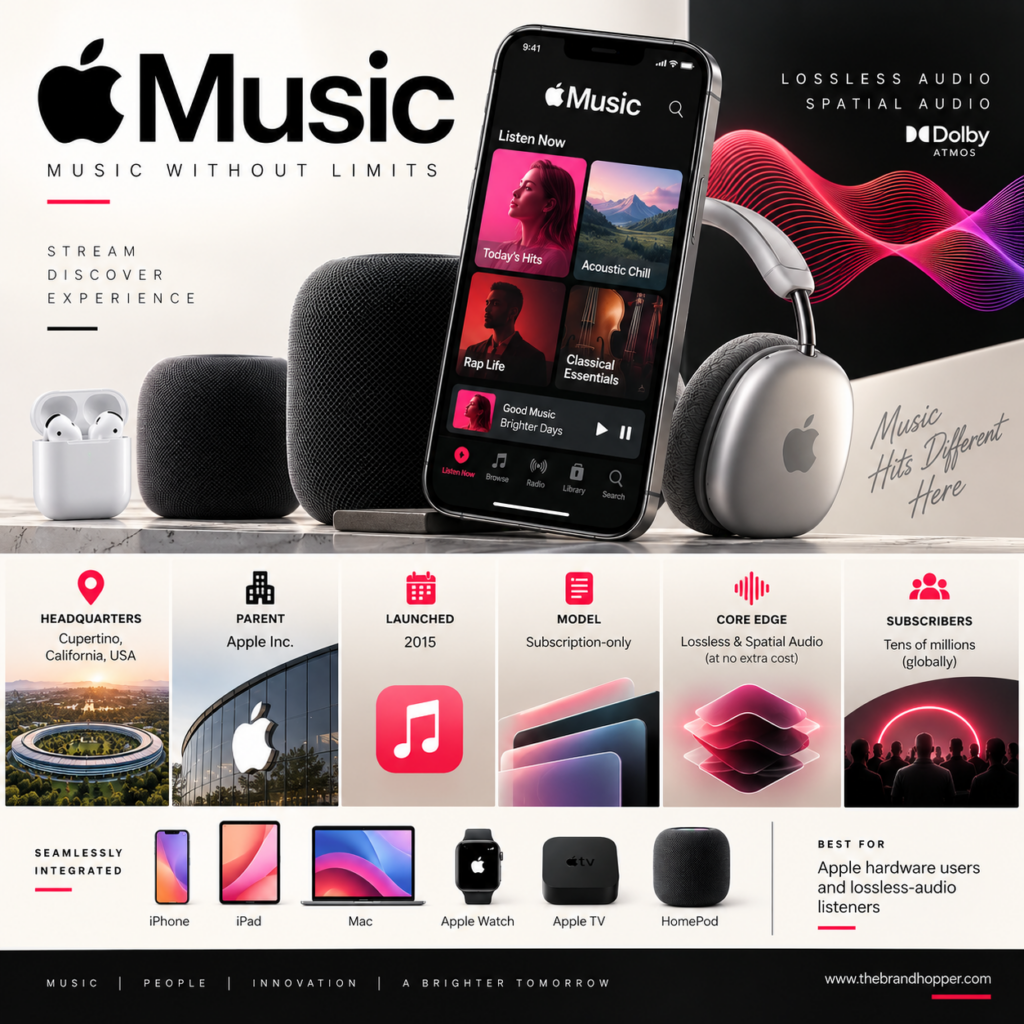
Apple Music is Spotify’s most direct global rival in scale and positioning, and the two are usually described as running neck-and-neck for the largest paid subscriber base outside China.
Apple’s biggest structural advantage is that Apple Music doesn’t need to turn its own profit — it’s bundled into Apple One, pre-installed on every iPhone, and used to strengthen the broader Apple ecosystem, which means Apple can subsidize features (like lossless and spatial audio, offered free to all subscribers since 2021) that Spotify has been slower and more cautious about matching.
Apple Music has no free ad-supported tier, which philosophically separates it from Spotify’s freemium acquisition strategy.
2. YouTube Music
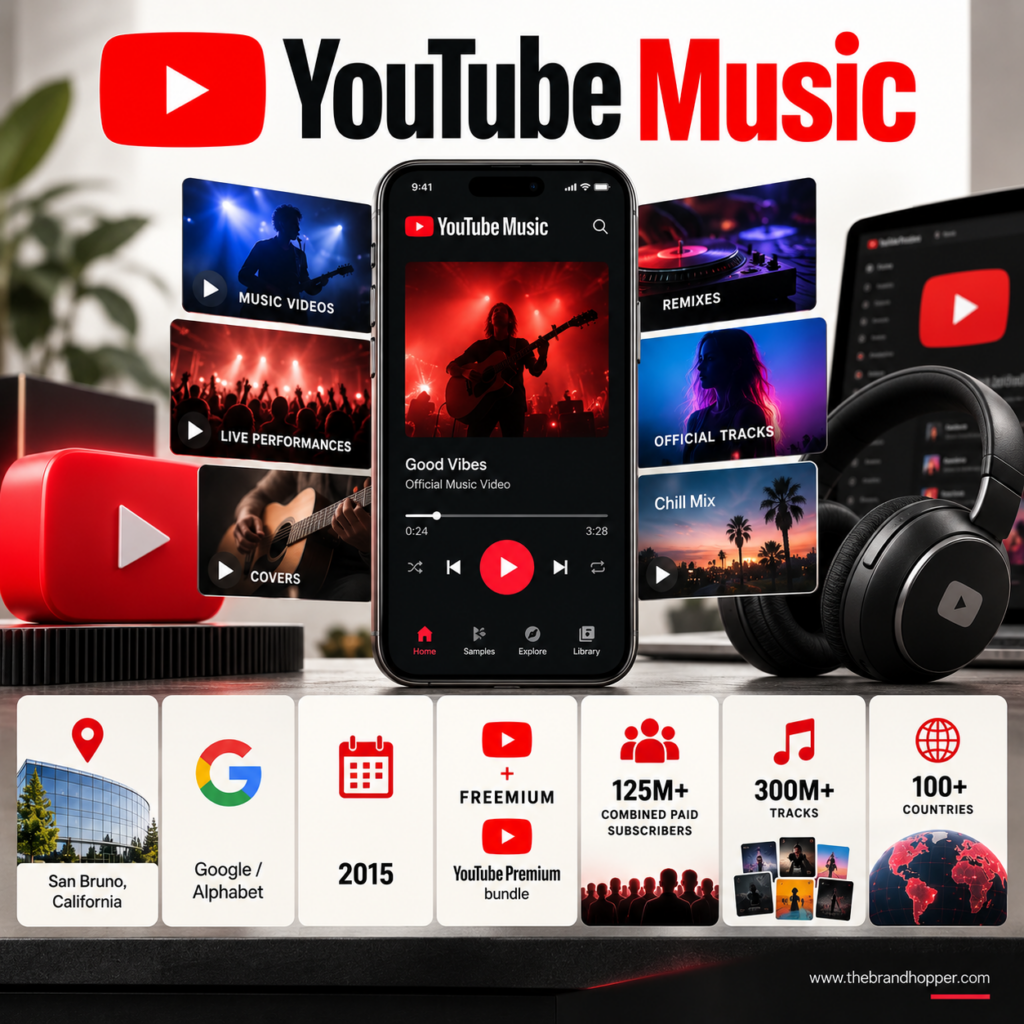
YouTube Music‘s edge over Spotify is architectural: it’s built on top of the world’s largest video platform, giving it a catalog of music videos, live sets, remixes, and fan uploads that no pure audio catalog can match.
Bundling with YouTube Premium (which also removes ads from regular YouTube) gives Google a cross-sell advantage Spotify can’t replicate, since Spotify has no equivalent video platform of its own.
YouTube Music has also pushed into podcasts, putting it in direct competition with Spotify’s podcast ambitions as well as its music business.
3. Amazon Music
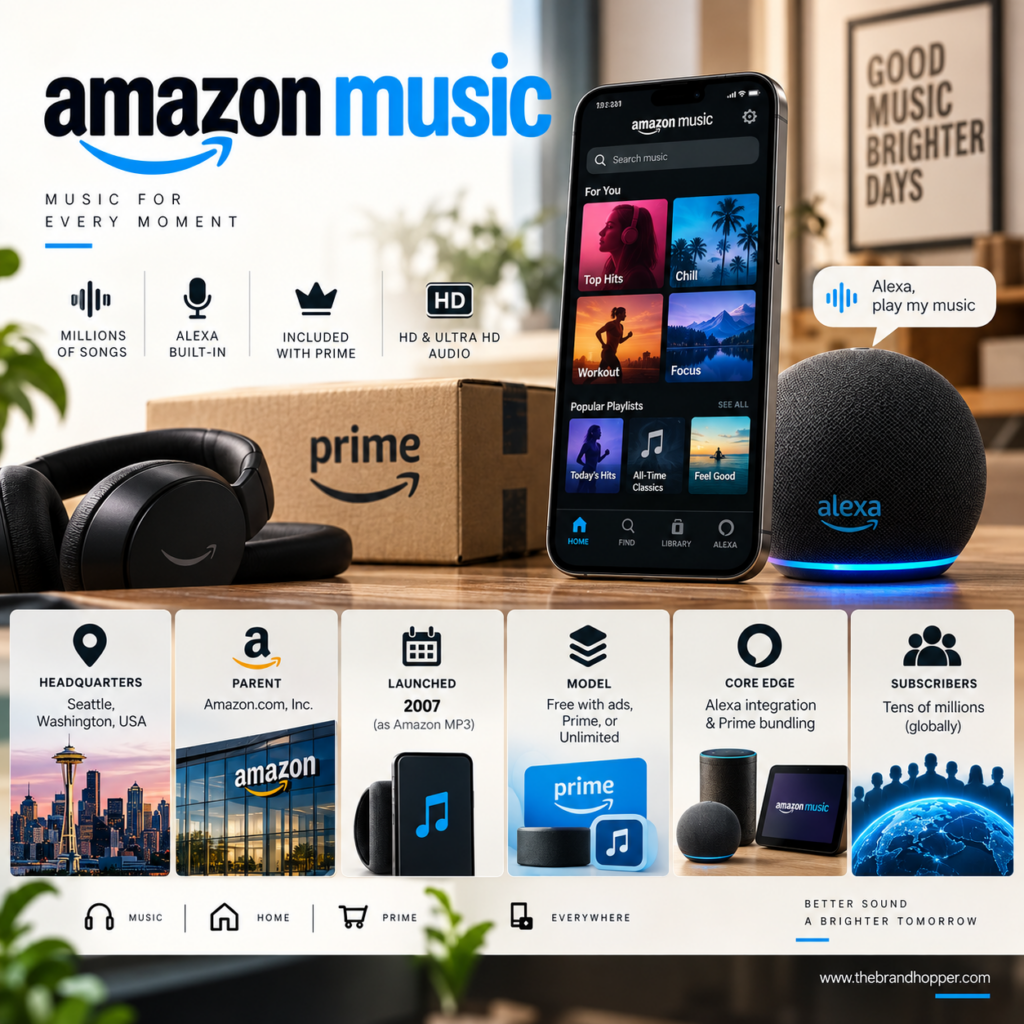
Amazon Music competes with Spotify primarily through bundling and hardware.
Because Amazon Music Prime access comes included with an Amazon Prime membership that most subscribers already pay for anyway, Amazon can offer a compelling music option at what feels like zero marginal cost, and Alexa/Echo devices give Amazon a voice-first advantage in the home that Spotify depends on partnerships to match.
Amazon Music also offers hi-res and spatial audio as part of its Unlimited tier, positioning it competitively against both Spotify and audiophile-focused services.
4. Tidal
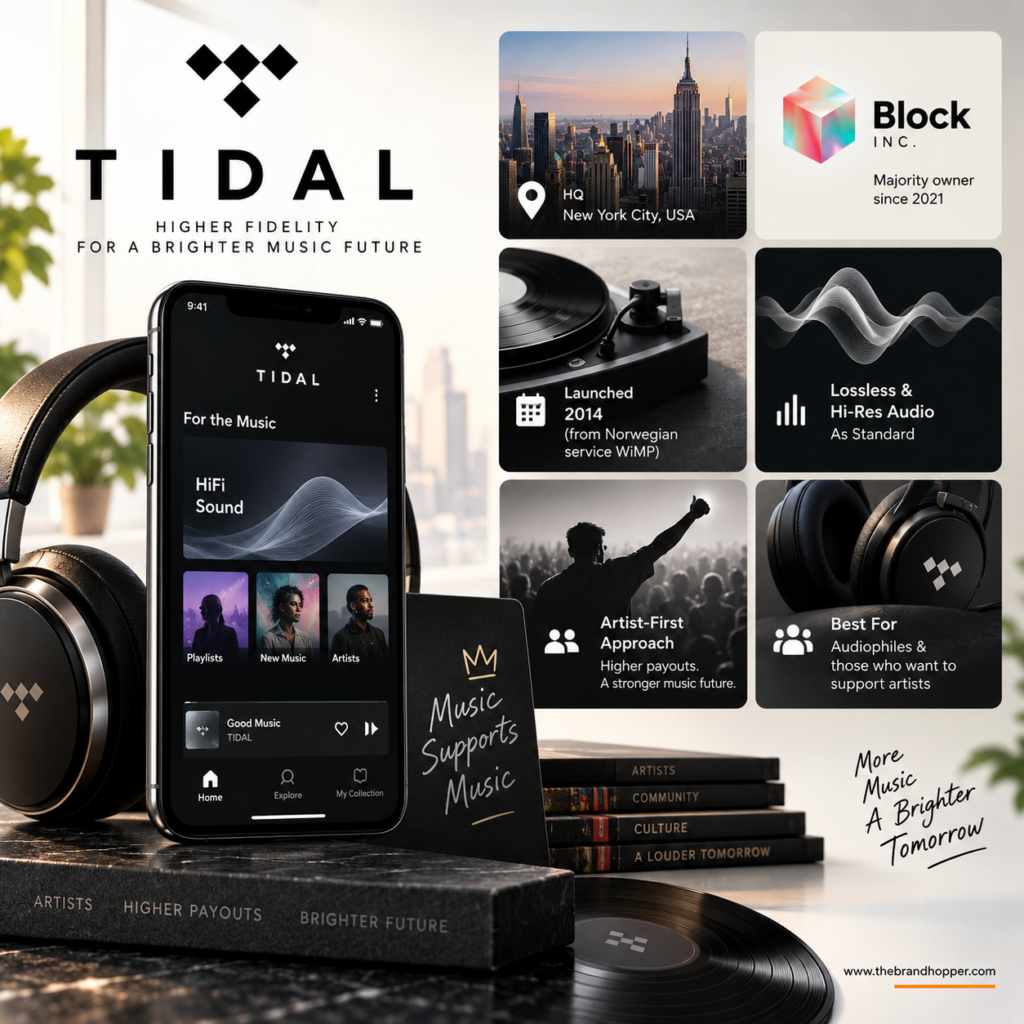
Tidal‘s competitive pitch against Spotify has never been about scale — it’s about audio quality and artist economics.
Since being acquired by Jack Dorsey’s Block in 2021, Tidal has leaned into direct artist payouts and ownership stakes for musicians as a philosophical counterpoint to Spotify’s per-stream royalty model, and in 2024 it simplified its plans into a single subscription tier that includes hi-fi audio by default rather than gating it behind a premium price.
It remains a niche player by user count but continues to shape the broader industry conversation about how streaming should pay artists.
5. Deezer
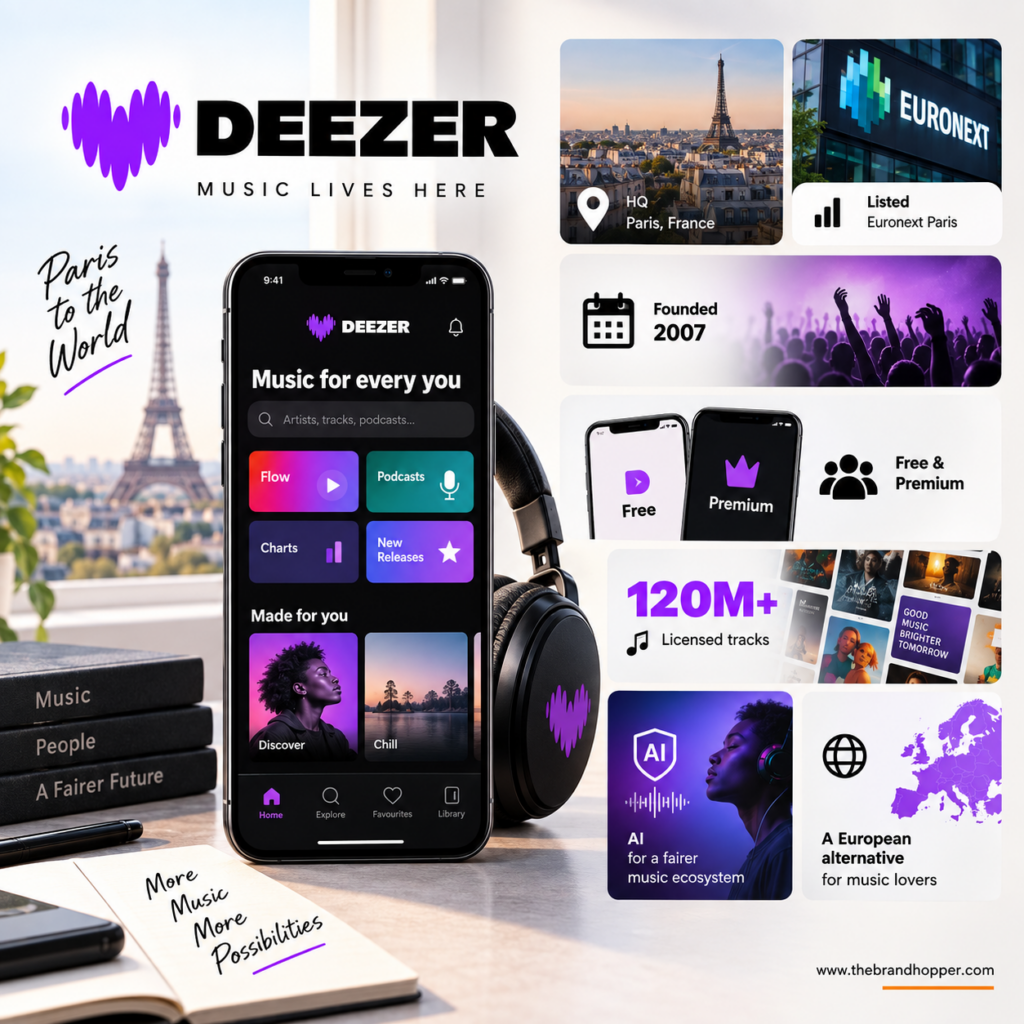
Deezer is Spotify’s most direct European-headquartered competitor and one of the few music streaming pure-plays to be publicly listed on its own regional exchange rather than through a US listing.
It has tried to differentiate less through price and more through catalog depth and platform trust, including building tools that flag AI-generated tracks so royalties aren’t diluted by low-quality synthetic content — an issue that has become a growing concern across the whole streaming industry, Spotify included.
Deezer’s subscriber base is meaningfully smaller than Spotify’s, but its multi-platform reach (smart TVs, cars, gaming consoles) keeps it relevant across markets where it has strong telecom-bundling partnerships.
6. SoundCloud
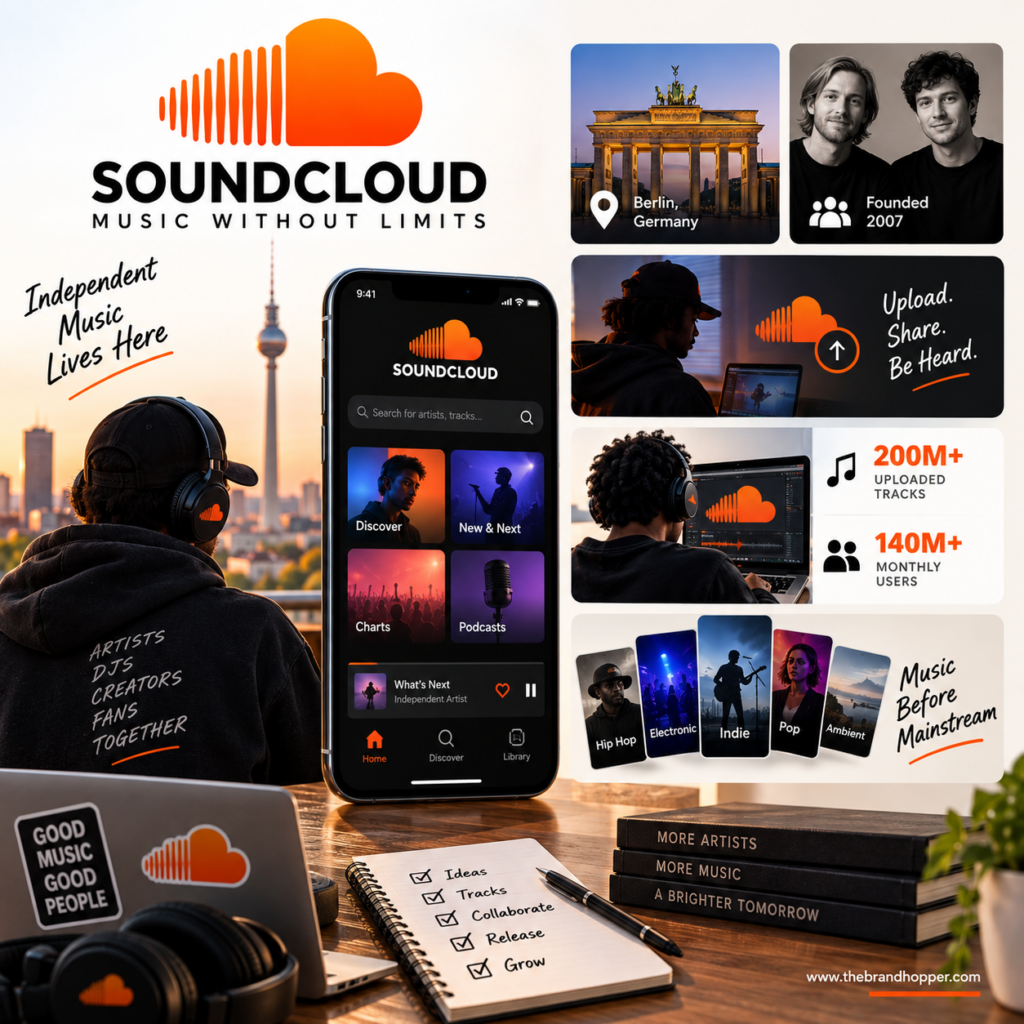
SoundCloud competes with Spotify from the opposite direction of the catalog: rather than licensing a curated library from labels, it lets anyone upload music directly, which made it the breeding ground for entire genres (SoundCloud rap being the most cited example) before those artists ever reached Spotify’s editorial playlists.
For creators, SoundCloud offers direct fan interaction (comments on tracks, reposts) that Spotify’s algorithm-first design doesn’t replicate, and its creator monetization tools give independent artists a more direct payout path than waiting for label deals.
7. Pandora
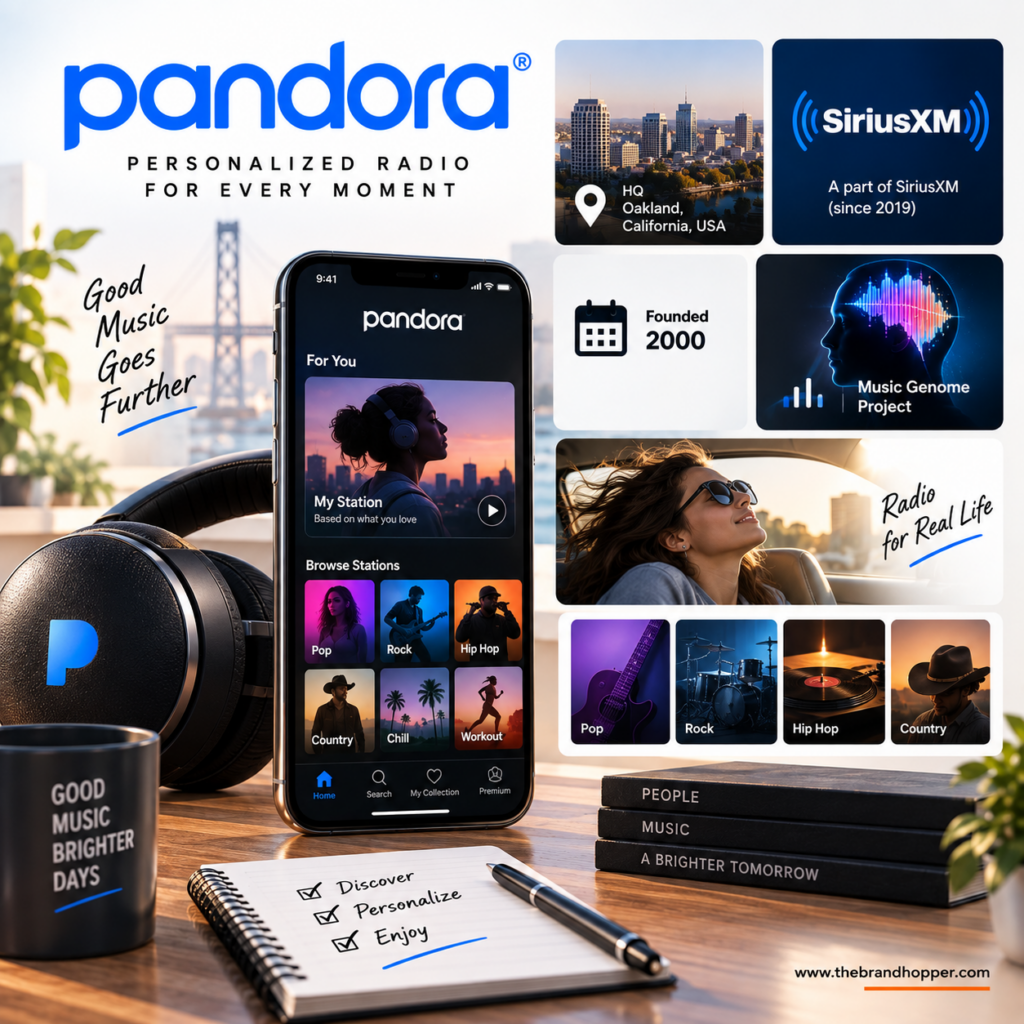
Pandora predates Spotify by six years and pioneered algorithmic music personalization through the Music Genome Project, but it has always competed more as a radio alternative than an on-demand jukebox — a positioning that sharpened after SiriusXM’s 2019 acquisition folded it into a broader audio-entertainment portfolio alongside satellite radio.
Pandora remains largely a U.S.-focused service, unlike Spotify’s global footprint, but its integration with SiriusXM gives it bundling leverage in cars and with SiriusXM’s existing subscriber base that a standalone platform wouldn’t have.
8. iHeartRadio
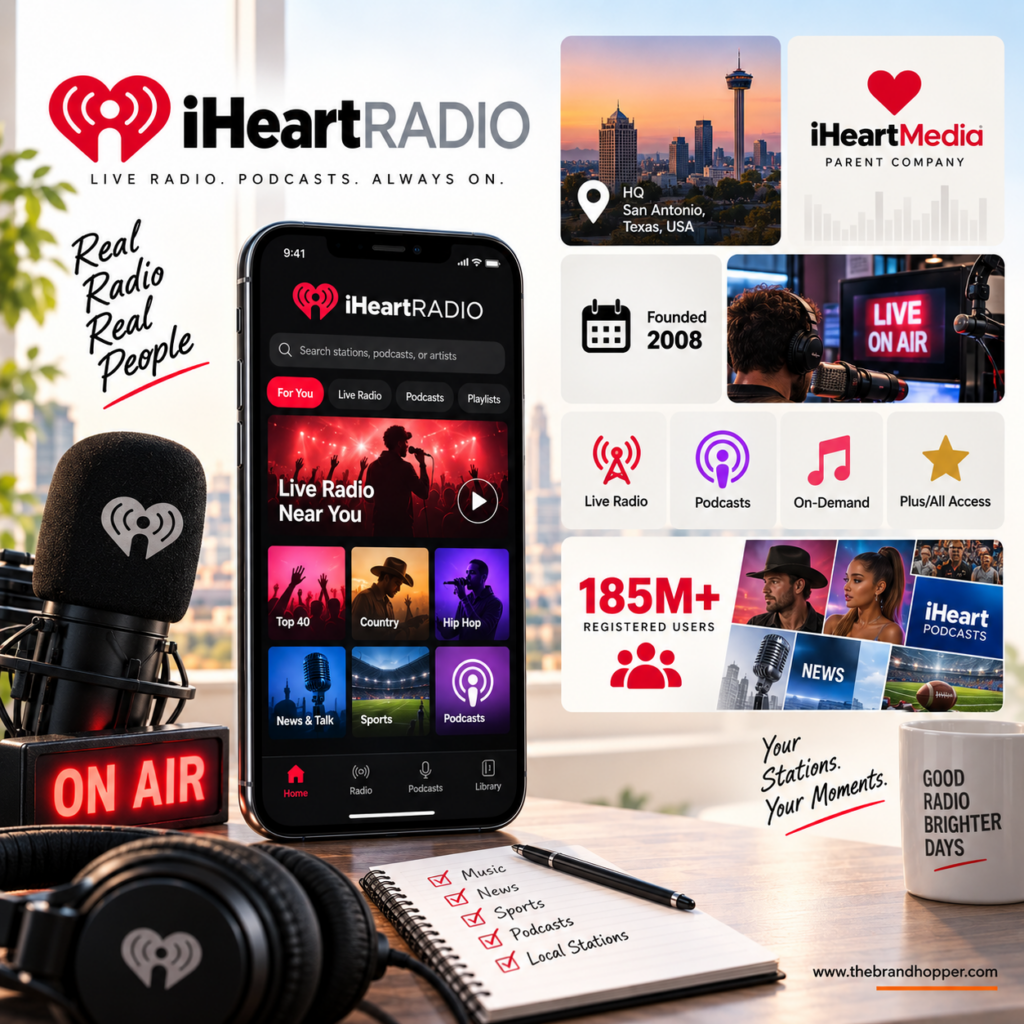
iHeartRadio’s competitive angle against Spotify is live, local radio — thousands of real broadcast stations streamed alongside on-demand playlists — which appeals to listeners who still want the DJ-curated, live-event feel of traditional radio rather than a purely on-demand catalog.
iHeartMedia is also one of the largest podcast publishers in the U.S., giving iHeartRadio a built-in podcast advantage that puts it in competition with Spotify’s own podcast investments, even though the companies also cross-license some podcast content to each other’s platforms.
9. Qobuz
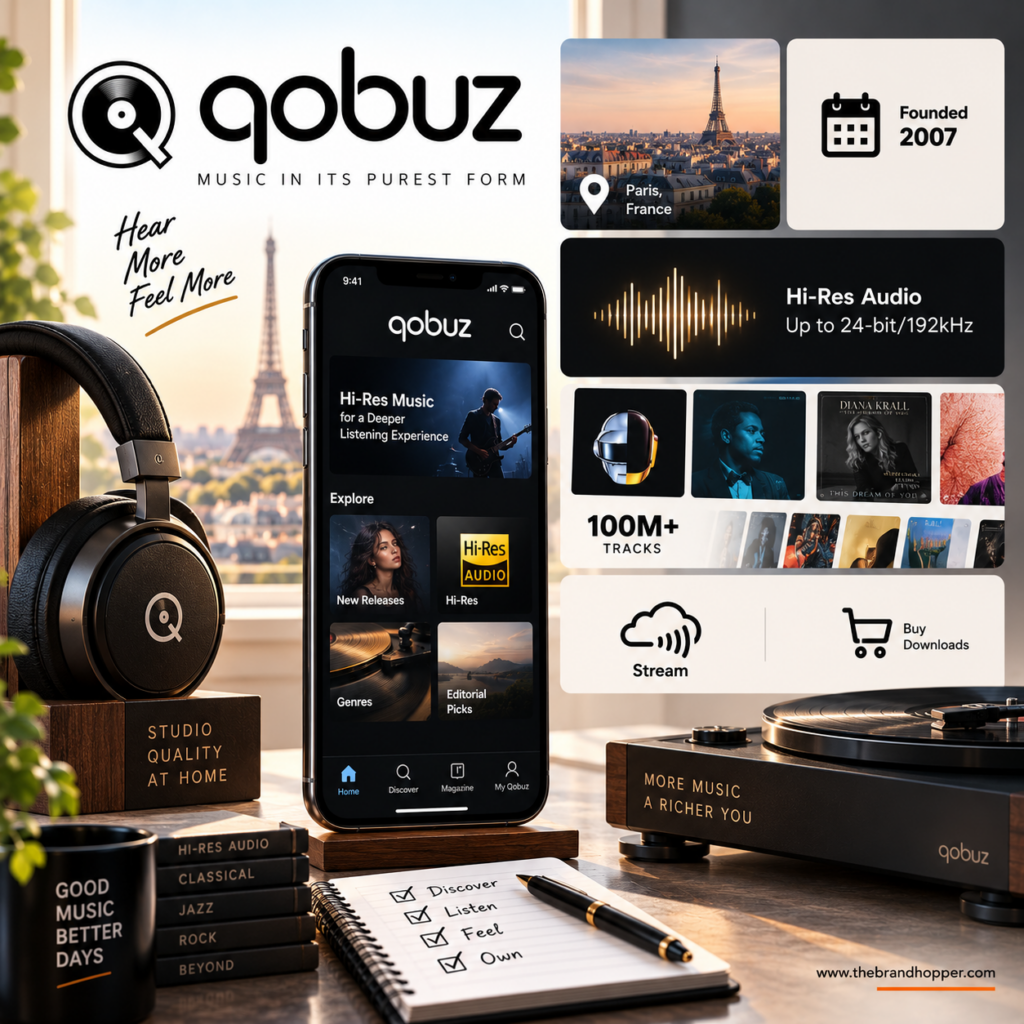
Qobuz is one of the purest audiophile plays among Spotify’s competitors, having eliminated its lossy-compression tier entirely to focus solely on lossless and hi-res audio.
Unlike Spotify, which added a lossless tier only gradually and cautiously, Qobuz built its entire brand around sound quality from the outset, and it pairs streaming with an à la carte download store, letting listeners own hi-res files rather than only stream them.
Its subscriber base is a fraction of Spotify’s, but it occupies a defensible niche among listeners who consider standard streaming audio quality a genuine downgrade.
10. Tencent Music Entertainment (TME)
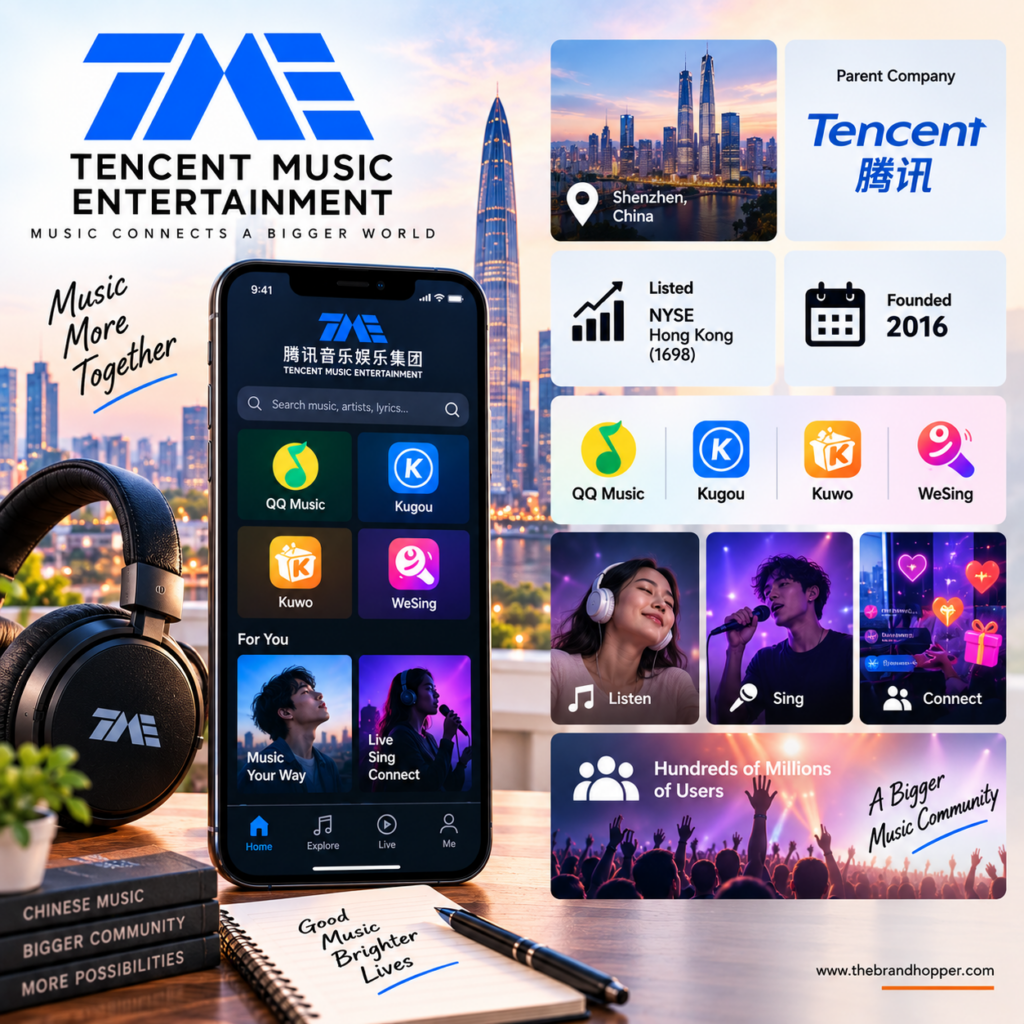
Tencent Music Entertainment is arguably the single largest audio-streaming operator Spotify never directly competes with, because Spotify does not operate in mainland China at all — TME effectively owns that market outright across its four major apps.
TME’s business model diverges sharply from Spotify’s in one important way: a large share of its revenue comes from social entertainment features like live-streaming and virtual gifting layered on top of music, rather than from subscriptions and advertising alone, giving it a monetization path Spotify hasn’t replicated.
Its relevance to Spotify is less head-to-head competition and more a demonstration that a very different audio-business model can operate at even greater scale.
11. NetEase Cloud Music
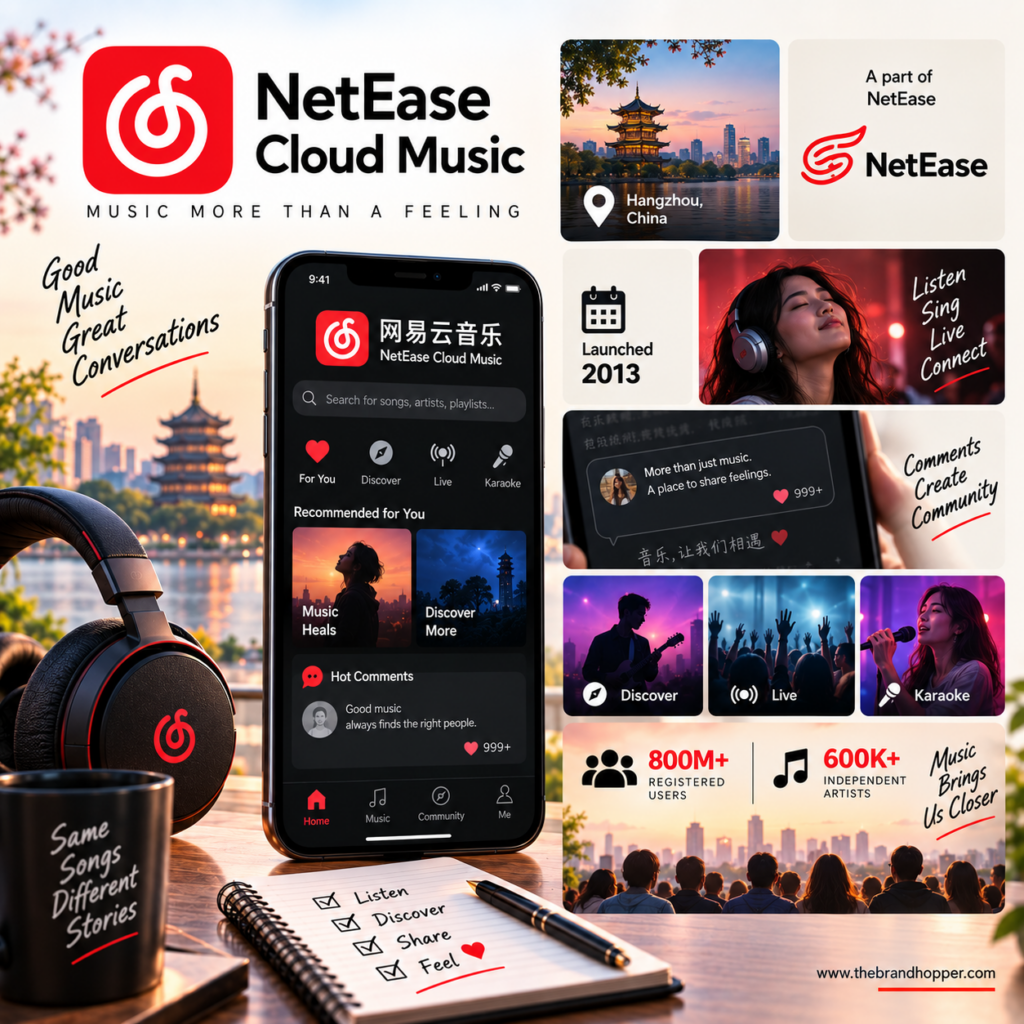
NetEase Cloud Music is TME’s chief domestic rival and a second reason Spotify has essentially no direct presence in the world’s largest population center for digital audio.
Its core differentiation from both Spotify and TME is social: songs on NetEase Cloud Music function almost like public diary entries, with comment sections often more culturally significant than the tracks themselves, creating an engagement dynamic no Western platform, Spotify included, has managed to replicate.
Like TME, it monetizes heavily through social and live-streaming features rather than subscriptions alone.
12. JioSaavn
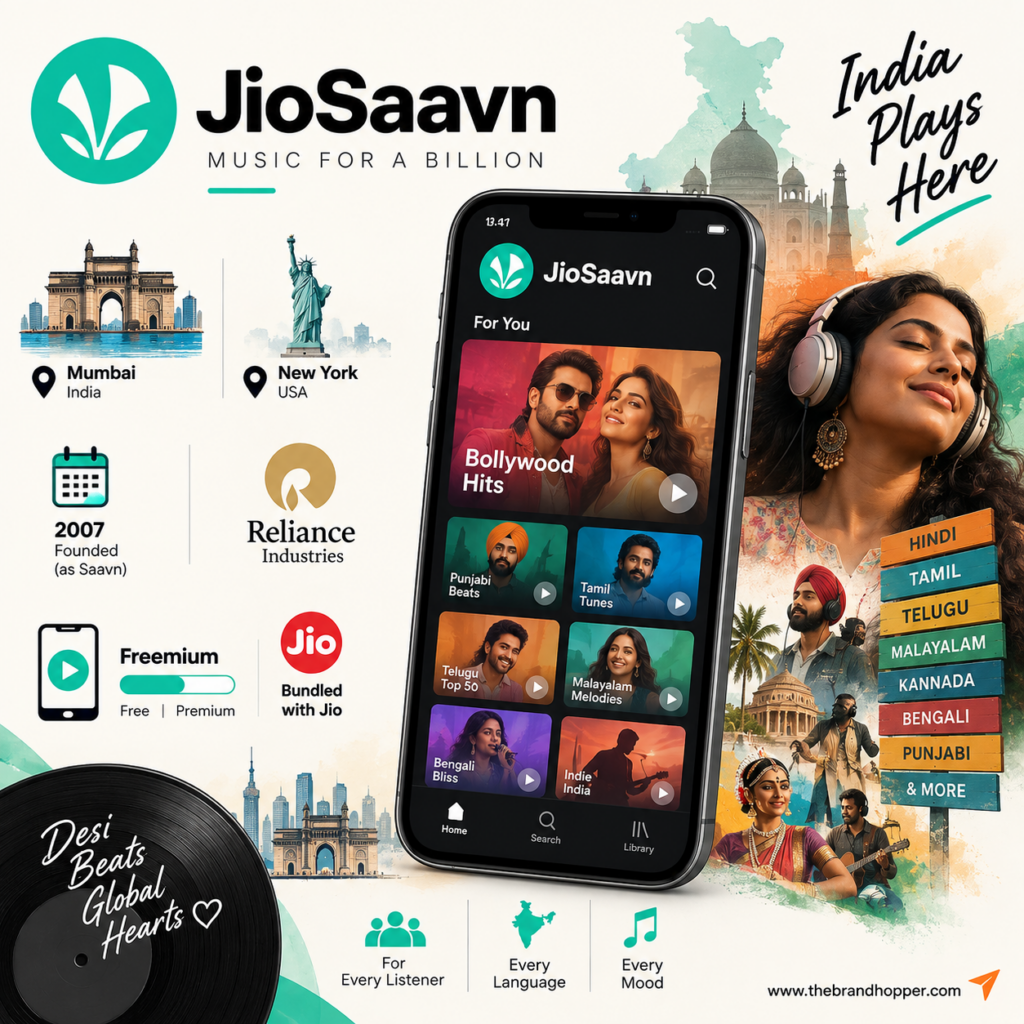
JioSaavn is Spotify’s most consequential rival in India, one of Spotify’s largest and fastest-growing user markets globally, because it combines a catalog spanning Bollywood and numerous regional Indian languages with the telecom-bundling power of Reliance Jio, India’s largest mobile carrier. That bundling model — music access effectively packaged into a mobile plan — is a distribution advantage Spotify has had to compete against through its own telecom partnerships in India rather than replicate outright. JioSaavn’s original artist programs and podcast/audio-drama investments also mirror Spotify’s own push beyond pure music.
13. Anghami
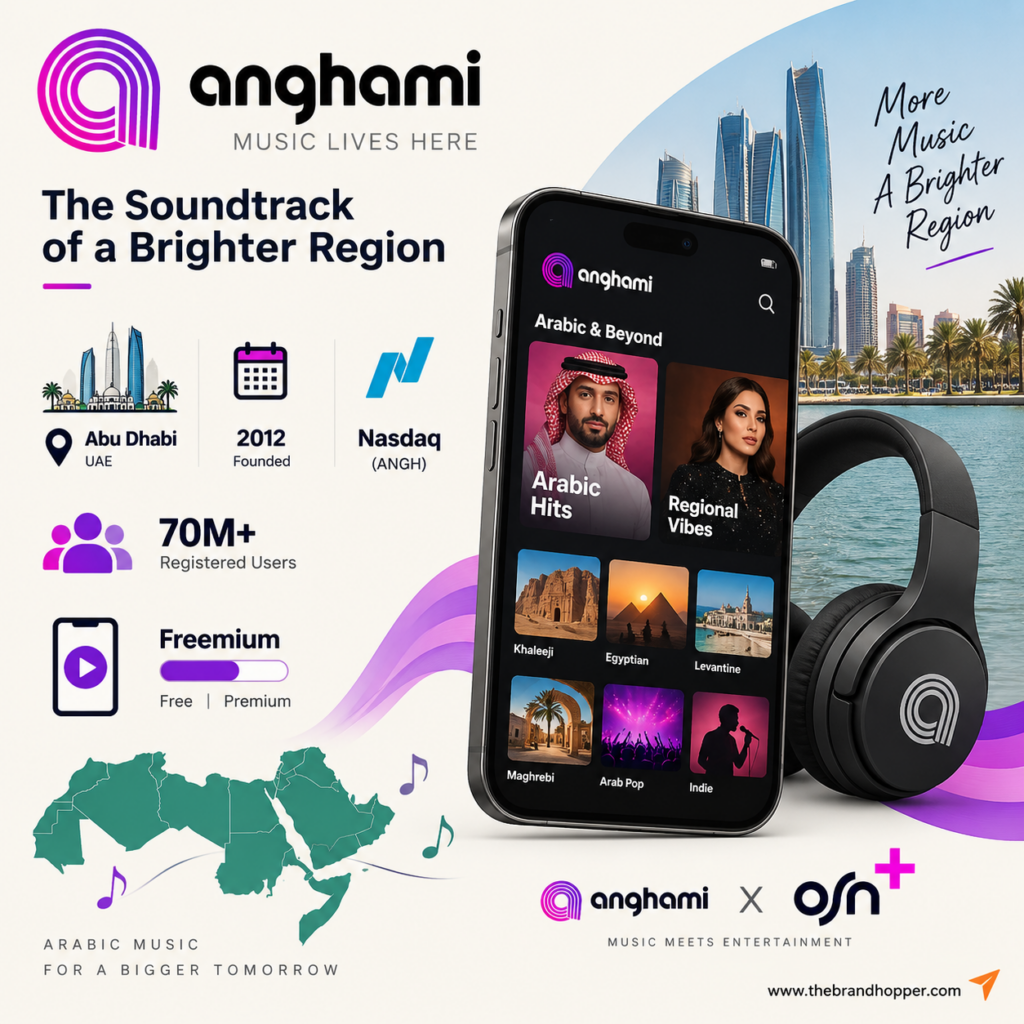
Anghami built its business years before Spotify entered the Middle East and North Africa in earnest, giving it deep label relationships (Rotana, Melody, Mazzika, alongside the international majors) and telecom partnerships across the region that a later entrant has had to compete against.
Since merging with the regional video-streaming service OSN+, Anghami has been positioning itself as a broader Arabic entertainment platform rather than music-only, a strategy that mirrors Spotify’s own expansion into podcasts and video but built around specifically regional content.
14. Boomplay
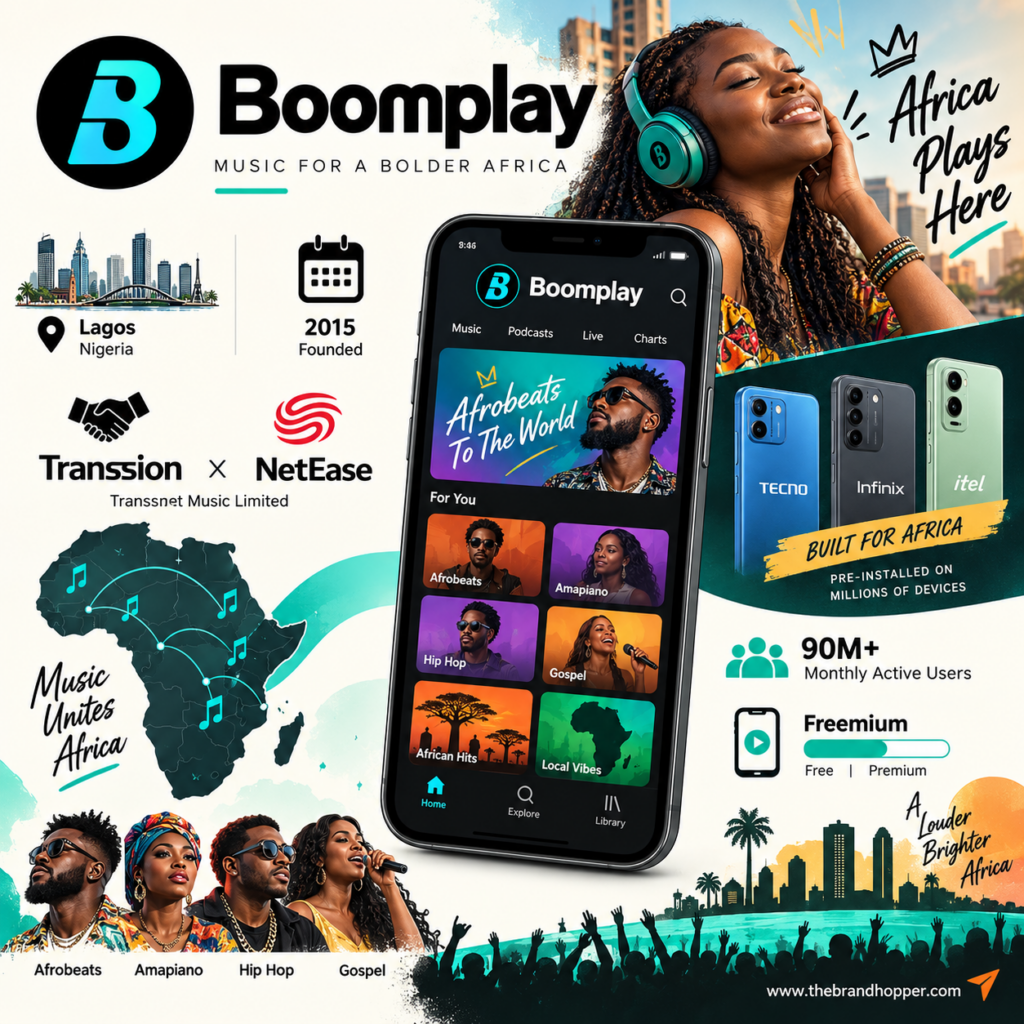
Boomplay‘s advantage over Spotify in Africa comes from hardware distribution rather than marketing: because it ships pre-installed on Tecno, Infinix, and itel phones — brands that collectively account for a large share of smartphone sales across Sub-Saharan Africa — it reaches first-time smartphone buyers before Spotify or any other streaming app gets a chance to compete for the install.
Its catalog and editorial focus on Afrobeats, Amapiano, and other African genres also gives it cultural relevance that a global platform has had to build market by market.
15. KKBOX
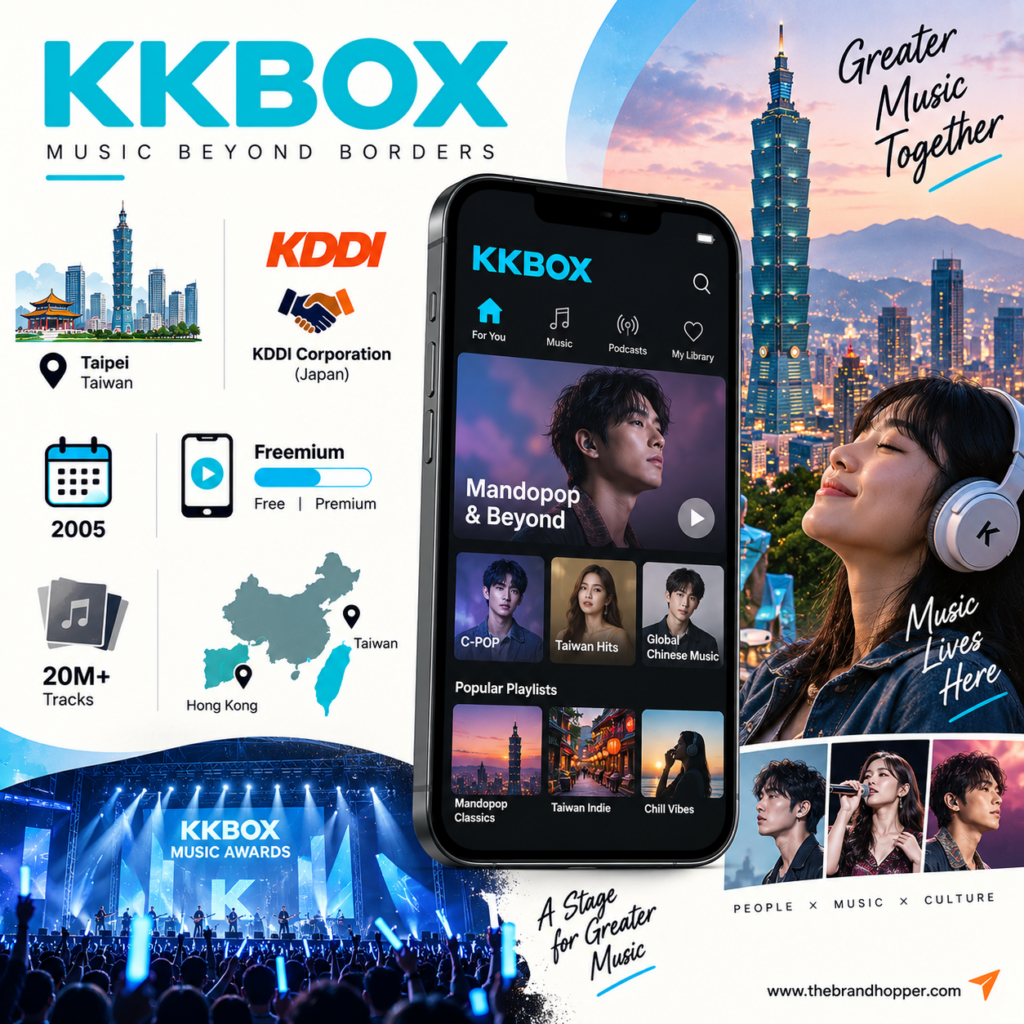
KKBOX predates Spotify by three years and remains one of the strongest brands in Mandopop and Chinese-language music specifically, an area where Spotify’s global, Western-leaning editorial approach has historically had less cultural depth.
Its ownership by Japan’s KDDI also gives it telecom-bundling relationships across parts of East and Southeast Asia that support customer acquisition in ways a standalone app must otherwise pay for through marketing.
16. Yandex Music
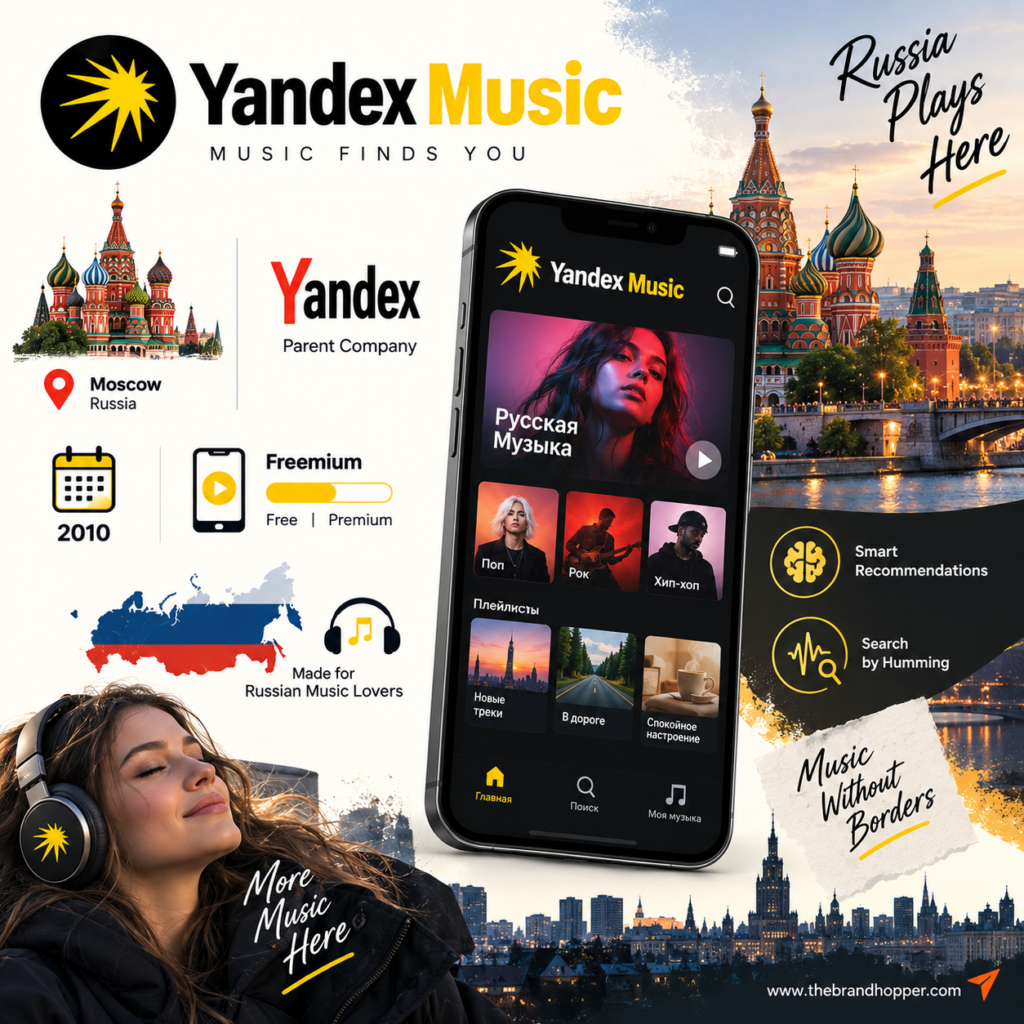
Yandex Music‘s relevance to Spotify is mostly about market absence rather than direct competition: Spotify does not operate in Russia, making Yandex Music (bundled into the broader Yandex Plus subscription alongside ride-hailing, delivery, and other services) the dominant option for Russian-speaking listeners by default. Its integration into the Yandex “super-app” ecosystem mirrors how Amazon and Apple use bundling to compete with Spotify elsewhere, just built around a different set of adjacent services.
17. Melon
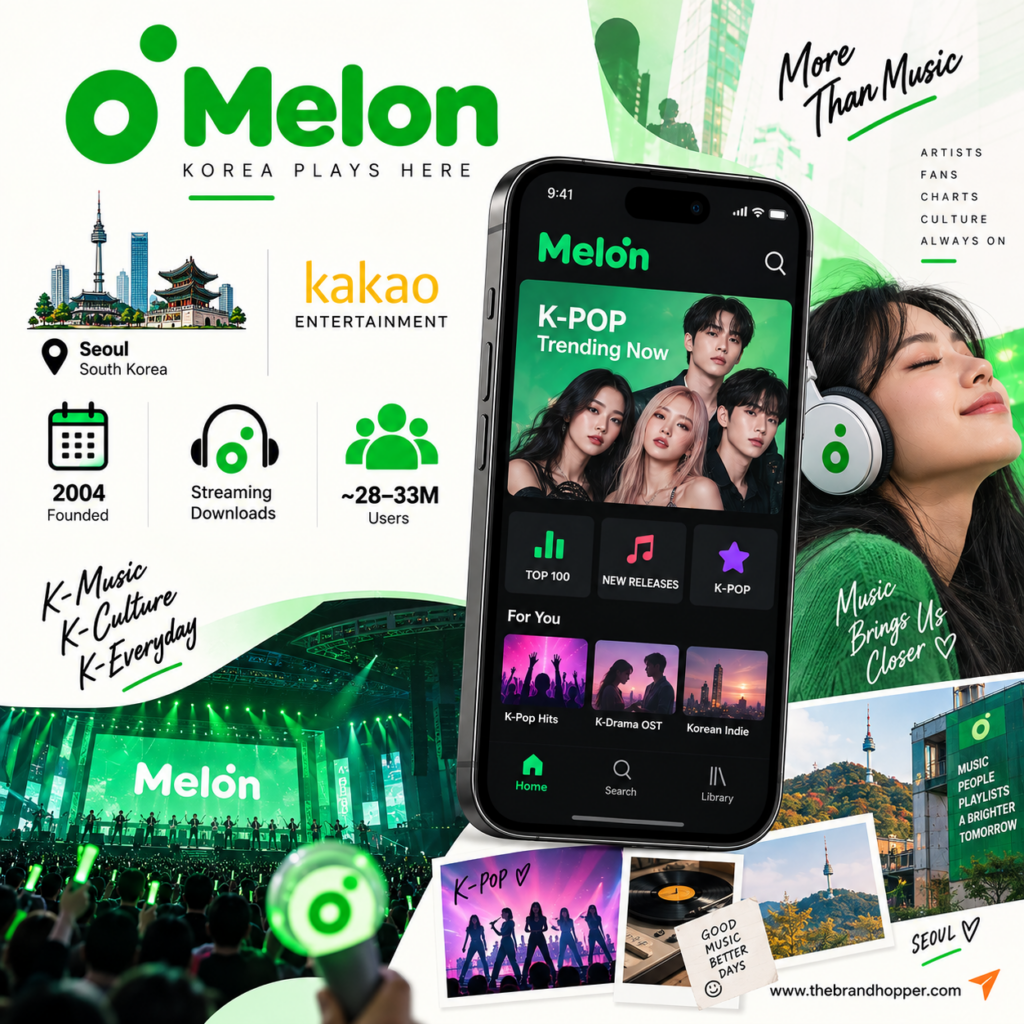
Melon predates Spotify by two years and functions as the de facto official chart for the South Korean music industry — its real-time rankings influence how K-pop releases are promoted and consumed domestically in a way no international platform, Spotify included, has been able to match, even as Spotify has invested heavily in K-pop playlisting and artist partnerships globally.
Melon’s ownership by Kakao Entertainment, one of Korea’s largest entertainment conglomerates, also ties it directly into artist management and content production in a way that gives it structural advantages in its home market.
18. Audiomack
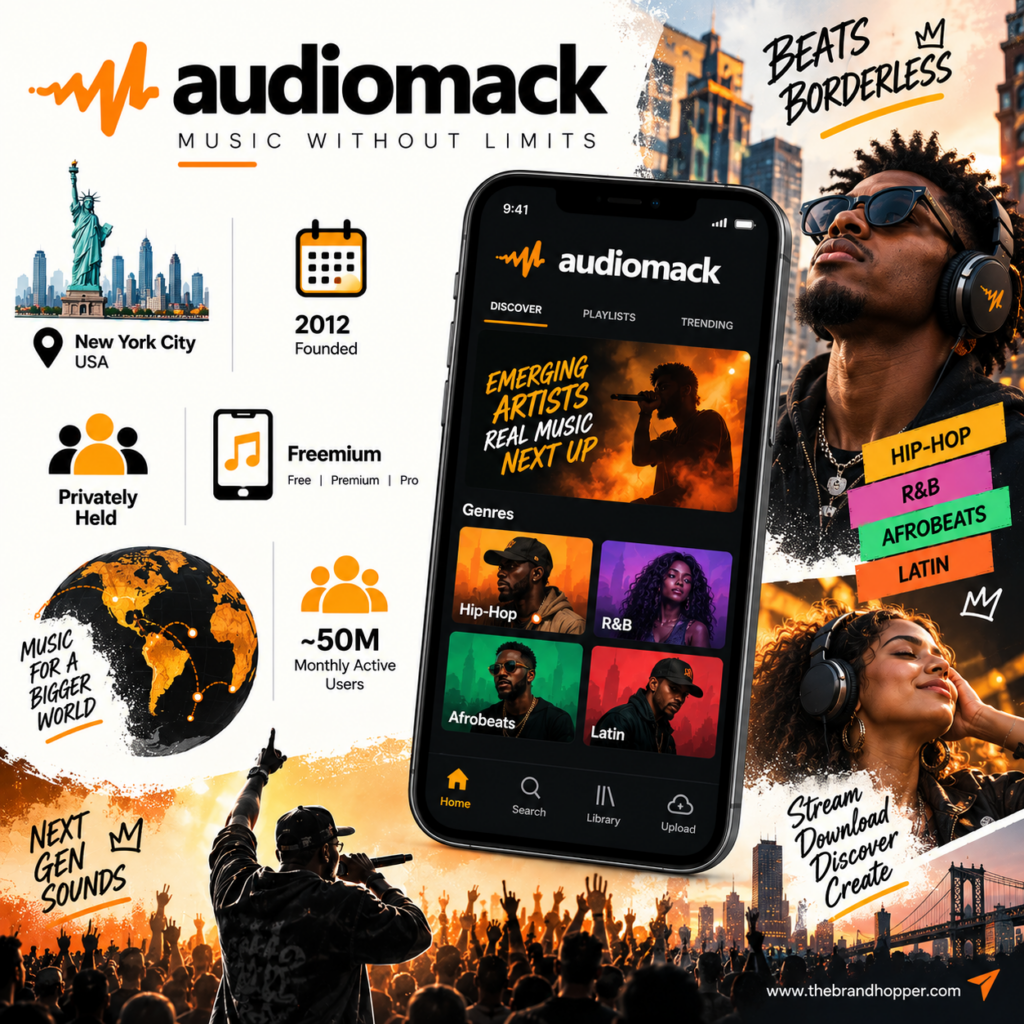
Audiomack competes with Spotify by serving listeners and markets where a paid subscription isn’t the realistic default — its free, ad-supported model with offline downloads is built for cost-sensitive audiences, particularly across parts of Africa, the Caribbean, and urban U.S. hip-hop culture, where it has become a genuine alternative discovery platform to Spotify and SoundCloud alike. Its creator monetization program gives independent hip-hop and Afrobeats artists a direct payout path, positioning it as both a fan-facing app and an artist-development platform.
19. Bandcamp
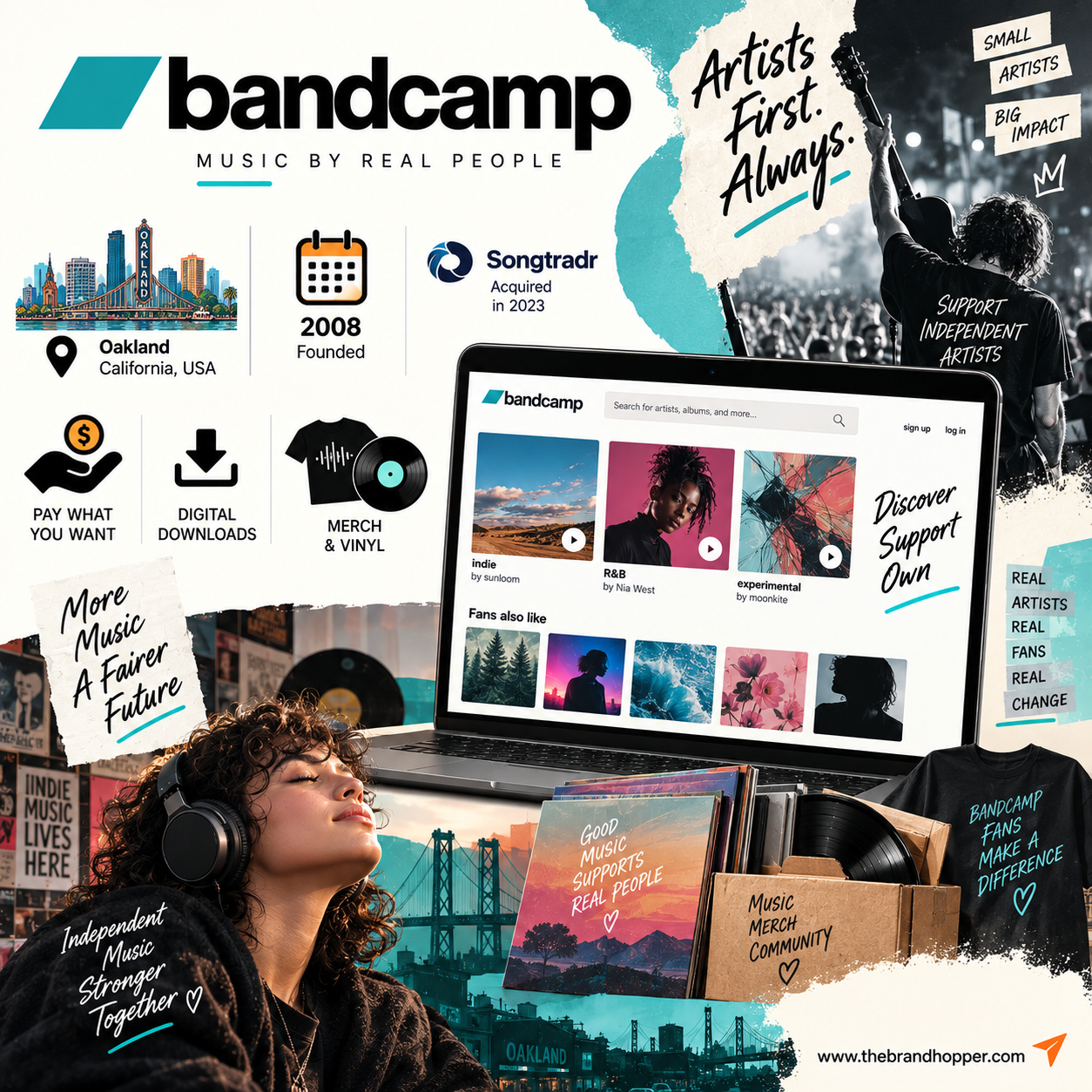
Bandcamp is structurally the least Spotify-like name on this list, because it isn’t primarily a streaming service at all — it’s a direct-to-fan marketplace where artists set prices, sell downloads and physical goods, and keep a much larger share of revenue than standard streaming royalties provide.
Its relevance to Spotify’s competitive picture is less about listener numbers and more about the ongoing artist-economics debate: many musicians point to Bandcamp’s transparent, higher-percentage payouts as the model streaming services like Spotify should be moving toward, making it an important reference point even for listeners who use it only occasionally alongside a Spotify subscription.
A Note on Platforms That Recently Shut Down
Napster’s music-streaming service shut down in early 2026 after its then-new owner, Infinite Reality, pivoted the brand toward AI products, ending a name that had been part of the streaming conversation since the peer-to-peer file-sharing era.
Wynk Music, Bharti Airtel’s Indian streaming app, shut down in December 2024 after Airtel switched to bundling Apple Music with its telecom plans instead.
TikTok Music, ByteDance’s short-lived streaming service (the successor to Resso), shut down in November 2024 after roughly sixteen months in a handful of markets.
Why the Competitive Picture Keeps Changing
A handful of durable dynamics explain why this list will keep evolving even though the platforms above are unlikely to disappear soon.
First, bundling keeps intensifying: Apple, Amazon, and Google/YouTube all treat music as one piece of a much larger ecosystem rather than a standalone product, which lets them compete on price and convenience in ways a pure-play company like Spotify structurally cannot match without its own hardware or e-commerce business.
Second, regional platforms in China, India, the Middle East, Africa, and Korea continue to out-compete global platforms on their home turf because local-language catalog depth, telecom bundling, and cultural relevance matter more to most listeners than having the single largest global catalog.
Third, the artist-economics debate — sharpened by Tidal’s ownership model, Bandcamp’s transparent payouts, and Deezer’s push against AI-generated content — keeps pressuring every platform, Spotify included, to reconsider how streaming royalties are calculated, which could reshape competitive positioning across the board.
And finally, audio’s boundaries keep expanding beyond music: podcasts, audiobooks, live radio, karaoke, and even social/video content are all now part of the same competitive arena, meaning platforms that once competed only on music catalogs — YouTube Music, iHeartRadio, Amazon Music, TME — increasingly compete with Spotify across an entire spoken- and recorded-audio landscape rather than one product category.
Frequently Asked Questions
Q: Who is Spotify’s biggest competitor?
A: Apple Music and YouTube Music are generally considered Spotify’s closest global competitors by subscriber scale, though outside the markets where Spotify operates, Tencent Music Entertainment and NetEase Cloud Music together serve a larger combined audience in China alone.
Q: Which Spotify competitor has the best audio quality?
A: Qobuz and Tidal are the two platforms most associated with high-fidelity, lossless, and hi-res audio, having built their entire brand positioning around sound quality rather than catalog size or price.
Q: Are there any Spotify competitors that pay artists more fairly?
A: Bandcamp is the most frequently cited example, since it uses a direct-to-fan sales model with a much smaller platform commission than typical per-stream royalty structures. Tidal has also pursued an artist-ownership model as an alternative to standard streaming payouts.
Q: What happened to Napster, Wynk Music, and TikTok Music?
A: All three have shut down their music-streaming operations. Napster pivoted to AI products in early 2026, Wynk Music shut down in December 2024 after Bharti Airtel switched to bundling Apple Music instead, and TikTok Music shut down in November 2024 after a short run in a handful of international markets.
Q: Does Spotify have a monopoly on music streaming?
A: No. While Spotify is the largest platform globally by paid subscribers and monthly active users, it faces substantial competition both from ecosystem bundlers like Apple, Amazon, and Google, and from regional platforms that outrank it entirely in markets like mainland China, Russia, and South Korea, where Spotify either has limited presence or does not operate at all.
Also Read: A Case Study on Spotify Wrapped: The Storytelling Phenomenon
To read more content like this, subscribe to our newsletter
Go to the full page to view and submit the form.