


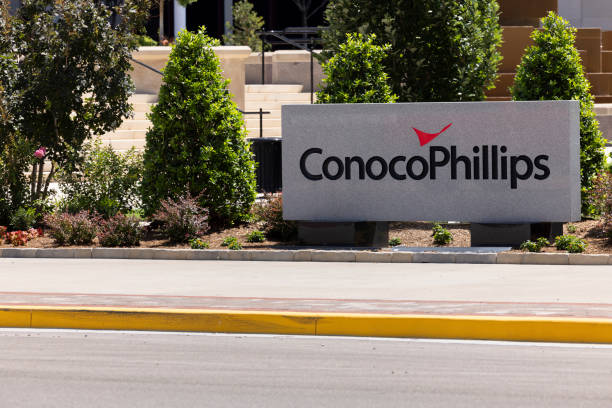
In an industry where a single oil field can be worth billions, every move counts. Welcome to the chess game of the energy world. The global oil & gas market is projected to reach a staggering $7.4 trillion by 2024, setting the stage for intense competition among industry giants. In this high-stakes arena, ConocoPhillips stands as a major player, but it’s far from alone.
ConocoPhillips, with its market capitalization of $137.4 billion as of early 2024, has carved out a significant position in the industry. Known for its technical capability in unconventional oil and gas production, particularly in U.S. shale plays, the company has consistently delivered strong operational performance. However, in an industry characterized by volatility and rapid technological change, understanding the competitive landscape is crucial for investors, industry professionals, and market observers alike.
This article delves into the fierce world of energy titans, exploring the top competitors challenging ConocoPhillips’ position. From innovative technologies to strategic acquisitions, these industry giants are constantly evolving, shaping the future of energy production and consumption. Let’s uncover who’s who in this dynamic field and how they stack up against ConocoPhillips.
The Oil & Gas Landscape: Setting the Stage
Current State of the Oil & Gas Industry
The oil and gas industry in 2024 finds itself at a critical juncture. Global demand for oil has shown resilience, rebounding strongly from the pandemic-induced slump of 2020. The International Energy Agency (IEA) projects global oil demand to reach 103 million barrels per day in 2024, a new record high. Natural gas, often touted as a transition fuel, has seen its demand grow steadily, particularly in Asia and Europe.
However, the industry faces significant headwinds. The push for renewable energy has gained momentum, with solar and wind power becoming increasingly cost-competitive. In 2023, renewable energy sources accounted for 30% of global electricity generation, a figure expected to rise to 35% by 2025.
Price volatility remains a constant challenge. Geopolitical tensions, OPEC+ decisions, and unexpected supply disruptions can cause oil prices to swing dramatically. In 2023, we saw prices fluctuate between $65 and $95 per barrel for Brent crude, highlighting the industry’s inherent unpredictability.
ConocoPhillips’ Position in the Market
ConocoPhillips has strategically positioned itself as a leading independent exploration and production (E&P) company. With a production capacity of approximately 1.5 million barrels of oil equivalent per day in 2023, the company ranks among the top producers globally.
Key assets include significant holdings in U.S. shale plays such as the Permian Basin, Eagle Ford, and Bakken, as well as operations in Alaska, Canada, and several international locations. This geographical diversification helps mitigate regional risks.
In terms of financial performance, ConocoPhillips reported revenues of $82 billion in 2023, with a net income of $12 billion, translating to a healthy profit margin of 14.6%. The company’s focus on capital discipline and operational efficiency has earned it a reputation for strong cash flow generation, making it attractive to investors seeking both growth and stability in the volatile energy sector.
Factors Influencing Competition
Several factors are shaping the competitive landscape:
- Geopolitical Issues: Tensions in the Middle East, sanctions on major producers like Russia, and trade disputes can significantly impact production and distribution capabilities.
- Technological Advancements: Innovations in drilling techniques, particularly in hydraulic fracturing and horizontal drilling, have unlocked vast new resources and improved efficiency.
- Environmental Regulations: Increasing pressure to reduce greenhouse gas emissions has led to stricter regulations and a push for cleaner energy sources.
- COVID-19 Pandemic Recovery: The uneven global recovery from the pandemic continues to influence energy demand patterns and supply chain dynamics.
- Energy Transition: The shift towards renewable energy sources is forcing oil and gas companies to diversify their portfolios and invest in low-carbon technologies.
These factors create a complex, ever-changing environment in which ConocoPhillips and its competitors must navigate carefully to maintain their market positions and ensure long-term viability.
1. ExxonMobil

Website – https://corporate.exxonmobil.com/
ExxonMobil, with its roots tracing back to John D. Rockefeller’s Standard Oil, stands as a colossus in the energy industry. As of 2024, it boasts a market capitalization of $453 billion, making it the largest publicly traded oil and gas company in the world.
Key strengths include:
- Integrated Business Model: ExxonMobil operates across the entire oil and gas value chain, from exploration and production (upstream) to refining and marketing (downstream), as well as chemicals production.
- Global Presence: The company has operations in over 50 countries, providing geographical diversification and access to various resource types.
- Research and Development: ExxonMobil invests heavily in R&D, spending over $1 billion annually on developing new technologies and improving existing processes.
Comparison with ConocoPhillips
While both are American oil giants, ExxonMobil dwarfs ConocoPhillips in size and scope:
- Market Capitalization: ExxonMobil ($500 billion) vs. ConocoPhillips ($123 billion)
- Production Capacity: ExxonMobil (3.7 million boe/day) vs. ConocoPhillips (1.5 million boe/day)
- Business Model: ExxonMobil (Integrated) vs. ConocoPhillips (E&P focused)
ExxonMobil’s larger size and integrated model provide certain advantages, such as better ability to weather price volatility and capture value across the entire supply chain. However, ConocoPhillips’ focused approach allows for greater agility and potentially higher returns in the E&P sector.
Recent Strategic Moves and Innovations
ExxonMobil has been adapting to the changing energy landscape:
- Low-Carbon Solutions: In 2021, ExxonMobil created a new business unit focused on carbon capture and storage, hydrogen, and biofuels. The company plans to invest $15 billion in lower-emission technologies through 2027.
- Digital Transformation: ExxonMobil has embraced AI and machine learning to optimize operations, from predictive maintenance in refineries to improved drilling accuracy in upstream operations.
- Cost Reduction: In response to the 2020 oil price crash, ExxonMobil implemented aggressive cost-cutting measures, reducing annual cash operating expenses by $6.5 billion compared to 2019 levels.
These moves demonstrate ExxonMobil’s commitment to maintaining its industry leadership while adapting to the energy transition, presenting a formidable challenge to competitors like ConocoPhillips.
2. Chevron Corporation

Website – https://www.chevron.com/
Chevron, the second-largest U.S. oil company, has established a robust global footprint that rivals that of ConocoPhillips. As of 2024, Chevron operates in more than 180 countries, with significant production in regions such as:
- United States: Major assets in the Permian Basin, Gulf of Mexico, and California
- Australia: Gorgon and Wheatstone LNG projects
- Kazakhstan: Tengiz and Karachaganak oil fields
- Nigeria: Deepwater and onshore operations
- Brazil: Pre-salt offshore fields
This geographical diversity allows Chevron to mitigate regional risks and capitalize on opportunities across different markets.
Competitive Advantages over ConocoPhillips
Chevron possesses several advantages that make it a formidable competitor to ConocoPhillips:
- Financial Stability: With a market capitalization of $255 billion as of September 2024, Chevron boasts a strong balance sheet. Its debt-to-capital ratio of 12% is among the lowest in the industry, providing financial flexibility for investments and acquisitions.
- Diverse Portfolio: While ConocoPhillips focuses primarily on upstream activities, Chevron’s integrated model includes downstream and chemicals businesses, providing additional revenue streams and helping to offset volatility in oil prices.
- Technological Edge: Chevron has been at the forefront of deepwater drilling technology. Its Deepwater Technical Center in Houston has developed innovations that have significantly reduced drilling costs and improved efficiency in challenging offshore environments.
- LNG Leadership: Chevron’s strong position in the liquefied natural gas (LNG) market, particularly through its Australian projects, gives it an advantage in meeting the growing global demand for cleaner-burning fuels.
Sustainability Initiatives
Recognizing the global push towards cleaner energy, Chevron has been ramping up its sustainability efforts:
- Renewable Energy Investments: Chevron plans to invest more than $10 billion in low-carbon projects by 2028, including wind and solar energy production.
- Carbon Capture and Storage (CCS): The company is actively developing CCS technologies and has partnered with Occidental Petroleum and Microsoft to develop a large-scale Direct Air Capture (DAC) facility in the Permian Basin.
- Hydrogen: Chevron is exploring opportunities in both blue hydrogen (produced from natural gas with carbon capture) and green hydrogen (produced using renewable energy).
- Emission Reduction Targets: Chevron aims to reduce its carbon intensity by 35% by 2028 compared to 2016 levels and has tied executive compensation to these environmental goals.
These initiatives demonstrate Chevron’s commitment to adapting to the changing energy landscape, positioning itself as a leader in both traditional and new energy markets. This comprehensive approach presents a significant challenge to ConocoPhillips, which must balance its focus on efficient hydrocarbon production with the need to address growing environmental concerns.
3. Shell plc
Website – https://www.shell.com/
In January 2022, Royal Dutch Shell underwent a significant corporate restructuring, simplifying its dual-share structure and relocating its headquarters from The Hague to London. This move, which resulted in the company being renamed Shell plc, was driven by several factors:
- Simplification: The new structure eliminated the complex dual-share system, making the company more agile and better positioned for potential mergers, acquisitions, or spin-offs.
- Tax Efficiency: The relocation to the UK removed the Dutch dividend withholding tax, potentially making Shell’s shares more attractive to international investors.
- Energy Transition Focus: The restructuring aligns with Shell’s strategy to become a net-zero emissions energy business by 2050.
This corporate overhaul demonstrates Shell’s adaptability and forward-thinking approach, setting a precedent that competitors like ConocoPhillips must consider in their own strategic planning.
Comparison of International Operations
Shell’s global footprint is extensive, rivaling and in some areas surpassing that of ConocoPhillips:
- Upstream: Shell operates in over 70 countries, with major production hubs in the U.S. (including the Permian Basin), Brazil, Australia, and Nigeria.
- LNG Leadership: Shell is the world’s largest LNG trader, with interests in liquefaction plants in nine countries and a large fleet of LNG carriers.
- Downstream: Unlike ConocoPhillips, which divested most of its downstream assets, Shell maintains a strong presence in refining and marketing, with approximately 44,000 retail sites worldwide.
- New Energies: Shell has been aggressively expanding into renewable energy and electric vehicle charging, areas where ConocoPhillips has limited presence.
Shell’s integrated model and broader geographical spread provide certain advantages over ConocoPhillips’ more focused E&P approach, particularly in terms of diversification and ability to capture value across the energy supply chain.
Investments in Alternative Energy Sources
Shell has been one of the most aggressive traditional oil and gas companies in pivoting towards cleaner energy sources:
- Offshore Wind: Shell has major offshore wind projects in development, including the 759 MW Hollandse Kust Noord project in the Netherlands and the up to 3.2 GW Mayflower Wind project off the U.S. East Coast.
- Solar Power: Through its subsidiary Silicon Ranch, Shell has invested in numerous utility-scale solar projects across the United States.
- Electric Vehicle Charging: Shell aims to operate 500,000 EV charging points globally by 2025 through its Shell Recharge network.
- Hydrogen: The company is involved in various green and blue hydrogen projects, including the NortH2 project in the Netherlands, which aims to produce green hydrogen using offshore wind power.
- Nature-Based Solutions: Shell is investing in forest conservation and restoration projects as part of its emissions reduction strategy.
These investments highlight Shell’s commitment to diversifying its energy portfolio and adapting to the changing energy landscape. This presents a significant challenge to ConocoPhillips, which has maintained a more traditional focus on oil and gas production. As the energy transition accelerates, ConocoPhillips may need to consider similar diversification strategies to remain competitive in the long term.
4. BP plc

Website – https://www.bp.com/
BP has undergone one of the most dramatic transformations in the oil and gas industry. In 2020, the company announced its ambition to become a net-zero company by 2050 or sooner, marking a significant shift from its traditional oil and gas focus:
- “Beyond Petroleum” Revival: BP has resurrected its “Beyond Petroleum” slogan, first introduced in 2000, with a renewed commitment to transitioning into an integrated energy company.
- Renewable Energy Targets: BP aims to increase its renewable energy generating capacity to 50 gigawatts by 2030, a 20-fold increase from 2019 levels.
- Oil and Gas Production Reduction: The company plans to reduce its oil and gas production by 40% by 2030 compared to 2019 levels.
- Carbon Intensity Reduction: BP has set a target to reduce the carbon intensity of its products by 50% by 2050 or sooner.
Strategy Differences from ConocoPhillips
BP’s strategy diverges significantly from ConocoPhillips’ more traditional E&P focus:
- Integrated Energy Company Model: While ConocoPhillips remains focused on oil and gas exploration and production, BP is transforming into a broader energy provider, balancing hydrocarbons with renewable energy and mobility solutions.
- Aggressive Divestment: BP has been selling off significant oil and gas assets to fund its transition, including the $5.6 billion sale of its Alaska business to Hilcorp in 2020.
- Electric Vehicle Charging: BP, through its BP Pulse brand, is rapidly expanding its EV charging network, an area where ConocoPhillips has no significant presence.
- Digital Transformation: BP has been at the forefront of applying AI and machine learning in its operations, including the use of digital twins for its production assets.
Recent Acquisitions and Partnerships
BP has been actively pursuing acquisitions and partnerships to support its energy transition strategy:
- Archaea Energy: In 2022, BP acquired Archaea Energy, a leading U.S. provider of renewable natural gas, for $4.1 billion.
- Lightsource BP: BP increased its stake in solar developer Lightsource BP to 50% in 2019, accelerating its growth in solar energy.
- Chargemaster: The acquisition of the UK’s largest EV charging network in 2018 formed the basis for BP’s expansion in EV charging.
- Microsoft Partnership: BP entered a strategic partnership with Microsoft in 2020 to develop digital energy solutions and advance net-zero goals.
These strategic moves highlight BP’s commitment to reinventing itself for the energy transition. While ConocoPhillips has made efforts to reduce its environmental impact, its strategy remains more focused on being a best-in-class traditional E&P company. As the energy landscape evolves, ConocoPhillips may face increasing pressure to diversify its portfolio and accelerate its own transition strategies.
5. TotalEnergies SE

Website – https://totalenergies.com/
TotalEnergies, formerly known as Total, has been one of the most proactive among the oil majors in diversifying its energy portfolio:
- Oil and Gas: Despite its diversification efforts, TotalEnergies maintains a strong presence in traditional hydrocarbons, with major projects in regions like the Middle East, Africa, and the North Sea.
- LNG: The company is a global leader in LNG, with interests in liquefaction plants in countries including Qatar, Russia, and Australia.
- Renewables: TotalEnergies aims to have 100 GW of gross renewable power generation capacity by 2030, focusing on solar and offshore wind.
- Electricity: The company has expanded into electricity production and distribution, particularly in Europe.
- New Energies: TotalEnergies is investing in hydrogen, biofuels, and carbon capture and storage (CCS) technologies.
This diversified approach allows TotalEnergies to hedge against the volatility of oil prices and position itself for the energy transition, presenting a unique challenge to more traditionally focused companies like ConocoPhillips.
Exploration Activities Comparison
While both TotalEnergies and ConocoPhillips are active in exploration, their approaches differ:
- Geographical Focus: TotalEnergies has a broader global footprint, with significant activities in Africa, the Middle East, and South America, in addition to its presence in North America and Europe. ConocoPhillips, while international, has a stronger focus on North American assets.
- Deep Offshore Expertise: TotalEnergies is renowned for its deep offshore capabilities, particularly in West Africa and Brazil. This expertise allows it to pursue high-potential, technically challenging projects that may be out of reach for some competitors.
- Exploration Success Rate: TotalEnergies has consistently maintained a high exploration success rate, often above 50%, which is considered excellent in the industry. In 2023, the company reported a success rate of 55% in its exploration activities.
- Resource Discoveries: In recent years, TotalEnergies has made significant discoveries, including the Venus discovery offshore Namibia in 2022, considered one of the largest oil finds in sub-Saharan Africa in the last decade.
Expansion in LNG Markets
TotalEnergies has established itself as a leader in the global LNG market, a position that sets it apart from ConocoPhillips:
- Major LNG Projects: The company is involved in several significant LNG projects worldwide, including:
- Mozambique LNG: Despite security challenges, TotalEnergies is developing this massive project with a capacity of 13.1 million tonnes per annum (mtpa).
- Arctic LNG 2: A 19.8 mtpa project in Russia, though its future is uncertain due to geopolitical tensions.
- Papua New Guinea LNG: TotalEnergies holds a 16.8% stake in this project, which has been in production since 2014.
- LNG Trading Capabilities: TotalEnergies is one of the world’s largest LNG traders, with a portfolio of long-term purchase and sale contracts that provide flexibility and arbitrage opportunities.
- Regasification Terminals: The company has invested in LNG import terminals in key markets, including Europe and India, to secure market access for its LNG production.
This strong position in LNG gives TotalEnergies an advantage in meeting the growing global demand for cleaner-burning fuels, particularly in Asia and Europe. While ConocoPhillips has some LNG operations, notably in Australia, its presence in this market is not as extensive as TotalEnergies’.
6. Marathon Oil Corporation
Website – https://www.marathonoil.com/
Marathon Oil has positioned itself as a specialist in U.S. unconventional oil and gas production, with a particular focus on four key regions:
- Eagle Ford (Texas): One of the most productive shale plays in the U.S., where Marathon has consistently improved its well productivity and reduced costs.
- Bakken (North Dakota): Marathon has significant acreage in this oil-rich region and has been a key player in its development.
- STACK/SCOOP (Oklahoma): These plays in the Anadarko Basin have provided Marathon with both oil and gas production opportunities.
- Permian Basin (Texas/New Mexico): While a relatively new entrant to this prolific basin, Marathon has been rapidly growing its position and production here.
This focused strategy allows Marathon to concentrate its technical expertise and capital on areas where it can achieve the highest returns, presenting a specialized challenge to ConocoPhillips’ more diversified portfolio.
Production Efficiency in Shale Operations
Marathon Oil has built a reputation for operational excellence in shale production:
- Well Productivity: The company has consistently improved its well productivity through optimized completion designs and enhanced drilling techniques.
- Cost Reduction: Marathon has been successful in driving down its production costs, with a breakeven oil price below $35 per barrel in its core U.S. operations as of 2023.
- Water Management: The company has implemented advanced water recycling and management systems, reducing both costs and environmental impact.
Competition with ConocoPhillips in Key Regions
Marathon Oil and ConocoPhillips compete directly in several key U.S. shale basins:
- Eagle Ford: Both companies have significant operations in this Texas play, with ConocoPhillips holding a larger acreage position but Marathon demonstrating strong operational efficiency.
- Bakken: While ConocoPhillips has reduced its presence in the Bakken in recent years, Marathon continues to see it as a core asset, potentially giving Marathon an advantage in this region.
- Permian Basin: Both companies have been expanding their presence in this highly productive basin, with ConocoPhillips making a significant move through its acquisition of Concho Resources in 2021.
The competition between these two companies in these regions often comes down to operational efficiency, technological innovation, and the ability to acquire and develop prime acreage positions.
Recent Performance and Growth Strategies
Marathon Oil has demonstrated strong financial and operational performance in recent years:
- Free Cash Flow Generation: The company has prioritized free cash flow generation, returning a significant portion to shareholders through dividends and share repurchases.
- Debt Reduction: Marathon has successfully reduced its debt levels, improving its financial flexibility.
- Disciplined Capital Allocation: The company maintains a disciplined approach to capital spending, focusing on high-return projects in its core areas.
- International Portfolio: While focused on U.S. shale, Marathon retains some international exposure through its operations in Equatorial Guinea, providing some diversification to its portfolio.
These strategies have positioned Marathon Oil as a leaner, more focused competitor to ConocoPhillips, particularly in the U.S. shale sector. While ConocoPhillips has a larger and more diverse portfolio, Marathon’s specialized approach allows it to compete effectively in key U.S. basins.
7. Occidental Petroleum

Website – https://www.oxy.com/
Occidental Petroleum (Oxy) has established itself as a dominant player in the Permian Basin, one of the most productive oil and gas regions in the world:
- Acreage Position: Following its acquisition of Anadarko Petroleum in 2019, Oxy became the largest acreage holder in the Permian, with approximately 1.8 million net acres.
- Production Volumes: As of 2023, Oxy’s Permian production exceeded 500,000 barrels of oil equivalent per day, making it one of the largest producers in the basin.
- Enhanced Oil Recovery (EOR): Oxy is a leader in CO2 EOR techniques, which it applies extensively in its Permian operations to improve recovery rates and extend the life of mature fields.
This strong Permian presence puts Oxy in direct competition with ConocoPhillips, which has also been expanding its Permian operations in recent years.
Production Efficiency Comparison
Oxy has focused on improving its operational efficiency, particularly in the Permian Basin:
- Advanced Drilling Technologies: Oxy utilizes machine learning and AI to optimize drilling operations, reducing costs and improving well performance.
- Water Management: The company has implemented innovative water recycling and management systems, crucial for sustainable operations in the water-stressed Permian region.
- Emissions Reduction: Oxy has set ambitious targets for reducing greenhouse gas emissions intensity, including the use of renewable energy to power its operations.
While ConocoPhillips is also known for its operational efficiency, Oxy’s specialized focus on the Permian and its leadership in EOR techniques give it certain advantages in this key region.
Impact of Anadarko Acquisition
Oxy’s $38 billion acquisition of Anadarko Petroleum in 2019 was a transformative move that significantly impacted its competitive position:
- Expanded Asset Base: The acquisition dramatically increased Oxy’s presence in the Permian Basin and added significant assets in the DJ Basin of Colorado and the Gulf of Mexico.
- Integration Challenges: Oxy faced challenges in integrating Anadarko’s operations and managing the substantial debt taken on to finance the acquisition.
- Divestments: To manage its debt load, Oxy has sold off non-core assets, including operations in Africa and parts of the Middle East.
- Strategic Positioning: Despite the challenges, the acquisition positioned Oxy as a major player in U.S. shale, particularly in the Permian, enhancing its ability to compete with larger rivals like ConocoPhillips.
This bold move by Oxy demonstrates the intense competition for prime assets in key U.S. basins and the strategic importance of scale in the current oil and gas landscape.
8. EOG Resources

Website – https://www.eogresources.com/
EOG Resources has built a reputation as one of the most technologically advanced independent oil and gas companies:
- Proprietary Well Completion Techniques: EOG has developed and patented several innovative completion designs that have significantly improved well productivity and reduced costs.
- Data Analytics and Artificial Intelligence: The company leverages big data and machine learning algorithms to optimize every aspect of its operations, from identifying the best drilling locations to predicting maintenance needs.
- Emissions Reduction Technologies: EOG has invested in various technologies to reduce methane emissions and flaring, including the use of solar-powered equipment at well sites.
This technological edge allows EOG to compete effectively with larger rivals like ConocoPhillips, particularly in terms of operational efficiency and resource extraction.
Efficiency Metrics Comparison
EOG’s focus on technology and operational excellence has resulted in industry-leading efficiency metrics:
- Well Productivity: EOG consistently ranks among the top performers in terms of initial production rates and estimated ultimate recovery (EUR) per well in key basins.
- Operating Costs: The company’s lease operating expenses (LOE) per barrel are among the lowest in the industry, thanks to its technological innovations and operational efficiencies.
- Return on Invested Capital (ROIC): EOG has maintained strong ROIC metrics, often outperforming larger integrated oil companies.
While ConocoPhillips is also known for its operational efficiency, EOG’s relentless focus on technology-driven improvements presents a significant competitive challenge.
Strategy in Key Shale Plays
EOG has a multi-basin approach, with significant operations in several key U.S. shale plays:
- Eagle Ford (Texas): One of EOG’s core areas, where it has consistently demonstrated strong well performance and cost efficiency.
- Permian Basin (Texas/New Mexico): EOG has rapidly grown its presence in both the Delaware and Midland sub-basins of the Permian.
- Powder River Basin (Wyoming): An emerging play where EOG has established a significant acreage position and demonstrated promising results.
- DJ Basin (Colorado): While a smaller part of its portfolio, EOG has shown strong results in this oil-rich region.
This diversified approach across multiple basins allows EOG to mitigate geological and regulatory risks while applying its technological expertise across different operating environments. It also puts EOG in direct competition with ConocoPhillips in several key regions, particularly the Permian and Eagle Ford.
9. Hess Corporation

Website – https://www.hess.com/
Hess Corporation has emerged as a major player in the global oil industry, largely due to its partnership with ExxonMobil in the prolific Stabroek Block offshore Guyana:
- Stabroek Block Potential: Since 2015, over 30 significant discoveries have been made in the Stabroek Block, with estimated recoverable resources of more than 11 billion barrels of oil equivalent.
- Production Ramp-up: The first phase of production began in December 2019, with multiple additional phases planned or under development.
- Partnership Structure: Hess holds a 30% stake in the Stabroek Block, with ExxonMobil (operator, 45%) and CNOOC (25%) as partners.
This transformational asset has dramatically changed Hess’s growth profile and competitive position relative to larger peers like ConocoPhillips.
Growth Potential Comparison
Hess’s Guyana discoveries provide it with a unique growth trajectory:
- Production Growth: Hess projects its net production from Guyana to reach approximately 750,000 barrels per day by 2026, more than doubling the company’s current total production.
- Low Breakeven Costs: The Guyana projects have breakeven costs below $35 per barrel, making them highly competitive on a global scale.
- Long-term Potential: With only a portion of the Stabroek Block explored to date, there is significant potential for additional discoveries and production growth.
While ConocoPhillips has its own growth projects, particularly in U.S. shale plays and Alaska, the scale and economics of Hess’s Guyana opportunity are unparalleled among its peer group.
Focus on Offshore Developments
In addition to Guyana, Hess maintains a balanced portfolio of offshore and onshore assets:
- Gulf of Mexico: Hess operates several producing fields in the deep waters of the Gulf of Mexico, including the Stampede and Tubular Bells fields.
- Southeast Asia: The company has production operations in Malaysia and Thailand, providing some geographical diversification to its portfolio.
- North Dakota Bakken: While not an offshore asset, Hess’s significant position in the Bakken shale play provides a balance to its offshore focus and competes directly with ConocoPhillips’ Bakken operations.
This mix of offshore and onshore assets allows Hess to balance the long-term, capital-intensive nature of offshore projects with the shorter-cycle, more flexible onshore developments.
Future Outlook: Navigating Challenges and Opportunities
As we look towards the future, several key trends are shaping the competitive landscape:
- Acceleration of Digitalization and Automation: The use of AI, machine learning, and robotics is becoming increasingly prevalent, driving operational efficiencies and cost reductions.
- Focus on ESG Metrics: Investors and stakeholders are placing greater emphasis on Environmental, Social, and Governance performance, pushing companies to reduce emissions and improve sustainability practices.
- Shift Towards Cleaner Fuels: Natural gas and LNG are gaining importance as bridge fuels in the energy transition, while investments in hydrogen and renewable natural gas are increasing.
- Energy Transition Strategies: Oil and gas companies are diversifying into renewable energy, electric vehicle charging, and other low-carbon technologies at varying paces.
Potential Disruptions and Their Impact
Several potential disruptions could significantly impact the industry:
- Rapid Adoption of Electric Vehicles: Accelerated EV adoption could lead to peak oil demand sooner than currently projected, pressuring oil prices and company valuations.
- Stricter Carbon Pricing and Emissions Regulations: Increasingly stringent environmental regulations could raise costs and potentially strand certain high-carbon assets.
- Geopolitical Shifts: Changes in global trade relationships, sanctions, or regional conflicts could disrupt supply chains and access to key resources.
- Technological Breakthroughs: Advancements in areas like battery technology, carbon capture, or fusion energy could dramatically alter the energy landscape.
Predictions for Industry Consolidation and Market Shifts
Looking ahead, we can anticipate several potential developments:
- Mergers and Acquisitions: As companies seek to optimize their portfolios and achieve economies of scale, we may see increased M&A activity, particularly among mid-sized players.
- Diversification into Alternative Energy: More oil and gas companies are likely to invest in renewable energy, hydrogen, and other low-carbon technologies to hedge against the energy transition.
- Asset Rationalization: Companies may increasingly divest high-cost or carbon-intensive assets to focus on their most competitive and sustainable operations.
- Specialization vs. Integration: Some companies may choose to focus on becoming best-in-class in specific areas (like ConocoPhillips in E&P), while others may pursue a more integrated energy company model (like Shell or BP).
Conclusion
The competitive landscape surrounding ConocoPhillips is dynamic and multifaceted. From industry behemoths like ExxonMobil and Chevron to more focused players like EOG Resources and Marathon Oil, each competitor brings unique strengths and strategies to the table.
ExxonMobil and Chevron leverage their scale and integrated models to compete across the entire value chain, while European majors like Shell and BP are aggressively pivoting towards a low-carbon future. TotalEnergies stands out with its balanced approach to traditional and new energies, particularly in LNG.
Among the independent E&P companies, Marathon Oil and EOG Resources challenge ConocoPhillips with their focused, technology-driven approaches to U.S. shale production. Occidental Petroleum’s strong position in the Permian Basin and leadership in CO2 enhanced oil recovery present unique competitive advantages. Meanwhile, Hess Corporation’s transformational discoveries in Guyana have repositioned it as a major growth story in the industry.
As the energy landscape continues to evolve, these companies are adapting their strategies in various ways:
- Technological Innovation: All competitors are investing heavily in digital technologies, automation, and advanced analytics to improve operational efficiency and reduce costs. ConocoPhillips will need to ensure it remains at the forefront of technological adoption to maintain its competitive edge.
- Portfolio Optimization: Companies are continuously refining their asset portfolios, focusing on low-cost, high-return opportunities. ConocoPhillips’ strategy of concentrating on core areas aligns with this trend, but it must remain vigilant in identifying and acquiring high-quality assets.
- Energy Transition: While ConocoPhillips has maintained a more traditional focus on oil and gas E&P, many of its competitors are diversifying into renewable energy, electric vehicle charging, and other low-carbon technologies. ConocoPhillips may face increasing pressure to broaden its energy portfolio in the coming years.
- ESG Performance: As investor focus on environmental, social, and governance factors intensifies, all companies in the sector are striving to improve their ESG metrics. ConocoPhillips’ efforts in this area, particularly in emissions reduction, will be crucial for maintaining investor support and social license to operate.
- Financial Discipline: In an era of volatile oil prices, maintaining a strong balance sheet and disciplined capital allocation is paramount. ConocoPhillips’ focus on returns over growth aligns well with this industry trend.
Looking ahead, the key challenge for ConocoPhillips and its competitors will be balancing the need to meet current energy demand with positioning for a lower-carbon future. The companies that can successfully navigate this transition – maintaining profitability from traditional operations while investing in future energy solutions – are likely to emerge as the leaders in the evolving energy landscape.
For ConocoPhillips specifically, key strategic questions for the future include:
- How can it leverage its expertise in unconventional resource development to maintain a competitive advantage in key basins like the Permian and Eagle Ford?
- Should it consider expanding its portfolio into LNG or other natural gas-focused projects to capitalize on the growing global demand for cleaner-burning fuels?
- To what extent should it diversify into low-carbon energy sources, and how can it do so while maintaining its core strengths and financial discipline?
- How can it continue to improve its ESG performance, particularly in reducing greenhouse gas emissions, to meet increasing stakeholder expectations?
- What role might mergers and acquisitions play in its future strategy, either to consolidate its position in core areas or to access new growth opportunities?
The answers to these questions will shape ConocoPhillips’ competitive position in the years to come. As the energy transition accelerates and the industry continues to evolve, the ability to adapt quickly, innovate consistently, and execute efficiently will be more crucial than ever.
In this dynamic environment, ConocoPhillips and its competitors are not just vying for market share in the traditional sense – they are competing to define the future of energy production and consumption. The winners in this competition will be those who can most effectively balance the demands of today’s energy needs with the imperatives of tomorrow’s low-carbon world.
For investors, industry professionals, and observers, understanding the nuances of this competitive landscape is crucial. The strategies and decisions made by ConocoPhillips and its rivals in the coming years will have far-reaching implications, not just for the companies themselves, but for the broader energy industry and global efforts to address climate change.
As we move forward, it will be fascinating to watch how ConocoPhillips navigates these challenges and opportunities. Will it maintain its focus on being a best-in-class E&P company, or will it follow some of its competitors in broader energy diversification? Only time will tell, but one thing is certain: the competition in the energy sector will remain as fierce and dynamic as ever.
Also Read: Exploring Shell’s Top Competitors & Alternatives
To read more content like this, subscribe to our newsletter
Go to the full page to view and submit the form.