


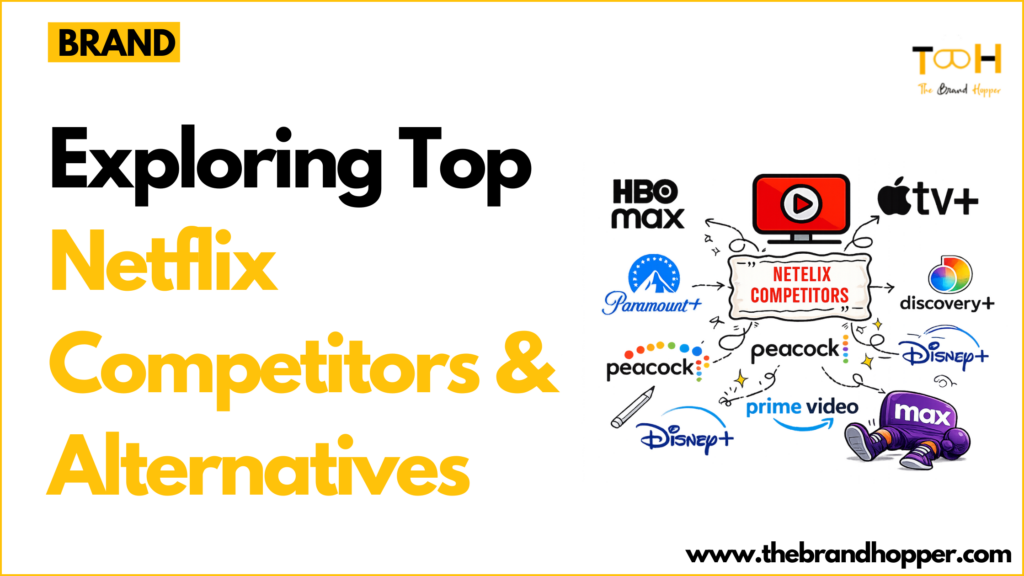
Netflix is the undisputed pioneer of the streaming era. Founded in 1997 as a DVD-by-mail service and pivoting to streaming in 2007, it now commands 301.6 million global subscribers and reported $45.18 billion in revenue in 2025 — a 15.8% year-on-year increase. Its ad-supported tier alone has attracted approximately 94 million users, and Netflix is projecting revenues of $50.7–$51.7 billion for 2026.
But dominance is not the same as monopoly. The streaming landscape is the most competitive it has ever been, with a dozen serious challengers fighting for screen time — from tech giants and legacy media conglomerates to niche platforms and free ad-supported services. Prices across the board have risen more than 20% since 2023 as platforms chase profitability, yet subscriber growth continues, driven by bundling, live sports rights, and the global appetite for on-demand content.
Whether you’re a viewer weighing your subscriptions, a marketer tracking the competitive landscape, or a media professional analysing the industry, this guide gives you the most up-to-date picture of every major Netflix competitor — complete with subscribers, pricing, content strengths, and honest verdict.
The Streaming Market in 2026: A Quick Snapshot
Before diving into individual competitors, here’s the context: Netflix holds a 21% share of US SVOD platforms and is projected to claim 29% of global subscription streaming revenue by 2029. However, the combined subscriber bases of its competitors already significantly exceed its own.
The market is not a winner-take-all — most households subscribe to two or three services simultaneously, and bundling has become the dominant commercial strategy. Disney, for instance, is folding Hulu into Disney+ in 2026 to create a single unified platform, while Amazon has begun bundling Apple TV+ and Peacock together as add-ons to Prime Video.
Top Competitors & Alternatives of Netflix
1. Amazon Prime Video

- Subscribers: ~200–240 million users worldwide (2025 estimate)
- Pricing: Included with Amazon Prime ($14.99/month or $139/year); standalone from $8.99/month
- Best For: Variety seekers and existing Amazon Prime members
Amazon Prime Video is arguably Netflix’s most formidable competitor — not because of its content alone, but because of the commercial architecture around it. Prime Video comes bundled with Amazon Prime, meaning hundreds of millions of users already have access to it as part of a package that also delivers free shipping, music, gaming, and cloud storage. Amazon last officially disclosed a subscriber count in 2021 (200 million), and while it no longer publishes exact figures, independent estimates for 2025 range from 200 to 240 million active users.
In terms of content, Prime Video has matured significantly. It has produced landmark original series including The Boys, Reacher, Fallout, and Rings of Power, the latter of which was the most expensive TV production in history at the time of filming. It holds streaming rights to NFL Thursday Night Football in the US, a deal that has driven significant subscriber engagement and made it a destination for live sports — a territory Netflix is only now beginning to enter.
Prime Video also carries a vast library of licensed content, and its X-Ray feature — which surfaces information about cast, songs, and trivia in real time — remains unique to the platform. In 2026, Amazon expanded its bundling strategy further, adding Apple TV+ and Peacock Premium Plus as optional add-ons for $19.99/month, creating a one-stop shop for streaming that few rivals can match.
Verdict: The broadest ecosystem play in streaming. Prime Video’s subscriber numbers are boosted by bundling rather than pure content pull, but its sports rights and original output have become genuine draws.
2. Disney+

- Subscribers: 127.8 million worldwide (as of mid-2025)
Pricing: From $7.99/month (with ads); Disney+/Hulu bundle from $12.99/month; Triple bundle (Disney+, Hulu, ESPN+) from $20/month - Best For: Families, Marvel and Star Wars fans, franchise content lovers
Disney+ launched in November 2019 and reached 100 million subscribers faster than any service in history — a feat built on the unrivalled depth of Disney’s intellectual property: Marvel, Star Wars, Pixar, National Geographic, and the classic Disney vault. As of mid-2025, the platform had 127.8 million subscribers globally, split roughly equally between the US/Canada (59.4 million) and international markets (68.4 million).
The platform’s 2026 story is defined by consolidation. Disney is in the process of folding Hulu — its general-entertainment streaming arm with a strong library of current-season TV and adult-oriented content — directly into the Disney+ app, creating a single destination that covers family content, live sports (via ESPN+), and general entertainment. This bundled experience is available from $20/month with ads and $30/month ad-free, positioning Disney as the closest thing to a full-service cable replacement among streaming services.
Content-wise, Disney+ continues to invest heavily in Marvel Cinematic Universe series and Star Wars content, though the critical reception of its original streaming output has been more mixed in recent years, prompting a strategic shift toward fewer but higher-quality productions.
Verdict: The family entertainment powerhouse. The Hulu integration makes it increasingly competitive as an all-in-one solution, and its franchise IP remains unmatched. The price of the full bundle, however, is now squarely in cable territory.
3. HBO Max


- Subscribers: 140+ million globally (Q1 2026); on track for 150 million by end-2026
- Pricing: Ad-supported from $9.99/month; ad-free from $16.99/month; Ultimate at $20.99/month
- Best For: Premium drama, film lovers, prestige television
HBO Max has quietly become one of the most compelling Netflix alternatives for quality-focused viewers. With 140 million global subscribers in Q1 2026 and a trajectory toward 150 million by year end, it is growing faster than most analysts expected following the rocky early years of the Warner Bros.-Discovery merger.
The platform’s content strength lies in its prestige pedigree. HBO’s library — which includes The Wire, Sopranos, Game of Thrones, The Last of Us, Succession, and The White Lotus — represents some of the most critically acclaimed television ever produced. Max has bolstered this with Warner Bros.’ film library, DC content, and a growing slate of original productions. Its ad-supported plan at $9.99/month is competitively priced, and the Ultimate tier ($20.99/month) includes 4K Ultra HD, Dolby Vision, and Dolby Atmos — the best technical specifications of any paid tier among major streamers.
In a further move to consolidate the streaming bundle market, Max is available alongside Disney+ and Hulu for $20/month (with ads) or $33/month (ad-free) — one of the most discussed deals in streaming in 2025.
Verdict: The strongest library of prestige TV in streaming. If you care about quality over quantity, Max consistently punches above its weight. Its pricing trajectory and bundling strategy suggest it is positioning itself for the long term.
4. Hulu

- Subscribers: ~50+ million (US only; merging into Disney+ in 2026)
- Pricing: From $7.99/month (with ads); ad-free from $17.99/month; Live TV bundle from $82.99/month
- Best For: Current-season TV, cord-cutters, live TV fans
Hulu occupies a distinctive position in the streaming market — the only major SVOD service that has consistently focused on current-season television, with episodes available to stream within 24–48 hours of airing on network TV. This makes it invaluable for viewers who have cut the cord but don’t want to miss live episodes of shows on ABC, NBC, CBS, and Fox.
Hulu’s Live TV tier — which bundles a cable-like live TV experience with on-demand streaming — is one of the most popular cord-cutting options in the US, starting at $82.99/month with over 95 channels. The 2026 integration into Disney+ means Hulu’s content will be accessible directly within the Disney+ app for existing bundle subscribers, though Hulu’s standalone app is expected to remain available.
Verdict: The best option for live and next-day TV in the US, and a key component of Disney’s bundle strategy. Its upcoming integration into Disney+ is a significant structural shift to watch.
5. Apple TV+


- Subscribers: Undisclosed (estimated 25–45 million paying subscribers)
- Pricing: $9.99/month; available in the Apple TV+ and Peacock bundle from $14.99/month
- Best For: Quality-over-quantity seekers, Apple ecosystem users
Apple TV+ remains the smallest of the major streaming platforms by content volume — but also one of the most critically acclaimed. Apple’s strategy has never been to compete on library size; instead, it funds a small number of highly ambitious productions and releases them slowly. The result is a consistent hit rate that rivals have struggled to match: Ted Lasso, Severance, The Morning Show, Slow Horses, Shrinking, Presumed Innocent, and Silo have all received significant critical and popular attention.
Apple does not disclose subscriber numbers, which itself is notable — the figure is almost certainly modest compared to Netflix or Max. But Apple TV+ operates with fundamentally different economics: it is effectively a marketing vehicle for Apple’s hardware and services ecosystem, which means profitability is not measured the same way as for standalone streaming businesses. At $9.99/month, it is priced to attract rather than maximise revenue per user.
In October 2025, Apple partnered with NBCUniversal to offer a joint Apple TV+ and Peacock bundle, and in April 2026, Amazon made this bundle available as an add-on through Prime Video — expanding Apple’s distribution significantly.
Verdict: A standout for original quality but a relatively thin library. Best value when bundled with Peacock or for Apple device owners who receive it free with a new purchase.
6. Paramount+

- Subscribers: 77 million worldwide (Q2 2025)
- Pricing: Essential from $7.99/month; Paramount+ with Showtime from $12.99/month
- Best For: CBS fans, Showtime drama, sports (UEFA Champions League, NFL, NFL on CBS)
Paramount+ has carved out a credible niche by leaning heavily into live sports and its legacy TV brands. The platform carries UEFA Champions League football, NFL games via CBS, and a deep library of CBS procedurals and reality programming — making it a go-to for sports fans and CBS loyalists. The addition of Showtime (now integrated under the Paramount+ with Showtime tier) brought prestige dramas like Yellowjackets, Billions, and Dexter: Original Sin into the fold.
With 77 million subscribers as of Q2 2025, Paramount+ has grown meaningfully since its rebranding from CBS All Access in 2021. However, parent company Paramount Global’s financial difficulties have raised questions about its long-term independence, with merger discussions ongoing.
Verdict: Strong for sports and CBS content, and the Showtime integration adds quality drama. Its long-term ownership situation introduces some uncertainty.
7. Peacock

- Subscribers: 44 million (end of 2025)
- Pricing: Premium from $7.99/month; Premium Plus from $13.99/month
- Best For: NBC/Universal content, live sports, The Office fans
Peacock, NBCUniversal’s streaming service, ended 2025 with 44 million subscribers. Its content proposition is built on NBC and Universal’s extensive library — The Office, Parks and Recreation, Brooklyn Nine-Nine — combined with live sports including Premier League football, the Olympics, Sunday Night Football, and WWE. This sports portfolio makes Peacock one of the most important streaming services for live event viewing in the US.
The 2025 Apple bundle and the 2026 Amazon Prime Video add-on partnership have been significant distribution boosts. Peacock has also begun investing more heavily in original productions, though its originals have yet to match the critical impact of those on competing services.
Verdict: Underrated for sports and live events. The library of beloved comfort-rewatch shows gives it consistent value. Its bundling partnerships with Apple and Amazon are smart distribution plays.
8. YouTube Premium


- Subscribers: ~100 million (estimated, including Music Premium)
- Pricing: $13.99/month individual; $22.99/month family
- Best For: Ad-free YouTube, background listening, YouTube Music
YouTube Premium is a different category of Netflix competitor — it doesn’t offer a catalogue of films and TV shows in the traditional sense, but competes for the same leisure screen time. For many users, YouTube’s user-generated content, creator channels, podcasts, and live streams constitute their primary source of video entertainment. Premium removes ads, enables background play and picture-in-picture, adds YouTube Music, and provides access to YouTube Originals.
Given that YouTube attracts over 2 billion logged-in users monthly, the scale of its content ecosystem dwarfs every other platform — the question is whether users will pay to access it without ads. With an estimated 100 million Premium subscribers, a significant number already are.
Verdict: Not a direct substitute for serialised drama or film, but a serious competitor for total screen time — particularly among younger audiences and mobile-first viewers.
9. Tubi
- Subscribers/Users: 97 million monthly active users (2025)
- Pricing: Completely free (ad-supported)
- Best For: Budget-conscious viewers, casual watching, classic films and TV
Tubi is the most-watched free streaming service in the United States and arguably the biggest surprise story in streaming over the past two years. Owned by Fox Corporation, Tubi carries over 250,000 titles — a library that dwarfs Netflix’s in raw volume — and earns revenue entirely through advertising, meaning it costs users nothing to access.
Its catalogue skews toward older films, B-movies, reality TV, and international content, but its depth is remarkable. In 2025–26, Tubi expanded aggressively into anime, adding popular series including Naruto and Bleach with minimal ad interruption. It has also begun commissioning original “Tubi Originals” — lower-budget productions designed to differentiate the platform. With 97 million monthly active users, it is already larger than many paid services by reach.
Verdict: The best free streaming service available. It cannot match Netflix for originals or prestige content, but for casual viewing at zero cost, it is unbeatable value.
10. JioHotstar

- Subscribers: 300 million paying subscribers (as of Q1 2025, within 3 months of launch)
- Pricing: Plans from ₹149/month in India; international pricing varies
- Best For: Indian and South Asian content, cricket, Bollywood
JioHotstar is the most significant streaming development to occur outside the US in recent years, and its subscriber numbers are staggering enough to make it a genuine global force. Launched on 14 February 2025 as the product of a merger between JioCinema and Disney+ Hotstar — following Reliance Industries’ $8.5 billion joint venture with The Walt Disney Company — JioHotstar attracted 600 million total users within its first three months, of whom 300 million are paying subscribers.
This makes JioHotstar the second-largest subscription streaming platform in the world by paying subscribers, behind only Netflix. It carries the streaming rights to the Indian Premier League cricket, one of the world’s most-watched sports properties, as well as Disney’s global content library, Star India’s vast Hindi and regional language content, and international originals. For anyone interested in the global streaming picture, JioHotstar is impossible to ignore.
Verdict: The dominant streaming platform in India and one of the largest in the world. A must-include in any serious competitive analysis of Netflix.
11. Crunchyroll

- Subscribers: 15+ million paying subscribers (2025)
- Pricing: Fan plan from $7.99/month; Mega Fan from $9.99/month; Ultimate Fan from $13.99/month
- Best For: Anime fans globally
Crunchyroll is the world’s leading dedicated anime streaming service, with over 15 million paying subscribers worldwide and a library of more than 1,000 anime titles. Owned by Sony Pictures Entertainment following a $1.175 billion acquisition in 2021, Crunchyroll has continued to invest in simulcast releases — streaming new anime episodes within hours of their Japanese broadcast — making it the go-to platform for fans who want to stay current.
In early 2026, Crunchyroll made a significant strategic move by removing its free ad-supported tier entirely, pushing all viewers to paid plans. This is a notable bet: it risks alienating casual users but signals confidence in the loyalty and willingness-to-pay of the anime audience.
Verdict: The definitive destination for anime. Not a direct Netflix substitute for general entertainment, but dominant in its niche — and that niche is now one of the fastest-growing content categories globally.
12. MUBI

- Subscribers: ~1 million paying subscribers (estimated)
- Pricing: $14.99/month or $107.88/year (frequently offers 3 months for $1 to new subscribers)
- Best For: Film cinephiles, arthouse and independent cinema
MUBI occupies the premium end of the niche streaming market: a curated service for film lovers who prioritise quality over quantity. Rather than licensing a vast library, MUBI offers a rotating selection of approximately 30 hand-picked films at any given time — arthouse classics, festival favourites, international cinema, and new independent releases — replacing one film each day. It also produces its own films through MUBI Go (a programme offering a free cinema ticket each week in supported markets) and MUBI Productions.
It cannot compete with Netflix on breadth, but for the cinephile audience it targets, it offers something no other streaming service does: genuine curatorial taste. Think of it as the difference between a superstore and an independent bookshop.
Verdict: A boutique service for serious film lovers. At $14.99/month, it is niche but meaningfully differentiated — a palate cleanser for subscribers fatigued by the algorithmic mainstream.
Head-to-Head Comparison Table (2026)
| Service | Subscribers | Starting Price | Best For | Key Strength |
|---|---|---|---|---|
| Netflix | 301.6M | $7.99/month | All-round | Original content volume |
| Amazon Prime Video | ~200–240M | $8.99/month | Variety + ecosystem | Prime bundle value |
| Disney+ | 127.8M | $7.99/month | Families, franchises | Marvel/Star Wars/Pixar IP |
| Max (HBO) | 140M+ | $9.99/month | Prestige drama | HBO library depth |
| Hulu | ~50M+ | $7.99/month | Current TV, live | Next-day network TV |
| Apple TV+ | ~25–45M | $9.99/month | Quality originals | Hit rate on originals |
| Paramount+ | 77M | $7.99/month | Sports, CBS | Champions League, NFL |
| Peacock | 44M | $7.99/month | Live sports | Olympics, Premier League |
| YouTube Premium | ~100M | $13.99/month | YouTube without ads | Scale & creator content |
| Tubi | 97M MAU | Free | Budget viewers | Largest free library |
| JioHotstar | 300M paying | From ₹149 | South Asian content | IPL cricket + Disney |
| Crunchyroll | 15M+ | $7.99/month | Anime fans | Largest anime library |
| MUBI | ~1M | $14.99/month | Cinephiles | Curated arthouse film |
How to Choose the Right Netflix Alternative
With so many options — and household streaming budgets under increasing pressure as prices have risen 20%+ since 2023 — choosing the right service (or combination) comes down to what you actually watch.
If your household includes children, Disney+ or the Disney+/Hulu bundle delivers the most family-oriented content value. If prestige drama is your priority, Max is hard to beat. If live sports matter, Peacock, Paramount+, or Hulu Live TV each offer compelling rights packages for different sports. If you’re budget-constrained and willing to watch ads, Tubi is the obvious first call. And if you’re a dedicated anime fan, Crunchyroll has no serious peer.
The bundling economy is also worth watching. The Disney+/Hulu integration, the Amazon-Apple-Peacock bundle, and the Disney+/Hulu/Max triple bundle are all designed to reduce subscriber churn while increasing household ARPU. In 2026, the smartest value play for most households is to pick one or two bundles rather than accumulating individual subscriptions.
Frequently Asked Questions (FAQs)
1. Who is Netflix’s biggest competitor in 2026? In terms of paying subscribers, JioHotstar (300 million) and Amazon Prime Video (~200–240 million) are the closest rivals at scale. In the US specifically, Max and Disney+ are Netflix’s most direct content competitors. Amazon Prime Video is often cited as the broadest competitive threat globally due to its ecosystem bundling.
2. Which streaming service has the most subscribers in 2026? Netflix leads all standalone streaming services with 301.6 million global subscribers. However, JioHotstar has approximately 300 million paying subscribers and is the second-largest subscription streaming service in the world — a development that reshapes the global competitive picture dramatically.
3. Is there a free alternative to Netflix? Yes. Tubi is the best free Netflix alternative, offering over 250,000 titles with ad support and no subscription fee. Pluto TV is another solid free option. Both are AVOD (Ad-Supported Video on Demand) services — you watch ads in exchange for free content.
4. Which streaming service is cheapest in 2026? Tubi is free. Among paid services, Netflix’s ad-supported tier ($7.99/month), Disney+’s ad-supported plan ($7.99/month), and Peacock’s Premium plan ($7.99/month) are among the lowest entry-level prices. Paramount+ Essential starts at $7.99/month as well.
5. Which streaming service is best for families in 2026? Disney+ or the Disney+/Hulu bundle is the strongest choice for families, given its depth of child-friendly content from Disney, Pixar, and Marvel. Peacock and Paramount+ also carry family-friendly content, and Netflix’s breadth covers most tastes for older children and adults.
6. Which streaming service is best for sports? It depends on the sport. Peacock carries the Premier League, Olympics, and Sunday Night Football. Paramount+ has UEFA Champions League and NFL on CBS. Amazon Prime Video streams NFL Thursday Night Football. YouTube TV and Hulu Live TV offer broad live sports coverage as cable-replacement bundles. Netflix is a relative newcomer to live sports, having streamed select boxing events and NFL Christmas games in 2024–25.
7. Has Netflix lost subscribers to its competitors? No — Netflix has continued to grow, adding subscribers year-on-year and reaching 301.6 million by 2026. Its 2023 password-sharing crackdown, which was initially controversial, proved commercially highly effective, converting shared account users into paying subscribers. Netflix has also expanded revenue through its ad-supported tier, which alone has attracted ~94 million users.
8. What happened to HBO Max? HBO Max was rebranded as “Max” in May 2023 following the merger of WarnerMedia and Discovery. The platform now combines HBO’s prestigious drama library with Warner Bros.’ film catalogue, Discovery’s unscripted and documentary content, and CNN. It has continued to grow, reaching 140+ million subscribers in Q1 2026.
9. Is Hulu being shut down? No. Hulu is being integrated into the Disney+ app in 2026, meaning its content will be accessible within the Disney+ platform for bundle subscribers. The standalone Hulu app is expected to remain available, but the long-term strategic direction is to unify Disney’s streaming experience under one roof.
10. Which streaming service has the best original content? This is subjective, but by critical consensus: HBO/Max has the deepest library of prestige originals (Succession, The Last of Us, The White Lotus). Netflix wins on volume and global variety. Apple TV+ has arguably the highest hit rate relative to its output. Amazon Prime Video has produced several landmark originals including The Boys and Fallout. Disney+ leads on franchise-driven content.
All subscriber data, pricing, and market figures cited in this article are sourced from company financial disclosures, industry research, and publicly available data as of May 2026. Pricing and plans are subject to change.
Also Read: Exploring Disney’s Top Competitors and Alternatives
To read more content like this, subscribe to our newsletter
Go to the full page to view and submit the form.