


Few luxury brands generate as much curiosity about who actually owns them as Rolex.
There’s no Rolex family running the boardroom, no rival conglomerate holding a controlling stake, and no ticker symbol to check on a stock exchange — a genuine rarity among companies of Rolex’s scale and cultural dominance.
Instead, Rolex sits inside one of the most unusual corporate governance structures in global business: a private foundation designed explicitly to make the company un-ownable in the conventional sense.
Here’s the complete picture of who owns Rolex today, how Hans Wilsdorf engineered this structure, how the company is actually governed day to day, and how Rolex’s most recent estimated financial performance stacks up against the rest of the Swiss watch industry.
How Rolex Began: From a London Import Business to a Geneva Watchmaking Icon
Rolex traces its origins to 1905, when a 24-year-old German-born businessman named Hans Wilsdorf founded Wilsdorf & Davis in London alongside his brother-in-law, Alfred Davis, a British watch dealer and investor.

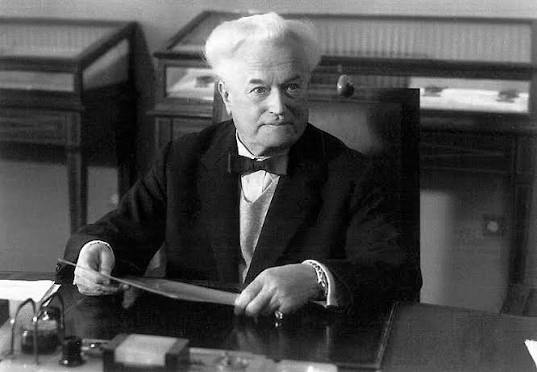
The original business model was straightforward: import precision Swiss movements into England and fit them into high-quality watch cases, at a time when wristwatches were still considered a novelty compared to pocket watches.
Wilsdorf registered the Rolex name in 1908 — a short, easily pronounceable word in virtually any language, reportedly chosen partly because it fit neatly onto a watch dial and sounded like the mechanical “ticking” of a watch being wound — and the company formally became Rolex Watch Co. Ltd. in 1915.
Following World War I, unfavorable British economic conditions, including steep taxes on luxury imports, pushed Wilsdorf to relocate the company’s operations to Geneva, Switzerland, where in 1920 he registered Montres Rolex SA, cementing Rolex’s identity as a genuinely Swiss watchmaking house rather than a British import brand.
From Geneva, Wilsdorf drove a series of horological breakthroughs that would define Rolex’s reputation for precision and durability, including the 1926 Oyster case (the world’s first waterproof wristwatch case) and the 1931 Perpetual self-winding rotor mechanism, innovations that transformed Rolex from a promising import business into the foundation of modern luxury watchmaking.
The Hans Wilsdorf Foundation: Why Rolex Has No Shareholders
The defining moment in Rolex’s ownership history came decades after its founding.
Having no children of his own and having already lost his wife, Hans Wilsdorf made the decision to ensure Rolex would never be broken up, sold off, or absorbed into a larger conglomerate after his death.
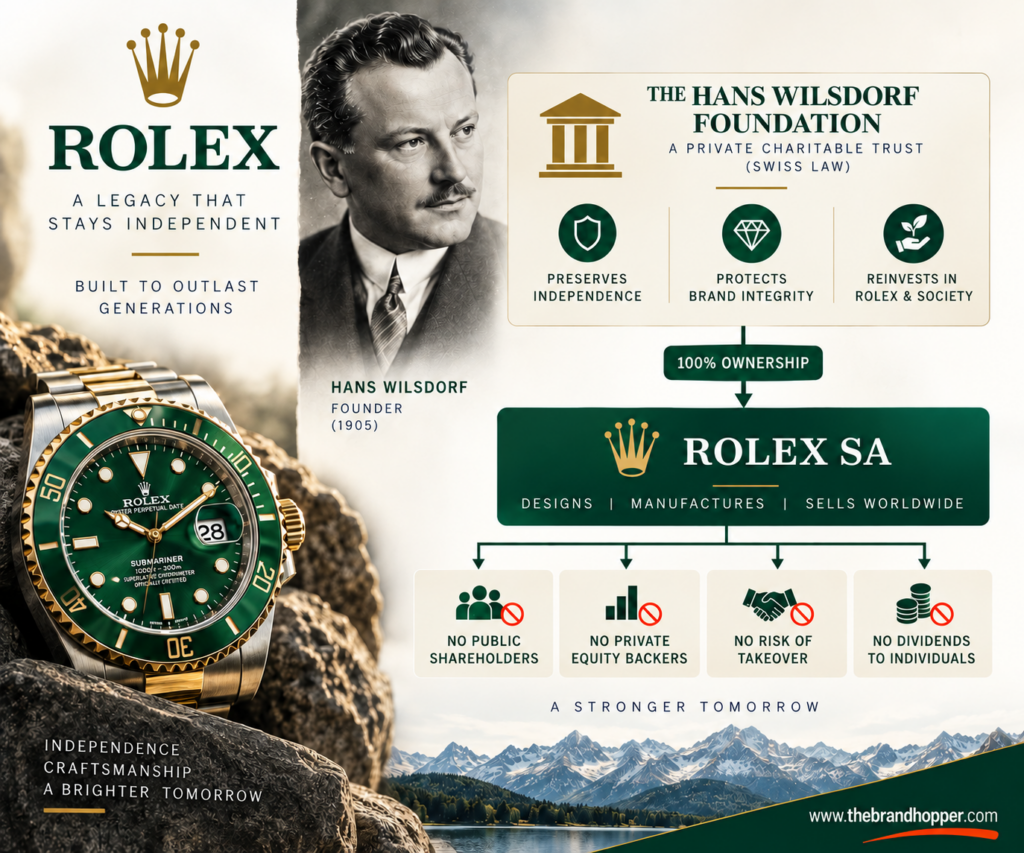
In 1944, Wilsdorf established the Hans Wilsdorf Foundation, a private charitable trust registered under Swiss law, and in 1960 — the year before his death — he transferred 100% ownership of Rolex SA to the foundation outright.
This structure means Rolex today has no public shareholders, no private equity backers, and no possibility of a hostile takeover or acquisition, since the foundation’s own charter explicitly commits it to preserving Rolex’s independence rather than maximizing shareholder returns or ever selling the company.
The foundation’s stated goals are threefold: to safeguard the continuity and independence of Rolex, to protect the purity and integrity of the brand and its watchmaking standards, and to reinvest the company’s profits back into the business and into philanthropic causes rather than distributing them to individual owners.

Because Rolex generates substantial profit but has no shareholders demanding dividends, the company has been able to plow enormous sums back into vertical integration, in-house manufacturing of components most rivals outsource, and long-term brand investment over multiple decades — a genuine structural advantage over publicly traded competitors accountable to quarterly earnings pressure.
Is Rolex a Non-Profit? Clearing Up a Common Misconception
A persistent misconception is that Rolex itself is a non-profit or charity because it is owned by a foundation.
In reality, Rolex SA is very much a for-profit, commercially operating company that manufactures and sells watches for substantial profit; it is the Hans Wilsdorf Foundation — the owner sitting above Rolex SA — that is structured as a private charitable trust.
The distinction matters because Rolex still competes aggressively in the luxury watch market, invests heavily in marketing and sponsorships (from tennis and golf to sailing and exploration), and prices its watches at typical luxury-market margins.
The “charitable” element comes through separately: the Hans Wilsdorf Foundation funds philanthropic initiatives including the long-running Rolex Awards for Enterprise, which supports individuals working on scientific, environmental, and humanitarian projects worldwide, and the Rolex Mentor and Protégé Arts Initiative, which pairs emerging artists with acclaimed masters across disciplines.

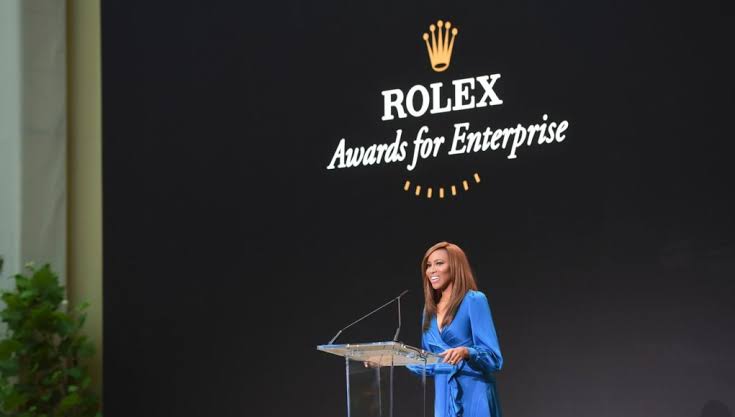
Rolex the commercial company and the Hans Wilsdorf Foundation’s philanthropy operate as related but distinct functions under the same overarching ownership umbrella.
How Rolex Is Actually Governed
With no shareholders to answer to, Rolex’s day-to-day operations are overseen by a professional executive leadership team that reports directly to the Hans Wilsdorf Foundation’s board of directors, which holds ultimate authority over major strategic decisions.
Jean-Frédéric Dufour has served as Rolex’s CEO since 2015, having previously led fellow Swiss watchmakers Zenith and Blancpain, and has overseen a decade of significant strategic moves at the company, including sustained expansion of Rolex’s in-house manufacturing capacity and a notable 2023 push toward greater control over the brand’s retail distribution.

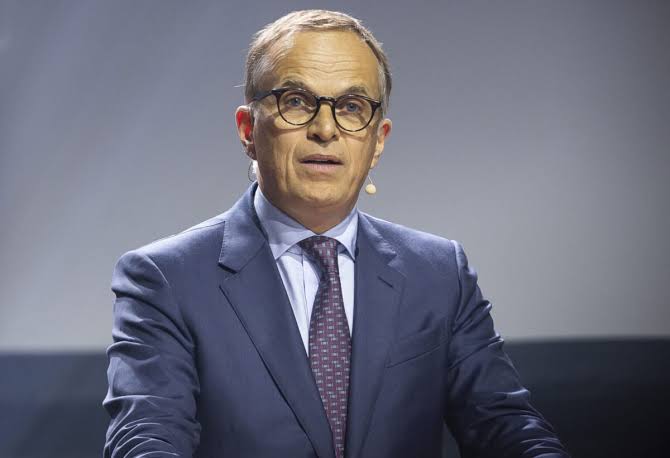
That governance model gives Rolex’s leadership unusual latitude to make long-term decisions — including deliberately limiting annual production to preserve scarcity and resale value — without the pressure of quarterly earnings calls or activist investors pushing for faster growth, a genuine point of structural differentiation from nearly every other major luxury conglomerate.
The 2023 Bucherer Acquisition: Rolex’s Boldest Retail Move
One of the most significant developments under Dufour’s leadership came in 2023, when Rolex made the surprise announcement that it would acquire Bucherer, one of the world’s largest independent luxury watch and jewelry retailers, with locations across Europe and the United States.
The move represented a striking departure from Rolex’s traditionally hands-off approach to retail, historically relying almost entirely on a global network of independent authorized dealers rather than owning point-of-sale operations directly.
Despite the acquisition, Dufour has publicly stated that Rolex has “no intention of growing Bucherer” into a dominant retail arm that would sideline existing authorized dealers, framing the deal instead as a way to gain deeper visibility into the retail and pre-owned watch markets rather than a wholesale pivot toward vertical integration.
The acquisition nonetheless signaled a new willingness at Rolex to extend its influence beyond manufacturing and into the broader ecosystem surrounding its watches, including the fast-growing certified pre-owned segment.
Tudor: Rolex’s Sister Brand Under the Same Foundation
Rolex is not the only watchmaker under the Hans Wilsdorf Foundation’s ownership umbrella.
Tudor, officially Montres Tudor SA, was registered by Hans Wilsdorf himself in 1926 as a related but distinct brand, designed to offer many of the technical and aesthetic qualities associated with Rolex at a more accessible price point.

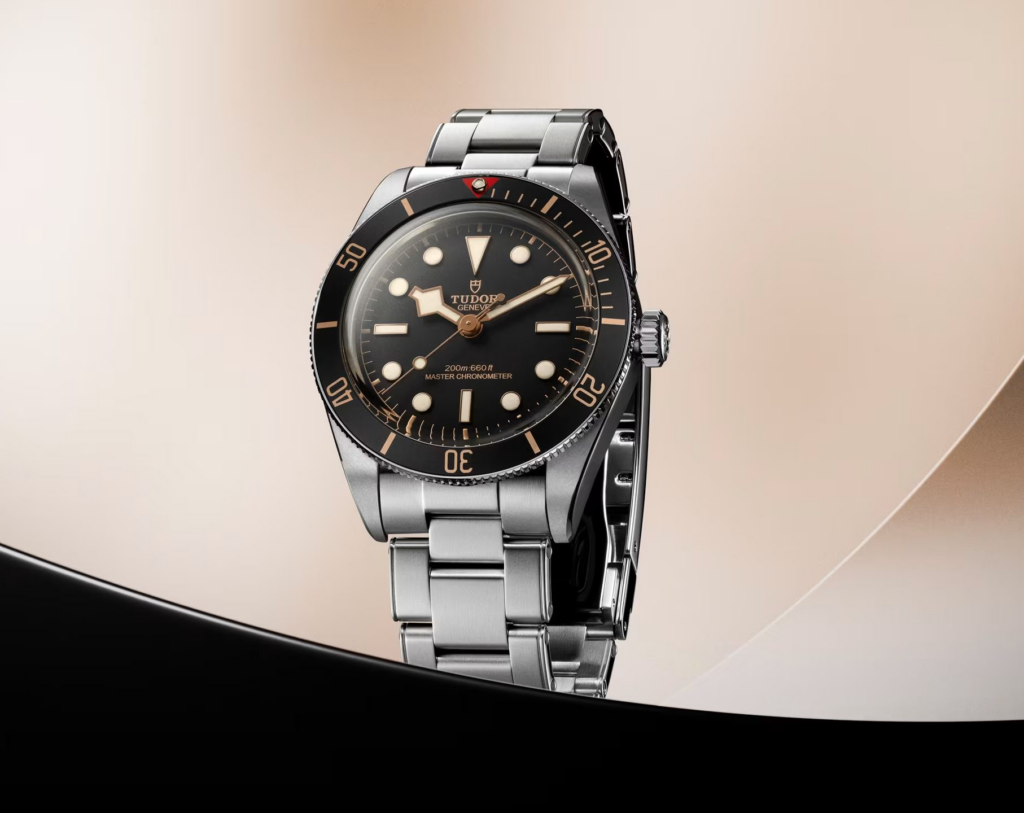
Tudor operates independently of Rolex in terms of day-to-day management, design direction, and market positioning — the two brands compete in different segments and maintain separate identities, manufacturing facilities, and retail networks — but both ultimately answer to the same foundation ownership structure, meaning profits generated by Tudor likewise flow back into the same independence-preserving, reinvestment-focused governance model rather than to any external shareholders.
Rolex’s Estimated Financial Performance
Because Rolex is privately held and under no obligation to disclose financial results, there is no official, audited revenue or profit figure published by the company itself.
However, independent industry analysis — most notably the closely watched annual Swiss Watcher report jointly produced by Morgan Stanley and LuxeConsult — provides the most widely cited estimates of Rolex’s scale.
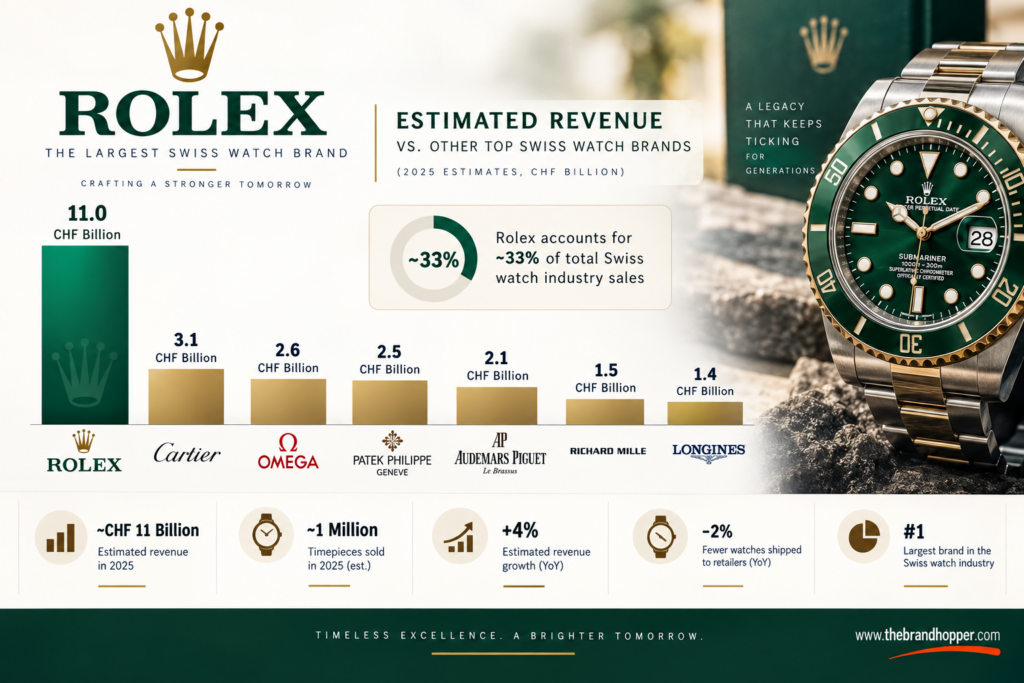
That report estimated Rolex’s 2025 sales at approximately CHF 11 billion (roughly $14 billion), marking the first time Rolex has been estimated to cross the $14 billion threshold and representing a roughly 4% increase year-over-year even as the watchmaker actually shipped about 2% fewer watches to retailers, continuing a rare two-year streak of declining unit volumes not seen in over two decades — a pattern widely interpreted as Rolex deliberately prioritizing pricing power and scarcity over raw unit growth.
Despite that unit dip, Rolex’s estimated revenue alone accounts for roughly 33% of the entire Swiss watch industry’s total sales, and the brand is estimated to have sold around one million timepieces during the period, reinforcing its position as by far the single largest player in an industry where only a handful of other brands — Cartier, Audemars Piguet, Patek Philippe, Omega, and Richard Mille — even cross the CHF 1 billion wholesale revenue threshold.

Why Rolex’s Ownership Structure Matters
Rolex’s foundation-based ownership model is frequently cited by business analysts as a genuine structural advantage rarely available to publicly traded luxury competitors.
Without shareholders demanding short-term returns, Rolex’s leadership has been able to make decisions that would be difficult to justify in a typical public company — deliberately constraining supply relative to soaring demand, investing enormous sums in vertically integrated in-house manufacturing of components like hairsprings and cases that most competitors outsource, and maintaining a decades-long, famously understated approach to marketing built around long-term brand partnerships rather than short-term promotional campaigns.
For consumers and industry watchers alike, this structure helps explain some of Rolex’s most distinctive market characteristics, including persistent waitlists for popular models and steady, controlled price appreciation on the secondary market, both of which stem directly from a governance model built for permanence rather than shareholder value maximization.
Rolex Ownership at a Glance
| Category | Detail |
| Founded | 1905 (London, as Wilsdorf & Davis) |
| Founders | Hans Wilsdorf and Alfred Davis |
| Relocated to Geneva | 1920 (registered as Montres Rolex SA) |
| Owner | Hans Wilsdorf Foundation (100%) |
| Foundation established | 1944; received full Rolex ownership in 1960 |
| Company structure | Privately held; no shareholders; cannot be sold or listed |
| Stock listing | None — not publicly traded |
| CEO | Jean-Frédéric Dufour (since 2015) |
| Sister brand | Tudor (Montres Tudor SA, founded 1926) |
| Notable 2023 move | Acquisition of retailer Bucherer |
| Estimated 2025 sales | ~CHF 11 billion (~$14 billion) |
| Estimated Swiss watch market share | ~33% of total industry sales |
| Estimated 2025 units sold | ~1 million timepieces |
Key Takeaways
Rolex’s ownership structure remains one of the most unusual in global business: the company has no shareholders, no public listing, and cannot legally be sold, because it is wholly owned by the Hans Wilsdorf Foundation, the private Swiss charitable trust founder Hans Wilsdorf established in 1944 and handed full control of the company in 1960.
Rolex itself began in 1905 as a London import business before relocating to Geneva and becoming the watchmaking icon it is today, and it now operates under CEO Jean-Frédéric Dufour alongside sister brand Tudor, which is likewise owned by the same foundation.
Despite disclosing no official financial results, independent industry tracking estimated Rolex’s 2025 sales at roughly $14 billion — about a third of the entire Swiss watch industry’s total revenue — reinforcing that Rolex’s unconventional, shareholder-free ownership model has done nothing to slow its position as the world’s dominant luxury watch brand.
Frequently Asked Questions
Q: Who owns Rolex?
A: Rolex is wholly owned by the Hans Wilsdorf Foundation, a private Swiss charitable trust established by Rolex founder Hans Wilsdorf. There are no individual owners, shareholders, or parent companies.
Q: Is Rolex a non-profit company?
A: No. Rolex SA is a for-profit, commercially operating company. It is the Hans Wilsdorf Foundation — the entity that owns Rolex — that is structured as a private charitable trust, not Rolex itself.
Q: Who founded Rolex?
A: Rolex was founded in 1905 in London by Hans Wilsdorf and his brother-in-law Alfred Davis, originally as Wilsdorf & Davis, before relocating to Geneva and becoming Montres Rolex SA in 1920.
Q: Can Rolex ever be sold or go public?
A: No. The Hans Wilsdorf Foundation’s charter is specifically designed to preserve Rolex’s independence permanently, meaning the company cannot legally be sold, acquired, or listed on a stock exchange.
Q: Who is Rolex’s CEO?
A: Jean-Frédéric Dufour has served as Rolex’s CEO since 2015, having previously led fellow Swiss watchmakers Zenith and Blancpain, and reports to the Hans Wilsdorf Foundation’s board of directors.
Q: Does Rolex own Tudor?
A: Yes, indirectly. Tudor was registered by Hans Wilsdorf in 1926 and, like Rolex, is owned by the Hans Wilsdorf Foundation, though the two brands operate independently with separate management and market positioning.
Q: Why did Rolex acquire Bucherer?
A: In 2023, Rolex acquired retailer Bucherer to gain greater visibility into the retail and pre-owned watch markets, though CEO Jean-Frédéric Dufour has stated Rolex has no intention of expanding Bucherer to sideline its existing network of authorized dealers.
Q: How much revenue does Rolex generate?
A: Rolex does not publish official financial results, but the Morgan Stanley and LuxeConsult 2025 Swiss Watcher report estimated Rolex’s 2025 sales at approximately CHF 11 billion (roughly $14 billion), or about 33% of the entire Swiss watch industry’s total sales.
Also Read: Rolex vs Omega: Which Luxury Watch Brand Wins?
Also Read: Timekeeping Titans: Inside Rolex Marketing Strategies and Mix
To read more content like this, subscribe to our newsletter
Go to the full page to view and submit the form.