


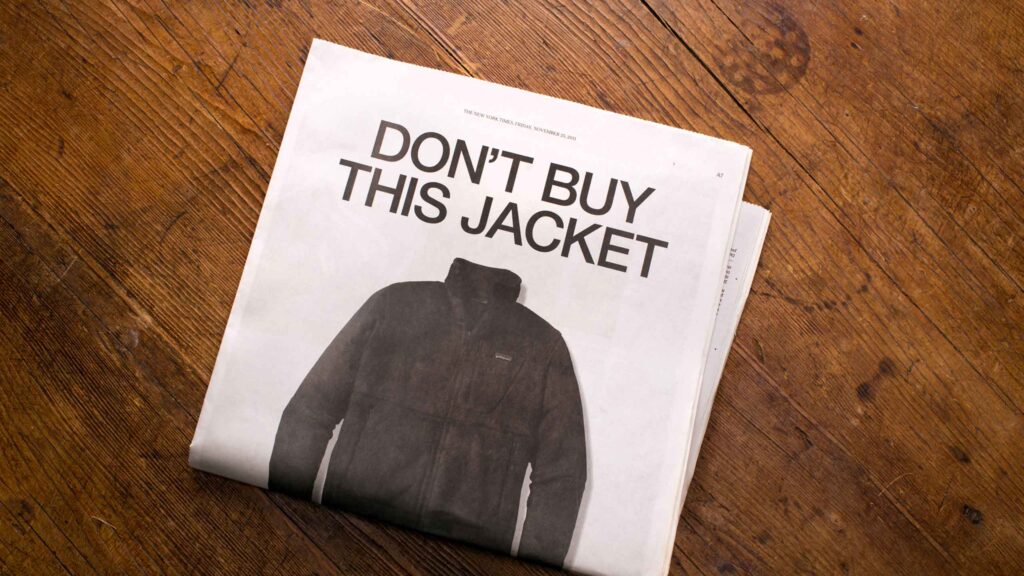
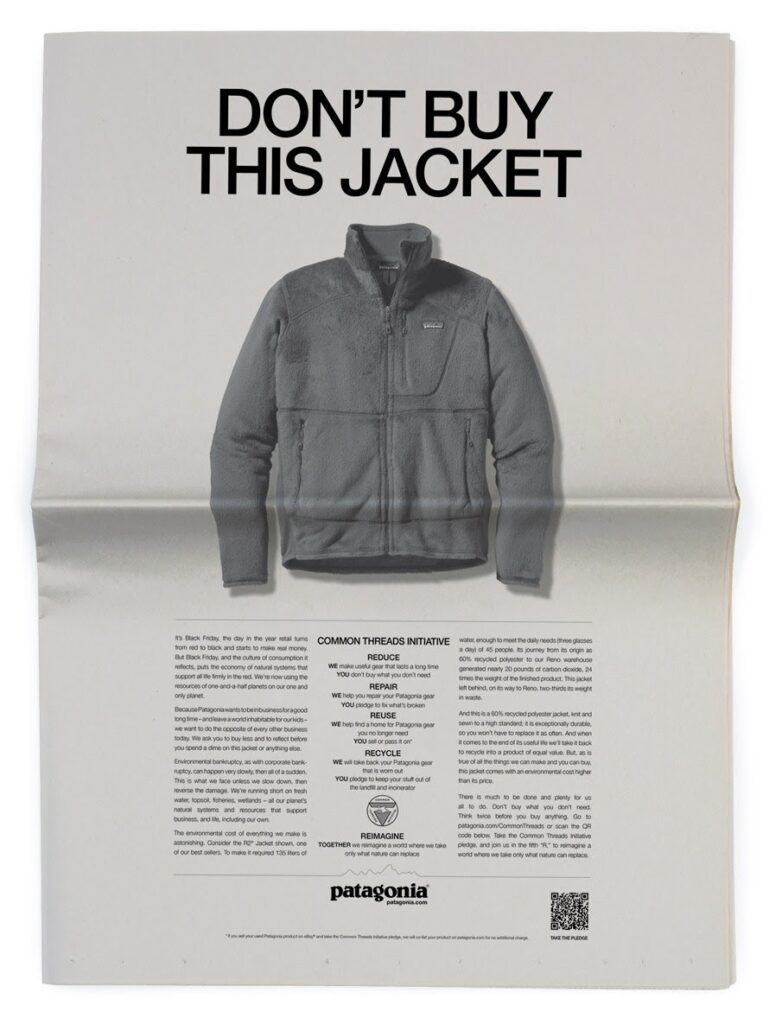
On Black Friday 2011 — the single biggest shopping day in American retail — Patagonia took out a full-page ad in The New York Times with a headline no other retailer would dare run: “Don’t Buy This Jacket.”
It featured the company’s best-selling R2 fleece and a detailed accounting of that jacket’s real environmental cost: greenhouse gas emissions several times its own weight, significant freshwater consumption, and real waste generation.
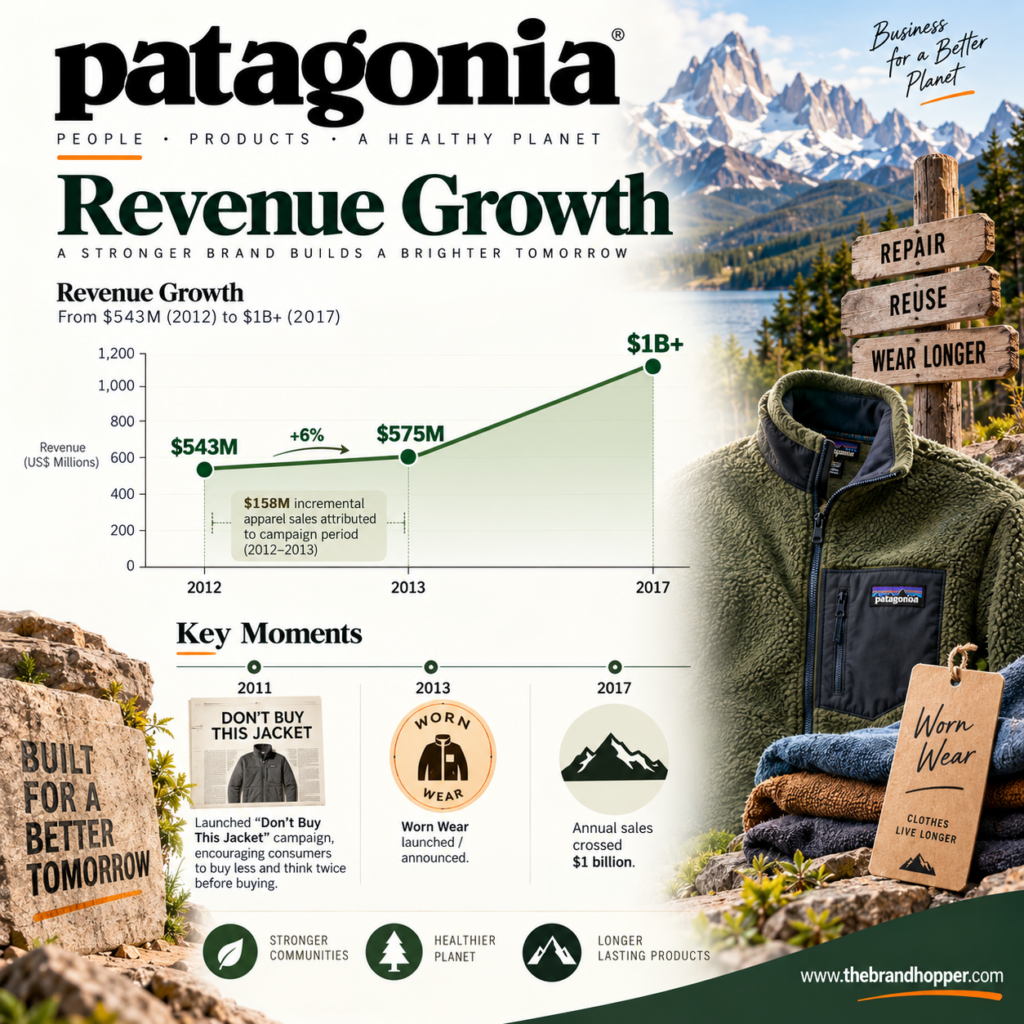
Rather than tanking sales, the campaign coincided with Patagonia’s revenue jumping nearly a third to $543 million the following year.
Fifteen years later, the campaign is still cited as one of the clearest examples of authentic, values-driven marketing outperforming conventional advertising — and Patagonia has kept building on its logic ever since, culminating in founder Yvon Chouinard’s unprecedented 2022 decision to give the entire company away to fight climate change.
This case study covers the full arc: the environmental philosophy behind the ad, what actually happened to sales, and where Patagonia’s ownership and business model stand in 2025-2026.
| Quick Answer: What Was “Don’t Buy This Jacket”?
• Launched Black Friday, November 25, 2011, with a full-page New York Times ad urging shoppers not to buy Patagonia’s best-selling R2 fleece. • Revenue rose nearly a third to $543 million in 2012 and crossed $1 billion by 2017, contradicting the ad’s literal message. • Helped seed Patagonia’s ongoing Worn Wear resale program and inspired imitators like REI’s #OptOutside. • In 2022, founder Yvon Chouinard transferred full company ownership to the Patagonia Purpose Trust and the Holdfast Collective, directing an estimated $100 million a year toward climate causes as of 2025. |
Patagonia’s Environmental Philosophy Before the Campaign
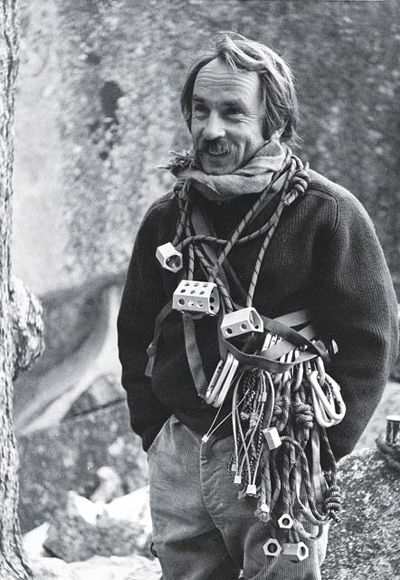
Patagonia was founded in 1973 by Yvon Chouinard, a rock climber and blacksmith who’d been selling hand-forged climbing pitons before pivoting the company toward apparel.

From early on, the company’s stated mission — later distilled to “We’re in business to save our home planet” — was built into governance and product decisions, not just marketing copy: Patagonia began donating 1% of sales to environmental causes in 1985, a commitment formalized into the broader 1% for the Planet initiative Chouinard co-founded in 2002, which has now moved more than $100 million to environmental groups since inception.
By 2011, Patagonia had also spent six years running its Common Threads Initiative (launched 2005), a five-part framework — reduce, repair, reuse, recycle, reimagine — that had already recycled 45 tons of returned clothing and converted 34 tons of that material into new garments over the initiative’s first twelve years.
Chouinard had also already published his 2005 memoir-manifesto “Let My People Go Surfing,” which laid out the company’s operating philosophy of deliberately staying small and privately held so that environmental commitments couldn’t be diluted by outside shareholders demanding growth at any cost — a philosophy that would resurface directly in the 2022 ownership decision more than a decade later.
Patagonia had also been an early adopter of organic cotton across its entire cotton product line by 1996, a switch the company made after an internal environmental audit found conventional cotton farming’s pesticide use to be far more damaging than assumed, even though the change tripled certain raw material costs at the time.
Inside the Campaign: More Than a Provocative Headline
The “Don’t Buy This Jacket” ad wasn’t a one-off stunt; it was Common Threads’ most provocative public expression, timed deliberately to Black Friday for maximum contrast.
Patagonia billed itself as “the only retailer in the country asking people to buy less” on the one day of the year when every other retailer is asking for the opposite.
The ad copy didn’t stop at guilt — it gave consumers a concrete alternative framework, urging them to reduce what they buy, repair what they own, reuse and pass along old gear, recycle what’s beyond repair, and reimagine a world that doesn’t demand ever-increasing consumption.

Patagonia backed the message with matching emails to its subscriber list and a partnership with eBay to promote resale of used Patagonia gear directly through the company’s own channels — a genuinely unusual move for a retailer to actively point customers toward not buying something new.
The ad copy itself went further than most retrospectives quote: it detailed that manufacturing the R2 jacket specifically required 135 liters of water — enough to meet the daily needs of 45 people — and generated two-thirds its weight in carbon dioxide emissions during production and shipping, figures Patagonia sourced from its own supply-chain footprint audits rather than industry averages.
Then-CEO Casey Sheahan later said the intent wasn’t to shame the customer who’d already bought the jacket, but to change the calculus before the purchase — asking shoppers to consider need over impulse on the one day of the year built entirely around impulse.
Worn Wear: Turning the Message Into a Business Model
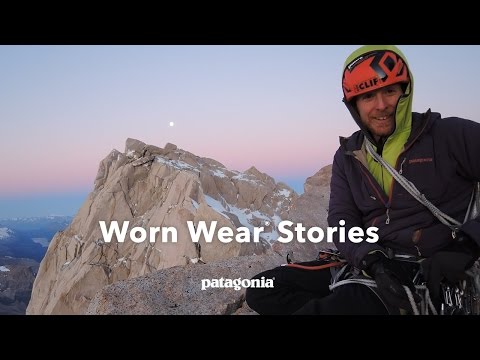
The campaign’s most durable legacy is the Worn Wear program it helped popularize: a trade-in and resale system where customers send back used Patagonia gear for store credit, Patagonia repairs and cleans it, and resells it at a discount rather than letting it go to landfill.
Worn Wear has generated an estimated 120,000-plus repurposed-item sales over its run, turning what could have been a purely symbolic sustainability gesture into an actual functioning secondary marketplace with real repeat revenue.
The program’s user-generated content — customers proudly showing off patched, decades-old Patagonia jackets — created a form of brand advocacy that no paid campaign could easily manufacture, reframing a worn-out jacket as a badge of loyalty rather than something to be embarrassed about.
Patagonia expanded the infrastructure behind Worn Wear considerably over the following decade: it operates dedicated repair facilities, including what the company has described as one of the largest garment repair centers in North America at its Reno, Nevada distribution hub, and runs a traveling fleet of Worn Wear repair trucks that visit college campuses, outdoor festivals, and retail parking lots to perform free on-the-spot repairs rather than requiring customers to mail gear in.
Patagonia has also stated publicly that a repaired jacket is, in its own environmental accounting, the single best thing a customer can do for the planet, ahead of even buying a newer, more sustainably manufactured replacement — a message that runs directly counter to how most apparel companies frame product lifecycle value.
The Results: A Sales Paradox That Actually Happened
The commercial results directly contradicted what conventional retail logic would predict.
Patagonia’s 2012 revenue, which captured roughly nine months under the new messaging, rose almost a third to $543 million, even as the company opened 14 new stores that same year — Bloomberg’s reporting on the period specifically credited the “buy less” positioning with driving more buying, not less.
Revenue grew another 6% to $575 million in 2013, and Patagonia’s own retrospective analysis attributes roughly $158 million in incremental apparel sales across those two years directly to the campaign period.
By 2017, annual sales had crossed $1 billion, with the company’s valuation estimated around $3 billion — growth that outside analysts and Patagonia itself have partly credited to the brand trust built through the 2011 campaign and the sustained Worn Wear program that followed it.

Marketing academics have offered a specific explanation for why the paradox resolved in Patagonia’s favor rather than backfiring: the ad functioned less as a literal instruction and more as a costly signal of the brand’s values, and consumers responded to that signal by consolidating their outdoor-apparel spending toward Patagonia specifically, even while buying less apparel in general.
In effect, Patagonia didn’t convince Black Friday shoppers to buy less — it convinced a meaningful share of them to buy Patagonia instead of a competitor, a subtly different outcome that also explains why so many imitators of the campaign’s tone failed to see similar results without Patagonia’s decades of prior credibility behind them.
Why It Worked: Authenticity as the Real Differentiator
What separates “Don’t Buy This Jacket” from the wave of greenwashing that followed it across the retail industry is that Patagonia’s environmental claims were backed by structural business decisions, not just copywriting.
Free repairs, a lifetime warranty on hardware, solar-powered facilities, and a documented, decades-long 1%-for-the-Planet giving history all existed before the campaign ran, giving the ad’s central claim — that Patagonia genuinely wanted customers to consume less — a credibility that a newer or less committed brand couldn’t easily replicate.
Academic research examining consumer response to the campaign found that audience members’ pre-existing environmental concern and their read on Patagonia’s underlying motive (intrinsic versus opportunistic) were the strongest predictors of a positive reaction, underscoring that the message worked specifically because it landed as authentic rather than performative.
Patagonia reinforced that credibility again in 2017 by suing the Trump administration over the reduction of Bears Ears and Grand Staircase-Escalante national monuments in Utah, and again in 2018 by publicly redirecting a $10 million corporate tax cut it received under federal tax reform directly to environmental nonprofits rather than keeping it as profit — both moves that had nothing to do with product marketing but continued demonstrating that the company’s environmental positioning carried real financial and legal cost, not just messaging.
Industry Ripple Effects: REI’s #OptOutside and Beyond
The campaign’s influence rippled well beyond Patagonia’s own sales figures.
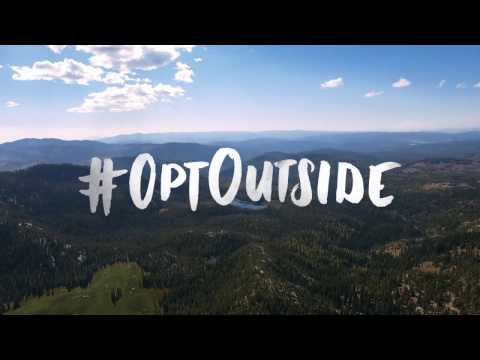
REI’s #OptOutside campaign, launched in 2015, directly borrowed the same counter-cultural Black Friday logic, closing REI’s stores entirely and paying employees to spend the day outdoors instead of working retail — a campaign REI has now run for a decade.
Numerous other outdoor and lifestyle brands adopted sustainability-forward messaging in the years that followed, though few matched the operational follow-through (repair services, take-back programs, verified supply chain transparency) that gave Patagonia’s version its credibility.
The broader effect was to push corporate transparency about environmental costs from a niche concern into a mainstream expectation across the apparel industry, even if most competitors’ execution remained shallower than Patagonia’s own.
Fashion industry watchdogs have since used Patagonia’s disclosures as a baseline against which to measure other brands’ sustainability claims, and the term “greenwashing” itself saw a marked rise in mainstream business press usage through the 2010s as more companies attempted similar messaging without matching operational changes — inadvertently making Patagonia’s original, substantiated version look more distinctive over time rather than less.
2022: Yvon Chouinard Gives the Company Away
The clearest continuation of the campaign’s logic came in September 2022, when Chouinard and his family transferred 100% of Patagonia’s ownership out of private hands entirely.
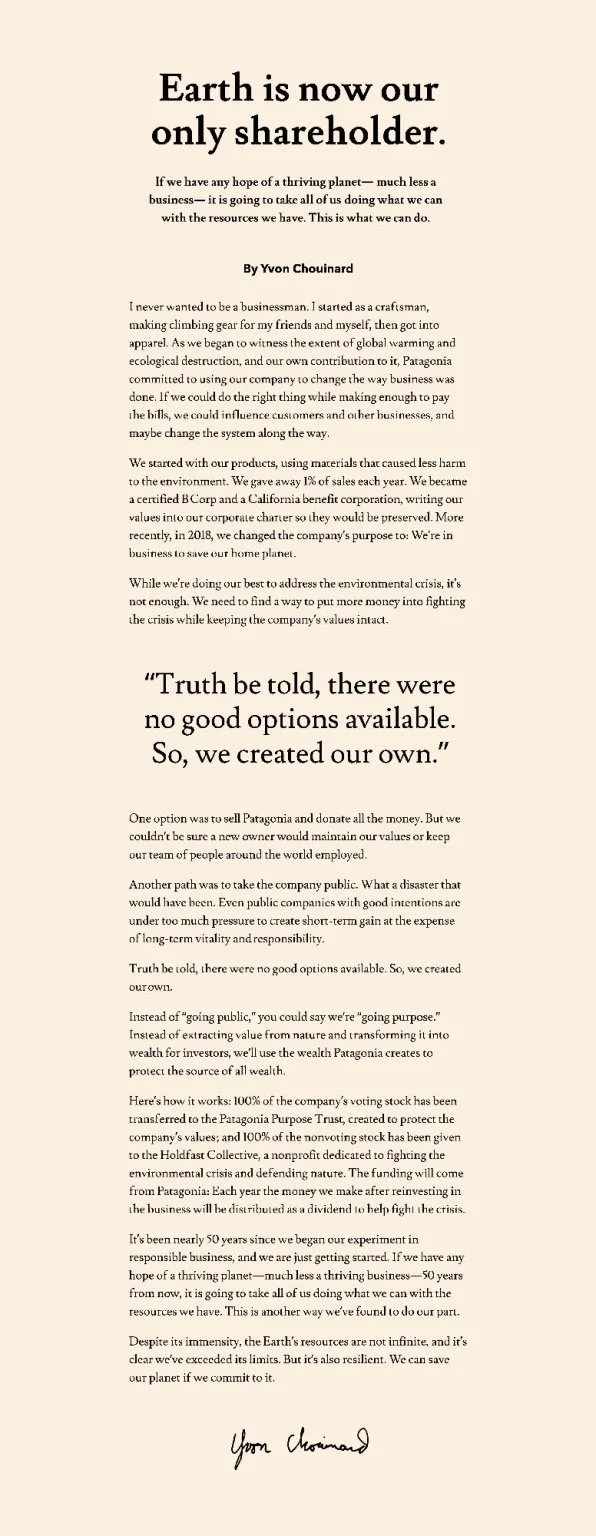
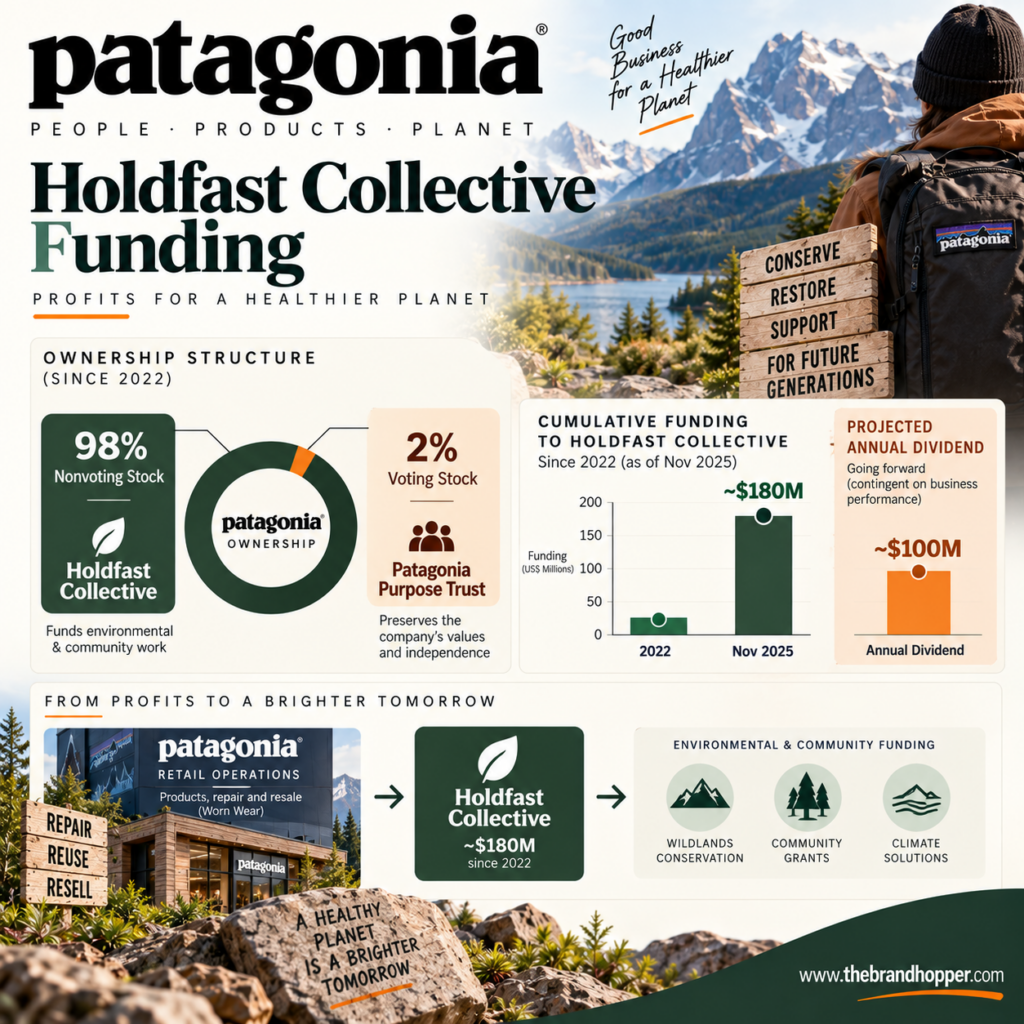
Voting control of the company moved to the newly created Patagonia Purpose Trust, tasked with protecting the company’s mission and independence, while 100% of the nonvoting shares — effectively all economic ownership — moved to the Holdfast Collective, a nonprofit dedicated to fighting climate change and protecting undeveloped land.
Chouinard’s own framing at the time was blunt: “Instead of extracting value from nature and transforming it into wealth for investors, we’ll use the wealth Patagonia creates to protect the source of all wealth,” effectively making the planet itself, in his words, Patagonia’s only shareholder.

Company leadership didn’t change: Ryan Gellert remained CEO, and the existing board stayed in place, now working alongside the Purpose Trust rather than a traditional ownership structure.
The restructuring was itself carefully engineered around the family’s control: the Chouinards structured the transfer, valued at roughly $3 billion, to avoid a large one-time tax bill by using the trust-and-nonprofit-donation structure rather than a straightforward sale or IPO, a detail tax and legal commentators flagged at the time as both financially savvy and consistent with the family’s long-stated aversion to Patagonia ever going public or being sold to a private equity buyer.
Chouinard was explicit that an IPO or acquisition had been considered and rejected specifically because either path risked a future owner reversing Patagonia’s environmental commitments once the founding family was no longer involved.
Patagonia Today: The Ownership Model, Three Years In
Three years into that ownership model, its financial output has been substantial and sustained.
As of a November 2025 update, Patagonia had funneled roughly $180 million to the Holdfast Collective since the 2022 restructuring, supporting a network of five nonprofit trusts focused on preserving wildlands, funding grassroots environmental organizations, and backing climate-focused political advocacy.
The company has projected an annual dividend to Holdfast of roughly $100 million going forward, contingent on business performance — meaning Patagonia’s ordinary retail operations, including the same Worn Wear and repair infrastructure that grew out of the 2011 campaign, now directly and structurally fund external climate action rather than shareholder returns.
Patagonia has also continued its practice of not running traditional Black Friday discounting, instead restocking its Worn Wear resale collection each year as its version of a holiday sales event — the same underlying anti-consumption logic from 2011, still in active use 15 Black Fridays later.

Gellert has said publicly that the company’s post-2022 governance structure has not required any change to day-to-day retail operations or product strategy — the trust’s mandate is specifically to preserve Patagonia’s existing values and independence rather than redirect the business itself — meaning the Holdfast Collective dividend functions much like a shareholder dividend would have under conventional ownership, just routed to environmental grantmaking instead of investor accounts.
Patagonia has continued releasing new product lines, including expanded resale and repair-focused offerings under the Worn Wear brand, through 2025 and into 2026, with the company describing circularity (repair and resale infrastructure) as now core to its long-term retail strategy rather than a side initiative.
Lessons for Marketers
1. Authenticity has to be structural, not just written into ad copy — Patagonia’s free repairs, lifetime warranties, and 1%-for-the-Planet giving predated the 2011 campaign and gave its central claim real credibility.
2. A genuinely provocative idea creates its own media coverage. “Don’t Buy This Jacket” generated earned media (AdWeek’s ad-of-the-day recognition among it) worth far more than the original New York Times placement cost.
3. Anti-consumption messaging can drive consumption when it’s aligned with brand trust — the campaign’s paradox (buy less, sell more) only works if customers already believe the company means what it says.
4. A single campaign can seed a durable business model. Worn Wear turned a marketing message into an actual functioning resale operation generating six figures’ worth of repeat transactions.
The logical endpoint of values-based marketing can be structural, not just promotional. Patagonia’s 2022 ownership transfer to the Holdfast Collective is the campaign’s underlying philosophy taken to its furthest possible conclusion — the company itself, not just its advertising, now exists to fund environmental protection.
Frequently Asked Questions
Q: When did Patagonia’s “Don’t Buy This Jacket” campaign run?
A: The campaign launched with a full-page New York Times ad on Black Friday, November 25, 2011, featuring Patagonia’s R2 fleece jacket.
Q: Did “Don’t Buy This Jacket” actually hurt Patagonia’s sales?
A: No — the opposite happened. Patagonia’s revenue rose almost a third to $543 million in 2012, grew another 6% to $575 million in 2013, and crossed $1 billion in annual sales by 2017.
Q: What is Patagonia’s Worn Wear program?
A: Worn Wear is Patagonia’s trade-in and resale program, where customers exchange used gear for store credit and Patagonia resells repaired items at a discount, generating an estimated 120,000-plus repurposed-item sales.
Q: Who owns Patagonia today?
A: Since September 2022, Patagonia has been owned by the Patagonia Purpose Trust (which holds voting control to protect the company’s mission) and the Holdfast Collective, a nonprofit that receives all of Patagonia’s nonvoting shares and profits to fund climate action.
Q: How much money has Patagonia’s ownership structure generated for environmental causes?
A: As of a November 2025 update, Patagonia had directed roughly $180 million to the Holdfast Collective since the 2022 restructuring, with an annual dividend of approximately $100 million projected going forward.
Q: Did other brands copy Patagonia’s anti-consumption marketing?
A: Yes — most notably REI’s #OptOutside campaign, launched in 2015, which closes REI stores on Black Friday entirely and has run for a decade, directly following Patagonia’s counter-cultural approach to the holiday shopping season.
Q: Is Patagonia still avoiding Black Friday sales today?
A: Yes. Patagonia does not run traditional Black Friday discounting; instead, it restocks its Worn Wear resale collection each year, continuing the same anti-consumption positioning first established in 2011.
Conclusion
Fifteen years on, “Don’t Buy This Jacket” remains one of the most cited examples in marketing education of a genuinely paradoxical campaign succeeding specifically because it wasn’t a trick — Patagonia’s revenue nearly doubled within five years of running an ad that asked people not to buy its product.
What makes the case study still worth updating today isn’t just the original sales numbers, which are now over a decade old; it’s that Patagonia never treated the campaign as a one-time creative stunt.
The same logic scaled into Worn Wear as an ongoing business unit, then scaled again into a 2022 ownership restructuring that now sends an estimated $100 million a year toward climate causes instead of shareholder dividends.
Few campaigns get to claim they eventually reshaped their parent company’s entire corporate structure; this one plausibly does.
Also Read
- Marketing Strategies and Brand Campaigns of Patagonia
- A Case Study on Cadbury’s Gorilla Brand Campaign
- Case Study Analysis: Nike’s “I Am Not A Role Model” Campaign
- Case Study Analysis: Levi’s – “Go Forth” Brand Campaign
- A Case Study on Budweiser: “Wassup?” Brand Campaign
To read more content like this, subscribe to our newsletter
Go to the full page to view and submit the form.