


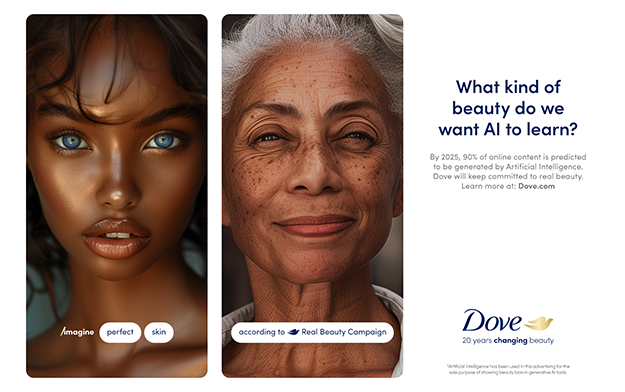
For more than two decades, Dove has run one of the only beauty-industry campaigns built around a single, unglamorous idea: stop retouching women. Launched in 2004 with a wall of un-airbrushed customers in their underwear, “Real Beauty” is still Dove’s central brand platform in 2026 — now expressed through a pledge to never use AI to alter women’s images, a Super Bowl film about girls quitting sport, and a partnership with Netflix’s Bridgerton. This case study walks through every major chapter of the campaign, from its 2004 launch to what Dove is running today, plus the strategy, results, and criticism along the way.
| Quick Answer: What is Dove’s Real Beauty Campaign?
• Launched in 2004 by Dove/Unilever with “Tested on Real Curves,” replacing retouched models with real, unretouched women. • Major chapters: Evolution (2006), Real Beauty Sketches (2013), Choose Beautiful (2015), #ShowUs (2019), Reverse Selfie (2021), The Code (2024). • Delivered Dove’s highest underlying sales growth in over a decade in 2023 (~€6B for Unilever). • The Dove Self-Esteem Project has reached 100M+ young people, targeting 250M by 2030. • 2026 activations include a Billie Jean King/Mia Hamm Super Bowl film and a Netflix Bridgerton partnership. |
Origins: Why Dove Built a Campaign Around Not Retouching Women
By the early 2000s, Unilever’s own research had found that only 2% of women worldwide considered themselves beautiful, and that beauty advertising itself was a contributing cause: models were routinely airbrushed, and the industry’s imagery had drifted further from what most women actually looked like every year. Unilever and its agency, Ogilvy & Mather, built a brief around a contrarian bet — that a skincare brand could grow faster by making women feel better about themselves than by selling them an unreachable standard.
The objectives were never purely commercial. Dove set out to widen a narrow, media-defined beauty standard, start a public conversation about self-image, and use its advertising budget to raise self-esteem rather than lower it — while still selling soap, body wash and lotion through the same campaign.
The Marketing Mix: Selling an Idea, Not Just Soap
- Product: skincare and personal-care items, sold alongside an idea — that beauty is broad, not narrow.
- Price: standard mass-market pricing, so the message wasn’t limited to a premium audience.
- Place: stocked in everyday retailers (Target, Walmart, drugstores) worldwide, reinforcing that “real beauty” wasn’t a luxury concept.
- Promotion: real, unretouched women across TV, print, digital, social and, since 2024, AI-policy campaigns.
Dove’s Real Beauty Campaign Throughout the Years
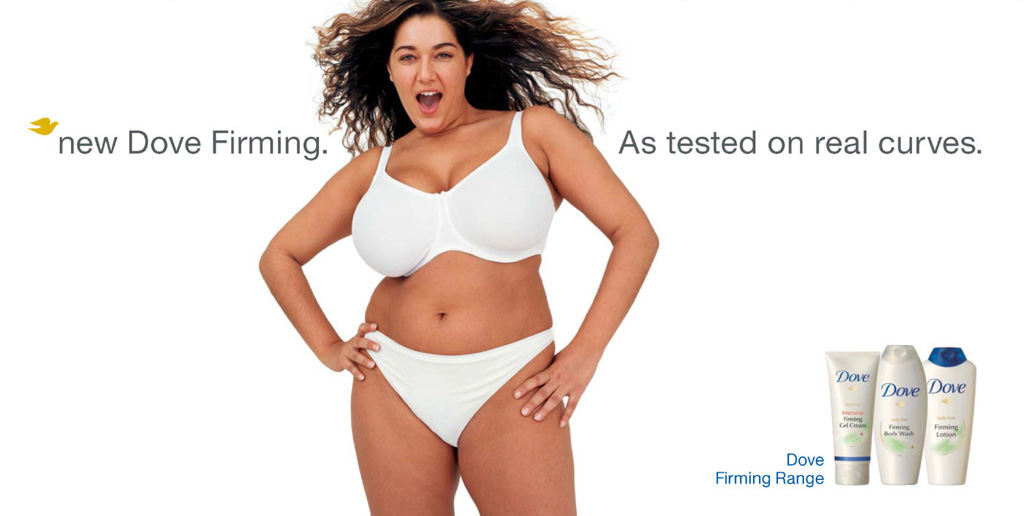
2004: “Tested on Real Curves” — the Launch
Real Beauty launched in 2004 with “Tested on Real Curves,” a print and billboard campaign shot by photographer Rankin featuring six ordinary women — not models — in white underwear, alongside the line “Tested on real curves.” It was a genuinely uncomfortable idea for a beauty brand at the time: showing bodies that hadn’t been retouched, in a category built almost entirely on retouching. The ads ran in the UK and US within weeks of each other and immediately generated far more press coverage than Dove’s media budget could otherwise have bought.

2006: “Evolution” — the Film That Made It Viral
In 2006, Dove released “Evolution,” a 75-second short film that compresses a full retouching session — hair, makeup, lighting, and then extensive digital editing — into a time-lapse showing an ordinary-looking woman transformed into a billboard model. The film ends with the line “No wonder our perception of beauty is distorted.” It was never bought as paid media; it spread almost entirely through email forwards and early YouTube sharing, at a moment when brand-funded viral video was still a novelty, and went on to win the Titanium Grand Prix at Cannes Lions in 2007 — advertising’s top honor for ideas that reshape a category, not just sell a product.

2013: “Real Beauty Sketches” — the Most-Watched Chapter
Real Beauty Sketches, released in 2013, is still the most-watched entry in the campaign. Dove brought in Gil Zamora, a forensic sketch artist trained by the FBI, and had him draw each participant twice from behind a curtain: once based on how she described her own face, and once based on how a stranger who’d briefly met her described the same face. The stranger’s sketches were consistently kinder and more accurate than the self-descriptions. The resulting film became one of the most-watched video ads of all time and briefly the most-watched ad on YouTube, translated into more than 25 languages.

2015: “Choose Beautiful” — Beauty as a Daily Choice
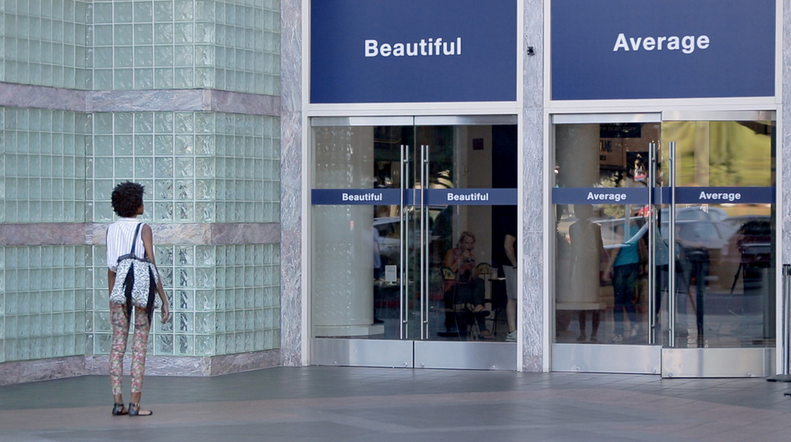
Choose Beautiful, in 2015, moved the idea from film into a live experiment: Dove installed two doors at building entrances in San Francisco, London, Shanghai, Delhi and São Paulo, one marked “Beautiful” and the other “Average,” and filmed which one women walked through. A companion survey of 6,400 women worldwide found 96% didn’t consider themselves beautiful, even though 80% believed every woman has something beautiful about her. The campaign was watched more than 10 million times on YouTube, though some critics called the door concept itself manipulative or heavy-handed — an early sign of a tension that would follow Dove for the rest of the campaign’s life: audiences increasingly scrutinizing whether a soap brand should be directing a conversation about self-worth at all.

2017: The Facebook Backlash
That tension became a real crisis in 2017, when a short Facebook video ad appeared to show a Black woman removing her shirt to reveal a white woman underneath. Widely read as implying Dove products made Black skin “cleaner” or more acceptable by turning it white, the ad triggered an immediate backlash; Dove pulled it and issued a public apology within a day. It wasn’t an isolated complaint — a 2011 print ad had already drawn criticism for arranging women by skin tone, light to dark, under a “before and after” style banner. The 2017 incident became a standing case study in how a purpose-led campaign can undercut its own message in a single execution.
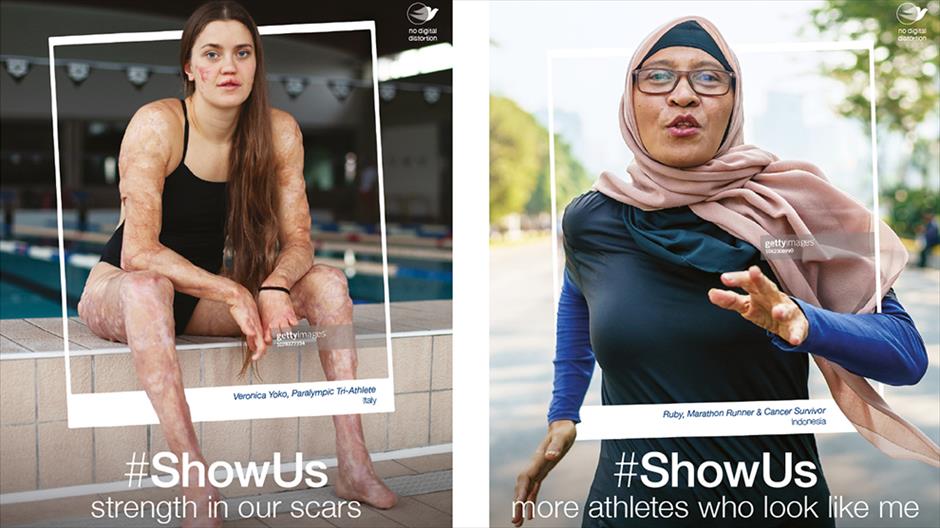
2019: Project #ShowUs — Fixing the Image Supply, Not Just the Message
Dove spent the next two years rebuilding around representation rather than just messaging. In 2019, it partnered with Getty Images and the female-photographer network Girlgaze to launch Project #ShowUs, a free stock-photo library of more than 5,000 images of 179 women across 39 countries, shot by 116 women and non-binary photographers and tagged by the women themselves rather than by stock-photo categories. The project was a direct response to Dove’s own finding that 70% of women didn’t feel represented by the images they saw in media and advertising — and it gave other advertisers a free, licensed way to fix that, not just Dove.

2021: “Reverse Selfie” and the Social-Media Era
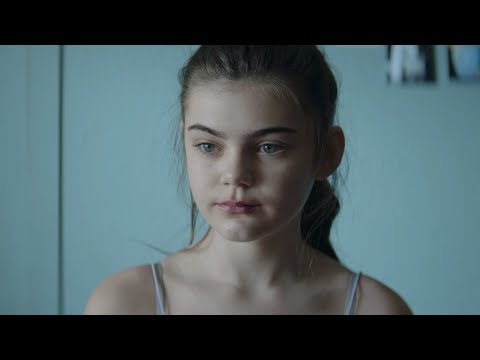
In 2021, Dove released Reverse Selfie, a direct sequel to Evolution built for the social-media era: it opens on a girl’s finished, filtered selfie and plays her editing process backward, revealing the unfiltered photo and the real girl underneath. It launched alongside “The Selfie Talk,” a free conversation guide to help parents and caregivers talk to children about photo editing and self-image. Reverse Selfie went on to win a Gold Lion at Cannes in 2022, generated an estimated 6 billion earned media impressions, drove a reported 4,000%+ increase in downloads of Dove’s Self-Esteem Toolkit, and recorded 99% positive sentiment in post-campaign analysis.
2022-2023: Product Campaigns, a Milestone, and a Fresh Controversy
Dove kept applying the same lens to product-specific campaigns through 2022, including a body-positivity push for its dry spray deodorant that pushed back on “armpit stereotypes” in beauty advertising. By 2023, the Dove Self-Esteem Project — the education arm running quietly behind all of these campaigns since 2004 — passed 100 million young people reached with body-confidence and media-literacy lessons, working toward a public goal of 250 million by 2030.
That same year, though, a size-inclusivity “fat liberation” ambassador partnership drew boycott calls from some consumers who felt Dove was wading into a politically charged debate rather than a broadly shared one — reinforcing, again, how much scrutiny a 19-year-old purpose campaign now attracts compared with its early years.
2024: The 20th Anniversary and “The Code”
2024 marked Real Beauty’s 20th anniversary, and Dove used it to publish its largest piece of research yet, the Real State of Beauty report, alongside a new pledge called The Code.
Surveying more than 33,000 people across 20 countries, the Real State of Beauty report found that 38% of women would give up a year of their life to achieve an ideal body, that beauty ideals have become more numerous even as they’ve become more diverse — looking healthy, slim, curvy and having a small waist, simultaneously — and that a third of women feel pressure to alter their appearance because of content they know is fake or AI-generated.
The Code was Dove’s answer to that last finding: a public pledge to never use generative AI to create or distort a woman’s image or body in its own advertising, framed as a response to a world where an estimated 90% of online content could be AI-generated by 2025. The accompanying short film reportedly drew over 500 million organic views and 4 billion organic impressions, with 94% positive sentiment — by Dove’s account, the biggest PR moment in the campaign’s 20-year history, and a Brand Impact score of 95 out of 100.

2025: The Real Beauty Prompt Playbook
In 2025, Dove followed The Code with the Real Beauty Prompt Playbook, a free public toolkit teaching people how to prompt AI image generators toward more realistic, size- and skin-tone-diverse output — extending the AI pledge from “what Dove won’t do” into a practical resource anyone can use, not just a brand promise.
2026: Sports, Streaming and Unfiltered Reviews
2026’s activations extend the same insight into entirely new formats rather than repeating the AI pledge.
For the 2026 Super Bowl, Dove ran “The Game Is Ours,” fronted by tennis and soccer icons Billie Jean King and Mia Hamm, reframing beauty from how a body looks to what a body can do — a direct response to Dove’s own research showing roughly half of girls quit sport around puberty over body-confidence concerns.

“Let Them Talk,” a partnership with Netflix’s Bridgerton, borrows the show’s social-scrutiny plotlines to comment on how women are judged and gossiped about — a period-drama wrapper around the same self-image insight Dove has run since 2004.
“Dove r/eal reviews” applies the authenticity idea directly to product marketing, publishing the first 50 unedited Reddit reviews of a new serum mask, good or bad, instead of curated testimonials.
Results: Does a Purpose Campaign Actually Move Sales?
By Unilever’s account, Real Beauty is one of the few purpose-led campaigns with a direct line to sales, not just sentiment.
- Dove delivered its highest underlying sales growth in more than a decade in 2023, contributing roughly €6 billion to Unilever.
- The Dove Self-Esteem Project has educated more than 100 million young people on body confidence, working toward a stated goal of 250 million by 2030.
- Reverse Selfie (2021) drove an estimated 6 billion earned impressions and a 4,000%+ increase in Self-Esteem Toolkit downloads.
- The Code (2024) recorded a Brand Impact score of 95/100, with over 500 million organic views and 4 billion organic impressions.
- Early campaign estimates (2004-2006) put earned media exposure at roughly 30x Dove’s paid spend, with the campaign microsite drawing 1.5 million visitors and a reported 10% revenue increase in its first year.
Real Beauty didn’t just move Dove’s own numbers — it set a template other categories borrowed directly: Aerie’s #AerieREAL (unretouched lingerie photos), CoverGirl’s #IAmWhatIMakeUp, and Nike’s body-inclusive “Better For It” positioning all followed a similar playbook of trading aspirational imagery for relatable imagery.
The Recurring Criticism Dove Has Never Fully Resolved
The throughline across two decades of controversy — the 2011 skin-tone ad, the 2017 Facebook video, the 2023 ambassador backlash — is the same structural critique: Unilever owns other brands that sell against insecurity (including, historically, skin-lightening products in some markets), which makes any single Dove misstep read as hypocrisy rather than a one-off mistake.
Dove’s global CMO of two decades, Alessandro Manfredi, left Unilever in 2024 following a run of campaigns that drew as much criticism as praise. Unilever’s consistent defense has been that an imperfect campaign that keeps the representation conversation alive is preferable to a safe one nobody remembers — a bet the sales and reach numbers above suggest has mostly paid off, even when individual executions haven’t.
Lessons for Marketers
Sell the insight, not just the product. Dove’s research — 2% of women call themselves beautiful in 2004, a third feel AI-driven pressure in 2024 — is the campaign; the products are secondary.
Be willing to take the harder, less polished position. Choosing real, unretouched customers over models was a commercial risk in 2004; refusing generative AI in 2024 was a similar bet against an entire industry trend.
Purpose campaigns invite scrutiny — plan for it. Dove’s history includes real missteps (2011, 2017, 2023); a durable purpose platform survives controversy by staying consistent, not by avoiding criticism entirely.
Give the idea new formats, not new campaigns. A forensic sketch artist (2013), a stock-photo library (2019), a reversed selfie (2021), an AI pledge (2024) and a Super Bowl film (2026) are all the same 2004 insight in a different medium.
Frequently Asked Questions
What is Dove’s Real Beauty campaign?
Real Beauty is Dove’s brand platform, launched in 2004, built on using real, unretouched customers instead of models in its advertising to challenge narrow beauty standards. It now extends to research (the Real State of Beauty report), an AI-ethics pledge (The Code), and youth education (the Dove Self-Esteem Project).
When and how did the Dove Real Beauty campaign start?
It launched in 2004 with “Tested on Real Curves,” a print campaign shot by Rankin featuring six non-model women in white underwear, built on Unilever research showing only 2% of women worldwide considered themselves beautiful.
What is Dove’s “Evolution” ad?
“Evolution” is a 2006 short film that time-lapses a full hair, makeup and digital-retouching session to show how far an ordinary photo is stretched into a billboard image. It spread virally without paid media and won the Titanium Grand Prix at Cannes Lions in 2007.
What is Dove’s “The Code” campaign?
“The Code” is Dove’s 2024 pledge, marking Real Beauty’s 20th anniversary, to never use generative AI to create or distort a woman’s image or body in its own advertising, in response to research showing AI-driven imagery pressures women’s self-esteem.
Has the Dove Real Beauty campaign faced criticism?
Yes, repeatedly: a 2011 ad arranging women by skin tone, a 2017 Facebook ad seen as racially insensitive, and a 2023 “fat liberation” ambassador partnership that drew boycott threats. Critics also point out that Unilever owns other appearance-focused brands, which sits uneasily with Dove’s messaging.
What results has the Real Beauty campaign delivered for Dove?
Dove reported its highest underlying sales growth in over a decade in 2023 (about €6 billion for Unilever), a 95/100 Brand Impact score for The Code, roughly 6 billion earned impressions for 2021’s Reverse Selfie, and over 100 million young people reached through the Dove Self-Esteem Project.
What is Dove doing for Real Beauty in 2026?
2026 activations include the Super Bowl film “The Game Is Ours” with Billie Jean King and Mia Hamm, a Netflix Bridgerton partnership called “Let Them Talk,” and “Dove r/eal reviews,” publishing unedited Reddit product reviews.
Conclusion
Real Beauty has outlasted almost every ad campaign built in the same decade because Dove keeps finding new, current-events-relevant proof for the same 2004 insight: real representation sells better than an unattainable ideal. Whether that proof point is a forensic sketch artist, a reversed selfie, a pledge against generative AI, or a Super Bowl film about girls quitting sports, the underlying strategy hasn’t changed across 22 years — and neither, Unilever’s sales figures suggest, has its effectiveness.
Also Read: How Dove Rebranded Beauty – and Why Emotional Marketing Still Wins
To read more content like this, subscribe to our newsletter
Go to the full page to view and submit the form.