


Most businesses judge their digital marketing by one number: sales. It’s an easy trap. A website can be driving record traffic and revenue while customer service is slow, support costs are ballooning, and the brand experience feels flat and forgettable.
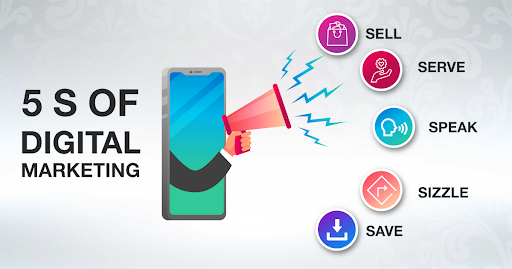
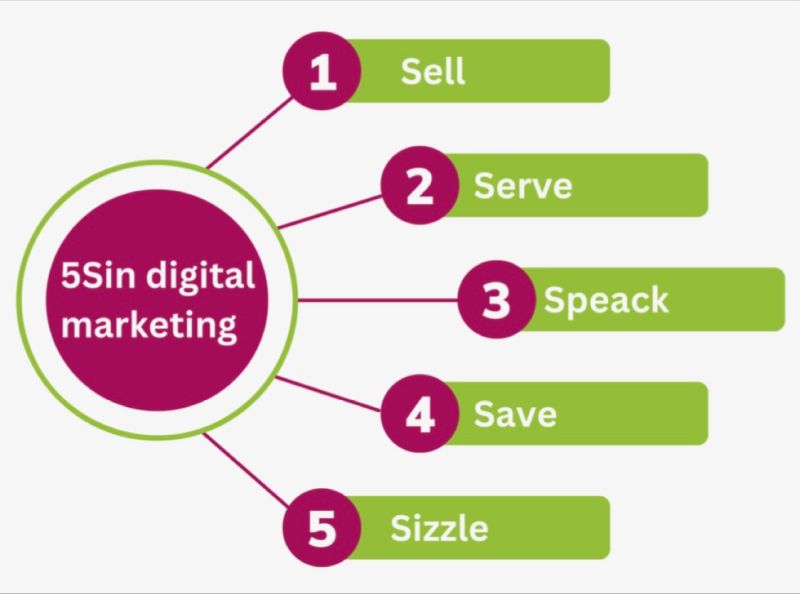
The 5S framework exists to stop that blind spot. Instead of one goal, it gives you five — Sell, Serve, Speak, Save, and Sizzle — so every digital activity, from a chatbot to a checkout page to an Instagram Reel, is tied to a measurable objective.
This guide breaks down what each S means today, backs every claim with a verifiable source, and gives you a step-by-step way to put the framework to work — whether you run an e-commerce store, a service business, or a B2B brand.
What Are the 5 S’s of Digital Marketing?
Each S represents a category of objective your digital marketing should be working toward. Together, they cover the full customer journey — not just the moment of purchase.
| The S | What It Means | Example KPI to Track |
| Sell | Grow revenue through digital channels | Conversion rate, online revenue, average order value |
| Serve | Add value by improving customer service | CSAT score, first-response time, resolution rate |
| Speak | Build two-way dialogue with your audience | Engagement rate, response rate, share of voice |
| Save | Cut costs using digital instead of traditional channels | Cost per contact, self-service deflection rate, channel ROI |
| Sizzle | Extend and reinforce the brand experience online | Net Promoter Score, repeat-visit rate, branded search volume |
Where the Framework Comes From
The 5Ss were developed by PR Smith, co-author of Digital Marketing Excellence, and have been taught for over two decades as a way to set well-rounded digital objectives.
Digital strategist Dave Chaffey, co-founder of Smart Insights, still references the model today, noting it remains “a good, simple starting point to help check you’re covering the whole of digital marketing, not just sales.” The framework typically sits inside the Objectives stage of a broader plan such as PR Smith’s own SOSTAC® model (Situation, Objectives, Strategy, Tactics, Action, Control) — more on how the two connect further down this guide.

1. Sell — Grow Sales Online
Sell is the most familiar S: using digital channels to drive measurable revenue. But treating “more sales” as the entire strategy is exactly what leaves the other four S’s — and long-term growth — on the table.
Why It Matters
Cart abandonment remains one of the biggest silent revenue leaks in digital commerce. Aggregating data across 50 separate studies, the Baymard Institute puts the average cart abandonment rate at roughly 70%. Among shoppers who weren’t just browsing, the single biggest reason cited is extra costs — shipping, tax, or fees — being too high, followed by delivery taking too long.
Live chat has a direct, measurable effect on the Sell objective too. Research compiled by LiveChat shows that shoppers who engage with a chat widget before checkout convert at roughly 40%, and customers are meaningfully more likely to buy at all when a chat option is visible on the page. That’s a service tool (Serve) directly lifting a sales metric (Sell) — a reminder that the five S’s rarely work in isolation.
Tactics to Try
- Show total cost (shipping, tax, fees) as early in the funnel as possible — surprise costs are the top driver of abandoned carts.
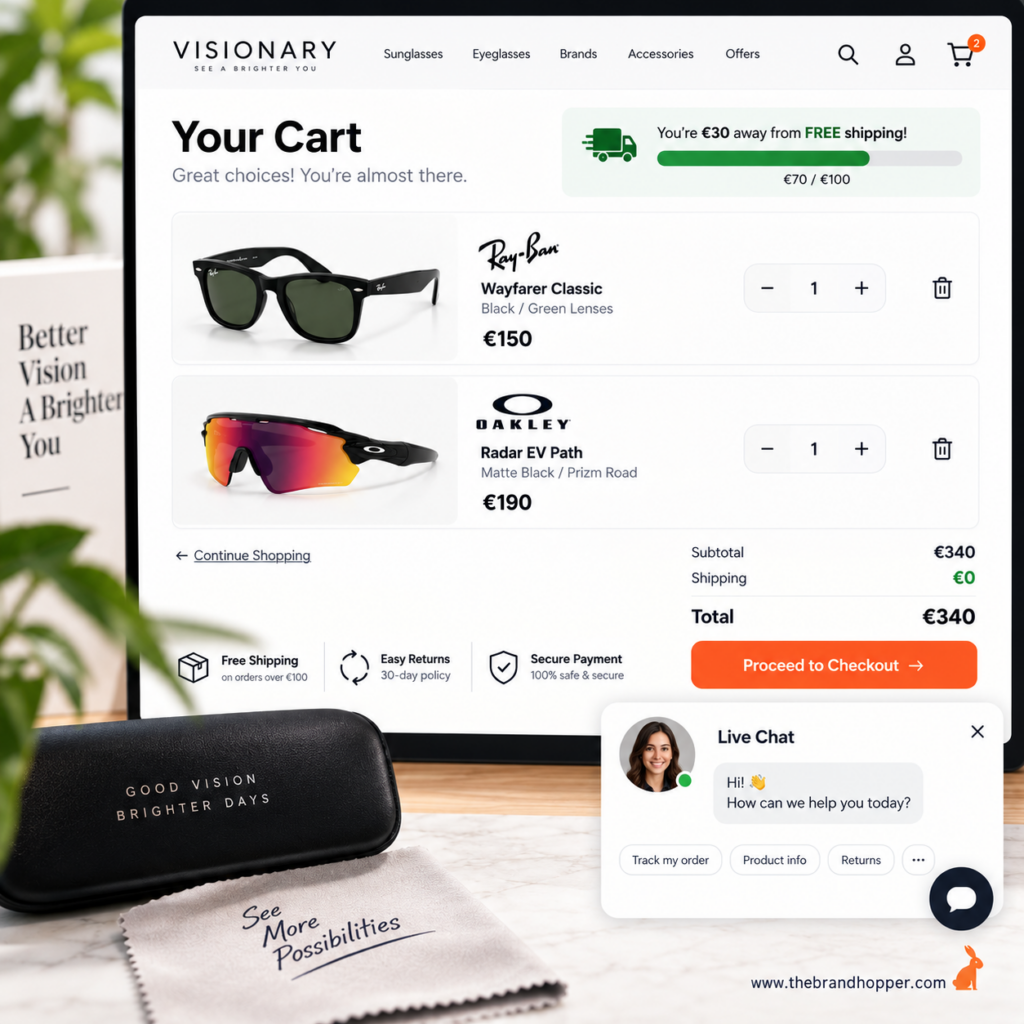
- Offer a free-shipping threshold and make it visible on product and cart pages, not just at checkout.
- Add live chat or a conversational assistant to high-intent pages like product and cart pages.
- Use programmatic advertising and real-time bidding to put sell-focused offers in front of high-intent audiences at the moment they’re most likely to convert.
- Use retargeting for abandoned carts, with a nudge (not necessarily a discount) that addresses the actual objection — usually cost or delivery time.
- Simplify checkout: fewer form fields, guest checkout, and multiple payment options reduce last-step drop-off.
Example: An online fashion retailer that adds a progress bar toward free shipping (“Add ₹450 more for free delivery”) alongside live chat on the cart page is directly targeting both top reasons for abandonment identified above — cost and uncertainty.

2. Serve — Add Value Through Better Service
Serve is about using digital channels to make customer service faster, easier, and more satisfying — because service quality now shapes buying decisions as much as price or product does.
Why It Matters
According to HubSpot’s research on customer self-service, roughly 78% of customer service leaders say customers now prefer solving problems on their own rather than contacting a human — many view reaching out for help as an inconvenience, not a first choice. At the same time, well over 60% of customers expect service to be available around the clock, a standard that’s very hard to hit without digital self-service and automation.
This doesn’t mean removing the human option — it means giving customers a fast digital path first, and a human escalation path second. Long wait times remain one of the most-cited service frustrations, so speed matters as much as availability.
Tactics to Try
- Build a searchable knowledge base or FAQ that covers your top 20 support queries.
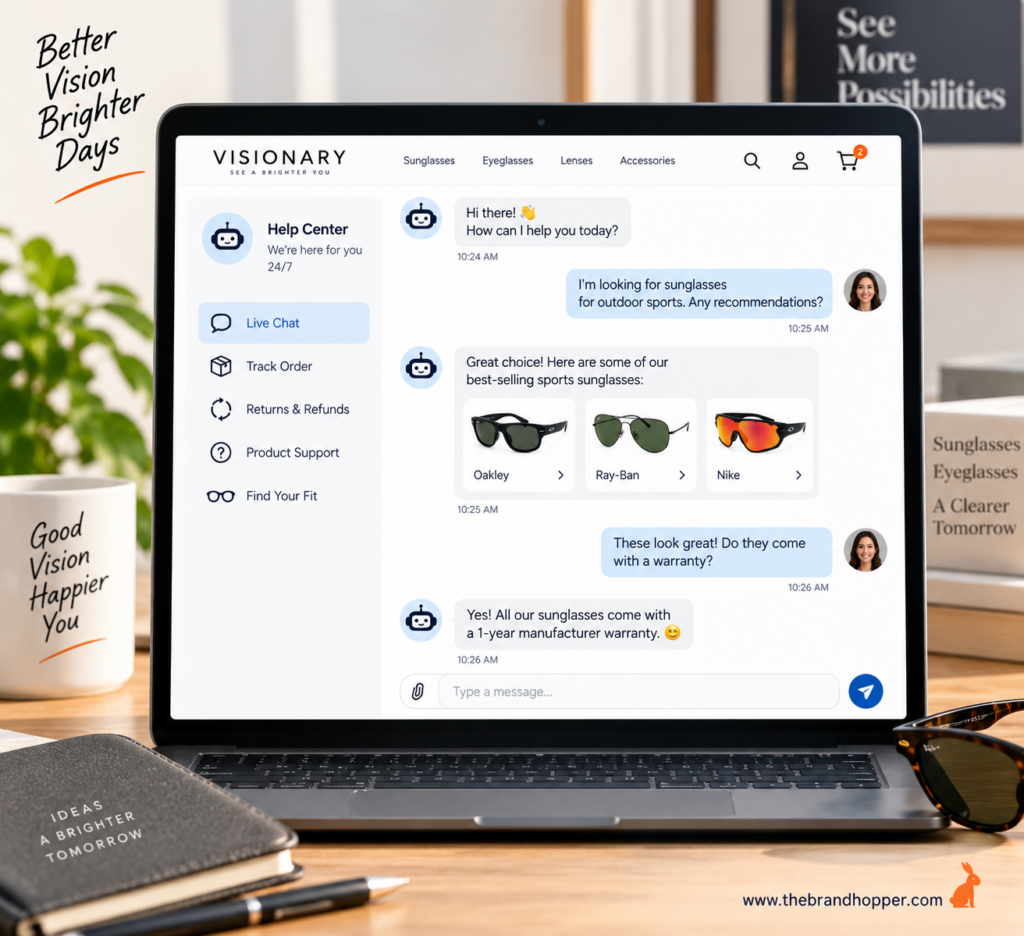
- Add a chatbot or AI assistant for tier-one queries (order status, returns, basic troubleshooting), with a clear, fast handoff to a human agent.
- Offer live chat during peak traffic hours, even if it isn’t 24/7.
- Monitor and respond to service requests on social media and review platforms, not just email.
- Track CSAT and first-response time as core KPIs, not just resolution volume.
Example: A telecom or SaaS brand that lets customers check plan usage, raise a complaint, and track its status entirely through a self-service portal — with a one-tap option to escalate to a live agent — is delivering Serve without inflating headcount.

3. Speak — Build Two-Way Dialogue
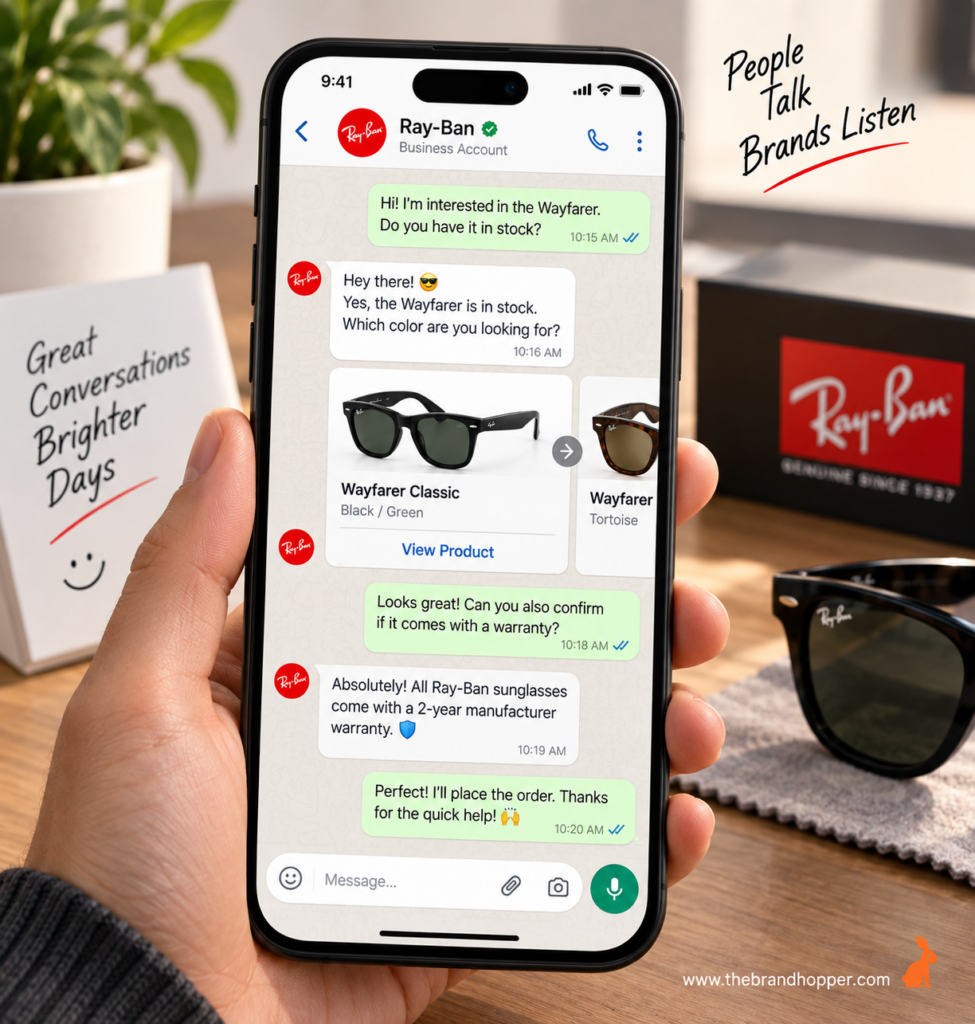
Speak is about replacing one-way broadcasting with real conversation — comments, DMs, reviews, and community, not just campaigns pushed out at an audience.
Why It Matters
The Sprout Social Index finds that nearly three-quarters of consumers expect a response from a brand on social media within 24 hours or sooner. Separately, data cited from Meta shows that roughly 74% of online adults feel more connected to a business when they can message it directly, and about two-thirds say messaging is their preferred way to communicate with a business at all — ahead of phone or email for many everyday queries.
In other words, “Speak” is no longer optional brand-building — it’s an expectation. Brands that only publish and never respond are conspicuously absent from a conversation their customers are already having.
Tactics to Try
- Set a response-time SLA for comments and DMs across every social channel you’re active on — 24 hours should be treated as a ceiling, not a target.
- Use social listening to track brand mentions even when you’re not tagged.
- Turn one-way content into two-way formats: polls, Q&As, comment prompts, and user-generated content campaigns.
- Reply to reviews — positive and negative — publicly and specifically, not with a generic template.
- Build a community space (a Facebook Group, Discord, or forum) where customers talk to each other, not just to you.
Example: A D2C skincare brand that replies to every comment on a launch post within a few hours — including the critical ones — builds more trust than one that posts and disappears, even if the second brand spends more on media.

4. Save — Cut Costs With Digital Channels
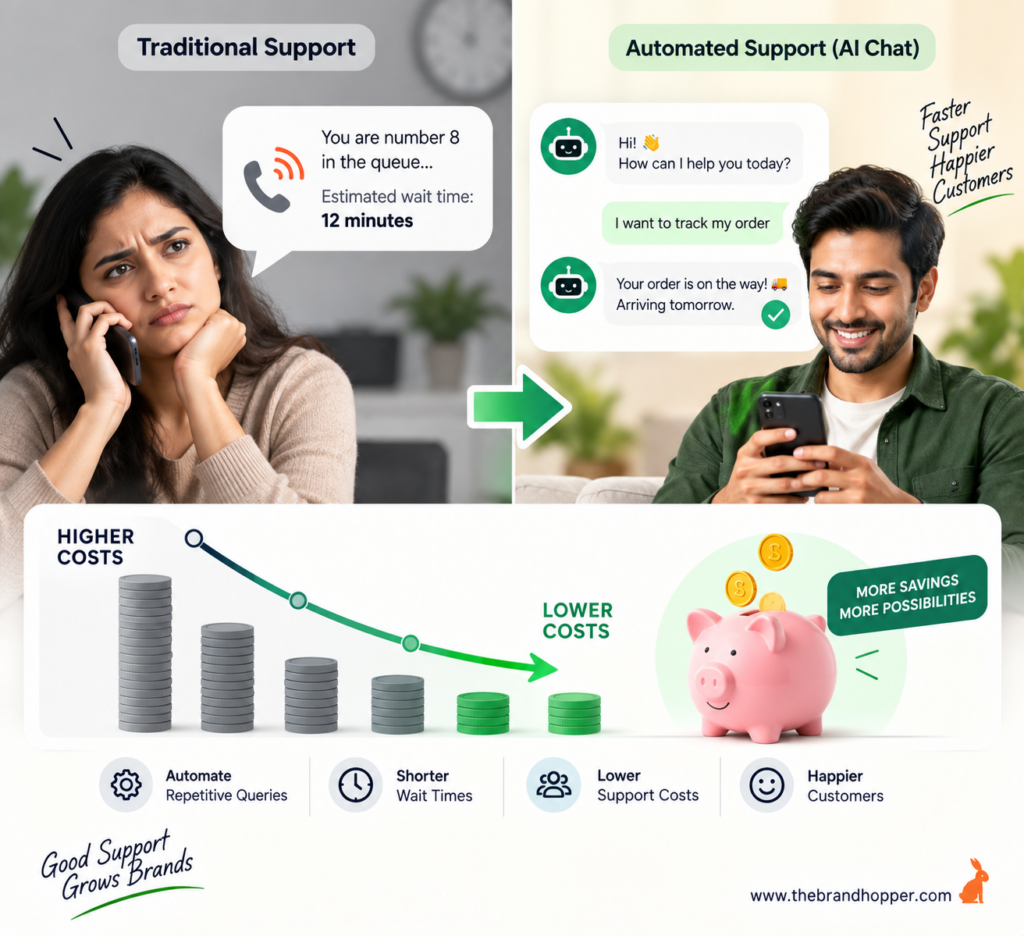
Save is the least glamorous S and the most overlooked — using digital channels to reduce the cost of selling, serving, and communicating compared to traditional, offline alternatives.
Why It Matters
Self-service isn’t just a customer preference — it’s also a cost lever. HubSpot reports that around 70% of businesses have already implemented some form of self-service, and roughly 64% of service leaders increased their investment in it, largely because deflecting routine queries away from live agents directly lowers cost-per-contact. Among businesses using AI-powered self-service specifically, a notable share report direct cost savings, with round-the-clock coverage cited as an added benefit over staffing a 24/7 human team.
Email is another quiet Save win. According to HubSpot’s State of Marketing research, email marketing typically returns somewhere between ₹10–₹36 for every ₹1 spent (expressed as a 10:1 to 36:1 ratio), making it one of the most cost-efficient channels available compared to paid acquisition — a meaningful Save lever when retention, not just new-customer sales, is the goal.
Tactics to Try
- Deflect repetitive queries to a knowledge base or chatbot before they reach a paid support seat.
- Use marketing automation (email/WhatsApp flows) for retention instead of always paying for fresh acquisition.
- Track cost-per-contact by channel (chat vs. phone vs. email vs. in-person) and shift volume toward the cheapest channel that still meets your CSAT target.
- Reallocate a portion of traditional media spend (print, outdoor) to owned digital channels where the marginal cost per additional message is close to zero.
Example: A D2C brand that resolves 60% of “where is my order” queries through an automated tracking page — instead of a support ticket — is saving cost per contact without touching customer satisfaction.
5. Sizzle — Extend the Brand Experience Online
Sizzle is the emotional S — using digital touchpoints to create an experience customers actually remember, talk about, and come back for, the way a well-designed store or a great unboxing moment does offline.
Why It Matters
Experience is no longer a “nice to have” layered on top of price and product — it’s a direct driver of retention. PwC’s Customer Experience research found that 52% of consumers have stopped buying from a brand after just one bad product or service experience, and 29% walked away after a poor customer experience specifically — separate from the product itself. The same research points to a real blind spot: roughly 90% of executives believe customer loyalty to their brand has grown recently, while only about 40% of consumers agree. That gap is exactly what a strong Sizzle strategy is meant to close.
Sizzle is what turns a one-time buyer into someone who follows your brand, shares your content unprompted, and defends you in the comments — the compounding, hard-to-copy kind of growth.
Tactics to Try
- Invest in storytelling content (video, behind-the-scenes, founder stories) that has nothing to do with a direct sales pitch.
- Keep visual identity and tone consistent across every channel — website, social, email, packaging inserts — so the brand feels like one entity, not five.
- Use interactive or immersive formats — AR try-on filters, quizzes, shoppable lookbooks — where the format fits the product.
- Build a loyalty or community layer that rewards engagement, not just spend.
- Track branded search volume and repeat-visit rate as leading indicators of brand strength, alongside NPS.
Example: A coffee or beverage brand that turns its packaging and app into a small, shareable ritual (a loyalty stamp, a personalized “your coffee story” recap) is building Sizzle — an experience worth talking about, not just a transaction worth completing.
How to Apply the 5S Framework to Your Strategy
The 5S model only creates value once it’s turned into specific, owned objectives. Here’s a simple six-step way to do that:
1. Audit your current digital activity against all five S’s — most teams will find they’re 80% Sell and almost nothing else.
2. Set one measurable objective per S for the quarter (e.g., Serve: cut first-response time by 20%).
3. Map existing channels and tactics to each objective — you’ll likely find tools you already have (email, social, chat) that are underused for Serve, Speak, or Save.
4. Assign a KPI and an owner to each S so it’s someone’s job, not everyone’s afterthought.
5. Build a content and campaign calendar that reflects all five S’s, not just product promotions.
6. Review results quarterly and rebalance — if Sell is strong but Sizzle is flat, shift budget and attention accordingly next cycle.
5S vs. the 4Ps vs. SOSTAC — How They Fit Together
These three frameworks are often confused because they get taught around the same time, but they answer different questions:
| Framework | What It’s For | Where It Fits |
| 4Ps (Product, Price, Place, Promotion) | The marketing mix — what you sell and how you position it | Strategy and tactical planning |
| 5S (Sell, Serve, Speak, Save, Sizzle) | Setting well-rounded digital objectives | Goal-setting, before tactics are chosen |
| SOSTAC® (Situation, Objectives, Strategy, Tactics, Action, Control) | A full end-to-end planning process | The overall plan — 5S typically sits inside its Objectives stage |
In short: SOSTAC is the whole plan, the 4Ps shape what you’re marketing, and the 5S framework makes sure the objectives you set for your digital marketing plan cover more than just revenue.
Common Mistakes When Using the 5S Framework
- Treating Sell as the only S that matters, and letting Serve, Speak, Save, and Sizzle go untracked.
- Setting objectives once a year and never revisiting them as channels and customer behavior change.
- Not assigning a clear owner or KPI to each S, so accountability quietly disappears.
- Copying a competitor’s tactics without first mapping them back to your own five objectives.
- Overspending on paid acquisition (Sell) while ignoring cheap, high-ROI Save opportunities like self-service and email.
Frequently Asked Questions
What are the 5 S’s of digital marketing?
The 5 S’s are Sell, Serve, Speak, Save, and Sizzle — a framework for setting digital marketing objectives that cover growing sales, improving customer service, building two-way dialogue, cutting costs, and strengthening brand experience, rather than focusing on revenue alone.
Who created the 5S digital marketing framework?
The framework was developed by marketing author PR Smith and has been widely taught and referenced by digital strategist Dave Chaffey through Smart Insights as a simple way to check that a digital marketing plan covers more than just sales.
Is the 5S framework still relevant today?
Yes. Because it’s a goal-setting lens rather than a list of specific tactics or platforms, it applies just as well to AI chatbots, short-form video, and messaging apps as it did to the channels available when it was first introduced — the five categories of objective haven’t changed even though the tools have.
How is the 5S framework different from the 4Ps of marketing?
The 4Ps (Product, Price, Place, Promotion) describe what you’re marketing and how you position it. The 5S framework is used earlier, to decide what your digital marketing should actually be trying to achieve, across five different objective categories.
Can small businesses and startups use the 5S framework?
Yes — the framework scales down easily. A small business might not need a dedicated team for each S, but assigning even one measurable goal per S (for example, a simple FAQ page for Serve, or a monthly email for Save) keeps the strategy balanced without adding much overhead.
What metrics should I track for each S?
Common choices are: conversion rate and revenue for Sell; CSAT and first-response time for Serve; engagement and response rate for Speak; cost-per-contact and channel ROI for Save; and Net Promoter Score or repeat-visit rate for Sizzle.
How often should I review my 5S objectives?
A quarterly review works well for most businesses — frequent enough to catch an imbalance (like Sell dominating every other S) before it becomes a habit, but not so frequent that you’re reacting to noise instead of trends.
Final Thoughts
The 5S framework endures because it fixes a very common, very human mistake: judging digital marketing by the metric that’s easiest to see (sales) while ignoring the ones that build a durable brand (service, dialogue, efficiency, and experience).
Use it as a quarterly checklist, not a one-time exercise, and you’ll catch imbalances — like an over-investment in Sell and a neglected Serve — long before they show up in your churn numbers.
Also Read: CBBE Model: Build Customer-Based Brand Equity That Lasts
To read more content like this, subscribe to our newsletter
Go to the full page to view and submit the form.