


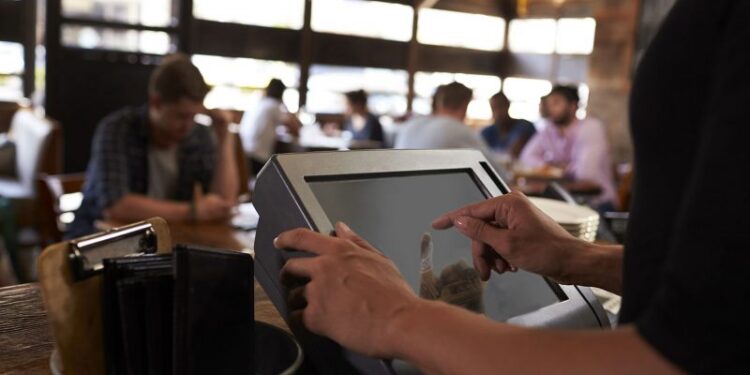
A slow POS rarely shows its weaknesses on a quiet Tuesday. It shows them at 7:30 on a Friday night, when the dining room is full, delivery tablets keep chiming, and the kitchen is three tickets behind. Handling more orders comes down to more than transaction speed. Every order channel has to land in the right place, payments have to keep moving, and the system has to stay up when volume peaks. We looked at dozens of restaurant platforms and narrowed the field to five that help operators keep up when orders stack.
How We Chose These Platforms
Every pick is based on public information: user reviews, official product pages, software directories, and case studies from restaurant operators. The process ran in four stages:
- Build a broad pool. We gathered POS and restaurant management platforms from directories, review sites, and food service trade publications. The pool covered everything from enterprise multi-location systems to mobile-first tools for single operators.
- Filter on proof. Platforms with thin or inconsistent review histories, outdated features, or poor support responsiveness were cut, regardless of brand recognition.
- Check claims against reality. Features promoted on official websites were compared with what operators reported in reviews and case studies. Where marketing and experience didn’t line up, that gap counted against the platform.
- Confirm food service fit. The final shortlist had to show restaurant-specific capabilities such as kitchen display, table management, online ordering, and hospitality payment flows. Verified reviews from restaurant operators counted more than general small-business feedback.
Side-by-Side Comparison
| Platform | Best For | Built Around | Standout During Busy Service |
| Orders.co | Managing every order channel from one POS | All-in-one restaurant POS | Dine-in, phone, website, and delivery app orders in one POS |
| SmartTab | High-volume bars and nightclubs | Hybrid cloud and local servers | Keeps processing payments when internet drops |
| Shift4 | Full-service and multi-location restaurants | POS, hardware, and payments together | 24/7/365 in-house support and lifetime hardware warranty |
| Toast | Restaurant management and POS | Android-based cloud platform | Toast Router cellular backup and 200+ integrations |
| Loyverse | Small to medium food service businesses | Smartphones and tablets | Free POS app with offline functionality |
Note: Data is sourced from review platforms and the official websites of the listed companies.
1. Orders.co: Best for Managing Every Order Channel From One Restaurant POS
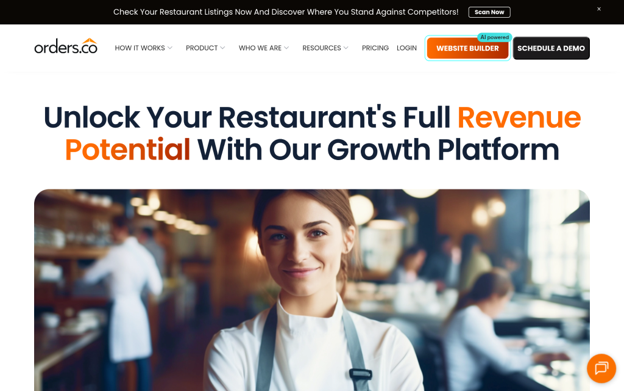

The short version: Orders.co is an all-in-one restaurant POS system. It connects in-store ordering, payments, online ordering, third-party delivery apps, kitchen operations, delivery management, customer engagement, and reporting in one system.
How It Handles Order Volume
When orders come from several directions at once, Orders.co gives staff one place to manage them. DoorDash, Uber Eats, Grubhub, ezCater, and direct website orders arrive in the POS automatically. Staff enter phone and traditional dine-in orders through the POS.
Menu items, pricing, modifiers, availability, and sold-out items are managed centrally across connected channels. Changes appear within seconds on the POS and direct ordering websites, and within seconds to several minutes on third-party marketplaces, depending on the provider and volume of changes.
Features That Matter During a Rush
Kitchen display: A KDS can be paired with the POS, with Orders.co support configuring which categories and items are routed to the kitchen screen. KDS software is included with advanced plans; hardware is separate.
Table-side ordering: Dine-In Express lets staff take orders at the table and send them through the POS to the kitchen.
Delivery options per location: Each location can use in-house delivery, AI Dispatch, or a selected third-party delivery provider.
Catering handled separately: Standard includes a separate catering ordering website with its own menu, loyalty, reviews, and delivery strategy. Advanced adds a separate catering POS business that can be operated from the same POS hardware. AI Dispatch can route catering delivery requests to DSPs appropriate for catering.
Dispute management: Uber Eats and DoorDash chargebacks are centralized. The Advanced service automatically initiates disputes after 24 hours and escalates rejected disputes by email and phone.
Growth after the order: Restaurants get a commission-free branded ordering website with pickup, delivery, scheduled ordering, coupons, loyalty and rewards, and guest review management. After initial setup of coupons, loyalty rules, and popular items, the system can automatically contact inactive customers every 11 days, with AI selecting the appropriate message or offer.
Visibility and support: X and Z reports, top-selling item insights, provider performance, and other reports provide operational visibility across locations. Profit IQ provides estimated profitability insights across the business, sales channels, categories, and menu items. Live support is available 24/7 by phone, chat, and ticketing.
What Operators Say
Customer feedback points to the value of managing POS transactions, orders, menus, delivery channels, marketing, and loyalty in one system. Operators also value the straightforward interface and automation. This can be especially useful for smaller restaurant teams that want fewer separate systems to manage.
Good to know: KDS hardware is sold separately. Marketplace-issued reports should be used for accounting and tax purposes. Once all required business information is provided, onboarding typically takes 2–7 days, depending on the customer’s availability.
2. SmartTab: Best for High-Volume Nightclubs and Bars
The short version: SmartTab is a POS built entirely around bars and nightclubs. Nightlife is its whole product, not an add-on.
How it handles order volume
SmartTab runs on a hybrid model that combines on-site local servers with cloud infrastructure. Payment processing keeps working when connectivity gets spotty, which is a common problem in packed venues. Tab management, employee accountability, and payment reliability are designed to work together under pressure.
Features that matter during a rush
- ID-based payment profiles that are central to how the system works
- Custom table maps
- Biometric employee tracking
- Kitchen display systems
- Enterprise mode for multi-location operators
What operators say
Venue operators in high-traffic nightlife settings highlight its reliability under load. Bar managers who have dealt with connectivity problems on peak nights single out the offline payment processing. The team behind SmartTab includes people with real bartending and ownership experience, and users say that shows in the product.
Good to know: Pricing is month-to-month with no long-term contract, which keeps the commitment manageable for venue owners.
3. Shift4: Best for Full-Service Restaurants and Multi-Location Food Service Operations
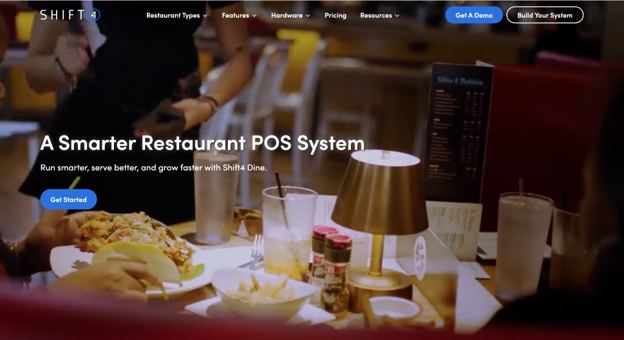

The short version: Shift4 Dine combines POS software, hardware, and payment processing in one restaurant system, backed by a company with more than 25 years in commerce technology.
How it handles order volume
Shift4 processes more than $260 billion annually across 200,000-plus customers, so the platform is built for scale. Its hardware lineup covers the main points where orders enter and move through a restaurant.
Features that matter during a rush
- Restaurant command center terminals
- Mobile terminals
- Kitchen display systems
- Self-service kiosks
- Lifetime hardware warranty with free replacement for malfunctions
What operators say
Operators report real operational improvements after switching, and several mention meaningful cost savings tied to the pricing structure. Reliable hardware and responsive support come up again and again. Users describe gains at both the checkout and kitchen level.
Good to know: Support is a major strength. It includes 24/7/365 in-house support and a nationwide network of certified technicians for on-site installation. That level of service isn’t the cheapest option, but multi-location operators tend to find it worth the cost.
4. Toast: Best for Restaurant Management and Point-of-Sale Systems
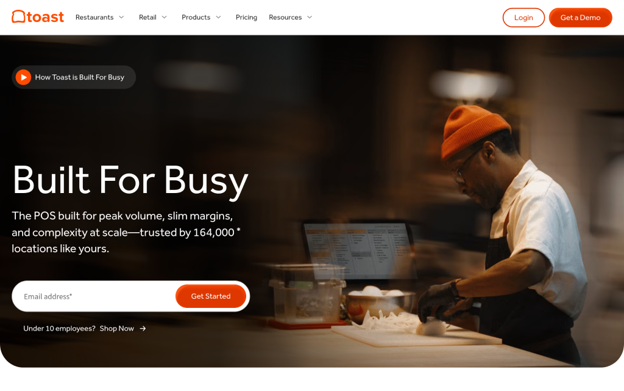
The short version: Toast is an Android-based, cloud-built platform serving around 120,000 US restaurants, with more than 21% adoption among restaurant POS systems.
How it handles order volume
Toast combines point of sale, online ordering, inventory management, payroll, and scheduling in one system. It connects with more than 200 third-party platforms, so it fits alongside most tools a restaurant already uses. The Toast Router provides built-in cellular service with automated payment backup, so an internet outage during service doesn’t stop the restaurant.
Features that matter during a rush
- POS and online ordering in one platform
- Inventory management
- Payroll and scheduling
- Table management designed around restaurant workflows
- Cellular backup through Toast Router
What operators say
Toast was named the top POS system powering America’s highest-grossing independent restaurant concepts as of 2023. Operators across different service formats say the platform’s depth matches the complexity of running food service at scale. Its $20 billion market cap at IPO reflected confidence that users had been showing for years.
Good to know: Toast is built only for restaurants. There is no general retail version, and that focus shows in how its features are designed.
5. Loyverse: Best for Small to Medium-Sized Retail, Food Service, and Hospitality Businesses
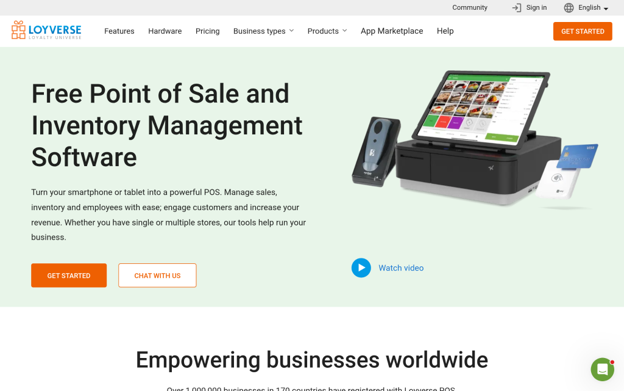
The short version: Loyverse turns smartphones and tablets into full POS systems, which lowers the upfront cost for smaller operators.
How it handles order volume
Offline functionality keeps sales moving when connectivity drops. For small food service businesses, that matters more than spec sheets suggest. The platform is used in more than 170 countries, supports more than 25 languages, and has over one million registered businesses.
Features that matter during a rush
- Sales processing on smartphones and tablets
- Inventory management
- Employee management
- Analytics
- Built-in loyalty programs
What operators say
Loyverse has won awards from Capterra, G2, Crozdesk, and GetApp, which points to users who actively recommend it. Smaller restaurant and cafe operators say the free offering and the loyalty program are what they would miss most. Its mobile-first design is praised for making staff training quick.
Good to know: The POS app is free. Premium back-office features are paid add-ons, which gives cost-conscious businesses flexible pricing.
Which One Fits Your Operation?
- You take orders from dine-in, phone, your website, and several delivery apps:co brings them into one POS with centralized menu management.
- You run a bar or nightclub where Saturday night decides the week: SmartTab’s hybrid setup and ID-based tabs are built for that environment.
- You operate multiple full-service locations and want hands-on support: Shift4’s in-house support and technician network stand out.
- You want a broad restaurant platform with deep integrations: Toast covers POS, ordering, inventory, payroll, and scheduling in one place.
- You’re a small cafe or restaurant watching every dollar: Loyverse’s free app and phone or tablet setup keep costs low.
Questions to Ask Before You Sign
- Was it built for restaurants? Systems designed around food service handle table management, kitchen display, and tipping far better than general retail tools.
- How many tools will I still need? Check whether online ordering, inventory, scheduling, and loyalty are covered in one place. Fewer systems mean fewer failure points during service.
- What will it really cost? Ask about hardware, monthly software fees, and payment processing rates. Processing fees can add up quickly over a full month.
- Can I see what’s working? Look for clear reporting on transaction speed, average transaction value, and inventory accuracy. Analytics that are hard to read won’t get used.
- Is it compliant? Confirm PCI DSS compliance, EMV chip support, and handling of local tax rules. These are baseline requirements.
Final Take
No single POS is right for every restaurant. The best choice depends on where your orders come from and where your service tends to break under pressure. SmartTab is strongest in nightlife, Loyverse suits operators keeping costs low, Shift4 stands out on support and hardware, and Toast offers depth and integrations. Orders.co fits restaurants that want dine-in, phone, website, and third-party delivery orders, plus kitchen, delivery, and customer engagement, running through one POS. Whichever you choose, the systems pulling ahead are the ones that stay reliable at peak volume and cut the work around each order.
To read more content like this, explore The Brand Hopper
Subscribe to our newsletter
Go to the full page to view and submit the form.