


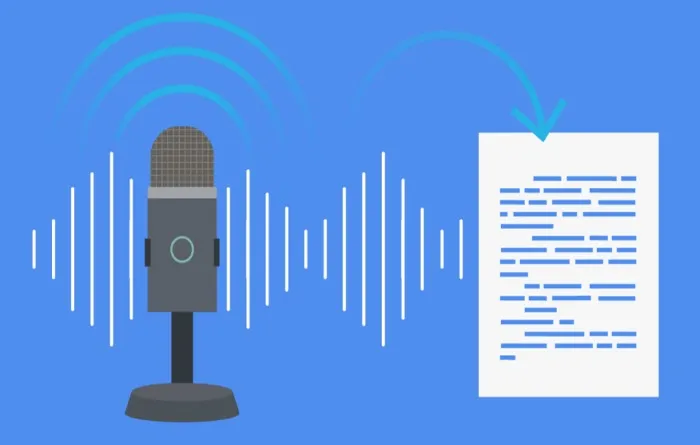
When a voice product feels quick and human, there’s usually a fast transcription layer underneath.
Live speech-to-text turns what someone is saying into text while the call or meeting is still going, so an agent can answer, a caption can update, or an assist tool can surface the next move before the moment passes. File uploads still help when you’re digging through old recordings, but this list is about the streaming path: you keep a connection open, send audio as it lands, and get text back in time to use it.
As you scroll down below, Telnyx, Deepgram, and AssemblyAI are 3 APIs teams keep putting on that shortlist in 2026.
TL;DR
- Best when you want one transcription API that can route live audio across several engines, and you care that transcription sits close to where calls terminate:
- Best when you want a specialist streaming speech-to-text stack with models aimed at live conversation and everyday production speech:
- Best when you want a streaming-first API built around stable live finals, turn detection, and tooling for conversational apps:
Top 3 Real-Time Transcription APIs Reviewed
| Capability | Telnyx | Deepgram | AssemblyAI |
| Engine/model story | Switch engines by config (Telnyx, Google, Deepgram, Azure paths) | Flux for conversational turns; Nova-3 for broad production streaming | Streaming model family for live conversational text |
| Live conversation helpers | Use cases across agents, captions, assist, and call routing | Built-in turn detection on Flux; keyterm and formatting options on Nova | Native turn detection, speaker labels, keyterm prompting |
| Languages | Broad multilingual coverage across engines | Flux about 10 languages; Nova-3 50+ languages | English plus Spanish, German, French, Italian, and Portuguese on multilingual streaming |
| Where it shines | Teams already on Telnyx telephony who want engine choice | Teams that want a dedicated STT vendor for live and production speech | Teams building live agents, captions, and assist that need stable finals |
1. Telnyx

Telnyx approaches real-time transcription as a router, not a single fixed model. You send live audio into one API, then choose which engine should handle recognition: Telnyx’s own speech-to-text path, Google, Deepgram Nova or Flux options, or Azure. That matters when a customer call needs a different engine tomorrow than it did today, because you change configuration instead of rebuilding the integration.
Moreover, transcription can also sit co-located with Telnyx telephony and edge facilities, so audio can be transcribed where calls already terminate rather than hauled across an extra hop before text appears.
What’s There?
- STT Router: One live-audio API that can reach several engines so you are not tied to a single recognition stack.
- Config-based engine switching: Move between engines without rewriting the integration when needs change.
- Telephony co-location: Run transcription close to where Telnyx call audio terminates.
- In-house ASR path: Telnyx’s own streaming path uses Whisper Large-V3-Turbo with auto-language detection and broad multilingual coverage.
- In-region processing: Options for US, EU, Australia, and other regions when data residency matters.
- Live use cases: Conversational agents, captions and meeting notes, voice commands, and live call transcription for routing and assistance.
Why it Stands Out?
The standout is choice without a full re-integration: one streaming front door, several engines behind it, plus the option to keep recognition near the phone path. That combination fits teams that already run calls on Telnyx and want transcription to feel like part of the same network story rather than a separate upload job.
2. Deepgram

Deepgram is a speech-to-text specialist with streaming at the center of the product. Live audio moves through Deepgram listen APIs, with Nova-class streaming for production speech and Flux for conversational turns where knowing when a turn ends, and handling interruptions, matters as much as the words themselves. Nova-3 is built for noisy, real-world audio and broader language coverage, including meeting and event-style workloads Flux is not aimed at.
And finally, industry-tuned and custom model paths help when your vocabulary is more specific than everyday speech.
What’s There?
- Live streaming listen APIs: Continuous audio in, transcripts out over Deepgram’s streaming endpoints.
- Flux for conversation: Recognition with built-in turn detection and interruption handling for live dialogue.
- Nova-3 for production streaming: High-performance STT with strong noise handling and 50+ languages.
- Domain and custom paths: Industry-tuned and custom models when your vocabulary needs a sharper fit.
- Under-300ms transcripts: Live transcripts return in under 300 milliseconds for many setups.
- Formatting and control tools: Keyterm prompting, filler words, smart formatting, diarization, numerals, and redaction on the Nova path, with self-hosted options for Flux and Nova-3.
Why it Stands Out?
Deepgram is strongest when transcription is the product you are buying, not a side feature of a bigger platform. Flux gives conversational apps turn awareness, while Nova-3 covers the wider streaming and production speech jobs, so you can match the model to the call rather than forcing one mode onto every workload.
3. AssemblyAI
AssemblyAI’s streaming speech-to-text is built for live audio over a WebSocket path that returns formatted transcripts while speech is still happening. The design leans on immutable finals so downstream systems can act sooner without chasing mid-stream rewrites, which helps when a voice agent or caption pipeline needs a stable line of text to decide the next step.
And here, Python and JavaScript SDKs keep the connect path short for teams shipping live agents, captions, contact-center assist, meetings, and real-time analytics.
What’s There?
- WebSocket streaming: Live audio in, formatted transcripts out over a persistent connection.
- Immutable finals: Stable finals so apps can act without mid-stream rewrite churn.
- Turn detection and endpointing: Native signals for when a speaker finishes a thought.
- Speaker labels and keyterm prompting: Tools that help live apps track who spoke and lock important words.
- Multilingual streaming: English plus Spanish, German, French, Italian, and Portuguese, with mid-utterance code-switching.
- Sub-300ms latency: Streaming responses sit in the sub-300 millisecond range for many live setups.
- Scaling for concurrent streams: Concurrent streams can grow with automatic scaling rather than a fixed open-session cap.
Why it Stands Out?
AssemblyAI fits when your product lives in the live moment: agents, captions, and assist that need text they can trust as soon as a turn settles. Immutable finals, turn tooling, and a streaming-first connect path make the API feel aimed at conversational real-time text rather than a batch job dressed up as live.
Closing Lines
These platforms differ mainly by how you buy the layer: Telnyx leans multi-engine routing plus telephony co-location, Deepgram leans STT models built for streaming speech, and AssemblyAI leans a streaming path with immutable finals and turn tooling.
So, here’s a final review:
- Choose Telnyx when you want multi-engine routing and transcription that can sit with your telephony path.
- Choose Deepgram when you want a specialist streaming STT vendor with Flux for conversation and Nova-3 for broader production speech.
- Choose AssemblyAI when you want a streaming-first API with stable finals, turn detection, and tooling for live conversational apps.
None of these replaces a test on your own audio. Measure on your microphones, your accents, and the workflows your product actually runs.
To read more content like this, explore The Brand Hopper
Subscribe to our newsletter
Go to the full page to view and submit the form.