


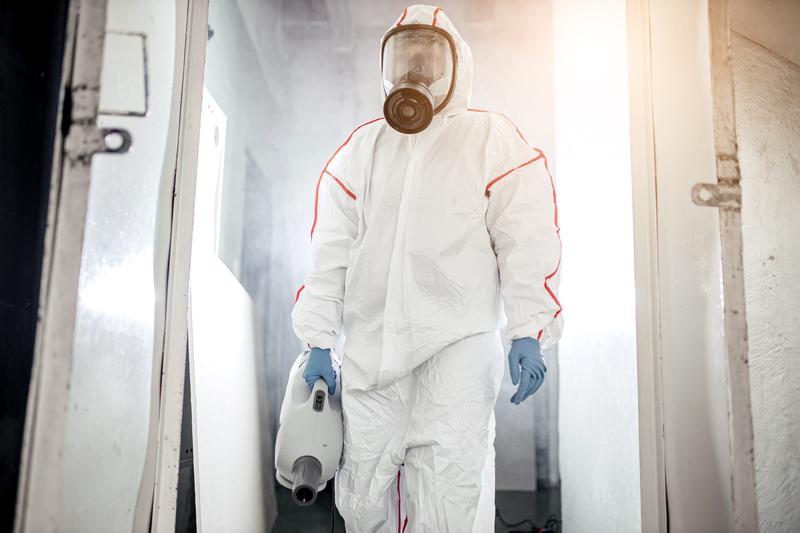
Biohazard cleanup is the controlled removal, cleaning, disinfection, and disposal of materials that may contain blood, bodily fluids, sewage, infectious waste, or other biological hazards. Professional remediation protects occupants, workers, and the property by addressing contamination that ordinary household cleaning may leave behind.
Key takeaways:
- Biohazard cleanup requires more than wiping visible surfaces.
- Blood and certain bodily fluids may expose people to harmful pathogens.
- Professionals use protective equipment, containment, approved disinfectants, and documented procedures.
- Porous materials may need removal when contamination cannot be safely eliminated.
- Correct disinfectant selection and contact time are essential.
- A qualified provider should explain the scope, disposal process, and completion criteria.
Biohazard cleanup is a specialized service for situations in which biological contamination may create a health or safety risk. The work may follow a traumatic event, unattended death, accident, sewage backup, hoarding situation, infectious disease concern, or discovery of contaminated needles and waste.
What Is Considered a Biohazard?
A biohazard is biological material that may threaten human health or the environment. In cleanup work, common examples include blood, certain bodily fluids, human or animal waste, sewage, used needles, contaminated personal items, and materials affected by decomposition.
Not every unpleasant mess is a biohazard. The risk increases when material is unknown, widespread, absorbed into building materials, associated with sharps, or connected to a traumatic or unattended event.
When the level of risk is unclear, avoid direct contact and limit access until the area can be evaluated.
Why Is Ordinary Cleaning Often Not Enough?
Ordinary cleaning is often not enough because visible removal and disinfection are different tasks. A surface can look clean while still containing biological residue. A disinfectant may also fail if soil was not removed first, the wrong product was used, or the surface did not remain wet for the required contact time.
Cleaning removes dirt and organic matter, while disinfection targets microorganisms on the surface. Applying disinfectant over visible contamination does not guarantee effective treatment.
When Should You Call a Professional Biohazard Cleanup Company?
You should call a professional biohazard cleanup company when contamination is extensive, has entered porous materials, involves an unknown substance, includes sharps, or follows a traumatic or unattended event.
Professional help is also appropriate when occupants cannot safely enter the area or when the emotional impact makes self-cleaning unrealistic.
Common situations include blood loss, unattended death, sewage contamination, discarded needles, animal waste, and hoarding conditions involving biological material.
A professional assessment does not always lead to a large project. A reputable provider should explain what requires specialized treatment, what can remain, and whether reconstruction will be needed.
What Happens During Professional Biohazard Cleanup?
Professional biohazard cleanup follows a controlled sequence designed to prevent cross-contamination and protect workers. The exact process changes by scene, but most projects include assessment, isolation, removal, cleaning, disinfection, verification, and disposal.
-
The Area Is Assessed and Secured
The area is assessed and secured to identify visible contamination, possible hidden spread, access points, ventilation concerns, and materials that may require removal.
Crews establish work boundaries so occupants, pets, employees, and visitors do not enter the contaminated zone. Clean areas may also need protection so workers do not spread contaminated material while carrying equipment or waste through the property.
-
Workers Use Appropriate Protective Equipment
Workers use protective equipment selected for the hazards present. Depending on the scene, this may include gloves, protective clothing, eye protection, protective footwear, and respiratory protection.
Professional companies should be able to explain how their training, protective equipment, and exposure-control procedures protect their employees.
-
Contaminated Materials Are Removed
Contaminated materials are removed when they cannot be reliably cleaned and disinfected. Hard, nonporous surfaces can often be treated. Absorbent materials may retain contamination below the visible surface.
Affected carpet, padding, mattresses, upholstered furniture, drywall, insulation, or unfinished wood may require partial or complete removal.
Removing material is not always a sign that cleanup has failed. In some situations, removal is the safest and most reliable way to eliminate contamination that has penetrated beneath the surface.
-
Surfaces Are Cleaned Before Disinfection
Surfaces are cleaned before disinfection because organic matter can interfere with a disinfectant’s performance. Crews remove residue and soil, apply the selected product according to its label, and keep the surface wet for the required contact time.
The product must also be compatible with the material being treated. A stronger chemical is not automatically the correct choice, and improper use can damage surfaces or create harmful fumes.
The crew should follow a controlled process rather than randomly spraying products around the room. Cleaning methods should be selected based on the material, contamination, and conditions at the property.
-
Odor Sources Are Addressed
Odor sources are addressed by removing contaminated materials and cleaning the affected structure. Fragrance, fogging, or deodorizer alone does not solve biological contamination.
Persistent odor can indicate that contamination remains in a porous or concealed area. Odor treatment should support source removal rather than replace it.
-
Waste Is Packaged and Managed
Waste is packaged and managed according to the material involved and applicable requirements. Biohazard cleanup waste is not always handled like ordinary household trash, especially when it contains sharps, saturated materials, or regulated medical waste.
The provider should have a clear process for containing and removing waste without carrying unprotected material through clean areas.
How Is Cleanup Completion Verified?
Cleanup completion is verified through visual inspection, process documentation, and confirmation that the agreed scope was completed. Some projects may use additional testing or third-party review when required by the property owner, insurer, regulator, or site conditions.
A completion walkthrough should identify what was removed, what was cleaned, what remains for reconstruction, and whether any access restrictions remain.
Photographs and written records can be useful when an insurance claim, property transaction, commercial safety file, or future repair is involved.
A completed cleanup does not always mean the room is fully restored. Remediation may leave flooring, drywall, or other finishes for a restoration contractor to replace.
What Should You Avoid After a Biohazard Incident?
You should avoid entering the affected area without protection, moving contaminated items through clean rooms, using a household vacuum, or mixing cleaning chemicals.
Children, pets, tenants, and untrained employees should not be allowed into the area.
Do not assume bleach is automatically the correct answer. Product concentration, surface compatibility, ventilation, and contact time all matter. Mixing bleach with ammonia or acids can create dangerous gases.
Contaminated needles and other sharps should not be picked up by hand or thrown loosely into ordinary trash.
How Do You Choose a Biohazard Cleanup Provider?
You choose a biohazard cleanup provider by evaluating training, insurance, responsiveness, transparency, and the quality of the proposed scope.
Ask who will perform the work, what protective measures will be used, how contaminated materials will be handled, and how completion will be documented.
A good estimate should explain the affected areas, expected removals, cleaning methods, waste handling, and conditions that could change the price.
Be cautious of vague estimates, pressure tactics, guaranteed insurance coverage, or companies that focus only on odor treatment. A trustworthy provider should explain both what needs to be done and what does not.
Frequently Asked Questions About Biohazard Cleanup
Q. Can you stay in the property during cleanup?
A. Whether you can stay depends on the location and extent of contamination. Widespread contamination, sewage, or ventilation concerns may require temporary relocation.
Q. Does insurance cover biohazard cleanup?
A. Insurance may cover cleanup when the underlying event is covered, but policies vary. Contact the insurer promptly, document the damage, and wait for the carrier’s review.
Q. How long does cleanup take?
A. Cleanup may take several hours or multiple days depending on the affected area, hidden contamination, and reconstruction needs.
Summary: Responding Safely to Biological Contamination
Biohazard cleanup is a safety-focused remediation process, not ordinary housekeeping. Correct work requires controlled access, protective equipment, careful material removal, thorough cleaning, label-compliant disinfection, responsible waste handling, and clear documentation.
Fast action can limit secondary damage, reduce disruption, and give owners a clearer record for insurance, property management, reconstruction planning, or future repairs.
When a property contains blood, bodily fluids, sewage, sharps, or other biological hazards, avoid unnecessary exposure and limit access to the area. Contact a professional biohazard cleanup team for an assessment, a clearly explained scope, and a safe path toward restoring the property.
To read more content like this, explore The Brand Hopper
Subscribe to our newsletter
Go to the full page to view and submit the form.