


Every established brand sits on an invisible asset that no challenger can buy off the shelf: accumulated trust. Decades of press coverage, word of mouth, shelf presence and familiarity mean that when a household name launches something new, the market extends it credit. A challenger brand gets no such credit. It has to borrow trust from elsewhere until it has built its own.
Understanding where that borrowed trust comes from, and how deliberately it can be acquired, separates the challengers that break through from the ones that stay niche.
The mechanics of borrowed trust
Trust transfers through association. A startup that lands a feature in a respected trade publication inherits a slice of that publication’s credibility. A new food brand stocked by a premium grocer borrows the grocer’s judgement. A B2B software company whose founder speaks at an established industry conference borrows the conference’s authority. In each case the customer’s reasoning is the same: someone I already trust has vouched for someone I do not know yet.
Marketers have names for the individual tactics, earned media, retail partnerships, influencer collaboration, thought leadership, but they are all the same mechanism wearing different clothes. The brand is renting a reputation while it builds one.
Search engines reason the same way
What is less widely appreciated is that search engines evaluate new brands almost exactly like consumers do. A website nobody links to is, in Google’s eyes, a brand nobody vouches for. Links from established, relevant sites function as citations: transferable votes of confidence that tell the algorithm this company is part of the real conversation in its industry.
This is why digital PR and SEO have steadily merged into one discipline. A feature in an industry publication is simultaneously a brand moment and a ranking signal. Challenger brands that treat the two as separate budgets usually underinvest in both. The ones that treat visibility as a single system, where coverage builds links, links build rankings, and rankings compound into a steady flow of customers who arrive already half-convinced, get twice the value from every placement.
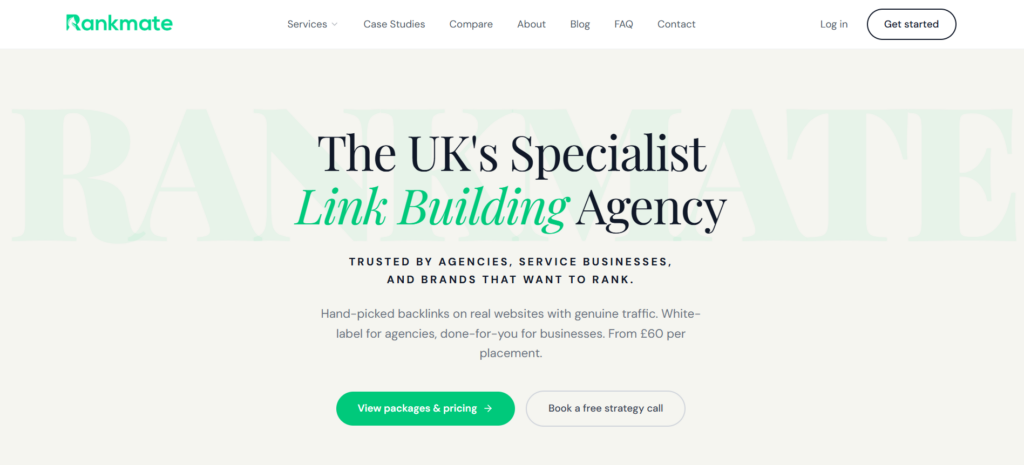
Some of that work is genuinely hard to do in-house, which is why many growing brands put a specialist link building service behind their content and PR efforts, securing placements on established sites in their niche while the internal team focuses on the product and the story.
Three rules for borrowing well
Not all borrowed trust is worth having, and some of it actively harms. Three rules keep the strategy honest.
First, relevance beats reach. A mention on a huge but unrelated platform transfers little, because the audience has no reason to care and the association makes no sense. A smaller, sharply relevant publication transfers a great deal. This is as true for backlinks as it is for press coverage: one link from a respected site in your own industry is worth more than dozens from generic directories.
Second, the association must survive scrutiny. Borrowed trust is a promise that the brand will be worth trusting on its own terms. If the product disappoints, the borrowed credibility converts into amplified disappointment. Plenty of well-funded launches have discovered that publicity simply helps more people find out you are not ready.
Third, borrowing is a bridge, not a home. The end state is a brand with its own gravity: customers who search for it by name, publications that cover it without being pitched, sites that link to it because it published something worth citing. Every borrowing tactic should be judged by whether it moves the brand closer to needing the tactic less.
The compounding effect
The brands that do this well describe the same pattern. Early on, every placement, partnership and link is fought for individually and the returns feel modest. Then, somewhere along the way, the flywheel starts turning on its own. Journalists come to them. Rankings hold without constant effort. New products launch into a market that already extends them credit.
That is the moment borrowed trust has become owned trust. The challenger has become, in its own corner of the market, the established name that newer challengers will one day borrow from. Getting there is rarely quick. But it is a great deal quicker for brands that understand, from day one, that authority is not a by-product of good marketing. It is the product.
To read more content like this, explore The Brand Hopper
Subscribe to our newsletter
Go to the full page to view and submit the form.