


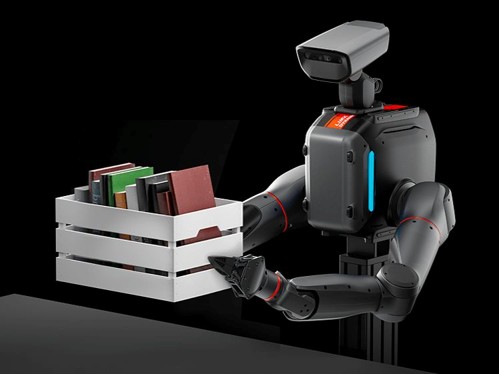
Choosing the right TRON 2 configuration starts with your research goals. Your choice should support the work you plan to do and fit your team’s resources. This guide helps you assess your needs, compare the available configurations and select an option that aligns with your project’s priorities.
What Does Your Research Project Require?
Define the experiment before selecting hardware. Record the task, operating environment, performance targets and resources available to support your study.
| Requirement | What to define | How it guides your choice |
| Research objective | Identify the behaviour you want to study and the actions or observations your learning pipeline must capture. | Grasping and sorting favour an arm-focused setup. Locomotion experiments require a suitable moving base and access to the relevant controls. |
| Operating environment | Measure worktables, passages and the designated test area. Record surface materials, slopes, thresholds and changes in level. | Check whether the robot can complete the intended route or manipulation sequence within the available space without rearranging the workspace between trials. |
| Performance requirements | Define the objects, working positions, test route and acceptable task completion rate before comparing specifications. | Assess each configuration against these criteria. Prioritise capabilities that support the experiment and request evidence under conditions that resemble your planned tests. |
| Team resources | Review available skills, equipment, development time and budget. Include software integration, supervision and maintenance. | Confirm that your team can prepare experiments, investigate failures and repeat tests within the project schedule and budget. |
Which TRON 2 Configuration Fits Your Task?
The TRON 2 platform offers dual-arm, wheeled-leg and sole configurations. Match each form to your experiment, then confirm the selected edition and required modules provide the complete setup you need.
Dual Arms for Manipulation Research
Choose dual arms for coordinated grasping, sorting and object handling. The published arm specifications help you assess access to working positions and identify the applicable load limits.
| Arm specification | Published value |
| Degrees of freedom | 7 per arm |
| Arm reach | 73 cm |
| Maximum end-effector load | 5 kg per arm |
| End-effector load in the extended condition | 3 kg per arm |
Check the object and tool requirements against the limit for the intended working position. For demonstration collection, define the views and end-effector behaviour your vision-language-action model needs before selecting attachments. If the experiment requires movement between workstations, confirm the additional hardware needed for mobile operation.
Wheeled Legs for Mobility and Payload Research
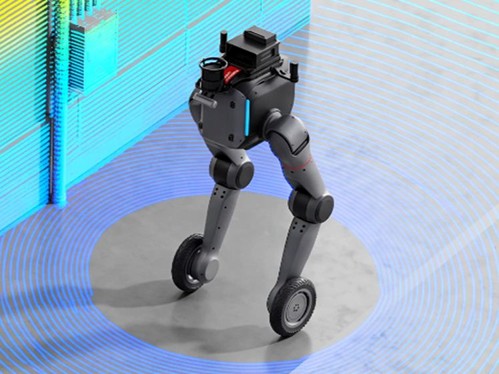
Use wheeled legs when rolling movement or carrying experimental equipment forms a central part of your study. Evaluate three areas:
- Mobility experiments: Define the route, turning tasks and surfaces you want to evaluate. Repeat the same route across trials so you can compare control changes against a consistent baseline. Record where movement slows, stops or requires operator intervention.
- Payload experiments: List the instruments and mounting hardware the robot must carry. Request loading and mounting guidance for the proposed configuration. Assess how the planned load affects clearance and movement before committing to the complete equipment package.
- Terrain checks: Record slopes, thresholds and stairs separately. Verify whether the selected configuration and operating mode support those features. Assess the actual route before supervised physical experiments, including space for turning, stopping and recovering from an interrupted trial.
Sole Feet for Bipedal Locomotion Research
Choose sole feet when your study focuses on foot placement, balance and contact control. Define whether you will assess steady walking, changes in direction or transitions between surfaces. Record floor friction, obstacle geometry and the space available for recovery. Keep those conditions consistent when comparing policies, and measure completed steps, balance losses and successful trials across the same course.
Arrange fall protection before physical trials and follow the official operating guidance. The manual recommends wheeled legs for stairs and identifies a high tipping risk for sole operation. Attempt sole-foot stair tests only when necessary, after checking step height, tread depth and friction against the stated requirements.
What Should You Verify Before Choosing?
Once you identify a suitable form, check whether the proposed package supports the full research workflow. Software access, accessories and laboratory preparation determine how quickly you can begin repeatable experiments.
Development Tools, Sensors and Data Access
- Verify control access. Confirm the SDK access included with the selected edition. For Python, C++ or ROS development, request a working example that matches your task. Establish whether you need built-in motion commands or direct control of the relevant joints.
- Map sensor coverage. Sketch the observations your experiment needs, then compare them with the proposed camera positions and fields of view. Confirm which sensors come with the kit and which require additional modules. Include mounting and calibration work in your plan.
- Review the data workflow. Request a sample recording and inspect its contents. Check whether observations and robot states can be aligned for training. Review simulation resources and examples, then verify that your team can export, store and reuse the required data.
Kit Contents, Lab Space and Total Cost
Use the final quotation as a checklist before ordering. Confirm these points in writing:
- Package contents: Obtain an itemised list covering the robot body, end effectors, sensors, teleoperation equipment and charging accessories. Identify the parts needed for your selected configuration and any planned changes of form. Budget separately for optional equipment.
- Laboratory readiness: Check installation dimensions, power access and the area needed for movement or arm operation. Plan where operators will stand and equipment will be stored. Assign responsibility for setup checks and routine maintenance before the first experiment.
- Complete cost: Request a quotation that identifies the selected edition, necessary accessories, shipping, training and support. Compare the package with your requirements sheet. Confirm delivery arrangements and service terms so the budget covers the equipment and assistance your project requires.
Conclusion
Choose a TRON 2 configuration that matches your research goals and team resources. Use a clear requirements sheet to compare options, verify development access and identify any missing equipment. Before ordering, confirm the included components, support and total cost in writing so your team can prepare for its first experiment with a complete setup.
To read more content like this, explore The Brand Hopper
Subscribe to our newsletter
Go to the full page to view and submit the form.