


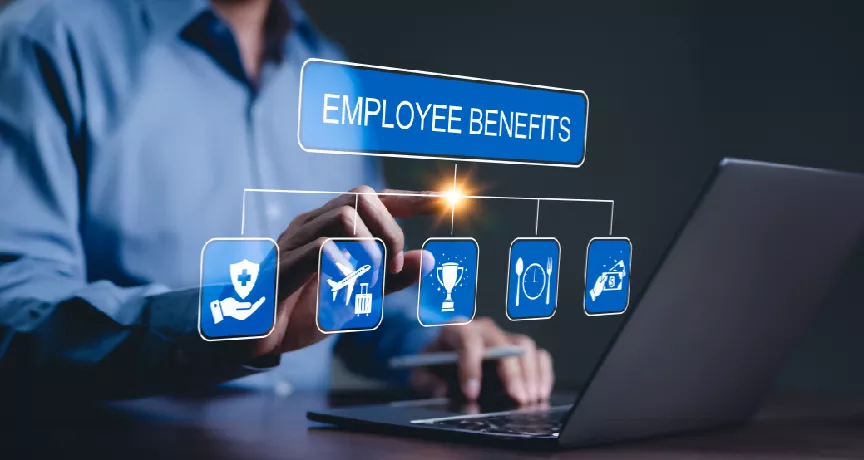
Employee benefits used to be a boring checkbox.
A pension plan. Some vacation days. Maybe private health insurance, if the company had been feeling flush. Benefits used to be pretty basic. Today they’re one of the biggest banners a company can fly announcing who it is and what it stands for.
Here’s the thing:
Employer branding isn’t a swanky careers site or five-star Glassdoor rating anymore. The benefits your company offers communicate your values better than any ad campaign. That’s why leading companies view benefits as a branding opportunity — not just an HR expense.
In short:
- Benefits shape how employees talk about the company
- Benefits shape how candidates decide where to apply
- Benefits shape how customers see the brand
Sound like a stretch? It’s really not.


In this guide:
- Why Benefits Matter for Employer Branding
- How Benefits Shape Brand Perception
- The Benefits That Actually Move the Needle
- Turning Benefits Into a Branding Asset
Why Benefits Matter for Employer Branding
Workers today care about more than a paycheck.
Employees want to know their company cares about them as people. Benefits are the quickest, easiest way to communicate that. In fact, numbers don’t lie — 79% of employees rank pay and benefits as the top factor when considering an employer.
That’s huge.
Benefits are unique in that they impact how the entire market perceives an organization. This is where employer branding, benefits and brand perception intersect. Improved benefits attract better talent. Better talent creates better products. Better products create a stronger brand.
It’s a chain reaction.
It’s also companies that are getting ahead who recognise that benefits such as Electric Car Scheme, mental health assistance, wellness budgets and flexitime are now the hallmarks of being seen as a “great employer” – the 21st century version of the corner office.
How Benefits Shape Brand Perception
Here’s a truth most business owners miss:
Culture spills out. Every. Single. Time. Employees will discuss. On LinkedIn. In group chats. On Glassdoor. And what they say becomes the brand.
Think about the companies people actually admire.
Companies don’t become popular places to work because their public relations departments declared them so. Word gets around from employees. Details like free lunches, extended parental leave and four-day workweeks spread quickly and influence public perception of the whole company.
Look at it this way:
A strong benefits package sends a signal that says:
- Values people over policies
- Invests in the long term
- Understands what modern workers need
Versus a company that only gives you enough. Same field. Same product. Different esteem.
That’s the power of benefits.
And that’s why 75% of job seekers consider an employer brand prior to applying for a position. Weak benefits = weak brand — often before reading the job description.
The Benefits That Actually Move the Needle
Not every benefit is worth the money.
Some employee benefits sound great on paper but have zero impact on brand perception. A ping pong table. A branded water bottle. Pizza Friday every month. Yeah, they’re cool, but nobody’s bragging to their friends about it.
The benefits that truly matter are those that address the needs of actual people:
- Financial support: salary sacrifice schemes, EV cars, cycle-to-work
- Wellbeing: private healthcare, mental health apps, gym memberships
- Flexibility: hybrid work, remote-first setups, four-day weeks
- Growth: learning budgets, coaching, tuition support
- Family: enhanced parental leave, fertility support, childcare help
These benefits are listed on Glassdoor. These benefits are posted on LinkedIn. These are benefits that make employees say WOW.
And that “wow” is the whole point.
Even better — companies offering these benefits, such as an EV salary sacrifice scheme, kill two birds with one stone. Not only are they saving employees a large sum of money on a vehicle, but they are demonstrating their priorities around sustainability, values and future-proofing. Brand goals achieved.
Turning Benefits Into a Branding Asset
Offering great benefits is only half the story.
The OTHER half is speaking of them. If no one knows the benefits… They CAN NOT formulate an opinion of the brand. Period.
Here’s what smart companies do:
Feature benefits offered on the careers page. Not at the bottom in small grey text. Not fuzzy language like “we offer a competitive benefits package.” Real details that human beings can connect with about what the company provides.
Smart companies also discuss benefits on social media. When an employee posts about their EV lease or their four day week, it does more for the brand than any paid advertisement ever will. It’s genuine. It’s buzzworthy. It’s free.
Benefits also become part of the recruiting spiel. Job postings list specific benefits. Recruiters open conversations with them. Interviewers emphasize them. Benefits become less of a covert line item. Instead they are part of the main pitch.
And that approach works. Organizations with positive employer brands see more applications. They hire faster. People stay longer. The benefits themselves are important — but so is the story told around them.
Did you know that approximately 32% of employers identify benefits as their biggest hurdle when recruiting new talent? Those who excel at it aren’t offering more. They’re communicating more.
Bringing It All Together
Benefits used to be quiet.
Something HR took care of behind the scenes. A folder tucked away in the onboarding binder no one read. Fast forward. It’s one of the loudest weapons a company has for brand building – internally with employees, with potential candidates, and externally with customers.
Employer branding’s relevance to benefits and brand perception is here to stay. In fact, it will only continue to deepen as employees ask for more, budgets become strained, and reputations are exposed online.
The key takeaways:
- Benefits are no longer a back-office concern — they’re a branding tool
- The right benefits attract better people and build a stronger reputation
- Talking about benefits publicly is just as important as offering them
- Standout perks like EV schemes, wellness support, and flexibility do the heavy lifting
Businesses that view benefits as branding will continue to gain a competitive edge. Businesses that view them as an afterthought will continue to ask themselves why they can’t find the right talent.
Simple as that.
To read more content like this, explore The Brand Hopper
Subscribe to our newsletter
Go to the full page to view and submit the form.