


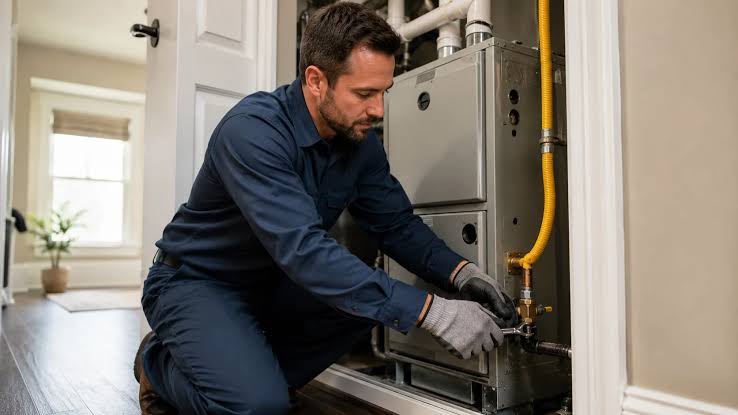
Three contractors walk through your door. Three quotes land on your kitchen table. One is $4,800, one is $6,200, and one is $9,100 with a paragraph of fine print nobody wants to read on a Tuesday night. The cheapest bid and the best bid are rarely the same document, and the gap between them usually comes down to about six lines you can learn to read in an evening.
Here is the honest part most homeowners skip: a furnace quote is a short technical spec sheet dressed up as a price. Once you know what each line is supposed to say, sorting good bids from padded ones takes less time than picking a new phone plan. If you would rather skip the homework entirely and let a licensed shop do the reading, you can request a gas furnace installation quote and compare it against the other two sitting on your counter. Either way, this guide shows you exactly where to look.
I have watched neighbors sign the cheapest bid in October and pay for it in February, and I have watched people overpay by two thousand dollars for a name they recognized. Both mistakes come from reading the total instead of the parts. So let’s read the parts.
What a gas furnace installation quote should actually list
A serious bid names the equipment down to the model number. You want to see the brand, the model, the heating capacity in BTUs, and the efficiency rating. If the quote says “high-efficiency furnace” and nothing else, you are being handed a mystery box with a price tag.
Beyond the box, the quote needs to spell out the labor scope. That means removal and disposal of the old unit, any ductwork modifications, the new flue or venting setup, gas line work if the line size changes, electrical connections, the thermostat, permits, and a commissioning test at the end. A bid that skips permits is not saving you money. It is moving a cost and a liability onto your name.
Efficiency ratings matter here, and not just for the sticker. The federal ENERGY STAR program publishes the efficiency tiers that qualify for recognition, and your quote should state where the proposed unit lands. A basic furnace and a condensing model can differ by several hundred dollars up front and pay some of that back over the life of the equipment. Ask each contractor to show the annual fuel use estimate for your house, not the showroom average.
Why the cheapest bid usually loses
Low bids tend to be low for a reason, and the reason is almost always scope. The contractor trimmed the manual load calculation, skipped the duct inspection, or priced a unit that is one size too small for your square footage and window count. A furnace that is undersized runs longer, works harder, and wears out sooner. That is not a bargain. It is a down payment on the next replacement.
If you want a second opinion on what proper sizing looks like, the Bureau of Labor Statistics tracks heating and air conditioning technicians as a skilled trade, which is the quiet reminder that a two-hour walkthrough and a load calculation are real labor, not free add-ons. A quote that skips them is a quote that skipped the work.
The Five-Box Quote Score, a quick way to rank three bids
Numbers on a page are hard to compare side by side. Draw five boxes on a legal pad and label them: Equipment, Sizing, Scope, Warranty, Credentials. Then score each quote from one to five in every box. Total up to twenty-five points. I have used this with friends comparing bids in Parma and North Olmsted, and the cheapest quote has never won. Not once.
Score the Equipment box high when the model number is spelled out and the efficiency tier is stated. Score Sizing high when the bid references a load calculation or a measured square footage, not a guess based on your neighbor’s house. Scope earns points for permits, disposal, and commissioning. Warranty needs both parts and labor spelled out separately, because a ten-year parts warranty with a ninety-day labor warranty is a lot weaker than it sounds at the kitchen table.
Credentials is the box that matters most and gets scored last. A valid state license, proof of insurance, and a listed business address all count. The National Institute of Standards and Technology maintains reference standards for measurement and testing that legitimate trades rely on, which is a nerdy way of saying that good contractors can point to recognized standards for their work, and bad ones cannot.
A real scenario from a furnace quote I read last fall
A homeowner on Jane Avenue in North Olmsted sent me three bids for a 1,900 square foot ranch with original 1970s ductwork. Bid A came in at $5,100 with no model number and no load calculation. Bid B came in at $6,400 with a named condensing furnace, a measured heat load, and a new flue. Bid C came in at $9,300 with the same equipment as B and a line item for “system balancing” that nobody could explain.
On the Five-Box Score, Bid A scored eleven, Bid B scored twenty-one, and Bid C scored seventeen. Bid B won. Six months later, the homeowner reported a bedroom that used to run cold all winter now holds temperature within a degree. That is what a proper load calculation and a correctly sized unit buy you, and no line on any invoice says so.
Five questions to ask before you sign
- Is the model number on the quote, or can you add it before I sign?
- Does a permit come with this job, and will you pull it in your name?
- What does the labor warranty cover, and for how long?
- Did you run a load calculation, and can I see the result?
- What is the change-order policy if the flue or gas line needs rework mid-install?
Those five answers tell you more about a contractor than any online review. If a bidder gets defensive about the paperwork, you have your answer without a follow-up visit.
When the right call is a fresh quote
If all three bids come back with mystery equipment, no permits, and vague warranties, the answer is not to pick the least bad one. Start over. A gas furnace installation is a fifteen-to-twenty-year decision, and the difference between a carefully scoped bid and a rushed one shows up every January for the life of the unit.
Read the lines, score the boxes, and call back the contractor who answers your questions without sighing. If none of them do, keep shopping. Your future self in a cold snap will thank you for the extra week of diligence.
To read more content like this, explore The Brand Hopper
Subscribe to our newsletter
Go to the full page to view and submit the form.