


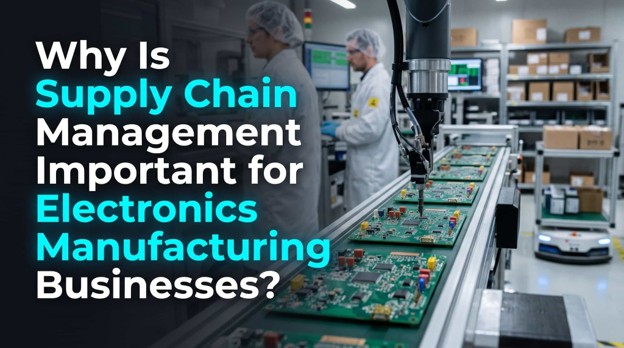
Imagine a medium-sized electronics manufacturer a couple of weeks prior to a major product rollout. The design is finalized, the production line is set-up and marketing has already “buzzed” the release. Then one e-mail comes in: One small part – a voltage regulator that is less expensive than a cup of coffee – is back-ordered for fourteen weeks.
All that matters now is to stay focused on the task at hand. The rollout slips, and customers begin to get antsy while the finance department begins to do some awkward calculations.
These types of stories are the reasons supply chain is not a back-office issue in electronics. It tells you whether you get your product to customers on time, maintain your margins and keep your reputation intact.
Electronics Supply Chains Are Uniquely Fragile
There are a lot of industries that have complex supply chains, but electronics has a few aspects that make it particularly hard.
Hundreds or thousands of parts are manufactured in a single device, from dozens of parts suppliers in multiple countries. A lot of those components are specialized, which means that you can’t use the one nearest to you. Product lifecycles are brief as well. The component, which is easily available now, may be eliminated next year.
This combination of complexity, specialization and speed makes for quick snowballing of small disruptions. If you ship late, an entire job can be delayed.
It Protects Your Production Schedule
Predictability is the most apparent advantage of having a solid supply chain. By knowing what comes in, when it comes in, and what is in inventory, you can be sure to plan production rather than guess at it.
This translates into fewer down times, fewer hurried orders at high cost, and fewer uncomfortable calls to customers concerning delays. It also allows you to be certain of delivery dates you can keep, which is more important to building customer trust than almost any marketing effort.
Quality Starts Long Before Assembly
Most people consider quality control as a process that occurs at the last stage of the production line. But in the electronics business, the quality is largely a function of the supplier and the relationship between the two.
Remove the circuit boards of the majority of devices. It’s not just about the price per unit when it comes to selecting the best PCB manufacturer. You’re seeing consistency, traceability, testing standards, and how they communicate when something goes wrong. A board with a slight defect may be able to pass a quick inspection and then fail after 6 months in a customer’s hands. By this point, the price tag to correct the mistake is many times greater than the price tag to select the right partner in the first place.
When it comes to supply chain management, it is essential that you make sure your suppliers are properly vetted, regularly audited and viewed as a part of your team and not as a line item.
The Hidden Parts Matter Too
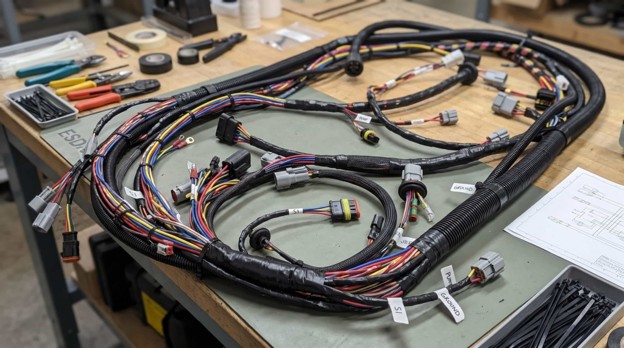
If you ask people what could they possibly put in an electronic product, they will say chips, screen and batteries. Connective tissue—cables and wiring that conduct electricity and signals between the various components—are not usually given the same focus. But problems tend to manifest themselves there.
Lead time and specifications, for instance for custom wire harnesses, are important in your product. There’s no pulling a harness off a shelf if yours is late, as it is designed for a specific layout. If you mix up the connector types, wire gages, or lengths, you can end up with an assortment of components that don’t fit. It helps to have good planning and communication with those putting these things together, to save a lot of scrabbling at the last minute.
Cost Control Without Cutting Corners
Reduction in costs is a universal desire – but the supplier that appears to offer the lowest costs may not be the lowest cost. Late deliveries, defect and emergency freight all cost money.
Good supply chain management provides better visibility over actual costs. You can identify areas where you’re overstocking, cash strapped, and areas where bulk buying or longer term contracts may be beneficial. Rather than pressure suppliers, it’s more about establishing a sustainable, equitable pace that benefits everyone.
Resilience Is the Real Competitive Edge
In the past several years, the electronics industry has learned a difficult lesson: It is a risk to depend on a single source for a key component. Production delays, lack of availability and geopolitical changes can all be a sudden death blow to a supplier.
You can tell resilient companies because they’re taking steps before they get hurt. They will approve backup suppliers, maintain a stockpile of the most important parts, and monitor any early warning signs, such as longer lead times or financial problems with suppliers. They are also aware of end of life component notices so that they don’t come as a surprise during production.
Not very glamorous, but it’s the difference between bending and breaking when things go sideways.
Consistency in Assemblies Builds Trust
You have a supply chain, but customers don’t think about it. You have a supply chain, but customers don’t think about it. The product of a well operated supply chain is a product that works reliably and consistently, arrives on time and is reliably repaired or replaced.
This is particularly true of assemblies that join together several parts. When you’re looking to source a product such as a Molex Wiring Assembly, you rely on the quality of the connectors, the accuracy of the terminations and the reliability of the documentation. If any of those go from one batch to the next, you will find it in warranty claims and failures in the field. Clear specifications, batch traceability, testing incoming lots are all factors that help maintain that consistency.
Practical Steps You Can Take Now
It doesn’t take a lot of changes to get better. There are a few habits that can make a huge difference:
- Map your suppliers. Be familiar with the sources of each component and mark any component with a single source.
- Communicate with suppliers on a regular basis. Avoid waiting for issues. Share their predictions and inquire about their ability.
- Keep track of the lead times in an honest and truthful way. Don’t plan your project around the numbers you’d like, the numbers you actually have will be used instead.
- Add buffers to critical components. It is less expensive to keep a small safety stock than to have a stopped line.
- Review performance often. Take measurements of on-time, defect rates, and take action.
- Document specifications clearly. Ambiguity is the root of many costly mistakes.
Wrapping Up
Supply chain management in electronics isn’t just logistics. It touches production schedules, product quality, costs, customer trust, and your ability to weather surprises. The companies that do it well tend to look calm from the outside, not because nothing goes wrong, but because they saw most of it coming.
If you take one thing away, let it be this: treat your suppliers and your supply chain as a core part of the business, not an afterthought. Start small, get a clear view of where your risks sit, and build from there. Future you, staring at that backordered voltage regulator, will be very glad you did.
To read more content like this, explore The Brand Hopper
Subscribe to our newsletter
Go to the full page to view and submit the form.