



**This post is sponsored by Semrush. When you purchase through links in this article, we may earn an affiliate commission from Semrush.**
When you are running a business alone, every new responsibility feels like another employee you need to hire. Marketing was one of those responsibilities I could not afford to ignore or afford to hire out.
I learned that the hard way.
As a solo consultant, I was responsible for finding clients, managing projects, sending invoices, answering emails, updating my website, creating content, and keeping an eye on what was happening in my industry. Marketing usually happened whenever I had a spare hour, which meant it was often the first thing pushed aside when client work became busy.
The problem was that I could not expect new clients to simply find me.
I needed people searching for the services I offered to discover my business. I also needed to understand what competitors were doing and whether my website was actually helping or getting in the way. Hiring an SEO specialist would have made things easier, but it was not realistic for my budget at the time.
That was when I started looking at Semrush differently.
I did not need another complicated task on my list. I needed a system that could help me understand where my business stood and what I should work on next.
I Stopped Treating Marketing Like Guesswork
Before using Semrush, I made many marketing decisions based on instinct. I would write a blog post because I thought the topic was useful or change a page because it did not look quite right. I rarely had a clear answer for why I was doing something.
Semrush changed that process.
I could research the keywords people were using to find services like mine and see which opportunities were relevant to my business. Instead of spending hours wondering what to write about, I had a starting point.
Competitor research was another turning point. Semrush allowed me to look beyond a competitor’s website and understand the search terms and topics helping them get noticed. I was not interested in copying them. I wanted to understand what they had figured out that I had missed.
That information made my limited time more valuable.
I could decide whether improving an existing page made more sense than writing something new. I could monitor rankings and see whether changes were actually making a difference. Semrush gave me information I could use to prioritize instead of simply giving me another list of marketing tasks.
The site audit was useful for the same reason. When you are managing a business by yourself, discovering a technical problem on your website can be frustrating because you may not know where to begin. Semrush helped me identify areas that needed attention so I could work through them systematically.
I still had to do the work. The difference was that I finally had some direction.
My One Person Business Started Working More Like a Team
The biggest change was not a dramatic overnight increase in traffic. It was the way I started thinking about marketing.
I began setting aside a small amount of time each week to review my search performance, check competitors, look at website issues, and decide what deserved attention. Semrush became part of that routine instead of something I opened only when I had a problem.
As search evolved, I also started thinking about visibility beyond traditional rankings. Getting a page onto Google was still important, but I could see that people were increasingly discovering information through AI generated answers as well.
That is where Semrush One fit into the larger Semrush platform for me. It brings traditional SEO and AI visibility into a more unified workflow, giving businesses another way to understand how they are being discovered across search and AI experiences.
That broader view matters when you do not have a team watching every change in search for you.
Semrush did not replace my judgment, and it certainly did not run my business for me. What it gave me was a way to make decisions with more information. For a solo business owner, that can be the difference between spending three hours on something that sounds useful and spending that same time on something that has a clearer reason behind it.
I still handle the client calls. I still write proposals. I still chase invoices and answer emails at inconvenient times. There is no large marketing department waiting to take those jobs from me.
But I no longer feel like I need one just to understand what is happening with my online presence.
Semrush became less of a tool I used for SEO and more of a practical part of the way I run the business. It helps me research before I create, investigate before I change something, and measure before I assume something worked.
For anyone running a business alone, that is the real value of having a system. You do not need to do everything perfectly. You need to know where your limited time will make the biggest difference.
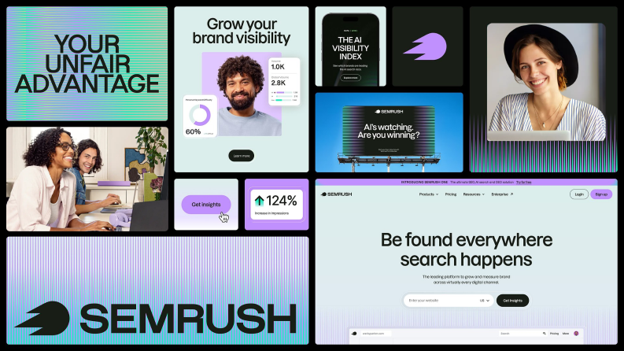

If you are waiting until you can afford a marketing team before taking your search visibility seriously, start building the system now. Explore what Semrush can show you about your website, your competitors, your rankings, and your visibility in the changing search landscape. You may not have a marketing department yet, but with the right information and a consistent process, you can make your one person operation work a lot smarter.
To read more content like this, explore The Brand Hopper
Subscribe to our newsletter
Go to the full page to view and submit the form.