


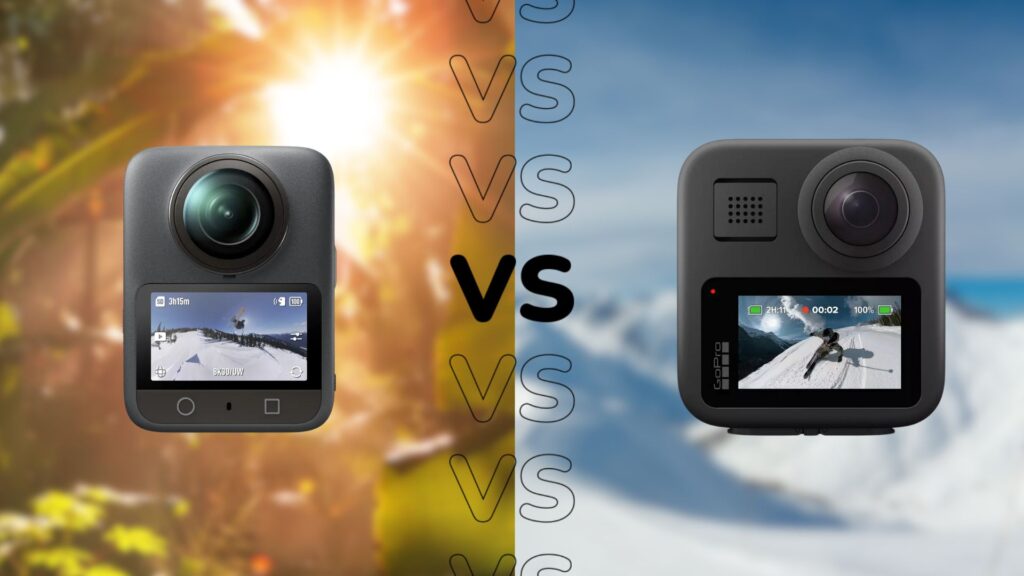
Quick answer: DJI is now the better action camera brand for most buyers, and the market agrees: it overtook GoPro in global sales for the first time in 2026. DJI’s Osmo Action 5 Pro beats GoPro’s Hero 13 Black on battery life, waterproof depth, low-light performance, and price. GoPro’s HyperSmooth stabilization is still arguably the best in extreme, high-motion conditions, but that technical edge is no longer enough to offset a company in genuine financial crisis — GoPro’s board is actively exploring a sale of the business.
Few rivalries in consumer tech have flipped as dramatically, or as quickly, as GoPro vs DJI. Three years ago this wasn’t really a contest: GoPro effectively was the action camera market. In 2026, that’s no longer true, and understanding why matters as much as comparing specs. Here’s the full picture.
A Stunning Reversal: How DJI Overtook GoPro
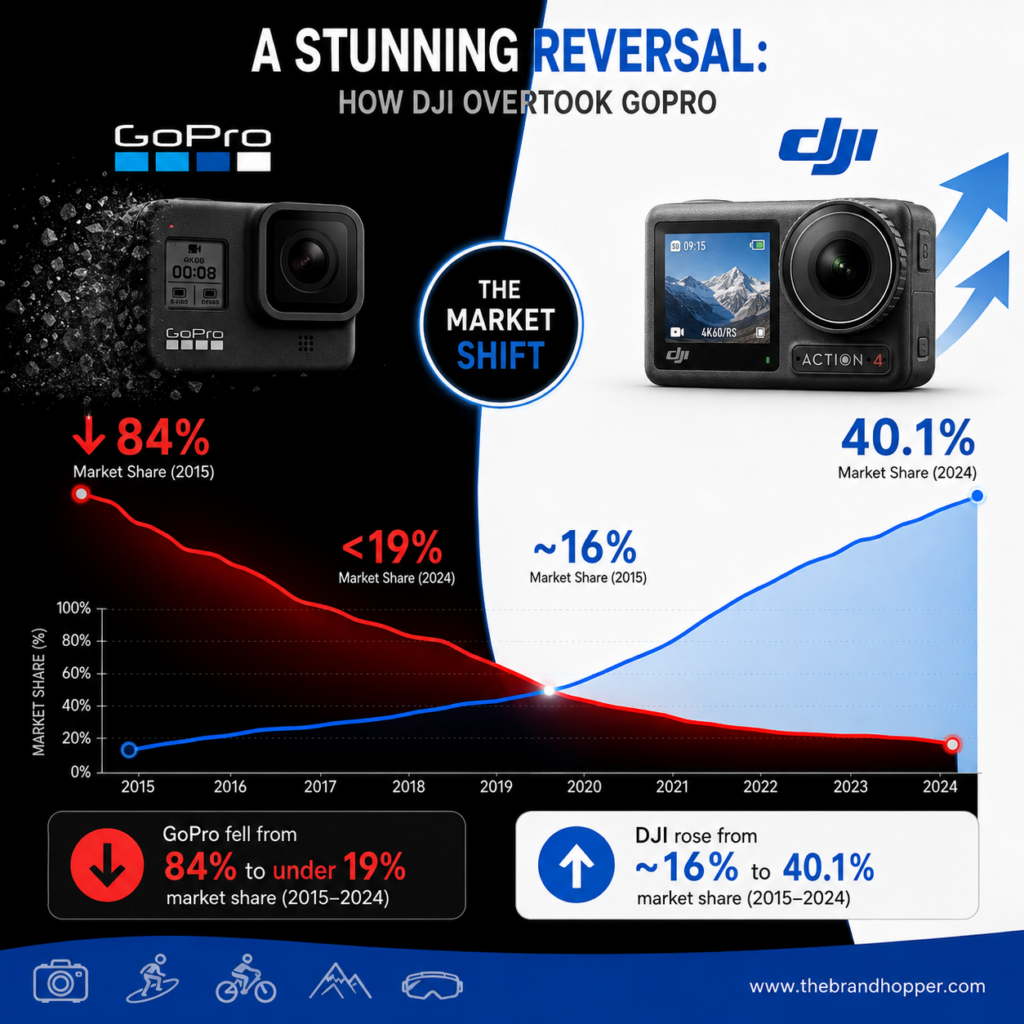
As recently as three years ago, GoPro commanded roughly 84% of the global action camera market.
By 2026, DJI had claimed the annual sales crown for the first time, with 40.1% market share, followed closely by fellow Chinese brand Insta360 at 37.9%.
GoPro’s share, meanwhile, has collapsed to under 19% on an annual basis, and by some quarterly measures fell into the single digits in early 2026.
In just a few years, GoPro went from category-defining monopoly to a distant third-place player behind two Chinese rivals.

Who Owns GoPro vs DJI?
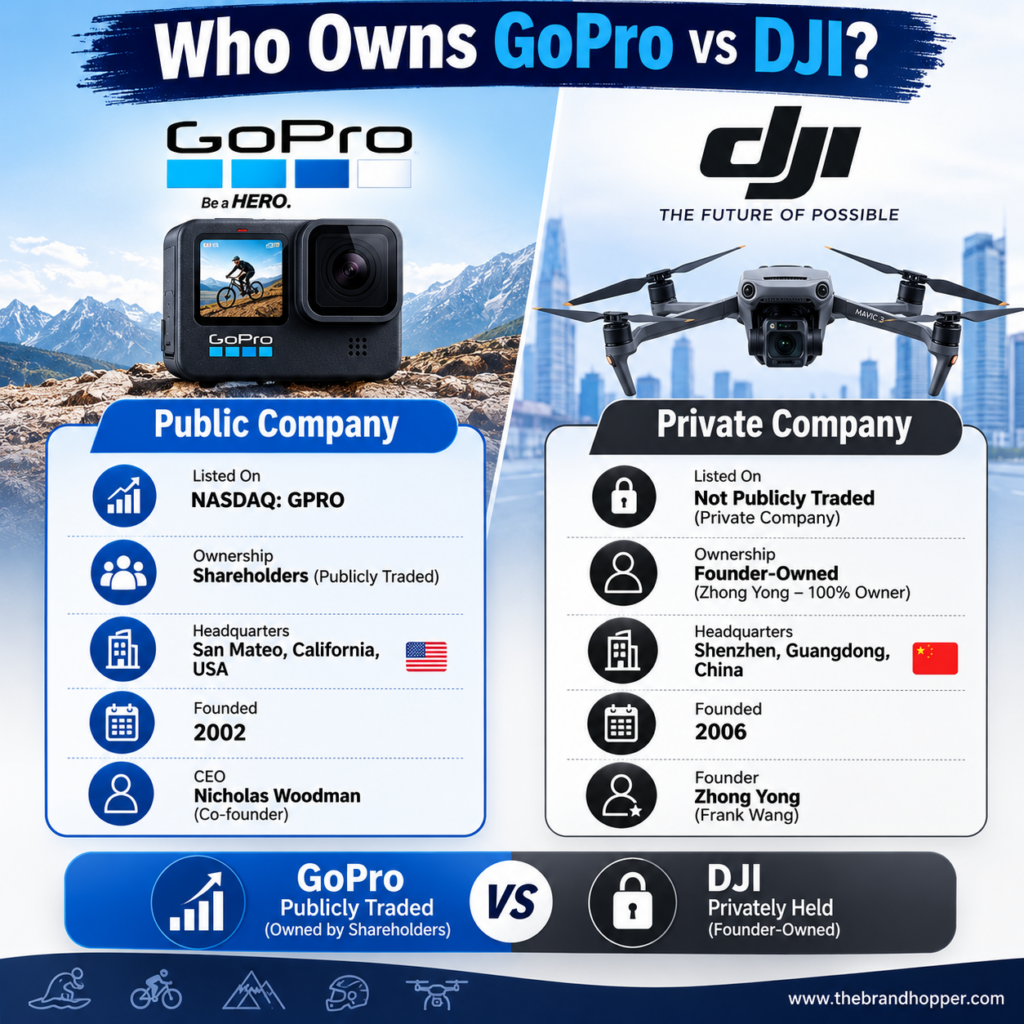
GoPro, Inc. is a publicly traded American company (Nasdaq: GPRO), founded in 2002 by Nick Woodman as Woodman Labs, headquartered in San Mateo, California, and listed on the stock market since its 2014 IPO. As a public company, its financial struggles are fully visible in quarterly filings, which is part of why the crisis has been so widely reported.
DJI, by contrast, is a privately held Chinese company founded on January 18, 2006, in Shenzhen by Frank Wang (Wang Tao), who started the business with roughly $2 million HKD raised alongside two university classmates.
Wang remains chairman and the company’s controlling figure. Because DJI is private, it discloses far less financial detail than GoPro, but industry estimates put its 2025 revenue at approximately 80 billion yuan (about $11.5 billion) across its full product range — drones, gimbals, and action cameras combined.
GoPro’s Financial Crisis, By the Numbers
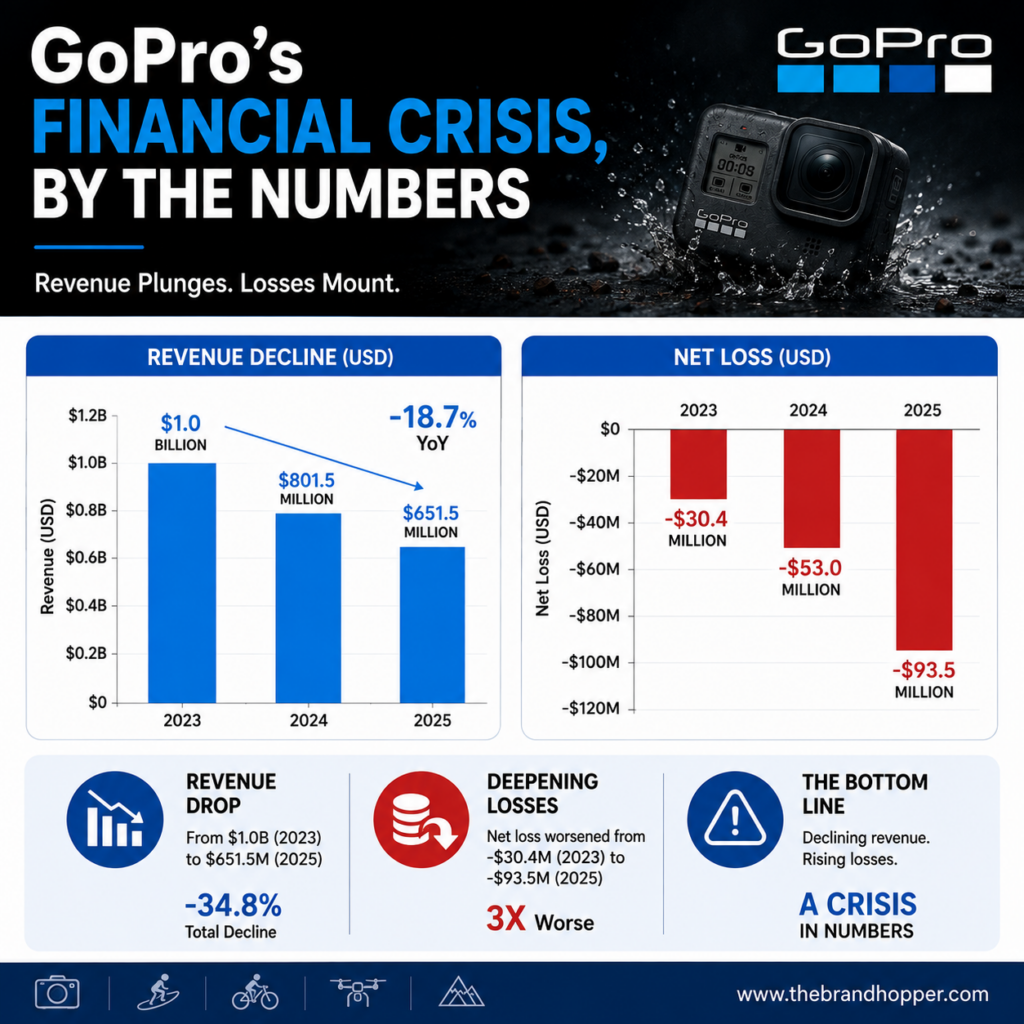
GoPro’s decline isn’t just about losing market share — it’s an existential financial crisis. In Q1 2026 alone, revenue fell 26.2% year over year, camera sales dropped 38%, and the company posted a net loss of $80.82 million. Cumulative net losses from 2023 through 2025 reached roughly $569 million, and cash reserves have dwindled to around $27 million.
The situation escalated in May 2026, when GoPro’s board announced a formal review of strategic alternatives, explicitly including a potential sale or merger of the company.
Founder and CEO Nick Woodman has publicly backed the process, and in July 2026 personally loaned the company $20 million to help it stay afloat, after GoPro had already cut 15% of its workforce and Woodman declined part of his own salary. As of recent reports, the sale process is described as being in its “later stages.”
DJI’s Rise and the US Regulatory Headwind
DJI’s growth hasn’t come without obstacles. In the United States specifically, the FCC added DJI to its “Covered List” on December 23, 2025, which blocks the authorization of new DJI equipment models for import going forward.
This doesn’t ground or disable drones and cameras already owned by US customers — existing units keep working, and a firmware-update waiver for previously authorized devices has been extended through at least January 1, 2029.
It’s also not a global ban; DJI continues to sell freely in most of the world, including the markets driving its recent growth.
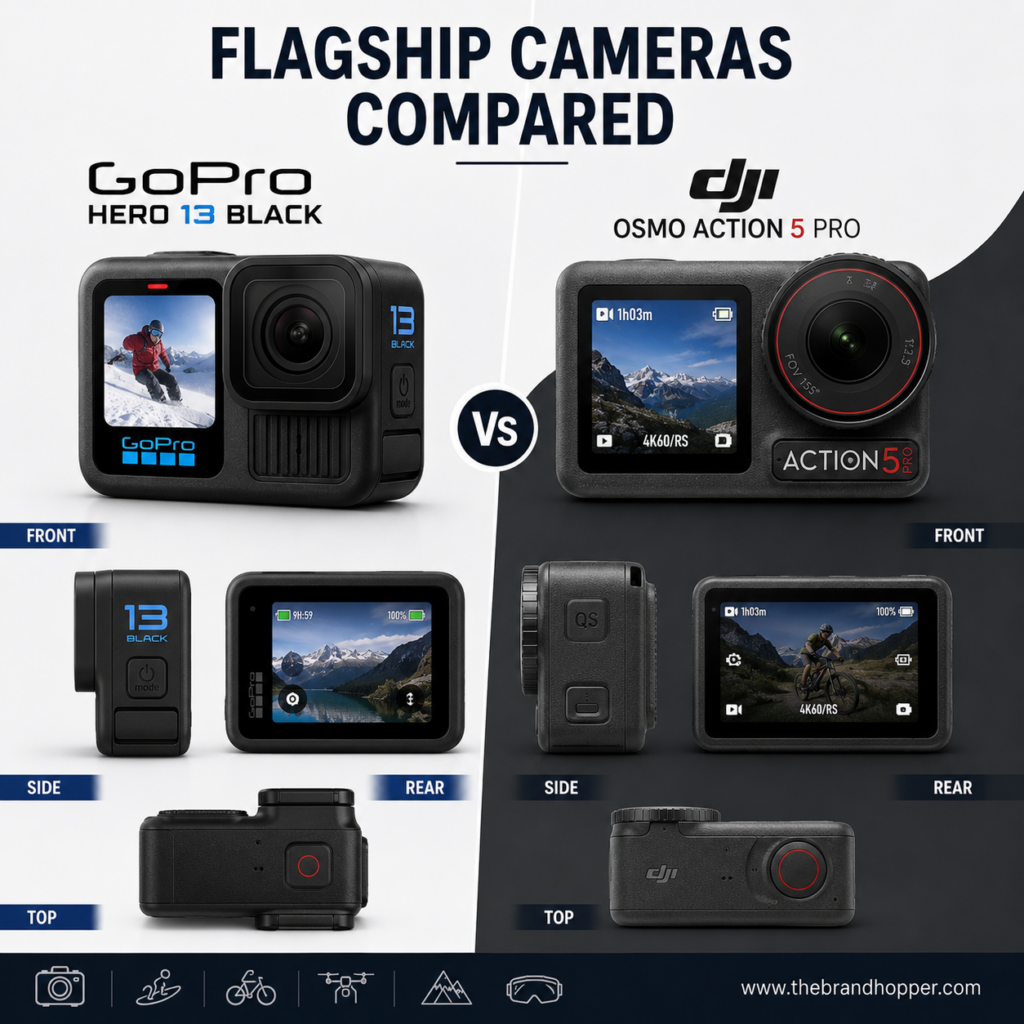
Flagship Cameras Compared: Hero 13 Black vs Osmo Action 5 Pro
On paper, the two companies’ current flagships are closely matched, but DJI wins more categories.
The GoPro Hero 13 Black (around $359) shoots up to 5.3K resolution, supports a modular front-lens system (Max Lens Mod) for wider field of view, and offers roughly 2 hours of continuous 5.3K30 recording. It’s waterproof to about 33 feet (10 meters) without a case.
The DJI Osmo Action 5 Pro (around $309) tops out at 4K resolution but delivers roughly 4 hours of 4K30 recording — double GoPro’s battery life — is waterproof to 66 feet (20 meters) without a case — double the Hero 13’s depth rating — and generally performs better in low light.
Stabilization Technology: HyperSmooth vs RockSteady
Stabilization remains GoPro’s strongest technical argument.
Its Emmy Award-winning HyperSmooth 6.0, paired with Horizon Lock, keeps footage visibly smoother than DJI’s RockSteady 3.0 with HorizonSteady 360° during genuinely aggressive, high-speed activity like mountain biking on rough terrain.
For moderate activity — hiking, kayaking, everyday use — independent testing has found DJI’s stabilization comparably smooth, closing a gap that used to heavily favor GoPro.
Price & Value
DJI is the more affordable option at the flagship level, roughly $50 cheaper than GoPro’s Hero 13 Black, while also offering longer battery life and better water resistance.
For most buyers, that combination makes DJI the stronger value proposition; GoPro’s advantages (higher resolution, modular lens, best-in-class stabilization for extreme sports) now come at a premium rather than as the default expectation.
Which Brand Is Best for You?
- For extreme sports and high-motion footage: GoPro’s HyperSmooth stabilization still has a real edge in the roughest conditions.
- For battery life and all-day filming: DJI’s roughly 4-hour runtime comfortably beats GoPro’s roughly 2 hours.
- For diving and deep water use: DJI’s 66-foot case-free depth rating doubles GoPro’s.
- For budget-conscious buyers: DJI is cheaper at the flagship level and currently the better overall value.
- For buyers wary of long-term brand stability: GoPro’s ongoing sale process introduces real uncertainty around future support and product roadmaps, worth factoring into a purchase decision.
- For US buyers concerned about future availability: note that DJI’s newest models can no longer be newly imported into the US under current FCC rules, though existing units remain fully supported.
GoPro vs DJI at a Glance
| Category | GoPro | DJI |
| Ownership | Public (Nasdaq: GPRO) | Private, founder-controlled |
| Founded | 2002, USA | 2006, China |
| 2026 action camera market share | Under 19% (down from 84% three years ago) | 40.1% (category leader) |
| Est. 2025 company revenue | Declining; Q1 2026 down 26.2% YoY | ~$11.5 billion (all products) |
| Financial status | Net losses of ~$569M (2023–2025); exploring a sale | Profitable, growing market share |
| Flagship model | Hero 13 Black (~$359) | Osmo Action 5 Pro (~$309) |
| Max resolution | 5.3K | 4K |
| Battery life (30fps) | ~2 hours | ~4 hours |
| Waterproof depth (no case) | ~33 ft (10m) | ~66 ft (20m) |
| Stabilization strength | Best for extreme, high-motion sports | Comparable for moderate activity |
| US regulatory status | No restrictions | New models blocked from US import (FCC Covered List, Dec 2025) |
Final Verdict
This comparison has stopped being close. DJI now leads on market share, price, battery life, waterproof performance, and low-light quality, while GoPro clings to a shrinking technical edge in extreme-sport stabilization.
More importantly, GoPro’s financial position — mounting losses, dwindling cash, and an active review of a potential sale — adds real uncertainty for anyone buying into the brand’s long-term future.
Unless best-in-class stabilization for genuinely extreme conditions is your top priority, DJI is the safer, better-value choice for most buyers heading into the rest of 2026.
Frequently Asked Questions
Q: Is DJI better than GoPro in 2026?
A: For most buyers, yes. DJI now leads the action camera market with 40.1% share, and its Osmo Action 5 Pro beats GoPro’s Hero 13 Black on price, battery life, and waterproof depth. GoPro still has an edge in stabilization for extreme sports.
Q: Is GoPro going out of business?
A: GoPro hasn’t closed, but it’s in serious financial difficulty. Its board announced a formal review of strategic alternatives, including a possible sale, in May 2026, after mounting losses and a sharp decline in market share.
Q: Who owns DJI?
A: DJI is a privately held Chinese company founded by Frank Wang (Wang Tao) in 2006. Wang remains chairman and the company’s controlling figure; DJI is not publicly traded.
Q: Is DJI banned in the United States?
A: Not entirely. The FCC added DJI to its Covered List in December 2025, which blocks authorization of new DJI equipment models for import into the US going forward. Previously purchased DJI products continue to work and receive firmware support.
Q: Why did GoPro lose so much market share?
A: GoPro’s market share fell from roughly 84% three years ago to under 19% in 2026 as Chinese rivals DJI and Insta360 released competitively priced cameras with longer battery life and comparable stabilization, while GoPro struggled with pricing, product cycles, and financial pressure.
Q: Which action camera has better battery life, GoPro or DJI?
A: DJI’s Osmo Action 5 Pro offers roughly 4 hours of 4K30 recording, about double the roughly 2 hours GoPro’s Hero 13 Black delivers at 5.3K30.
Q: Is GoPro or DJI better for extreme sports?
A: GoPro’s HyperSmooth 6.0 stabilization still holds a visible edge over DJI’s RockSteady 3.0 in the most aggressive, high-motion conditions, making it the stronger pick specifically for extreme sports footage.
Also Read: Marketing Strategies and Marketing Mix of GoPro
To read more content like this, subscribe to our newsletter
Go to the full page to view and submit the form.