


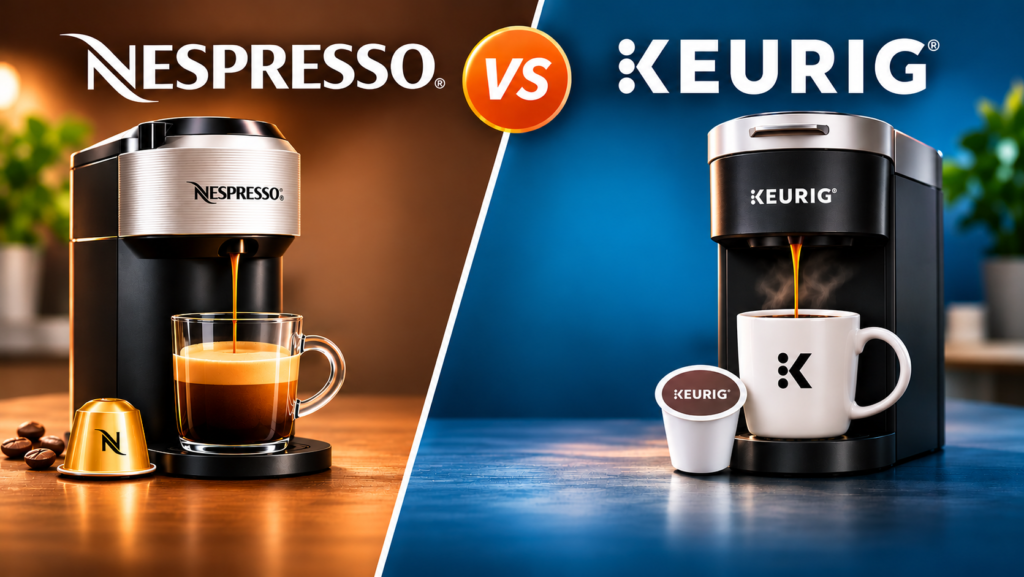
Nespresso vs Keurig is one of the defining rivalries in single-serve coffee. Both brands let you make coffee at the push of a button using pre-portioned pods, but they are built around different ideas of what a good cup of coffee should be.
Nespresso focuses on espresso-style coffee, premium brewing technology and a more curated coffee experience. Keurig is known for convenient, affordable drip-style coffee and a broad selection of beverages from multiple brands.
2026 has been a landmark year for both. Nespresso celebrated its 40th anniversary with a global campaign starring Dua Lipa and introduced the Vertuo Up. Keurig Dr Pepper completed its acquisition of JDE Peet’s, prepared to separate its beverage and coffee businesses, and launched the Keurig Alta system, which introduces plastic- and aluminium-free coffee rounds.
In this guide, we compare Nespresso and Keurig on brewing technology, coffee quality, machines, pod prices, variety, sustainability, ownership, financial performance and international availability to help you choose the right coffee machine brand.

How They Brew: Espresso vs Drip-Style Coffee
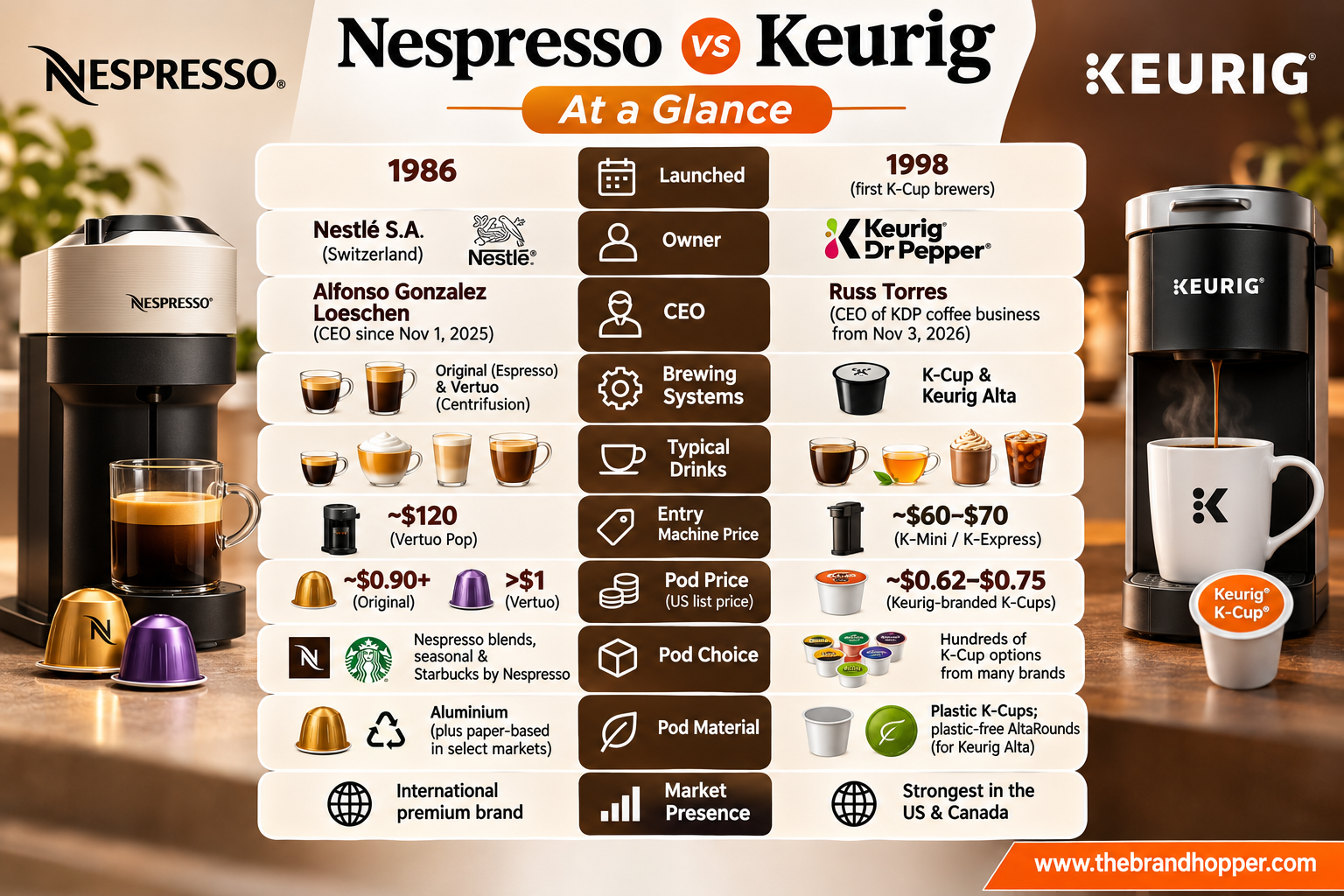
The biggest difference between Nespresso and Keurig is how they extract coffee.
Nespresso: Two Brewing Systems
Original: Nespresso’s classic Original system forces hot water through a small capsule at high pressure, up to 19 bar. It is designed to produce espresso-style coffee, including ristretto, espresso and lungo.
Many Original machines can be paired with a milk frother or include milk preparation features, making them suitable for cappuccinos and lattes.
Vertuo: Nespresso’s Vertuo system uses barcode-reading technology to identify each capsule and adjust the brewing parameters. Its Centrifusion technology spins the capsule at up to 4,000 rotations per minute, extracting coffee and producing a layer of crema.
Vertuo offers multiple drink sizes, from small espresso servings to larger mugs and carafes, depending on the machine and capsule. This makes it more versatile for households that enjoy both espresso-style drinks and larger coffees.
Keurig: K-Cup and the New Alta
Classic Keurig brewers pierce a plastic K-Cup and pass hot water through the coffee at relatively low pressure. They typically brew drip-style coffee in serving sizes of around 6 to 12 ounces.
Many models offer features such as a strong-brew setting, iced coffee options or milk frothers. However, classic K-Cup brewers do not make true espresso because they do not use espresso-level pressure.
That changes with the Keurig Alta, introduced on 29 October 2026. Alta brews AltaRounds, compressed coffee rounds held together by a thin plant-based coating, without a plastic or aluminium pod shell.
The system reads a code on each round to select the brewing profile and can make espresso shots as well as larger coffee drinks. Keurig Alta is also backward compatible with K-Cup pods.
Winner, brewing technology: Nespresso for established espresso-style brewing and crema. Keurig Alta is a significant new development for the Keurig system.
Coffee Quality and Taste
Taste is subjective and depends on the coffee blend, roast, freshness and brewing settings. However, the two brands produce noticeably different styles of coffee.
Nespresso is designed around concentrated espresso-style extraction. Its Original and Vertuo systems produce coffee with a richer body and crema, making them particularly suitable for espresso-based drinks and milk recipes.
Nespresso sources coffee through its Nespresso AAA Sustainable Quality Program, established in 2003 in collaboration with the Rainforest Alliance. The programme focuses on coffee quality and farming practices across its sourcing network.
Keurig’s strength is familiar, convenient drip-style coffee. Its K-Cup range includes well-known brands such as Green Mountain Coffee Roasters, The Original Donut Shop, Dunkin’ and Starbucks, giving consumers access to a variety of familiar blends.
For people who prefer a larger, less concentrated cup of coffee, Keurig’s classic brewers may be a better fit. For those who prefer espresso, crema and milk-based coffee drinks, Nespresso is generally the more suitable system.
Winner, taste: Nespresso for espresso-style coffee and concentrated drinks; Keurig for familiar drip-style coffee and brand choice.
Machines and Prices
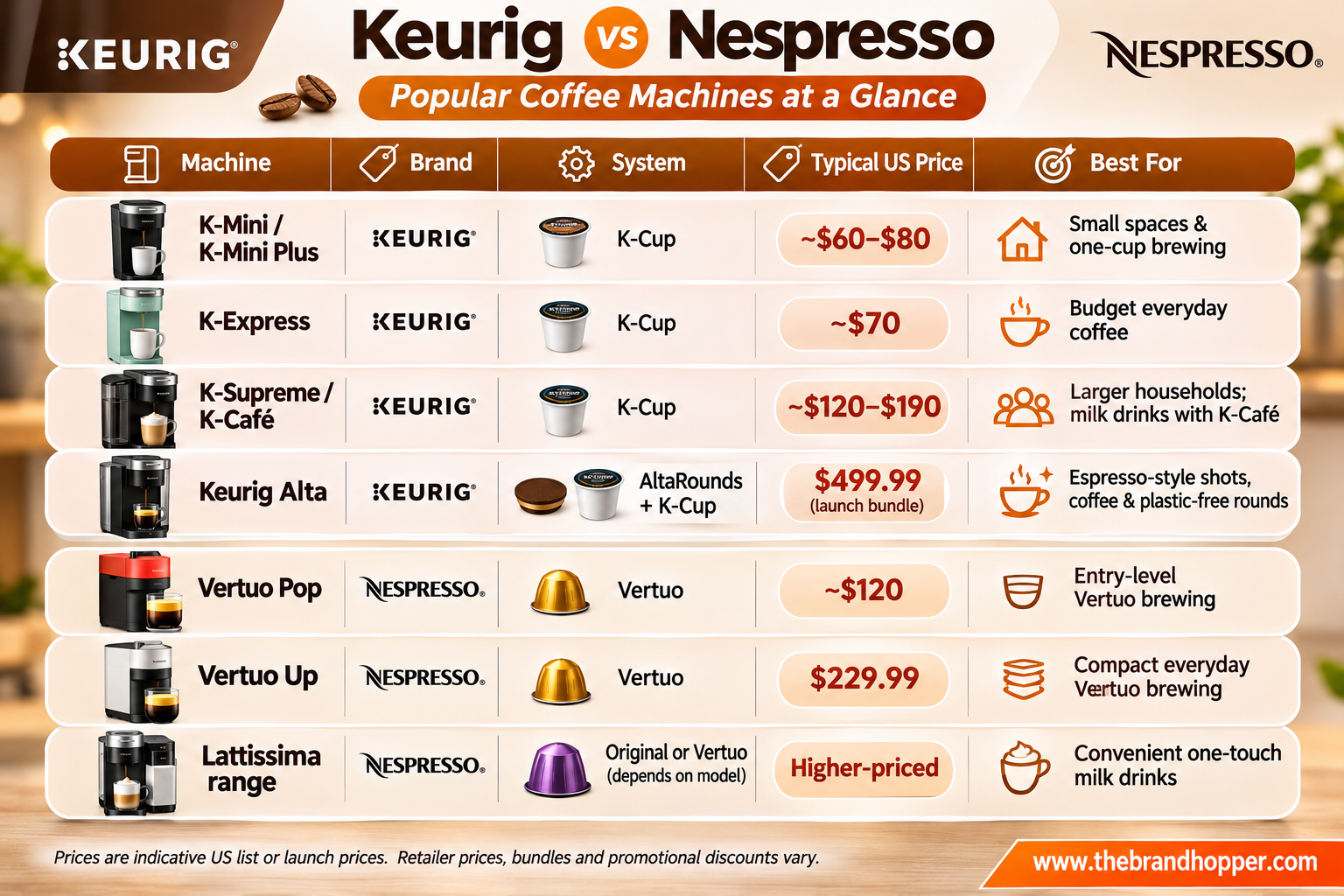
The Nespresso Vertuo Up is a newer addition to the Vertuo range. It heats up in approximately three seconds, offers six cup sizes and includes features designed for everyday coffee and coffee-based drinks. See the official Vertuo Up product page for current specifications and pricing.
The Keurig Alta launched with a $499.99 bundle that includes the brewer and starter AltaRounds. It is positioned as a more premium system than Keurig’s traditional entry-level K-Cup machines.
Winner, machine price: Keurig for affordable entry-level machines. Nespresso offers a wider premium espresso-focused experience across its machine range.
Pod Prices and Cost per Cup
For most households, coffee pods cost considerably more over time than the machine itself.
Keurig: Keurig-branded K-Cups commonly list for around $0.62–$0.75 per pod in the US, depending on the coffee and pack size. Store-brand compatible pods can cost less, and subscriptions or bulk purchases may reduce the price further.
Nespresso: Original capsules generally start at around $0.90 at list prices, while Vertuo capsules usually cost more than $1 because they are designed for different drink sizes and brewing requirements.
Keurig Alta: AltaRounds launched at $10.99 for a box of eight, or approximately $1.37 per round. The Single Shot variety launched at $9.99 per box, placing the cost per serving closer to the premium pod category.
At one pod a day, a classic Keurig user paying around $0.62–$0.75 per pod would spend approximately $226–$274 a year. A Nespresso user paying $0.90 or more per capsule would spend at least around $329 a year for one capsule daily.
These estimates exclude machine costs, milk, electricity, shipping and discounts. Actual annual spending depends on drink size, capsule choice and how many servings are made each day.
Winner, cost per cup: Keurig with classic K-Cups.
Variety and Pod Choice
Keurig’s open licensing model is one of its biggest strengths. Its brewers support hundreds of K-Cup options from many brands, including coffee, tea, hot cocoa and flavoured beverages.
This makes Keurig particularly appealing to households where different people prefer different drinks. Consumers can choose from familiar coffee brands and a wide range of flavours without being limited to one manufacturer’s coffee selection.
Nespresso operates a more curated ecosystem. It offers its own blends, single-origin coffees, seasonal releases and Starbucks by Nespresso capsules.
Third-party capsules are widely available for Nespresso Original machines, but Vertuo’s barcode-based brewing system limits compatibility primarily to Nespresso’s own capsule range.
Winner, variety: Keurig for the breadth of brands and beverage options.
Sustainability and Recycling
Sustainability is an important consideration in the single-serve coffee market, particularly because capsules create packaging waste.
Nespresso
Nespresso Original capsules are made from aluminium, with the company reporting that its Original capsules contain 80% recycled aluminium. Aluminium can be recycled repeatedly, provided it is collected and processed through suitable recycling systems.
Nespresso has operated dedicated capsule recycling programmes since 1991. However, access to a collection programme should not be confused with the percentage of capsules actually recycled. Nespresso’s 2025 sustainability reporting put its global capsule recycling rate at approximately 33%, while reporting that 99% of aluminium capsules purchased by household consumers had access to convenient collection.
Nespresso has also introduced paper-based, home-compostable capsules in selected markets. These are not available across all countries or for every machine system.
Keurig
Keurig’s traditional K-Cups use plastic pods. The company has faced criticism over the practical recyclability of these pods, because recycling depends on local facilities and consumers properly preparing the capsules.
In 2024, the US Securities and Exchange Commission fined Keurig Dr Pepper $1.5 million over inaccurate statements concerning K-Cup recyclability. The SEC announcement explains the case.
Keurig Alta’s AltaRounds are designed without a plastic or aluminium pod shell and use a plant-based coating. However, the rounds launched with individual foil freshness wrappers that are not currently recyclable through standard programmes. Keurig has said it plans to transition to paper recyclable wrappers in 2027.
Winner, sustainability: Nespresso currently has a more established aluminium capsule collection and recycling system. Keurig Alta is a notable development, but its overall environmental impact will depend on packaging, collection and actual disposal outcomes.
Who Owns Nespresso and Keurig?
Nespresso: Owned by Nestlé
Nespresso is a wholly owned business of Nestlé S.A., the Swiss food and beverage group. It was launched in 1986 and celebrated its 40th anniversary in 2026.
Nespresso appointed Alfonso Gonzalez Loeschen as its CEO effective 1 November 2025. He previously led Nespresso’s North American business.
In March 2026, Nespresso announced Dua Lipa as its Global Brand Ambassador as part of its 40th-anniversary campaign. The campaign represents a new phase in the brand’s global marketing and premium positioning.
Keurig: Owned by Keurig Dr Pepper, Preparing for a Spin-Off
Keurig is part of Keurig Dr Pepper (KDP), the US beverage company listed on Nasdaq.
On 1 April 2026, KDP completed its acquisition of JDE Peet’s, the owner of coffee brands including Jacobs, L’OR and Peet’s. KDP initially acquired 96.22% of JDE Peet’s shares, with its ownership subsequently increasing.
KDP plans to separate into two publicly listed businesses: Beverage Co. and Global Coffee Co. The coffee company is expected to include Keurig and JDE Peet’s, with the separation targeted for early 2027, subject to market conditions.
Global Coffee Co. is expected to have approximately $16 billion in annual revenue, more than 25,000 employees and operations in over 100 markets.
Russ Torres joined KDP’s coffee business in November 2026 and was appointed CEO of the future Global Coffee Co.
Bottom line: Nespresso remains part of Nestlé’s global coffee portfolio, while Keurig is expected to become a central brand within a newly separated global coffee company.
Financial Performance
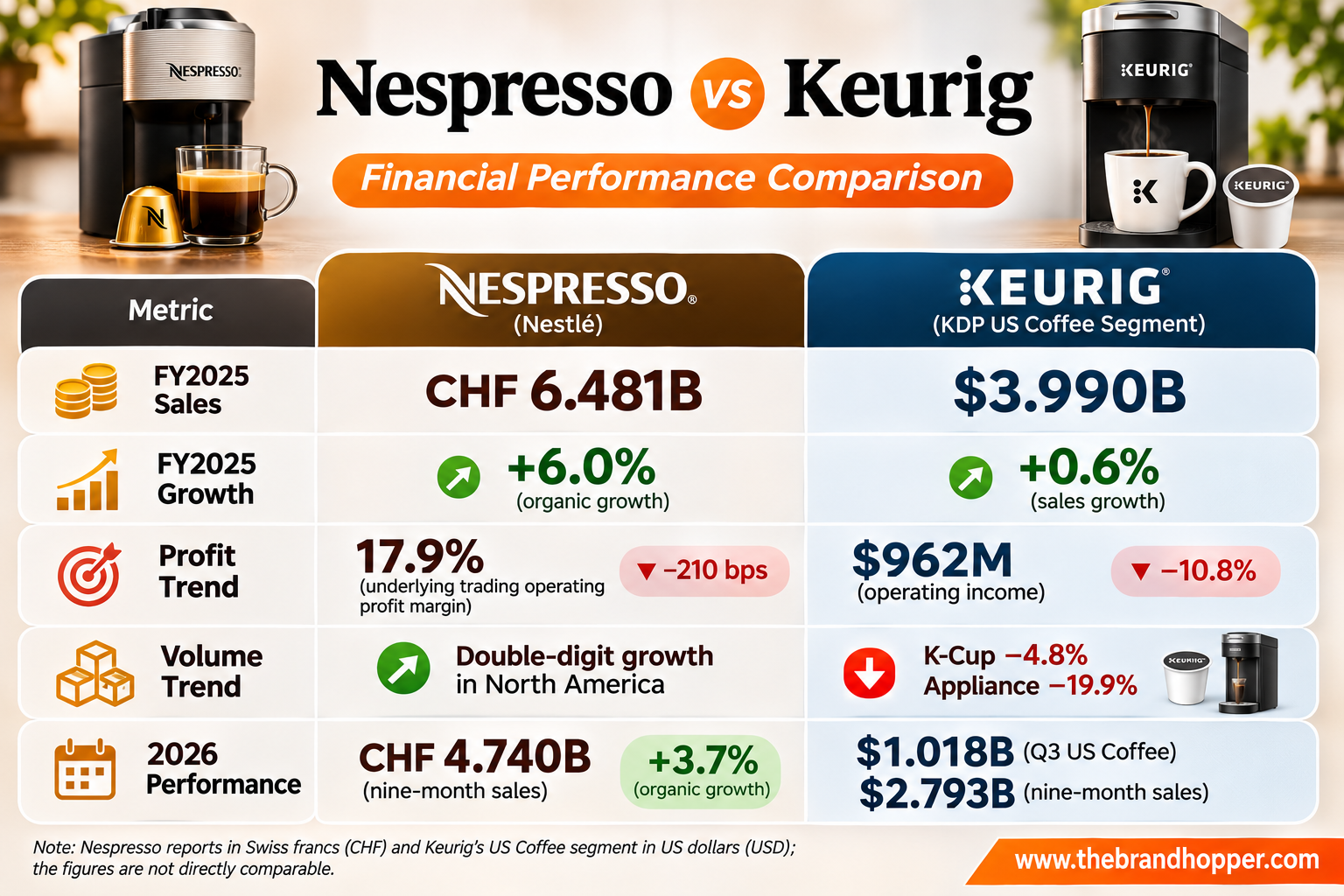
Nespresso’s growth has been supported by its Vertuo system and North American performance. In the first nine months of 2026, Nespresso reported organic growth of 3.7%, with Vertuo continuing to perform well.
Keurig’s US Coffee business has faced a more challenging market. KDP has reported pressure in the single-serve coffee category as consumers trade down to lower-priced ground coffee, instant coffee and private-label products.
The acquisition of JDE Peet’s is intended to strengthen KDP’s global coffee portfolio and create a larger international coffee business.
Nespresso vs Keurig: Which Should You Choose?
The Bottom Line
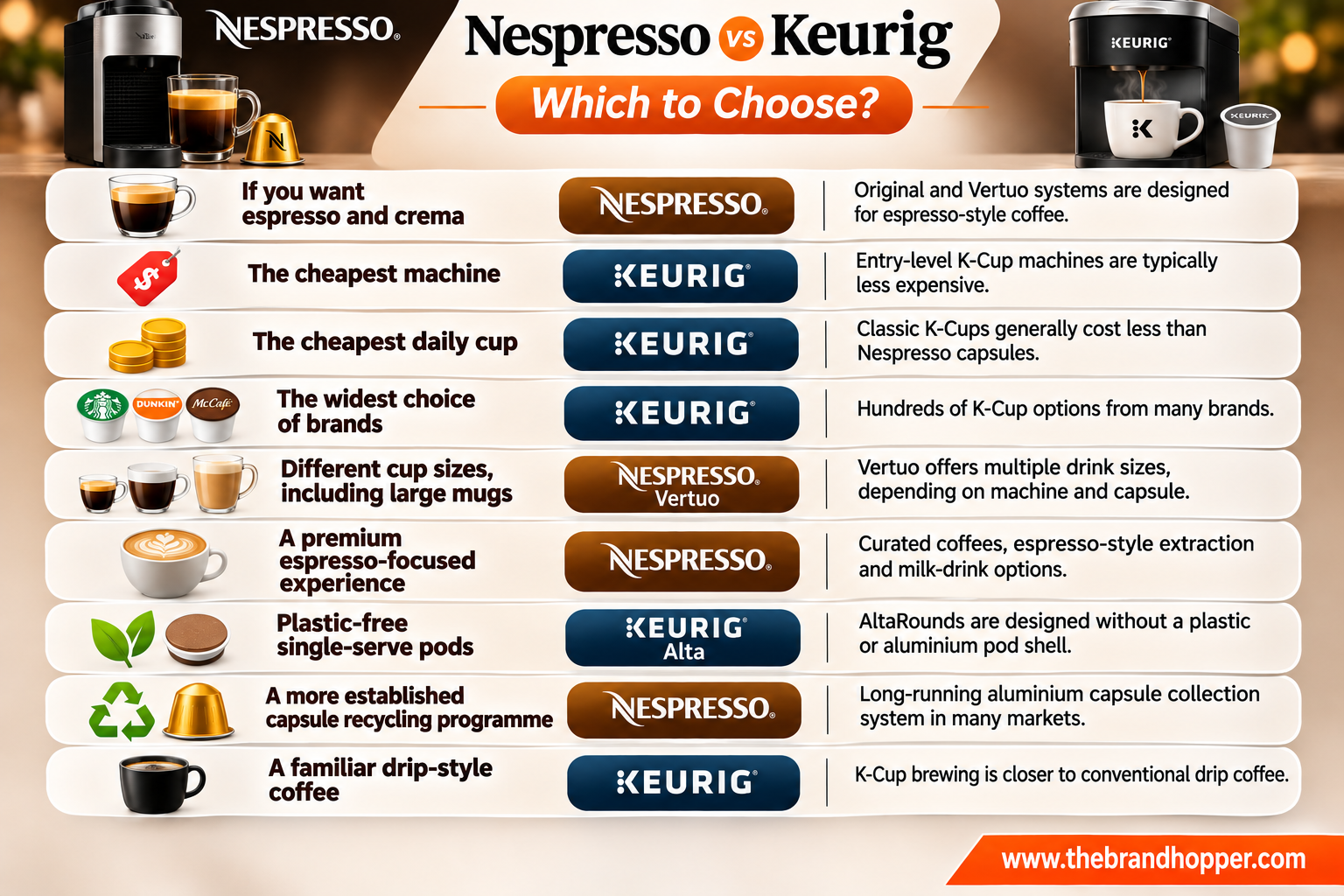
Nespresso is the stronger choice for espresso-style coffee and a premium home-brewing experience. Its Original and Vertuo systems offer espresso, crema, a range of drink sizes and coffee-based milk drinks. The brand also has a more established international presence and a long-running aluminium capsule collection programme.
Keurig is the stronger choice for value and variety in its core North American market. Its classic machines are generally cheaper, K-Cups tend to cost less, and its broad selection of brands makes it easy to find familiar coffee and other hot beverages.
The new Keurig Alta gives the brand a more premium option and introduces plastic- and aluminium-free coffee rounds, although the long-term sustainability benefits will depend on packaging and disposal practices.
If you prefer espresso-based drinks and a more curated coffee experience, choose Nespresso. If you want an easy, affordable mug of familiar coffee with plenty of brand choices, Keurig is worth considering.
Frequently Asked Questions
Q: Is Nespresso better than Keurig?
A: For espresso-style coffee and concentrated drinks, Nespresso is generally the better fit. Its Original and Vertuo systems are designed to produce espresso-style coffee and crema. Keurig is more suitable for convenient drip-style coffee, lower-cost servings and a wider selection of brands.
Q: Which is cheaper, Nespresso or Keurig?
A: Keurig is generally cheaper. Entry-level K-Cup machines often list for around $60–$70 in the US, and Keurig-branded K-Cups commonly cost around $0.62–$0.75 each. Nespresso Original capsules generally cost around $0.90 or more, while Vertuo capsules usually cost more than $1.
Q: Can a Keurig make espresso?
A: Classic Keurig K-Cup brewers cannot make true espresso because they do not use espresso-level pressure. The Keurig Alta, introduced in October 2026, can brew espresso shots from AltaRounds.
Q: Can you use K-Cups in a Nespresso machine?
A: No. Nespresso machines use Nespresso-format capsules, either Original or Vertuo. Keurig brewers use K-Cups, while the Keurig Alta also supports AltaRounds.
Q: Who owns Nespresso?
A: Nespresso is owned by Nestlé, the Swiss food and beverage company. Nespresso’s CEO is Alfonso Gonzalez Loeschen, who took the role in November 2025.
Q: Who owns Keurig?
A: Keurig is part of Keurig Dr Pepper. KDP plans to separate its beverage and coffee businesses, with Keurig and JDE Peet’s expected to form part of Global Coffee Co., targeted for early 2027.
Q: Are Nespresso pods recyclable?
A: Nespresso aluminium capsules are recyclable, and the company operates capsule collection programmes in many markets. However, collection access does not guarantee that every capsule is recycled. Nespresso reported a global capsule recycling rate of approximately 33% in its 2025 sustainability reporting.
Q: Are Keurig K-Cups recyclable?
A: Some K-Cup pods are labelled recyclable, but actual recycling depends on local facilities and proper preparation of the pods. Keurig Alta’s AltaRounds are designed without a plastic or aluminium pod shell, though their individual freshness wrappers remain a separate packaging consideration.
To read more content like this, explore The Brand Hopper
Subscribe to our newsletter
Go to the full page to view and submit the form.