


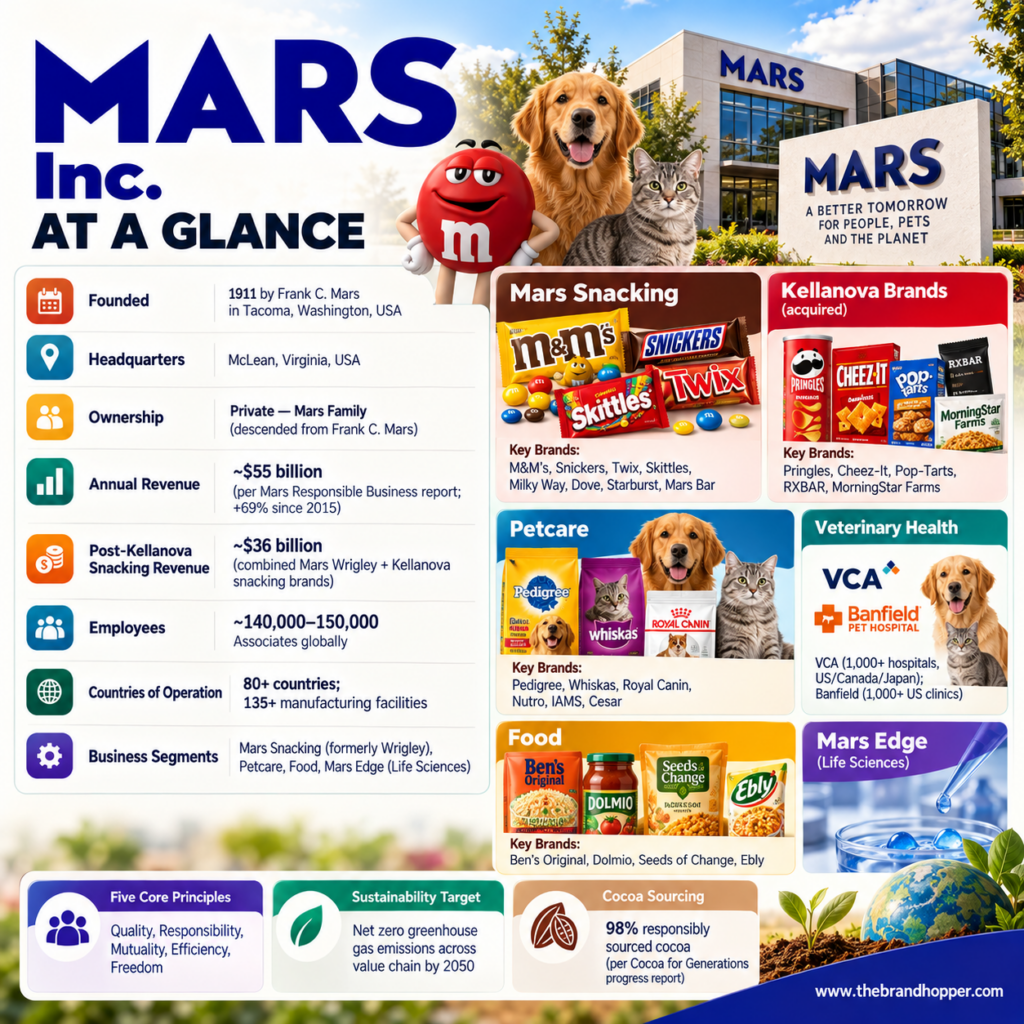
Few companies in the world can claim a portfolio quite like Mars, Incorporated. Founded in 1911 by Frank C. Mars in a kitchen in Tacoma, Washington, the company has grown into a privately held global giant generating approximately $55 billion in annual revenues — and that figure is set to climb significantly following its landmark $35.9 billion acquisition of Kellanova, completed in December 2025. Mars now controls some of the most recognised brand names in confectionery, pet care, food, and veterinary services, all while maintaining the family ownership structure that has guided it for over a century.
What is less widely appreciated is the marketing sophistication behind this scale. Mars does not merely manufacture chocolate bars; it engineers emotional connections between consumers and its brands across every channel, every season, and every culture. Its campaigns are studied in business schools. Its characters — the M&Ms Spokescandies, the Snickers hunger alter egos — are part of popular culture. Its purpose-led initiatives, from the Cocoa for Generations sustainability programme to the Pedigree shelter adoption campaigns, demonstrate that commercial ambition and social responsibility can coexist.
This article provides a comprehensive analysis of Mars Inc.’s marketing strategies, key campaigns, and the four Ps of its marketing mix. It draws on the company’s latest publicly available data and covers how Mars markets its brands across confectionery, petcare, food, and veterinary health — and what the Kellanova acquisition means for its marketing future.

Marketing Strategies of Mars Inc.
Mars Incorporated employs a multi-layered marketing strategy that operates simultaneously at the brand level, the corporate level, and the cultural level. From globally consistent campaign platforms to hyper-localised activations, from data-driven programmatic advertising to cause-led brand purpose, Mars has developed one of the most sophisticated marketing operations in the consumer goods industry. Below is a comprehensive breakdown of the key strategies that define how Mars markets its brands.
1. Brand Building Through Iconic Characters and Consistent Platforms
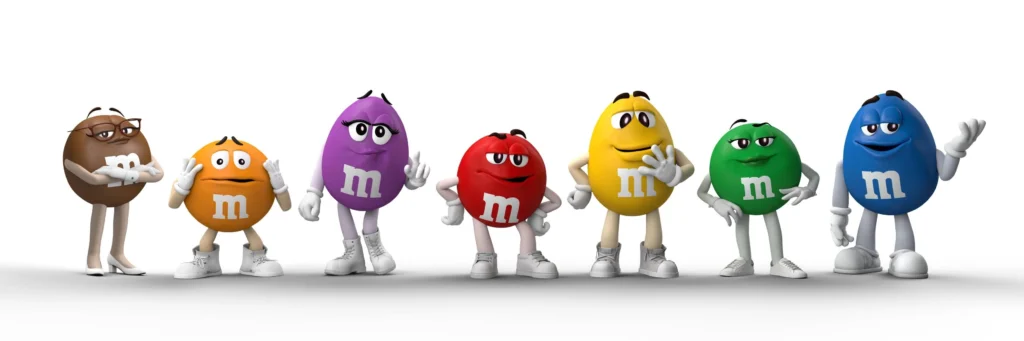
The single most powerful element of Mars’ marketing arsenal is its ability to build brand characters and campaign platforms that endure across decades without feeling stale. The M&Ms Spokescandies — Red, Yellow, Blue, Green, Orange, and the newer Purple, introduced in 2022 as the brand’s first new character in a decade — are not merely mascots but fully realised personalities with distinct attitudes, voices, and narrative arcs. Their ability to flex across every format, from Super Bowl spots to social media Reels to limited-edition packaging, is a masterclass in brand architecture.

The Snickers “You’re Not You When You’re Hungry” global platform, created by BBDO, is perhaps the most successfully sustained campaign idea in modern advertising. Launched in 2010 with a TV spot featuring Betty White, the platform has been continuously refreshed across 58+ markets for over a decade. In the US, it has featured NFL quarterback Josh Allen in a family-friendly bedtime-story spot run across TV, streaming, digital, and programmatic channels through the NFL season.
In India, Mars Wrigley cast comedian Vinay Pathak in a campaign set in a chaotic office environment. Across Europe, AMV BBDO created the “Hunger Alter Egos” out-of-home campaign — a series of vivid posters in which animals (a hotheaded tiger, a drained snail, a sluggish sloth) represent what hunger turns people into — running across 55 markets in Europe and Central Eurasia.

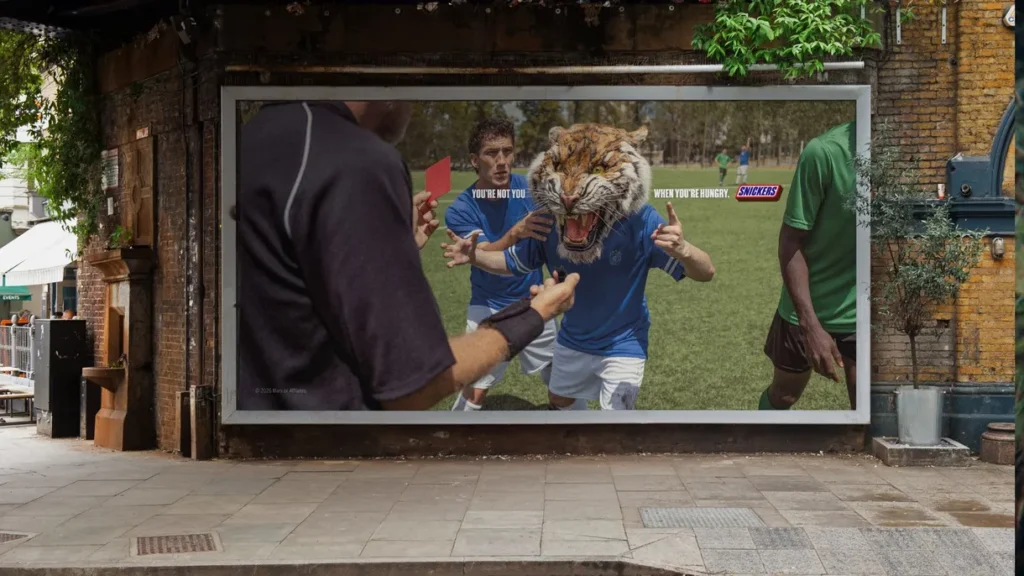
What makes the Snickers platform remarkable is its cultural versatility. The hunger insight is universal, but the creative expression is localised. The result is a campaign that is both globally coherent (the same brand truth, the same humour register) and locally resonant (familiar faces, familiar contexts). This balance of global consistency with local relevance is one of the defining capabilities of Mars’ marketing function.
Skittles has built an equally iconic platform around “Taste the Rainbow,” but with a deliberately absurdist, irreverent tone that sets it apart from every other candy brand. The brand evolved this platform with the “Commit to the Rainbow, Taste the Rainbow” campaign, built with Team OMC, which invited fans to demonstrate extreme commitment to the brand through increasingly surreal acts. One anchor film, “Youth,” depicted a grandson willingly surrendering his youth to his grandmother in exchange for Skittles — a piece of storytelling that was equal parts bizarre and emotionally resonant. The campaign ran across global markets throughout 2024 and into 2025, and by 2025 Skittles had reached $1 billion in annual revenue, reflecting the commercial impact of sustained creative investment.

2. Product Portfolio Diversification: From Candy to Clinics
Mars’ most distinctive marketing asset is its extraordinary portfolio breadth. The company competes in confectionery, petcare, food, and veterinary health — four entirely different consumer markets, each with its own purchasing dynamics, emotional drivers, and competitive set. This diversification is not accidental; it is a deliberate strategy that insulates Mars against category-level downturns and gives it unmatched cross-category consumer data.
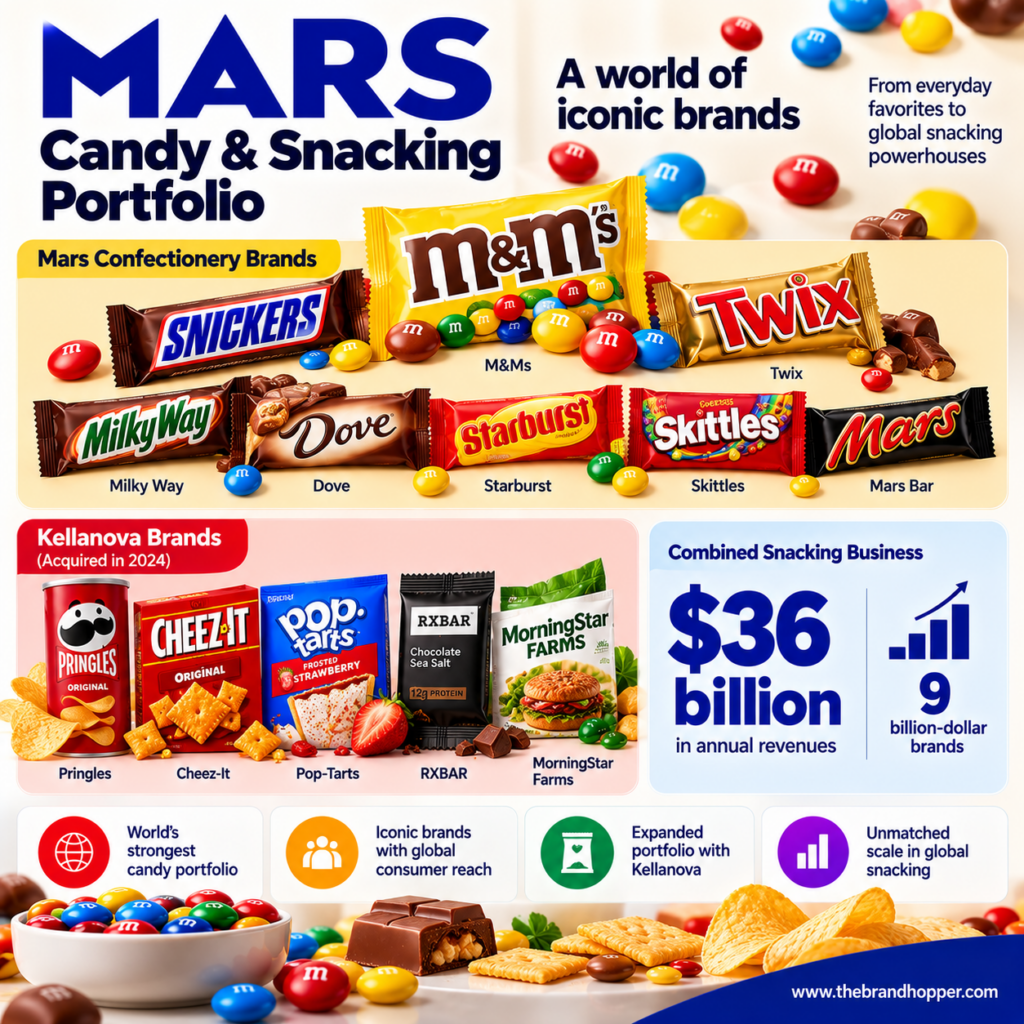
In confectionery, Mars operates what is arguably the world’s strongest candy portfolio. M&Ms, Snickers, Twix, Milky Way, Dove, Starburst, Skittles, and the Mars Bar collectively represent some of the best-known sweet brands on earth. The 2024 acquisition of Kellanova adds Pringles, Cheez-It, Pop-Tarts, RXBAR, and MorningStar Farms to this lineup, creating a combined snacking business with approximately $36 billion in annual revenues and nine billion-dollar brands. No other company in the world has a snacking portfolio of comparable scale or consumer reach.
In petcare, Mars Petcare is the world’s largest pet food and veterinary care business. Its brands — Pedigree, Whiskas, Royal Canin, Nutro, IAMS, and Cesar among them — serve dogs, cats, and other companion animals with nutritionally tailored products across price tiers from mass-market to therapeutic and veterinary-exclusive. Mars Veterinary Health, which operates approximately 3,000 veterinary clinics and hospitals worldwide through VCA (over 1,000 hospitals in the US, Canada, and Japan) and Banfield (over 1,000 pet hospitals in the US and Puerto Rico), transforms Mars from a product seller into a full-service partner in the lives of pet owners. This integration of nutrition and health services under one corporate roof is without precedent in the pet industry.
In food, Mars’ Ben’s Original (formerly Uncle Ben’s, rebranded in 2021 as part of a cultural sensitivity initiative), Dolmio, Seeds of Change, and Ebly serve health-conscious consumers seeking convenient, wholesome meal ingredients. Seeds of Change is particularly well positioned as consumer interest in organic, purpose-led food brands continues to grow.
Each segment targets different consumer occasions, demographics, and shopping missions, but they are unified by Mars’ Five Principles (Quality, Responsibility, Mutuality, Efficiency, and Freedom) and by the company’s conviction that long-term brand investment, not short-term margin extraction, is the correct commercial strategy. This cultural commitment to brand-building over financial engineering is a significant competitive differentiator for a privately held company not subject to quarterly earnings pressure.
3. Campaign Excellence: A Brand-by-Brand Breakdown
Mars does not manage its brands from a single creative centre. Each brand has its own campaign personality, agency relationships, and communication strategy. The result is a portfolio of campaigns that are individually distinctive while sharing the same underlying commitment to creative quality and emotional engagement.
SNICKERS: Beyond “You’re Not You When You’re Hungry,” Snickers has extended its hunger platform into activations, branded content, and cause marketing. In India, the Peanut Brownie TVC (2025) used DDB Mudra to create an office-set comedy built around the new Peanut Brownie variant — a product innovation paired with campaign activation. The European “Hunger Alter Egos” OOH campaign demonstrated that even a decades-old platform can generate fresh, award-worthy creative work when the brief is reinvented for the medium. Snickers also ran a US airline-themed spot mocking the irritating behaviours that hungry passengers exhibit on flights, tapping into a universally relatable micro-context.

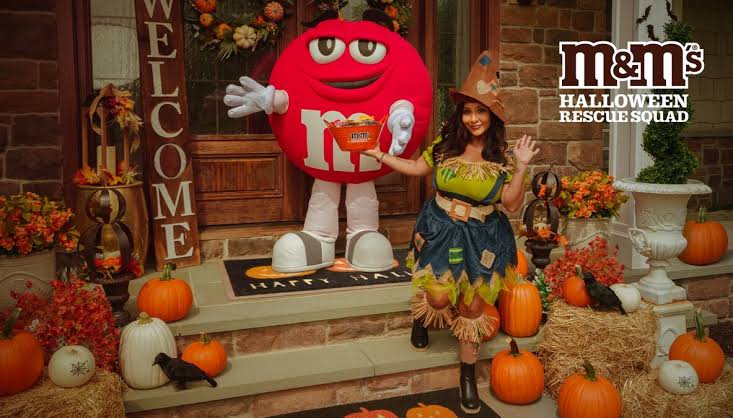
M&MS: The Spokescandies remain the brand’s primary creative asset, but M&Ms has also invested in cause-led marketing through its “Together We Make Every Moment Better” platform. In 2023, after a controversy surrounding the characters’ redesign generated significant media attention, M&Ms staged a carefully managed return of the full Spokescandies lineup via a Super Bowl campaign, demonstrating the brand’s ability to turn a PR challenge into a cultural moment. The brand also introduced its “Better With M” integrated campaign, which ran across Super Bowl, digital, and shopper marketing channels, anchored by a Habitat for Humanity partnership that connected candy consumption to community building. For Halloween 2025, M&Ms revived its Halloween Rescue Squad activation for the third consecutive year, blending seasonal relevance with multi-channel engagement.

SKITTLES: Skittles’ marketing has consistently pushed the boundaries of conventional candy advertising. For the Super Bowl, the brand famously ran a Broadway musical instead of a television spot — a stunt that generated exponentially more earned media than a conventional 30-second ad. In 2025, the brand launched “Legally Acknowledge the Rainbow” for its new Skittles Pop’d freeze-dried line: consumers were required to sign a genuine legal document before trying the product, with a dedicated website and an exclusive Snapchat tongue-signing filter driving engagement. The campaign was a masterclass in creating a low-cost, high-attention activation around a product launch. By any measure — earned media, social sharing, or category disruption — Skittles’ marketing punches well above its budget weight.
TWIX: In March 2025, Mars invested heavily in repositioning Twix with a campaign built on the message “Two Is More Than One,” supported by a high-speed-chase video creative and reported campaign spend of up to $70 million. The campaign was designed to reactivate the brand’s distinctive “two sticks” selling proposition for a younger consumer cohort who had not grown up with the “Left Twix vs. Right Twix” rivalry narrative. The activation included OOH, digital, social, and in-store shopper marketing elements.
DOVE CHOCOLATE: Dove has consistently been positioned as Mars’ premium chocolate brand, targeting adult women with a softer, more indulgent, self-care-oriented communication style. The brand’s “Snackable Chocolate Bites” line — bite-sized pieces of premium dark chocolate — tapped into the trend toward mindful, portion-controlled indulgence. Dove’s marketing contrasts deliberately with the louder, humour-driven campaigns of Snickers and Skittles, using a calmer visual language and a more emotionally intimate tone.
PEDIGREE: Mars Petcare’s flagship dog food brand has built a powerful purpose-led marketing programme around shelter dog welfare. The “Brighter Futures” campaign offered food donations to rescue dogs, with social media hashtag engagement unlocking up to 500,000 bowl donations. The “Good Then, Better Now” campaign (Colenso BBDO, 2026) leaned into multi-generational nostalgia: parents who grew up with Pedigree-fed family dogs are shown connecting with their children over the brand. The emotional insight — that Pedigree has been trusted across generations of pet owners — is powerfully differentiating in a category where trust is the primary purchase driver. Pedigree also runs the “Every Pup’s Superpower” initiative, linking healthy nutrition to a rescue dog’s ability to find a new home.
ROYAL CANIN: Royal Canin’s marketing is deliberately scientific and recommendation-led, targeting veterinarians, breeders, and informed pet owners. Unlike mass-market pet food advertising, Royal Canin rarely appears in mainstream media channels. Instead, it invests in veterinary professional education, breeder sponsorships, and breed-specific product development. This B2B2C model — where veterinary recommendation drives consumer purchase — gives Royal Canin a durable competitive moat that mass advertising cannot replicate.

4. Digital Marketing and Data-Driven Consumer Engagement
Mars has made significant and ongoing investments in digital marketing capabilities across its brand portfolio. Its approach spans owned, earned, and paid digital channels, with a growing emphasis on first-party data collection, e-commerce acceleration, and AI-driven personalisation.
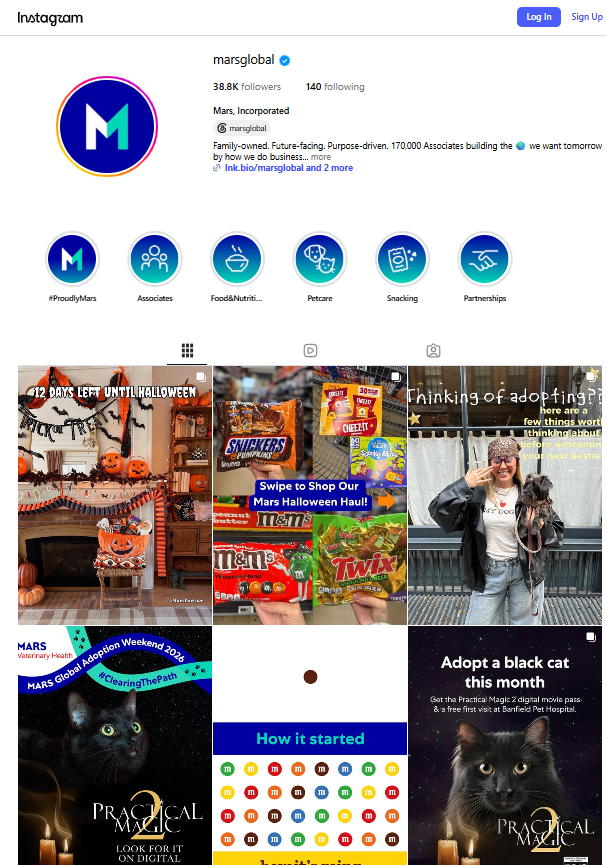
On social media, each major Mars brand maintains active presences across Instagram, Facebook, X (Twitter), TikTok, and YouTube. M&Ms and Snickers leverage their characters and campaign platforms for high-frequency social content, while Pedigree and Whiskas use social channels to build communities of pet lovers with user-generated content, pet photography challenges, and educational posts about animal nutrition. Mars actively manages community interactions — responding to comments, joining trending conversations, and co-creating content with brand fans.

In digital advertising, Mars invests in programmatic display, social media paid media, connected TV, and retail media networks. Retail media — advertising on the digital platforms operated by retailers like Amazon, Walmart, and Tesco — has become a particularly significant channel for Mars, given that a large proportion of confectionery and pet food purchases are now influenced or fulfilled online. The ability to reach consumers at or near the moment of purchase, with relevant creative tied to shopping intent, offers a measurable ROI that brand-level TV advertising cannot match.
Influencer marketing is a growing component of Mars’ digital investment. Mars collaborates with food creators, pet influencers, and lifestyle personalities across categories, using their authentic relationships with communities of brand-relevant consumers to drive awareness, trial, and loyalty. These partnerships are particularly valuable for product launches, where earned credibility from a trusted creator can be more persuasive than paid advertising.
Mars has also invested in direct-to-consumer digital touchpoints. Brand websites are designed as content destinations as much as product pages, featuring recipes (Dolmio, Ben’s Original), pet health advice (Pedigree, Royal Canin), and interactive tools (M&Ms personalisation). The M&Ms personalisation service — which allows consumers to order custom-printed M&Ms for events and gifts — is a direct-to-consumer commerce platform that combines revenue generation with brand engagement.
5. Seasonal Marketing and Occasion-Based Campaigns
Mars is one of the world’s most sophisticated practitioners of seasonal marketing. Its brands are deeply embedded in the cultural calendar — Halloween, Christmas, Valentine’s Day, Easter, Super Bowl, and major sporting events — and Mars invests year-round in planning, production, and activation for these occasions.
Halloween is Mars’ single biggest seasonal marketing moment. The company deploys its confectionery portfolio — M&Ms, Snickers, Twix, Skittles, Starburst, and Milky Way — in coordinated seasonal campaigns that span TV, digital, in-store display, and experiential activation. For Halloween 2025, M&Ms returned with the Halloween Rescue Squad for the third consecutive year, a multi-platform campaign that had become a recognisable seasonal franchise in its own right. Skittles launched a short-form sitcom-style campaign following the antics of a man and his ghost roommate, a piece of branded storytelling that was simultaneously an ad and entertainment content. Twix created “Hallowmas” — a portmanteau of Halloween and Christmas — combining two major candy occasions into a single, season-bridging brand moment.

The Super Bowl is Mars’ highest-profile single advertising event. M&Ms, Snickers, and Skittles have all featured in Super Bowl campaigns at various points, generating enormous earned media before, during, and after the game. Skittles’ decision to run a Broadway show instead of a Super Bowl ad remains one of the most talked-about marketing moves in the brand’s history, generating wall-to-wall press coverage at a fraction of the media cost of a Super Bowl spot.

Mars also activates around major sporting events globally — FIFA World Cup, Six Nations Rugby, the ICC Cricket World Cup — deploying Snickers’ “You’re Not You When You’re Hungry” platform in contextually relevant sporting moments. The intersection of sport, hunger, and competition makes Snickers a natural fit for sports sponsorship and sports-adjacent advertising.
6. Retail Partnerships and Shopper Marketing
Mars is one of the largest suppliers to global grocery retailers, and its relationships with these partners are a critical component of its go-to-market strategy. The company invests heavily in shopper marketing — the discipline of influencing purchasing decisions at or near the point of sale — through shelf placement negotiation, in-store display, co-branded promotions, and exclusive retailer activations.
Shelf space and placement are commercially vital for impulse-purchase categories like confectionery and pet treats. Mars works with retail partners to secure prominent end-of-aisle displays, checkout-queue placements, and seasonal feature sections. These placement agreements are supported by co-funded trade marketing budgets that make Mars one of the most visible brands in the grocery environment during key seasonal periods.
Mars has also developed exclusive retailer programmes that create unique brand experiences within specific retail environments. Limited-edition products, retailer-exclusive varieties, and co-branded gift sets for seasonal gifting occasions are all tools that Mars uses to deepen retailer relationships while generating incremental consumer demand. These exclusivities give retailers a differentiated offer that they cannot replicate with private-label products.
In the e-commerce channel, Mars has developed dedicated strategies for Amazon, Ocado, Walmart.com, and other major online grocery platforms. The shift toward online grocery shopping — accelerated significantly by the pandemic and now a structural feature of retail — has required Mars to invest in digital shelf optimisation (product content, imagery, and reviews), sponsored product advertising on retail platforms, and fulfilment capabilities that ensure product availability and delivery speed.
7. Sponsorships, Partnerships, and Cultural Associations
Mars uses sponsorships and partnerships strategically to build brand associations with values, communities, and cultural moments that resonate with its target consumers. These investments operate at multiple levels: global mega-sponsorships for brand-building at scale, and targeted local partnerships for community connection.
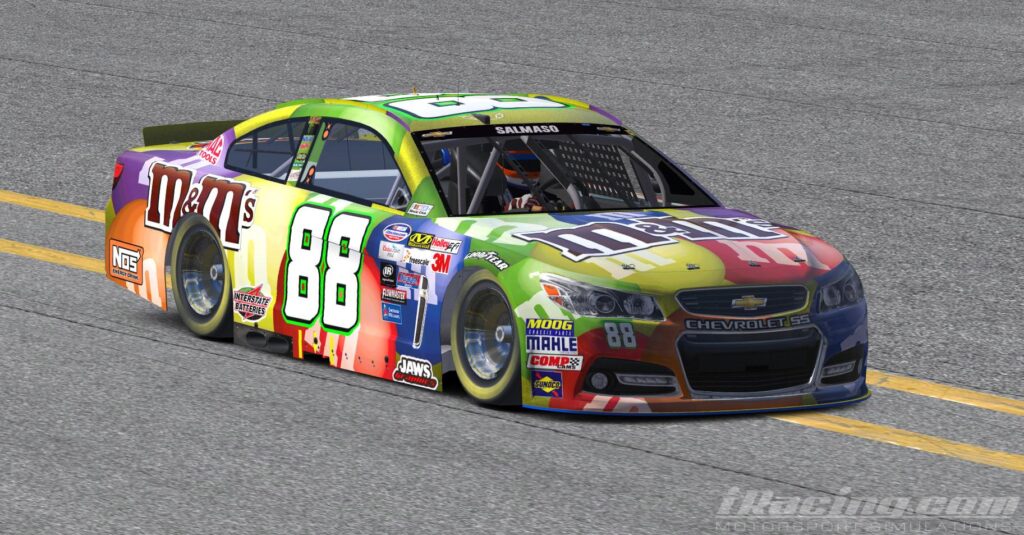
In sports, Mars has sponsored the FIFA World Cup (Mars Bar and Snickers), the NFL (through the “You’re Not You When You’re Hungry” platform with celebrity athletes), and various domestic football and cricket leagues across its key markets. M&Ms has had a long-running association with NASCAR through its iconic M&Ms Chevrolet race car, a highly visible brand placement that reaches millions of racing fans. These sports associations align Mars’ brands with themes of performance, competition, shared experience, and fun — all values that reinforce confectionery’s role as a reward and a communal pleasure.

In cause marketing, Mars has formed long-term partnerships with the Rainforest Alliance, the World Wildlife Fund, and the National Geographic Society around sustainability and biodiversity. These partnerships are not merely PR exercises; they underpin Mars’ Cocoa for Generations programme and its commitment to achieving a physically segregated, deforestation-free cocoa supply chain by 2030. By aligning with credible external organisations, Mars provides its sustainability claims with third-party validation that carries more consumer weight than self-reported metrics.
Pedigree’s partnerships with animal welfare organisations and shelters around the world represent another category of cause-led partnership. The Pedigree Foundation — funded by a percentage of Pedigree product sales — has donated millions of dollars to shelters and rescue organisations globally, building a direct link between consumer purchase behaviour and tangible social impact. This “purchase-as-donation” mechanic is a powerful loyalty driver, particularly among younger consumers who expect brands to have a social purpose.
8. Sustainability as a Core Marketing Strategy
For Mars, sustainability is not an add-on to its marketing strategy — it is embedded in its brand purpose. The company’s “Sustainable in a Generation” plan sets ambitious targets across greenhouse gas emissions, water use, land use, and income sustainability for the farmers in its supply chain. Its Cocoa for Generations programme, backed by a $1 billion long-term investment commitment, is the most significant corporate programme in sustainable cocoa sourcing.

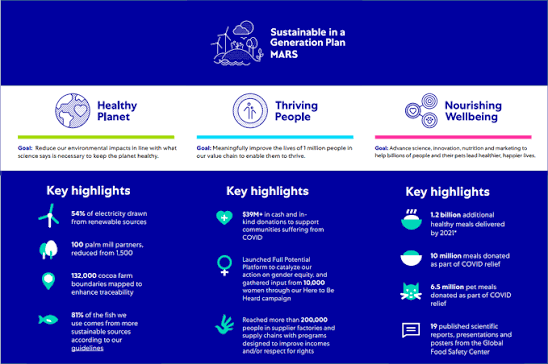
The headline metrics from Mars’ latest sustainability reporting illustrate the scale of this commitment: approximately 98% of the cocoa Mars purchases is now responsibly sourced; greenhouse gas emissions have been reduced by approximately 1.5 million tonnes of CO₂e against a 2015 baseline; and the company cut its emissions by 1.9% in a year when its revenue grew to approximately $55 billion — demonstrating that growth and emissions reduction are not mutually exclusive. Mars has committed to halving its total greenhouse gas emissions by 2030 and reaching net zero across its full value chain by 2050.
These commitments are communicated to consumers through on-pack messaging, campaign elements, corporate advertising, and stakeholder communications. Mars’ first-ever US corporate advertising campaign, “Mars Is Closer Than You Think,” launched in October 2025, was explicitly a sustainability and community narrative: it highlighted Mars’ 38 US factories, veterinary clinics, research labs, and 16 regional offices, and featured its American-made brands including Pedigree and Royal Canin. The campaign ran on OOH, print, and social media in five US target markets.
Ben’s Original (formerly Uncle Ben’s) rebranding in 2021 was also a sustainability and social inclusion initiative. Mars acknowledged that the original brand imagery had racial connotations that were inconsistent with its values, rebranded the product, and invested in the Ben’s Beginners programme supporting community cooking and childhood food education. This willingness to make commercially costly brand changes in the service of social values is a signal of the depth of Mars’ commitment to responsible business — and a marketing asset in a world where brand purpose increasingly influences consumer choice.
9. Innovation and New Product Development
Mars invests continuously in new product development as a growth and relevance strategy. Innovation serves multiple commercial purposes: it drives incremental category revenue, attracts new consumer cohorts, provides news for retail buyers, and generates marketing campaign hooks. Mars’ innovation pipeline spans incremental line extensions (new flavours, formats, and sizes), platform innovations (new eating occasions, new nutritional profiles), and disruptive launches (entirely new products or sub-brands).
In confectionery, Mars has consistently extended its core brands through flavour and format innovation. Snickers has launched Peanut Brownie, Hazelnut, Almond, and White variants to address different taste preferences within the brand’s core hunger-satisfaction occasion. M&Ms has expanded its range with Caramel, Pretzel, Fudge Brownie, and Crunchy Cookie varieties, each generating its own campaign moment and shelf presence. Skittles Pop’d — a freeze-dried variant that intensifies the flavour profile — was specifically positioned as a next-generation product for consumers seeking a new candy experience, and the “Legally Acknowledge the Rainbow” campaign was built entirely around this product innovation.
In petcare, Royal Canin’s breed-specific and health-condition-specific nutritional programmes represent a form of hyper-personalised product innovation. By developing recipes tailored to Labrador Retrievers, Maine Coon cats, or dogs with kidney disease, Royal Canin offers a level of nutritional specificity that mass-market brands cannot match. This innovation strategy is both a scientific achievement and a powerful marketing differentiator.
Mars Edge, the company’s life sciences division based in Germantown, Maryland, conducts R&D in human health, plant science, and biotechnology — areas that may not immediately produce consumer-facing products but demonstrate Mars’ commitment to long-term scientific innovation with potential applications in nutrition, agriculture, and wellness.
Marketing Mix of Mars Inc. (4Ps Framework)
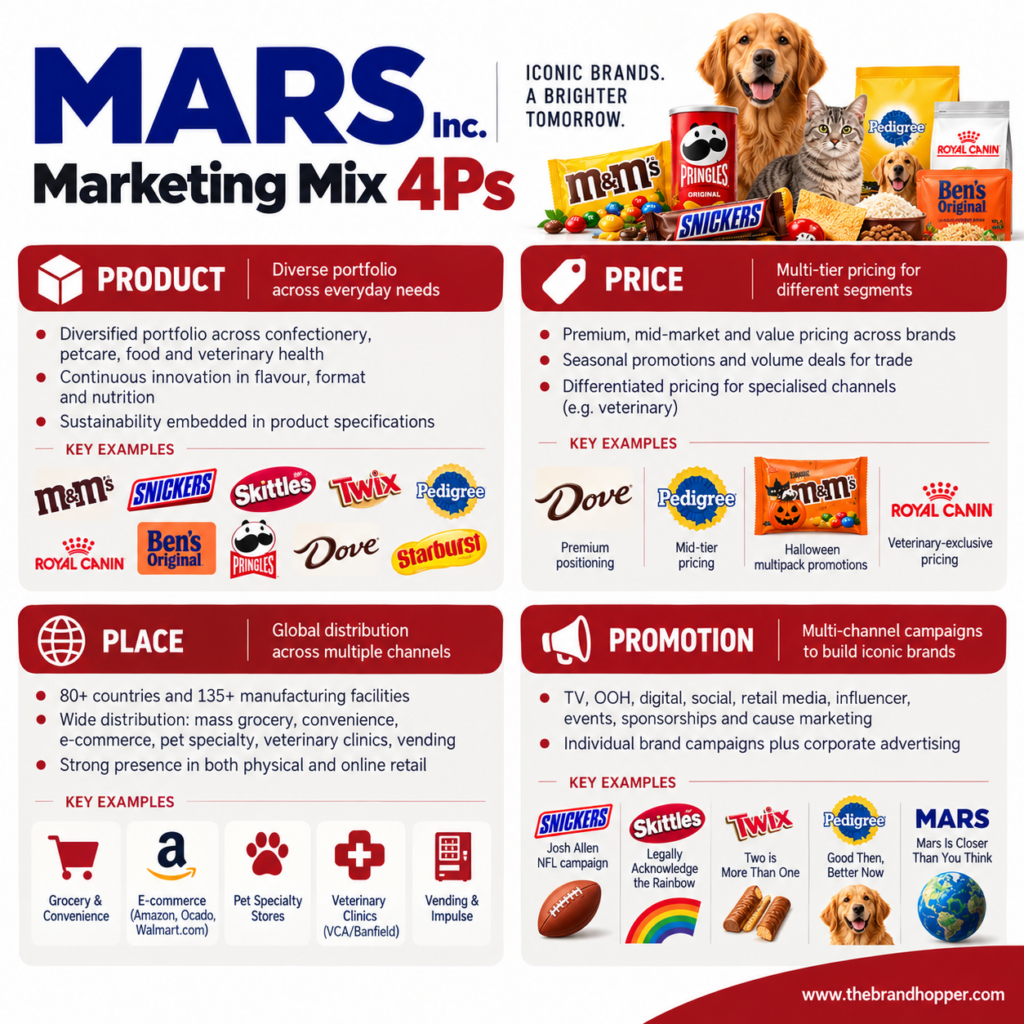
The marketing mix — Product, Price, Place, and Promotion — provides a structured lens through which to evaluate how Mars brings its brands to market. The following analysis applies the 4Ps framework to Mars’ multi-segment, multi-brand business model.
Product
Mars’ product strategy is built on three pillars: breadth, quality, and innovation. Breadth means having a product for every consumer occasion and budget, from a 50p chocolate bar at a convenience store checkout to a £80 therapeutic diet for a cat with renal disease. Quality means investing in the ingredients, processes, and specifications that make consumers trust and repurchase Mars brands. Innovation means continuously refreshing the portfolio to remain relevant to evolving consumer tastes, health trends, and cultural moments.
The Kellanova acquisition transforms Mars’ snacking portfolio from primarily chocolate and candy into a full salty/savoury and sweet snacking powerhouse. Pringles, Cheez-It, and Pop-Tarts address snacking occasions (savoury crunch, cheese crackers, toasted pastry) that Mars’ existing portfolio could not serve. RXBAR adds a high-protein, clean-label bar that targets health-conscious consumers. MorningStar Farms brings a plant-based protein portfolio that positions Mars in the growing alternative protein segment. The combined snacking business has approximately $36 billion in annual revenues and nine billion-dollar brands — the most formidable snacking portfolio ever assembled under a single corporate roof.
Mars’ petcare product strategy reflects the humanisation of pets. As pet owners increasingly treat their animals as family members, demand for premium, therapeutic, and scientifically formulated pet nutrition has grown dramatically. Royal Canin’s breed-specific and condition-specific diets are designed by veterinary nutritionists and are often recommended or sold exclusively through veterinary practices. Pedigree serves the volume mass-market with nutritionally complete diets at accessible price points. IAMS and Nutro occupy the mid-market premium tier. This tiered portfolio ensures that Mars captures pet food spending across every demographic and price sensitivity.
Price
Mars employs a deliberate multi-tier pricing strategy that matches product positioning and brand promise. Dove chocolate, for example, is priced at a premium relative to the core confectionery range, reflecting its positioning as a refined, adult indulgence with higher cocoa quality and more sophisticated flavour profiles. Snickers, Twix, and M&Ms are priced competitively at the mid-market level, where volume and impulse purchasing are the primary commercial drivers.
In petcare, Royal Canin Veterinary Diets are priced at a significant premium to mass-market pet food, reflecting the clinical research investment behind the formulations and the exclusivity of the veterinary distribution channel. Pedigree and Cesar are positioned for everyday mainstream spending, with large-format and multipack SKUs offering volume value for loyal repeat buyers.
Promotional pricing is deployed strategically at key seasonal moments — Halloween multipacks, Christmas gift boxes, Valentine’s Day gift formats — to drive volume while maintaining brand value perceptions. Mars also uses promotional pricing for trial-driving on new product launches, offering introductory price points or money-back guarantees to lower the barrier to first purchase.
Value perception management is a core discipline for Mars. The company aims to ensure consumers never feel that a Mars product is overpriced for its quality — but also never so cheap that it feels like a commodity. This balance between price and perceived value is maintained through consistent quality standards, compelling packaging design, and brand investment that keeps Mars brands top of mind and aspirationally desirable.
Place (Distribution)
Mars operates one of the most extensive consumer goods distribution networks in the world. Its products are available in 80+ countries through a combination of owned manufacturing, third-party distribution, and direct-to-consumer channels. With 135+ factories globally, Mars has the local manufacturing presence to serve markets efficiently and respond to regional taste preferences with locally produced variants.
Traditional retail remains the dominant channel for Mars confectionery and petcare products. Supermarkets, convenience stores, petrol forecourts, discount stores, and specialist pet retailers all carry Mars products, with dedicated shopper marketing programmes for each channel format. The checkout-lane candy placement — where Snickers, Twix, and M&Ms generate enormous impulse revenues for both Mars and its retail partners — is a distribution asset that no online channel can fully replicate.
E-commerce has grown substantially as a Mars distribution channel, particularly in petcare. Subscription models for pet food — Amazon Subscribe & Save, Chewy Auto-Ship, and direct-from-brand subscription programmes — are increasingly important, with subscription buyers demonstrating significantly higher lifetime value and brand loyalty than single-purchase customers. Mars has invested in the operational capabilities — direct-to-consumer fulfilment, digital shelf management, and retail media partnerships with Amazon and Walmart — required to compete effectively in the online channel.
Mars’ veterinary distribution channel for Royal Canin and for pharmaceutical products sold through VCA and Banfield represents a unique distribution advantage. Products sold through veterinary recommendation carry an authority and trust that no over-the-counter product can claim. The network of approximately 3,000 Mars Veterinary Health clinics globally is not only a healthcare business but a distribution asset that gives Mars direct, trusted relationships with tens of millions of pet owners annually.
Promotion
Mars’ promotional strategy is multi-layered, brand-specific, and remarkably consistent in its commitment to creative quality. The company spends billions of dollars annually on advertising and promotion globally, with a portfolio of campaigns that range from globally unified creative platforms to highly localised activation.
Television and online video remain the primary brand-building channels for Mars’ confectionery brands. The ability to tell emotionally engaging stories at scale — whether it’s Snickers’ hunger-driven comedy, M&Ms’ character-led entertainment, or Dove’s quiet indulgence — requires the reach and audiovisual richness that broadcast and streaming TV delivers. Mars consistently invests in high-production-value TV ads and runs them at sufficient frequency to build the mental availability that drives impulse purchase at point of sale.
Out-of-home advertising — billboards, transit, retail OOH, and digital screens — is a particularly effective channel for Mars confectionery given the brand names’ role as instant visual triggers for purchase intent. The Snickers “Hunger Alter Egos” European poster series demonstrated that OOH can be a primary creative medium rather than a supporting channel, winning awards and generating press coverage while reaching consumers in high-traffic urban environments.
Digital and social media promotion is increasingly sophisticated and data-driven. Mars uses audience segmentation, lookalike modelling, and behavioural targeting to reach consumers at different stages of the purchase funnel with tailored creative. Retargeting campaigns serve relevant product ads to consumers who have visited Mars brand websites or searched for Mars products. Retail media advertising on Amazon and Walmart’s platforms targets consumers who are actively browsing or purchasing in the category.
Corporate social responsibility is an increasingly prominent component of Mars’ promotional mix. The “Mars Is Closer Than You Think” US corporate campaign, the Cocoa for Generations communications, and the Pedigree Foundation’s shelter dog programmes all serve a dual function: they drive positive media coverage and build brand trust, while contributing to the genuine social and environmental outcomes that Mars has committed to delivering.
Frequently Asked Questions (FAQs)
Q1. What is Mars Inc.’s annual revenue?
A: Mars Inc. generates approximately $55 billion in annual revenues, a figure that represents growth of over 69% since 2015, according to data cited in Mars’ own sustainability reporting. Mars is privately held and does not publish audited financial statements, so publicly available figures are estimates drawn from corporate disclosures and press releases. The completed acquisition of Kellanova in December 2024 is expected to increase group revenue significantly, with the combined snacking business alone forecast to generate approximately $36 billion annually.
Q2. What are Mars Inc.’s most important marketing campaigns?
A: Mars operates some of the most enduring and commercially effective campaign platforms in advertising. Snickers’ “You’re Not You When You’re Hungry” (BBDO, 2010–present) is widely considered one of the greatest sustained advertising ideas of the modern era, running across 58+ markets and continuously refreshed with new celebrity talent and cultural contexts. Skittles’ “Taste the Rainbow” platform has evolved from a colourful candy tagline into a vehicle for some of the most creative, award-winning work in the confectionery category. M&Ms’ Spokescandies — brand characters that have featured in advertising since the 1950s — remain among the most recognisable brand assets in the world.
Q3. Why did Mars acquire Kellanova, and what does it mean for marketing?
A: Mars completed its $35.9 billion acquisition of Kellanova in December 2024, creating the world’s largest snacking company. Kellanova brought Pringles, Cheez-It, Pop-Tarts, RXBAR, and MorningStar Farms to the Mars portfolio, addressing salty snack occasions, protein bar consumers, and plant-based eaters that Mars’ existing portfolio did not serve. For marketing, the acquisition creates a combined platform with nine billion-dollar brands, cross-portfolio shopper marketing opportunities, and combined advertising scale that should drive significant efficiency in media buying and retailer partnership programmes.
Q4. What is Mars Inc.’s sustainability marketing strategy?
A: Mars has embedded sustainability into its marketing strategy rather than treating it as a standalone CSR function. Its Cocoa for Generations programme — backed by a $1 billion investment commitment — targets 98% responsibly sourced cocoa, a physically segregated deforestation-free supply chain by 2030, and net zero emissions by 2050. These commitments are communicated on-pack, in campaign elements, and through corporate advertising. The “Mars Is Closer Than You Think” US corporate campaign, the Pedigree Foundation’s shelter dog programme, and the Ben’s Original rebranding are all examples of sustainability and social responsibility as active marketing strategies, not just compliance obligations.
Q5. How does Mars market its pet food brands differently from its confectionery brands?
A: Mars’ petcare marketing operates on fundamentally different principles from its confectionery marketing. Confectionery campaigns are primarily emotion and entertainment-led, built around humour, characters, and cultural moments. Petcare marketing is divided between purpose-led mass-market campaigns (Pedigree’s shelter dog activism, Whiskas’ cat welfare advocacy) and expert-authority marketing (Royal Canin’s veterinary nutritionist credentials, VCA’s clinical expertise). Royal Canin in particular uses very little mainstream consumer advertising, relying instead on veterinary professional education, breeder relationships, and point-of-care recommendation — a B2B2C model that builds trust through expert endorsement rather than broadcast reach.
Q6. What is the “Five Principles” philosophy and how does it shape Mars’ marketing?
A: Mars’ Five Principles — Quality, Responsibility, Mutuality, Efficiency, and Freedom — are the foundational values that guide all business decisions, including marketing. Quality means Mars never compromises on product standards to reduce costs. Responsibility means Mars acknowledges the impact of its business on consumers, communities, and the planet, which shapes its sustainability commitments and purpose-led campaigns. Mutuality means Mars evaluates its partnerships — with retailers, agencies, suppliers, and charities — by the degree of shared benefit they create. Efficiency means marketing budgets are allocated rigorously against measurable outcomes. Freedom, enabled by private family ownership, means Mars can make long-term brand investments without the quarterly earnings pressure that pushes publicly listed competitors toward short-termism.
Q7. How does Mars use digital marketing to compete in e-commerce?
A: Mars has made significant investments in digital marketing capabilities to compete effectively in the rapidly growing e-commerce channel. In petcare, Amazon Subscribe & Save and Chewy Auto-Ship programmes drive recurring revenue from loyal pet food buyers. In confectionery, Mars runs sponsored product campaigns on retail media networks (Amazon Advertising, Walmart Connect, Tesco Media) to intercept consumers at the point of purchase intent. Direct-to-consumer programmes — notably the M&Ms personalisation service — combine commerce with engagement. Mars also uses social media advertising, influencer partnerships, connected TV, and programmatic display to drive brand consideration and purchase conversion across digital touchpoints.
Q8. What makes Skittles’ marketing stand out from other candy brands?
A: Skittles’ marketing is defined by its deliberate rejection of conventional advertising conventions. Where most candy brands use upbeat, colourful, family-friendly advertising, Skittles leans into the absurd, the surreal, and the unexpectedly dark. The brand famously staged a Broadway musical instead of running a Super Bowl TV spot, generating far more earned media than a conventional ad could have bought. The “Legally Acknowledge the Rainbow” campaign for Skittles Pop’d required consumers to sign a genuine legal document to try the product — a stunt that was simultaneously a legal exercise and a viral marketing activation. This commitment to distinctiveness, even at the risk of alienating some consumers, has built Skittles into a $1 billion revenue brand with a disproportionately passionate fanbase.
Conclusion
Mars Inc. is a study in how sustained brand investment, creative ambition, and long-term thinking can build a consumer goods empire that lasts across generations. From the M&Ms characters that have delighted consumers for over seven decades to the Pedigree shelter dog campaigns that have donated millions of bowls of food to rescue animals, Mars consistently demonstrates that the most durable marketing strategies are the ones built on genuine consumer insight and authentic brand purpose.
The Kellanova acquisition marks the most significant single strategic move in Mars’ history — transforming the company from a chocolate and petcare giant into the world’s largest snacking business. Integrating nine billion-dollar brands, aligning marketing platforms, and capturing the cross-portfolio commercial synergies that the deal promises will be the dominant marketing challenge of the next several years.
What gives Mars a structural advantage in this challenge is the same thing that has always differentiated it: private family ownership that enables genuine long-term thinking. Mars does not need to please quarterly analysts. It can invest in decade-long campaign platforms like “You’re Not You When You’re Hungry,” fund a $1 billion sustainability programme without immediate returns, and rebuild a brand like Ben’s Original from scratch on the basis of values rather than short-term revenue protection. In a world where most consumer goods marketing is increasingly tactical and short-term, Mars’ ability to think in decades rather than quarters is its most powerful, and least replicable, competitive advantage.
Also Read: The Snickers Hangry Campaign: Full Case Study
To read more content like this, subscribe to our newsletter
Go to the full page to view and submit the form.