


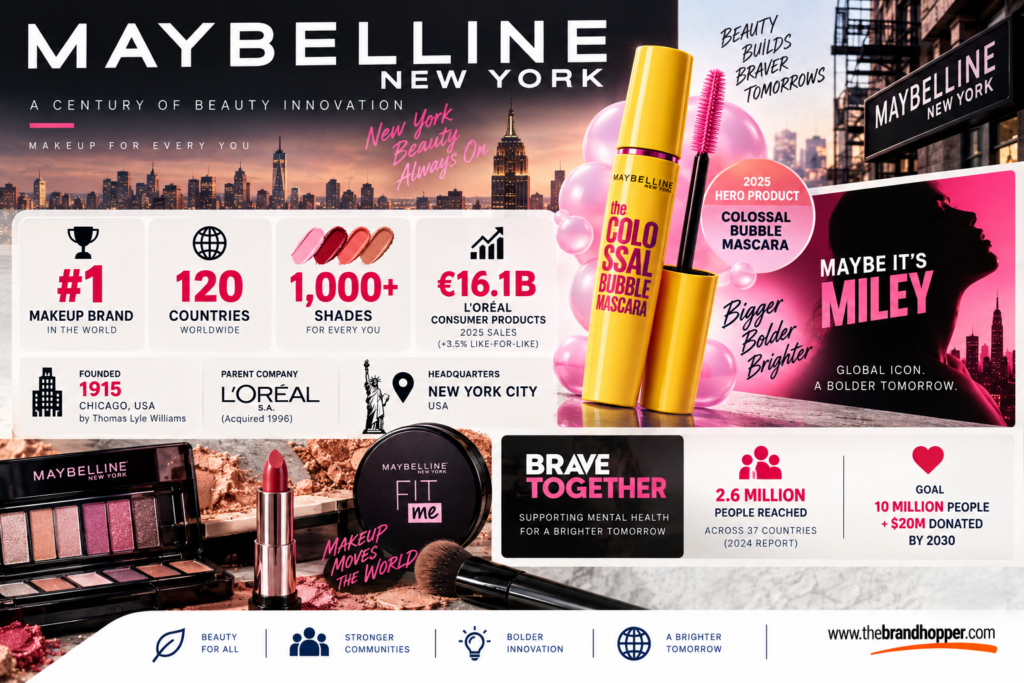
In the vast and fiercely competitive landscape of global cosmetics, Maybelline New York stands as an enduring icon. What began as a homemade lash enhancer mixed in a Chicago kitchen in 1913 has evolved into the world’s #1 makeup brand by sales, distributed across 129 countries and sitting at the heart of L’Oréal’s Consumer Products Division — which generated €16.1 billion in FY2025 revenue.
Maybelline’s staying power is not accidental. For over a century, the brand has consistently out-marketed rivals by reading cultural shifts earlier than the competition, investing in the right faces and platforms at the right time, and building a brand DNA that bridges mass affordability with genuine aspirational appeal. From radio advertising in the 1920s to TikTok virality in the 2020s, from supermodel campaigns to AI-powered virtual try-ons — Maybelline has always found a way to be where its customer is going next.
This article provides a deep dive into the full spectrum of Maybelline’s marketing strategies. Whether you are a marketing professional, beauty industry analyst, or brand strategist, this is the most comprehensive account of how Maybelline continues to win in a market that never stops evolving.

A Brand Born from Necessity: The Maybelline Story (1915–1996)
The Maybelline origin story is one of the most human in consumer brand history. In 1913, a young Chicago woman named Mabel Williams singed her eyebrows and lashes in a kitchen accident. To restore their appearance, she mixed petroleum jelly with coal dust — a simple improvised solution that happened to work remarkably well. Her brother, Thomas Lyle Williams, saw immediately what she could not: a commercial opportunity hiding in plain sight.
In 1915, at just 19 years old, Thomas Lyle Williams officially founded the company, naming it “Maybelline” as a tribute to his sister Mabel and her favourite beauty product, Vaseline. The first product was initially sold under the name “Lash-Brow-Ine,” but the Maybelline name quickly took hold and defined the brand’s identity as a beauty solution rooted in real women’s real needs.

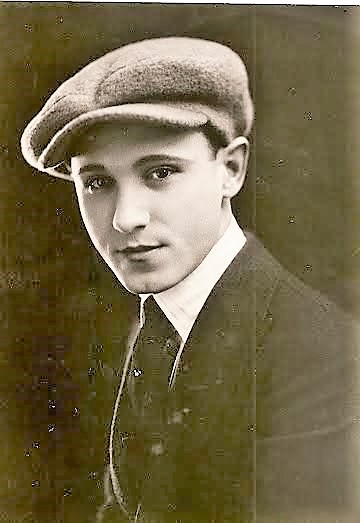
In 1917, Maybelline introduced its Cake Mascara — widely recognised as the first modern eye cosmetic made for everyday use. Initially available only through mail order, it proved so popular that women began requesting it at drugstores, marking the start of Maybelline’s retail distribution journey. By the 1920s, Maybelline had become the first cosmetics company to advertise on radio, a pioneering move that dramatically expanded its reach and drove sales nationwide. In 1929, the brand extended beyond mascara into eyebrow pencils and eye shadow, laying the foundation for its eventual full-range cosmetics portfolio.
By 1967, having built a dominant position in American eye makeup, Thomas Lyle Williams sold the company to Plough Inc. for $136 million in cash and stock. The business underwent further ownership changes — Schering-Plough in 1971, Wasserstein Perella & Co. in 1990 — before a pivotal 1996 acquisition by French cosmetics giant L’Oréal, which relocated the headquarters to New York City and officially rebranded the company as Maybelline New York. That name carries more than geography: it signals fashion, cosmopolitanism, and the aspirational energy of the city itself.
Under L’Oréal’s Wing: Becoming a Global Powerhouse
The L’Oréal acquisition unlocked a new era of global ambition for Maybelline. With L’Oréal’s global distribution network, R&D infrastructure, and marketing budget behind it, Maybelline rapidly expanded from a strong US brand into a truly global cosmetics force. Today it operates in 129 countries and sits within L’Oréal’s Consumer Products Division alongside L’Oréal Paris, Garnier, and NYX — a division that recorded €16.1 billion in FY2025 revenue, growing +3.5% like-for-like with strong Q4 acceleration of +4.8%.
Maybelline’s role within the division is to anchor mass-market makeup globally — the highest-volume, highest-frequency beauty category. L’Oréal’s FY2025 results confirmed that the Consumer Products Division was powered by “blockbusters like Maybelline New York Colossal Bubble Mascara,” demonstrating that Maybelline remains the innovation engine of the Group’s most accessible and broadly distributed division.
L’Oréal’s total FY2025 group sales reached €44.05 billion, with growth in all divisions and broad-based acceleration in the second half. For Maybelline, this broader group strength translates into continued investment in product R&D, digital marketing infrastructure, and global campaign execution at a scale that independent or smaller beauty brands simply cannot match.
Marketing Strategies of Maybelline New York
Maybelline’s marketing approach is not a single tactic but a carefully engineered system of complementary strategies that reinforce each other across channels, geographies, and audience segments. Below is a comprehensive analysis of the seven core pillars that make Maybelline’s marketing one of the most effective in the global beauty industry.
1. Celebrity Endorsements and the Power of the Right Face
Maybelline’s approach to celebrity partnerships is strategic, generational, and deeply cultural. The brand does not simply pay famous faces to hold products — it selects ambassadors who embody a moment in time and uses the partnership to shift the brand’s cultural positioning.
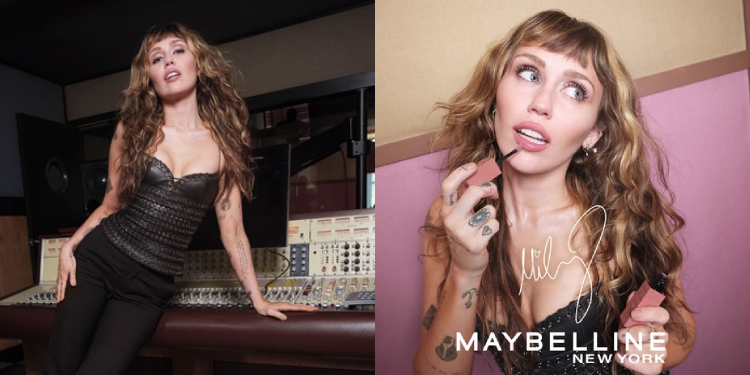
The most significant recent move came in September 2025, when Maybelline announced multi-Grammy winner Miley Cyrus as its new global spokesperson on a multi-year contract. Cyrus is the first spokesperson in brand history to reimagine the iconic “Maybe It’s Maybelline” jingle in her own voice — a bold move that bridges the brand’s classic heritage with the irreverence and self-expression of the TikTok generation. The campaign rolled out across TV, digital, social media, and in-store activations globally from September 2025, with Cyrus fronting both the viral Sky High Mascara franchise and major new colour launches. Supporting content came from mega-creators including Manny MUA, Sai de Silva, Isabel Clancy, and I Luv Sarahii, blending celebrity pull with creator authenticity.

Before Cyrus, the 2024 “ICONS” campaign featured Naomi Campbell and RuPaul promoting the Instant Age Eraser Concealer, revitalising the “Maybe It’s Maybelline” jingle with a modern twist. Campbell’s association — spanning decades of the brand’s history — provides timeless credibility, while RuPaul’s inclusion powerfully reinforces gender-fluid beauty ideals. These choices are not coincidental: Maybelline’s “ICONS” framework deliberately selects faces who transcend their original category and mean something larger to culture.
In India, Maybelline’s celebrity strategy brilliantly tracks generational shifts. Earlier partnerships with Alia Bhatt and Deepika Padukone established the brand’s Bollywood credentials with millennial consumers. The 2023 “Beauty Squad” then pivoted to Gen Z, appointing Suhana Khan (poised for her *The Archies* debut), Ananya Birla, and Eksha Subba alongside Olympian PV Sindhu — covering Bollywood, music, sports, and law enforcement in a single cohort that visually embodied inclusivity and empowerment. Suhana Khan fronted the Super Stay Lumi-Matte Foundation campaign, while Sara Ali Khan led the “Insta Weddings” campaign targeting modern brides who want social media-ready looks.

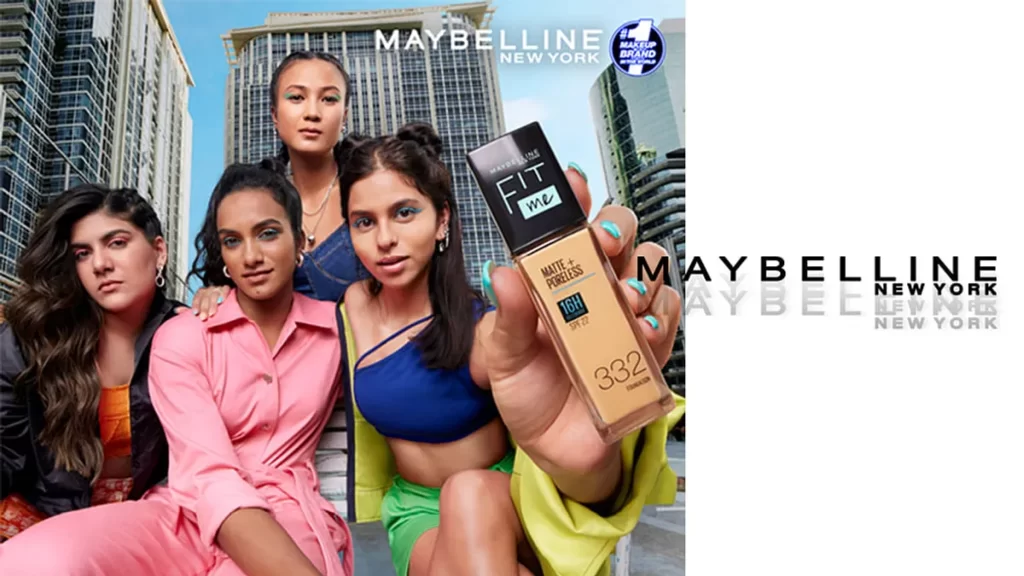
Globally, the earlier “Maybelline x Gigi Hadid” collection demonstrated the brand’s ability to merge high-fashion influence with mass-market accessibility, generating a 35% sales boost for the collaboration line. In Asia, a 2016 campaign with Hong Kong actor-singer William Chan sold 20,000 units of a lipstick shade called “Queen” in just two hours by creating interactive story-driven content — a sign that Maybelline was mastering the live commerce model years before it became mainstream.
The common thread in all of these partnerships is that Maybelline’s celebrities are cultural amplifiers, not just awareness drivers. Each partnership comes with platform-native content, product integration, and storytelling that makes the endorsement feel like a natural cultural conversation rather than a paid placement.

2. Digital-First and Influencer-Centric Campaigns
Maybelline has been one of the most sophisticated digital marketers in the beauty industry for years, building a multi-layered influencer ecosystem that spans global superstars, regional celebrities, micro-creators, and hyper-local Key Opinion Consumers (KOCs). The result is a brand presence that feels simultaneously global and personal.
TikTok is the brand’s most powerful growth engine. The 2022 Sky High Mascara viral moment is now a case study in organic-to-paid amplification: when the mascara’s lash-lengthening performance spread organically through user-generated content, Maybelline rapidly seeded creators on the TRIBE platform to produce 20+ “before and after” transformation videos. The resulting #SkyHighMascara campaign generated 570 million views and sold out inventory four times globally. By 2023, the mascara had become the #1 best-selling mascara in both the US and UK, with one tube sold every three seconds on Amazon. Its Amazon search volume peaked at 1,516.8 in January of the following year, and sales grew from 5,662 units in November 2024 to 16,573 units by April 2025.
The “Record Breakers Go Sky High” campaign in early 2026 extended this momentum by featuring aerospace engineer Aisha Bowe, bestselling author Alex Aster, and Olympic medalist Ilona Maher — three women who “defy limits” in their fields revisiting formative spaces where they first discovered what it means to aim higher. Separately, model Winnie Harlow starred in her own Sky High campaign, “Defying Gravity,” which tied the mascara’s performance story to her personal narrative of resilience.

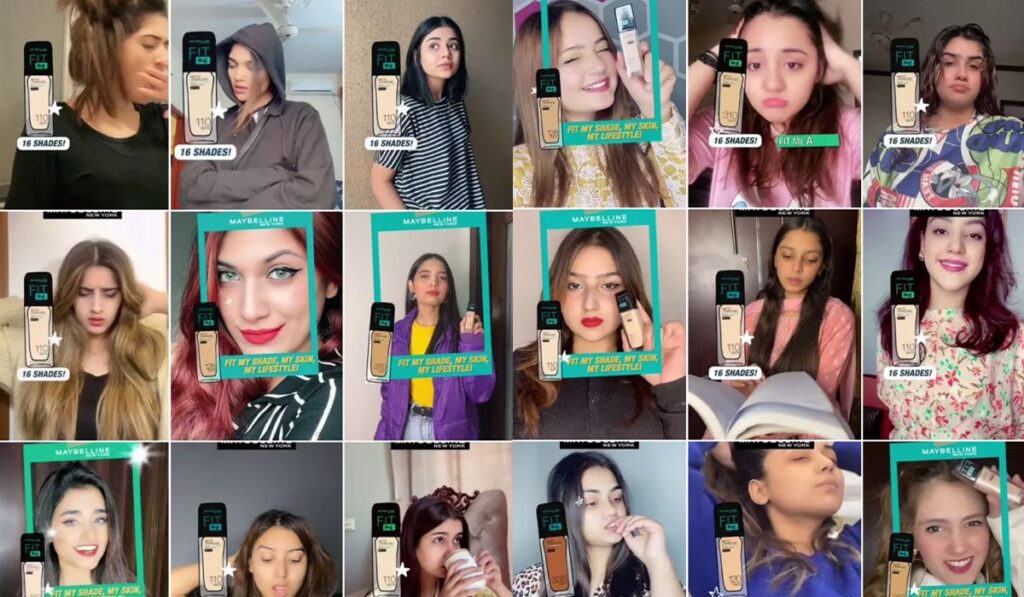
The Pakistan #FitMeAsIAm campaign on TikTok (2022) exemplifies how Maybelline executes hyper-local digital campaigns. The challenge invited users to showcase natural skin using the Fit Me Matte + Poreless Foundation alongside a branded jingle and a custom AR filter. Amplified by influencers like Hania Aamir and micro-creators, the campaign sold 20,000 units in two hours and expanded the foundation’s shade range to 16 options for South Asian skin tones. The broader campaign approach has been documented as driving a
The Pakistan #FitMeAsIAm campaign on TikTok exemplifies Maybelline’s local-first digital execution. Amplified by influencers like Hania Aamir and thousands of micro-creators, the campaign sold 20,000 units in two hours and expanded the foundation’s shade range to meet diverse South Asian skin tones. Independently analysed data shows the approach drove a 40% increase in Gen Z engagement and a 25% uplift in online sales across the markets where it was deployed.

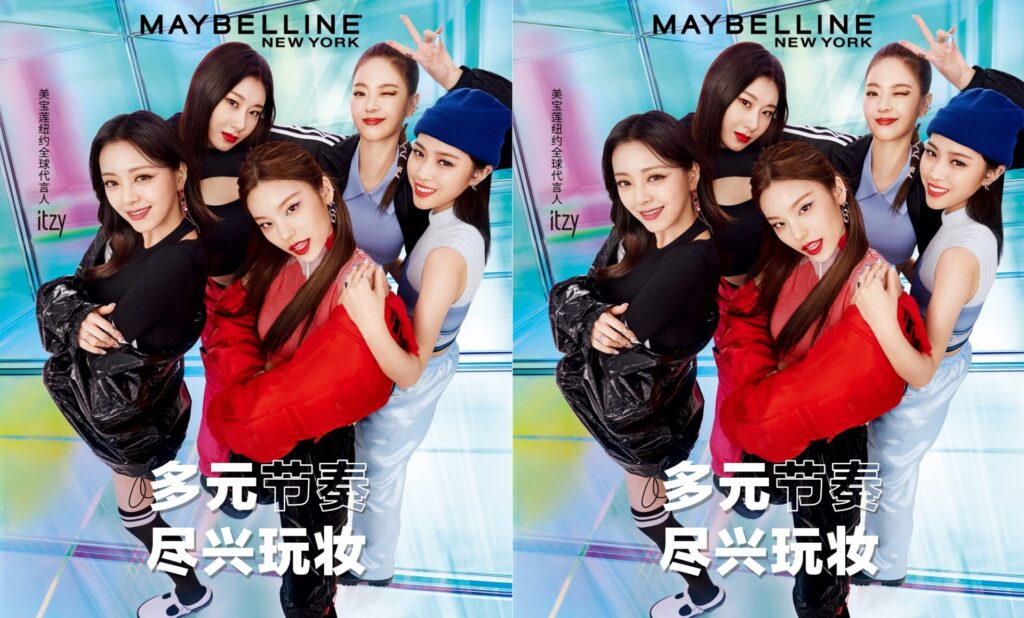
China demanded an even more sophisticated digital playbook. The 2022 “Lì 2.0” campaign partnered with 500+ Key Opinion Consumers on TikTok to promote bold makeup transformations through peer testimonials and tutorials, boosting sales by 35% and positioning Maybelline as a Gen Z favourite for self-expression. The 2022 “City of Rhythm” metaverse launch on Tmall ahead of Double 11 featured K-pop group ITZY and AR try-ons for products including the Super Stay Matte Ink Lipstick — attracting 5 million visitors and selling 50,000 lipsticks in 90 minutes.
Augmented reality and AI have given Maybelline a new layer of digital engagement. Its Virtual Try-On feature — powered by YouCam AI and integrated into the brand’s website and app — analyses 1,500+ skin-tone data points to match users to the right foundation shade. This has reduced online return rates by 35% and increased conversion rates by 22%. In 2023, the brand launched AI-powered makeup filters on Microsoft Teams, enabling users to apply virtual mascara and lipstick during video calls — a playful, high-attention brand moment that boosted product searches for Super Stay Vinyl Ink by 200%.
Maybelline has embraced digital technology comprehensively across its business, as documented in multiple academic and industry analyses . The brand continues to invest in AI-driven personalisation, shoppable social media integrations, and real-time engagement tools that transform passive content viewers into active buyers. Shoppable posts on Instagram and TikTok streamline the purchase path, with the Lifter Stix Multi-Use Face Stick campaign driving a 40% sales spike via direct platform transactions.
3. Inclusivity and Diversity at the Core
Inclusivity is not a Maybelline marketing tactic — it is built into the brand’s product development DNA and its storytelling from the ground up. The brand has invested systematically in ensuring that its products, campaigns, and communications reflect the full diversity of the consumers it serves.
On the product side, the Fit Me Matte + Poreless Foundation offers 40+ shades globally and
18 shades tailored for the Indian market — addressing undertones from golden to neutral across light to deep complexions. The brand’s AR Shade Finder tool further democratises shade-matching by reducing the guesswork that historically caused underrepresented groups (olive and deep skin tones in particular) to avoid purchasing foundation online. Reducing mismatch rates by an estimated 30% directly drives both sales and trust in communities that mainstream beauty brands had often failed to serve.
In terms of representation, Maybelline broke significant ground in 2017 by featuring Manny Gutierrez (Manny MUA), a gay beauty influencer with millions of followers, in its “That Boss Life” campaign for Big Shot Mascara — marking the first time a major global cosmetics brand had a male face as a campaign centrepiece. This catalysed a broader shift: RuPaul’s inclusion in the 2024 “ICONS” campaign and transgender model Ami Patel’s role in Indian SuperStay Vinyl Ink campaigns are direct continuations of this commitment. The brand’s “Make Up for All” initiative funds LGBTQ+ advocacy and trains retail staff on gender-neutral product recommendations.
The #FitMeAsIAm campaign, which featured creators with vitiligo, albinism, and visible skin conditions, transformed functional foundation marketing into a platform for self-acceptance. Campaigns featuring male and gender-nonconforming influencers have collectively generated 18 million+ social media impressions and a 40% uptick in male-identifying customers purchasing mascara.
Maybelline’s inclusivity leadership has commercial consequences beyond representation metrics. When a brand demonstrates it has genuinely built products for you — your undertone, your gender expression, your skin condition — and then runs campaigns that reflect that, it earns a quality of brand loyalty that no amount of advertising spend can manufacture. This is arguably the most durable competitive advantage in Maybelline’s strategy toolkit.

4. Brave Together: Building Brand Purpose Around Mental Health
In a beauty category often criticised for promoting unrealistic standards and contributing to anxiety and low self-esteem, Maybelline’s “Brave Together” programme represents one of the most credible and sustained purpose-led marketing initiatives in the industry.
Launched in 2020, Brave Together is Maybelline’s long-term commitment to destigmatising mental health conversations, providing access to professional support, and funding mental health organisations globally. The programme has helped more than 1.65 million people access free, one-on-one professional mental health support across 34+ countries. Maybelline has committed to reaching 10 million people and donating $20 million to mental health causes by 2030.

A landmark milestone came in October 2024 when the WHO Foundation announced a five-year partnership with Maybelline New York. Maybelline pledged USD 1.8 million to support mental wellbeing initiatives, helping WHO and its partners reach at least two million additional people with essential mental health services by 2028. This is not a brand sponsorship — it is a genuine programmatic partnership that uses WHO’s global health network to extend mental health access to communities in low- and middle-income countries.

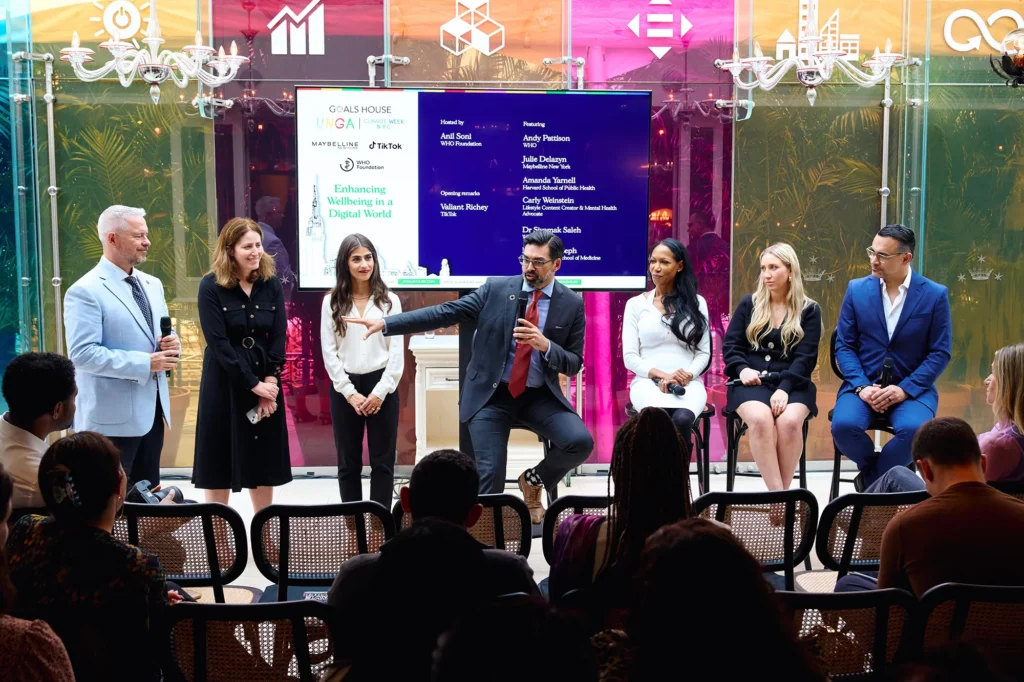
The campaign’s creative execution for World Mental Health Day 2024 centred on a statistic that hits home with Maybelline’s core demographic: 73% of Gen Z experience symptoms of anxiety or depression. The 90-second hero film, produced with anti-bullying charity Ditch the Label, was accompanied by Brave Talk — a gamified digital tool launched in August 2024 in collaboration with The Jed Foundation — which walks users through a mental health conversation framework using the BRAVE acronym (Be present, Right setting, Ask questions, Validate feelings, Encourage action).
Why does this matter as a marketing strategy? Because Gen Z is the most purpose-conscious consumer cohort in history. They do not just buy brands that share their values; they advocate for them, defend them, and build communities around them. By embedding Brave Together so deeply into its identity — with verifiable impact metrics, credible NGO partnerships, and genuine resources rather than awareness hashtags — Maybelline has made purpose a structural asset rather than a seasonal campaign. The result is measurable loyalty among the generation that will drive beauty category growth for the next two decades.
5. Localisation with Global Brand Equity: The Glocal Playbook
Maybelline operates in 129 countries but does not market in 129 identical ways. Its “glocal” strategy builds on a consistent global brand architecture — accessibility, trendiness, urban energy, self-expression — while executing locally in ways that feel native to each market’s culture, platform habits, and beauty preferences.
India: Bollywood, Tier-2 Cities and Digital Commerce
India exemplifies Maybelline’s glocal mastery. The brand entered India in 1998 and has since become the country’s #1 makeup brand, with 92% brand recall in Tier-2 cities. Pricing strategy is a key part of this: Maybelline positions itself between budget labels (Elle 18) and premium rivals (L’Oréal Paris), offering international appeal at accessible price points while avoiding local manufacturing to maintain its premium perception. Earlier Bollywood partnerships with Alia Bhatt included a pioneering Google Hangout campaign that connected fans across multiple cities in live interactive sessions, blending Bollywood’s cultural pull with digital accessibility — a campaign that drove a 40% spike in social mentions at the time of launch.
Recent India launches have deepened the localisation. The Fit Me Compact launch featured 16 shades specifically formulated for South Asian undertones, promoted through campaigns featuring Paralympic athlete Avani Lekhara and micro-influencers speaking regional dialects. The 2025 Sunkisser Blush launch engaged beauty creator Malvika Sitlani for blind-testing events across four cities, where 89% of attendees approved the product’s formula. This approach turns product launches into genuine advocacy events rather than advertising deployments.
China: Livestreaming, Metaverse and K-Pop
China demanded Maybelline’s deepest digital integration. By 2024, Douyin (Chinese TikTok) live streams accounted for 35% of the brand’s China revenue, with hosts demonstrating local beauty trends like “gradient lips” and “puppy eyeliner” in real time. The 2022 “City of Rhythm” metaverse launch on Tmall — co-hosted by K-pop group ITZY ahead of Double 11 — combined gamified shopping, AR try-ons, and K-beauty aesthetics to attract 5 million visitors and sell 50,000 lipsticks in 90 minutes. Earlier, the 2016 Lip Flush Oil launch on Taobao Live with spokesperson Angelababy demonstrated live-commerce selling years before it became globally fashionable.

Southeast Asia: Cultural Nuance and Community Beauty
Southeast Asia’s diverse markets require culturally precise storytelling. In Vietnam, the “Every Flaw is a 10” initiative celebrated acne scars and textured skin through TikTok tutorials from 500+ KOCs, delivering a 27% lift in brand relevance and a 15% sales increase. In Malaysia, the #MySuperfreshRaya campaign tied the WhiteSuperFresh range to Hari Raya with influencers demonstrating “bling-free” festival makeup, yielding 16,000 engagements and 12% market share growth. Thailand’s “Bold in Bangkok” collection incorporated tamarind extracts into lip tints to address local demand for natural ingredients. The combined result is 85% brand penetration across ASEAN nations — a figure that proves glocal strategy is not a compromise but a compounding competitive edge.
6. Product Innovation with a Trend-First Approach
Maybelline’s innovation philosophy is built on a simple but powerful principle: products should lead culture, not follow it. The brand’s R&D and marketing teams work in close alignment with real-time social data and trend forecasting to ensure that when a new product launches, it does so into a cultural conversation already beginning to form.
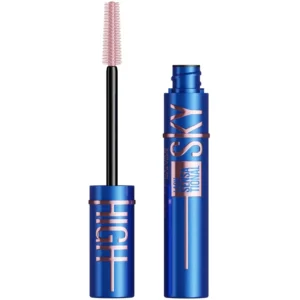
Sky High Mascara: Engineering Virality into a Product Launch
The Sky High Mascara story is perhaps the best-documented case study in beauty industry viral marketing. When the mascara’s extraordinary length-extending performance began spreading organically through user-generated TikTok content in 2021, Maybelline’s team recognised immediately that organic credibility was more valuable than any paid campaign at that moment. Rather than flooding the space with advertising, it seeded creators strategically through the TRIBE platform to amplify rather than replace organic momentum. The result: a 570 million-view campaign, four global sell-outs, and sustained category leadership. It remains the #1 best-selling mascara in the US and UK, with Amazon sales data showing consistent demand growth from 5,662 units per month to over 16,573 units by April 2025.

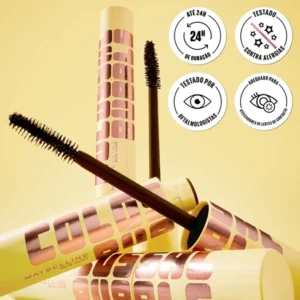
Colossal Bubble Mascara: FY2025’s Breakout Product
In FY2025, L’Oréal’s official results cited the Colossal Bubble Mascara as one of the Consumer Products Division’s key blockbusters and a significant contributor to the division’s accelerating growth in the second half of the year. The Colossal franchise has been a Maybelline mainstay for years, but the Bubble variant — with its oversized brush delivering maximum volume in a single stroke — tapped into the maximalist makeup aesthetic that Gen Z and millennial consumers adopted heavily across FY2024 and FY2025. Its launch strategy combined influencer “first use” videos, before-and-after transformation content, and direct retail placement in the highest-traffic beauty aisles.
SuperStay Matte Ink: Making Longevity Aspirational
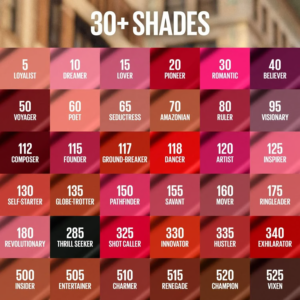
The SuperStay Matte Ink Liquid Lipstick series launched in 36 super-saturated shades with a 16-hour transfer-proof formula that addressed Gen Z’s demand for low-maintenance, high-impact makeup. The #MaybellineSwipeIt campaign on TikTok transformed the arrow-shaped applicator into a viral ritual, with users revealing vivid shades in a single swipe. The campaign generated 12 million views in its initial phase, drove a 40% sales surge in India’s matte lipstick market, and turned the applicator itself into a recognisable brand asset. Limited editions, such as the “Bold in Bangkok” collection infused with tamarind extract, kept the line culturally fresh across different regional markets.
Fit Me Fresh Tint: Riding the Skinification Wave
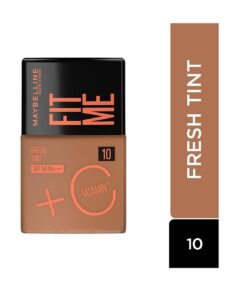
The “skinification of makeup” — the trend of consumers seeking cosmetics that also deliver skincare benefits — is one of the defining shifts in beauty over the past five years. Maybelline’s Fit Me Fresh Tint, launched with SPF 50 and Vitamin C alongside light coverage, directly addressed this shift and achieved a 92% approval rate in India for its breathable formula. The product was marketed through #FitMeAsIAm campaigns featuring models with acne scars and natural skin conditions, connecting product performance to the broader inclusivity narrative that gives the Fit Me franchise its emotional resonance.

7. Strategic Retail and Omnichannel Presence
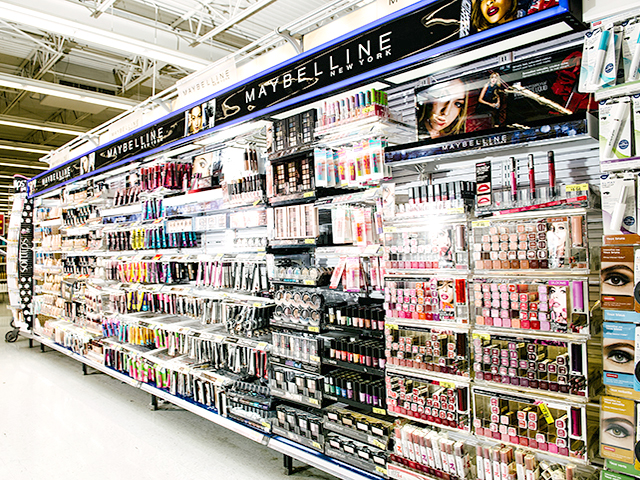
Maybelline understands that the customer journey in beauty is not linear. A shopper may discover a product through a TikTok video, research it on the brand’s website using the AR try-on, read reviews on Amazon, and ultimately purchase it in a Walmart aisle after picking it up to look at the shade range. Maybelline’s omnichannel strategy is designed to be seamlessly present at every one of those touchpoints.

Physical Retail: Experience Over Transaction
In physical retail, Maybelline has moved decisively from passive shelf presence to active experience creation. The “Beauty Hub” counters at Shoppers Stop outlets across India feature trained beauty advisors providing free makeup trials, driving a 30% increase in foot traffic since their broader rollout. In the US, Walmart’s “Express Beauty” kiosks stock Maybelline’s top 50 SKUs with QR codes linking directly to TikTok tutorials, boosting impulse purchases by 25%. Seasonal pop-ups — such as the “Bold in Bangkok” activation at CentralWorld Mall offering custom lipstick engraving and AR-powered skin analysis — generate thousands of samples distributed over days and create genuine word-of-mouth moments that paid advertising cannot replicate.
E-Commerce and Live Commerce
In e-commerce, Maybelline has been a consistent first mover. Its 2023 collaboration with Nykaa for Pink Friday launched the Super Stay 30H Foundation with an 18,000-unit sell-out in 10 minutes via flash sale and livestream demo. On Tmall, Double 11 livestreams featuring K-pop acts and gamified AR giveaways generated $5 million in pre-orders for the Vinyl Ink Lipstick franchise. Douyin live-stream selling now accounts for 35% of Maybelline’s China revenue — a figure that would have seemed impossible a decade ago.
Digital Integration Across Channels
Maybelline’s Virtual Try-On tool, powered by YouCam AI and analysing 1,500+ skin-tone data points, has reduced online foundation return rates by 35% while increasing conversion rates by 22% — solving one of e-commerce beauty’s most persistent problems. In the UK, the “Click & Collect” service with Boots enables customers to order online and pick up in-store within two hours, paired with free mini-makeovers, increasing basket sizes by 40%. In India, the #MaybellineSwipeIt campaign drove TikTok users to scan in-store QR codes for exclusive discounts, blending social virality with offline foot traffic. Ulta’s “Beauty to Go” kiosks in subway stations stock Maybelline bestsellers with QR-linked tutorials for five-minute makeup routines, meeting commuter customers exactly where they are.
Underpinning all of this is a real-time inventory management system unified across 129 countries. By maintaining live stock visibility, Maybelline prevents an estimated 80% of potential lost sales from out-of-stock scenarios — a significant operational advantage in a category where product availability at the moment of intent is the deciding factor between a sale and a lost customer.
Maybelline’s Marketing Mix: The 4Ps
| 4P Element | Maybelline’s Approach |
| Product | Full-range cosmetics portfolio (mascara, foundation, lipstick, eye shadow, concealer, skincare-makeup hybrids). Hero franchises: Sky High Mascara, Fit Me Foundation, SuperStay Matte Ink, Colossal Bubble Mascara. Products designed with inclusivity (40+ shades) and innovation (SPF, Vitamin C, 16-hour wear) at core. |
| Price | Mass-market positioning: affordable and accessible without feeling cheap. Priced between drugstore value brands and premium prestige labels globally. India example: international quality at ~₹175 for entry products. Delivers aspirational beauty at democratic price points. |
| Place | 129 countries via 4-channel distribution: (1) mass retail (Walmart, Shoppers Stop, Boots, Nykaa); (2) own website + app with AR try-on; (3) e-commerce marketplaces (Amazon, Tmall, Flipkart); (4) live-stream commerce (Douyin, Taobao Live, TikTok Shop). 95% of products available as in-store testers. |
| Promotion | Multi-channel campaigns blending: global spokesperson (Miley Cyrus from September 2025), macro-influencers and mega-creators (Manny MUA, Gigi Hadid), regional micro-influencers and KOCs (500+ per campaign), TikTok/Instagram viral campaigns, AR and AI digital tools, mental health purpose programme (Brave Together), and in-store experiential activations. |
Maybelline in the Global Beauty Market
The global cosmetics market was valued at approximately USD 450.20 billion in 2026 and is projected to reach USD 802.04 billion by 2035, growing at a CAGR of 6.56%. Within this market, makeup accounts for a significant segment, with skincare representing the largest category at approximately 40% of total market value.
Maybelline’s primary competitors in the mass-market makeup segment include Revlon, CoverGirl, e.l.f. Cosmetics, Rimmel (Coty), and NYX (a fellow L’Oréal brand). In the premium segment, MAC, Urban Decay, and Charlotte Tilbury set the aspiration ceiling. Against all of these, Maybelline’s competitive advantages are its distribution reach (129 countries), parent company R&D investment, decades of brand equity, and a marketing machine that operates at a speed and scale that most rivals cannot match.
The rise of e.l.f. Cosmetics — which has disrupted the mass market with ultra-low price points and strong Gen Z social engagement — represents the most significant competitive pressure Maybelline faces in developed markets. Maybelline’s response has been to strengthen its digital and influencer credentials, invest in purpose-driven marketing that builds deeper loyalty, and accelerate product innovation cycles to ensure it is always launching into the trends that e.l.f. has not yet occupied.
In fast-growing markets like India and Southeast Asia, Maybelline’s main competitive challenge comes from local and regional brands that can out-localise it on price and cultural nuance. The brand’s answer is to invest more deeply in local creator ecosystems, regional product variants, and transparent purpose marketing — all of which create a brand relationship that purely price-competitive local rivals struggle to replicate.
Also Read: A Detailed Marketing Strategy Analysis of Nivea
Frequently Asked Questions (FAQs)
Q1. What makes Maybelline the world’s #1 makeup brand?
A: Maybelline holds the #1 position in global makeup sales through a combination of extraordinary distribution reach (129 countries), a price point that makes professional-quality cosmetics accessible to mass-market consumers worldwide, and decades of consistent marketing investment that has built brand recognition across generations. Its parent company L’Oréal, whose Consumer Products Division generated €16.1 billion in FY2025, provides the R&D and infrastructure to keep Maybelline ahead of competitors on both product innovation and marketing execution.
Q2. Who is Maybelline’s current global spokesperson?
A: As of September 2025, Miley Cyrus is Maybelline New York’s global spokesperson on a multi-year contract. She is the first spokesperson in brand history to reimagine the iconic “Maybe It’s Maybelline” jingle in her own voice. The campaign, launching across TV, digital, social, and in-store globally, features Cyrus fronting the Sky High Mascara franchise and new colour launches. She is joined in content by mega-creators Manny MUA, Sai de Silva, Isabel Clancy, and I Luv Sarahii. Prior global faces have included Naomi Campbell, RuPaul (2024 “ICONS” campaign), and Gigi Hadid. Source: Maybelline New York PR Newswire, September 2025.
Q3. What is Maybelline’s Brave Together programme?
A: Brave Together is Maybelline’s long-term mental health initiative, launched in 2020, committed to destigmatising anxiety and depression and providing access to professional mental health support. Since launch, it has helped more than 1.65 million people access free, one-on-one professional support across 34+ countries. In October 2024, the WHO Foundation announced a five-year partnership with Maybelline, supported by a USD 1.8 million commitment to reach at least two million additional people with mental health services by 2028. The brand’s long-term goal is to reach 10 million people and donate $20 million by 2030. A new gamified tool, Brave Talk, launched in August 2024 in partnership with The Jed Foundation. Source: Maybelline New York Newsroom; WHO Foundation (October 2024).
Q4. What was Maybelline’s bestselling product in FY2025?
A: L’Oréal’s FY2025 annual results cited the Colossal Bubble Mascara as one of the Consumer Products Division’s key “blockbusters” driving growth in the second half of FY2025. The Sky High Mascara remained the #1 best-selling mascara in both the US and UK, with Amazon sales growing from approximately 5,662 units per month in November 2024 to over 16,573 units by April 2025. Both products represent Maybelline’s mastery of building mascara franchises that combine genuine performance with cultural momentum. Source: L’Oréal FY2025 Annual Results; Amazon/Accio sales data.
Q5. How does Maybelline use TikTok in its marketing strategy?
A: TikTok is Maybelline’s most powerful growth platform. Key tactics include: seeding TRIBE and KOC creators to amplify organic moments (Sky High Mascara’s 570 million-view campaign); launching branded hashtag challenges with AR filters (#FitMeAsIAm — 20,000 units sold in two hours); running live-stream commerce (Douyin accounts for 35% of China revenue); and creating viral application rituals (#MaybellineSwipeIt — 12 million views; stock shortages across Southeast Asia). The brand blends paid amplification with genuine organic seeding, creating content that feels native to TikTok rather than imported from a TV commercial brief. The September 2025 Miley Cyrus jingle reimagination was specifically designed for the TikTok-era of beauty marketing.
Q6. What is Maybelline’s pricing strategy?
A: Maybelline occupies a deliberate “masstige” position — mass distribution with prestige aspiration. Globally, it prices above pure drugstore value brands while remaining significantly more affordable than premium and luxury cosmetics. In India, this translates to accessible entry-price products that feel international in quality and packaging. The brand avoids local manufacturing in key markets to maintain a sense of premium imported origin, while keeping pricing within reach of the aspirational middle class. This balance is central to Maybelline’s ability to serve as the makeup brand for “everyone” without losing the aspirational energy that drives trial and brand desire.
Q7. How does Maybelline approach inclusivity in its marketing?
A: Inclusivity is structural rather than seasonal for Maybelline. Product inclusivity: the Fit Me Foundation offers 40+ shades globally; an AR Shade Finder reduces mismatch rates by an estimated 30%; formulations are dermatologically tested and non-comedogenic for sensitive skin. Representation inclusivity: Maybelline was the first major global cosmetics brand to feature a male influencer (Manny MUA, 2017) in a lead campaign role; has partnered with RuPaul, transgender model Ami Patel, and creators with vitiligo and albinism; and maintains the “Make Up for All” initiative supporting LGBTQ+ advocacy. These actions have driven measurable results: campaigns featuring gender-inclusive faces generated 18 million+ social impressions and a 40% increase in male-identifying customers purchasing mascara.
Q8. What digital technology tools has Maybelline deployed?
A: Maybelline has invested in several categories of digital technology: (1) AR Virtual Try-On powered by YouCam AI, which analyses 1,500+ skin-tone data points to match consumers to the right foundation shade — reducing online return rates by 35% and increasing conversion by 22%; (2) AI-powered makeup filters on Microsoft Teams (launched 2023), enabling virtual mascara and lipstick application during video calls — driving a 200% spike in Super Stay Vinyl Ink searches; (3) Shoppable Instagram and TikTok posts, enabling direct in-platform purchase; (4) Branded AR filters on TikTok and Instagram for hashtag challenges; (5) Real-time inventory management across 129 countries, preventing an estimated 80% of potential lost sales from out-of-stock scenarios. Source: Maybelline New York corporate communications; Microsoft partnership announcement (2023).
Q9. What is Maybelline’s strategy for emerging markets like India?
A: India is one of Maybelline’s most important growth markets. The brand entered in 1998 and has achieved 92% brand recall in Tier-2 cities, making it India’s #1 makeup brand. The India strategy combines Bollywood celebrity ambassadors (Alia Bhatt, Suhana Khan, Sara Ali Khan, Deepika Padukone at various points), regional micro-influencer campaigns in local dialects, shade ranges specifically formulated for South Asian undertones (e.g., 16 shades in the Fit Me range for Indian skin), pricing that slots between budget Elle 18 and premium L’Oréal Paris, and experiential retail at Shoppers Stop Beauty Hub counters. Campaigns like #FitMeAsIAm and the Sunkisser Blush blind-test tour also demonstrate a willingness to invest in participatory marketing that builds genuine consumer advocacy rather than passive awareness.
Q10. What does the global cosmetics market look like and where does Maybelline fit?
A: The global cosmetics market was valued at approximately USD 450.20 billion in 2026 and is projected to grow to USD 802.04 billion by 2035 at a CAGR of 6.56%. Skincare is the largest single category at approximately 40% of total market value; makeup is the second-largest. Within makeup, Maybelline holds the #1 global position by sales, operating within L’Oréal’s Consumer Products Division, which generated €16.1 billion in FY2025 revenue. North America accounts for approximately 34% of the global cosmetics market. Maybelline’s combination of mass-market pricing, global distribution, and marketing excellence positions it to capture outsized growth as beauty markets expand in Asia, Africa, and Latin America over the coming decade. Source: IMARC Group; L’Oréal FY2025 Annual Results.
Conclusion: A Beauty Brand That Never Stops Evolving
Maybelline’s marketing success over more than a century rests on a single insight that has never gone out of date: understand your customer better than anyone else, and give them what they want before they can articulate it themselves. Thomas Lyle Williams understood that women wanted accessible, reliable eye makeup that would not embarrass them if it arrived by mail. Today, Maybelline understands that Gen Z wants products that reflect their full identity, brands that stand for something beyond product performance, and marketing that meets them on TikTok at 11pm rather than waiting for them to find an ad in a magazine.
The brand’s FY2025 performance confirms that this understanding remains sharp. With the Colossal Bubble Mascara driving Consumer Products Division growth, Sky High Mascara sustaining its #1 category position, Miley Cyrus reimagining the iconic “Maybe It’s Maybelline” jingle for a new generation, Brave Together deepening its WHO Foundation partnership, and digital tools like Fargo AI and Virtual Try-On transforming how consumers experience the brand — Maybelline is not managing its legacy. It is building its future.
What makes Maybelline’s marketing model worth studying closely is how few genuine trade-offs it requires: celebrity and creator, global and local, aspirational and accessible, performance and purpose. It has found a way to hold all of these tensions simultaneously without losing coherence. For any brand asking how to build mass-market scale while maintaining cultural relevance, Maybelline’s playbook is among the richest case studies available.
Also Read: Who Owns L’Oréal? Ownership & Brand Portfolio
Also Read: Who are Estee Lauder’s Top Competitors in Cosmetics Industry?
To read more content like this, subscribe to our newsletter
Go to the full page to view and submit the form.