


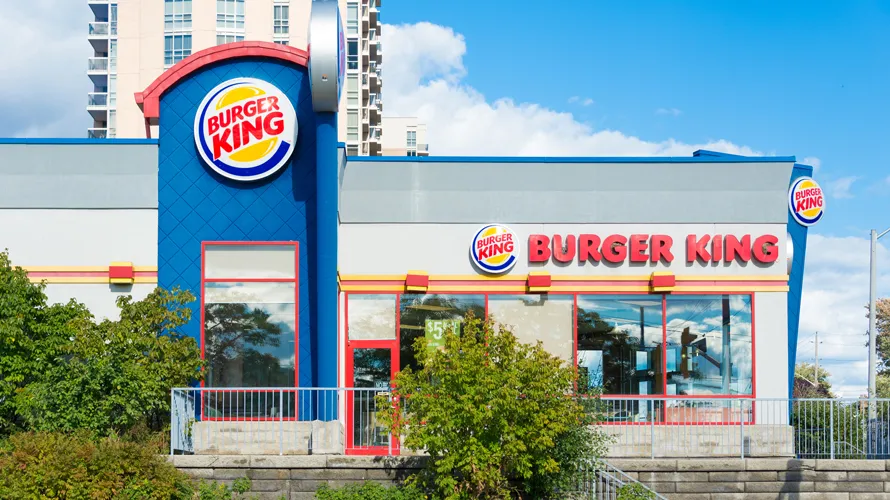
Burger King is one of the most recognizable fast-food brands on the planet, its flame-grilled Whopper a fixture of drive-thru culture for seven decades.
But behind the crown logo sits a genuinely complex corporate structure: a Miami diner-turned-global chain, sold and resold across four decades of corporate ownership, eventually landing in the hands of one of the most aggressive private equity firms in the world.
Here’s the complete picture of who owns Burger King today, how 3G Capital built an empire out of a struggling burger chain, what else sits inside the Restaurant Brands International portfolio, and how Burger King’s current turnaround is reshaping the numbers heading into 2026.
How Burger King Began: From a Miami Diner to “Home of the Whopper”
Burger King’s origin story starts not with its own founders but with a license.
James McLamore and David Edgerton, both graduates of Cornell University’s School of Hotel Administration, initially became franchisees of a Jacksonville-based chain called Insta-Burger King, opening their first Miami location on December 4, 1954.

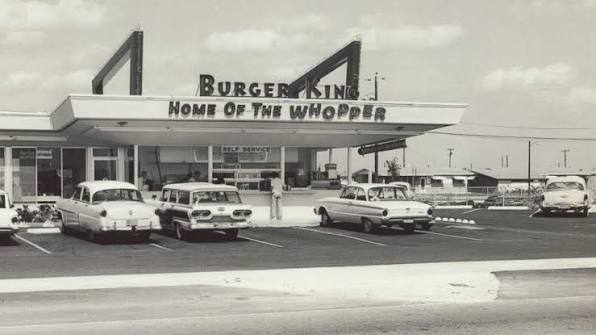
When the parent company ran into financial trouble in 1959, McLamore and Edgerton bought the national rights outright and rebranded the growing chain as Burger King of Miami, introducing the flame-broiling cooking method and the Whopper sandwich that would come to define the brand.
Under McLamore and Edgerton’s leadership, Burger King grew rapidly through franchising, becoming the third-largest fast-food chain in America and closing in on second place behind only McDonald’s by the mid-1960s.
In 1967, the founders sold Burger King to food conglomerate Pillsbury, beginning a long stretch of corporate-parent ownership that would see the brand pass through several more hands over the following decades — from Pillsbury to British conglomerate Grand Metropolitan (which acquired Pillsbury in 1989), to Grand Met’s successor Diageo following a 1997 merger, and finally to a private equity consortium led by Texas Pacific Group, Bain Capital, and Goldman Sachs Capital Partners, which bought Burger King from Diageo in 2002 and took it public again in 2006.
Enter 3G Capital: The 2010 Buyout That Changed Everything
The ownership structure that defines Burger King today began to take shape in 2010, when 3G Capital — a Brazilian private equity firm founded by Jorge Paulo Lemann, Marcel Telles, and Carlos Alberto Sicupira, known for a famously aggressive, cost-cutting management culture inherited from their earlier success turning around Anheuser-Busch InBev — announced a deal to acquire Burger King outright for approximately $4 billion, taking the company private once again.


The acquisition closed on October 19, 2010, and 3G Capital wasted little time reshaping Burger King’s operations, aggressively cutting costs, shifting toward a nearly fully franchised business model, and refranchising company-owned restaurants to institutional and multi-unit operators.
The strategy proved remarkably lucrative: 3G Capital’s roughly $1 billion equity investment in the Burger King deal has, through subsequent restructuring and expansion, grown into a stake now worth tens of billions of dollars, frequently cited as one of the most successful private equity plays in restaurant industry history.
The 2014 Tim Hortons Merger: Building Restaurant Brands International
3G Capital’s next major move came in August 2014, when Burger King agreed to merge with Canadian coffee-and-donut chain Tim Hortons in a deal valued at roughly $12.5 billion.
The merger was partly financed by a $3 billion preferred equity investment from Warren Buffett’s Berkshire Hathaway, lending significant financial credibility to the transaction, and structured the combined company — newly named Restaurant Brands International (RBI) — with dual headquarters positioning and Canadian tax domicile, which also drew scrutiny at the time over so-called “tax inversion” concerns given the more favorable Canadian corporate tax environment relative to the U.S.
The merger instantly created what was, at the time, the world’s third-largest quick-service restaurant company by number of locations, combining Burger King’s roughly 14,000 restaurants with Tim Hortons’ dominant Canadian coffee-shop footprint.
RBI has since expanded its portfolio further, acquiring Popeyes Louisiana Kitchen in 2017 for approximately $1.8 billion and Firehouse Subs in 2021 for roughly $1 billion, rounding out a four-brand portfolio spanning burgers, coffee and donuts, fried chicken, and submarine sandwiches.
Who Owns Restaurant Brands International Today?
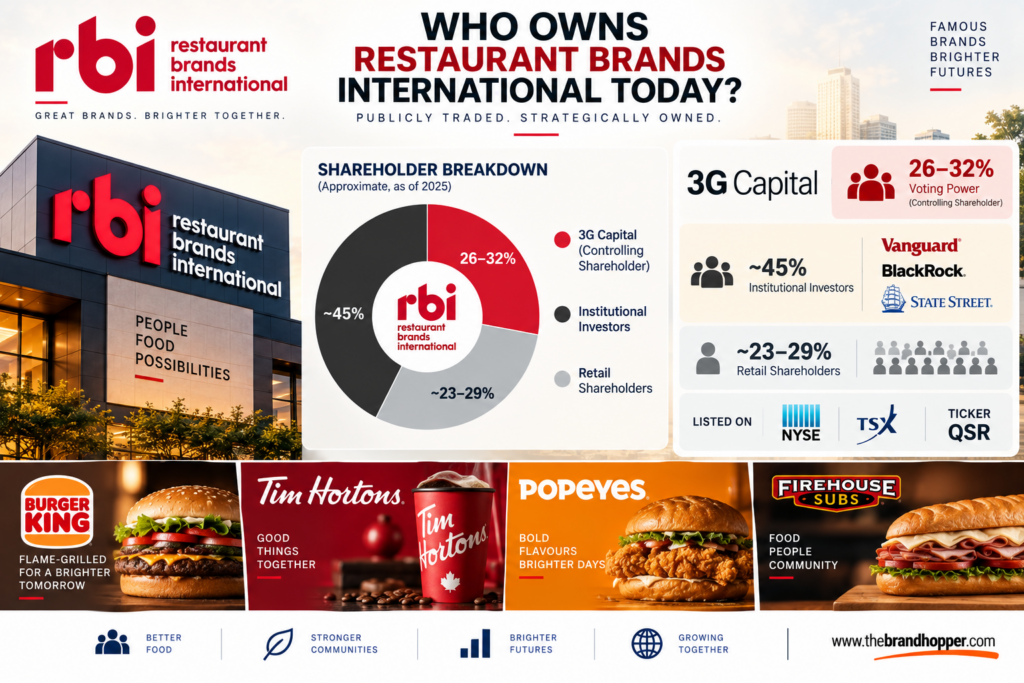
Restaurant Brands International trades publicly on both the New York Stock Exchange and Toronto Stock Exchange under the ticker QSR, but 3G Capital remains its controlling shareholder even after more than a decade of gradual stake reduction.
As of late 2025 SEC filings, 3G Capital holds approximately 26-32% of RBI’s voting power (sources vary slightly depending on whether the figure captures economic ownership versus voting control through RBI’s dual-class share structure), down substantially from the roughly 51% stake 3G held immediately after RBI’s formation in 2014.
In a notable recent move, 3G Capital sold approximately $3 billion worth of RBI shares in a block transaction, continuing a gradual monetization pattern common among private equity sponsors of mature, long-held public portfolio companies while still retaining enough of a stake to exert outsized influence over board composition and major strategic decisions.
The remaining roughly 45% of RBI shares are held by the investing public — a mix of institutional asset managers and retail shareholders — trading actively on both the NYSE and TSX.

Burger King’s Place Inside the RBI Portfolio
Within Restaurant Brands International’s four-brand structure, Burger King operates as a largely autonomous, heavily franchised business unit, with RBI’s corporate parent setting overall strategic direction, capital allocation, and brand investment priorities across Burger King, Tim Hortons, Popeyes, and Firehouse Subs.
Burger King itself is overwhelmingly franchised — well over 99% of its roughly 19,000 global locations are operated by independent franchisees rather than company-owned — a structure that generates highly predictable royalty and franchise-fee revenue for RBI while shifting the capital burden of running individual restaurants onto franchise operators.
This heavily franchised model, refined aggressively under 3G Capital’s ownership since 2010, is central to understanding why RBI as a corporate parent can generate strong free cash flow and consistent shareholder returns even during periods when Burger King’s own same-store sales growth has been inconsistent, as it was for several years earlier in the 2020s before the current turnaround took hold.
Burger King’s “Reclaim the Flame” Turnaround
Burger King entered the mid-2020s facing real competitive pressure, losing ground to rivals including Wendy’s amid inconsistent value offerings, aging restaurant footprints, and uneven marketing execution.
In response, RBI launched a multi-billion-dollar “Reclaim the Flame” initiative aimed at modernizing Burger King’s U.S. restaurant fleet, improving food quality and consistency, sharpening value-menu offerings, and re-energizing marketing — an investment strategy that has visibly paid off heading into 2026.

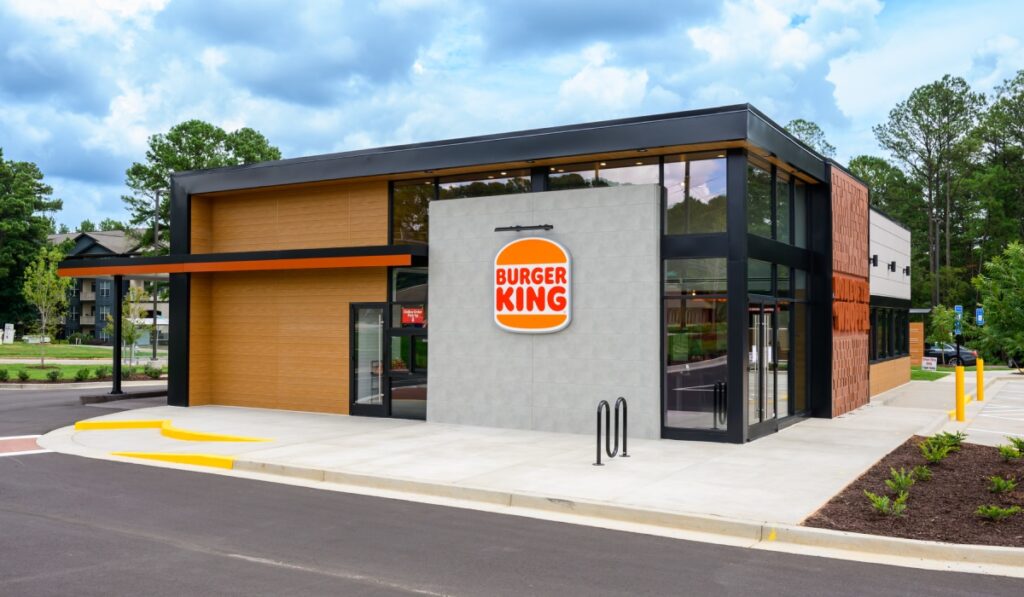
Burger King’s U.S. comparable sales grew 8.5% in the second quarter of 2026, the chain’s best quarterly performance since Q2 2023 and its fifth consecutive quarter of growth, while system-wide sales globally climbed 8.2% despite some store closures tied to the ongoing remodeling and re-franchising push.
That momentum was strong enough that, by August 2026, Burger King had reportedly overtaken Wendy’s to reclaim its position as America’s second-largest burger chain by sales, trailing only McDonald’s — a meaningful milestone validating the turnaround strategy RBI has pursued since Josh Kobza took over as CEO.
Leadership: Josh Kobza’s Operational Turnaround Era
Joshua Kobza became CEO of Restaurant Brands International in March 2023, succeeding Jose Cil, who had led the company since 2019.

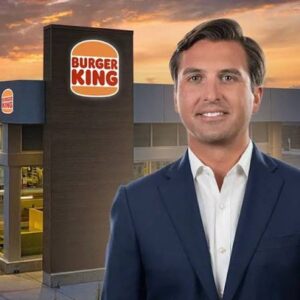
Kobza is very much an RBI institutional veteran, having spent roughly a decade in progressively senior roles at the company, including stints as Chief Financial Officer from 2013 to 2018 and Chief Operating Officer from 2019 to 2023 — giving him deep familiarity with both the financial and operational levers driving the company’s performance.
Under Kobza, RBI has leaned into brand-specific turnaround investment (most visibly at Burger King, but also at Tim Hortons and Popeyes) rather than pursuing further major acquisitions, a strategic pivot toward organic improvement across the existing four-brand portfolio that appears to be paying dividends in the 2026 results.
RBI’s FY2025 and 2026 Financial Performance
Restaurant Brands International reported full-year FY2025 total revenue of $9.43 billion, with net income of $776 million for the fiscal year, reflecting steady consolidated performance across all four brands even as Burger King’s turnaround was still in its earlier innings.
Momentum accelerated meaningfully into 2026, with Burger King’s standout system-wide sales growth of 8.2% and comparable sales growth of 8.6% leading RBI’s overall portfolio performance in recent quarters, reinforcing management’s confidence in the brand’s multi-year “Reclaim the Flame” reinvestment strategy.
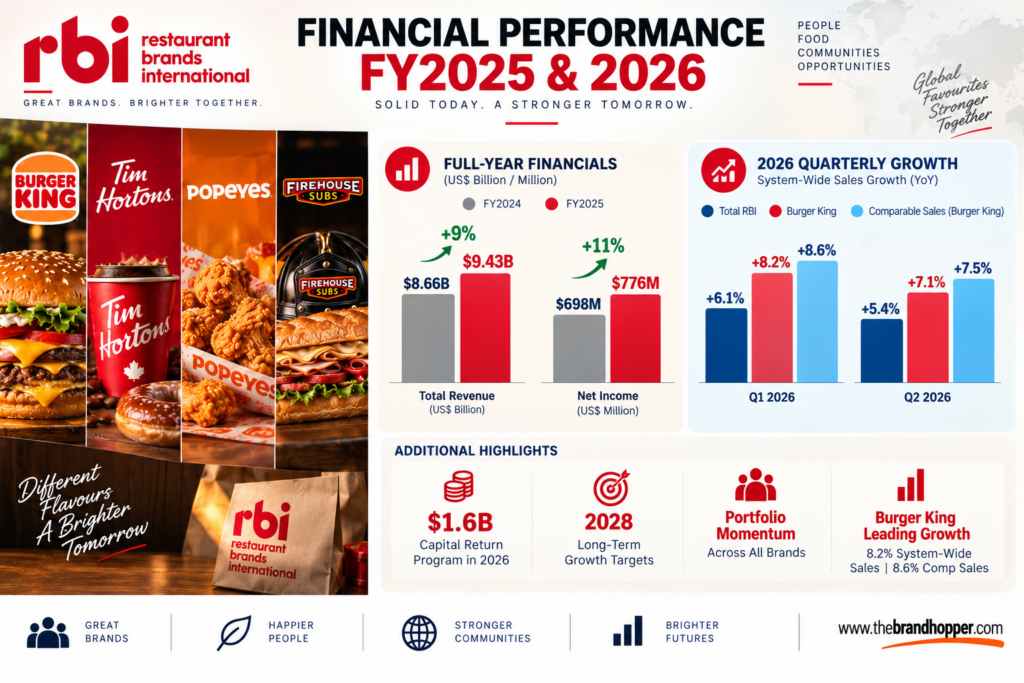
RBI has also continued returning capital to shareholders, reaffirming its 2028 long-term growth targets alongside a $1.6 billion capital return program set for 2026, a signal of confidence in both current momentum and the durability of the turnaround underway across the portfolio.
RBI’s Market Value in 2026
As of 2026, Restaurant Brands International’s market capitalization has ranged from roughly $33.8 billion in June to approximately $34.8 billion by August, reflecting renewed investor enthusiasm tied directly to Burger King’s accelerating turnaround and consistent performance across RBI’s other three brands.
That valuation places RBI among the largest quick-service restaurant companies globally by market value, trading alongside peers like McDonald’s, Yum! Brands, and Wendy’s, even though RBI’s overall restaurant count — more than 33,000 locations across over 120 countries — rivals or exceeds most of those competitors.
Why Burger King’s Ownership Structure Matters for Investors and Franchisees
Burger King’s position inside a multi-brand, private-equity-influenced public holding company shapes nearly every aspect of how the brand operates today, from its almost fully franchised restaurant model to its centralized capital allocation and marketing strategy set at the RBI corporate level.
3G Capital’s continued outsized influence — even at a reduced ~26-32% voting stake — means major strategic decisions, including the scale and pacing of investments like “Reclaim the Flame,” still carry the fingerprints of the same aggressive, efficiency-focused ownership philosophy that reshaped Burger King starting in 2010.
For investors, RBI represents a diversified quick-service restaurant bet spanning burgers, coffee, chicken, and sandwiches, with Burger King’s 2026 turnaround currently serving as the most closely watched storyline within the broader portfolio; for franchisees, it means operating within a system where capital-light corporate economics and centralized brand strategy directly shape day-to-day requirements around remodeling, menu standards, and value positioning.
Burger King Ownership at a Glance
| Category | Detail |
| Founded | December 4, 1954 (Miami, Florida) |
| Founders | James McLamore and David Edgerton |
| Parent company | Restaurant Brands International Inc. (RBI) |
| Controlling shareholder | 3G Capital (~26-32% of voting power) |
| 3G Capital founders | Jorge Paulo Lemann, Marcel Telles, Carlos Alberto Sicupira |
| 3G Capital’s 2010 buyout price | ~$4 billion |
| Company structure | Publicly traded (RBI); 3G Capital-controlled; ~45% public float |
| Stock listing | NYSE/TSX: QSR |
| CEO (RBI) | Josh Kobza (since March 2023) |
| Sister brands | Tim Hortons, Popeyes, Firehouse Subs |
| Global restaurant count (Burger King) | ~19,000 (99%+ franchised) |
| Current turnaround initiative | “Reclaim the Flame” |
| FY2025 RBI total revenue | $9.43 billion |
| FY2025 RBI net income | $776 million |
| Q2 2026 Burger King US comparable sales | +8.5% (best quarter since Q2 2023) |
| 2026 RBI market capitalization | ~$33.8-34.8 billion |
Key Takeaways
Burger King’s ownership structure in 2026 reflects one of the most consequential private equity plays in restaurant industry history: 3G Capital’s $4 billion buyout in 2010, followed by the 2014 merger with Tim Hortons (backed by a $3 billion Berkshire Hathaway investment) that created Restaurant Brands International, the publicly traded parent that still owns Burger King today alongside Tim Hortons, Popeyes, and Firehouse Subs.
3G Capital remains RBI’s largest and most influential shareholder at roughly 26-32% of voting power, even after selling down a substantial portion of its original stake, including a recent $3 billion share sale.
Financially, RBI delivered FY2025 revenue of $9.43 billion and net income of $776 million, while Burger King’s “Reclaim the Flame” turnaround has driven standout 2026 momentum — 8.5% U.S. comparable sales growth in Q2 2026 and a reclaimed position as America’s second-largest burger chain — under CEO Josh Kobza’s operationally focused leadership.
Frequently Asked Questions
Q: Who owns Burger King?
A: Burger King is owned by Restaurant Brands International (RBI), a publicly traded Canadian-based holding company (NYSE/TSX: QSR) that also owns Tim Hortons, Popeyes, and Firehouse Subs. RBI itself is controlled by 3G Capital, the Brazilian private equity firm that acquired Burger King in 2010.
Q: Who founded Burger King?
A: Burger King was founded by James McLamore and David Edgerton, who opened the first location in Miami on December 4, 1954, after initially operating as franchisees of a predecessor chain called Insta-Burger King.
Q: What is 3G Capital’s stake in Restaurant Brands International?
A: As of late 2025, 3G Capital holds approximately 26-32% of RBI’s voting power, down from roughly 51% at RBI’s formation in 2014, after selling down portions of its stake including a recent $3 billion share sale.
Q: When did 3G Capital buy Burger King?
A: 3G Capital acquired Burger King for approximately $4 billion in a deal that closed on October 19, 2010, taking the company private before its 2014 merger with Tim Hortons and subsequent re-listing as part of Restaurant Brands International.
Q: What other brands does Restaurant Brands International own?
A: Alongside Burger King, RBI owns Tim Hortons (acquired via 2014 merger), Popeyes Louisiana Kitchen (acquired 2017), and Firehouse Subs (acquired 2021).
Q: What was RBI’s revenue in FY2025?
A: Restaurant Brands International reported FY2025 total revenue of $9.43 billion and net income of $776 million across its four-brand portfolio.
Q: Who is RBI’s CEO?
A: Joshua Kobza has served as CEO of Restaurant Brands International since March 2023, succeeding Jose Cil, after previously serving as the company’s CFO and COO.
Q: Is Burger King’s turnaround working?
A: Yes. Burger King’s “Reclaim the Flame” initiative has driven system-wide sales growth of 8.2% and U.S. comparable sales growth of 8.5% in Q2 2026 alone, helping the chain reportedly reclaim its position as America’s second-largest burger chain by sales in mid-2026.
Also Read: McDonald’s vs Burger King: Which Fast Food Brand Wins?
To read more content like this, subscribe to our newsletter
Go to the full page to view and submit the form.