




Quick answer: Nike has no parent company. It’s a publicly traded company (NYSE: NKE) with no single owner, but co-founder Phil Knight and his family effectively control it. Through a dual-class share structure, the Knight family holds roughly 20% of total shares but commands about 97% of the voting power that elects most of the board, via a holding entity called Swoosh LLC.
Nike is one of the most recognizable brands on the planet, so it’s natural to assume some giant conglomerate sits behind it. It doesn’t — Nike is its own company, and understanding who owns it means understanding a stock structure most people never think to check. Here’s the full picture: ownership, control, revenue, and the brands under the Swoosh.
Is Nike Privately or Publicly Owned?

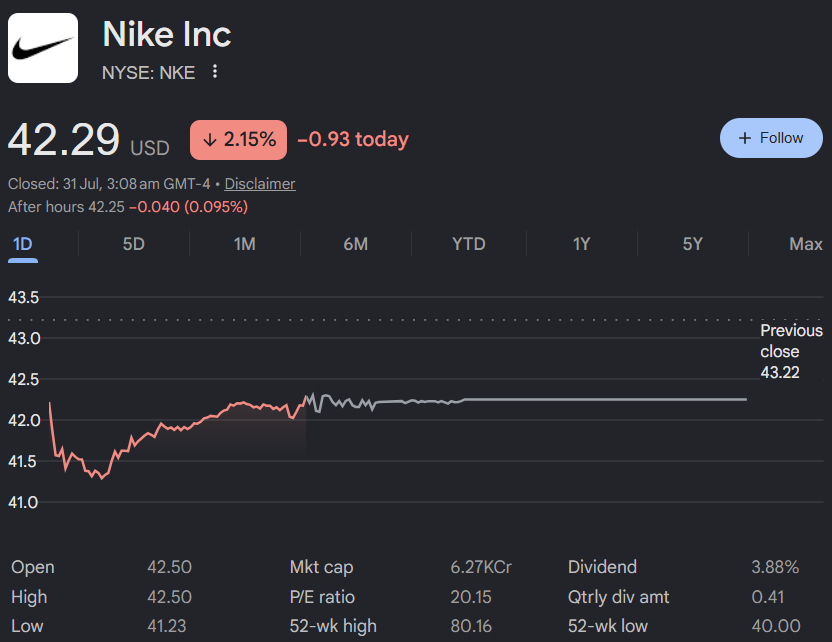
Nike is publicly traded on the New York Stock Exchange under the ticker NKE, meaning anyone can buy shares. But “publicly traded” isn’t the same as “publicly controlled.” Nike uses a dual-class stock structure: Class A shares, held mostly by insiders, and Class B shares, the ones trading on the NYSE.
Both classes carry equal economic rights, but Class A shares alone elect 75% of Nike’s board, while Class B shareholders elect only 25%. That split is why ordinary NKE investors have far less say over the company’s direction than share count alone would suggest.
Who Founded Nike?
Nike began life as Blue Ribbon Sports, founded on January 25, 1964, by Phil Knight, a University of Oregon runner and accountant, and Bill Bowerman, his former track coach. The pair struck a 50-50 partnership, initially importing Japanese running shoes from Onitsuka Tiger and selling them out of the trunk of Knight’s car.

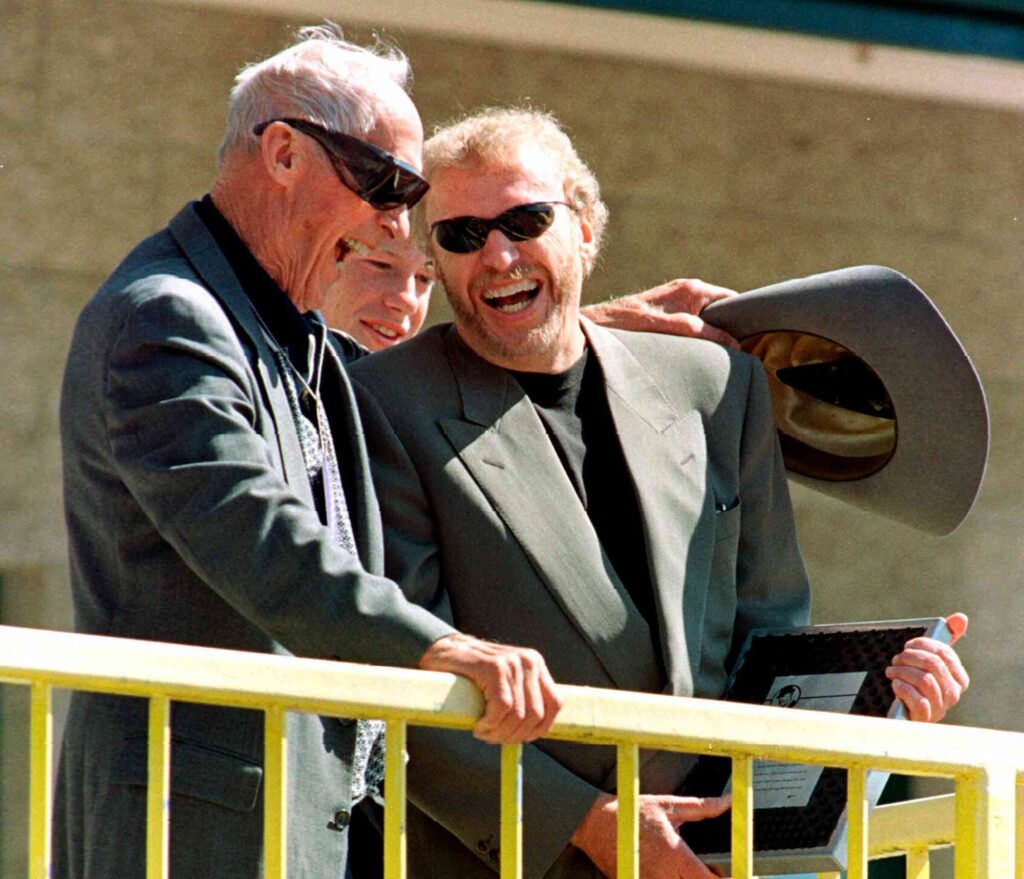
In 1971, the company began designing its own shoes and rebranded as Nike, after the Greek goddess of victory, adopting the now-iconic Swoosh logo.
Who Really Controls Nike? The Knight Family’s Voting Power
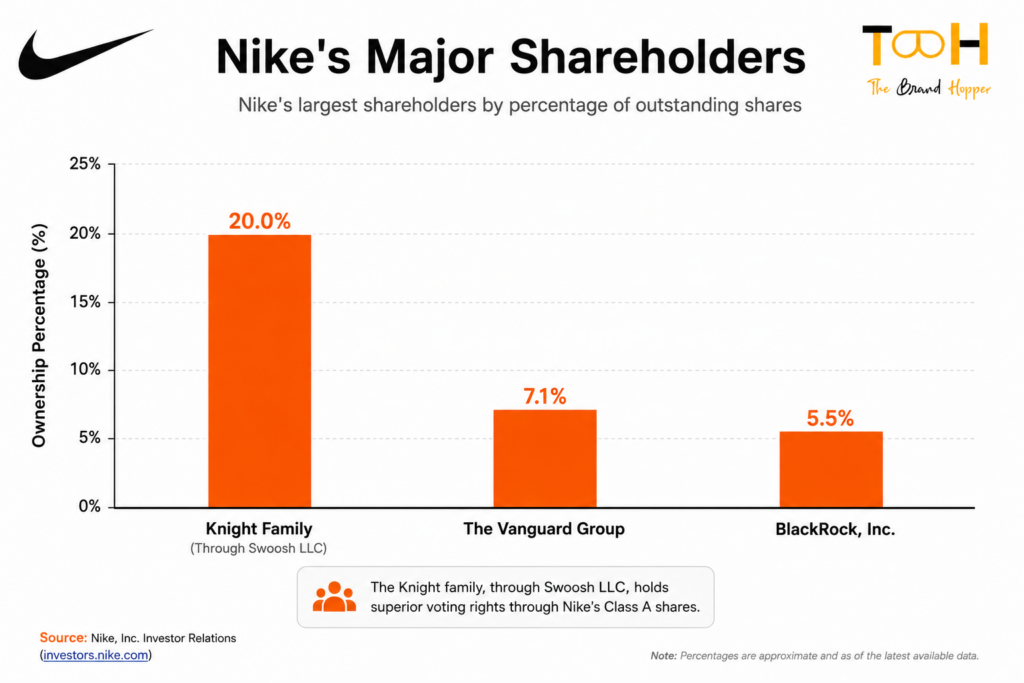
This is where Nike’s ownership gets interesting. Phil Knight and his family own only about one-fifth of Nike’s total shares, split across a holding company called Swoosh LLC (roughly 227 million shares), Knight’s personal holdings (about 36 million shares), and a trust held by his son, Travis Knight (about 27 million shares).

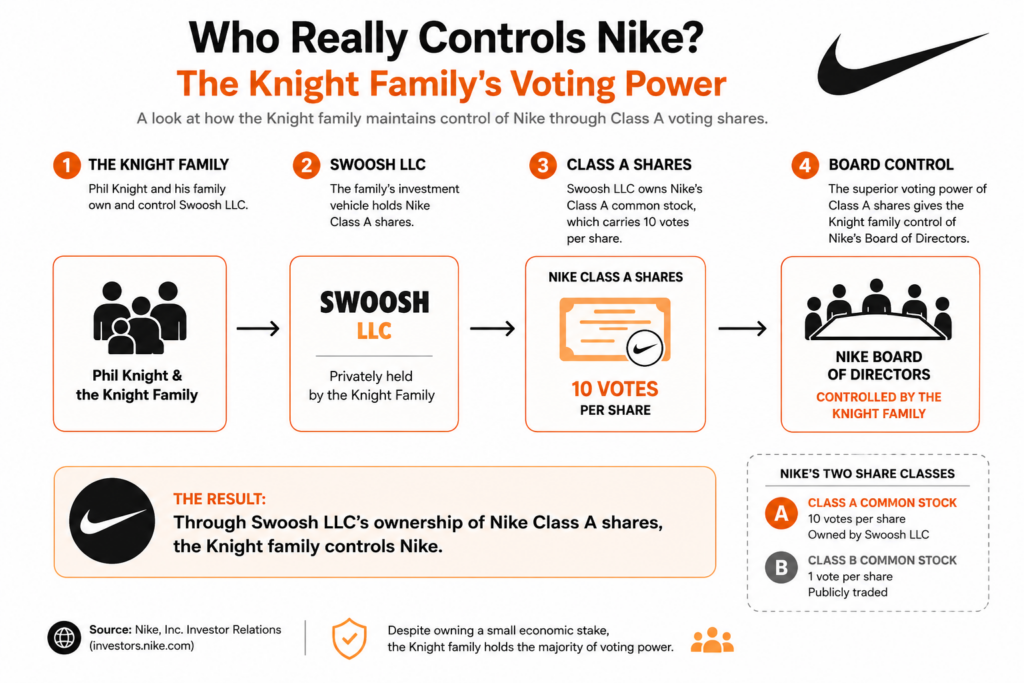
Despite that relatively modest economic stake, the family controls approximately 97% of Nike’s Class A voting rights. Combined with current and former executives, they can select nine of Nike’s twelve board seats. In practice, this means the Knight family retains effective control over Nike’s leadership, strategy, and major decisions, even though public shareholders own the large majority of the company’s total equity.
Nike’s Major Shareholders
Beyond the Knight family, Nike’s stock is held largely by institutional investors. The two largest are Vanguard, holding about 7.1% of shares, and BlackRock, holding about 5.5%. The rest is spread across other institutions, index funds, and individual retail investors, none of whom individually approach the Knight family’s level of influence.
Nike’s Revenue & Financial Snapshot
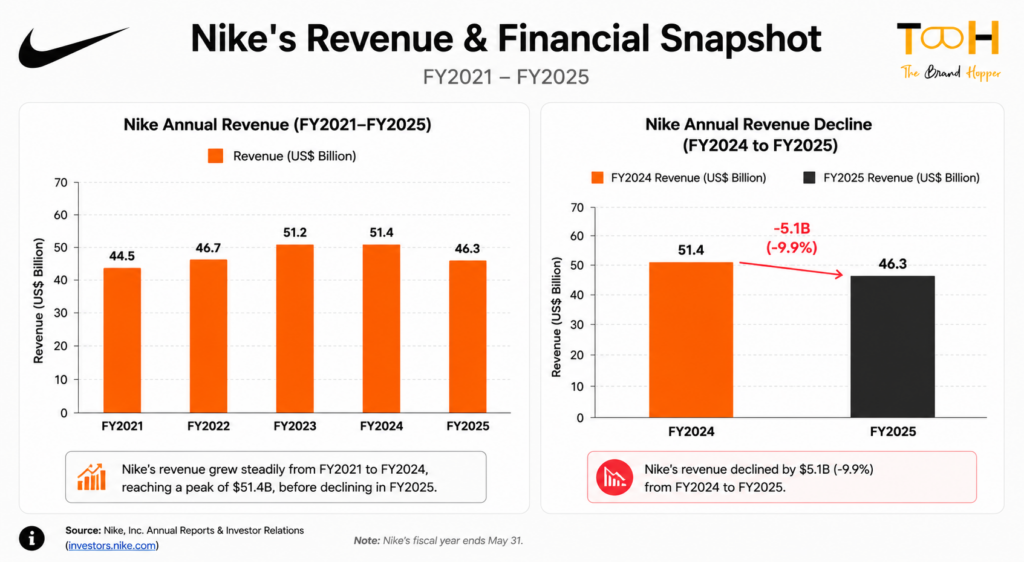
Nike’s business has cooled recently after years of growth. Full-year fiscal 2025 revenue (the 12 months ended May 31, 2025) came in at $46.3 billion, down from $51.4 billion in fiscal 2024. NIKE Direct revenue — its stores and digital channels — fell 13% to $18.8 billion, while wholesale revenue declined 7%. Gross margin slipped to 42.7%, and earnings per share came in at $2.16, as the company leaned on markdowns to clear excess inventory.
Nike still returned $5.3 billion to shareholders in fiscal 2025 through dividends and buybacks, and posted a return on invested capital of 20.2%. As of mid-2026, Nike’s market capitalization sits at roughly $62–65 billion, reflecting investor caution about the brand’s ongoing turnaround under new leadership.

What Brands Does Nike Own?
Nike, Inc. is the parent for a small, tightly focused portfolio — not a sprawling empire. Its two main brands beyond the Nike label itself:
- Converse — maker of the Chuck Taylor All Star, acquired by Nike in 2003 for about $305 million. Converse still operates out of its own headquarters in Boston.
- Jordan Brand — built in-house rather than acquired. It grew out of Michael Jordan’s original 1984 endorsement deal and the 1985 launch of the Air Jordan 1, eventually becoming a standalone Nike subsidiary brand generating billions annually.
Nike has also shed brands that didn’t fit its core focus: Umbro (sold in 2012 for $225 million), Cole Haan (sold in 2013 for $570 million), and Hurley (sold in 2019) — all offloaded to sharpen the company’s focus on Nike, Jordan, and Converse.
Who Runs Nike Today?
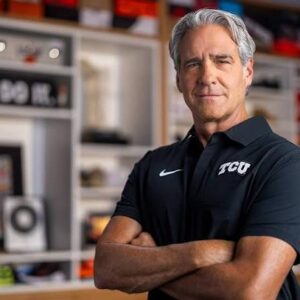
Elliott Hill has served as President and CEO of Nike since October 2024. Hill spent more than 32 years at Nike before retiring in 2020, previously leading global commercial and marketing operations as President of Consumer and Marketplace. His return was widely read as a move to bring operational discipline back to a company navigating slowing sales and stiffer competition.

Nike at a Glance
| Metric | Detail |
| Founded | 1964, as Blue Ribbon Sports, by Phil Knight & Bill Bowerman |
| Renamed Nike | 1971 |
| Headquarters | Beaverton, Oregon |
| Stock ticker | NYSE: NKE |
| Parent company | None — publicly traded, no controlling parent |
| Controlling shareholder | Knight family (~20% of shares, ~97% of Class A votes) |
| Top institutional holders | Vanguard (~7.1%), BlackRock (~5.5%) |
| FY2025 revenue | $46.3 billion (down from $51.4 billion) |
| Market cap (mid-2026) | ~$62–65 billion |
| Key brands owned | Nike, Converse, Jordan Brand |
| CEO | Elliott Hill (since October 2024) |
Frequently Asked Questions
Q. Does anyone own Nike outright?
A. No single person or company owns Nike outright. It’s publicly traded, but co-founder Phil Knight and his family control roughly 97% of the voting shares that elect most of the board, giving them effective control despite owning a minority of total shares.
Q. Is Nike a family-owned business?
A. Not in the traditional sense. Nike is a public company, but it retains family control through a dual-class share structure — similar to Meta or Alphabet — where the founding family holds outsized voting power relative to its ownership stake.
Q. What is Nike’s parent company?
A. Nike has no parent company. NIKE, Inc. is the top-level public company, and it in turn owns subsidiary brands including Converse and Jordan Brand.
Q. Does Nike still own Converse?
A. Yes. Nike has owned Converse since acquiring it in 2003 for approximately $305 million, and continues to operate it as a separate brand headquartered in Boston.
Q. How much revenue does Nike make?
A. Nike generated $46.3 billion in revenue for fiscal year 2025 (ended May 31, 2025), down from $51.4 billion the prior year, amid a broader brand reset and increased promotional activity.
Q. Who is Nike’s CEO?
A. Elliott Hill has been President and CEO of Nike since October 2024, returning to the company after a 32-year career there and a brief retirement.
Also Read: A Deep Dive into Success Story and Success Factors of Nike
To read more content like this, subscribe to our newsletter
Go to the full page to view and submit the form.