


Sony is one of the rare companies that has repeatedly reinvented itself across generations — from a bombed-out Tokyo radio repair shop to the maker of the Walkman, the Trinitron television, the PlayStation, and now a diversified entertainment and semiconductor powerhouse spanning music labels, Hollywood studios, and camera image sensors used in the majority of the world’s smartphones.
Here’s the complete picture of who owns Sony today, how two wartime engineers built it from scratch, why the company just spun off its entire financial services business, and what its sprawling modern empire actually looks like.
How Sony Began: A Bombed-Out Radio Shop and a Wartime Partnership
Sony’s origin story starts in the rubble of postwar Tokyo.
In September 1945, just weeks after Japan’s surrender, engineer Masaru Ibuka opened a small radio repair shop in the bomb-damaged Shirokiya department store building in Tokyo’s Nihonbashi district.
Ibuka had run Japan Precision Instruments Company during the war, supplying electronic devices for the military, and it was during the war that he first met Akio Morita, an applied sciences instructor who had worked alongside him as an engineer designing heat-seeking missile technology for the Imperial Japanese Army.
The following year, on May 7, 1946, Ibuka and Morita formally founded Tokyo Tsushin Kogyo K.K. (Tokyo Telecommunications Engineering Corporation) together, beginning what business historians have called one of “business history’s most productive and intriguing relationships” — Ibuka supplying the relentless product-development genius and Morita the marketing and business instincts that would together turn a small repair shop into a global brand.

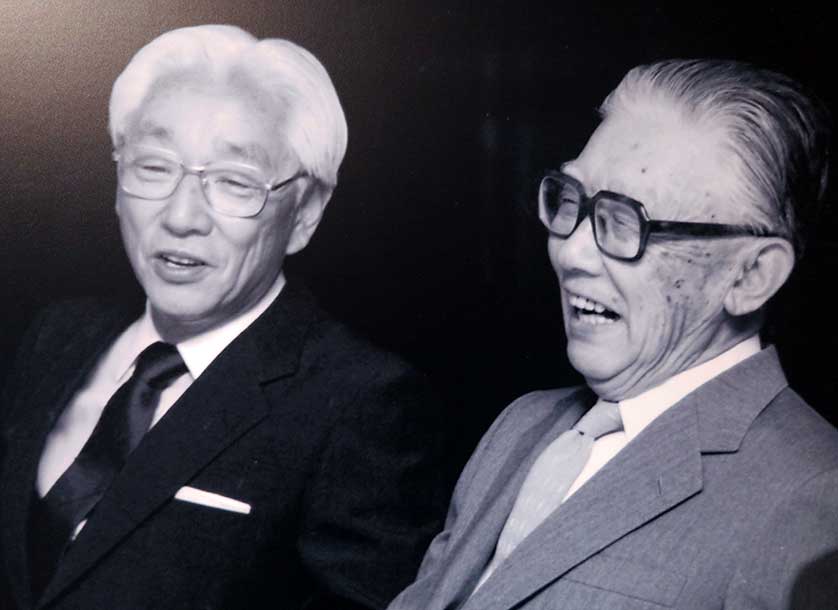
The company adopted the name Sony Corporation in 1958, derived from the Latin word “sonus” (sound) blended with the English slang “sonny,” chosen specifically because it was pronounceable and memorable in any language, reflecting Morita’s early ambition to build a genuinely global company from Japan.
Who Owns Sony Today? A Diffuse, Globally Held Shareholder Base
Sony Group Corporation has no controlling shareholder, founding family stake, or government ownership today — it is a widely held public company whose largest shareholders are almost entirely institutional trust banks and global asset managers rather than any individual or family.
The single largest shareholder is The Master Trust Bank of Japan, Ltd. (Trust Account), holding approximately 17.9% of shares, a figure that reflects Japan’s common practice of routing large blocks of institutional and pension assets through trust bank nominee accounts rather than any single beneficial owner controlling that stake directly.
Citibank, acting as depositary bank for Sony’s American Depositary Receipt holders, holds the second-largest block at roughly 9.7%, effectively representing the aggregated U.S. investor base that owns Sony ADRs on the New York Stock Exchange.
Custody Bank of Japan holds about 6.2% in a similar trust capacity, while global asset managers BlackRock (~9.12%), Nomura Asset Management (~4.73%), and The Vanguard Group (~4.39%) round out the largest identifiable institutional holders.

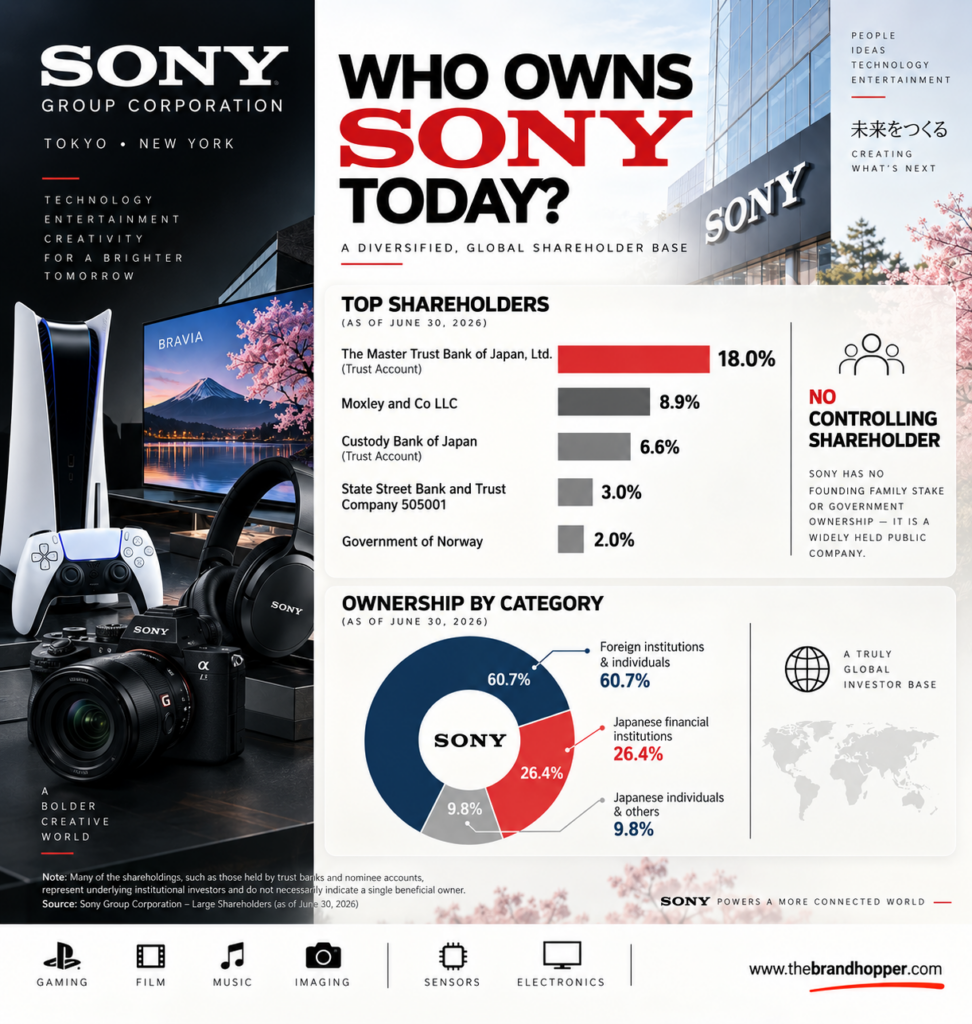
Overall, foreign institutions and individuals together account for roughly 61% of Sony’s shares, Japanese financial institutions hold about 26.4%, and Japanese individual and retail investors hold roughly 9.8% — a genuinely international ownership base that reflects Sony’s dual listing and decades-long global investor appeal.
Sony’s Business Empire: From PlayStation to Film Studios to Camera Sensors
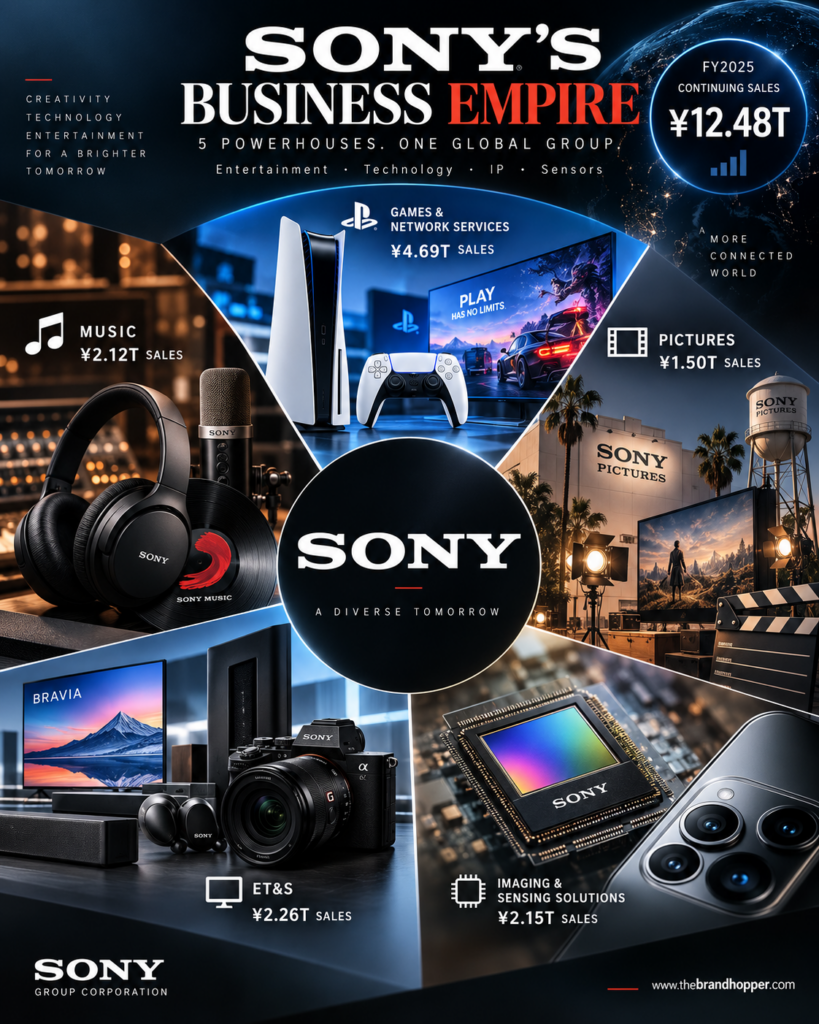
Sony’s modern corporate structure spans a remarkably diverse set of businesses that have little obvious overlap beyond a shared parent company and brand.
The Games & Network Services (G&NS) segment, home to the PlayStation console business and PlayStation Network subscriptions, has become one of Sony’s largest and most profitable divisions, with cumulative PlayStation 5 shipments surpassing 80 million units and network services revenue continuing to climb as more of Sony’s gaming business shifts toward digital and subscription revenue.
The Music segment encompasses Sony Music Entertainment, one of the “big three” global record labels, alongside music publishing and a stake in streaming-adjacent platforms, and has benefited enormously from the continued global growth of streaming, with both recorded music and publishing revenue climbing at healthy mid-to-high single-digit rates in recent quarters.
The Pictures (Movies) segment includes Sony Pictures Entertainment, spanning film production, television production, and media networks, giving Sony a genuine Hollywood studio footprint alongside its Japanese electronics heritage.
Sony’s Entertainment, Technology & Services (ET&S) segment covers the company’s traditional consumer electronics — televisions, cameras, and audio equipment — while the Imaging & Sensing Solutions (I&SS) segment, covering the image sensors found in a majority of the world’s smartphone cameras, has quietly become one of Sony’s highest-margin and most strategically important businesses as demand for high-quality mobile photography and machine-vision sensors has grown.

The Big 2025 Story: Sony Spins Off Its Entire Financial Services Business
If one event defined Sony’s corporate structure in 2025, it was the company’s decision to separate its financial services arm entirely.
On September 3, 2025, Sony Group Corporation announced a partial spin-off of its wholly owned subsidiary, Sony Financial Group Inc. (SFGI) — encompassing Sony Life, Sony Bank, and Sony’s insurance operations — with the transaction closing on October 1, 2025.
Under the terms of the spin-off, Sony distributed approximately 83.6% of SFGI shares directly to existing Sony shareholders as an in-kind dividend, retaining only about 16.4% of the financial services company itself, and SFGI began trading as an independently listed company on the Tokyo Stock Exchange Prime Market.
The move mirrors a broader trend among diversified global conglomerates — similar in spirit to Unilever’s 2025 ice cream demerger — of separating a financially distinct, capital-intensive business (in this case, insurance and banking, which operate under entirely different regulatory and capital requirements than entertainment or electronics) from a parent company’s core operations, allowing both the remaining Sony Group and the newly independent Sony Financial Group to be valued and managed more cleanly by investors going forward.
The spin-off temporarily depressed some of Sony’s reported quarterly results due to one-time deconsolidation effects, even as the company’s core entertainment and technology businesses continued performing strongly underneath.
Sony’s Leadership: A New CEO Takes Over in 2025
Sony’s top leadership changed hands in 2025 as well.
Hiroki Totoki was appointed Director, Representative Corporate Executive Officer, President and CEO of Sony Group Corporation, effective April 1, 2025, succeeding Kenichiro Yoshida, who had served as President and CEO since April 2018.

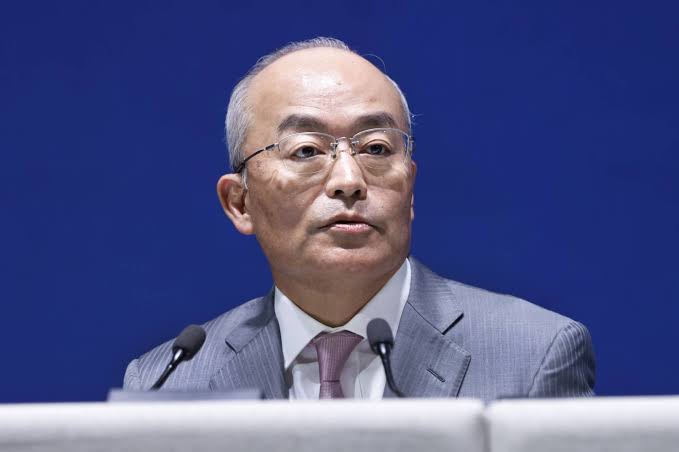
Rather than departing the company, Yoshida transitioned into the role of Chairman, remaining involved in Sony’s governance and long-term strategy while handing day-to-day operational leadership to Totoki, who previously served in senior finance and strategy roles within the group, including a stint helping oversee Sony’s gaming and mobile businesses.
The leadership transition continues Sony’s long-standing pattern of promoting experienced internal executives into the CEO role rather than seeking outside leadership, preserving continuity in strategic direction even as the specific mix of businesses under the Sony umbrella continues to evolve through moves like the financial services spin-off.
Sony’s FY2025 Financial Performance
Sony’s FY2025 results (for the fiscal year ended March 31, 2025) demonstrated the underlying strength of its entertainment and technology businesses even amid portfolio changes.
Consolidated sales came in at ¥12,957.1 billion, a modest decrease of ¥63.7 billion from the prior year, with declines in the Financial Services segment (ahead of its eventual spin-off) offset by solid growth in the Games & Network Services, Music, and Imaging & Sensing Solutions segments.
Consolidated operating income reached ¥1,208.8 billion, while net income attributable to Sony Group Corporation’s stockholders totaled ¥970.6 billion for the year.
Excluding the Financial Services segment entirely — a useful lens given the subsequent spin-off — Sony’s core sales were ¥12,043.9 billion with operating income of ¥1,276.6 billion and net income of ¥1,067.4 billion, arguably a clearer picture of the entertainment-and-technology business that now constitutes the ongoing Sony Group post-spin-off.
Within these results, the Games & Network Services segment posted particularly strong quarterly growth of 16% in sales and 37% in operating income during parts of the year, driven by higher PS5 hardware profitability and continued network services growth, while the Music segment saw sales climb 14% with streaming revenue rising across both recorded music and publishing.
Sony’s Market Value in 2026
As of 2026, Sony’s market capitalization sits at roughly $140 billion, reflecting continued investor confidence in the company’s entertainment, gaming, and semiconductor businesses even as management guided FY2026 revenue to contract slightly to around ¥12 trillion amid the post-spin-off portfolio adjustment and broader macroeconomic headwinds.
That valuation places Sony among the more richly valued Japanese multinational conglomerates, with investors increasingly pricing the company less as a traditional electronics manufacturer and more as a diversified entertainment and technology platform anchored by high-margin businesses like PlayStation Network services, music streaming royalties, and image sensor technology.
Why Sony’s Ownership Structure Matters for Investors
Sony’s genuinely dispersed, internationally held shareholder base — dominated by trust banks, depositary institutions, and global index funds rather than any founding family or government stake — means the company’s strategic direction is driven by professional management accountable to a broad institutional base rather than any single controlling voice.
This structure gave Sony’s board and executive team the latitude to execute a major structural decision like the Financial Group spin-off relatively cleanly, unlocking what management viewed as trapped value between a capital-intensive insurance and banking business and a higher-growth entertainment and technology core.
For investors, Sony post-spin-off represents an increasingly focused bet on gaming, music, film, and image sensor technology, with the more capital-intensive, lower-multiple financial services business now trading as its own separately valued entity.
Sony Ownership at a Glance (FY2025)
| Category | Detail |
|---|---|
| Founded | May 7, 1946 (as Tokyo Tsushin Kogyo), Tokyo, Japan |
| Founders | Masaru Ibuka and Akio Morita |
| Renamed Sony Corporation | 1958 |
| Largest shareholder | The Master Trust Bank of Japan (~17.9%) |
| Other major shareholders | Citibank/ADR depositary (~9.7%), BlackRock (~9.12%), Custody Bank of Japan (~6.2%) |
| Company structure | Publicly traded, no controlling shareholder or family stake |
| Stock listings | Tokyo Stock Exchange (6758); NYSE (ADR: SONY) |
| CEO | Hiroki Totoki (since April 1, 2025) |
| Chairman | Kenichiro Yoshida (former CEO) |
| Headquarters | Minato, Tokyo, Japan |
| Major 2025 event | Sony Financial Group spun off as independent company (Oct 1, 2025) |
| Key segments | Games & Network Services, Music, Pictures, ET&S, Imaging & Sensing |
| FY2025 sales | ¥12,957.1 billion |
| FY2025 net income | ¥970.6 billion (attributable to shareholders) |
| 2026 market capitalization | ~$140 billion |
Key Takeaways
Sony’s ownership story in 2026 centers on genuine institutional diversity rather than founder or family control: no single entity holds more than roughly 18% of shares, with trust banks, ADR depositary institutions, and global asset managers like BlackRock and Vanguard making up the largest identifiable blocks nearly eight decades after Masaru Ibuka and Akio Morita founded the company in a bombed-out Tokyo radio shop.
The company’s biggest recent structural move wasn’t a change in top-line ownership but a change in shape — the October 2025 spin-off of Sony Financial Group as an independently listed company, freeing the core Sony Group to focus on gaming, music, film, and image sensors under new CEO Hiroki Totoki.
Financially, FY2025 delivered ¥12,957.1 billion in sales and ¥970.6 billion in net income, with PlayStation, music streaming, and image sensors emerging as the clear growth engines heading into Sony’s next chapter.
Frequently Asked Questions
Q: Who owns the most shares of Sony?
A: The Master Trust Bank of Japan holds Sony’s largest identifiable share block at approximately 17.9%, though this reflects aggregated institutional and pension assets held in trust rather than a single beneficial owner. BlackRock (~9.12%) is the largest global asset manager shareholder.
Q: Who founded Sony?
A: Sony was founded on May 7, 1946, by engineers Masaru Ibuka and Akio Morita as Tokyo Tsushin Kogyo (Tokyo Telecommunications Engineering Corporation). The company was renamed Sony Corporation in 1958.
Q: Did Sony spin off part of its business?
A: Yes. Sony completed a partial spin-off of Sony Financial Group Inc. — including Sony Life and Sony Bank — on October 1, 2025, distributing about 83.6% of shares to existing Sony shareholders and retaining only a 16.4% stake.
Q: Who is Sony’s CEO?
A: Hiroki Totoki became Sony Group’s President and CEO effective April 1, 2025, succeeding Kenichiro Yoshida, who transitioned to the role of Chairman.
Q: What was Sony’s revenue in FY2025?
A: Sony reported FY2025 (fiscal year ended March 31, 2025) consolidated sales of ¥12,957.1 billion, with net income attributable to shareholders of ¥970.6 billion.
Q: What businesses does Sony own?
A: Sony operates across Games & Network Services (PlayStation), Music (Sony Music Entertainment), Pictures (Sony Pictures Entertainment), Entertainment Technology & Services (electronics), and Imaging & Sensing Solutions (camera sensors), following the 2025 spin-off of its financial services arm.
Q: Is Sony a Japanese-owned company?
A: Sony is headquartered in Japan and Japanese financial institutions hold roughly 26.4% of shares, but the majority of shares — around 61% — are held by foreign institutions and individuals, making Sony a genuinely internationally owned public company.
Q: How many PlayStation 5 units has Sony sold?
A: Cumulative PlayStation 5 shipments surpassed 80 million units as of recent reporting, making it one of Sony’s most successful hardware franchises and a key driver of Games & Network Services segment growth.
Also Read: Who Owns Unilever? Ownership & Brand Portfolio
To read more content like this, subscribe to our newsletter
Go to the full page to view and submit the form.