


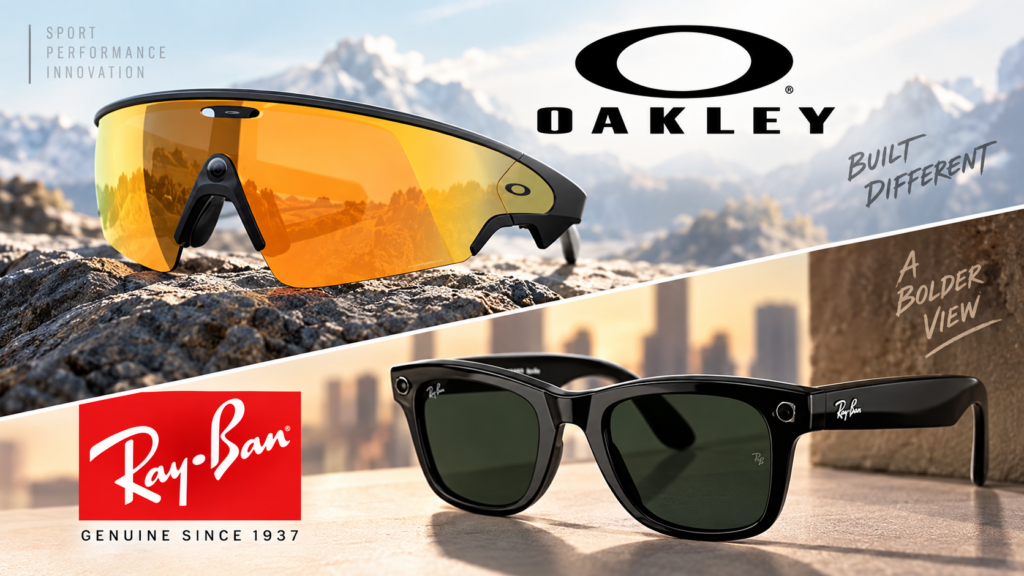
Ray-Ban and Oakley are arguably the two most recognizable eyewear brands on the planet, worn everywhere from Hollywood red carpets to Olympic velodromes.
What most shoppers don’t realize is that this isn’t really a rivalry between two competing companies at all — both brands sit inside the same corporate house, EssilorLuxottica, the Franco-Italian eyewear giant that also owns Persol, Oliver Peoples, and licenses frames for Chanel, Prada, and Versace.
So the real question isn’t which company wins, but which brand fits your face, your lifestyle, and your budget better.
Here’s a complete, grounded comparison of Ray-Ban and Oakley — history, ownership, financials, technology, and which one actually deserves a spot on your face.
How Ray-Ban Began: Solving a Pilot’s Problem at 30,000 Feet
Ray-Ban’s origin story starts not with a fashion designer but with a US Army Air Corps pilot’s medical complaint.
In 1929, Lieutenant General John Macready, a record-setting high-altitude aviator, approached optical company Bausch & Lomb with a problem: standard flight goggles of the era failed to block the intense blue and ultraviolet light pilots encountered at altitude, causing headaches, nausea, and impaired vision.
Bausch & Lomb’s engineers responded with a teardrop-shaped goggle featuring green lenses specifically tuned to absorb the most harmful light spectrum while preserving visual clarity, introduced in 1936.


The product was officially released to the public in 1937 under a name that described exactly what it did — Ray-Ban, short for “banning the rays” that damaged pilots’ vision — with Bausch & Lomb patenting the design on May 7, 1937.
Fifteen years later, in 1952, Ray-Ban introduced the Wayfarer, designed by Bausch & Lomb designer Raymond Stegeman using the then-revolutionary material of injection-molded plastic to create a bold, angular silhouette unlike anything else in eyewear at the time — a shape so influential it remains one of the best-selling sunglasses designs in the world more than seven decades later.
How Oakley Began: A Dog’s Name and a Motocross Grip
Oakley’s founding story couldn’t be more different from Ray-Ban’s military pedigree.
In 1975, motocross enthusiast Jim Jannard invented a proprietary rubber compound he called “Unobtainium” to solve a very specific problem: motocross handgrips that stayed slippery and uncomfortable during races.
His resulting product, “The Oakley Grip,” featured a cam-shaped design with an octopus-tread pattern and was named after his English Setter, Oakley Anne.

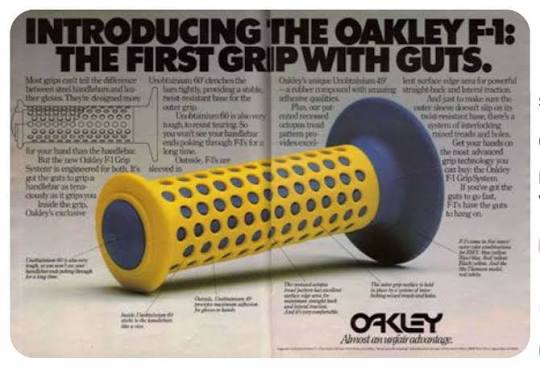
The company didn’t enter the eyewear business until 1980, launching the O Frame ski goggle, followed in 1984 by the Eyeshade, a radical single-lens cycling sunglass that was worn by American cyclists at the 1984 Los Angeles Olympics and instantly established Oakley’s identity as a performance-first, sports-engineering brand rather than a fashion label.
That identity deepened dramatically in 2015 with the launch of Oakley’s Prizm lens technology, which uses precisely tuned lens formulations to enhance contrast and color definition for specific sports and conditions, cementing Oakley’s reputation among athletes as the eyewear brand built by engineers rather than designers.
Unobtainium, Jannard’s original rubber compound, remains a core material in Oakley’s earsocks and nosepieces to this day, a rare case of a company’s founding invention still shaping its flagship products fifty years later.
Who Owns Ray-Ban and Oakley Today? Same Parent, Different Paths to Get There
Both brands eventually ended up under the same roof, though they arrived there through very different acquisitions.
Bausch & Lomb sold Ray-Ban to Italian eyewear conglomerate Luxottica Group in 1999 for a reported $640 million, after the brand had lost some of its cultural momentum in the 1980s and needed the manufacturing scale and retail distribution that Luxottica could provide.
Oakley, meanwhile, remained independent and founder-led for over three decades before Luxottica acquired it in 2007, a deal that brought Jim Jannard’s performance-engineering DNA into the same portfolio as Ray-Ban’s classic Americana styling.
Luxottica itself had been founded in 1961 in Agordo, Italy, by Leonardo Del Vecchio, who built the company from a small eyewear-components manufacturer into the world’s largest eyewear conglomerate through decades of aggressive brand acquisitions and vertical integration into retail (Sunglass Hut, LensCrafters) and licensing.
The final piece of the modern puzzle came on October 1, 2018, when Luxottica merged with French lens giant Essilor to form EssilorLuxottica, with Del Vecchio serving as chairman of the newly combined entity until his death in 2022.
Today, Ray-Ban and Oakley are just two of dozens of brands inside EssilorLuxottica’s portfolio, which also includes Persol, Oliver Peoples, Vogue Eyewear, and licensed lines for Chanel, Prada, Versace, and Burberry.
EssilorLuxottica’s FY2025 Financial Performance
EssilorLuxottica’s FY2025 results were genuinely historic for the company.
Full-year group revenue reached €28,491 million, up 7.5% year-over-year on a reported basis and a stronger 11.2% at constant exchange rates — the first time in company history that EssilorLuxottica delivered annual double-digit sales growth at constant currency.
Growth accelerated sharply through the year, with revenue up 7.3% in the first half but surging to 15.2% growth in the second half, driven substantially by the explosive acceleration of the AI-glasses business developed in partnership with Meta.
Fourth-quarter revenue alone hit €7,600 million, up an impressive 18.4% at constant exchange rates. Profitability kept pace with growth: the group posted an adjusted operating margin of 16.0% of revenue, record free cash flow of €2.8 billion (up €400 million year-over-year), and full-year net income attributable to shareholders of €3.157 billion, up 7.2% from the prior year.

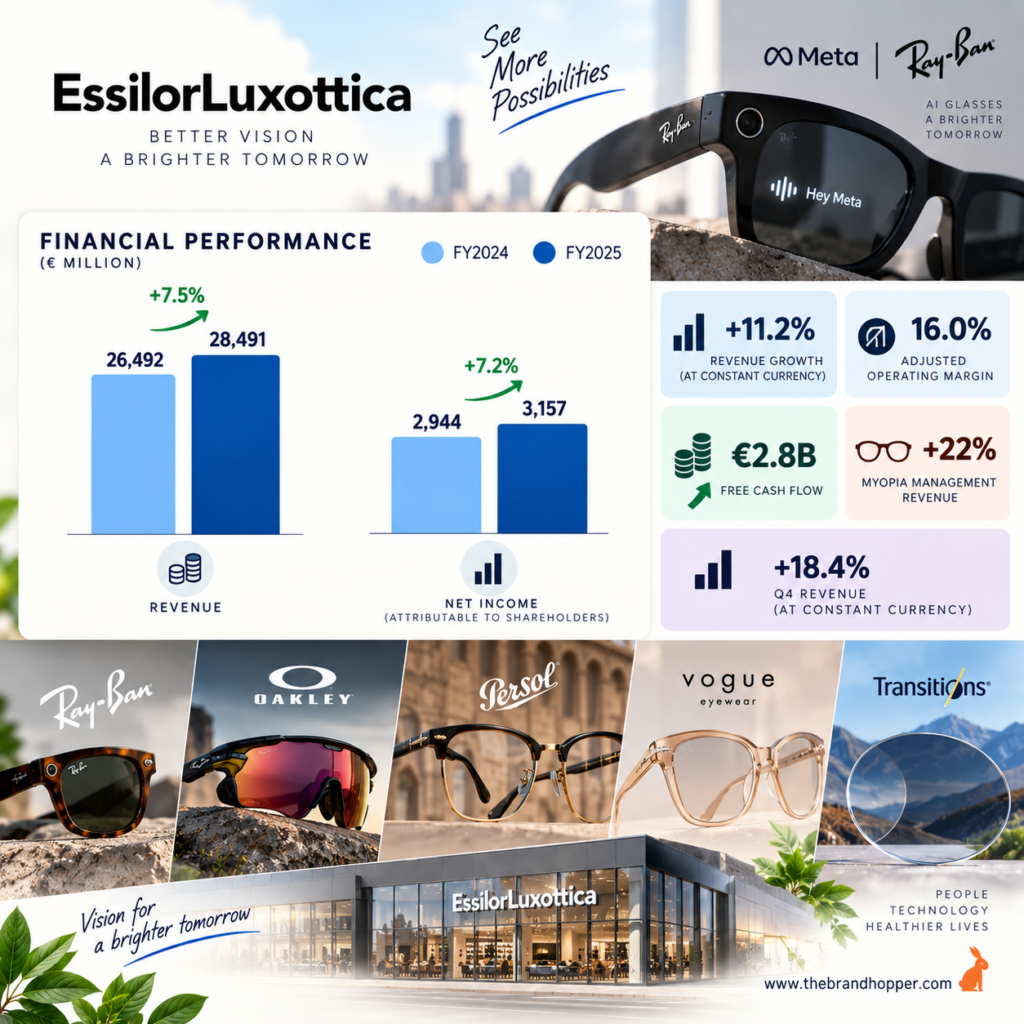
Within these results, myopia management products — an increasingly important growth category for the lens side of the business — saw revenue rise 22%, illustrating how EssilorLuxottica’s growth engine now spans far beyond just sunglasses into vision health and wearable technology.
The Real 2025 Story: Ray-Ban and Oakley Become AI Glasses Brands
If there’s one development that defined both brands in 2025, it wasn’t a new sunglasses silhouette — it was the explosive success of smart glasses.
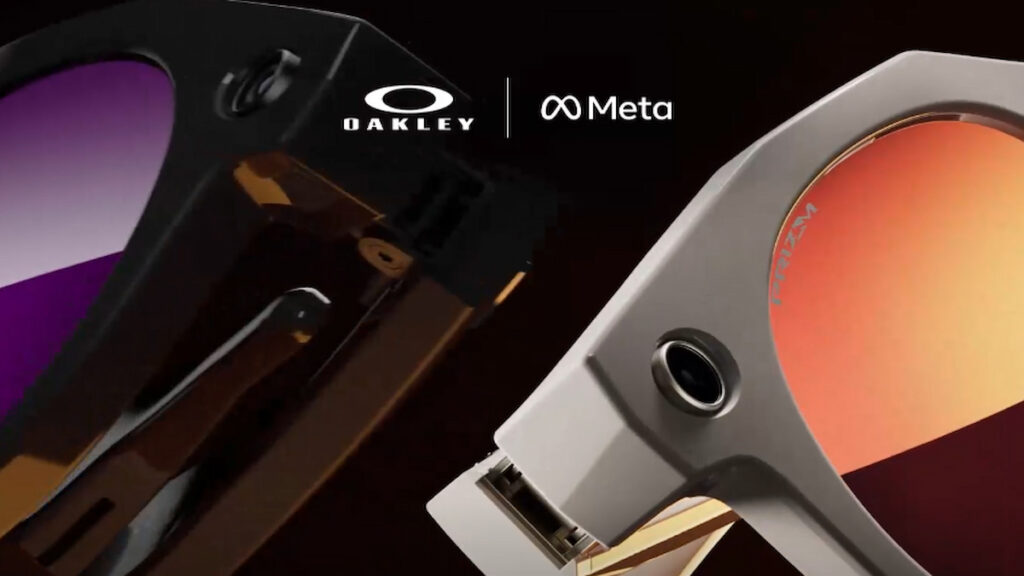
EssilorLuxottica’s partnership with Meta produced the Ray-Ban Meta smart glasses line, and in September 2025 the companies expanded the lineup with sport-focused Oakley Meta products, including the Oakley Meta Vanguard ($499, launched October 21, 2025) and Oakley Meta HSTN, alongside the premium $800 Meta Ray-Ban Display glasses — the company’s first smart glasses to include a built-in heads-up display.

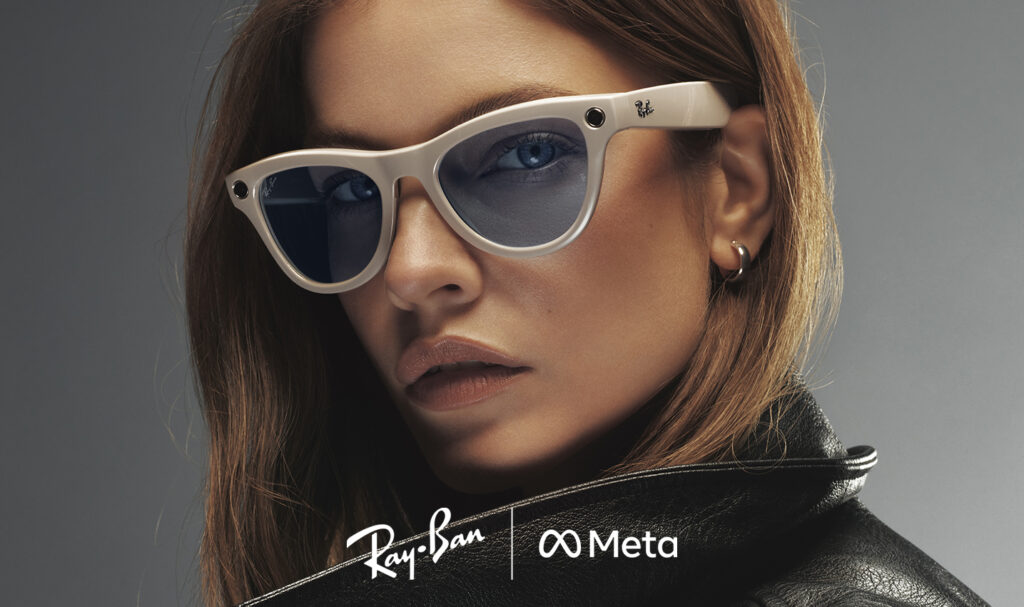
Together, Ray-Ban Meta and Oakley Meta devices sold more than 7 million units in 2025 alone, more than tripling combined 2023-2024 sales, and captured over 80% of the entire global smart glasses market, which itself grew 110% year-over-year in the first half of 2025 as rivals like Xiaomi and TCL-RayNeo entered the category.
The Oakley Meta Vanguard in particular leaned hard into Oakley’s performance-engineering heritage, featuring auto-capture during high-speed cycling, Garmin smartwatch integration for real-time performance metrics, and Strava integration for activity sharing — essentially translating Oakley’s four-decade sports-optics identity directly into the smart-glasses era, while Ray-Ban Meta products leaned on the brand’s classic Wayfarer and Aviator silhouettes to make AI glasses look like normal sunglasses rather than gadgets.

Design Philosophy: Fashion Icon vs Sports Engineering
The clearest way to understand the difference between these two brands isn’t financial — it’s philosophical.
Ray-Ban has always designed from the outside in, starting with an iconic silhouette (the Aviator’s teardrop lens, the Wayfarer’s angular plastic frame) and building function around a look that has remained culturally relevant across nearly nine decades of film, music, and street style.
Oakley designs from the inside out, starting with a technical problem (glare during high-speed cycling, impact protection during motocross, contrast enhancement for specific sports) and building a distinctive aesthetic around solving it, resulting in wraparound lenses, vented frames, and an unmistakably futuristic, athletic look.
Neither approach is objectively superior; they simply serve different purposes, which is precisely why EssilorLuxottica has been happy to run both brands in parallel rather than merging their identities.
Lens Technology and Performance Features
Oakley holds a clear technical edge for active, outdoor, and sport-specific use.
Its Prizm lens technology, introduced in 2015, uses precisely tuned lens formulations engineered for specific sports and lighting conditions — trail running, road cycling, golf, water sports — enhancing contrast and color definition in ways that generic tinted lenses cannot match, and most Oakley frames are built with wraparound coverage, secure grip materials (including the original Unobtainium earsock and nosepiece compound), and genuine impact resistance suitable for high-speed sports.
Ray-Ban’s lens technology, by contrast, prioritizes classic optical clarity and style-driven tinting — polarized options, gradient tints, and photochromic lenses — rather than sport-specific performance engineering, since the brand’s core use case has always been everyday sun protection and fashion rather than athletic performance.
Price and Positioning
Both brands occupy the premium mid-tier of the eyewear market, generally priced between $150 and $250 for standard sunglasses, though Oakley’s more technical sport-specific models and Ray-Ban’s premium collaborations can push higher.
Their new AI smart-glasses lines follow a similar pattern: Ray-Ban Meta glasses start at more accessible price points aimed at everyday tech-curious consumers, while Oakley Meta Vanguard’s $499 price tag and the ultra-premium $800 Meta Ray-Ban Display reflect more specialized, feature-dense positioning aimed at athletes and early-adopter tech enthusiasts respectively.
Which Brand Is Best for You? A Practical Breakdown
If you’re buying sunglasses primarily for everyday style — running errands, driving, casual outdoor wear, or simply looking good — Ray-Ban’s classic silhouettes and broad style range make it the more versatile, fashion-forward choice, and its Wayfarer and Aviator lines remain genuinely timeless investments that rarely look dated.
If you’re an athlete or serious outdoor enthusiast who needs a lens genuinely engineered for glare reduction, contrast enhancement, and impact protection during high-speed activity, Oakley’s Prizm lens technology and sport-specific frame engineering make it the clear functional winner.
If you’re curious about smart glasses specifically, Ray-Ban Meta is the better entry point for general everyday use and social features like hands-free photo and video capture, while Oakley Meta Vanguard is purpose-built for athletes who want fitness-tracking integration layered on top of the same underlying AI glasses technology.
Ray-Ban vs Oakley at a Glance
| Fact | Ray-Ban | Oakley |
| Founded | 1936-1937 (Bausch & Lomb, USA) | 1975 (Jim Jannard, USA) |
| Origin product | Aviator sunglasses for US Army Air Corps pilots | Motocross grip made from Unobtainium rubber |
| Entered eyewear | 1936 (founding product) | 1980 (O Frame ski goggle) |
| Iconic products | Aviator (1937), Wayfarer (1952) | Eyeshade (1984), Prizm lens (2015) |
| Acquired by Luxottica | 1999 (from Bausch & Lomb, ~$640M) | 2007 (from founder Jim Jannard) |
| Parent company | EssilorLuxottica | EssilorLuxottica |
| Design philosophy | Fashion-forward, iconic silhouettes | Performance-engineered, sport-specific |
| Signature technology | Classic tints, polarized, photochromic lenses | Prizm lens technology, wraparound protection |
| AI smart glasses | Ray-Ban Meta, Meta Ray-Ban Display ($800) | Oakley Meta Vanguard ($499), Oakley Meta HSTN |
| 2025 combined AI glasses sales | 7+ million units (Ray-Ban + Oakley Meta combined) | 7+ million units (Ray-Ban + Oakley Meta combined) |
| Best for | Everyday style, fashion, casual wear | Sports performance, cycling, running, motocross |
Key Takeaways
Ray-Ban and Oakley aren’t really rivals in a corporate sense — both are owned by EssilorLuxottica, which posted record FY2025 revenue of €28.49 billion and net income of €3.157 billion, with growth substantially fueled by the runaway success of Ray-Ban Meta and Oakley Meta smart glasses, which together sold over 7 million units and captured more than 80% of the global smart glasses market in 2025.
The more useful comparison is one of purpose: Ray-Ban’s nearly 90-year legacy of iconic, fashion-forward silhouettes like the Aviator and Wayfarer make it the better everyday and style-driven choice, while Oakley’s five decades of sports-engineering DNA, from Unobtainium grips to Prizm lens technology, make it the better choice for genuine athletic performance.
Both brands now also serve as the twin faces of EssilorLuxottica’s push into AI-powered wearable technology, proving that even eyewear’s most storied names are being reinvented for a smart-glasses future.
Frequently Asked Questions
Q: Are Ray-Ban and Oakley owned by the same company?
A: Yes. Both brands are owned by EssilorLuxottica, the Franco-Italian eyewear giant formed in 2018 from the merger of Luxottica and Essilor. Luxottica acquired Ray-Ban in 1999 and Oakley in 2007.
Q: Which is better, Ray-Ban or Oakley?
A: Neither is universally “better” — Ray-Ban is the stronger choice for classic, everyday style thanks to iconic designs like the Aviator and Wayfarer, while Oakley is the stronger choice for sports performance thanks to its Prizm lens technology and wraparound, impact-resistant frame engineering.
Q: Who founded Ray-Ban and Oakley?
A: Ray-Ban was created by Bausch & Lomb in 1936-1937 in response to a request from US Army Air Corps pilot John Macready. Oakley was founded in 1975 by Jim Jannard, initially as a motocross grip company before expanding into eyewear in 1980.
Q: How much revenue did EssilorLuxottica make in FY2025?
A: EssilorLuxottica reported FY2025 group revenue of €28,491 million, up 11.2% at constant exchange rates, with net income attributable to shareholders of €3.157 billion, up 7.2% year-over-year.
Q: How well did Ray-Ban Meta and Oakley Meta smart glasses sell in 2025?
A: Ray-Ban Meta and Oakley Meta smart glasses together sold more than 7 million units in 2025, more than tripling combined 2023-2024 sales, and captured over 80% of the global smart glasses market.
Q: What is Oakley’s Prizm lens technology?
A: Prizm is Oakley’s proprietary lens technology, launched in 2015, that uses precisely tuned lens formulations engineered to enhance contrast and color definition for specific sports and lighting conditions.
Q: Is Ray-Ban or Oakley more expensive?
A: Both brands are generally priced similarly in the $150-$250 range for standard sunglasses, though Oakley’s specialized sport lenses and Ray-Ban’s premium collaborations can push prices higher; their smart glasses lines range from roughly $299 for entry Ray-Ban Meta models to $800 for the Meta Ray-Ban Display.
Q: When did Oakley release its first eyewear product?
A: Oakley entered the eyewear market in 1980 with the O Frame ski goggle, followed by the influential single-lens Eyeshade cycling sunglass in 1984, which was worn at the 1984 Los Angeles Olympics.
Also Read: Top Competitors of EssilorLuxottica: Who Rivals the #1?
To read more content like this, subscribe to our newsletter
Go to the full page to view and submit the form.