


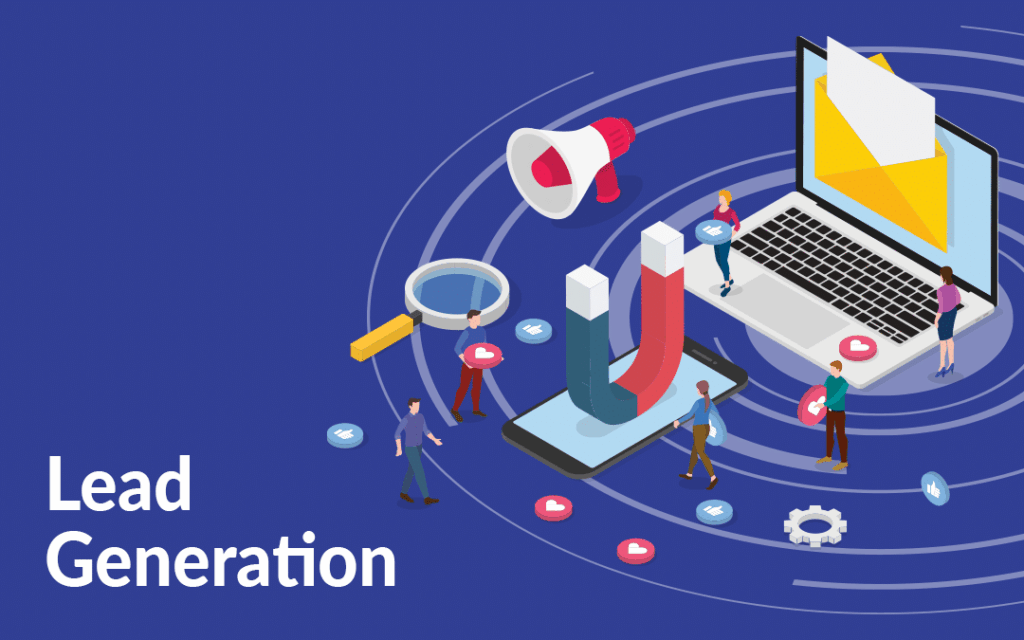
A regional software reseller once ran its entire pipeline off a shared spreadsheet: reps hand-copying names from LinkedIn, guessing at email formats, and following up whenever they remembered to. Deals slipped for weeks at a time, not because the product was wrong for the buyer, but because nobody caught the lead while it was still warm.
Contrast that with a five-person outbound team armed with verified contact data, automated sequencing, and lead scoring that flags intent the moment it appears — the same headcount, but a pipeline that compounds instead of leaking. The difference between those two companies isn’t hustle. It’s tooling.
Lead generation used to be a numbers game: dial enough, email enough, and something sticks. That math has broken down. Buyers now research vendors extensively on their own before a salesperson ever enters the picture, which means the moment they do reach out, they expect the seller to already understand their problem.
Manual prospecting — scraping names off LinkedIn, guessing email formats, cold-calling from a purchased list — simply cannot keep pace with how fragmented and self-directed the modern buying journey has become.
The tooling shift underway is toward intent data, AI-assisted enrichment, and scoring models that tell a rep which of the thousand leads in the CRM is actually worth calling today.
Buyers now complete roughly 70% to 80% of their purchasing journey — researching, shortlisting, and often picking a preferred vendor — before they ever initiate contact with a salesperson, according to research cited by Demand Gen Report. A sales team that’s still relying on cold outreach alone is showing up to a conversation the buyer has largely already had without them.
What Makes a Great Lead Generation Tool?
1. Data accuracy and enrichment quality is the foundation everything else sits on — a beautifully automated sequence sent to a bounced email or an outdated job title is wasted effort, so verified, frequently refreshed contact and firmographic data matters more than almost any other feature on this list.
2. Prospecting and outreach automation determines how much manual grind a tool removes: the best platforms let a rep build a list, personalize messaging at scale, and launch a multi-channel sequence without hopping between five different tabs.
3. CRM and workflow integration decides whether captured leads actually enter a pipeline that gets worked, or die in a spreadsheet nobody opens again — two-way sync with Salesforce, HubSpot, or a similar system is close to non-negotiable for any team past the solo-founder stage.
4. Lead scoring and qualification separates tools that just generate volume from tools that generate pipeline, since a list of ten thousand unranked contacts is far less useful than five hundred ranked by actual buying intent.
5. Compliance with GDPR and CCPA data-sourcing rules is a real legal and reputational exposure, not a checkbox — a tool that can’t explain where its contact data comes from is a liability waiting to surface.
6. Pricing and scalability rounds it out: a tool priced for enterprise data teams will bankrupt a two-person startup, and a tool built for solo prospecting will buckle under an enterprise sales org’s volume, so matching the platform to the team’s actual stage matters as much as any individual feature.
Best Lead Generation Tools
1. ZoomInfo


ZoomInfo built its name on what is widely regarded as the largest and most frequently refreshed B2B contact and company database on the market, and it remains the default choice for revenue teams that treat data quality as a competitive advantage rather than an afterthought. It was built specifically to solve the problem of stale, incomplete contact records that quietly poison every downstream sales and marketing motion.
Its core mechanic is a continuously verified database of contacts, org charts, technographics, and buyer intent signals, layered with tools like GTM Studio and Copilot that turn raw data into prioritized, AI-assisted outreach recommendations. Rather than just handing a rep a phone number, it tells them which accounts are actively researching relevant topics right now.
Its standout differentiator is depth: beyond basic contact details, ZoomInfo maps entire organizational hierarchies, tracks technology stacks, and layers in real-time intent data pulled from a large web-intelligence network — the kind of account intelligence that’s difficult to replicate with a cheaper, thinner database.
ZoomInfo does not publish list pricing; every deployment is quoted based on team size, data depth, and which modules (Sales, Marketing, Talent, Operations) are included, and the company explicitly states its packages are consultative rather than one-size-fits-all.
| Plan | Price | Key Details |
| SalesOS / GTM Platform | Custom quote (contact sales) | Seat-based pricing scaled by user count, credit volume, and data depth required |
Best for: Enterprise and mid-market revenue teams that need the deepest, most reliable account and contact intelligence available and have budget to match.
2. Apollo.io

Apollo.io combines a large contact database with built-in email sequencing, dialing, and workflow automation in a single platform, and it has become one of the fastest-growing tools in the category precisely because it replaces what used to require three or four separate subscriptions.
Its core mechanic runs on a unified credit system: users search and filter its database for ideal-customer-profile matches, then move those contacts directly into automated, multi-step outreach sequences without ever exporting a CSV. AI-assisted research and message drafting sit on top of that workflow to speed up personalization at scale.
Its standout differentiator is sheer breadth for the price — very few competitors bundle prospecting data, sequencing, a dialer, and pipeline management into one subscription that starts free and scales gradually, rather than forcing a jump straight to an enterprise contract.
Apollo’s pricing is genuinely tiered and self-serve up through its Organization plan, with a Custom tier available for teams needing SSO, dedicated support, or API access at scale; heavy outbound users should watch credit consumption closely, since add-ons and overages can push real spend well past the sticker price.
| Plan | Price | Key Details |
| Free | $0 | Access to the core database, basic search filters, limited credits |
| Basic | $49/user/mo (billed annually) | Unlimited email credits (min. 120,000/year), core sequencing tools |
| Professional | $79/user/mo (billed annually) | Advanced reporting, email tracking, higher credit limits |
| Organization | $119/user/mo (billed annually, 3-user minimum) | SSO, advanced security, customizable reporting |
Best for: SMB and mid-market sales teams that want prospecting data and outreach automation in one tool without stitching together a larger stack.
3. Lusha
Lusha is built around speed and simplicity: a browser extension and workspace that reveal verified emails and direct-dial phone numbers for prospects on LinkedIn, company websites, and other professional networks in a couple of clicks.
Its core mechanic runs entirely on a credit system — revealing an email costs a fraction of the credits a phone number does — which lets a rep or team dial in exactly how much they’re spending on data versus other Lusha features like buying-signal tracking and CRM enrichment.
Its standout differentiator is how little friction stands between a rep finding a prospect and getting their direct contact information; where some enrichment platforms require building out full lists and campaigns first, Lusha is optimized for a fast, individual, in-the-moment lookup during live prospecting.
Pricing runs on a per-seat, credit-based structure across four paid tiers plus a permanent free plan, with credit allotments that scale with each tier and a fully custom Scale plan for larger teams that negotiate volume discounts on a per-credit basis.
| Plan | Price | Key Details |
| Free | $0/mo | 40 credits/month, basic prospecting and extension access |
| Starter | ~$37/mo (billed annually) | ~4,800 credits/year, 1 user |
| Pro | ~$52/mo (billed annually), scaling with credit slider | ~7,200+ credits/year, 2 users |
| Premium | ~$300/mo (billed annually), scaling with credit slider | ~40,800+ credits/year, 5 users |
| Scale | Custom quote | Volume-discounted per-credit pricing, per-user credit limits |
Best for: Individual reps and small sales teams that want quick, affordable, on-demand contact lookups rather than a full enrichment platform.
4. Outreach


Outreach is a sales engagement platform that has evolved into what it now calls an AI Agent Platform, layering autonomous research, personalization, and deal-management agents on top of its original multi-channel sequencing engine.
Its core mechanic centers on sequences — automated, multi-touch cadences across email, calls, and social touches — combined with conversation intelligence that records and analyzes sales calls, and a growing suite of AI agents that draft outreach, summarize deals, and flag at-risk pipeline automatically.
Its standout differentiator is how far it’s pushed agentic AI into daily seller workflows: rather than just automating message-sending, Outreach’s agents actively research accounts, prep reps before meetings, and surface deal risk without a human prompting it, positioning it as much a coaching and forecasting tool as a prospecting one.
Outreach does not publish public pricing; it uses a combination of seat-based licensing and consumption-based AI credits, with packages ranging from an entry conversation-intelligence tier up through a full enterprise revenue-orchestration package.
| Plan | Price | Key Details |
| Amplify Essentials | Custom quote (contact sales) | Conversation intelligence, AI coaching, 10,000 AI credits |
| Amplify Core | Custom quote (contact sales) | Multi-channel sequencing, AI prospecting agents, 25,000 AI credits |
| Amplify Plus | Custom quote (contact sales) | Full agent suite, deal health alerts, 50,000 AI credits |
| Amplify Pro | Custom quote (contact sales) | AI forecasting, territory management, 100,000 AI credits |
Best for: Mid-market and enterprise sales teams that want outbound sequencing bundled with conversation intelligence and AI-driven deal coaching.
5. Salesloft
Salesloft positions itself as a full revenue orchestration platform built around Cadence, its sequencing engine, alongside conversation intelligence, deal management, and forecasting tools aimed at the entire revenue team, not just SDRs.
Its core mechanic is the cadence — a structured, multi-channel sequence of calls, emails, and social touches — paired with Rhythm, a prioritization layer that tells reps which accounts and actions matter most on a given day rather than leaving them to guess.
Its standout differentiator is its focus on orchestration across the whole revenue motion: rather than treating prospecting, deal management, and forecasting as separate tools bolted together, Salesloft frames them as one continuous system, with bi-directional CRM sync keeping everything aligned in real time.
Salesloft does not publish self-serve pricing on its site; every quote comes from a sales conversation, packaged around the specific mix of Cadence, Conversations, Deals, and Forecast modules a team needs.
| Plan | Price | Key Details |
| All Salesloft packages | Custom quote (contact sales) | Cadence automation, conversation intelligence, deals, and forecasting modules, packaged per team need |
Best for: Established sales organizations that want a single orchestration layer spanning prospecting, deal execution, and forecasting.
6. HubSpot

HubSpot is the closest thing the inbound side of lead generation has to a default platform, combining forms, landing pages, live chat, and email nurturing with a free CRM that keeps every captured lead in one system of record from the first click onward.
Its core mechanic is capture-to-nurture in a single flow: a visitor fills out a form or engages a chatbot, HubSpot logs them as a contact automatically, and marketing automation workflows nurture them with targeted emails based on their behavior — no separate integration required between the capture tool and the database.
Its standout differentiator is breadth of the free tier: unlike most enrichment or engagement platforms, a small team can run real inbound lead capture, basic email marketing, and full CRM record-keeping without paying anything, then graduate into paid tiers as volume and sophistication grow.
Marketing Hub pricing scales by marketing-contact tier and included seats, with Professional and Enterprise editions carrying a required one-time onboarding fee on top of the monthly subscription.
| Plan | Price | Key Details |
| Free | $0/mo | Up to 2 users, basic forms, live chat, free CRM |
| Starter | From $7/mo/seat (billed annually; promotional rate) | 500 HubSpot Credits, 1,000 marketing contacts |
| Professional | From $800/mo (3 Core Seats included) | 2,000 marketing contacts, omni-channel automation; requires a one-time $3,000 onboarding fee |
| Enterprise | From $3,600/mo (5 Core Seats included) | 10,000 marketing contacts, advanced reporting and governance; requires a one-time $7,000 onboarding fee |
Best for: Marketing teams that want inbound lead capture, nurturing, and CRM record-keeping unified under one platform, starting from zero budget.
7. OptinMonster
OptinMonster, created by the team behind WPBeginner, is a focused on-site conversion tool: popups, floating bars, slide-ins, and gamified opt-in campaigns designed to turn anonymous website traffic into captured leads before they leave.
Its core mechanic is behavior-based targeting — campaigns trigger on exit intent, scroll depth, time on page, or referral source, rather than firing the same generic popup at every visitor regardless of what they’re doing on the site — paired with built-in A/B testing to see which variant actually converts.
Its standout differentiator is that it’s purpose-built for a single job and does it well: rather than being one module inside a broader marketing suite, OptinMonster focuses entirely on the capture moment itself, which makes it a natural add-on to whatever email or CRM system a team already runs.
Pricing is impression-based rather than contact-based, scaling with how many times campaigns are displayed per month and how many sites the account covers, with intro-rate annual billing as the default purchase path.
| Plan | Price | Key Details |
| Basic | From $7/mo (billed annually, promotional rate) | 1 site, 2,500 impressions/month |
| Plus | From $19/mo (billed annually, promotional rate) | 2 sites, 10,000 impressions/month |
| Pro | From $29/mo (billed annually, promotional rate) | 3 sites, 25,000 impressions/month |
| Growth | From $49/mo (billed annually, promotional rate) | 5 sites, 100,000 impressions/month, agency/client features |
Best for: Marketing teams and content-driven sites that want to convert existing traffic into leads without touching their outbound prospecting stack.
8. LinkedIn Sales Navigator

LinkedIn Sales Navigator is LinkedIn’s dedicated prospecting layer on top of its core professional network, giving sellers advanced search filters, lead and account recommendations, and direct messaging reach that the standard LinkedIn interface doesn’t offer.
Its core mechanic is filtered discovery inside the largest professional network available: over fifty advanced search filters let a rep narrow down to precisely the right title, seniority, industry, and company size, then save leads and accounts to track their activity over time, including job changes and posts.
Its standout differentiator is context that data-only tools simply can’t replicate — because it sits inside LinkedIn itself, a rep sees shared connections, recent posts, and mutual context before ever sending a message, which tends to lift response rates compared to a cold email pulled from a database with no social signal attached.
Pricing is transparently published for its two self-serve tiers, with the CRM-integrated Advanced Plus tier reserved for a custom sales quote based on team size and integration needs.
| Plan | Price | Key Details |
| Core | $119.99/mo or $1,079.88/yr per license | Advanced search filters, 50 InMails/month, built for individual sellers |
| Advanced | $159.99/mo or $1,799.88/yr per license | Adds Account IQ/Lead IQ insights, team seat management, built for sales teams |
| Advanced Plus | Custom quote (contact sales) | Deep CRM integrations (Salesforce, HubSpot, and more), enterprise onboarding |
Best for: Individual sellers and sales teams that rely heavily on LinkedIn as a primary prospecting channel and want warmer, context-rich outreach.
9. Expandi
Expandi is a cloud-based LinkedIn automation tool built specifically to run connection-request and messaging campaigns at scale while trying to stay inside LinkedIn’s usage limits and avoid account bans.
Its core mechanic is multichannel sequence-building on top of LinkedIn actions: connection requests, InMails, and messages combined with email follow-ups in a single sequence, with smart algorithms that pace outreach volume and a dedicated, country-based IP address per account to reduce platform risk.
Its standout differentiator is how deliberately it’s built around account safety and agency workflows — features like campaign prioritization, image and video personalization, and white-label reporting make it a natural fit for agencies running LinkedIn outreach on behalf of multiple clients rather than a single in-house team.
Pricing is a flat per-seat rate for its core Business plan, with a custom Agency tier for teams running ten or more seats or wanting a white-labeled version of the platform.
| Plan | Price | Key Details |
| Business | $99/mo (or $79/mo billed annually) | Cloud automation, dedicated IP, multichannel sequences, unlimited campaigns |
| Agency | Custom quote (10+ seats) | Everything in Business, role/permission management, white-label branding, dedicated CSM |
Best for: Agencies and small sales teams running LinkedIn-first outbound campaigns who need built-in account-safety guardrails.
Building Your Lead Generation Stack
The right starting point depends entirely on where the leak in the funnel actually is. A solo founder doing their own outbound is usually better served by Apollo.io or Lusha — enough data and sequencing to run real campaigns without an enterprise price tag. An SMB sales team ready to scale outbound benefits from Outreach or Salesloft once manual follow-up starts costing more in missed deals than the subscription would cost. A marketing team whose real gap is converting existing website traffic, not finding new prospects, should look first at HubSpot or OptinMonster rather than another data tool. And an enterprise sales org juggling account-based strategies across a large territory is the natural home for ZoomInfo’s depth of data paired with LinkedIn Sales Navigator’s social context.
The instinct to buy a full stack on day one is understandable, but it’s usually the wrong move. The smarter approach is diagnosing which stage of the funnel is actually leaking — capture, enrichment, or follow-up — and fixing that one stage first. A team drowning in unqualified inbound doesn’t need a better outbound sequencer; a team with plenty of leads but no consistent follow-up doesn’t need another data source. Fix the highest-leverage leak, prove the ROI, and let the rest of the stack grow from there rather than trying to buy your way to a complete pipeline in one purchase order.
Also Read:
- Best Brand Monitoring Tools to Catch a Crisis Early
- Best Marketing Automation Platforms for Every Team
- 10 Best Social Media Analytics Tools That Actually Prove ROI
- Best AI Landing Page Builders in 2026 (Ranked & Compared)
To read more content like this, subscribe to our newsletter
Go to the full page to view and submit the form.