Duolingo stands as a transformative force in global education, recognized as the world’s most popular language learning application. Its mission is profoundly ambitious: to cultivate the finest educational experiences globally and ensure their universal accessibility. This commitment has propelled Duolingo to the forefront of mobile learning, making it the top-grossing application within the Education category across both Google Play and the Apple App Store. The platform’s extensive reach is evidenced by its impressive user base, which recorded 130 million Monthly Active Users (MAUs) in Q1 2025, alongside a significant milestone of surpassing 10 million paid subscribers.
Before Duolingo’s emergence, the landscape of language education was largely characterized by expensive, often rigid, and less engaging methodologies. The advent of Duolingo marked a significant disruption, redefining how millions approach language acquisition. Its distinctive fusion of cutting-edge technology, sophisticated gamification, and unparalleled accessibility has rendered the learning process not merely effective but also inherently enjoyable and notably addictive. This unique blend has positioned Duolingo as a pioneering entity, fundamentally altering perceptions of what language education can and should be.
Chapter 1: The Genesis of a Global Vision
The inception of Duolingo is deeply rooted in the personal experiences and shared aspirations of its co-founders, Luis von Ahn and Severin Hacker. Luis von Ahn’s journey began in Guatemala City, where he was born and raised. His early life exposed him firsthand to the stark disparities in educational opportunities, particularly between the affluent and less privileged segments of society. This observation profoundly shaped his conviction in the democratizing power of education, especially recognizing how English proficiency could significantly enhance income potential in his home country. Von Ahn’s innate talent for computer science manifested early, ignited by receiving a Commodore 64 computer at the age of eight. His academic pursuits led him to Duke University for his bachelor’s degree and subsequently to Carnegie Mellon University, where he earned his Ph.D. and later joined the faculty.

Before co-founding Duolingo, von Ahn had already made substantial contributions to the tech world. He is credited with co-inventing CAPTCHA and reCAPTCHA, widely used online tools designed to distinguish human users from automated bots. ReCAPTCHA, in particular, showcased a remarkable dual purpose: while serving its primary function of human verification, it simultaneously leveraged collective internet user efforts to digitize old books and archives by having them decipher unclear words. This innovation, a testament to what von Ahn termed “human computation,” was acquired by Google in 2009, setting the stage for his next groundbreaking venture.
Severin Hacker, a Swiss computer scientist, entered the narrative during his Ph.D. studies at Carnegie Mellon, where he met von Ahn. Hacker’s upbringing in multilingual Switzerland fostered a deep appreciation for the role of language skills in bridging cultural divides. His interest in computer science was initially sparked by video games and the desire to understand and build them. The collaboration between von Ahn and Hacker was ignited by their mutual passion for harnessing technology to address real-world problems and democratize education.
The direct motivation for Duolingo emerged from von Ahn’s observations in Guatemala: the prohibitive cost of high-quality English language education, despite its potential to significantly uplift economic prospects for many. Both founders shared a profound belief in the transformative power of free education and sought to dismantle the financial barriers that rendered language learning inaccessible to millions. Their ambitious goal was to create a platform that was not only entirely free but also demonstrably effective and inherently engaging.
Initial funding for this audacious endeavor came from von Ahn’s MacArthur Fellowship and a National Science Foundation grant. Duolingo was formally founded in 2011, launching its private beta in November of that year, followed by a public release in June 2012. A distinctive aspect of Duolingo’s early strategy was its initial monetization concept: charging businesses for translations that users generated as a byproduct of their language learning. This model was envisioned as a means to sustain the platform while keeping the core educational content free for all users.
This early approach to monetization, drawing heavily from von Ahn’s prior success with reCAPTCHA, illustrates a consistent entrepreneurial philosophy. The prior innovation effectively utilized collective human effort—deciphering distorted text—to simultaneously serve a primary function (human verification) and a valuable secondary purpose (digitizing books). This direct application of the “human computation” principle to Duolingo, where users’ learning activities would generate valuable translations for businesses, underscores a deep-seated commitment to making education free. Even when this initial business model proved unviable due to issues like translation quality and pricing pressures, it showcased an unwavering dedication to providing core educational services without direct cost to the learner. This early strategic choice foreshadowed the later freemium model, which would also strive to keep core learning accessible to all.
The combined backgrounds of the founders further illuminate Duolingo’s unique character. Luis von Ahn’s drive stemmed from a profound social justice motivation, seeking to democratize access to education and foster economic uplift. Severin Hacker, on the other hand, brought an intrinsic understanding of language’s cultural significance, cultivated in a multilingual environment, coupled with a keen interest in the engaging mechanics of video games. This synergy provided the “why” – the compelling social impact and the vision of free education – and significantly contributed to the “how” – the creation of an effective, engaging, and gamified learning experience. This fusion of motivations and expertise is a pivotal factor in Duolingo’s distinctive brand identity and product design, positioning it not merely as an educational application but as a social mission ingeniously wrapped within an addictive, game-like experience.
Chapter 2: The Art and Science of Gamification
Duolingo’s remarkable success is inextricably linked to its masterful application of gamification, a core strategy designed to motivate daily user engagement in a manner that is both enjoyable and effective. This approach transforms the often arduous process of language acquisition into an engaging, game-like experience, built on scientifically informed principles of effective learning.
At the heart of Duolingo’s gamified ecosystem are several key mechanics:
- Streaks: This feature meticulously tracks the number of consecutive days a user completes lessons, serving as a powerful catalyst for habit formation and consistency. It has been identified as a primary driver of Duolingo’s growth, with millions of users proudly maintaining extended streaks. The ability for users to “freeze” their streaks offers a degree of flexibility, acknowledging real-world interruptions while still encouraging long-term commitment.
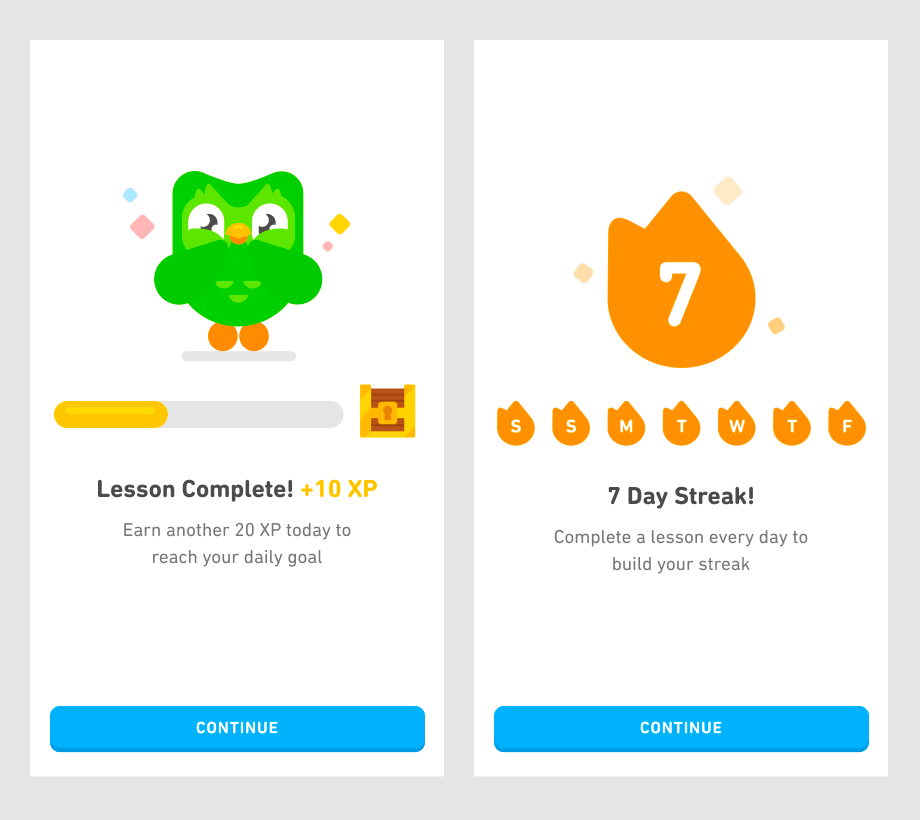
- Experience Points (XP) and Leveling Up: Users earn XP for every completed lesson or challenge, simulating the gratifying progression found in video games. Immediate feedback, often visualized through progress bars, fuels motivation, encouraging users to continue their learning journey and even compete with others on leaderboards.
- Badges and Achievements: These digital accolades are awarded for accomplishing various in-app tasks, such as accumulating XP, completing lessons at specific times, or inviting friends. Badges serve as tangible recognition of progress, fostering intrinsic motivation tied to personal growth. Their impact extends beyond individual motivation, with reports indicating that badges increased in-app purchases by 13% and friend additions by an impressive 116%.
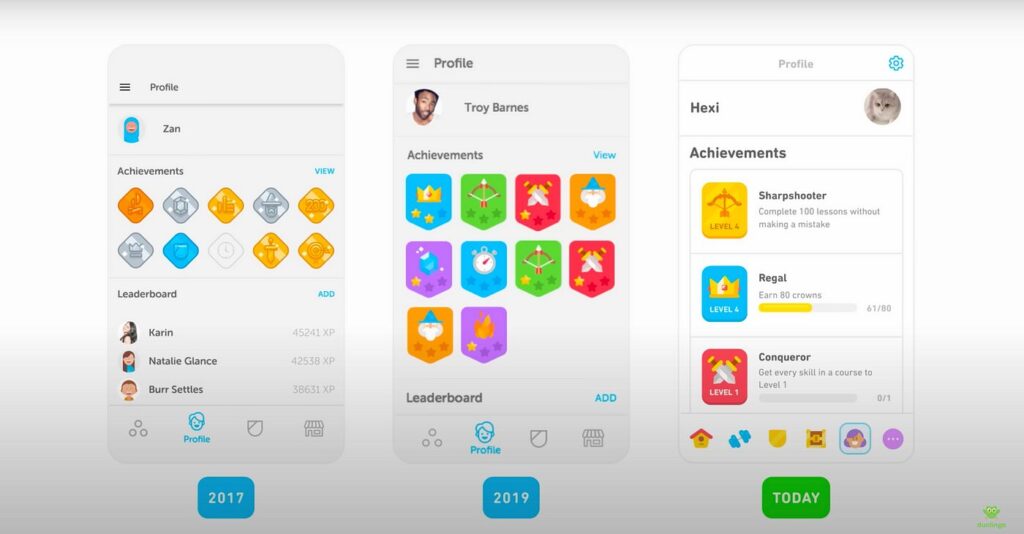
- Gamified Design for Unit Levels and Cracked Levels: Duolingo encourages users to achieve “legendary” status within each unit, a design choice that not only motivates deeper engagement but also allows users to attest to their proficiency. The concept of “cracked levels,” which indicate a need for review, prompts users to “repair” these sections, further improving engagement metrics.
These mechanics are not arbitrary; they are meticulously crafted to tap into fundamental psychological principles that drive user engagement and habit formation. The streak system, for instance, leverages the human desire not to break a chain of successes, employing consistency as a potent motivator. More broadly, Duolingo’s gamification aligns with models like Fogg’s Behavioral Model, which posits that desired behaviors are effectively modified by addressing three key factors: motivation, ability, and triggers.
Beyond the visible game elements, Artificial Intelligence (AI) plays a pivotal, albeit often unseen, role in ensuring Duolingo’s pedagogical effectiveness. Machine learning algorithms are employed to personalize the learning experience for each user, adeptly predicting which language concepts a user might be on the verge of forgetting. This adaptive learning capability is instrumental in increasing user retention and driving higher engagement by dynamically tailoring content to individual performance. The platform continuously refines its personalized recommendations by analyzing vast amounts of user responses and data collected from billions of exercises.
The integration of gamification acts as a powerful strategic lever for driving organic growth and fostering virality. The mechanics, particularly streaks and badges, are designed to not only increase engagement and retention but also to encourage users to share their achievements. This is evident in the “thousands of users” who share their streak accomplishments on social media daily. This public display of progress and achievement acts as a form of authentic, user-generated endorsement, attracting new users through social proof and curiosity. This effectively transforms individual learning journeys into public performances, leveraging social dynamics to significantly amplify brand reach without necessitating substantial traditional marketing expenditures. This approach exemplifies a powerful product-led growth strategy, where the inherent design of the product itself becomes its most effective marketing channel, creating a self-reinforcing cycle of engagement and acquisition.
Furthermore, AI serves as the unseen architect of pedagogical effectiveness within this gamified framework. While gamification provides the engaging, visible layer that makes learning feel like play and is rooted in scientific principles of effective learning , AI is the underlying intelligence that ensures the efficacy of the learning process. The AI-driven adaptive learning ensures that the gamified experience is not merely entertaining but also pedagogically sound and highly personalized. This prevents users from becoming bored or overwhelmed, ensuring that the “addictive” quality of Duolingo translates into genuine learning productivity. This sophisticated integration highlights Duolingo’s advanced approach to educational technology, where an engaging user experience is seamlessly interwoven with data-driven pedagogical science, positioning the platform as a serious learning tool cleverly disguised as a game.
Table 1: Core Gamification Mechanics & Their Impact
| Mechanic | Description | Psychological Principle/Motivation Tapped | Observed Impact/Benefit |
| Streaks | Tracks consecutive days of lesson completion. | Habit formation, consistency, avoidance of loss (not breaking the chain). | Biggest driver of growth, higher app engagement, more frequent weekly sessions, thousands of social media shares daily. |
| Experience Points (XP) | Points earned for completing lessons/challenges. | Sense of accomplishment, progress tracking, friendly competition. | Simulates game progression, motivates users to keep going, fosters competition on leaderboards. |
| Badges/Achievements | Digital rewards for milestones (e.g., XP, learning time, inviting friends). | Intrinsic motivation, recognition, personal growth, sense of reward. | Increased in-app purchases by 13%, increased friend additions by 116%, boosts engagement. |
| Gamified Unit Levels | Encourages users to achieve “legendary” status in each section. | Mastery, proficiency validation, clear progression. | Motivates regular engagement, enhances learning outcomes, provides a sense of accomplishment. |
| Cracked Levels/Progress Bar | Visual indicators of sections needing review or overall course progress. | Motivation to “repair” and complete, clear visual feedback. | Improved engagement metrics, keeps users motivated and focused on goals. |
Chapter 3: Evolving Business Model: From Mission to Monetization
Duolingo’s journey to financial sustainability has been a dynamic process, marked by strategic pivots and continuous experimentation. The company’s foundational principle, articulated early on, was a commitment to being “100% free”. This commitment initially manifested in an innovative, albeit ultimately unsuccessful, crowdsourcing business model. The original concept involved charging businesses for translations performed by Duolingo users as a natural byproduct of their language learning activities. This approach was conceived as a way to generate revenue while upholding the promise of free education. However, this model faced significant challenges, primarily due to inconsistent translation quality and a competitive “race-to-the-bottom” pricing environment, leading to its eventual failure.
By 2016, five years after its founding, Duolingo had yet to generate significant revenue, prompting a critical re-evaluation of its monetization strategy. This period saw a notable shift from Luis von Ahn’s initial public stance that Duolingo would “never have ads, never in-app purchases, and never subscriptions”. The transition to a freemium model was characterized by extensive “trial and error” and “constant experimentation”.
The current freemium model incorporates three primary revenue streams:
- Advertising: Introduced as a means to monetize without directly charging for educational content, ads appear for free users between lessons. Extensive A/B testing was conducted to determine the optimal placement and load of advertisements to balance revenue generation with user experience.
- In-App Purchases (IAP): These are presented as optional enhancements, such as the ability to “repair your streak if you give us $2”.
- Subscriptions (Super Duolingo and Duolingo Max): Originally known as Duolingo Plus, the subscription tier initially offered an ad-free experience and gradually expanded its features. Super Duolingo now provides unlimited hearts (removing the penalty for mistakes), personalized practice sessions, unlimited attempts at Legendary challenges, and offline access. A higher tier, Duolingo Max, further enhances the experience with AI-powered conversation practice. To cater to broader user segments, a Family Plan was also introduced, offering a more affordable option for groups to access premium features.
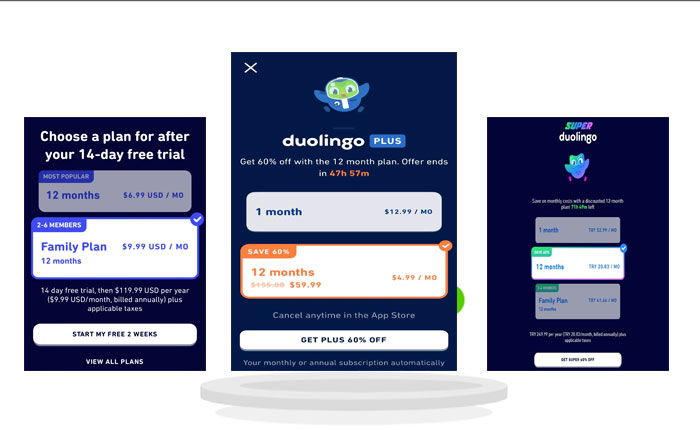
A central tenet of Duolingo’s monetization strategy is its commitment to balancing universal access with sustainable profitability. The core educational content remains freely accessible to all users, irrespective of their subscription status. Monetization efforts are strategically focused on offering “bells and whistles” or enhanced features that complement the free learning experience. This approach ensures that the vast majority of Duolingo’s users—approximately 93%—who do not pay, can still benefit from the platform’s educational offerings. The company explicitly communicates that paying users “support our mission to keep education free for millions around the world”.
This pragmatic evolution from an idealistic, purely free model to a mission-aligned monetization strategy is a critical aspect of Duolingo’s brand story. The initial vow to never introduce ads, IAPs, or subscriptions reflected a strong commitment to universal free education. However, the failure of the crowdsourced translation model necessitated a strategic adaptation to ensure the company’s viability. The pivotal decision was to find a way to monetize that did not compromise the core mission of free education, by charging for supplementary features rather than locking content behind a paywall. This delicate balancing act between altruism and commercial viability highlights the company’s agility and its commitment to continuous experimentation, particularly through extensive A/B testing, to refine its monetization mix. This trajectory serves as a compelling case study for how mission-driven companies can achieve profitability and sustainability without abandoning their foundational values.
Despite the company’s assertion that core content remains free, a notable tension exists between this stated reality and user perception, particularly concerning a “pay-to-win” dynamic. Users have voiced criticisms regarding a “slow erosion of features that are available for free” and perceive a shift towards a model where payment is increasingly necessary to progress efficiently. Concerns are often raised about the presence of ads and the “heart” system (or “energy” system), which penalizes mistakes and limits the number of lessons free users can complete in a session, creating a sense of being compelled to pay to avoid interruptions or continue learning. This perception suggests that while the content itself is not paywalled, the experience of progression within the gamified framework is increasingly incentivized for paid subscribers. This highlights a significant challenge for freemium models, especially in education: how to implement sufficient friction in the free tier to encourage conversions without alienating the core user base or undermining the brand’s fundamental promise of accessibility. The disparity between intended design and user perception underscores the critical importance of managing user expectations and clearly articulating value propositions.
Duolingo’s financial performance reflects the success of its adapted business model. As of June 2023, revenue stood at $442.39 million, surging to $748 million in 2024. The company’s valuation has also seen substantial growth, reaching $6.5 billion in 2023 and a market capitalization of approximately $19.03 billion recently. Revenue growth has consistently approached 40% year-over-year, with a reported 38% increase in Q1 2025. This robust growth is accompanied by improved operating performance and a swift movement toward profitability, with net income reaching $88.6 million in 2024. Significantly, subscriptions now account for over 80% of Duolingo’s total revenue, demonstrating the success of this key monetization stream. The company also maintains a strong balance sheet, characterized by substantial cash reserves and minimal long-term debt.
Table 2: Duolingo’s Growth Milestones & Financial Snapshot
| Year/Date | Key Event/Metric | Value/Figure | Source Snippet ID |
| 2011 | Founding | – | |
| Nov 2011 | Private Beta Launch | – | |
| Jun 2012 | Public Release | – | |
| 2017 | Registered Users | 200 million | |
| May 2020 | Valuation | $1.5 billion | |
| 2023 | Total Users | 300 million | |
| Jun 2023 | Revenue | $442.39 million | |
| 2023 | Valuation | $6.5 billion | |
| 2024 | Revenue | $748 million | |
| 2024 | Operating Income | $63 million | |
| 2024 | Profit | $88.6 million | |
| Dec 2024 | Employees | ~830 | |
| Q1 2025 | Monthly Active Users (MAUs) | 130 million | |
| Q1 2025 | Daily Active Users (DAUs) Growth (YOY) | 49% (46.6 million DAUs) | |
| Q1 2025 | Paid Subscribers | Over 10 million | |
| Q1 2025 | Revenue Growth (YOY) | 38% | |
| Recent | Market Cap | ~$19.03 billion | |
| Recent | Subscriptions as % of Revenue | >80% |
Table 3: Evolution of Duolingo’s Monetization Strategy
| Period/Year | Monetization Model/Component | Description/Key Features | Impact/Outcome |
| 2011-2014 (Initial) | Crowdsourced Translations for Businesses | Users translated web content as they learned; businesses paid for these translations. | Failed due to poor translation quality and “race-to-the-bottom” pricing; not sustainable. |
| 2014-Present | Advertising | Ads displayed to free users between lessons. | Introduced to monetize without charging for content; A/B tested for optimal placement. |
| 2014-Present | In-App Purchases (IAP) | Optional purchases for specific features (e.g., streak repair). | Provided minor, optional revenue streams. |
| 2014-Present | Subscriptions (Duolingo Plus, Super Duolingo, Duolingo Max) | Began with ad-free experience, expanded to include unlimited hearts, personalized practice, legendary challenges, offline access. Duolingo Max adds AI conversation. Family plans introduced. | Now accounts for over 80% of Duolingo’s revenue; ensures core learning remains free while offering enhanced experience. |
Chapter 4: Scaling to Millions: Growth, Marketing, and Brand Identity
Duolingo’s ascent to global prominence is largely attributable to its ingenious strategies for organic growth and viral user acquisition. Its early success was not fueled by massive advertising budgets but rather by an exceptional product that naturally generated “word-of-mouth marketing”. The freemium model, offering a robust free product, was instrumental in attracting a “massive user base” from the outset. This approach yielded impressive early metrics, including over 10 million app downloads within a year of launch, more than 300,000 pre-launch sign-ups, and a remarkable 200 million registered users within just six years. The platform continues to demonstrate robust growth in its Daily Active Users (DAUs) and Monthly Active Users (MAUs), with DAUs increasing by 49% in Q1 2025 and reaching a record number of additions in that quarter.
A cornerstone of Duolingo’s brand identity and marketing prowess is its distinctive, often described as “unhinged,” social media presence, personified by its iconic mascot, Duo the Owl. Duo is more than just a logo; the owl embodies Duolingo’s playful, humorous, and at times, comically intimidating brand personality. Duo’s antics, frequently depicted in “hilariously unexpected situations” or “threatening” users with reminders to complete lessons, have become infamous across platforms like TikTok and Instagram. These viral campaigns have garnered millions of views, effectively converting online buzz into tangible app downloads. Duolingo masterfully leverages “creative shock value,” memes, and pop culture references to stand out in crowded digital spaces. Even the highly publicized “death” of Duo was a calculated viral marketing stunt, designed to generate significant buzz and conversation. This strategic shift towards a “social-first strategy” has been prioritized over traditional TV commercials and ads, as the company observes real-time growth and direct impact from its social content. A notable example is their 5-second Super Bowl ad, paired with a push notification, which achieved significant virality and discussion at a “fraction of the cost” of traditional longer spots.
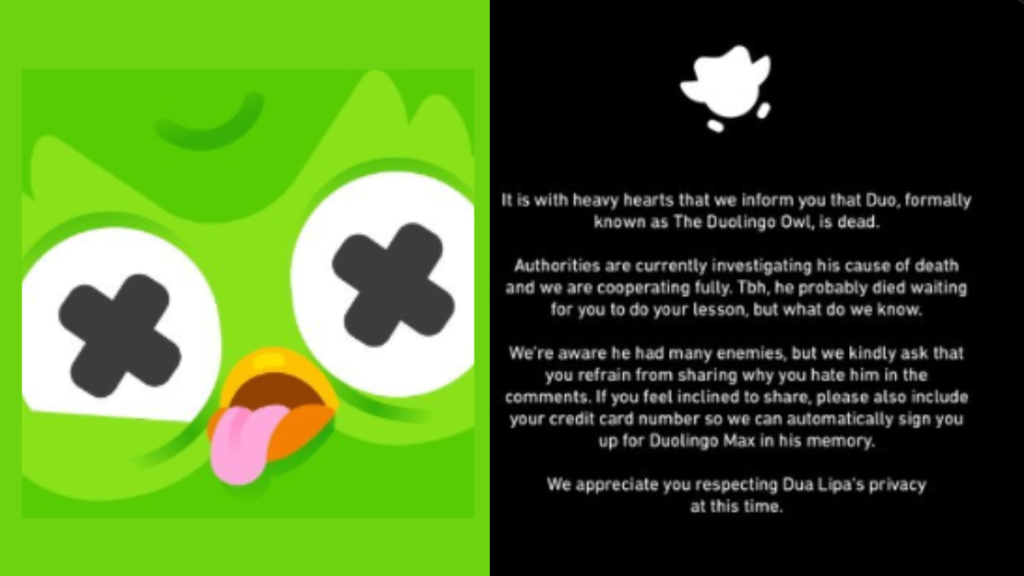
This symbiotic relationship between Duolingo’s product gamification and its distinctive, “unhinged” marketing approach is a key differentiator. The in-app gamification, with its streaks and XP systems, intrinsically drives user engagement and habit formation. The external marketing, particularly through Duo, extends this gamified experience and brand personality beyond the confines of the application. The “unhinged” content leverages the intrinsic motivation and competitive spirit cultivated by the app’s features—such as the playful “fear” of losing a streak—and transforms it into viral, shareable content. This creates a cohesive brand narrative where the app’s playful yet persistent nature is mirrored in its external communications, making the brand itself an engaging “game” that users actively participate in and share. This strategy demonstrates a highly effective and cost-efficient model for brand building and user acquisition in the digital age, achieving massive organic reach and recognition without heavy reliance on traditional, expensive advertising, embodying a “budget-smart” approach to marketing.
Effective user retention is another critical pillar of Duolingo’s success, largely driven by its sophisticated use of personalized communication and push notifications. Duolingo has achieved remarkable success in utilizing push notifications to maintain user engagement and consistency. A core element of this strategy is personalization, where data gleaned from each user’s learning history and progress is used to tailor messages and course recommendations. Notifications are meticulously fine-tuned based on specific languages and individual user preferences, with extensive A/B testing employed to optimize their frequency and content for maximum impact.
These personalized communications are designed to make users feel valued, ensuring the learning experience remains relevant and engaging, thereby fostering a “deeper connection and commitment” to the application. Consistency and habit formation are reinforced by sending notifications at the same time daily, encouraging regular use. The system also celebrates user milestones and achievements, providing a sense of accomplishment and further motivation. Gamification elements are cleverly integrated into notifications, with reminders about leaderboard updates, challenges, and streaks leveraging friendly competition to keep users motivated. Furthermore, Duolingo offers users flexibility, allowing them to customize notification settings to suit their preferences, demonstrating a user-centric approach. The company’s commitment to continuous optimization through A/B testing ensures that its push notification strategy remains as effective as possible, constantly refining messaging, timing, and content. Email marketing also plays a role, employing humor, urgency, and personalization to encourage consistent engagement outside the app.
The sophisticated use of data-driven personalization acts as a powerful multiplier for user retention. By leveraging user learning history and preferences, Duolingo transforms generic reminders into highly relevant and motivating nudges. This goes beyond simply sending messages; it involves anticipating user needs and challenges, making individuals feel understood and supported in their learning journey. This deep personalization, rigorously backed by continuous A/B testing, is a critical, though often less visible, driver of Duolingo’s industry-leading retention rates. It ensures that the habits initially formed through gamification are consistently sustained over time, turning what could be an intrusive element (notifications) into a valuable and engaging touchpoint. Duolingo thus exemplifies how leveraging user data for hyper-personalization, combined with a dedication to continuous optimization, can significantly enhance customer loyalty and retention in a highly competitive digital landscape.
Chapter 5: Beyond Languages: Diversification and Future Horizons
Duolingo’s strategic vision extends beyond its foundational language learning offerings, encompassing a deliberate expansion into new learning formats and verticals. This diversification is a natural progression, leveraging the company’s core competencies and mission.
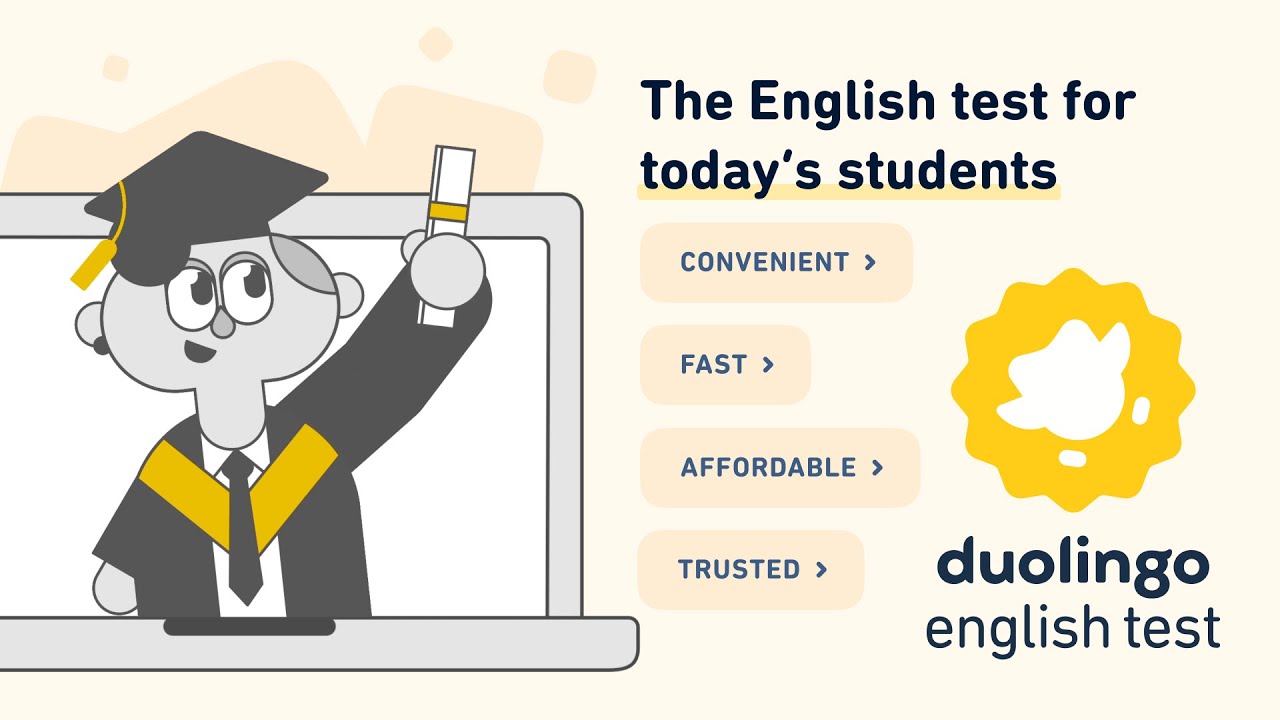
One significant expansion is the Duolingo English Test (DET), launched in 2016. Its mission is to “lower barriers to higher education for students everywhere”. The DET distinguishes itself by being highly accessible, allowing test-takers to complete it online, anytime, anywhere, for a fee of just $49. It is also remarkably efficient, with tests completable in one hour and results typically available within two days. The impact of DET has been substantial, with hundreds of thousands of test-takers and acceptance by over 5,500 institutions globally. Notably, the test experienced a 2000% year-over-year increase in test-takers in 2020, providing crucial support to students during the global pandemic. Furthermore, Duolingo demonstrates its commitment to accessibility by offering test fee waivers to high-achieving, low-income students through its Access Program.
Beyond formal assessments, Duolingo has explored other learning formats. Duolingo Podcasts, for instance, offered real-world language immersion featuring native speakers, cultural context, simplified scripts, and interactive exercises. These podcasts, including series in Spanish and French, provided cultural stories that entertained and educated listeners. While the podcast series has since been sunsetted, over 300 episodes remain available for streaming. More recently, immersive features like Stories and DuoRadio have been integrated into new language courses to enhance reading and listening comprehension respectively.
A significant strategic move has been Duolingo’s venture into entirely new verticals: Math and Music. These courses were launched in October 2023 for iOS users. This diversification is a calculated extension, capitalizing on Duolingo’s proven expertise in making self-learning enjoyable through its signature gamified features, such as streaks and leaderboards. The selection of Math and Music was based on their substantial market size and their strong alignment with Duolingo’s overarching mission of accessible learning. This expansion is also anticipated to “drive incremental revenue gains without a proportional increase in expenses,” indicating a highly efficient growth strategy.
The company’s commitment to technological leadership is evident in its aggressive leveraging of Artificial Intelligence (AI) for rapid content creation and future innovation. AI investments are actively accelerating content creation. A striking example of this is the launch of 148 new language courses in less than a year, effectively more than doubling Duolingo’s existing offerings. This rapid expansion, which historically would have taken years for a single course, was made possible by advancements in generative AI, shared content systems, and internal tooling. Generative AI enables Duolingo to develop a high-quality base course and then swiftly customize it for dozens of different languages. Furthermore, Duolingo Max, the premium subscription tier, already incorporates AI for enhanced conversation practice. The company expresses confidence that it is “just beginning to scratch the surface of what we can offer our users” with AI.
This strategic diversification represents a natural extension of Duolingo’s core mission and its established competencies. The company’s fundamental purpose is to develop and universally provide the best education. The Duolingo English Test directly extends this mission by addressing a critical barrier to higher education—costly and often inaccessible proficiency tests. Similarly, the expansion into Math and Music leverages the proven methodology of making learning fun through gamification to enter new, large educational markets. This demonstrates a coherent long-term vision for Duolingo to evolve into a broader educational platform, moving beyond its initial niche in language learning. This strategic expansion positions Duolingo for sustained growth, transforming it into a multi-vertical learning powerhouse. It also illustrates how a strong brand identity and a clear mission can effectively guide successful product diversification.
Moreover, generative AI is not merely an incremental improvement; it is a transformative force that enables Duolingo to overcome previous bottlenecks in content creation. The ability to launch 148 new courses in under a year, a task that once took years for a single course, fundamentally alters the economics of content development. This allows for an “unprecedented speed and quality” of expansion, enabling Duolingo to rapidly respond to market demands, such as the growing interest in Asian languages, and to diversify its offerings at a pace previously unimaginable. This highlights Duolingo’s commitment to technological leadership as a core competitive advantage. Their proactive and effective integration of AI for content generation positions them to rapidly establish dominance in new educational verticals and maintain a significant lead over competitors who rely on more traditional, manual content creation methods.
Chapter 6: Navigating Challenges and Sustaining Impact
Despite its resounding success, Duolingo faces ongoing challenges, particularly concerning the perceived pedagogical effectiveness of its platform and the evolving user experience within its freemium model.
Regarding pedagogical effectiveness, studies generally acknowledge Duolingo’s utility for beginners, noting its efficacy in improving reading, writing, listening skills, vocabulary, and grammar. However, some research points to limitations, particularly in developing advanced speaking skills, the accuracy of its speech recognition technology, and the provision of sufficient context for a comprehensive understanding of new concepts. Critics suggest that while Duolingo serves as an excellent starting point, it may not be sufficient for users aiming for fluency or advanced language proficiency. Conversely, Duolingo’s internal efficacy studies claim impressive results: 9 out of 10 learners report increased speaking confidence after just one month, 9 out of 10 teachers endorse its effectiveness, and five sections of Duolingo are equated to five semesters of university instruction.
A more contentious issue revolves around the “pay-to-win” perception among some users. While Duolingo maintains that its core lesson content remains free for all users, with premium features offering an enhanced, uninterrupted experience , a segment of the user base expresses frustration. These users lament the “slow erosion of features that are available for free,” citing the increasing presence of ads and the “heart” system (or “energy” system) that limits mistakes and lesson continuity, leading to a feeling of being compelled to pay to progress effectively. Some describe the free tier as having become “unusable” or “crap”.
This tension between Duolingo’s founding mission of “free education for all” and the commercial imperatives of a publicly traded company represents an inherent challenge. The company’s initial commitment to universal accessibility now coexists with its responsibility to deliver financial returns, evidenced by its robust revenue growth and the fact that subscriptions constitute over 80% of its income. While Duolingo asserts that core content remains free, the deliberate design of the free tier to introduce friction—through ads and limited “hearts”—is intended to encourage conversions to paid subscriptions. This creates a perception of a “pay-to-win” model, which, while financially effective, risks alienating a segment of its user base and potentially diluting the strength of its original brand promise of accessible education. This dilemma is common for mission-driven tech companies once they enter the public market. Duolingo’s ongoing challenge lies in its ability to continue innovating and growing revenue while authentically upholding its commitment to accessibility, as the long-term health of its brand relies on maintaining user trust and alignment with its foundational vision.
Furthermore, an “efficacy gap” exists, particularly in bridging beginner engagement with advanced fluency. Duolingo excels at onboarding and retaining beginners through its highly engaging gamified interface, making initial language learning accessible and enjoyable. However, the pedagogical challenge intensifies when transitioning these users to higher proficiency levels, where passive learning and limited real-world interaction become significant hurdles. The criticisms regarding limitations in developing speaking skills, providing sufficient context, and guiding users to advanced fluency highlight this gap. The introduction of features like Podcasts, Stories, DuoRadio, and especially Duolingo Max with its AI-powered conversation practice, represents a strategic effort to address these known limitations, particularly in oral communication and contextual understanding. This indicates a clear recognition of the challenge and an active attempt to broaden its pedagogical scope beyond foundational skills. Duolingo’s continued success will increasingly depend on its ability to prove effectiveness for intermediate and advanced learners, not solely beginners, and to seamlessly integrate these more complex learning experiences into its gamified framework, which could further justify higher-tier subscriptions.
Maintaining the core mission amidst commercial growth and user experience changes is a delicate balancing act. The company’s focus on organic growth and its avoidance of heavy reliance on paid marketing have been crucial in maintaining its ability to offer robust free features. Continuous iteration and extensive A/B testing are employed to strike the right balance between enhancing the user experience and driving monetization. The challenge of managing rapid expansion, particularly with the recent launch of 148 new courses, without compromising product quality or user experience, remains a critical operational consideration.
Conclusion: The Enduring Legacy of Duolingo
Duolingo’s brand story is a compelling narrative of innovation, adaptation, and unwavering commitment to a foundational mission. Its unparalleled success stems from a unique confluence of accessibility, groundbreaking gamification, and sophisticated AI-driven personalization. The platform disrupted traditional language education by making learning fun, engaging, and universally available, a testament to its innovative product design.
The company’s marketing strategies, particularly the “unhinged” social media presence spearheaded by the iconic Duo mascot, have been instrumental in fostering organic growth and cultivating powerful brand recognition. This creative approach, which often blurs the lines between product experience and external communication, has allowed Duolingo to achieve massive reach efficiently. Furthermore, Duolingo’s agile evolution of its business model, moving from an unviable crowdsourcing concept to a highly successful freemium structure, demonstrates its capacity to balance its core mission of free access with the demands of sustainable profitability.
Looking ahead, Duolingo is poised for continued expansion and innovation. Its strategic diversification into new learning verticals, such as Math and Music, leverages its proven methodology for making self-learning enjoyable and aligns with its broader educational mission. The transformative role of generative AI is set to accelerate content creation at an unprecedented pace, enabling rapid expansion into new languages and learning formats, and promising future innovations that are only beginning to be explored.
Despite the ongoing challenges related to pedagogical depth for advanced learners and managing the perception of a “pay-to-win” model within its freemium structure, Duolingo remains steadfast in its commitment to its enduring mission: to develop the best education in the world and make it universally available. By continuously adapting to new technologies, responding to market demands, and striving to overcome its inherent challenges, Duolingo solidifies its position as a global leader in educational technology, consistently pushing the boundaries of accessible and engaging learning for millions worldwide.
Also Read: How Duolingo Keeps You Hooked?
To read more content like this, subscribe to our newsletter