A few months ago, I realized a hard truth: I had no time to read. Between work, errands, and everything else life threw at me, my stack of unread self-help books collected dust on the nightstand. One day at lunch, I complained to a friend about it, and she laughed, saying she had the same problem. Then she told me her secret – reading book summaries on her phone each morning. Honestly, I felt unsure at first. I love real books and wasn’t sure short summaries would do much good.
Still, I had nothing to lose. That evening, I got home and did some research on this quick way of learning – microlearning. Turns out it’s just short lessons you can read or listen to in a few minutes, wherever you are. People called it perfect for busy lives (like mine!).
After some Googling about book summary apps, two names popped up right away: Headway vs Blinkist. Curious if these apps could really help me learn, even though my free time was limited, I decided to give them both a fair shot and see which worked best for me.
A quick look made me see both apps had lots of happy users, but I knew I needed to try them myself. Over the next few weeks, I used Headway and Blinkist every day – on the train ride to work, cooking dinner, or cleaning my apartment.
In this guide, I’ll share what it was really like to use Headway and Blinkist. I’ll tell you what I liked about both apps, what didn’t feel right, and how each one fit into my daily routine. By the end, you’ll know which one I picked, and why. If you’re short on time like me but still want to keep learning and growing, keep reading to see which app is right for you.
Library & Topic Relevance
When I first decided to try Headway and Blinkist, the number and type of books in each app mattered most to me. I wanted enough choice, but I also cared if those choices matched topics I was curious about.
First, I checked out Headway. It had around 1,800 book summaries. At first glance, that felt like enough titles. Most covered areas are:
- Self-growth;
- Career tips;
- Productivity hacks;
- Leadership advice;
- Health and happiness lessons.
These topics are exactly what I often look for. Headway doesn’t really do fiction, though, which was a slight letdown because sometimes I need a break from serious topics and just want an interesting story. Still, the selection felt practical and focused on improving daily life and work-related skills.
Next up was Blinkist. It surprised me by offering around 7,500 summaries – that actually felt huge! But when I took a closer look, I realized many of those were shortcasts, brief retellings of podcasts rather than actual book summaries. For me personally, podcast summaries weren’t very useful – I would usually just listen directly to podcasts if I had the time. This means Blinkist’s summary count seemed larger than it actually was for my needs. Still, the app covers many topics
- Motivation tips;
- Science topics;
- Personal finance ideas;
- History quick reads;
- Even some short fiction stories.
In short, Headway felt smaller but more relevant and focused clearly on personal or career development. Blinkist offered more diverse subjects but padded their numbers with the shortcasts feature that wasn’t helpful to my needs.
Summary style & impact
I like quick book summaries that feel fun and easy to follow, so I paid close attention to the writing style in Headway vs Blinkist. This is important since a summary needs to be clear and stick easily in my memory.
Headway summaries felt natural and easy for me. They use short sentences and pick simple words to explain big ideas. I remember opening the app after a tiring workday, picking a new summary about managing time, and getting useful tips straight away. Headway also adds pictures, quick highlights, and small charts – they helped me quickly understand points without extra effort.
Sometimes I wish there were more details, though. Headway hits the main ideas but doesn’t give much background or examples because it has to fit many ideas into 15 minutes. For me, it was perfect when I wanted a quick lesson, less useful if I needed deep detail.
Headway summary style:
- Short sentences make ideas easy to follow;
- Images or small charts show key points clearly;
- Highlights focus my attention on important facts.
Blinkist does things a bit differently. The first summaries I read there grabbed my interest right away because they went straight to the point with no extra talk. Each sentence quickly explained one idea before moving on. This helped me learn basic facts in topics like science or history quickly. But when reading about topics like leadership or motivation, their direct style sometimes felt cold to me – I struggled to feel inspired or engaged after finishing a summary.
Blinkist summary style:
- Brief and straight-to-the-point sentences;
- Quick-moving style helps speed up learning basic info;
- Little detail or examples provided beyond core ideas;
- The less personal touch can feel cold or distant on some topics.
Learning tools & habit support
As I tested different learning apps, I noticed many offer special tools to help build good habits. I really liked this because I often struggle to stick with new routines, even when I start excited. So I was curious to see how Headway and Blinkist compare.
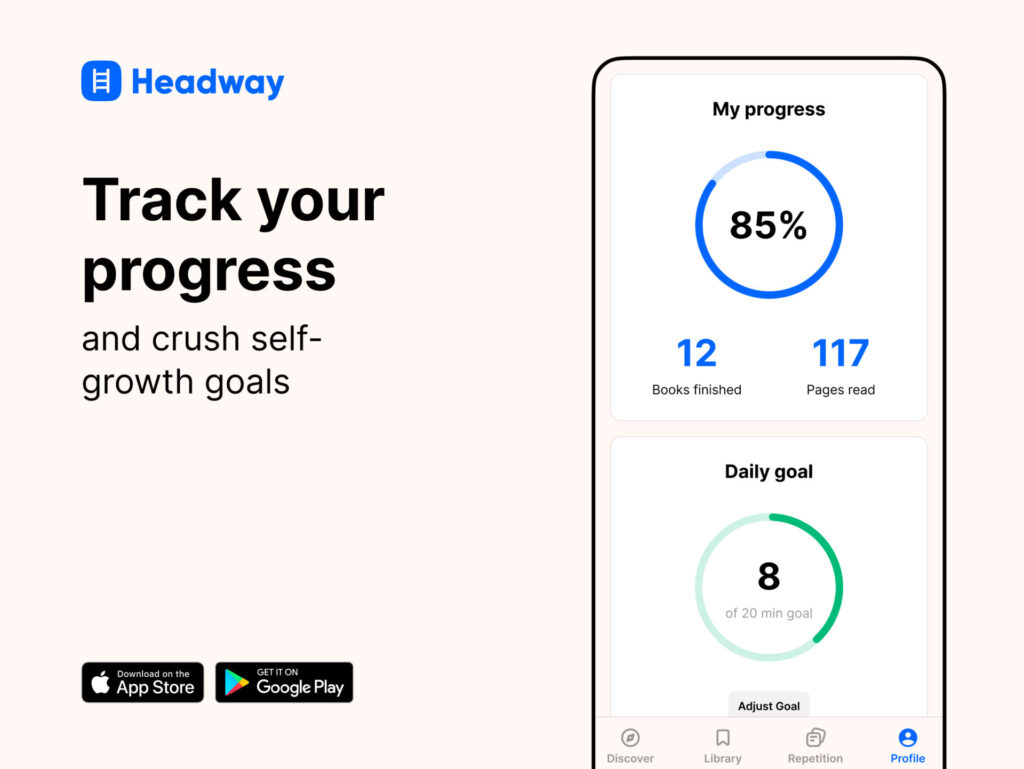
Headway impressed me right from the start. It asked me what topics matter most to me and suggested books based on my answers. I liked its daily challenges and small quizzes – they made opening the app each day feel like a fun goal instead of a chore.
One thing that worked great for me was the flashcards tool. After reading a summary, I could instantly turn key ideas into cards and practice them later. This helped the points stay in my mind much longer.
Here’s what stood out for me in Headway:
- Quick daily challenges to help form habits;
- Flashcards for key lessons;
- Personalized book suggestions based on my own goals;
- Small quizzes that kept things interesting.
Blinkist has some habit tools too, but they felt less personal to me. It tracks reading streaks, and seeing mine grow did push me to come back each day at first. It also has curated lists called “Spaces,” created by other readers or authors. These give extra book ideas grouped by topic, and sometimes they inspire me to explore books outside my usual choices. But Blinkist didn’t offer quizzes or flashcards, which left me missing some interactive ways to remember ideas.
The best things Blinkist has:
- Reading streak tracker for regular use;
- Curated “Spaces” with book ideas by topic;
- Some personalized reading tips based on past picks.
Overall, Headway’s tools matched better with the way I learn and kept my habit going stronger over time. Blinkist had some useful extras too, but it didn’t feel quite as motivating for daily use.
User experience & engagement
Headway impressed me right away. The design looked clean and welcoming. Searching for book summaries took just seconds – simply type the title and it appears instantly. Large buttons helped a lot when clicking through summaries during crowded train rides or while cooking dinner.
Points I enjoyed about Headway:
- Simple navigation to find summaries fast;
- Big fonts that are easy to read;
- Helpful visuals that matched summary points nicely;
- Smooth switching between audio and text versions, perfect for multitasking.
One thing that bugged me a bit was hearing the same few narrator voices over and over – I wished for a little more variety to keep things fresh.
Blinkist had its upsides, too. When I opened the app, clear tabs made getting around easy. The main page showed recommended titles clearly organized, while a neat library kept track of summaries I’d already saved.
Points I liked about Blinkist:
- Clear and simple layout that felt organized;
- Easy-to-use play button for audio summaries;
- Text highlights sentence-by-sentence during listening—a nice feature to easily follow along.
One thing Blinkist lacked was a place to jot down quick notes inside the app itself. Sometimes, after hearing or reading something interesting, I wanted to write my own thoughts down quickly, but there wasn’t an option for that.
Both apps made daily use pretty easy overall. But if I had to pick just one based purely on comfort and ease of use, Headway clicked slightly more with my daily needs – it felt warmer, simpler, and quicker to use day after day
Personalization
For me, a learning app feels good when it knows what I care about and shows me stuff I really want to learn. I’m busy, so if an app picks titles based on what I like, it keeps me coming back for more. So, how did Headway and Blinkist do with personalization?
Headway
Headway felt personal right from the start. The app started by asking simple questions about my preferences and goals, such as:
- What topics matter most to me? (work skills, health, happiness)
- How much time do I have daily?
After answering these short questions, the suggested book titles matched my main goals well – reducing work stress, boosting health, and getting more productive.
One small thing I really liked was the “roll the dice” button – it gave random book ideas outside my usual topics. This made picking books fun sometimes.
Blinkist
Blinkist personalized content based on titles I read or listened to over time. After only a few days of use, the suggestions improved a lot, fitting my preferences.
Blinkist highlights included:
- Recommendations improved steadily as I used the app more often;
- An AI summary tool (for premium users): paste links of articles or podcasts for fast summaries – helpful when short on time.
Out of the two, Headway felt more personal right from the beginning – it figured out exactly what I needed. But Blinkist’s smart AI summaries of extra articles led me to some interesting reads I’d never planned for
Audio & text options
When I started looking for an app to read book summaries, having both audio and text choices mattered a lot. Sometimes I want to listen while cooking dinner or going for a run, but other times I’m happier just reading quietly.
Headway lets me switch between audio and text easily. The narrators spoke clearly, and I liked speeding up the voice. The offline option was helpful – the other day on the subway, my internet dropped out, but I had already downloaded some summaries. I could keep listening without problems. One downside for me was hearing the same narrators often; after some time, their voices felt repetitive.
Favorite audio and text features in Headway:
- Easy to change the speed of narration;
- Can save audio summaries to play offline;
- Highlights turn into flashcards later – I loved testing myself this way.
Headway also has handy text tools. I liked that I could quickly tap and highlight parts that felt important, so I didn’t forget them later. When there was a new word or topic I didn’t get, tapping it gave me an instant explanation or even a short translation. This saved me from having to stop and check elsewhere.
When I tested Blinkist, it also offered audio and text options. Audio summaries on Blinkist mostly had real people recording them, which felt natural, like listening to someone chatting easily about a good book. But lately, some summaries have used robot-like voices instead of people. Those sounded flat to me, not friendly enough.
Things I liked about Blinkist audio & text
- Can download summaries to listen without internet;
- The text highlights automatically as the narrator speaks;
- Easy choice between audio speeds.
Yet, highlighting sentences was tricky at times – it often took several taps on my phone before actually marking the words. Also, unlike Headway, Blinkist had no quick way for adding personal notes or translations.
Pricing & value
When testing Headway and Blinkist, price made a big difference for me. Both apps offer free trials, so I took advantage of those at first. What matters most is if the app actually feels worth the cost after the trial ends.
Headway has a weekly trial, then it’s about $89.99 per year. At first, that seemed expensive to me compared to other phone apps I use. But once I started going through many book summaries each week, the price seemed reasonable enough for daily use.
Blinkist gives one free summary per day in their basic version, but you need premium (around $99 per year) to pick your own summaries and download content. They also have an expensive Pro tier (about $152 each year), which comes with extra tools like an AI summary feature to shorten articles from other websites. For my needs, premium felt enough because it gave plenty of summaries and offline downloads.
Overall, after trying both apps myself, Headway felt like a better value personally. It felt simpler and more focused on my interests, like career tips and habits, rather than offering tons of extra features I didn’t often need. The yearly cost matched well with how much time I spent using it every day.
Pros & Cons
I found good and bad points about each app. To help you choose the right one for your busy routine, I’ll share what I liked most and least from my own daily use. Check out the table below to see how both apps stack up.
| Headway | Blinkist |
| ✅ Friendly, simple interface – I always felt relaxed using it after a long day. | ✅ Huge selection – I easily found titles on lots of different topics. |
| ✅ Daily challenges and quizzes made learning feel fun. | ✅ Short sentences got straight to the main ideas fast – perfect while washing dishes or walking home. |
| ✅ Flashcards helped me remember new ideas better. | ✅ “Spaces” gave useful suggestions by people who know their topics well – I liked finding unexpected suggestions here. |
| ✅ Personalized picks really matched what I wanted to learn – I stayed interested every day. | ✅ The option to shorten outside articles with its AI meant less time scrolling through long news stories. |
| ✅ Easy audio-text switching – it was simple to read for 10 minutes, then listen when cooking dinner. | ✅ Good highlighting features followed the narration sentence-by-sentence – it kept me focused during longer summaries. |
| ❌ No fiction summaries when I needed a quick story break after a busy day. | ❌ Many summaries were actually shortcasts, which didn’t feel as useful when I’m looking for book info specifically. |
| ❌ Hearing the same narrator voices got dull after daily listening sessions. | ❌ Less personal approach – summaries sometimes felt too cold or formal if I needed motivation or warmth in advice topics. |
| ❌ Summaries are often very brief, not always provide enough detail when I wanted examples or deeper topics. | ❌ Highlighting words could be tricky at times – I tapped multiple times just to mark text. |
| ❌ Narration quality began dropping due to more robot-like audio voices replacing human readers, which sounded flat to me. |
Headway vs Blinkist: What to choose for personal growth
After trying out both Headway and Blinkist, I found that each suits a different kind of learner. Blinkist offers loads of content, so it fits people who like variety and can jump quickly between many topics. But if you’re like me, busy with work and looking to grow in specific areas like productivity or better habits, you might prefer a simpler choice.
Personally, Headway fits my schedule better, and I believe that it’s the best app for personal growth 2025. I loved how easy it was to use during my commute or while cooking dinner. The short challenges and handy flashcards kept me coming back each day without feeling tired or bored.
Blinkist has some good points too – I liked the “Spaces” suggestions and their AI tool summarizing extra articles. Despite that, the summaries sometimes felt cold and distant instead of friendly and practical for everyday use.
For someone busy like me wanting focused tips on self-growth, career skills, and daily life advice, Headway naturally felt more comfortable and useful.
To read more content like this, explore The Brand Hopper
Subscribe to our newsletter