Marvel Comics, once a struggling publisher on the brink of collapse, transformed into a global entertainment powerhouse that Disney acquired for a staggering $4 billion. This remarkable journey spans over eight decades, characterized by creative brilliance, financial turbulence, bold strategic decisions, and an eventual phoenix-like rise from bankruptcy. From its humble beginnings as Timely Comics in 1939 to becoming the cornerstone of the world’s most successful film franchise, Marvel’s story exemplifies how powerful intellectual property, when properly leveraged, can transcend its original medium to capture the global imagination and generate unprecedented value.
The Birth of a Comic Book Empire (1939-1961)
The story of Marvel began in 1939 when pulp-magazine publisher Martin Goodman founded Timely Comics, seeking to capitalize on the growing popularity of comic books—especially those featuring superheroes. The company’s first publication, Marvel Comics #1 (October 1939), introduced characters who would become important to the Marvel Universe: the Human Torch and the Sub-Mariner. This initial foray into superhero publishing proved successful, encouraging Goodman to expand his superhero lineup.
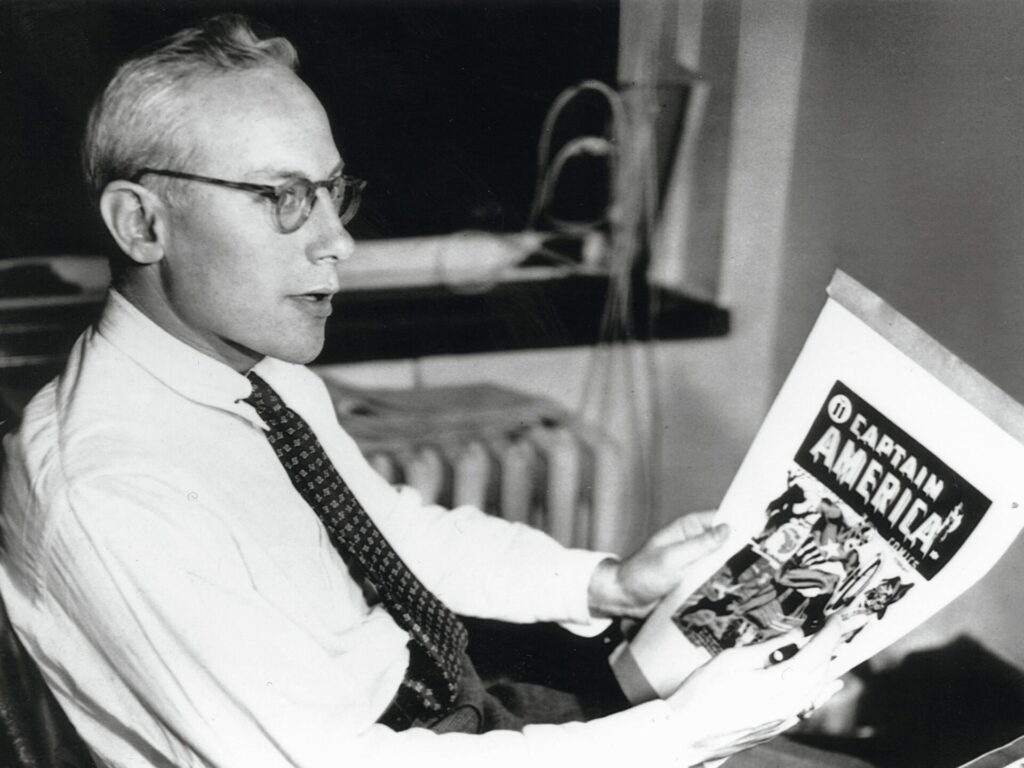
During comics’ “Golden Age” in the 1940s, Timely introduced numerous superhero characters, with Captain America emerging as their most significant creation. These early comics often reflected the geopolitical climate of the time, with Timely characters frequently depicted fighting against Nazi Germany and Imperial Japan, even before the United States officially entered World War II. This patriotic positioning resonated with American readers during wartime, helping establish the publisher’s relevance in popular culture.
However, as the 1940s drew to a close, public interest in superheroes waned considerably. Timely responded to changing market demands by cancelling its superhero titles by 1950. Adapting to consumer preferences, Goodman formed his own distribution company in 1951, and Timely Comics was rebranded as Atlas Magazines. During this transitional period, the company diversified its offerings, publishing comics in various genres including humor, westerns, horror, war, and science fiction. While Atlas briefly attempted to revive superheroes like Captain America in 1953, these efforts failed to gain traction in a market that had moved on from the superhero craze.
The Atlas years represented a period of survival rather than innovation, with the company producing content across multiple genres to maintain market presence while awaiting the next major shift in comic book trends. This adaptability would prove crucial for the company’s long-term survival, allowing it to weather the industry’s cyclical nature until more favorable conditions returned.
The Comics Code and Industry Transformation
The mid-1950s brought significant challenges to the comic book industry as a whole. Growing controversy surrounding the supposed connection between comic books and juvenile delinquency led to increased scrutiny of the medium. This culminated in the implementation of the Comics Code Authority in 1954, a self-regulatory body that imposed strict content guidelines on publishers. The Code heavily restricted depictions of horror, crime, and violence, fundamentally altering the types of stories that could be told in mainstream comics.
This industry-wide restriction, while challenging for publishers, inadvertently set the stage for the next evolutionary phase of comics. With horror and crime comics effectively neutered by the Code’s restrictions, publishers began looking for alternative content that could still appeal to readers while complying with the new regulations.
The Marvel Age Begins (1961-1970)
The landscape of American comic books changed dramatically in 1956 when DC Comics successfully reintroduced superheroes, beginning with a new version of The Flash in Showcase #4. This revival marked the beginning of what would be known as the “Silver Age of Comic Books,” spanning from 1956 to 1970. The success of DC’s superhero revival created a market opportunity that would soon be seized by its competitors.
In 1961, Atlas Comics officially rebranded as Marvel Comics, positioning itself to become DC Comics’ primary competitor in the superhero genre. This name change coincided with a creative renaissance that would forever change the comic book industry. The original Marvel logo made its debut in July 1961, featuring a simple design with an M placed vertically over a C in a small box on the comic book covers. Though understated, this logo appeared on the covers of comics that would introduce some of popular culture’s most enduring characters.
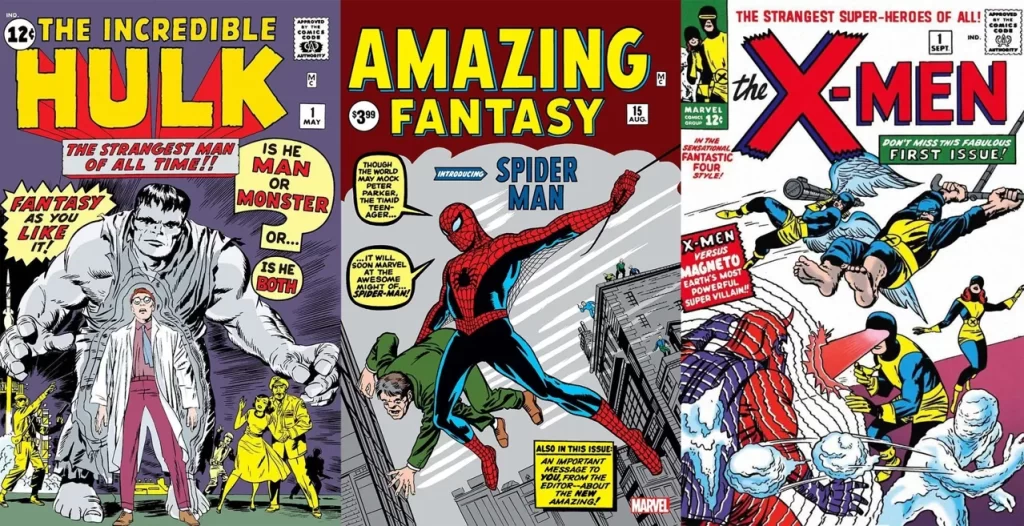
The true Marvel revolution began with the introduction of the Fantastic Four, followed by a wave of new superhero creations including Ant-Man in 1962, and Iron Man and the X-Men in 1963. These characters differed significantly from their Golden Age predecessors and DC counterparts, featuring more complex personalities, personal problems, and human flaws that resonated with readers.
The Lee-Kirby Era: Creating the Marvel Universe
Central to Marvel’s Silver Age renaissance was the creative partnership between writer-editor Stan Lee and artist Jack Kirby. Their collaboration produced characters and stories that redefined what superhero comics could be, introducing a level of sophistication, interconnectivity, and relatability previously unseen in the medium. Under Lee’s editorial direction, Marvel developed a distinctive voice that spoke directly to readers, creating a sense of community through letter columns, creator credits, and behind-the-scenes glimpses at the “Marvel Bullpen.”

However, this creative golden age was not without its tensions. The relationship between Stan Lee and Jack Kirby gradually deteriorated as they clashed over creative control and recognition. Kirby, whose artistic brilliance and storytelling skills were instrumental in shaping Marvel’s universe, desired greater input and autonomy in developing the characters and stories. Meanwhile, Lee, as Marvel’s public face and chief writer, enjoyed greater visibility and acclaim than Kirby, whose immense artistic contributions were often not given equivalent recognition.
This imbalance created resentment, with Kirby feeling undervalued despite his foundational role in creating Marvel’s most iconic characters. The power dynamic favored Lee, who maintained significant editorial control, leading to creative disagreements and growing dissatisfaction from Kirby. Eventually, feeling unappreciated, Kirby left Marvel in the early 1970s to join rival DC Comics—a significant loss for Marvel, as it lost one of its greatest artistic talents and visionaries.
Despite these behind-the-scenes tensions, the Lee-Kirby partnership produced an unprecedented creative output that established Marvel’s distinctive approach to superhero storytelling—one that emphasized flawed heroes, scientific (albeit fantastical) origins, and interconnected continuity. This approach would become the foundation for Marvel’s expanding universe and eventually translate into its highly successful film adaptations decades later.
Expansion and Evolution (1970s-1980s)
Following the departure of Jack Kirby, Marvel entered a new creative phase often referred to as the Bronze Age of Comics. During this period, Marvel continued to expand its universe with new characters and more complex, socially relevant storylines. Major storylines and events from this era included the Contest of Champions, the groundbreaking Phoenix Saga, Days of Future Past, and the Death of Captain Marvel. These stories pushed the boundaries of comic book storytelling, tackling more mature themes and complex narrative structures.
The Bronze Age saw Marvel’s continued evolution beyond its Silver Age foundations, with a new generation of talented writers and artists joining the company. By the end of the Silver Age, creators such as Denny O’Neil, Gary Friedrich, Roy Thomas, Archie Goodwin, Neal Adams, Herb Trimpe, Jim Steranko, and Barry Windsor-Smith had entered the field, bringing fresh perspectives and artistic styles. These creators helped Marvel maintain its creative edge while expanding its character roster and storyline complexity.
During this period, Marvel also began to see the collectible value of its publications increase. The growing recognition of comics as collectible items was evidenced by milestone sales such as a copy of Amazing Fantasy #15 (August 1962), featuring Spider-Man’s debut, selling for $1.1 million in 2011, and a copy of The Fantastic Four #1 selling for $1.5 million in 2022. This trend toward valuing comics as investments would become increasingly significant in the industry.
The Road to Financial Trouble (1980s-1996)
Despite its creative successes, Marvel faced mounting business challenges throughout the 1980s and into the 1990s. The comic book industry experienced significant market fluctuations, with speculator bubbles forming and bursting as collectors purchased multiple copies of “collector’s item” issues. Marvel’s business decisions during this period, including expansion into new markets and publishing ventures, ultimately proved unsustainable.
By the mid-1990s, the comic book industry was in serious decline, with sales dropping dramatically as the speculator bubble burst. This industry-wide collapse hit Marvel particularly hard. The company’s financial struggles culminated in 1996 when Marvel was forced to file for Chapter 11 bankruptcy protection. This bankruptcy filing marked one of the lowest points in the company’s history, threatening not just its business operations but the very future of its iconic characters and intellectual property.
The bankruptcy created a tumultuous period for Marvel, with tense legal battles and struggles to pay back creditors6. What had once been a leading publisher of beloved superhero stories now faced the very real possibility of dissolution or being broken apart and sold in pieces to satisfy its debts. The future of characters like Spider-Man, the X-Men, and the Avengers hung in the balance as Marvel’s leadership fought to find a path to survival.
Phoenix Rising: Rebuilding After Bankruptcy (1997-2005)
Marvel’s salvation came in 1997 when the company was merged with Isaac Perlmutter’s Toy Biz after a period of tense legal battles. This merger allowed Marvel to emerge from bankruptcy and begin rebuilding its business. Perlmutter entrusted his business partner Avi Arad with the monumental task of revitalizing Marvel. Arad took on the challenge with determination, working to convince skeptical bankers of the value inherent in Marvel’s characters and intellectual property.

One of the most consequential strategies employed during this recovery period was the auctioning off of film rights to some of Marvel’s most valuable characters. In a move that would have long-term implications, Marvel sold the film rights to Spider-Man to Sony, the Hulk to Paramount, and Daredevil, the X-Men, and the Fantastic Four to 21st Century Fox. While these deals generated much-needed revenue and helped the company survive its immediate financial crisis, they also meant that Marvel no longer controlled the film rights to many of its most marketable characters.
Despite this apparent setback, these licensing deals had an unexpected silver lining: they demonstrated the commercial viability of Marvel’s characters on the big screen. The success of films like Sony’s “Spider-Man” (2002) and Fox’s “X-Men” (2000) proved that Marvel’s characters could translate successfully to cinema and generate substantial box office returns. This validation would later inform Marvel’s bold decision to develop its own film productions.
The Birth of Marvel Studios (2005-2008)
In the wake of seeing other studios profit from its intellectual property, Marvel made a strategic decision that would fundamentally transform both the company and the entertainment industry. Marvel Studios had been founded in 1993 by Avi Arad as part of Marvel Entertainment Group, but it wasn’t until the mid-2000s that the studio began to take shape as the powerhouse it would become.
The pivotal shift came when Marvel decided to produce its own films rather than merely licensing its characters to other studios. This was a risky move, especially for a company that had so recently emerged from bankruptcy. Marvel Studios, now under the leadership of producer Kevin Feige who became its president in 2007, developed an ambitious plan to create an interconnected universe of films based on Marvel characters—characters that weren’t necessarily the company’s most well-known properties, since the film rights to many of Marvel’s most popular heroes had already been sold.
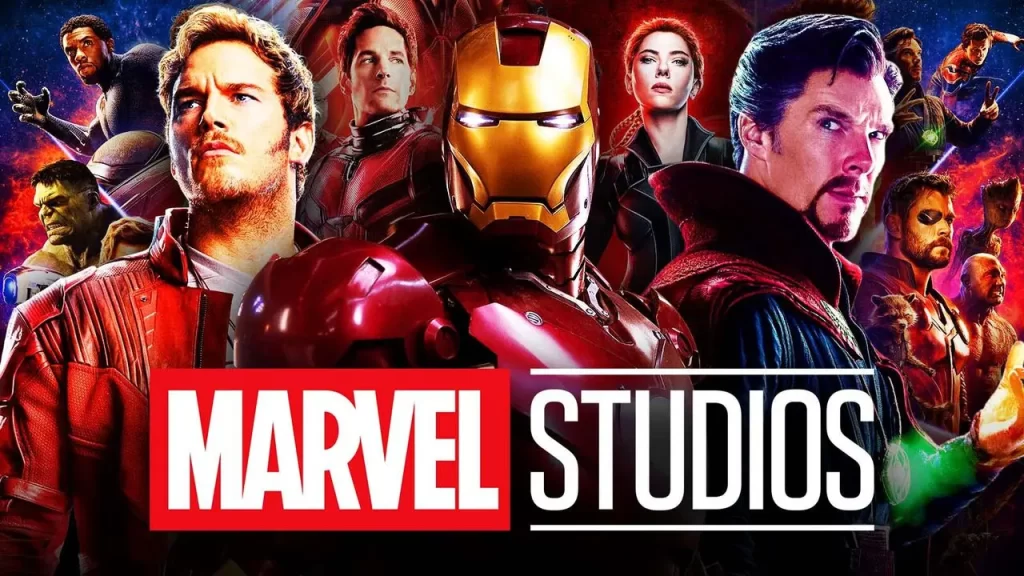
This strategy represented a fundamental shift in how superhero films were conceptualized. Rather than treating each film as an isolated product, Marvel envisioned a cinematic universe where characters and storylines could cross over between different films, mirroring the interconnected nature of Marvel’s comic books. This approach was unprecedented in Hollywood and initially met with skepticism from industry observers.
Marvel’s first self-produced film would be “Iron Man,” starring Robert Downey Jr. as the titular hero. At the time, Iron Man was not considered a top-tier Marvel character in terms of public recognition, and Downey Jr. was viewed as a risky casting choice due to his troubled personal history. Many questioned whether audiences would embrace a superhero film featuring a lesser-known character played by an actor with a controversial past.
The Marvel Cinematic Universe Revolution (2008-2012)
The 2008 release of “Iron Man” marked the beginning of what would become known as the Marvel Cinematic Universe (MCU). The film was both a critical and commercial success, grossing $318.4 million domestically and $585.2 million worldwide. This performance validated Marvel’s strategy and proved that the company could successfully produce its own films based on its intellectual property.
What truly set Marvel Studios apart was its long-term vision for an interconnected cinematic universe. The now-famous post-credits scene in “Iron Man,” featuring Samuel L. Jackson as Nick Fury mentioning “the Avengers Initiative,” hinted at the larger universe Marvel was planning to build. This approach represented a paradigm shift in franchise filmmaking, moving away from the traditional sequel model toward a more complex narrative universe spanning multiple films and characters.

Following “Iron Man,” Marvel Studios continued to introduce new characters and build toward its ambitious crossover event. Films like “The Incredible Hulk” (2008), “Iron Man 2” (2010), “Thor” (2011), and “Captain America: The First Avenger” (2011) each added new elements and characters to the MCU while maintaining narrative connections between the films.
This strategy culminated in 2012’s “The Avengers,” which brought together characters from the previous films in an unprecedented crossover event. The film was an extraordinary success, grossing over $1.5 billion worldwide and definitively establishing the viability of Marvel’s shared universe model. By this point, Marvel had revolutionized not just superhero films but Hollywood’s approach to franchise filmmaking in general.
The success of the MCU represented a remarkable vindication of Marvel’s strategy. The company had taken characters that weren’t its most famous properties—because those film rights had been sold during its financial troubles—and turned them into the foundation of the most successful film franchise in history. Marvel Studios’ interconnected universe of films had earned $6 billion in domestic box office and nearly $15 billion worldwide by the time it reached its 10-year anniversary with 19 individual projects.
Disney Acquisition and Global Expansion (2009-Present)
Marvel’s remarkable turnaround from bankruptcy to entertainment powerhouse caught the attention of one of the world’s largest media companies: The Walt Disney Company. In 2009, Disney acquired Marvel Entertainment in a landmark $4 billion deal that would fundamentally alter both companies’ futures. This acquisition gave Disney access to Marvel’s vast library of characters and intellectual property, while providing Marvel with the financial resources and distribution infrastructure of a global entertainment conglomerate.
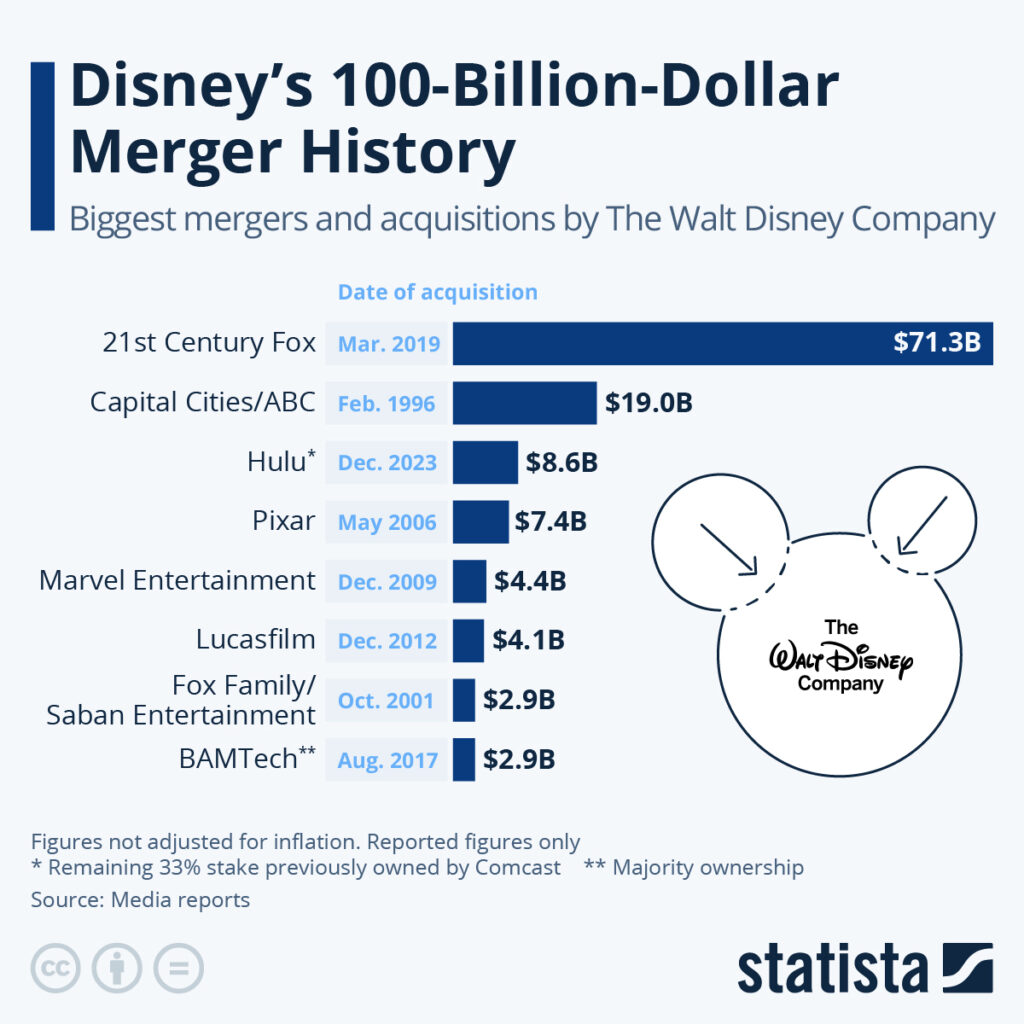
Under Disney’s ownership, Marvel Studios continued to expand the MCU, introducing new characters and exploring new corners of its fictional universe. The acquisition also facilitated Marvel’s expansion into television production, theme park attractions, and expanded merchandising operations. The Walt Disney Company’s global reach helped Marvel transform from a primarily American brand to a truly international entertainment phenomenon.
Disney’s acquisition of Marvel has proven to be one of the most successful corporate purchases in entertainment history. The $4 billion purchase price now appears to be a remarkable bargain considering the revenue generated by Marvel properties in the years since the acquisition. Marvel Studios’ films alone have grossed tens of billions of dollars worldwide, not including merchandise sales, licensing revenue, or the value added to Disney’s streaming service through Marvel content.
Marvel’s Brand Evolution
Throughout its history, Marvel’s brand identity has evolved alongside its business fortunes. The company’s original logo when it rebranded from Atlas to Marvel in 1961 was simple and understated, featuring just an M placed vertically over a C in a small box on comic covers. This minimalist approach reflected the company’s status as a relatively small publisher at the time.
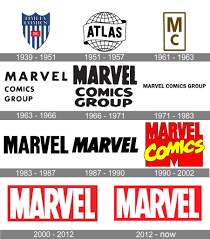
As Marvel grew in prominence, its logo and brand identity evolved to reflect its increasing cultural significance. The distinctive red and white Marvel logo that would eventually become iconic went through multiple iterations, each reflecting the design sensibilities and brand positioning of its era. The evolution of Marvel’s logo parallels the company’s journey from a modest comic book publisher to a global entertainment brand.
Beyond its visual identity, Marvel’s brand has been defined by its distinctive approach to storytelling. The “Marvel method” of creating comics—where writers and artists collaborated in a more fluid process than the strict script-first approach—translated into a unique narrative voice that carried through to its films and other media. Marvel’s characters were distinguished by their relatable flaws and personal struggles, making them more accessible to audiences than the more idealized heroes of competing publishers.
This storytelling approach became a key component of Marvel’s brand identity and was successfully translated to the screen in the MCU. The balance of humor, action, character development, and interconnected storytelling that defined Marvel Comics became hallmarks of Marvel Studios’ films as well, creating a consistent brand experience across different media.
Legacy and Cultural Impact
From its near-death experience in bankruptcy to becoming the cornerstone of Disney’s entertainment empire, Marvel’s journey represents one of the most remarkable business turnarounds in media history. The company’s success demonstrated the immense value of intellectual property in the modern entertainment landscape and revolutionized how entertainment franchises are conceptualized and executed.
Marvel’s impact extends far beyond its business performance. The company’s characters and stories have become central to contemporary popular culture, influencing everything from fashion to language to other entertainment properties. The MCU’s success established a new template for franchise filmmaking that competitors have attempted to replicate, with varying degrees of success.
Perhaps most significantly, Marvel transformed comic book adaptations from a niche genre to the dominant form of blockbuster entertainment. Characters once considered too obscure or “nerdy” for mainstream audiences now anchor billion-dollar film franchises and are recognized by audiences worldwide. This mainstreaming of comic book culture represents a fundamental shift in the entertainment landscape—one that can be directly attributed to Marvel’s creative and business strategies.
Conclusion
Marvel’s journey from a small pulp publisher to bankruptcy and then to global entertainment powerhouse encapsulates the transformative power of intellectual property in the modern media landscape. The company’s survival and ultimate success resulted from a combination of creative brilliance, strategic risk-taking, and the ability to adapt its storytelling across different media while maintaining the core elements that made its characters beloved by generations of fans.
The $4 billion acquisition by Disney, once considered a substantial investment, has proven to be one of the most successful media purchases in history, generating returns that have far exceeded the initial purchase price. As Marvel continues to expand its universe across film, television, and other platforms, its brand story stands as a testament to the power of resilience, creative vision, and the enduring appeal of well-crafted fictional worlds.
The Marvel story demonstrates that even when facing seemingly insurmountable financial obstacles, companies with truly valuable intellectual property and the vision to leverage it effectively can achieve remarkable turnarounds. From the brink of dissolution in 1996 to becoming the foundation of the most successful film franchise in history, Marvel’s rise represents one of the greatest comeback stories in entertainment business history.
Also Read: Beyond Superheroes: Why Is Marvel So Successful?
To read more content like this, subscribe to our newsletter