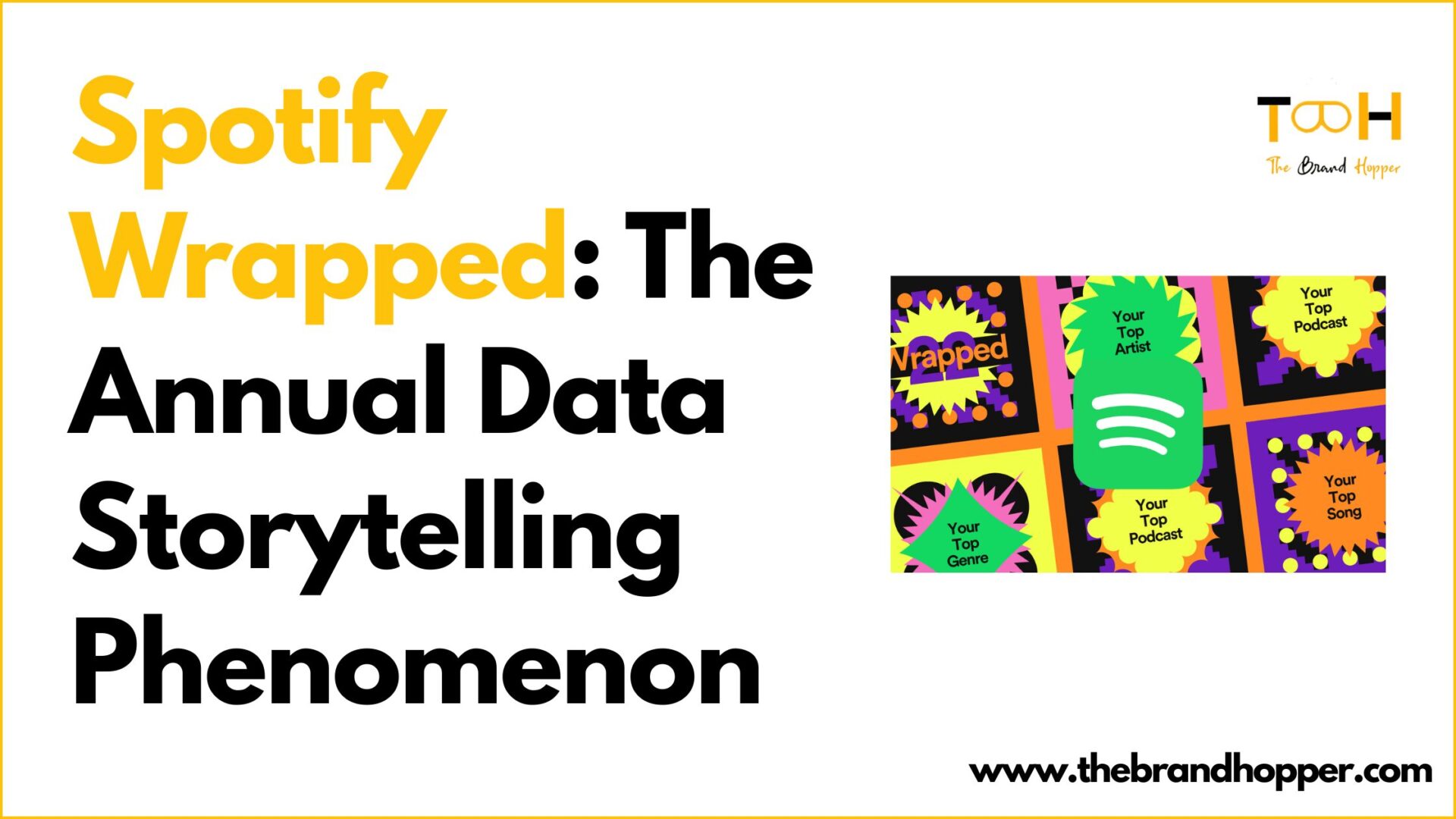
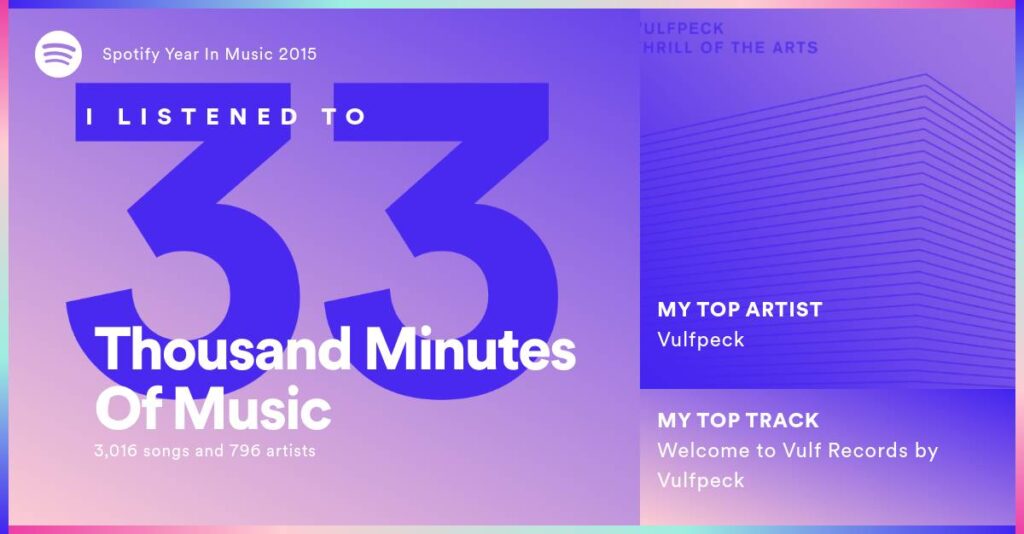
Every December, millions of Spotify users eagerly await Spotify Wrapped, the streaming service’s annual personalized recap of their year in music. Wrapped takes users’ listening data – favorite tracks, top artists, genres, total minutes streamed, and more – and transforms it into vivid, shareable cards and playlists. Launched in 2015 (initially called “Year in Music”), Wrapped was rebranded in 2016 and has since grown into a viral cultural phenomenon. Each year, Spotify delivers unique year-in-review statistics to hundreds of millions of users – in 2023, Wrapped engaged a record 227 million monthly active users – making it a cornerstone of the brand’s user experience.
How Spotify Wrapped Works: Data and Personalization
At its core, Spotify Wrapped is powered by vast amounts of user data and machine learning. Every time a user plays, skips, searches, or saves a song, Spotify logs that event. Over a year, even an average user in the US streams roughly 743 hours of music. All these billions of “events” – from search queries to every playlist action – feed into a central data warehouse. Spotify’s data engineers aggregate and model this information to compute individualized metrics: top songs, artists, favorite genres, total listening time, and more. In short, everything a user does on the app (device type, listening session, track plays) is collected and joined so that Wrapped can surface personalized stats for each listener.
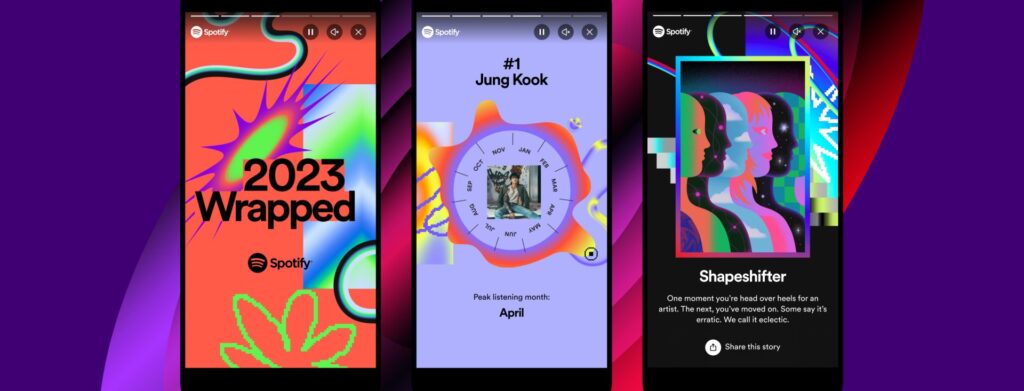
Spotify then layers on human curation. According to Spotify’s design and editorial teams, human curators monitor emerging music and cultural trends all year. They identify rising tracks and artists using both qualitative insights and off-platform signals, and they watch which songs “stick” in popular playlists. Those editorial insights feed back into the recommendation system. In practice, Spotify’s algorithms balance familiarity with discovery: they note your behavior (e.g. adding songs to playlists, playing songs in full, skipping tracks) to learn your taste, but they also inject trending songs where appropriate. The interplay of algorithms and human curation means your Wrapped can feature artists discovered anywhere on Spotify – whether via an editorial playlist or an AI suggestion – making the recap feel both personal and culturally relevant.
Finally, Spotify “activates” the results by packaging them into a friendly user interface. Reverse-ETL pipelines push the computed stats from the data warehouse into the app’s feeds, emails, and shareable content. The end result is a fully personalized in-app Wrapped experience: users see their own top songs, artists, and listening moments displayed in a dazzling animated story that they can swipe through and share. The process is technically complex (Spotify reportedly handled exabytes of data for this purpose) but results in a seamless, personal “year in music” that each user can call their own.
Origins and Evolution of Spotify Wrapped
2015-2016 – Year in Music becomes Wrapped: The first year-end recap was launched in late 2015 as “Your Year in Music,” a three-part global campaign (overall top charts, fans’ personal stats, and artists’ stats). It attracted about 5 million unique users in its first run, essentially planting the seed for a cultural tradition. In 2016 the campaign was rebranded as Spotify Wrapped, and Spotify began generating “Your Top Songs” playlists for users, distinguishing it from other brands’ retrospectives.
2019 – Built into the App: By 2019, Spotify embedded Wrapped directly into its app (rather than via email), making it easier for users to discover and share their recap.

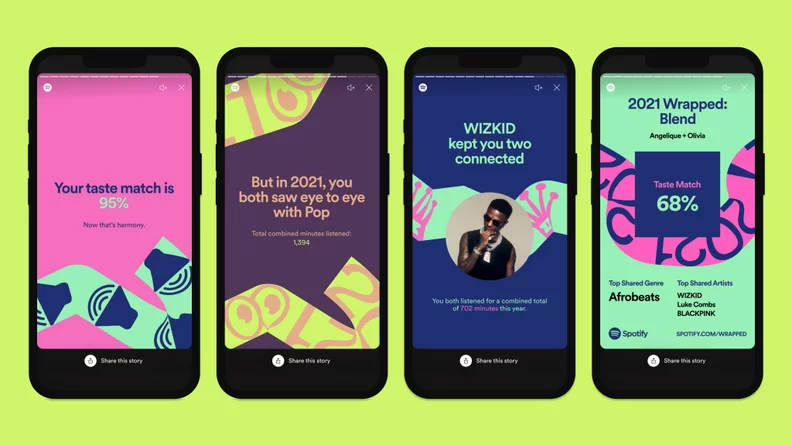
2021 – Social Features: Wrapped’s format expanded beyond static lists. In 2021, Spotify introduced features like Audio Aura (a colorful visual “aura” around your Listening Personality) and Wrapped Blend (collaborative playlist with a friend), along with short video messages from users’ favorite artists. These additions enhanced self-expression and social sharing.
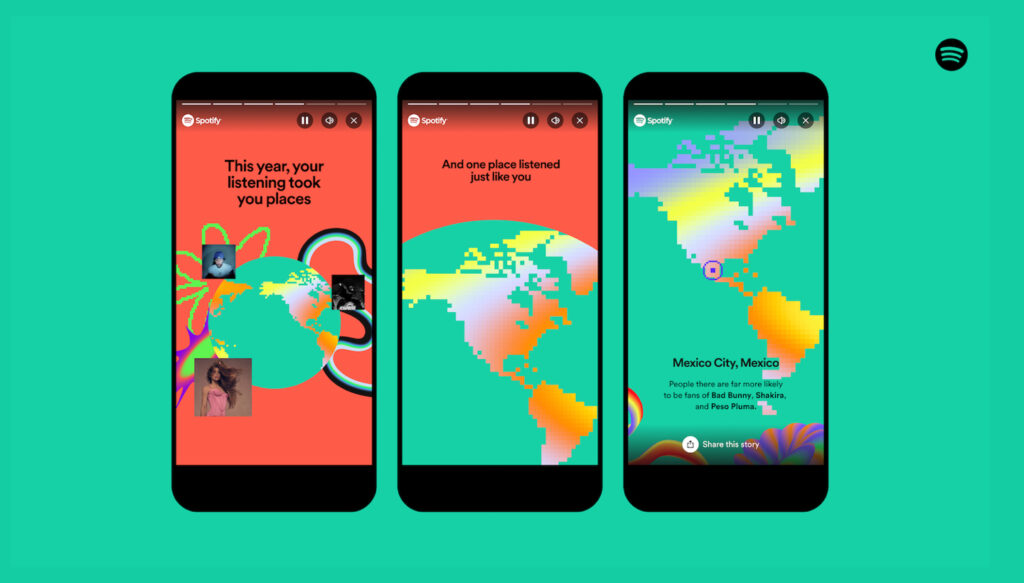
2023 – Interactive Games: The 2023 Wrapped added playful interactivity. For example, Spotify launched Sound Town, a trivia game based on your listening habits, and Me In 2023, a mini-story involving your top artist. That year’s campaign reached 227 million users – a record – underscoring Wrapped’s massive scale.
2024 – AI and Personalization: The 2024 Wrapped (Spotify’s 10th anniversary) was its most ambitious yet. Spotify introduced “Your Music Evolution,” a data story that breaks users’ listening history into up to three “phases” (with descriptive titles and connected artists). It also revamped the visual design in bold, looping animations inspired by “constant reinvention” in music. On the tech side, Spotify added an AI-generated “Wrapped AI Podcast”, a short audio recap narrated by AI hosts using Google’s NotebookLM, and integrated its AI DJ/AI Playlist tools into the Wrapped experience. For the first time, Spotify even created Wrapped summaries for content creators: personalized Wrapped hubs were made for artists, songwriters, podcasters, and authors of audiobooks, deepening engagement with the creator community. Worldwide, the 2024 campaign rolled out to 184 markets, supported by new TikTok and Instagram sharing integrations and even voice commands (e.g. “Play top songs 2024”).
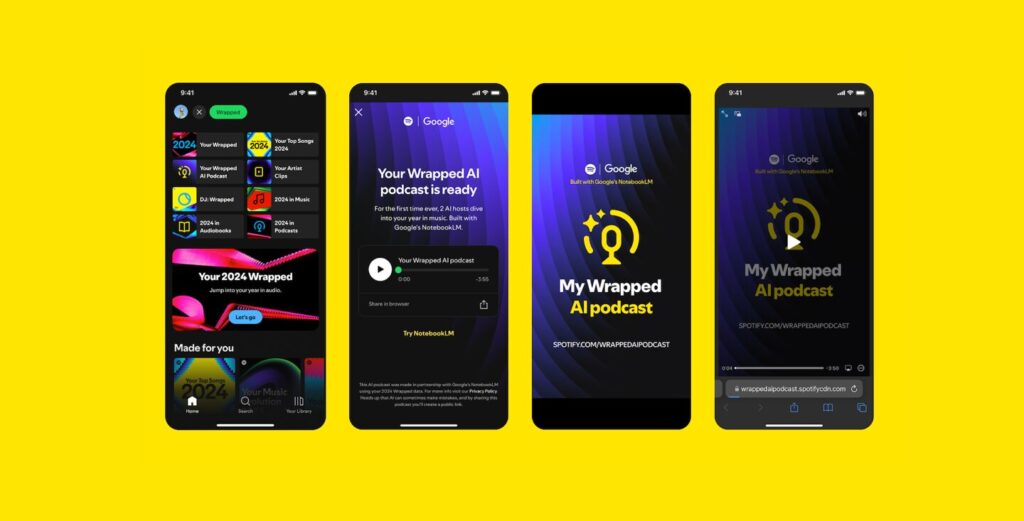
These evolutions have kept Wrapped fresh while retaining its core: a uniquely personalized year-end music “gift” to users. As Spotify’s editorial director noted, each year’s design and feature set “stands apart,” reflecting the brand’s evolving identity and ensuring Wrapped remains a must-see annual event.
Marketing Strategy and User Engagement of Spotify Wrapped
Spotify Wrapped has become a marketing superweapon for the company. It delivers enormous engagement without requiring any extra work from the user. The campaign is designed for virality: users see their personalized stats and are prompted to share the colorful results on social media. Every year, Spotify essentially “weaponizes” its hundreds of millions of listeners to advertise for free. This design creates powerful FOMO – people who haven’t yet joined or used Spotify are driven to do so just to participate in Wrapped.
The impact is visible in the metrics. For example, analytics report that the 2024 Wrapped generated roughly 2.1 million social-media mentions in 48 hours and over 400 million TikTok views in three days. About 10.5 million users actively shared their Wrapped results, and Spotify’s app saw a 40% spike in engagement during launch week. Historically, these campaigns have repeatedly broken records. In 2020 the Wrapped launch even boosted Spotify app downloads by 20%. In short, Wrapped consistently drives brand awareness: as one marketing post puts it, it acts like a yearly “cultural report card” for listeners and has become a viral phenomenon that other brands try to emulate.
Even independent studies confirm Wrapped’s social buzz. Sprinklr’s social listening during the 2024 campaign found astonishing anticipation: roughly 2.2 million people were already talking about Wrapped by mid-November 2024, before it even launched. By mid-December, the campaign “dominated social conversations worldwide,” consistently trending with hashtags and memes. In effect, Wrapped turns personal listening data into shareable stories, making every user an advocate for Spotify. As one analysis notes, “Spotify has, in essence, pioneered the concept of shareable personal data as entertainment”. The result is enormous unpaid publicity and a strengthened brand image as a music-discovery leader.
2024–2025 Innovations of Spotify Wrapped
Spotify continues to push Wrapped into new territory. The 2024 campaign’s key innovations – “Your Music Evolution,” AI Podcast, and creator-specific experiences – have set a high bar. Looking ahead, industry watchers expect Spotify to further build on these trends in 2025. For example, rumors suggest expanded podcast leaderboards and more personalized recaps (e.g. top podcast episodes or minutes-listening charts) may appear next year. Spotify’s emphasis on AI and interactivity will likely continue, perhaps with deeper customization or augmented reality tie-ins.
Meanwhile, Spotify has already announced that the concept will extend beyond music. The 2024 Wrapped for Authors marks the first time non-audio creators get a personalized year-end recap. It’s reasonable to expect new categories of content creators to be included in future Wrapped rollouts (e.g. more fine-grained podcast Wrapped categories, global charts, etc.). By integrating Wrapped into voice devices and new sharing partners (e.g. recently launched TikTok/IG integrations), Spotify ensures that next year’s Wrapped will be even more ubiquitous and connected. Whatever form it takes, Wrapped’s strategy of turning data into a gamified, must-share experience will remain central – a lesson Spotify seems keen to capitalize on in 2025 and beyond.
Design, Data Visualization, and Storytelling
A major reason Spotify Wrapped stands out is its design and narrative approach. Wrapped is not just a static report of numbers; it’s a visual story. Each Wrapped campaign uses bold graphics, animations and playful language to make data feel entertaining. For instance, Sprinklr’s analysis highlights how Spotify assigns each listener a whimsical “music persona” (e.g. “Pop Princess” or “Nostalgic Nomad”) based on their tastes, tapping into nostalgia and identity. Wrapped also segments data into easily digestible visuals: colorful infographics, dynamic progress bars, and mood-themed backgrounds that resonate with the user’s listening vibe. In 2024, the design took cues from pop culture’s cycle of reinvention: bright technicolor “hyperloops” and new custom typefaces reinforced Spotify’s refreshed brand identity.
Interactive elements are also key. Recent Wrapped experiences include quizzes and mini-games (e.g. the 2023 Sound Town trivia), and “unlockable” features (Spotify’s Playlist in a Bottle is one example of time-capsule storytelling, and Your Music Evolution creates a timeline of listening phases). Each card or screen is optimized for sharing (story-format visuals, animated GIFs, etc.), encouraging users to broadcast snippets of their Wrapped. As SoundGuys notes, YouTube’s new Recap followed this lead by introducing “animated cards” in Instagram-Story style for easy social sharing, and Spotify’s own Wrapped design has always prioritized shareability and visual punch.
In short, Wrapped treats raw statistics as narrative. Rather than a dry list of plays, Spotify transforms a user’s year in music into a personalized storybook of tunes and milestones. Analysts praise how the campaign “delves deep” into listening habits (genres, repeat tracks, seasonal peaks) and presents them in a vibrant, social-media-friendly experience. This fusion of data visualization with lighthearted storytelling is a hallmark of Wrapped’s design success.
Competitor Analysis Year-in-Review Initiatives
Spotify’s Wrapped has inspired competitors to launch their own year-in-review features. Notably:
Apple Music Replay: Apple’s equivalent lets users track their top songs and artists. Unlike Wrapped’s once-a-year drop, Apple’s Replay is dynamic year-round: users get a live, updating Replay playlist that refreshes weekly so they can watch their tastes evolve. At year’s end, Apple also provides a summary of total listening time, top artists, and favorite albums – much like Wrapped – but the continuous nature is what sets Replay apart. In practice, Apple Music users can check their Replay stats any time, whereas Spotify users must wait for December’s unveiling.
-
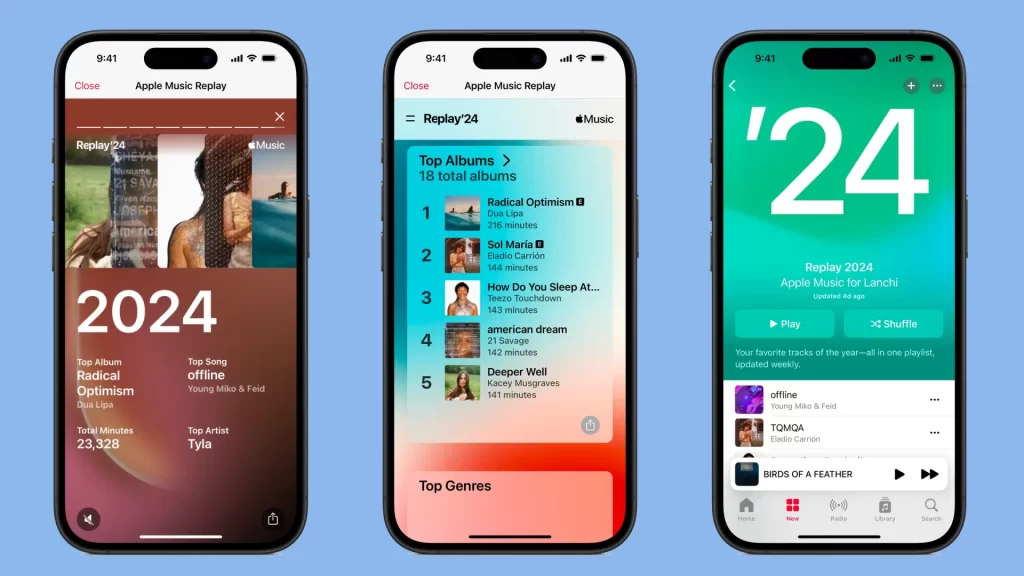
Apple Music Replay 2024
YouTube Music Recap: YouTube Music relaunched its annual “Recap” in 2024 with several new interactive features. It drops earlier than Wrapped and is built as a multi-screen story. Key additions include animated shareable cards synced to the music’s rhythm, a “Music Personality Summary” (a descriptive label like “The Hopeless Romantic”), a year-long timeline charting monthly listening, and even integrated podcast statistics. SoundGuys called it “the most comprehensive yet” due to these innovations. In essence, YouTube Music Recap is positioning itself as a direct competitor by offering a similarly personalized, visually rich narrative.
-
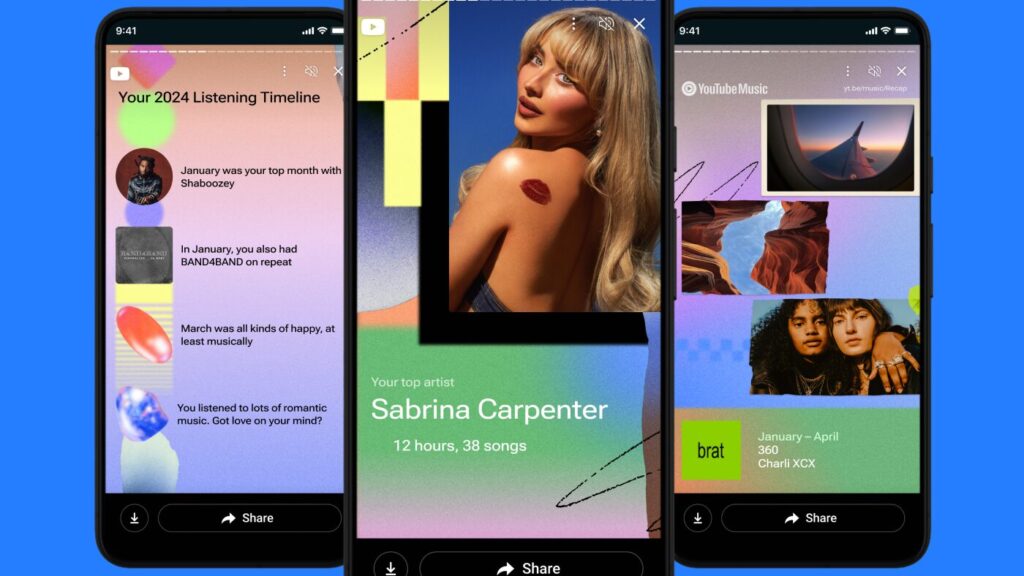
YouTube Music Recap
Deezer (My Deezer Year/Month): Deezer launched My Deezer Year to recap 2024 listening habits (complete with playful “Hype me/Roast me” commentary). In 2025 it’s rolling out “My Deezer Month,” a monthly statistics feature. Starting May 2025, Deezer will email users a monthly recap of their top songs, artists, and genres, each presented in a fun format. Uniquely, Deezer is also introducing universal sharing links so listeners can send favorites to friends on any streaming service (Spotify, Apple Music, YouTube, etc.). This cross-platform sharing is something Spotify hasn’t done yet. In summary, Deezer’s approach mirrors Spotify and Apple but adds its own twist on personalization and sharing.
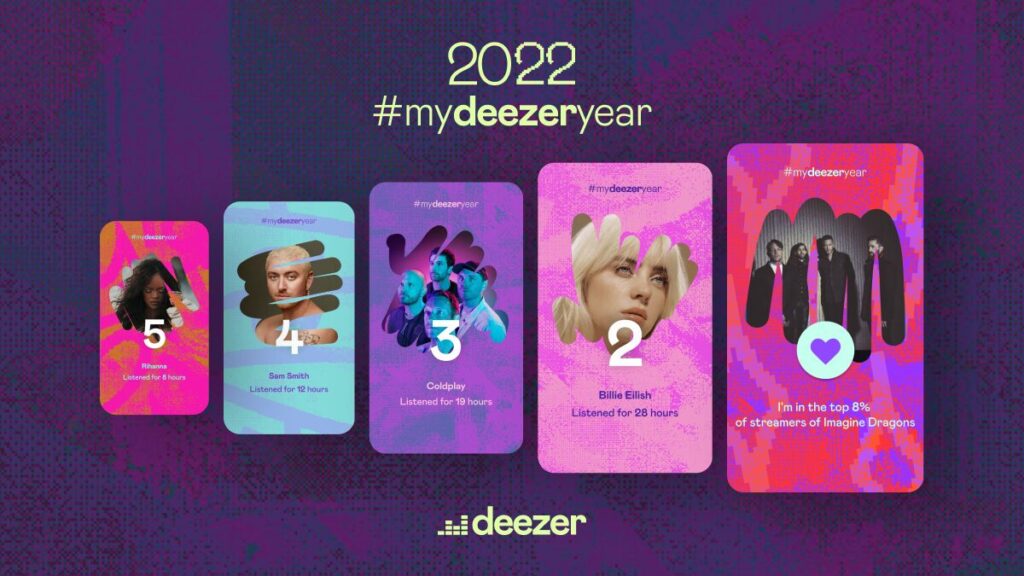
A quick comparison of these services’ year-in-review features highlights their differences:
| Service | Frequency | Key Features |
|---|---|---|
| Spotify Wrapped | Annual (December) | Personalized cards (top songs, artists, genres, minutes); special 2024 features like Your Music Evolution, AI-driven podcast recap; integrated sharing (TikTok/IG); bold animated design. |
| Apple Music Replay | Year-round (updates continuously) | Continuously updated top songs/artists playlists; annual summary with listening hours and favorite albums; mainly static visuals but more insight as year unfolds. |
| YouTube Music Recap | Annual (early December) | Story-format experience with animated cards, “Music Personality” labels, year timeline, podcast & video consumption stats; strong sharing focus; launched earlier than Wrapped. |
| Deezer My Deezer Month/Year | Monthly & Annual | “My Deezer Year” (annual summary with top tracks/artists, witty commentary) and new “My Deezer Month” (monthly stats); novel cross-platform sharing links; enhanced algorithm customizations by user. |
Each competitor offers similar basic analytics (top songs/artists), but Wrapped has led in spectacle and social integration, prompting rivals to catch up with their own creative twists.
Criticism and Privacy Concerns of Spotify Wrapped
Despite its success, Spotify Wrapped has not been without criticism. One major critique is privacy: Wrapped is essentially the result of a year-long tracking campaign, and some commentators call it “marketing surveillance.” TechRadar observes that Spotify “follows every stream” to collect an ever-growing cache of personal data, then turns it into an entertaining package. Digital rights advocates have bluntly remarked that Spotify “market[ed] surveillance as fun,” encouraging users to celebrate their own monitoring. In other words, Wrapped reminds users that “something, somewhere is effectively spying on you,” to borrow a phrasing from The Guardian. In fact, research indicates Spotify collects far more than just your listening counts: it logs demographics (gender, IP-based location, even presumed nationality and social class) to build detailed “taste profiles”. Such extensive data use, combined with Spotify’s known data-sharing with advertisers, has led regulators to take notice (e.g. a €5.4 million GDPR fine in 2023 for Spotify’s data transparency failures). In short, privacy experts warn that Wrapped’s free appeal comes at the cost of trading personal data, a trade many users simply accept as “just songs,” even as critics call it potentially insidious.
There is also content criticism. Some users and analysts found the 2024 Wrapped underwhelming due to its new AI elements. Forbes, for example, panned the 2024 Wrapped as “lackluster” – complaining that the quirky AI-generated “micro-genre” labels were not useful outside of Spotify, and that listening to a pair of AI hosts narrate the year felt “soul-destroying”. In general, the pivot to AI-powered storytelling drew a backlash from fans who missed the concrete stats and lighthearted tone of previous years. Additionally, music industry critics note that Wrapped’s celebration of stream counts reinforces the dominance of superstar artists. The campaign’s focus on “most-streamed” charts has been seen as glossing over real issues: as one commentary points out, Spotify’s Wrapped “paints a glossy, idealized picture” of the music industry while ignoring artists’ struggles (many big-name artists have publicly criticized Spotify’s low payouts).
In summary, while users largely embrace Wrapped as fun, some privacy advocates and cultural critics question the message behind it – that our listening is being tracked and packaged for entertainment. These concerns remind us that Wrapped’s appeal is inseparable from the vast surveillance infrastructure that enables it.
Conclusion: A Standout Case Study in Data-Driven Marketing
Spotify Wrapped has emerged as a textbook example of data-driven marketing. It harnesses millions of user data points to create a deeply personalized, emotionally engaging experience. By gamifying personal data and embedding social sharing, Wrapped has achieved what many campaigns only dream of: users voluntarily promoting the brand en masse. In the words of marketing analysts, it has become one of the most successful marketing campaigns of the 21st century. It turns abstract numbers into an interactive story about you, which users love to share with friends.
At the same time, Wrapped is a case study in the power and pitfalls of personalization. On the positive side, it boosts discovery (as Spotify notes, Wrapped can show you new artists you found anywhere on the platform) and builds community buzz. On the cautionary side, it highlights how much data we unwittingly entrust to platforms. Yet for marketers, Wrapped stands as a beacon: it illustrates how combining data analytics, creative design, and a shareable user experience can drive engagement and brand love. As one insight puts it, Spotify has “pioneered the concept of shareable personal data as entertainment,” setting a gold standard for personalized campaigns.
In sum, Spotify Wrapped is more than just a fun year-end recap – it’s a viral marketing achievement. Its blend of personalization, storytelling, and social virality has kept Spotify at the center of music culture every December. Whether or not you treasure Taylor Swift or Taylor Swift’s fans singing, Wrapped proves that your data, when presented smartly, can be the ultimate marketing gift.
Also Read: How Spotify Built $30 Billion Business?
To read more content like this, subscribe to our newsletter