Dockers is a global apparel brand known for its iconic line of khaki pants and casual wear, offering a blend of style, comfort, and durability. Established in 1986, Dockers is a subsidiary of Levi Strauss & Co., and it has positioned itself as a leader in the men’s casual wear market. The brand’s primary focus is to provide versatile clothing for men that transitions seamlessly from the office to the weekend, offering products that are both polished and relaxed. Over the years, Dockers has become synonymous with khakis, a timeless piece in many men’s wardrobes.
Dockers was born out of a desire to create a contemporary yet comfortable alternative to the traditional suit pants. The brand made its debut with its Dockers® Khakis, a casual yet smart pair of pants that were well-tailored and practical, offering a refreshing departure from formal business attire. The versatility of Dockers khakis made them an instant hit, especially among professionals looking for stylish yet easy-to-wear clothing for casual work environments. By offering a more relaxed, yet still professional, option, Dockers carved out a unique niche in the men’s apparel market.
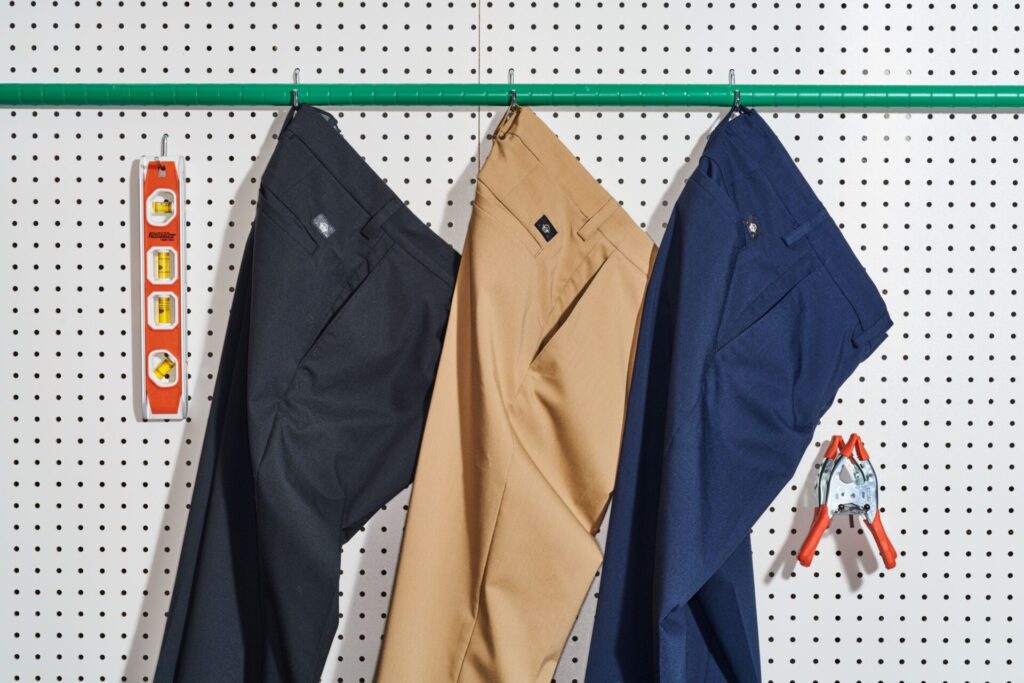
The brand’s commitment to quality and innovation has been key to its success. Dockers introduced several revolutionary products and styles over the years, such as Easy Care Khakis and D3 Fit, which provided various cuts and fits tailored to different body types. These innovations, combined with the brand’s heritage of superior craftsmanship, allowed Dockers to continue evolving with fashion trends while maintaining a strong connection to its classic roots.
Dockers is also a pioneer in emphasizing the idea of “Casual Fridays”, which became widely popular in the corporate world during the 1990s. The brand helped normalize the shift toward more casual work attire by offering smart, relaxed options that maintained professionalism without the rigidity of formal suits. This shift was part of a broader cultural change in the workplace, as more companies began adopting flexible dress codes. Dockers played a significant role in this transformation by presenting an attractive and practical alternative for office wear.
The brand’s reach extends beyond just pants; Dockers offers a complete range of casual apparel, including shirts, jackets, and shorts, as well as a variety of accessories. Through partnerships and collaborations, Dockers has remained relevant across generations, always staying true to its commitment to offering high-quality, functional clothing with a modern touch. Dockers’ offerings have become an essential part of many people’s everyday wardrobe, providing pieces that are not only durable but also stylish and easy to wear.
In recent years, Dockers has made an effort to connect with a younger audience by integrating sustainability into its product lines. With increasing awareness of environmental issues, the brand has shifted its focus towards more eco-conscious production methods, such as using organic cotton and recycled materials in its garments. This move is part of the broader Levi Strauss sustainability initiatives, which emphasize reducing waste and carbon footprint while maintaining the brand’s commitment to quality.
One of Dockers’ standout features is its brand personality, which communicates a blend of sophistication and casual ease. While its roots are deeply connected to classic Americana, Dockers has embraced global fashion trends and adapted to the evolving needs of its customers. This blend of tradition and modernity has allowed the brand to maintain its appeal across different generations and cultures.
Through its innovative marketing campaigns, Dockers has reinforced its core message of offering high-quality, versatile clothing that can easily transition from work to play. The brand has continually evolved to meet the changing demands of its customer base while staying true to its identity. Dockers has proven that, with the right balance of tradition and innovation, a brand can continue to thrive in a competitive global market.
In conclusion, Dockers is not just a brand of khakis; it represents a lifestyle of effortless style and comfort. With its strong heritage, commitment to innovation, and evolving sustainability practices, Dockers continues to be a major player in the global apparel market. It is a brand that speaks to the modern man’s desire for versatile, durable, and stylish clothing, and its rich legacy ensures it remains a staple in the wardrobes of men around the world.
Marketing Strategies of Dockers
Dockers – launched in 1986 as Levi Strauss & Co.’s khaki-centric offshoot – built its name by revolutionizing office attire with casual pants. Nearly 40 years ago, Dockers ignited a Casual Fridays phenomenon, providing an acceptable alternative to the stuffy suit.
By mailing out a “Guide to Casual Business Wear” to 25,000 HR managers in 1992, Dockers helped offices nationwide embrace khakis and a more relaxed dress code. This clever act of heritage storytelling – positioning Dockers as the originator of business casual – cemented the brand’s identity and propelled its khakis into the mainstream.
However, staying iconic and relevant is an ongoing journey. Over the decades, Dockers has continually evolved its marketing strategy – from tongue-in-cheek ad campaigns to digital influencer collaborations – all while weaving a consistent narrative thread about authenticity, versatility, and the brand’s California roots.
Heritage and the “Casual Friday” Legacy
In the late 1980s and ’90s, Dockers exploded in popularity by casualizing the workplace, famously helping usher in the era of “Casual Friday.” The brand’s early marketing leaned heavily into this narrative. By promoting khakis as the liberating antidote to rigid suits, Dockers became synonymous with smart-casual style.
An often-cited piece of brand lore is how Dockers essentially invented Casual Friday (at least on the U.S. mainland): the brand’s 1992 HR mailer provided rules and inspiration for dressing down professionally. It even sponsored in-office fashion shows and set up a hotline for dress code emergencies – engaging tactics that not only sold pants but also reinforced Dockers’ role as a cultural trendsetter.
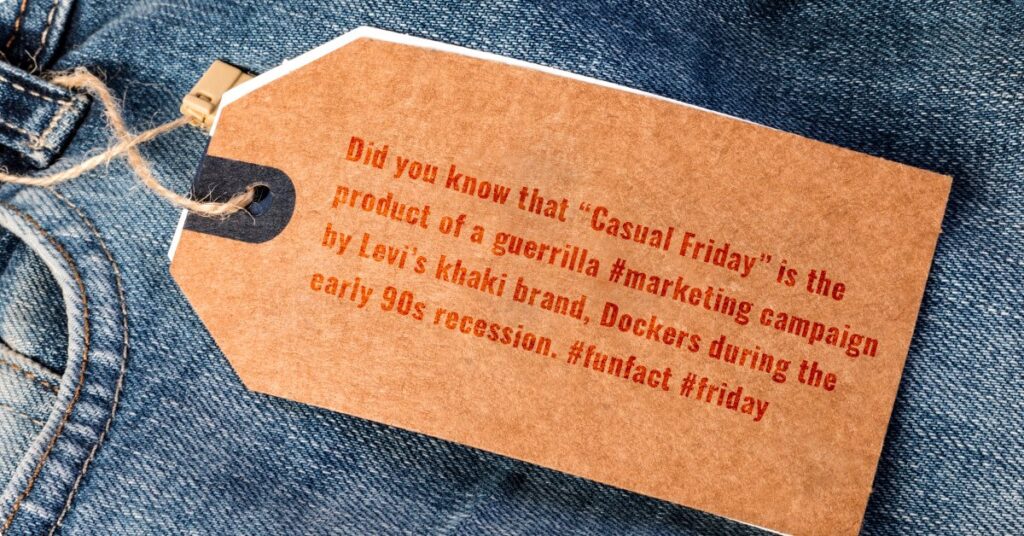
This heritage of relaxed yet put-together style became a foundational story that Dockers still taps into globally. Even today, Dockers’ official messaging proudly notes the brand “created the modern workforce khaki” and “challenged formality in the workplace”, reminding consumers worldwide that it was Dockers that first gave them permission to swap suits for something more personal.
Reinvention Through Narrative: Major Campaigns and Pivots
By the 2000s, Dockers faced the challenge of staying relevant as khakis risked being seen as “dad pants” from a bygone era. The brand’s answer was to double down on narrative-driven campaigns that reasserted its core identity in fresh ways.
A notable pivot came with the “Wear the Pants” campaign (launched 2009 and spotlighted with a Super Bowl 2010 ad). In a cheeky 30-second spot, a chorus of pantless men sang “I Wear No Pants” until a voiceover urged them – and viewers – that “it’s time to wear the pants.” This humorous call to manhood was backed by a “Man-ifesto” encouraging men to embrace confidence and responsibility, symbolized by wearing Dockers khakis. The campaign aimed to woo back lapsed “weekend warriors” and younger men by reminding them that khakis are a versatile wardrobe staple – not just baggy office attire.
https://www.youtube.com/watch?v=4gR6LR_VcwA
Product strategy was tightly integrated here – the ads highlighted new slimmer fits and modern styles (like the K-1 and D3 chinos) to show that Dockers had evolved with the times. Engagement tactics were innovative for the era, too: viewers could Shazam the TV spot or enter online for a chance to win Dockers pants, blending traditional advertising with emerging digital interaction.
A few years later, in 2015, Dockers undertook another self-reinvention.
After introspective consumer research around the globe, the brand introduced the tagline “Yes, They’re Dockers.” This campaign sprang from hearing surprise whenever stylish modern chinos turned out to be Dockers – an insight the brand flipped into a proud rallying cry. The phrase implies a confident narrative: Dockers can be unexpectedly fashionable, and you should own that fact.
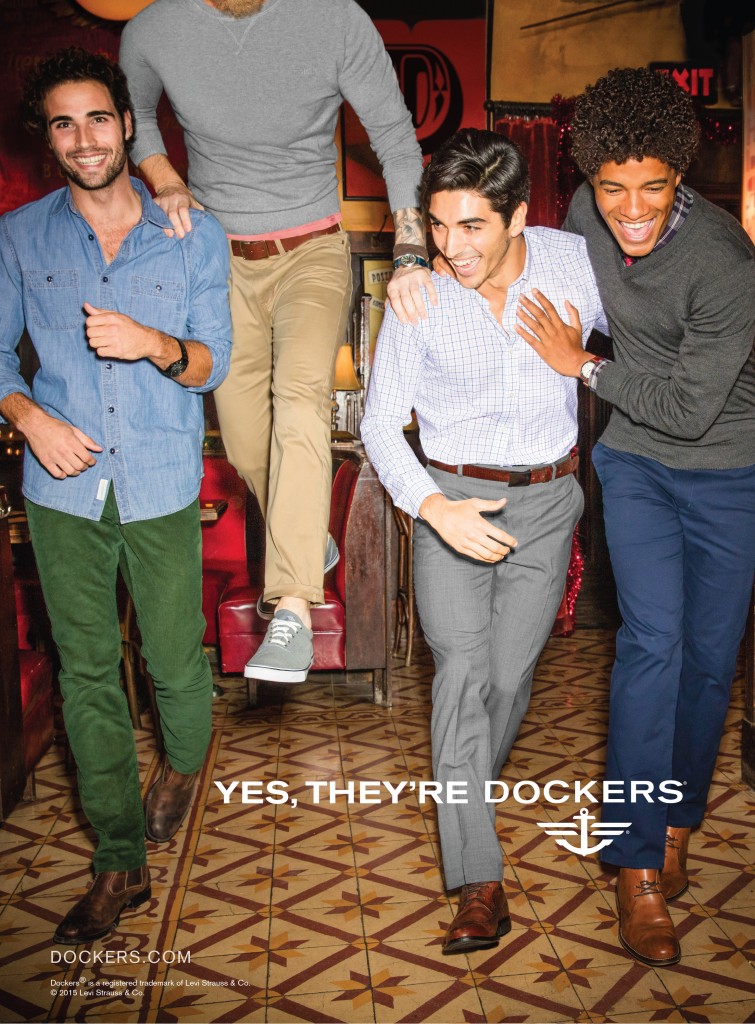
The new positioning debuted via print ads in magazines like Sports Illustrated and Esquire, signaling that Dockers wanted to reclaim the pride of place it once held, but in a contemporary context. By boldly stating its name, the brand positioned itself as both iconic and renewed – essentially telling customers, “Yes, the great pants you’re admiring are Dockers, and we’re proud of it.”
This mid-2010s storytelling helped bridge Dockers’ heritage with a modern, slightly cheeky tone, reminding lapsed fans and new audiences alike that the brand still had style cred.
Dockers 2.0 – Authenticity, Versatility, and a Fresh Aesthetic
By the late 2010s, Dockers’ marketing had fully shifted from nostalgic to forward-looking, while still leveraging its origins.
A prime example was the 2019 European campaign “#YouDontNeedASuit”, which reimagined Dockers’ workwear legacy for a millennial audience. The campaign’s hero video literally wrestled with tradition: a young entrepreneur grapples (WWE-style) with a living, fighting empty suit, ultimately hurling that symbol of stuffy formality out the window. The tagline – “To change the world, you don’t need a suit” – delivered a bold message that one can be successful, entrepreneurial, and “disrupt the status quo” in casual Dockers attire.
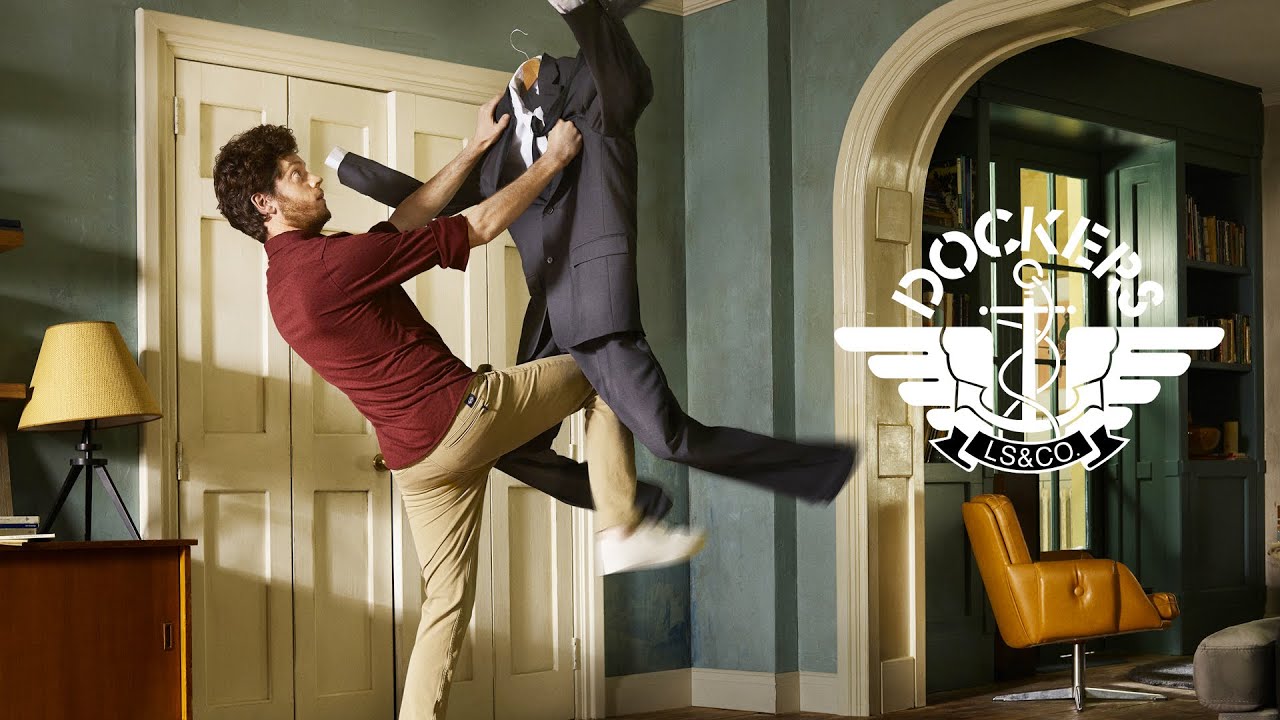
As Dockers Europe’s Brand Marketing Director Joan Calabia explained, this was “a fresh and modern take on our origins”. It tapped into the same rebellious spirit that Dockers showed in the ’90s with Casual Friday, but with new humor and energy. The brand purpose, Calabia noted, is giving people the confidence to be their best, without needing a uniform – “we already did it through the Casual Friday movement…and finally we bring back a tone of disruption and humor that has always been part of Dockers’ communication history.” In other words, Dockers was reclaiming its narrative of empowerment and individuality, telling a new generation that being authentic (and casually dressed) is more powerful than conforming in a suit.
This campaign also spotlighted Dockers’ product evolution. It featured the Smart Series collection – e.g. Smart 360 Flex™ chinos and shirts with four-way stretch – as the new “uniform” for entrepreneurs, activists and adventurers alike. By showcasing high-performance, comfortable fabrics in a stylish context, Dockers communicated that its product strategy had adapted to modern needs (comfort and style) while remaining anchored in the khaki narrative.
The #YouDontNeedASuit ads, with their playful defiance, successfully reinvigorated the brand’s image in Europe and beyond, earning consumer attention and reinforcing Dockers’ identity as the original champion of workplace casual. In fact, this effort was part of a larger “Always On” marketing platform for Dockers around that time – a continuous push to inspire people to pursue their goals dressed as themselves.
Embracing Digital Channels and Influencers
To maintain relevance globally, Dockers recognized it needed to meet younger audiences where they are – online and on social platforms – and to update the way it tells its story. Over the past few years, the brand has aggressively integrated digital marketing, social media, and influencer partnerships into its global strategy.
A case in point is Dockers’ savvy use of LinkedIn to reconnect with its professional roots. In a full-circle twist, the brand that once mailed letters to HR departments turned to LinkedIn’s digital network to “re-ignite the conversation” about workplace fashion. “Thirty years on, we found we have a platform called LinkedIn that’s perfectly suited to engaging professionals,” noted Joan Calabia of Dockers Europe. The LinkedIn campaign centered on the message “to change the world, you don’t need a suit,” mirroring the European ad’s tagline, and featured a striking video of a young man literally wrestling an empty suit (bringing that narrative to life online).
Dockers supplemented the video with interactive content like The New Casual guide (an e-book updating the old HR pamphlet for the 21st century) and carousel ads showcasing its flexible Smart 360 Flex designs. By leveraging LinkedIn’s targeting (aiming at HR leaders, job switchers, and young professionals) and its content-friendly format, Dockers achieved a 57% market penetration in the campaign and boosts in brand perception. This success proved that a legacy brand could indeed deliver an emotional message on digital platforms, associating Dockers with an entrepreneurial mindset for a new generation.
Beyond LinkedIn, Dockers has cultivated a lively presence on visual and social media globally. It uses Instagram and TikTok to shed its “stodgy” image and showcase a laid-back, youthful vibe. The brand’s content often highlights its California heritage – sunlit backdrops, casual outfits, and real people confidently wearing khakis in everyday life.
Dockers has also tapped a roster of international influencers and brand ambassadors – the Dockers® Crew – to personalize its narrative. For example, professional model Taylor Hill, NBA athlete Jordan Poole, Peruvian singer Nicole Zignago, Ukrainian tennis star Elina Svitolina, French surfer Maud Le Car, BMX champion Matthias Dandois, and others have all been featured as Dockers ambassadors. Each brings their own story and style, echoing the campaign slogan “Live Original” – a global marketing platform encouraging people to embrace their originality and unique point of view in Dockers clothing.

These collaborations infuse the brand with diverse voices and local relevancy. For instance, Latin America’s marketing prominently features Zignago (resonating with young creatives in that region), while Europe’s includes Svitolina (aligning with a sporty, resilient image). The ambassadors share content on their channels and appear in Dockers ads, effectively blending influencer marketing with brand storytelling.
Product Strategy: Telling the Khaki Story Anew
Underneath the marketing gloss, Dockers’ product strategy itself has become a storytelling vehicle. Rather than chasing fads, Dockers has leaned into what it calls its “California Point of View” – a timeless, laid-back style DNA – while adapting to contemporary tastes. This is evident in the brand’s expanded product lines and how they’re marketed. Dockers still celebrates its core item, the khaki chino, as “the ultimate expert” in the category.
But today’s campaigns also depict Dockers as a head-to-toe lifestyle brand, offering polos, jackets, sweaters, and even a revived women’s collection – all with the goal of outfitting a new generation for everyday life. The marketing for this is very narrative-driven: campaigns often depict women in dynamic, on-the-go scenarios (from office meetings to weekend outings) to show that Dockers apparel can keep up with their busy lives.
Early results have been promising – Dockers saw nearly 60% growth in women’s global revenue in 2023 after refocusing on this segment. The brand has smartly distributed the women’s line across channels: in the U.S., Dockers women’s products launched on its own site and stores as well as retail partners like Tilly’s and fashion-forward Free People.
Purpose and Planet: Weaving Sustainability into the Brand Story
No modern brand strategy is complete without a sustainability narrative, and Dockers has made environmental responsibility a key part of its global storytelling. The brand often reminds consumers that it is part of Levi Strauss & Co., which pioneered eco-friendly innovations like Water<Less® manufacturing.
In fact, Dockers was an early adopter of LS&Co’s water-saving techniques – first implementing them in its products in 2010. By 2020, Dockers proudly announced that 47% of its entire product line was made with Water<Less® methods, which reduce water usage in garment finishing by up to 96%. This milestone was celebrated with a special 10-year anniversary collection highlighting those sustainably washed, lived-in looks.
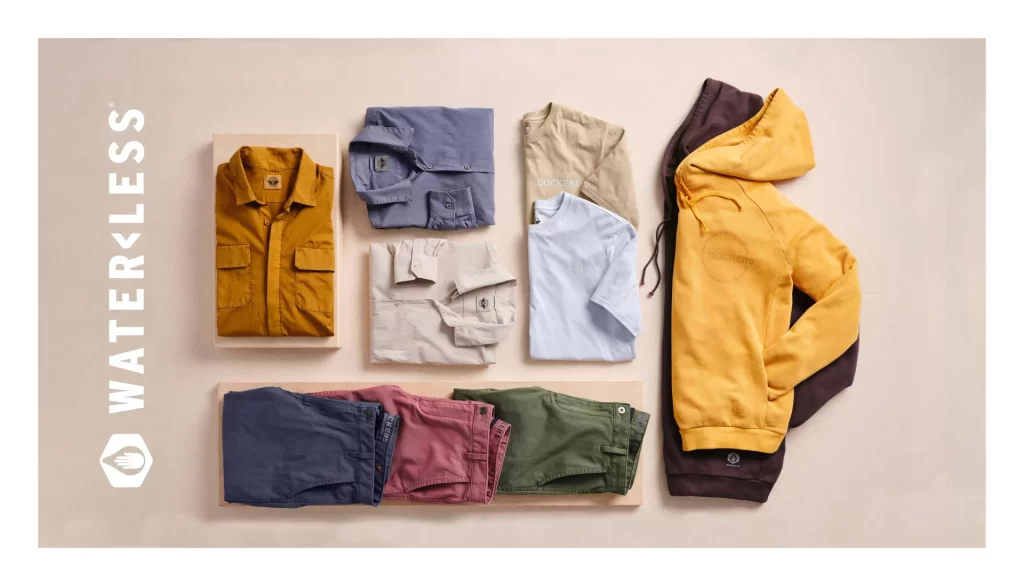
Dockers’ marketing has increasingly highlighted such facts to bolster its credibility with eco-conscious consumers. Messaging around “responsibly made” clothing appears in brand content, and Dockers’ website prominently features its values of “innovation and style, responsibly made”.
Beyond manufacturing, Dockers talks about materials (using more organic and recycled cotton, for instance) and partnerships that underscore its commitment to the planet. Dockers has partnered with the Better Cotton Initiative and has pledged to use 100% sustainably sourced cotton in the near future. It even teases product innovations like recycled polyester fibers and exploring cottonized hemp, showing that the brand is looking ahead in textile sustainability.
These initiatives are often woven into the brand narrative by emphasizing that doing right by people and planet isn’t a marketing stunt but true to Dockers’ values – which makes sense given Levi Strauss’ long-standing CSR history. A Forbes article noted that Dockers prioritizes people and planet “from manufacturing to marketing”, and indeed nearly half of Dockers products worldwide now use water-saving methods.
The purpose-driven marketing goes further in community initiatives: Dockers has a global partnership with Waves For Water, a nonprofit bringing clean water to communities in need. Dockers uses its platforms to highlight this cause and has engaged customers in certain campaigns to contribute to clean water projects, neatly aligning the brand’s water-saving product message with real-world impact.
Omnichannel Reach and Global Relevance
A significant aspect of Dockers’ global strategy is its omnichannel approach – ensuring the brand story is cohesive across retail stores, online platforms, and everything in between. As a self-described “democratic” brand, Dockers wants to be wherever its customers are, providing a seamless experience.
In practice, this means that Dockers has dramatically expanded its direct retail presence internationally while also leveraging wholesale and digital channels in tandem. In the past few years, Dockers opened dozens of new standalone stores around the world – growing to about 100 stores, with only five in the U.S. and the rest across Europe, Latin America, and Asia.
These brick-and-mortar stores serve as experiential touchpoints, immersing shoppers in Dockers’ California-casual lifestyle with visual storytelling (large in-store photos of surfers, skateboarders, and professionals wearing Dockers) and knowledgeable staff who can relay the brand’s heritage.
At the same time, Dockers has carefully woven its online and offline strategies together. The company speaks of being “omnichannel by design,” ensuring that inventory, sizing, and even marketing campaigns are aligned across e-commerce and physical retail.
For example, a campaign like “Live Original” doesn’t just live on Instagram; it also finds expression in store window displays, point-of-sale materials, and even staff training (so that a store associate might tell a customer about the latest Dockers ambassador collab or sustainability factoid, reinforcing what that customer may have seen online).
This integrated approach recognizes that the customer journey is no longer linear. As Dockers expanded into new markets such as India in 2024, it partnered with local retail technology firm Ace Turtle explicitly to create a unified online-offline presence. This three-pronged entry ensured that whether Indian consumers encountered Dockers in a mall or on their smartphone, they got a consistent brand message and access to the product.
Conclusion
As of today, Dockers stands as a case study in brand storytelling. It transformed from being simply “America’s favorite chino” to a globally recognized lifestyle brand that champions comfort, style, and values in equal measure. The journey has included refreshing its aesthetic (bringing in throwback styles and launching women’s wear), doubling down on DTC and digital engagement, and publicly committing to causes like water conservation and equality.
Through all these strategic decisions, Dockers maintains a narrative through-line: it’s about being true to yourself and being comfortable in your own skin (and pants). That message, rooted in its casual-Friday origin and now expressed in diverse ways, is how Dockers continues to inspire loyalty and relevance. In the brand’s own optimistic words, “There is something magical here, and I feel it in our strategy taking hold.”Dockers’ marketing journey – past, present, and future – is about capturing that magic of authenticity and sharing it with the world, one khaki story at a time.
To read more content like this, subscribe to our newsletter