Last Updated on June 26, 2025 by Team TBH
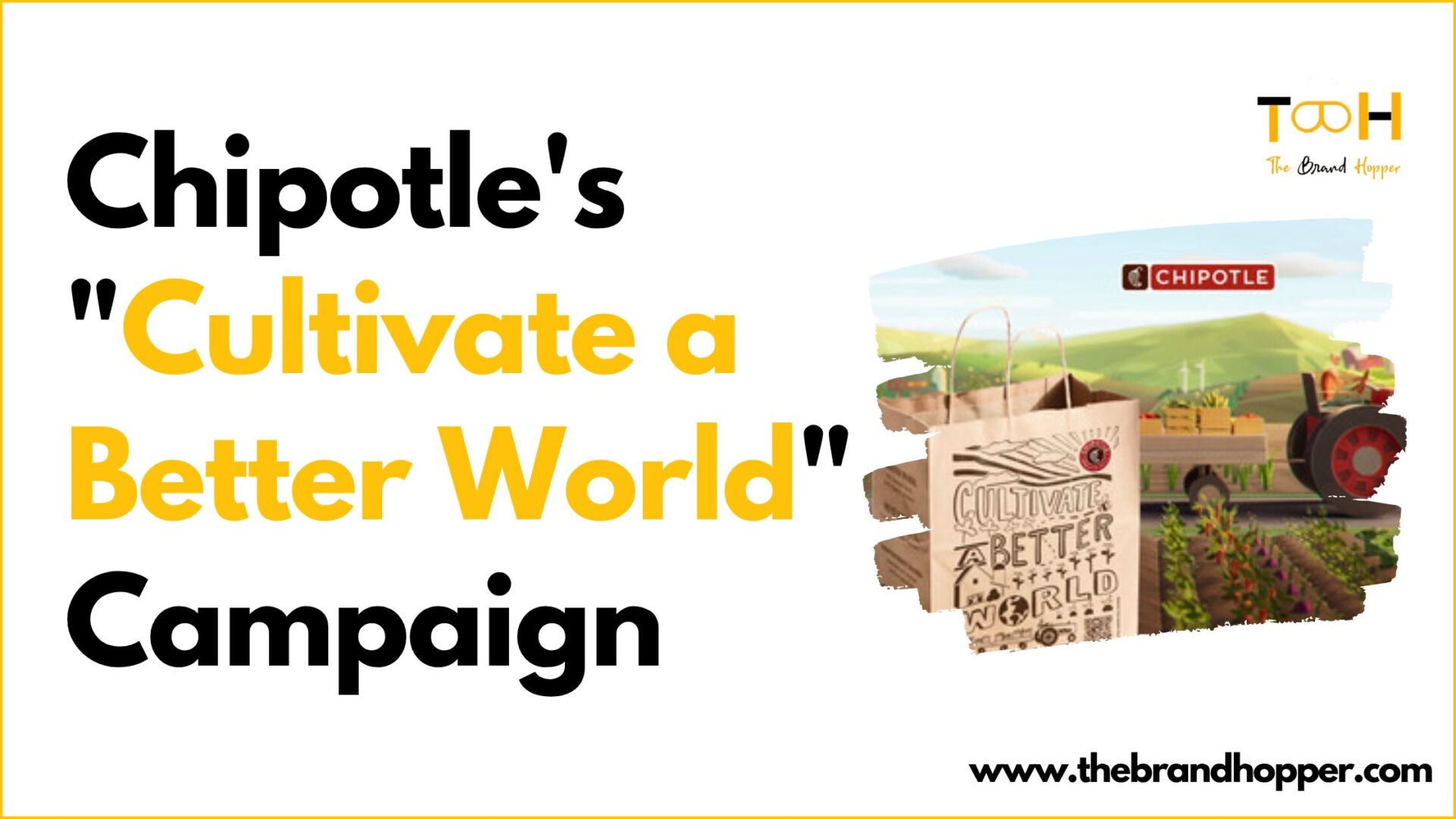
Chipotle’s brand purpose has long centered on sustainable, high-quality food – a mission summarized by its mantra “Food With Integrity” and the stated goal “to cultivate a better world.” This purpose-driven vision underpinned the global Cultivate a Better World marketing campaign, launched in 2011 and evolving through films, games, events and promotions worldwide.
The campaign was designed to reinforce Chipotle’s identity as a leader in ethical, sustainable fast-casual dining and to reconnect with customers after supply-chain controversies.
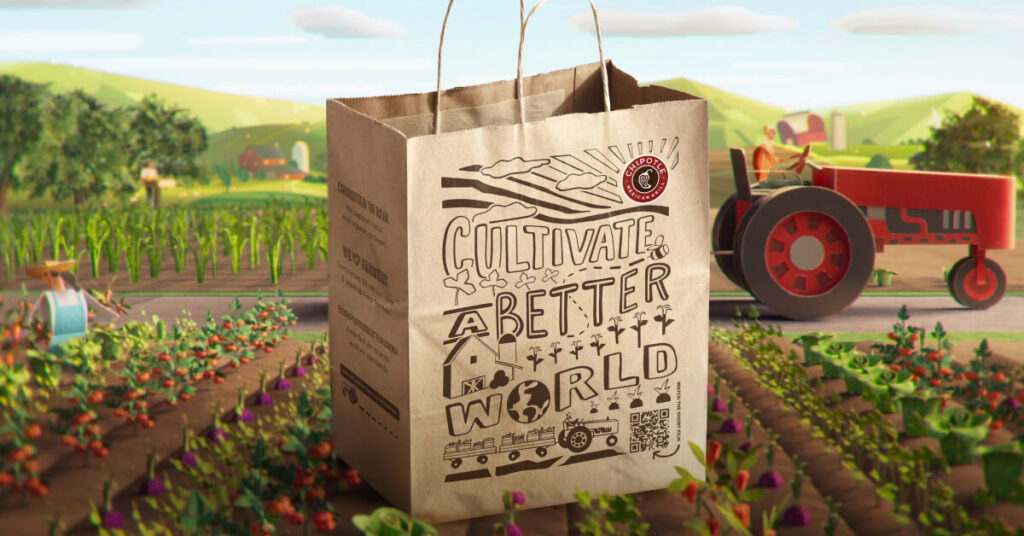
In practice, Cultivate combined emotionally resonant storytelling with interactive content and social engagement to spark conversations about food and farming ethics. Over more than a decade, it reached hundreds of millions of people, won top creative awards, and became a case study in purpose-driven branding.
Strategic Goals and Brand Vision of the Campaign
At its core, the Cultivate campaign aimed to align marketing with Chipotle’s core mission and values. The company explicitly tied marketing objectives to its Food Integrity Commitment – including responsible sourcing, humane animal welfare, non-GMO ingredients and sustainability.
Its strategic goals were to build trust and loyalty by highlighting these values.
As one analysis notes, Chipotle’s marketing goals are “rooted in clear objectives to elevate brand identity, foster loyalty, boost sales, and promote sustainable practices”. In practice this meant consistent messaging across touchpoints (restaurants, advertising, digital, social) to reinforce that Chipotle serves fresh, ethically raised ingredients.
For example, the company launched the Chipotle Rewards loyalty program to turn casual diners into repeat customers, rewarding them for engagement rather than just purchases.
Internally, this strategic vision also shaped culture. Chipotle emphasizes a “special people culture” that empowers employees and nurtures leaders from within.
Executives often told stories of team members whose lives changed through Chipotle’s mission-driven work.
In a 2020 keynote, Chief Restaurant Officer Scott Boatwright described an employee who rose from crew member to aspiring restaurant operator, saying “Working at Chipotle has changed my life,” echoing sentiments he hears across the organization. This focus on purpose – “Food with integrity… the belief we actually can cultivate a better world” – underpinned both customer-facing and internal initiatives.
In short, the Cultivate campaign was built not on pushing products, but on sharing Chipotle’s purpose and rallying both consumers and employees around it.
Messaging and Philosophy of the campaign
The heart of the Cultivate a Better World campaign was its messaging: food has the power to change the world. Chipotle communicated that by “committing to Responsibly Raised, Real food” the company contributes to a better future.
Campaign materials repeatedly contrasted natural farming with industrial agriculture.
As one advertising blog noted, Chipotle’s ads tackle “inhumane farming” head-on, positioning the brand as a call to bring back ethical practices. The company has said the goal of its films and games was “less to generate sales and more to educate people on issues in food,” encouraging better consumer decisions.
In every piece of media, the phrase “cultivate a better world” was the refrain – the consistent slogan tying together short films, festival events, games and social campaigns.
Key philosophical points included transparency and radical honesty.
For example, the “Back to the Start” film and its successors focus entirely on broad issues (factory farming, food choices) without product placement or menu images – a bold move emphasizing purpose over promotion. This approach reinforced Chipotle’s “Food With Integrity” ethos.
In-company statements and reports echo this: Chipotle insists that how food is raised and grown directly shapes its taste and impact. The company even launched tools like the Real Foodprint to show customers environmental impacts of Chipotle’s ingredients.
In summary, Cultivate’s messaging philosophy was educational and values-driven, leveraging storytelling and entertainment to make viewers care about sustainable agriculture and humane food systems.
Creative Execution: Films, Games, and More
Chipotle’s creative execution centered on cinematic short films and interactive content. Its first major piece was “Back to the Start” (2011): a two-minute stop-motion animation directed by Nexus Studios. The film tells the story of “Pa,” a pig farmer who gets swept up in factory farming but ultimately returns to sustainable practices (earning praise for authenticity and emotion).
The production details emphasize Chipotle’s purpose: only real farming techniques are shown (solar panels, pasture, etc.), and the soundtrack is Willie Nelson’s cover of Coldplay’s “The Scientist,” with song-download proceeds to the Cultivate Foundation.
The result was a viral hit: 300+ million earned-media impressions and over 80 industry awards.
In its own words, the animation “put the Chipotle brand firmly on the map” and sparked global conversation about food ethics.

Following this, “The Scarecrow” (2013) expanded the narrative. This project included an award-winning animated short (by Moonbot) and an accompanying mobile game. The story depicts a dystopian food factory run by “Crow Foods,” where scarecrows toil to produce processed meals.
The scarecrow hero rebels, starts a sustainable burrito stand, and spreads the “Cultivate a Better World” message. The short is set to Fiona Apple’s haunting cover of “Pure Imagination” and was released on YouTube and in cinemas.
It again prioritized storytelling over product shots: the company’s name never appears onscreen, only the moral of ethical food supply is shown. The campaign also drove engagement through the Scarecrow game, where players dismantle factory farms. This cross-media push emphasized experiential learning. According to Chipotle, the theme was to generate curiosity about food origins through entertainment.
“The Scarecrow” achieved enormous reach – over 650 million media impressions and 18 million film views – and even earned two Cannes Grand Prix.

In 2016, Chipotle released “A Love Story.” This animated short (with an online matching game tie-in) told a lighter, romantic tale of two aspiring restaurant owners who escalate a fast-food battle – illustrating how processed foods proliferate. It used a lively cover of Sanah’s song “The Scientist,” and conveyed that massive menus and additives are a dead-end for quality.
As a Business Wire release reports, “A Love Story” garnered 61 million views and high audience scores (Ace Metrix rated it their top quick-service ad). Importantly, Chipotle’s own surveys found the film shifted perception: 71% of viewers said it made them more likely to believe Chipotle uses high-quality, whole ingredients, and 65% said it increased their trust in the company.

This demonstrated the campaign’s impact on brand image. A match-game based on the film further extended its reach by rewarding players with meal offers, linking digital engagement to in-store visits.
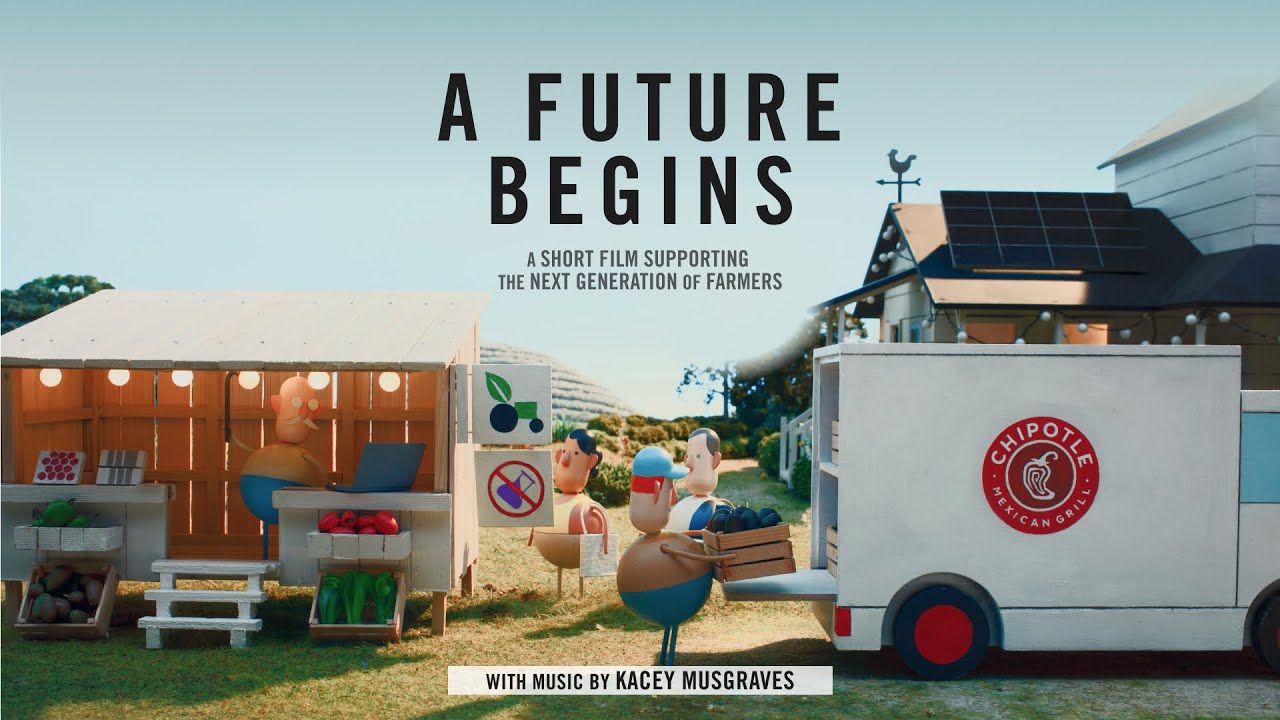
In 2021, the story continued with “A Future Begins.” A sequel by Nexus Studios revisited the original farm: now Pa’s son grows up and modernizes the family farm with sustainable innovation. This film, aligned with Chipotle’s Cultivate Next venture fund initiative, added elements like solar panels and regenerative agriculture practices into the narrative.
Early results were astounding: it became the most socially-engaging Chipotle content ever, with 50+ million views on social platforms (11M on YouTube, 27M on TikTok), and over 15,000 comments. The campaign won a Bronze Pencil at The One Show for animation. As Todd James Hunter, the campaign creative producer, notes, “A Future Begins far exceeded its predecessor on engagement and efficient reach… the highest social engagement of any piece of Chipotle brand content or advertising in company history”.
Chipotle also deployed non-traditional media. For example, the “Cultivate Festival” brought the message to life offline: a free day-long Chicago event (2013–2017) combining music, chef demos and educational exhibits from farmers. One report notes 16,000 attendees at a festival featuring bands, films on factory farming, and even a hog gestation crate exhibit.
In another innovation, Chipotle became the first restaurant brand to air a national commercial inside the metaverse: in Feb 2025, it debuted “Unfolded” – a 60-second ad on Roblox that used Halsey’s cover of the Rolling Stones’ “She’s a Rainbow.” In this animated spot, a delivery truck transforms industrial farmland into verdant fields as it drives, ending at a Chipotle restaurant.
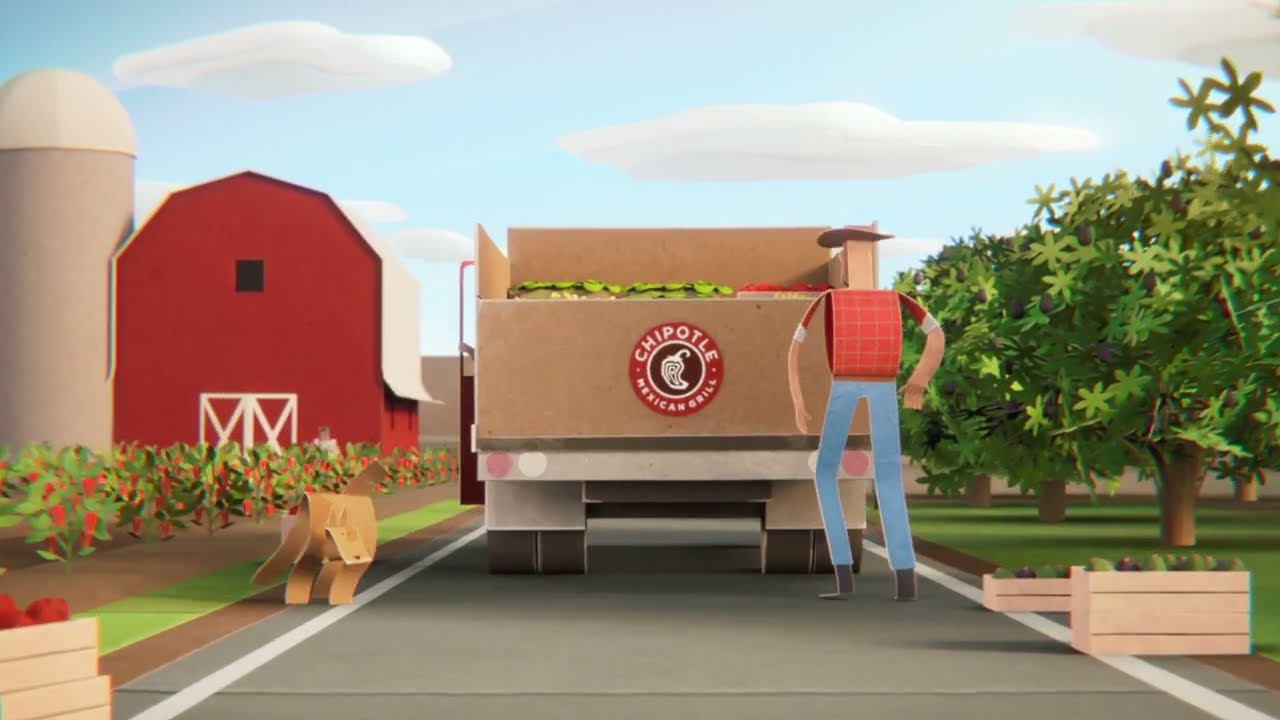
The spot’s tagline: “Cultivate a better world.” That release on Roblox’s Carnitas Cinema rewarded players with free-entrée codes, merging gaming, content, and real-world rewards. This exemplifies how the campaign evolved across channels – from theaters and YouTube to TikTok, games, social media, branded festivals, and even restaurant loyalty programs.
Media Channels and Omnichannel Growth
The Cultivate platform spanned traditional and new media in a coordinated way. Chipotle utilized:
Film and TV: Cinematic short films were promoted via YouTube and film festivals (often preceding Oscars or Sundance). Some stories were also adapted into TV spots or aired during events (e.g. football games).
Social Media & Digital Video: The films went viral on YouTube and Facebook, supported by teasers and behind-the-scenes content. Chipotle’s small social team engaged directly with followers (even signing their names on posts), and the brand participated in TikTok trends (e.g. the later “GuacDance”) to stay culturally relevant.
Interactive Branded Content: Mobile and online games tied to the films (like The Scarecrow game, A Love Story memory match, and the Burrito Builder on Roblox) amplified reach. These games educated players on food sourcing while offering real rewards.
Events and Experiential: The Cultivate Festival, as noted, fused entertainment with education. Chipotle also leveraged experiential pop-ups and virtual events (e.g. the Super Bowl-themed “Carnitas Cinema” on Roblox).
Loyalty and In-Store Activations: The Farm Team (later Rewards) program let customers earn perks through gaming and social engagement, tying back to the campaign’s themes. In stores, messaging on cups, bags, and menus often referenced sustainability initiatives, reinforcing the global theme at the point of sale.
Public Relations and Partnerships: Chipotle’s PR amplified its commitment (e.g. large donations to sustainable agriculture research, support for farmers via its Cultivate Foundation). It partnered with influencers and media (like working with Halsey) to extend the campaign’s narrative.
By using a mix of earned, owned, and paid media across these channels, Chipotle ensured the “Cultivate” message was omnipresent. Every new film or program was accompanied by social contests, press releases, and cross-promotion on apps. The brand’s consistent tagline and visuals made it easy for audiences to connect each piece back to the central philosophy.
Performance Metrics and Results of the Campaign
The Cultivate campaign’s impact can be measured in awareness, engagement, and sentiment. It generated hundreds of millions of views and impressions worldwide. For example, Back to the Start alone drew 300+ million earned media impressions, while The Scarecrow brought in over 650 million impressions and 18 million video views. Combined, Chipotle’s animated films have won multiple Cannes Lions and Emmys, highlighting their industry impact.
In terms of social media and digital engagement, the campaign set records for the brand. A Love Story achieved 61 million online views and scored highest ever on ad tracking (Ace Metrix) for a quick-service ad. Chipotle’s own tracking of that film showed 71% of viewers were more convinced of the chain’s high-quality ingredients and 65% gained trust in the brand – clear evidence of influence on consumer perception.
Its 2021 film A Future Begins recorded over 50 million combined social impressions (27M on TikTok), making it Chipotle’s most engaging content in history. Even smaller stunts like the 2020 “GuacDance” TikTok challenge drew billions of views (outside the short-film campaign), showing Chipotle’s overall social momentum.
Regarding brand awareness, surveys indicate Chipotle already enjoyed very high recognition. A 2022 report found 84% of U.S. consumers recognize Chipotle, and about one-fifth encountered it in media that year. Though the Cultivate campaign did not publish Nielsen data on awareness lifts, the sheer scale of earned media (viral video views, news coverage, influencer shares) suggests it maintained Chipotle’s buzz. In fact, the brand’s marketing was credited as a driver of growth – after Q4 2024, executives noted comparable-sales gains and specifically cited “the strength of its marketing” as a factor.
Sales and loyalty impacts are harder to isolate, but qualitative signs point positive. Chipotle saw same-store sales growth of 5–7% in late 2024, during which purpose messaging was front and center. Its loyalty program, fuelled by these storytelling efforts, grew to tens of millions of members (some sources cite over 30 million). Moreover, consumer opinion surveys have ranked Chipotle among the top fast-casual brands for quality and ethics. The marketing content also won consumer awards (e.g. Webby Awards for Good), reflecting strong public reception.
Importantly, the Cultivate platform built intangible brand equity. It differentiated Chipotle in the crowded fast-casual space by making it synonymous with “responsible farming.” As one analyst notes, Chipotle’s dedication to purpose “built trust and deeper connections” with consumers. The numerous creative awards (e.g. 4 Cannes Grand Prix, multiple Emmys) and executive accolades (CMO Chris Brandt named Brand CMO of the Year 2023) underscore that the campaign achieved its goal of cultural relevance.
Influence on Consumers and Company Culture
Consumer perception: Cultivate shifted how people think of Chipotle. Rather than just another burrito chain, audiences came to see Chipotle as a vocal advocate for sustainable food systems. The campaign’s focus on stories (like the farmer returning to his roots, or the scarecrow’s rebellion) humanized issues of animal welfare and nutrition.
Surveys after A Love Story showed an immediate bump in trust and quality perception. Social listening data (not publicly disclosed) indicated that consumer discussion around Chipotle increasingly mentioned “ethics,” “farmers,” and “integrity.” In practice, this aligned with Chipotle’s aim: by 2025, the brand’s consumer image was strongly tied to its mission. Even amid food-safety crises in the mid-2010s, Chipotle could lean on its cultivated reputation to recover (its transparency approach during the 2015 E. coli incidents was in part enabled by the goodwill built through Cultivate-related PR).
Employee and cultural impact: Internally, the campaign reinforced Chipotle’s culture of purpose. Employees have ample opportunities to engage in the mission – from volunteer programs through the Cultivate Foundation to innovation programs like the Cultivate Next fund. Company leadership frequently references the campaign theme in internal communications. For example, Chipotle’s strategy documents and training emphasize that every team member is contributing to “cultivating a better world.”
This has tangible effects: retention and morale reportedly improved as crew members felt part of something meaningful. CEO anecdotes (like Boatwright’s story of Rebecca) illustrate that employees identify with the brand’s mission and take pride in working for a company with stated values. As a Chipotle press release put it, the Food With Integrity vision is realized by “building a special people culture… centered on creating teams of top performers empowered to achieve high standards”. In essence, Cultivate wasn’t just an ad campaign but a cultural rallying cry that helped bind customers and employees around Chipotle’s ideals.
Conclusion
Chipotle’s “Cultivate a Better World” campaign stands as a hallmark of purpose-driven marketing. By steadfastly focusing on storytelling about real food and sustainable farming, Chipotle reinforced its brand vision globally while engaging consumers on digital, social and experiential fronts.
The campaign’s strategic goals – building awareness of sustainable sourcing, differentiating the brand, and deepening loyalty – were met through innovative executions like award-winning animations and interactive games, all united by one message. The results were measurable (hundreds of millions of impressions, viral views, boosted consumer trust) and cultural (strengthened reputation as a values-led leader).
Equally important, the initiative helped shape Chipotle’s internal culture, giving employees a sense of mission and underscoring the company’s purpose. In sum, Cultivate a Better World proved that a fast-casual chain could use creative marketing not just to sell burritos, but to sell an idea – and in doing so, change both its image and its industry.
Also Read: Who are Chipotle’s Top Competitors in Fast Food Industry?
To read more content like this, subscribe to our newsletter