Share via:
In 2020, a year marked by unprecedented global challenges, millions of people around the world turned to mindfulness apps like Calm and Headspace to manage stress, improve sleep, and maintain mental well-being. These two apps, which began as small startups, have become central players in a booming mindfulness industry that now reaches billions of people. They represent more than just a trend; they are part of a cultural shift in how we approach mental health and self-care. This article delves into the rise of Calm and Headspace, explores the psychological, technological, and cultural forces behind the mindfulness app boom, and examines their impact on both the industry and the millions of users who rely on them.
Table of Contents
ToggleOrigins of Calm and Headspace: Pioneering the Mindfulness App Movement
Headspace: From Buddhist Monk to Digital Meditation Pioneer
The story of Headspace begins with Andy Puddicombe, a former Buddhist monk, who spent ten years meditating in monasteries in the Himalayas. While on his spiritual journey, Puddicombe discovered the transformative power of meditation and realized that it was not just for monks or spiritual practitioners but could be something accessible for everyone.
In 2010, Puddicombe teamed up with Rich Pierson, a former advertising executive who had experienced high levels of stress and anxiety from his career. Together, they sought to make meditation a daily practice that anyone could easily integrate into their busy lives. With Pierson’s marketing expertise and Puddicombe’s deep understanding of mindfulness, Headspace was born.

The app launched in 2012 with a simple concept: 10-minute guided meditation sessions, available to anyone, anywhere. Headspace’s premise was straightforward—teach users how to meditate in small, digestible increments. The app’s design was minimalistic and approachable, with Puddicombe’s calming voice acting as the perfect guide for beginners. The app allowed users to learn at their own pace, with sessions that could be done on-the-go, making meditation accessible to even the busiest individuals.
By 2018, Headspace had accumulated over 35 million users across 190 countries. The app’s global success led to a major shift in the way people viewed mental health. No longer was meditation relegated to specialized wellness retreats or obscure books; it had become a tool for everyday mental wellness, available through an app in your pocket. Headspace’s goal was not just to offer a product but to shift the cultural conversation around mental health.
Calm: Turning Sleep and Relaxation into a Business
Calm was founded in 2012 by Michael Acton Smith and Alex Tew, two British entrepreneurs with tech backgrounds. Acton Smith had previously founded Moshi Monsters, an online game aimed at children. After his exit from that venture, he decided to pursue a new path that would have a positive impact on people’s lives. He found peace in meditation and recognized its potential to address the rising levels of stress and sleep deprivation that many people were facing.

The app initially began as a simple relaxation tool, offering soundscapes and calming music. However, it quickly evolved into an immersive experience. Acton Smith and Tew introduced Sleep Stories, which became a hallmark of the Calm experience. Narrated by celebrities such as Matthew McConaughey, Harry Styles, and Stephen Fry, these stories were designed to help people wind down and fall asleep. The app’s tranquil design and luxurious feel positioned it as a premium product, attracting users who were looking for relaxation in a fast-paced world.
By 2020, Calm had been downloaded over 100 million times, and its paying subscriber base reached over 4 million$2 billion valuation made it one of the most successful wellness apps on the market. With a unique combination of sleep aid features, relaxation tools, and mindfulness content, Calm quickly became a household name.
The Mindfulness App Boom: Why Now?
Technological Advancements: The Power of the Smartphone
The rise of Calm and Headspace could not have happened without the rise of the smartphone. The rapid adoption of smartphones in the 2010s made it possible for mindfulness apps to reach millions of users worldwide. Meditation, which was once reserved for retreats, classes, or personal experiences, could now be practiced from the comfort of one’s own home, office, or even while commuting.
Smartphones provided a convenient, on-demand platform for meditation apps. Whether it was on the train, before bed, or during a lunch break, users could easily access a guided session at any time. The integration of push notifications allowed mindfulness apps to nudge users to meditate regularly, even in the midst of busy schedules.
By integrating features like personalized meditation plans, progress tracking, and reminders, apps like Calm and Headspace made meditation part of daily life for millions. The combination of technology and mindfulness made the practice more accessible, consistent, and scalable than ever before.
Psychological Shifts: The Growing Demand for Mental Health Solutions
Over the past decade, there has been a growing awareness of the importance of mental health. The rise of mental health issues, such as anxiety, depression, insomnia, and stress, has sparked a demand for accessible solutions. Traditional methods, such as therapy and medication, often come with barriers like cost, stigma, and lack of access. This is where mindfulness apps have been able to fill a critical gap by offering users an easy-to-access and affordable alternative for managing their mental well-being.
The COVID-19 pandemic further amplified these mental health issues, as social isolation, uncertainty, and fear increased anxiety levels around the world. At the same time, mental health resources, such as therapy, became harder to access due to lockdowns and restrictions. This led to an explosion in the popularity of mindfulness apps, as people turned to digital solutions for relief.
Research has shown that mindfulness meditation can reduce stress, improve sleep, and enhance emotional regulation. In a time when the world was facing uncertainty, Calm and Headspace provided users with a sense of stability and mental clarity, making mindfulness an essential tool for many.
Cultural Shifts: The Mainstreaming of Meditation and Self-Care
Once considered a practice for the spiritually inclined or those in niche wellness circles, meditation has increasingly entered the mainstream. Celebrities, athletes, and corporate leaders have endorsed mindfulness practices, making it socially acceptable and cool to meditate. This cultural shift has helped position meditation as not just a spiritual practice, but as a lifestyle choice for self-care and personal development.
Gifts centered on relaxation rituals, such as stress-relieving bath soaks from Flewd, fit naturally into this category by supporting moments of rest, decompression, and personal care that people can return to again and again.
Apps like Calm and Headspace capitalized on this cultural trend by positioning themselves as tools for personal growth and wellness. Headspace, for instance, focused on helping people improve focus, reduce stress, and manage sleep problems, while Calm expanded into sleep aids and relaxation techniques.
In addition to celebrity endorsements, both Headspace and Calm embraced corporate partnerships. Headspace partnered with Delta Air Lines, JetBlue, and the NBA to offer in-flight meditation sessions and to integrate mindfulness into professional sports. Calm also made waves by collaborating with Kaiser Permanente to offer its app for free to healthcare workers during the pandemic, reinforcing the idea that mindfulness was a tool for managing stress in high-pressure environments.
Headspace vs. Calm: A Study in Differentiation
While Calm and Headspace share the same overarching goal – to help users achieve a sense of peace and mindfulness – they have developed distinct identities and user experiences. Both apps offer meditation guides, but they differ in content structure, approach, and overall experience.
Headspace: Structured Meditation for Beginners
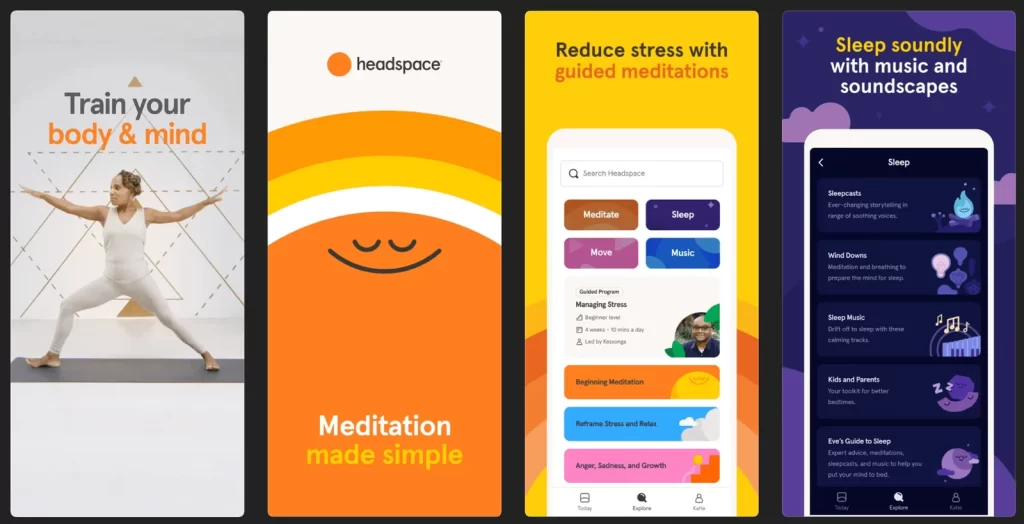
Headspace is known for its structured, goal-oriented approach to mindfulness. The app is designed for users who want a clear, step-by-step path to building a meditation practice. Headspace’s approach is structured around packs, which are meditation courses centered on a specific theme, such as stress, focus, or sleep. These packs typically last between 10 and 30 days, with each session offering a specific meditation exercise or technique to address a particular mental health concern.
Headspace has a playful, cartoonish design, and its user interface is colorful and welcoming. The app’s structure and guidance make it appealing to beginners, as it provides users with a roadmap for building their meditation practice over time.
Calm: Immersive, Relaxation-Focused Content
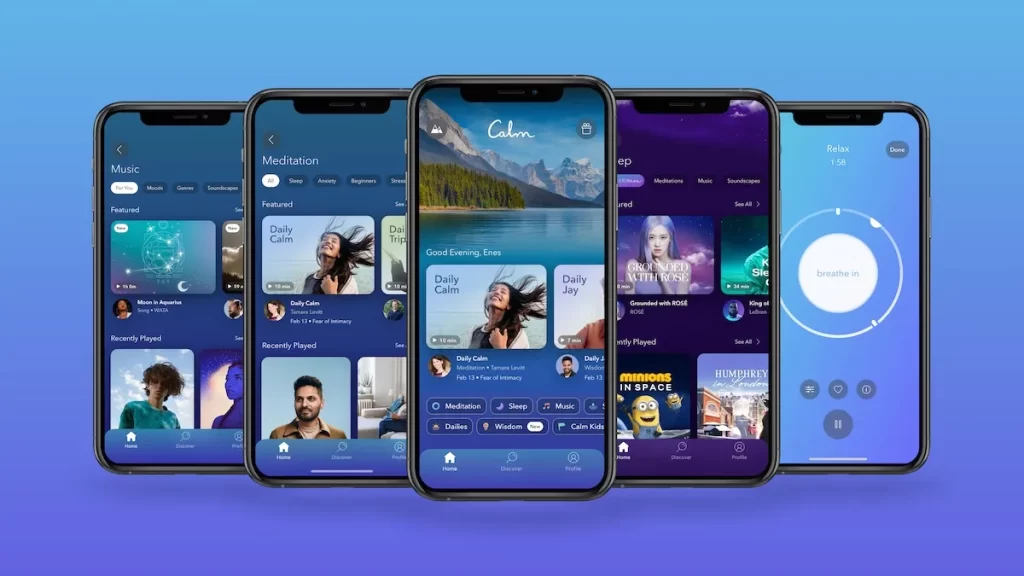
In contrast, Calm is more diverse in its offerings, appealing to a broader audience with a range of content types. Calm’s app includes not only meditation but also relaxing soundscapes, sleep stories, and motivational talks. Its Sleep Stories, read by famous narrators like Matthew McConaughey and Stephen Fry, are a signature offering that differentiates it from Headspace. These stories help users unwind and relax, providing a soothing, distraction-free experience that helps them fall asleep.
Calm also offers personalized music tracks, which can be customized to fit a user’s mood or need for relaxation. The app’s design is sleek and visually calming, with nature-inspired themes and a minimalist interface that helps users focus on relaxation.
Pricing Models: The Freemium Approach
Both Headspace and Calm use a freemium pricing model, where users can access a limited amount of content for free but must pay for premium features. Headspace offers a free Basics course, which includes introductory meditation sessions, while the premium version offers access to its entire library of meditation packs. Subscriptions range from $12 per month to $70 per year.
Calm also offers a free version with limited access to soundscapes and meditations. However, to unlock premium features, such as Sleep Stories and exclusive music tracks, users must subscribe. Calm’s premium subscription costs $15 per month or $70 per year, with a one-time lifetime subscription available for around $300.
Market Impact: The Rise of Mindfulness Tech
The global market for mindfulness apps is now valued at approximately $1–2 billion and is expected to reach $8 billion by the early 2030s. The success of Calm and Headspace has helped fuel this market growth, with both companies leading the charge in terms of downloads, revenue, and brand recognition.
As of 2021, Calm had been downloaded more than 100 million times and had 4 million paying subscribers. The company raised $75 million in funding in 2020, bringing its valuation to $2 billion. Meanwhile, Headspace had accumulated 65 million downloads and generated over $100 million in annual revenue. The company merged with Ginger, a digital therapy platform, to create Headspace Health, a move that expanded its offerings to include therapy services and mental health tools beyond meditation.
Both companies have strategically partnered with major organizations to expand their user base. Calm, for example, partnered with Kaiser Permanente, a healthcare provider, to offer its app to healthcare workers for free during the pandemic. Headspace, on the other hand, formed partnerships with the NBA, JetBlue, and Nike, among others, to integrate mindfulness into various professional settings.
Competitors and the Expanding Mindfulness Landscape
While Calm and Headspace dominate the mindfulness app market, they face increasing competition from other apps and platforms. Competitors such as Insight Timer, Ten Percent Happier, and Breethe have carved out niches for themselves in the mindfulness space.
-
Insight Timer is one of the largest free meditation apps, with over 25 million downloads. It offers more than 100,000 free guided meditations and focuses on community-driven content. While it doesn’t have the polished interface of Calm or Headspace, its wealth of free content has made it a popular choice for users who prefer a more open-source, non-commercial model.
-
Ten Percent Happier, co-founded by Dan Harris, targets a more skeptical audience. The app’s focus is on secular meditation, and it offers a more pragmatic approach to mindfulness. Harris, a journalist and meditation skeptic turned believer, brings a rational perspective to meditation, making the app popular among those who might find traditional mindfulness practices intimidating.
-
Breethe offers a broad range of content, including meditations, motivational talks, and sleep aids. The app targets a diverse audience, combining elements of mindfulness with self-help and personal development.
Despite the growing competition, Calm and Headspace remain the two biggest players in the industry due to their strong brand recognition and large user bases. Both companies are focused on expanding their offerings and innovating to stay ahead of new competitors.
Criticisms and Limitations: The Mindfulness App Debate
Despite their success, both Calm and Headspace have been subject to criticism. Some concerns raised by experts and users include:
Lack of Scientific Evidence
While there is ample research supporting the benefits of mindfulness and meditation, there is limited scientific evidence specifically on the efficacy of app-based meditation. Critics argue that short, guided sessions from an app may not provide the same depth of mindfulness practice as in-person sessions led by experienced teachers. Furthermore, some studies have questioned whether apps like Calm and Headspace can truly replicate the transformative experiences that come with longer, more immersive meditation retreats.
Over-Commercialization
One significant criticism is the commercialization of mindfulness. Meditation, which was once a deeply spiritual practice, has been turned into a business model. Some argue that the emphasis on subscriptions, in-app purchases, and celebrity endorsements undermines the core principles of mindfulness, which should be about self-awareness and mental well-being, not profit.
Accessibility Concerns
Both Calm and Headspace offer free versions of their apps, but premium content often requires a subscription. This can create an accessibility barrier, especially for individuals who are low-income or do not have access to smartphones. While Calm and Headspace offer discounts and free trials, the cost of a full subscription may still be prohibitive for some people.
User Retention and Engagement
Despite the widespread popularity of mindfulness apps, user retention is a significant challenge. Studies have shown that while millions of people download the apps, many users stop engaging after a few weeks. The gamification of meditation, through streak tracking and badges, may also cause stress or anxiety for some users, defeating the purpose of relaxation. Mindfulness is about building a consistent, long-term practice, but for many, the novelty of an app can wear off quickly.
The Future of Mindfulness Apps: AI, Wearables, and Global Expansion
The future of mindfulness apps is promising. We can expect to see further personalization through the use of artificial intelligence (AI), the integration of wearable devices, and continued global expansion.
AI and Personalization
Artificial intelligence is set to play a major role in the future of mindfulness apps. Companies like Balance are already using AI to personalize meditation sessions, adjusting content based on user preferences, mood, and stress levels. This personalized approach could lead to more effective meditation and greater engagement from users. Headspace has already integrated AI in the form of chatbots that recommend content based on user input, and Calm has experimented with AI-generated sleep stories. As AI technology improves, it could make mindfulness apps even more responsive and tailored to individual needs.
Wearables and Biofeedback
The integration of mindfulness apps with wearable devices, such as smartwatches or fitness trackers, will likely become more common. This will allow mindfulness apps to provide real-time biofeedback and guide users based on heart rate, stress levels, and sleep patterns. By combining physical and mental wellness data, apps can offer users a more holistic and personalized experience.
Global Expansion
As the demand for mindfulness apps continues to grow, we can expect to see more localized content and regional expansion. Calm and Headspace have already expanded into multiple languages and regions, but there is still untapped potential in countries outside the Western world. Localization could include incorporating local cultural contexts, offering region-specific meditation techniques, and tailoring content for different populations.
Healthcare Integration
The healthcare industry will likely play a significant role in the future of mindfulness apps. With the increasing recognition of mindfulness as a tool for mental well-being, mindfulness apps may become integrated into clinical settings. Companies like Headspace and Calm are already offering their apps through healthcare providers and corporate wellness programs, but future apps may also be prescribed by doctors as part of a broader mental health treatment plan.
Conclusion: The Future of Mindfulness Tech
The mindfulness app boom represents a transformative shift in how we approach mental health and well-being. Apps like Calm and Headspace have made meditation and mindfulness accessible to millions of people, helping them manage stress, improve sleep, and enhance overall well-being.
As the industry grows, we can expect to see further technological innovation, global expansion, and personalized experiences. While there are criticisms regarding the commercialization of mindfulness, the overall impact of these apps on mental health awareness and accessibility cannot be ignored.
The future of mindfulness apps looks bright, with new developments in AI, wearables, and healthcare integration likely to enhance their effectiveness. As more people turn to these apps for self-care and mental wellness, the mindfulness movement will continue to shape how we understand and practice mental health in the digital age.
Also Read: Headspace – Founders, Business & Revenue Model, Competitors
To read more content like this, subscribe to our newsletter
Share via: