There has been a marked shift in consumer sentiment regarding sustainability in recent years, and the idea that this is a concern relevant only to a tiny subset of prospective customers is old news.
Now, brands across every industry niche need to have one eye on their environmental impact in order to court the kind of buyers that can keep their sales buoyant.
One particularly interesting example of this comes in the form of the luxury jewelry market, where there has not traditionally been a huge demand for products that are sold on their green credentials.
If this is not a movement you’re familiar with, hold tight as we get to the bottom of what’s going on and why.
Why the Eco Angle Matters
This isn’t just a simple PR issue. We’re talking about a history stained by conflict minerals, the infamous ‘blood diamonds’ used to fund wars, and devastating environmental impacts.
Traditional mining can lead to deforestation, soil erosion, and the pollution of local water sources with toxic chemicals like mercury and cyanide. For decades, these supply chains have been notoriously opaque, leaving consumers in the dark about a gem’s true origin and the human cost of its journey from the earth to the showroom. This is the baggage the industry is now desperate to shed.
There’s no escaping the realities of the current consumer market, in which 78% of people claim to hold values that align with sustainable living.
Even top-tier fashion brands must now showcase their ecological efforts loud and proud, and this usually comes across in simple provisions like recyclable, biodegradable packaging and a commitment to cutting emissions.
The sticking point for jewelry brands is a little more significant. It’s an industry that’s mired in ethical concerns originating from the unfortunate combination of the resource-intensive mining of precious gems and the conditions encountered by those workers early in this part of the supply chain.
So, luxury jewelry has an image problem, and it is shaking it off with a multi-pronged approach in order to claw back some street cred with conscientious consumers in the Gen Z and Millennial age groups that now dominate in terms of pure spending power.
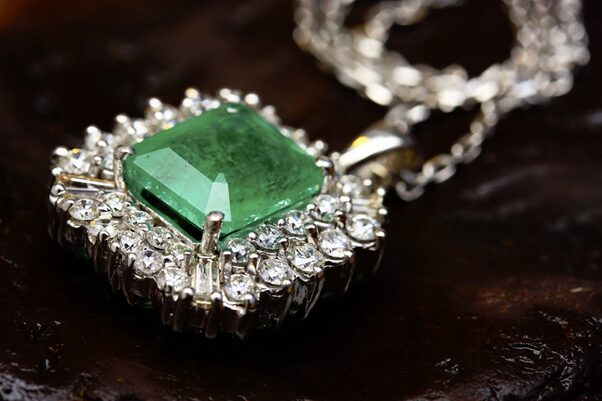
The good news is that there really are brands out there that offer luxury products made with natural, mined gems that look good and are supplied without the aforementioned concerns attached to them. Consumers can happily buy heirloom-quality emerald jewelry which is beautiful and devoid of ethical baggage.
We’re also entering the era of the lab-grown gemstone, in which jewels that are identical to mined counterparts can be produced at scale in factory-like facilities that consume significantly less energy than would otherwise be required to pull them out of the planet’s crust.
Essentially, customers who want to buy traditionally mined jewelry for its innate authenticity can do so without worrying about sustainability, and the same is true for those who recognize the appeal of synthetically produced equivalents.
What Else is At Play?
Another reason that luxury jewelry companies are touting their green credentials is that they are facing more of a struggle to win over consumers who are feeling the pinch financially.
In particular it’s Gen Z shoppers who have less disposable income than their older counterparts, and thus find it harder to justify splashing out on something as seemingly superficial as high-end rings, necklaces and other accessories in this category.
The whole miasma of generational marketing is an obstacle every brand must contend with, and for jewelry providers, it’s the promise of making luxury both affordable and sustainable that’s a major hook.
What’s particularly compelling about this connection is that it actually ties neatly into the purpose of jewelry, which is often used as a symbol of long-standing love and affection, whether given between couples who are in a relationship or as a token of familial bonding. Jewelry brands that talk about sustainability do so in the context of showing that they’re thinking about the future, and that their pieces reflect not just the journey that individuals are on, but are made to promote a greener time to come for the entire planet.
The Bottom Line
The realities of climate change stare many consumers in the face every day, so it’s not much of a leap to understand why brands need to take this into account in terms of how they market their products, not to mention how they manage their entire operations.
Conscious luxury in jewelry buying is a microcosm of this broader trend, yet one that has more acute challenges for companies to cope with than in many other markets.
Brands that adapt to emerging expectations have an opportunity to do something special, and prioritizing sustainability is a sales winner as well as a pro-planet step worth celebrating anyway.
To read more content like this, explore The Brand Hopper
Subscribe to our newsletter