
Last Updated on August 15, 2025 by Team TBH
Revolving Games is a blockchain and Web3 gaming startup that emerged as a notable player at the intersection of traditional video gaming and decentralized technology.
Founded in 2019 and headquartered in San Francisco, the company develops AAA-quality games with integrated blockchain elements, focusing on player ownership and community engagement. As of 2025, Revolving Games has a portfolio of titles across strategy and role-playing genres and has amassed over 700,000 game installs and 40,000 paying players globally.
The company is backed by leading industry investors such as Pantera Capital, Animoca Brands, and Polygon Studios, as well as gaming luminary Dan Houser (Rockstar Games co-founder). To date, it has secured nearly $50 million in funding to fuel its vision.
This article provides a strategic analysis of Revolving Games, covering its founding story, leadership, business model, revenue streams, funding history, competitors, competitive advantages, product offerings, and overall outlook. The analysis emphasizes how Revolving Games positioned itself in the Web3 gaming sector – a field often met with skepticism – and evaluates the company’s model and competitive stance.
Founding Story of Revolving Games
Revolving Games was founded in 2019 by brothers Ammar, Saad, and Shayan Zaeem, who had previously built and sold a successful Pakistani game studio called Caramel Tech in 2017. Armed with a decade of game development experience, they moved to Silicon Valley to start Revolving Games with the goal of creating AAA games enhanced by blockchain technology.
Early seed funding came in 2020 from venture firm Sarmayacar and a strategic $12 million investment from a global game publisher. This capital enabled the team to establish operations in both San Francisco and Lahore (Pakistan), leveraging Silicon Valley leadership and cost-effective talent in Pakistan.
In its initial phase, Revolving Games collaborated with Gala Games and NBCUniversal on a Battlestar Galactica-themed blockchain MMO (announced in 2022). However, as the market evolved, the founders pivoted to focus on original intellectual property and a “product-first” strategy.
By late 2022, the company had shifted resources toward its own fantasy franchise (Skyborne) and other in-house titles. Notably, the Zaeem brothers decided to delay any cryptocurrency token launches or NFT pre-sales until their games had proven traction. This measured approach—prioritizing fun gameplay and user acquisition before introducing Web3 elements—set the tone for Revolving Games’ brand story.
The founding narrative is thus one of experienced game entrepreneurs applying hard-earned lessons: build games that people want to play, and only then weave in the blockchain features that can enhance player ownership.
Founders of Revolving Games
Revolving Games is led by its three co-founders, the Zaeem brothers, who collectively drive the company’s vision and operations:
Ammar Zaeem (Co-CEO)

A technical leader and spokesperson for the company, Ammar oversees product development. He emphasizes a data-driven design philosophy and has championed the mantra that blockchain should be an invisible layer that adds value only after a game is fun. Ammar previously co-founded Caramel Tech and brings deep engineering expertise.
Saad Zaeem (Co-CEO)

Saad focuses on business strategy, fundraising, and partnerships. He articulates the long-term vision of building a “player-owned ecosystem” and has been key in securing investors and advisors. Saad’s leadership helped onboard major partners (like Animoca Brands and Dan Houser) and he ensures that community and gameplay remain at the forefront of company decisions.
Shayan Zaeem (President of Studios)

Shayan heads game design and studio management across the company’s North America and Asia teams. He has been instrumental in talent development – training engineers and designers in Pakistan and integrating them with the global team. His game design experience (spanning mobile and RPG titles) helps Revolving Games create content that appeals to both casual and core gamers.
The founders’ combined experience (they have been involved in games that grossed over $2–3 billion in lifetime revenue) gives Revolving Games a strong foundation. Their credibility in game development sets them apart from many Web3 startups. This seasoned leadership, complemented by an advisory board that includes Rockstar Games co-founder Dan Houser, has attracted investor confidence and guided the company’s player-centric ethos.
Business Model of Revolving Games
Revolving Games operates on a hybrid business model that merges traditional free-to-play gaming with blockchain-based ownership features. In practice, the company launches its games as conventional free-to-play titles on mobile or PC platforms to build a player base, and only later layers in Web3 components for those players who are interested. Co-CEO Ammar Zaeem summarized this approach: “we feel the layers of web3 around ownership should come after you’ve created the fun and the funnel of user acquisition”. This means initial monetization comes from familiar sources (in-app purchases, season passes) rather than crypto tokens.
Over time, Revolving Games introduces blockchain elements to enhance the gaming experience: players can earn or purchase game items as NFTs, trade assets in decentralized marketplaces, or utilize a unified utility token across games. The company is developing its own blockchain ecosystem called the RCADE Network, which includes a dedicated game chain and a community-run node network to support its titles. The RCADE token, set to launch in 2025, will act as the economic backbone connecting all its games (for example, allowing interoperable rewards and item transfers). Importantly, Revolving Games did not rely on selling tokens to fund development; it raised money through traditional investors, preserving the token launch as a gameplay feature rather than a fundraising gimmick.
Another aspect of the model is strategic IP partnerships and publishing services. While building its own franchises, Revolving Games has shown it can co-develop games with major intellectual properties (e.g. the Battlestar Galactica project) and is positioning itself as a “decentralized publisher” for other developers in the Web3 space. By investing in internal tools and platform technology, the company can offer support to third-party studios (e.g. onboarding their games onto the RCADE infrastructure) in exchange for revenue share or fees in the future. In summary, Revolving Games’ business model is to create fun, lasting games first, monetize them like traditional games, and then amplify their value through blockchain-based player ownership and an interconnected game network.
Revenue Streams of Revolving Games
The company’s revenue streams to date have been dominated by conventional game monetization, with blockchain-based revenue expected to grow as its ecosystem matures:
1) Free-to-Play Purchases:
Revolving Games earns the bulk of its revenue from in-game purchases such as virtual currency packs, upgrades, and cosmetics. For example, War of Nova quickly began tracking toward $30 million in annualized revenue largely from player spending on the mobile app stores. HatchKings, a casual title, generated $1.4 million in its first 10 days through microtransactions. These figures show that the company can achieve strong cash flow without relying on any crypto elements.
2) On-Chain Asset Sales and Fees:
As Web3 features roll out, new revenue avenues are opening. The company has begun selling certain in-game assets as NFTs (for instance, unique Hatchlings or upcoming Skyborne items), and it conducted a pre-sale of node licenses to community members in 2024. These sales contributed additional funding. Going forward, Revolving Games can earn transaction fees from player-to-player trades of NFTs in its games’ marketplaces. While still a smaller slice of the pie, these blockchain revenues are expected to increase once the RCADE Network and token are live.
3) Token Economy (Future):
With the launch of the RCADE token in mid-2025, the company may gain revenue indirectly through its tokenomics. For example, if a portion of RCADE tokens are sold during the token generation event or if tokens held in the company treasury appreciate, that represents capital that can be reinvested. Moreover, the token’s existence is meant to boost engagement and spending across all games (players might play more or spend more if they can earn/share in token rewards), thus driving the other revenue streams. Revolving Games has designed this token integration carefully to avoid dependence on token speculation; the token is a bonus layer for a committed community rather than an initial revenue pillar.
By balancing traditional revenue with emerging Web3 income, Revolving Games aims for a sustainable financial model. The strong early performance in free-to-play spend provides a stable foundation, while the introduction of NFT and token-related revenues offers upside and a deeper stake for players in the ecosystem.
Funding of Revolving Games
Revolving Games has gone through several funding rounds, raising nearly $50 million in total by 2025. Its fundraising strategy favored equity investment from reputable venture capital firms rather than early ICOs, which helped establish credibility. Key funding milestones include:
Seed Round (2020)
The company’s initial funding came from a seed round led by Sarmayacar and supplemented by a major game publisher’s strategic investment. Approximately $13 million was raised at this stage, enabling the build-out of its studios and early game development.
Series A (2022)
In September 2022, Revolving Games announced a $25 million round led by Pantera Capital. This round included prominent Web3 investors Animoca Brands, Polygon, and Dapper Labs, and even attracted Rockstar Games’ co-founder Dan Houser as an angel investor. The infusion was used to expand the development of new titles (like Skyborne) and to develop the backend technology for its blockchain platform.
Follow-on Investments (2023–2024)
Pantera Capital and others provided additional financing as the company demonstrated progress. An undisclosed follow-on round in 2024 (led by Pantera) brought the total venture funding to over $37 million by mid-2024. Revolving Games also raised community funding through the sale of node NFTs and other digital assets, bridging some of its financing needs with its player community.
By early 2025, Revolving Games’ cumulative funding approached $50 million across all rounds. The company’s roster of backers and steady financing reflect investor confidence in its veteran team and differentiated strategy. This capital has been crucial for supporting a 150+ person team and multi-year game development cycles.
(Table: Funding history of Revolving Games)
| Round (Year) | Amount Raised | Notable Investors |
|---|---|---|
| Seed (2020) | ~$13 million | Sarmayacar (VC); Global game publisher (undisclosed) |
| Series A (2022) | $25 million | Pantera Capital (lead); Animoca Brands; Polygon Studios; Dapper Labs; Dan Houser |
| Follow-on (2024) | Undisclosed (total funding ~$37M by 2024) | Pantera Capital (lead); Animoca Brands; others (extended investment) |
| Total (2025) | ~$50 million | – (multiple rounds as above) |
Competitors of Revolving Games
Revolving Games operates in the competitive Web3 gaming space, facing both specialized blockchain game studios and traditional game companies exploring crypto. Key competitors include:
Mythical Games

A Los Angeles-based Web3 game studio founded in 2018, known for titles like Blankos Block Party and NFL Rivals. Mythical has raised around $270 million (including a $150M round at $1.25B valuation). It offers a platform where players truly own in-game NFTs and has its own chain (Mythos). Mythical’s heavy funding and big IP partnerships make it a major competitor, though Revolving Games differentiates itself by a more cautious rollout of NFTs and focusing on its own IP.
Gala Games

Founded in 2019 by Zynga’s co-founder, Gala built a decentralized gaming platform powered by its GALA token and a network of player-run nodes. Gala’s ecosystem hosts multiple games (e.g. Town Star, Spider Tanks) and relies on community participation for funding and operations. While Gala had first-mover advantage in Web3 gaming (and a large token market cap in 2021), Revolving Games competes by emphasizing higher production values and delaying tokenization until after achieving player engagement. The two share a similar vision of player-owned networks, but RG’s approach is to prove games first whereas Gala’s model introduced crypto elements early.
Sky Mavis (Axie Infinity)
Vietnam-based Sky Mavis pioneered the play-to-earn genre with Axie Infinity. The company raised $152M in 2021 and built its own chain (Ronin) to support Axie’s ecosystem. Axie’s boom and bust showed the challenges of sustainable economies. Sky Mavis is now focusing on improving gameplay and launching new games on Ronin. Revolving Games’ philosophy was partly shaped in contrast to Axie’s trajectory – RG avoids creating an economy that outgrows the game’s fun factor. Nonetheless, Sky Mavis remains a formidable competitor due to its large remaining community and technical infrastructure.
(Other notable players in this space include Animoca Brands’ portfolio of games like The Sandbox, and traditional publishers like Ubisoft that have dabbled in NFTs. However, many established companies are still in experimental stages with Web3, giving startups like Revolving Games and its peers a window to establish leadership.)
Competitive Advantage of Revolving Games
Revolving Games has several competitive advantages that help it stand out in the Web3 gaming industry:
1) Veteran Game Development Expertise:
The team’s background of delivering commercially successful games gives it an edge in building polished products. Few blockchain gaming startups have leaders who have shipped titles with millions of players in the traditional market. This experience has translated into higher-quality games (e.g. War of Nova’s retention and revenue metrics outperform typical Web3 games). The credibility of the Zaeem brothers and the involvement of advisors like Dan Houser signal to both players and investors that RG can deliver on its promises.
2) Gameplay-First Strategy and Trust:
Revolving Games’ decision to win players over with fun and fair gameplay before introducing blockchain builds trust and a positive reputation. By not forcing crypto elements, the company has managed to attract mainstream gamers who would normally avoid “NFT games.” This approach is proving that Web3 games can achieve mainstream adoption, answering skeptics who doubt that gamers will embrace blockchain. In contrast, competitors that led with tokens sometimes suffered backlash or quick user churn once the initial hype passed.
3) Balanced Monetization and Sustainability:
The company’s hybrid monetization (earning regular in-app revenue first, and adding on-chain revenue second) provides financial stability. Revolving Games is not solely dependent on token prices or NFT sales to survive, which means it can weather crypto market volatility better than many peers. Thus, even during a crypto market downturn, its games can continue to generate income from players. This reduces the boom-bust risk that hurt some play-to-earn projects.
In summary, Revolving Games’ competitive advantages lie in being a game-first company in an often hype-driven sector. Its blend of proven talent, a cautious and user-centric approach to blockchain, diversified monetization, and strong backing gives it a solid platform to become one of the breakout success stories in Web3 gaming.
Products and Services of Revolving Games
Revolving Games’ product lineup as of 2025 showcases its multi-genre approach and the gradual integration of Web3 elements into engaging games:
War of Nova
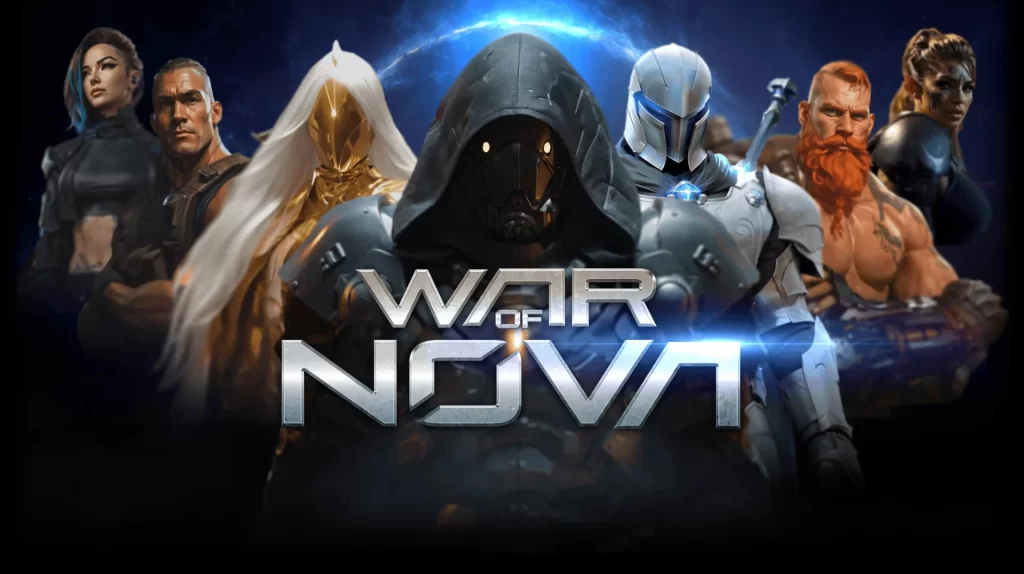
A sci-fi 4X strategy MMO (mobile/web) where players command starfleets in an online galaxy. As Revolving Games’ flagship release, War of Nova achieved rapid success and is generating roughly $30 million per year in revenue. It is free-to-play, with optional Web3 features (players can own starships as NFTs and will eventually earn RCADE token rewards), though the majority of its audience plays it like a traditional game.
HatchKings & Hatchlings
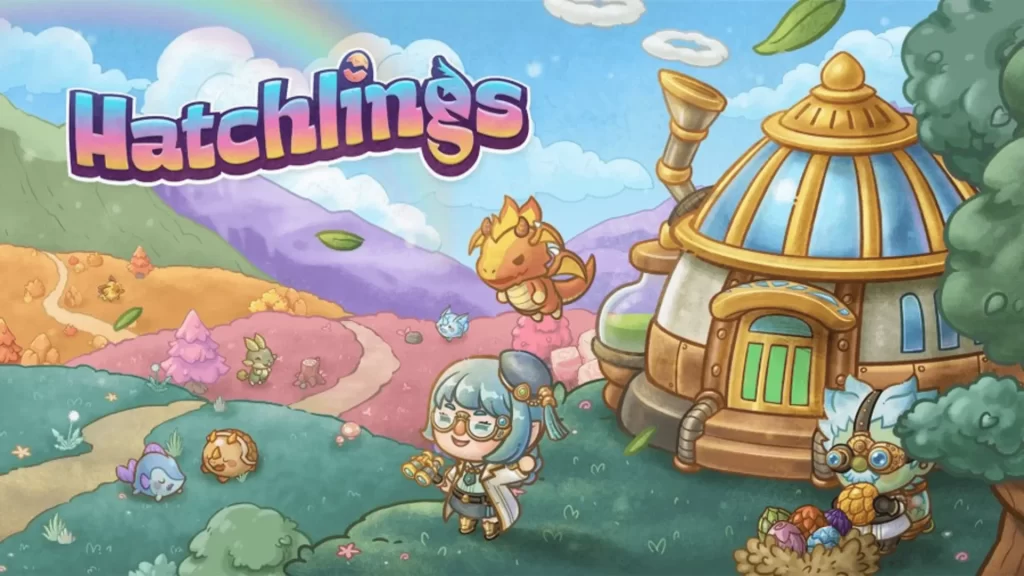
Two linked casual games – HatchKings (mobile) is a Coin Master-like slots game to hatch creature eggs, and Hatchlings (web) is a pet simulator to raise those creatures. These titles rapidly gained popularity (HatchKings earned $1.4 million in its first 10 days). While mostly standard free-to-play games, some special Hatchling creatures have been sold as NFTs to collectors, adding a Web3 twist for those interested.
Skyborne: Phoenix Flight
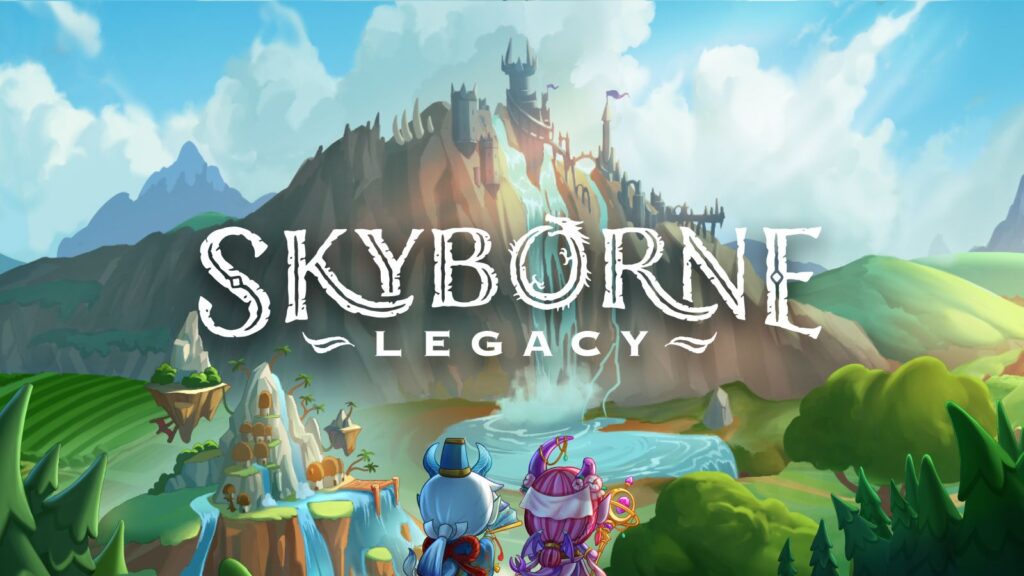
An upcoming adventure RPG inspired by Animal Crossing and Zelda. Skyborne features a vibrant fantasy world where players quest, craft, and build homes. It will run on Polygon and showcase Revolving Games’ RCADE integration – players will truly own characters, items, and land as blockchain assets. Expected to launch in late 2025, this title is a major step in bringing Web3 concepts to mainstream RPG fans.
Other Projects
In 2025, RG also released GTFO, an endless runner featuring characters from the popular Meatbags NFT art collection. This fun collaboration engaged a Web3 community and coincided with RG’s token launch timeline. The company’s earlier work on a Battlestar Galactica strategy game (with Gala Games) provided experience working with major IP, even though focus later shifted to original games.
Conclusion
Revolving Games’ story demonstrates how focusing on core gameplay and sustainability can yield success in Web3 gaming. The company has launched multiple games with real player bases and revenue—a rarity in this nascent sector. Its cautious integration of blockchain (delaying token launches and avoiding pay-to-earn pitfalls) has distinguished it from earlier play-to-earn experiments and could serve as a model for the industry.
Looking ahead, Revolving Games will need to scale its platform and maintain player engagement as competition increases, but it enters this phase with a solid foundation of talent, products, and investor support.
If it meets its growth targets (such as reaching $60M in ARR) and continues delivering quality content, Revolving Games is well-positioned to fulfill its ambition of becoming the “Supercell of Web3”—bringing blockchain gaming into the mainstream with blockbuster-caliber titles.
Also Read: Riot Games: Epic Success Story and Key Success Factors
Also Read: The “Unreal” Journey of Epic Games: A Look at Its Business Model, Revenue And Growth
To read more content like this, subscribe to our newsletter