Smart factories are transforming the manufacturing process in the era of Industry 4.0 with their intelligent automation, real-time data capabilities, and the ease of connecting them to the digital world.
Flashy technologies such as robotics, artificial intelligence, and machine learning regularly make headlines, yet behind the scenes, another hero keeps the whole operation running: the conveyor system.
The current models are flexible, quick, sensor-based, and highly integrated with factory control processes. So, they work with precision, respond to real-time demand, and deliver essential information into the smart ecosystem.
Although they are not the most glamorous aspect of the factory floor, conveyors play a vital role in ensuring a production process remains efficient, accurate, and cost-effective. In fact, most of the high-tech applications in a smart factory would not work without them.
That’s not all.
Read on to learn more about conveyor systems and how they benefit different industries with their effective mechanism.
1. Modular, Snap-together Construction
Modular belt conveyor systems are made up of snap-together plastic modules that are easily assembled without complex processes or specialized machinery.
This design simplifies the setup process, making it easier to deploy the system quickly, reconfigure it for changing layouts, or replace individual belt sections without disrupting the entire conveyor system. Regardless of what your factory configuration is producing, changing, or evolving, a modular design allows rapid modifications with little downtime.
Therefore, suitable for the intense manufacturing environment, a modular conveyor system is adaptable and efficient to provide agility in operations. In turn, it leads to uninterrupted operational flow.
2. Easy Maintenance
One of the greatest benefits of modular belt conveyors is their ease of maintenance. Compared to older conveyor belts, which often have to be completely removed to fix or replace, modular belts enable you to replace faulty portions in phases. That greatly minimizes repair time and reduces production time.
For example, maintenance personnel can detect worn-out or broken links and simply install new modules without having to remove the whole belt system. This efficient maintenance method minimizes equipment availability loss, reduces labor cost, and maximizes the overall life of the conveyor. Thus, making it an excellent option for high-volume usage.
3. Exceptional Durability
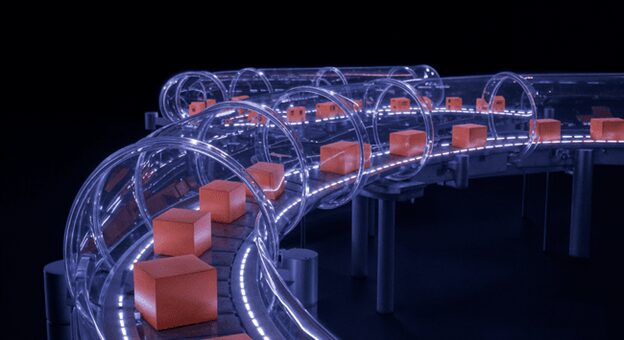
Modular belt conveyors are constructed using high-strength thermoplastics that are extended to endure wear, impact and chemical exposure. That also makes them highly suitable for harsh industrial use, where regular fabric or rubber belts may not hold up very well.
These plastic modules are not easily frayed or torn and are not affected by moisture or grease. Therefore, they are appropriate to use in both wet and oily conditions. These belts also deliver long-term effectiveness, whether used to carry metal parts, food products or packaging materials with minimal wear and tear.
They have a durable build, requiring less replacement frequency and making them reliable to operate in most industries.
4. Adjustable Routing Capabilities
There is no doubt that conveyor systems are reputed to be highly flexible in layouts. In contrast to the regular straight-line conveyor systems, they can be assembled to make the products travel around corners, up an incline, and even on varying levels.
This flexibility enables manufacturers to create production lines that are optimized in terms of floor space and operational processes. For example, these conveyors would move along the complex paths in limited space facilities or multi-tiered production zones without hindering the performance.
Their capability to bend, curve, and climb without compromising the direction of the products also guarantees easier material handling and more efficient transportation. It is especially helpful for manufacturing, assembly, or containment settings.
5. Cleanability for Sensitive Environments
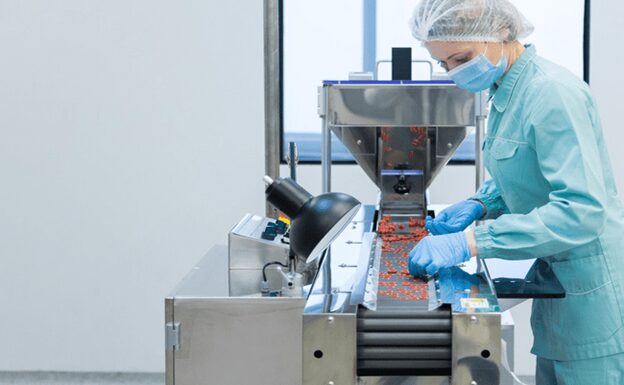
Hygiene is critical in smart factories, particularly those that work within the food, pharmaceutical, or semiconductor industries.
Modular belt conveyor systems are specially tailored to the environment that requires high cleanliness requirements. They allow easy and comprehensive tool-free washdown due to their open-link construction. Their plastic material is also resistant to moisture, bacterial growth and chemical absorption.
That’s not all. Unlike fabric belts, which become contaminated, modern conveyor systems are nonporous and can be cleaned with standard sanitizers. As a result, it creates a workflow that is suited to automated cleanrooms.
Further, in buildings equipped with IoT that monitors cleanliness and compliance in real-time, the time to disassemble and sanitize equipment to a regulatory level is minimized and becomes a seamless process.
6. Smart Manufacturing and Energy-Efficient Operation
Smart manufacturing places a special emphasis on energy-efficient devices to reduce consumption and decrease the carbon footprint.
The modular belt conveyor systems perfectly follow this consideration. They have low-friction and tension surfaces, which enable the use of small motors that consume less energy. Most of them are compatible with smart functions such as variable-speed drives and automated shut-off sensors that can respond to real-time production needs.
This way, these energy-smart conveyors will minimize electricity use during idle periods as well as help facilitate predictive maintenance. Within a factory where software controls machine effectiveness, such conveyors support sustainability targets without interfering with speed or reliability. That makes it a key tool in an Industry 4.0 world.
Conclusion
In the ever-evolving world of smart manufacturing, it’s easy to focus on flashy innovations like robotics and AI.
Yet, behind the scenes, modular conveyor systems do the heavy lifting—quietly, efficiently, and intelligently. Their adaptability, hygiene-conscious design, energy efficiency, and seamless integration with automation make them the silent powerhouses that keep smart factories running at peak performance.
Moreover, as production demands grow more complex and data-driven, these conveyors provide the flexibility and reliability needed to stay ahead.
As a consequence, in today’s production factories, they’re not just moving parts—they’re essential building blocks of a smarter, faster, and more sustainable manufacturing ecosystem.
To read more content like this, explore The Brand Hopper
Subscribe to our newsletter