Imagine a neon‐pink Coca-Cola bottle or a black painted McDonald’s. It feels wrong because iconic brands use consistent colors, logos, and messaging. A brand audit is the structured process that keeps a brand cohesive and true to its identity. In practice, a brand audit examines every aspect of your brand (internal and external) to ensure consistency, effectiveness, and alignment with your goals. This exercise uncovers strengths to leverage and gaps to fix. For example, research shows companies with consistent branding report about 33% higher revenue growth than competitors. Brand audits benefit organizations of any size – even a small startup can use an audit to differentiate and grow. The steps below outline a clear, actionable approach any business can use to review and revitalize its brand.
Core Audit Focus Areas: A thorough brand audit covers three main domains: Internal Branding, External Branding, and Customer Experience (see Table 1). Internal branding examines how well employees understand and use the brand (mission, values, style guides). External branding looks at how customers, partners, and competitors perceive your brand (visibility, messaging, positioning). Customer experience evaluates every touchpoint from awareness to purchase (journey mapping, satisfaction, reviews). Each area has specific metrics and examples (Table 1) to guide your analysis.
Table 1: Core Focus Areas in a Brand Audit
| Focus Area | Key Aspects & Examples | Sample Measures |
|---|---|---|
| Internal Branding | Employee understanding of mission, values and brand story; consistency of internal communications (e.g. uniform email signatures, up‐to‐date brand guidelines). | Employee survey on brand knowledge; internal guideline adoption. |
| External Branding | Brand visibility and messaging to outsiders; consistency across channels; competitor positioning. | Brand recall from surveys; social media sentiment analysis; share of voice. |
| Customer Experience | Customer journey and interactions: do touchpoints (website, support, packaging) match the brand promise? | Net Promoter Score (NPS); customer satisfaction ratings; conversion rates. |
Step 1: Define Objectives and Scope
Begin by clarifying why you are auditing the brand and what you will cover. Tie the audit to business goals – for example, you might want to check brand consistency after a merger, measure awareness before a product launch, or prepare for a rebrand. Engage leadership and key teams early: secure stakeholder buy-in from marketing, sales, product and executives, so everyone understands the purpose. Decide whether to audit the entire company brand or focus on a specific product line, market, or campaign. Setting clear, measurable goals (e.g. improve brand recognition by 20%, resolve messaging gaps) and a defined scope will keep the process focused and efficient.
Key Actions: Identify the audit’s purpose (brand consistency check, awareness study, post-merger alignment, etc.). Align these objectives with company strategy and timelines (e.g. before a major campaign or annual planning cycle). List the brand elements to review (logos, voice, website, customer feedback, etc.). Brief leadership and appoint an audit owner or team.
Step 2: Gather Brand Assets and Documentation
Next, assemble all official brand materials. Collect your brand guidelines or style guide, logo files (all approved versions), color palettes, typography rules, and imagery assets. Gather mission and vision statements, core values, value propositions, and any existing messaging frameworks or taglines. Also, inventory tangible examples of how the brand is used: website pages, marketing collateral (brochures, decks, ads), social media profiles, signage, product packaging, and more. This inventory will serve as the baseline for your audit.
-
Checklist: Compile official brand documentation (logos, color swatches, fonts, brand book). Create a list of touchpoints (website, social media, email templates, printed materials, etc.) and collect samples of each. Note any missing guidelines (e.g. no written voice guidelines) – creating them may become an audit outcome.
-
Example: Microsoft, for instance, publicly shares its brand guidelines and assets online to keep all partners aligned. The company’s exhaustive media kit (logo downloads, color codes, usage rules) prevents misuse by vendors and underscores the importance of consistency.
Microsoft’s publicly shared brand guidelines page
By the end of this step, you should have a clear picture of how your brand is supposed to look and sound. If files are outdated or guidelines are missing, those are important findings.
Step 3: Audit Brand Consistency Across All Channels
Now, systematically compare each brand touchpoint against your guidelines to spot inconsistencies. Review digital channels first: check the website, app UI, email templates, and social media profiles for correct logo usage, colors, fonts, and tone. Are old logos or outdated taglines still in use anywhere? Then audit printed materials and physical branding: signage, packaging, business cards, and any customer‐facing documents. Even small details count: an incorrect trademark symbol or a mismatched color in a brochure can dilute your brand’s credibility. Document every discrepancy – take screenshots or photos of off-brand examples.
-
Checklist: Work through each channel with a standard checklist (website, social media, ads, office signage, etc.) and mark compliance versus the brand standards. Note any violations (e.g. “old logo on partner portal” or “social profile missing tagline”).
-
Check Messaging: Read key pieces of content (homepage headline, “About Us” page, social posts) and verify they reflect the current brand voice and positioning. Flag anything outdated (for example, an old slogan still on a brochure).
-
Internal Collateral: Don’t forget internal touchpoints: employee handbooks, slide templates, and HR materials should also echo the brand values and tone.
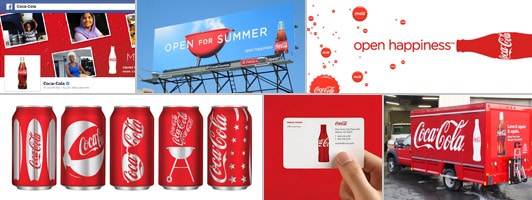
Maintaining consistency builds trust and recognition. Inconsistent branding can confuse customers and hurt revenue – studies find consistent brands see significantly higher growth. As one example, Coca-Cola’s trademark “Coke Red” is so ingrained that it never appears in any other shade – when you see that exact hue, you immediately think of Coca-Cola. Use this step to ensure your brand’s colors and style are equally unmistakable.
Step 4: Assess External Perception and Market Position
With the internal view complete, turn outward: how is your brand seen by customers and the market? Compare the brand you want to project with the brand impression that actually exists. Collect customer feedback via surveys, interviews, or focus groups. Ask customers or prospects to describe your brand and rate attributes like trustworthiness, innovation, or value. Open-ended questions can reveal surprises (e.g. you may think you’re seen as “innovative,” but customers associate you more with “value” or something else). Combine quantitative ratings with qualitative comments to get the full picture.
-
Customer Surveys & Interviews: Conduct a brief brand perception survey (tools like SurveyMonkey or Typeform work). Include questions like “Which words come to mind when you think of our brand?” or rating scales for key attributes. Interview a handful of loyal customers and a few prospects who chose competitors – ask why they made their choice and how they’d compare your brand to others.
-
Online Feedback: Review unsolicited feedback. Check social media comments, Google Reviews, Yelp, and industry forums for mentions of your brand. Analyze sentiment: are comments mostly positive or negative? For example, if many customers praise your product quality but complain about slow support, that’s a perception gap to address.
-
Employee Perspective: Sometimes employees unknowingly shape external perception. Briefly gauge how staff describe the brand (on platforms like Glassdoor or in casual interviews). If employees are confused about the brand message, that inconsistency will filter outward.
This stage uncovers perception gaps. For instance, you might find your official messaging emphasizes “personalized service,” but customers rarely mention service in feedback – signaling a disconnect to fix. Document these insights carefully: customer quotes and anecdotes can be powerful evidence later.
Step 5: Analyze Performance Metrics and Digital Presence
Next, review data and metrics that reflect your brand’s market presence. Website analytics are key since most audiences engage online first. Look at traffic sources and engagement: is your site attracting the target audience? Do you have a high rate of branded search traffic (people explicitly searching for your company)? A well-known brand often sees strong direct and branded search traffic, whereas low branded traffic may indicate weak awareness. Examine pages that convey your brand story (About Us, blog posts). High time-on-page and low bounce rates there suggest your messaging resonates; high bounce might hint at disconnect. (Notably, about 94% of business buyers research online before contacting a company, so a strong digital presence is crucial.)
-
Website & SEO: Use analytics tools to compare branded vs. non-branded traffic. Check if your site and official social profiles dominate the first page of search results. If unrelated or negative results appear, plan cleanup.
-
Social Media and Share of Voice: Track follower counts, engagement rates and growth on social platforms. Compare mention volume and engagement with competitors. If a rival consistently outshines you in social buzz or press coverage, investigate why.
-
Brand Mentions and Coverage: Count media mentions, blog features, awards – any indicators of share of voice. A high presence in industry news usually signals strong positioning.
-
Customer Loyalty Metrics: Look at sales data that reflect brand equity. Do you track Net Promoter Score (NPS), repeat purchase rates or referral volume? A beloved brand often has high customer loyalty scores. Notice trends: are these improving or slipping?
Through these analytics, form a quantitative picture of brand health. For example, if branded search is low and social engagement flat, you may need to boost brand awareness campaigns. This step gives you measurable criteria to compare against any soft feedback.
Step 6: Benchmark Against Competitors
A brand audit isn’t complete without understanding the competition. Analyze key competitors’ branding and market positions to see where you stand. Start by listing 3–5 direct and indirect competitors (include any emerging players your team has encountered). For each, visit their website and note their core messaging, slogan, and visual style. Are they positioning as “innovative tech leaders” or “friendly neighborhood experts,” for example?
-
Compare Positioning: Identify your competitors’ unique selling points and values. Do they claim to be the fastest, the safest, the most cost-effective? Plot these attributes in a simple brand positioning grid (see Table 2). In this matrix, rate your brand versus each competitor on factors like innovation, price, customer service, etc. Fill it with data from customer feedback and online sentiment. Such a visual can highlight where you lag or lead (e.g. Competitor A is seen as more innovative, while your brand is stronger on reliability).
-
SWOT Analysis: For each competitor, summarize strengths, weaknesses, opportunities and threats relative to your brand. For example, a competitor’s strength might be “global name recognition,” while their weakness is “high prices.” Your brand’s opportunity could be filling a niche they overlook (e.g. more personalized service), and a threat might be a new competitor entering the market.
-
Competitive Landscape: Look at competitors’ social and media presence as well. Are they thought leaders (publishing whitepapers, winning awards) where you are not? Do their customers praise a feature that yours lacks? This external benchmarking reveals gaps and ideas.
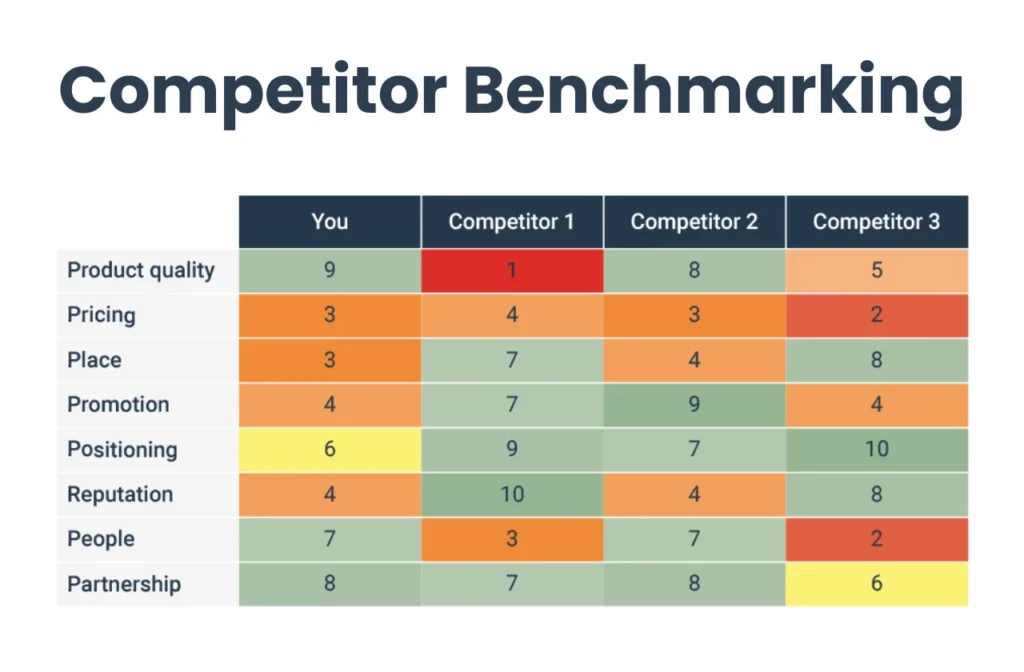
Conducting competitor audits ensures your brand messages are truly distinctive. If all brands in your space claim to be “trusted experts,” you may need to redefine what makes you uniquely valuable. Document these findings – understanding where competitors outshine you can guide strategic changes.
Step 7: Compile Findings and Create an Action Plan
By now you’ll have a mountain of insights. The final step is to synthesize the audit into a clear report and action plan. Summarize your key findings in an organized format, such as a slide deck or document. Highlight where the brand is strong (e.g. “Brand values clearly communicated internally”) and where you found inconsistencies or perception gaps (e.g. “Messaging mismatch between website and sales materials” or “50% of customers don’t associate us with ‘innovation’ as intended”). Use real examples (screenshots, quotes) as evidence – concrete illustrations make the case for change compelling.
-
Prioritize Issues: Not all findings are equal. Rank them by impact and urgency. A website with a wrong logo is easier to fix (low impact) than a core brand message that misses the mark (high impact). Focus first on “quick wins” that correct glaring inconsistencies, and on high-impact gaps that affect customer perception.
-
Recommendations: For each issue, propose specific actions. This forms your brand improvement roadmap. Actions might include: updating brand guidelines; redesigning key assets (website, packaging); training staff on brand messaging; launching a campaign to reposition the brand; or even a full rebrand if needed. Be as concrete as possible (e.g. “Revise homepage copy to emphasize X,” “Replace outdated logo on all materials by Q2,” “Develop brand training for sales team”).
-
Assign Owners and Timeline: Assign responsible teams or individuals to each action item and set target dates. This ensures accountability. For example, “Marketing to update style guide by June 30; Digital Team to publish new brand template on intranet by July 15” etc.
Finally, plan to monitor progress. A brand audit shouldn’t be a one-off. Integrate key metrics (from Step 5) into regular reporting. Over the next months, track improvements in the areas you targeted. Many experts recommend performing a full brand audit at least annually as a preventative measure. Regular audits help catch new drift (for instance, a new product launch may need an audit after rollout) and keep the brand aligned as the business evolves.
Tables and Checklists
Table 2: Sample Brand Audit Checklist. Use a checklist like the one below to guide your review:
| Audit Category | Checklist Item |
|---|---|
| Brand Strategy | Review official mission, vision and values for consistency. Update if outdated. |
| Visual Identity | Verify all logos, color palettes and typography in use match the guidelines. |
| Messaging & Tone | Check taglines, slogans, and copy on web and print for current brand voice. |
| Digital Presence | Audit website and social profiles for correct branding and up‐to-date content. |
| Internal Materials | Ensure employee communications (handbooks, templates, email signatures) follow brand rules. |
| Customer Feedback | Gather recent survey results, reviews and social sentiment to understand perception. |
| Competitor Analysis | Analyze competitors’ positioning, messaging, and design style for gaps and overlaps. |
Table 3: Sample Brand Audit Evaluation Criteria. As you analyze findings, use criteria like these to evaluate each brand element:
| Criterion | How to Evaluate | Example Benchmarks |
|---|---|---|
| Brand Consistency | Check for deviations from official guidelines (colors, logo, fonts). | Aim for 100% compliance (no mismatched assets). |
| Message Alignment | Do all communications (web, social, print) reflect the current brand message? | Target <5% outdated/mislabeled content. |
| Customer Sentiment | Use surveys and social listening to gauge positive vs. negative mentions. | NPS above industry average; >80% positive reviews. |
| Market Differentiation | Analyze if your unique values/USPs are known vs. competitors. | Brand should rank at least 2nd in target attribute (e.g. innovation) in your matrix. |
| Awareness & Reach | Track branded search volume, direct traffic, media mentions. | Year-over-year increase in search volume; top-of-page search listings. |
Conclusion
A formal brand audit is an investment that pays off in clearer strategy and stronger market presence. By following these steps—defining objectives, cataloging assets, checking consistency, gathering feedback, analyzing metrics, and comparing competitors—you build a 360° view of your brand’s health. The insights will guide concrete improvements (from redesigning materials to refining messaging) that make your brand more cohesive and compelling. Remember, brand audit is not a one-time chore but a routine strategic check-up. Conduct it annually or before any major brand initiative. The result is a unified brand that resonates with customers and drives business growth.
Also Read: Rebranding vs. Brand Refresh: Understanding the Differences
To read more content like this, subscribe to our newsletter