Marketing is on the brink of a technological revolution. Brands are pouring record budgets into digital tools – global MarTech spend is projected to top $215 billion by 2027 – in pursuit of the ever-elusive “right message, right time, right person.”
Consumers now expect hyper-personalized experiences (75% say they’re more likely to buy from a brand that tailors content to them), and marketers are responding with an array of cutting-edge solutions.
From AI-driven analytics to immersive virtual worlds, these tools promise unprecedented targeting and engagement – but integrating them is no small feat. In fact, 28% of CMOs name adopting emerging technologies (like AI) as their top challenge.
To help marketing professionals navigate this landscape, we examine 10 emerging technologies that are already transforming the industry, with examples of how they’re used today and what lies ahead.
| Technology | Key Marketing Applications | Examples/Trends |
|---|---|---|
| AI & Machine Learning | Predictive analytics, personalization, chatbots | 88% of marketers use AI in their jobs, with 93% using it to generate content faster; Netflix/Amazon recommendations; predictive customer segmentation and ROI boosts (~25% improvement via analytics). |
| Augmented Reality (AR) | Virtual try-ons, interactive ads, product visualization | IKEA Place app (furniture try-on); AR filters (e.g. Gucci on Snapchat) – 71% of consumers say they’d shop more if AR were available; some brands report conversion uplifts (up to ~40%) with AR campaigns. |
| Virtual Reality (VR) | Immersive brand experiences, virtual showrooms, events | VR product demos and virtual tours; 53% of consumers prefer brands using VR in marketing. VR campaigns can increase memory recall by ~33%. Examples include virtual test drives or VR store tours by auto and retail brands. |
| Extended Reality/Metaverse | Persistent virtual worlds and XR experiences | Nike’s Nikeland on Roblox and Patrón’s Decentraland pop-up – brands building virtual “islands” or events. By 2026, 1 in 4 people are predicted to spend ≥1 hour per day in the metaverse, creating vast new marketing venues. |
| Blockchain & Web3 | Supply-chain provenance, NFTs, ad transparency | Immutable ledgers and tokens for trust. Example: Nestlé’s Zoégas coffee lets customers scan a QR code to see bean origin via blockchain. In advertising, blockchain can record every ad impression on a tamper-proof chain, combating ad fraud. NFTs and token communities (Web3) are also emerging as brand engagement tools. |
| Internet of Things (IoT) | Connected devices for real-time data and personalization | Billions of smart devices (smartphones, wearables, beacons) create rich customer data. An estimated 21.1 billion connected IoT devices worldwide by 2025 means every smart billboard, wearable and in-store sensor can deliver timely, personalized offers. Retailers use smart fitting rooms and beacons to tailor promotions on the spot. |
| Voice & Conversational AI | Voice search, smart speakers, chatbots | Voice assistants (Alexa/Siri/Google Assistant) and chatbots for 24/7 interaction. Over 1 billion voice searches per month and 8.4 billion voice-enabled devices globally signal a massive audience. For example, Domino’s lets customers order pizza via Alexa and voice commands, and Sephora uses AI chatbots to recommend products. Optimizing SEO for conversational queries and designing voice-driven promotions are key trends. |
| Programmatic Advertising (AdTech) | Automated ad buying and targeting | Real-time bidding and AI-optimized ad placement. Programmatic already accounts for 91.3% of display ad spend in 2024, enabling hyper-targeted ads on mobile, web, CTV and beyond. AI-driven platforms now optimize ad creative and bidding in milliseconds, shifting budget toward high-value audiences. |
| Big Data Analytics & Personalization | Customer insights, segmentation, predictive marketing | Deep analytics and Customer Data Platforms turn raw data into action. By stitching together behavior and demographics, brands can deliver personalized offers and content. In fact, 75% of consumers say personalization makes them more likely to buy. Airlines and retailers use algorithms to forecast demand and tailor prices, while content platforms (e.g. Netflix, Spotify) personalize recommendations in real time. Integrating AI with these data streams enables “next-best-action” marketing and even anticipatory personalization. |
| 5G / Edge Connectivity | Ultra-low-latency experiences, IoT throughput | Next-generation networks (5G and edge computing) unlock new capabilities. Gigabit speeds and low latency will enable high-definition live video ads, real-time AR/VR streaming on mobile devices, and massive IoT data flows. For example, 5G-powered AR filters and VR experiences at events can operate seamlessly. Though still rolling out, 5G is the backbone that will let many of the above technologies reach their full potential. |

1. Artificial Intelligence (AI) and Machine Learning (ML)
What it is: AI/ML refers to algorithms that learn from data. In marketing this means systems that can recognize patterns, predict outcomes, and automate decisions. Common AI tools include recommendation engines, predictive analytics, and dynamic customer segmentation.
How it transforms marketing: AI enables “hyper-personalization” at scale. For example, Netflix uses ML to analyze viewer habits and suggest shows; Amazon’s algorithms dynamically recommend products. Machine learning also powers automated ad bidding (deciding in milliseconds how much to bid for an online ad impression).
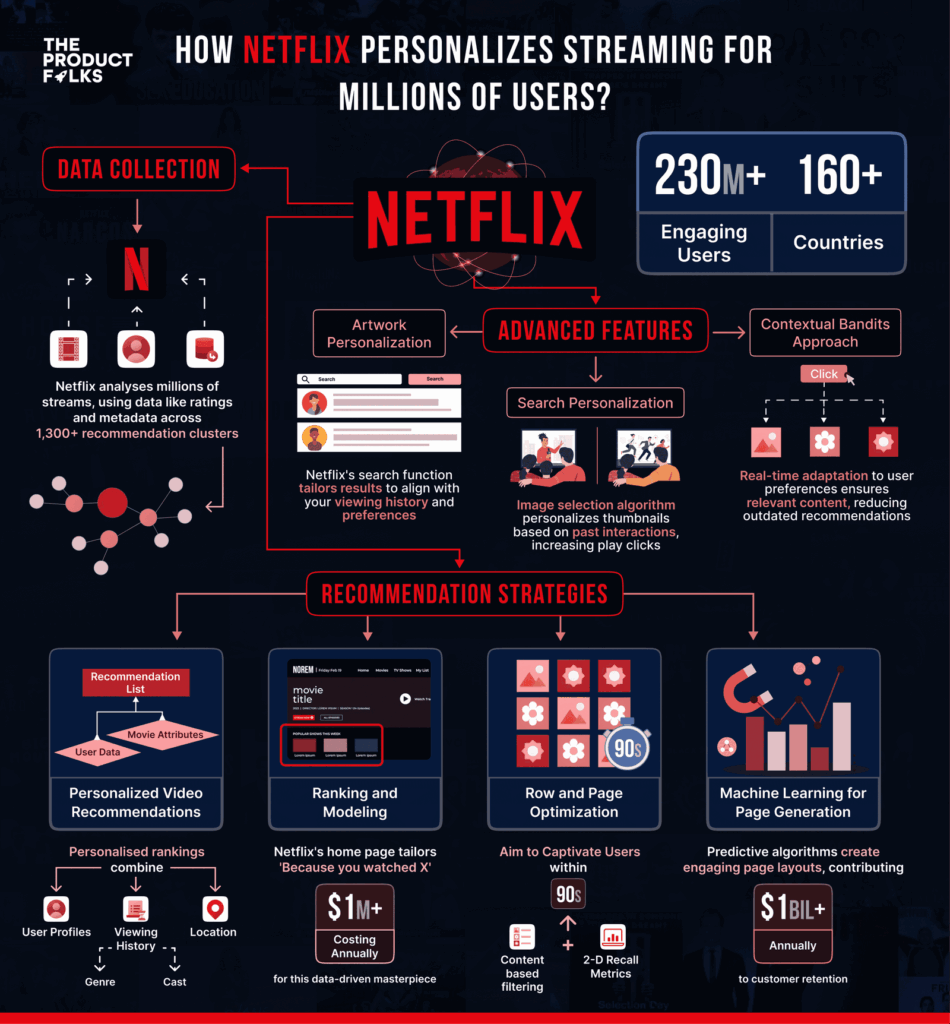
Critically, AI accelerates content creation and campaign management. 88% of marketers rely on AI in their roles, using it for everything from email optimization to media planning. Firms deploying AI-driven analytics often see higher ROI – one report showed an e-commerce marketer boosting marketing ROI by 25% using AI insights. AI chatbots (like those used by Sephora) automate customer engagement around the clock, learning from each interaction.
Real-world examples: Beyond Netflix/Amazon, many platforms embed AI: email platforms that predict when users will open messages, CRMs that flag at-risk customers, and social ad tools that use ML to target the best audience. Chatbots on websites or in apps (for banking, retail, travel, etc.) handle inquiries and even close sales. Voice-activated assistants (Siri, Alexa) are AI agents, and brands are increasingly integrating with them (e.g. Domino’s Alexa skill for pizza).
Future implications: AI will continue to mature into an autonomous partner. We’re seeing the rise of generative AI, where models like GPT-4 and DALL·E can write copy, generate designs or compose video drafts based on minimal prompts. This shifts human work from execution to oversight and strategy. AI will also move from descriptive and predictive analytics to prescriptive action – autonomously adjusting campaigns and budgets in real time. Marketers will increasingly rely on “AI agents” that negotiate ad buys or dynamically tailor customer journeys. The future marketer’s role will be to guide and audit AI, ensuring creativity and ethics are upheld as machines handle volume.
2. Augmented Reality (AR)
What it is: AR overlays digital content onto the real world through devices (smartphones, tablets, AR glasses). Unlike VR, users remain in their environment but see computer-generated enhancements. Common AR applications include filters, games (like Pokémon Go), and try-on experiences.
How it transforms marketing: AR bridges online and offline shopping by letting consumers “try before they buy” virtually. Cosmetic brands offer AR mirrors or phone filters to let users experiment with makeup or hairstyles in real time. Furniture and home-goods retailers (e.g. IKEA) enable customers to place life-size 3D models of products in their own living rooms before purchase. Such immersive ads greatly increase engagement: one study found 71% of consumers would shop more if AR were available. AR experiences also extend to interactive social media filters (Snapchat/Instagram) that gamify brand engagement. Importantly, AR data can feed back into analytics – tracking which product users placed in their environment or which filters they tried – allowing further personalization.

Examples: Gucci’s AR sneaker filter on Snapchat lets users visualize shoes on their feet, linking to purchase; luxury brand BMW launched an AR app to preview cars’ features. In beauty, L’Oréal’s “makeup selfie” AR tools let users apply virtual lipstick or eyeshadow, driving trial. These experiences aren’t just gimmicks – early adopters see measurable uplift. In one case, a fashion retailer reported up to a 40% increase in online conversions after adding an AR wardrobe-try-on feature.
Future implications: As AR hardware (like lightweight smart glasses) improves, AR marketing will become ubiquitous in daily life. Think interactive billboards that animate when viewed through glasses, or location-based AR content (imagine scanning a museum exhibit for deeper brand storytelling). With 5G connectivity, live AR advertisements and holographic pop-ups at events will be seamless. Long term, AR could evolve into a universal user interface – brands will compete for visibility in a “digital layer” over the world, making AR design and safety critical skills for marketers.
3. Virtual Reality (VR)
What it is: VR immerses users in a fully digital environment through headsets or goggles. Unlike AR, VR replaces the user’s surroundings with a simulated world. VR is used for gaming, training simulations, virtual tours, and interactive experiences.
How it transforms marketing: VR enables deeply immersive storytelling that no other medium can match. Brands can create virtual showrooms or event spaces where customers explore products in lifelike settings. For example, an automotive company can offer a virtual test drive in exotic locations. VR also creates memorable experiences: studies show VR marketing campaigns can boost memory recall by ~33% compared to traditional ads. Consumers often find VR enjoyable – one report found 53% prefer brands that use VR in their marketing – which can translate into brand affinity. Moreover, as more social platforms explore VR (e.g. Facebook’s Horizon), marketers can insert themselves into emerging VR-native environments.
Examples: Tourism boards use VR to “teleport” viewers to destinations (e.g. a 360° VR tour of the Maldives beach). Retailers have experimented with VR showrooms (e.g. a virtual Macy’s store tour). Even product launches are held in VR: imagine unboxing a new smartphone virtually. In entertainment, brands sponsor VR concerts or games (like Coke sponsoring a VR rugby match) to reach highly engaged audiences.
Future implications: VR is still an “early adopter” channel, but hardware is improving rapidly. Lower-cost standalone headsets and growing VR user bases mean marketing opportunities will expand. Future VR marketing could include interactive ads within VR games or social spaces, virtual events (e.g. conferences or concerts hosted by brands), and cross-device experiences (starting in VR and continuing on mobile). As technology matures, marketers will need to master 3D design and real-time interaction. Ethical considerations (avoiding VR motion-sickness, respecting attention in immersive worlds) will also be crucial.
4. Extended Reality (XR) and the Metaverse
What it is: “Extended reality” (XR) is a blanket term for all immersive technologies (AR, VR, MR). The metaverse refers to persistent, shared virtual worlds where users interact as avatars. This includes gaming platforms (Roblox, Fortnite), social VR hubs (Horizon Worlds), and any 3D virtual space where people gather.
How it transforms marketing: The metaverse creates new social and commercial realms. Brands can build virtual spaces or “islands” where customers play, shop, and socialize. Unlike one-off AR experiences, metaverse marketing stakes out permanent real estate. For example, a fashion brand might open a virtual boutique where users browse and buy digital clothing (or reserve real-world items). These spaces often blend gaming and shopping, blurring lines between entertainment and e‑commerce. Metaverse campaigns capitalize on virality: limited-edition digital goods (NFTs) create hype and FOMO. According to one report, by 2026, 25% of people will spend at least 1 hour per day in the metaverse – suggesting a rapidly growing audience for marketers.
Examples: Nike’s Nikeland (on the Roblox gaming platform) invites users to play mini-games while wearing Nike gear on their avatars. Adidas and Balenciaga have launched digital collectibles and virtual wearables in gaming worlds. Luxury brands host VIP events in VR clubs. A recent brand activation let fans virtually explore a concept sneaker through a mixed-reality app, blending AR and VR worlds. These efforts often tie back to real-world sales through promo codes or NFT ownership benefits.

Future implications: As XR devices (AR glasses, VR headsets) become mainstream and networks improve, the metaverse will mature into a major channel. Marketers should experiment now to learn what works: whether that’s immersive storytelling in VR, sponsorship of metaverse events, or selling exclusive virtual products. Over the next decade we may see advertising revenue of $144–206 billion in the metaverse by 2030. The challenge will be balancing novelty with strategy – ensuring metaverse campaigns build real engagement, and not just hype. Ultimately, the metaverse could reshape brand-consumer relationships by making marketing a participatory, social experience.
5. Blockchain and Web3
What it is: Blockchain is a decentralized ledger technology that records transactions in an immutable chain. In marketing, blockchain underpins Web3 concepts like cryptocurrencies and NFTs (non-fungible tokens). NFTs are unique digital assets (art, videos, virtual goods) tied to blockchain tokens.
How it transforms marketing: Blockchain adds transparency and trust. Brands use it for supply-chain provenance (showing exactly where a product came from) and to combat fraud. For example, Nestlé’s Zoégas coffee bags contain QR codes linking to a blockchain trace of bean origin, assuring customers of sustainability claims. In digital advertising, blockchain can validate every ad impression or click on a tamper-proof ledger, ensuring advertisers pay only for real human views. Smart contracts (self-executing agreements on blockchain) enable new loyalty models: brands can issue tokenized rewards or gated experiences for NFT holders. The rise of NFT marketing has also engaged communities – e.g. limited-edition NFT drops as brand promotions, where owning a collectible unlocks special content or discounts.
Examples: Beyond Nestlé, clothing brands like Sela have used blockchain tags to verify product authenticity. In entertainment, companies launch NFT collectibles (like limited digital sneakers) that fans can buy and trade. Even social media platforms are exploring token tipping or on-chain fandom. On the ad-tech side, some firms are piloting blockchain-based ad networks to prove delivery.
Future implications: Blockchain and Web3 remain experimental, but they promise new frameworks for customer relationships. As privacy regulations tighten, marketers may use decentralized identity systems (built on blockchain) that let consumers control their data. Token economies could reward advocacy: imagine consumers earning crypto for sharing an ad or giving brand feedback. However, Web3 hype has cooled, so brands will need to focus on utility over novelty. Ultimately, blockchain’s key value for marketing is building trust – in claims, transactions and data – which can be a powerful differentiator.
6. Internet of Things (IoT)
What it is: IoT refers to networks of internet-connected “smart” devices and sensors embedded in everyday objects (phones, TVs, appliances, beacons). These devices continuously collect data and often communicate with each other and the cloud.
How it transforms marketing: IoT turns the physical world into a rich data source. For marketers, smart sensors in stores or cities enable hyper-local and context-aware campaigns. For example, a retailer’s mobile app can detect when a loyal customer walks past a physical store (via a BLE beacon) and instantly push a personalized coupon to their phone. Wearables (smartwatches, fitness trackers) gather health and lifestyle data that can inform targeted ads (e.g. promoting a sports drink after detecting a workout). Connected home devices (speakers, fridges) allow brands to insert themselves into daily routines (imagine your fridge screen suggesting recipes and grocery ads based on its contents). The sheer scale is massive: an estimated 21.1 billion IoT devices will be connected by 2025.
Examples: Smart packaging uses NFC chips to let customers tap and learn about a product’s story. In auto marketing, connected car data (with owner permission) can be used to personalize offers – e.g. a driver seeing a notification about a tire sale after sensor data indicates wear. Travel companies use IoT in smart airports (digital signage that changes based on queue data) to advertise lounge upgrades. Even utilities (smart thermostats) can show energy-saving tips (and relevant ads) based on usage patterns.
Future implications: As 5G and edge computing expand, IoT devices will generate even more real-time data. Marketers will need to harness AI to make sense of these continuous streams and act instantly. One can envision phygital campaigns: a global shoe brand might sense high foot traffic at a sports event via IoT camera counts and trigger augmented-reality ads on nearby smartphones. Privacy and security are big considerations – consumers must consent to data use – so transparency (possibly via blockchain) will be vital. Overall, IoT enables the vision of advertising becoming integrated with the environment around the consumer, creating seamless, context-aware experiences.
7. Voice Technology and Conversational AI
What it is: Voice technology includes smart speakers (Alexa, Google Home, Siri) and voice assistants, as well as text-based chatbots. Conversational AI refers to any interface that interacts in natural language (voice or text) and often uses AI to understand intent.
How it transforms marketing: Voice shifts how customers find and consume brand content. “Voice search optimization” is now critical: marketers must adapt SEO to match how people speak (“find me gluten-free pizza near me” instead of typed queries). Smart speakers enable voice-based commerce and engagement. For instance, Domino’s developed an Alexa skill so people can order pizza hands-free, mimicking the one-click convenience model. Chatbots on websites or messaging apps use AI to answer queries instantly, collect leads or even sell products. These interfaces collect conversational data (questions asked, phrasing used) which can refine marketing personas. Importantly, voice is growing explosively: there are now more voice-enabled devices than people on Earth – about 8.4 billion globally – and over 1 billion voice searches per month.
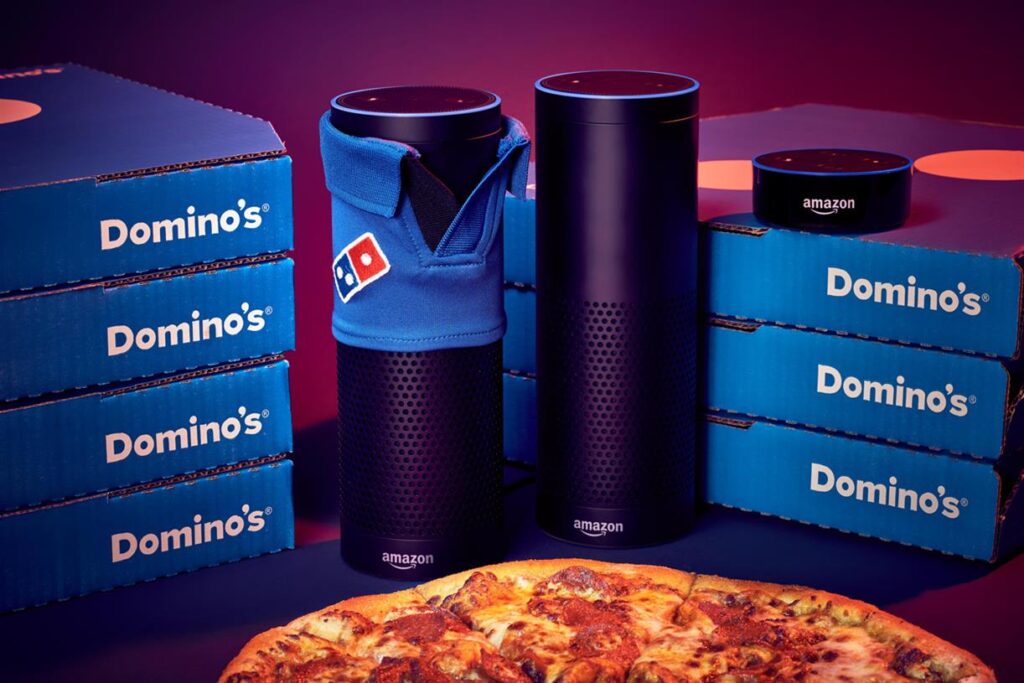
Examples: Beyond Domino’s, brands like Lowe’s let customers ask their Echo for DIY tips and product info. Insurance and banking bots (e.g. Erica by Bank of America) guide customers through simple transactions. Media companies release podcasts and radio-style branded content for smart speakers to play. Hotels use in-room voice assistants to take service requests (e.g. play music, order room service) – a form of marketing and upselling.
Future implications: As ambient computing becomes ubiquitous (IoT + voice + AI), conversational interfaces will be a primary channel. Marketers must optimize content for audible delivery (concise, direct answers). In the next few years, voice commerce (shopping via voice) could be an $80B+ market. Brands will also explore interactive voice ads (where you can respond by voice) and “voice search ads.” With advances in natural language understanding, conversational AI will handle more complex tasks (e.g. personal shopping assistants). The human touch in marketing will evolve to designing helpful, friendly voice personalities that represent the brand.
8. Programmatic Advertising and Ad Tech
What it is: Programmatic advertising is the automated buying and selling of digital ads using software algorithms. AdTech refers to the entire ecosystem of technology platforms for planning, buying, delivering, and measuring ads (including DSPs, SSPs, DMPs).
How it transforms marketing: Programmatic makes ad buying faster and more data-driven. Instead of fixed placements, brands use real-time bidding to place ads in milliseconds on the best next available impression. This precision targeting (by audience segment, context, time) boosts efficiency. Programmatic is already dominant – over 91% of display ad dollars flow through programmatic channels – because it’s simply the most scalable way to reach users online. AI and ML are enhancing programmatic, automating creative optimization and dynamic retargeting. For example, an ad platform might automatically swap in product images for users who viewed those items on your site. Programmatic also extends to new media: Connected TV (ads on smart TVs) and digital-out-of-home (DOOH) displays are programmatically served based on real-time criteria (weather, audience).
Examples: Companies like The Trade Desk and Google’s DV360 enable brands to run cross-platform campaigns programmatically. A retailer can use programmatic to buy social media ads targeting users who abandoned carts, or to place billboards in a city based on mobile location data spikes. Real-time analytics dashboards show exactly which placements drove sales, allowing marketers to reallocate spend on the fly.
Future implications: The ad tech stack will continue to evolve with privacy changes (cookie deprecation) and AI. “Contextual” targeting (showing ads based on page content rather than user cookies) is resurging. Programmatic marketplaces will expand into areas like audio streaming and in-game ads. Ultimately, programmatic will fuse with personalization: campaigns dynamically adjust creative and offers for each individual. For marketers, mastering martech integration (connecting CRM, DMPs, analytics with programmatic engines) will be crucial to maintain ROI.
9. Big Data Analytics and Personalization
What it is: Big data analytics refers to processing vast amounts of customer data (from transactions, web behavior, social, etc.) to uncover insights. Personalization technologies use these insights to tailor messaging, content and offers to individual preferences in real time.
How it transforms marketing: Data is the fuel for almost every modern marketing initiative. By segmenting customers into micro-groups based on behavior, AI-powered analytics allow hyper-personalized marketing. For example, an e-commerce site might show different homepages to shoppers based on browsing history and predicted interests. Marketing automation platforms (email, SMS, push) can pull data from CRMs to trigger tailored communications – birthday discounts, product recommendations, abandoned-cart reminders. As noted earlier, personalization is a major driver: 75% of consumers are more likely to make a purchase when brands deliver individualized content. Additionally, predictive analytics (a subset of AI) can forecast trends – e.g. which products will be hot next quarter – enabling marketers to allocate budget and stock accordingly.
Examples: Streaming services use past viewing to curate home screens. Amazon’s homepage is famously different for each user based on data. Offline, retailers use data from loyalty programs to send targeted coupons (e.g. a shopper who frequently buys coffee might get a new coffee product offer). Startups in this space offer “customer data platforms” (CDPs) that unify data from multiple channels into one profile, making omnichannel personalization easier.
Future implications: Personalization will become omnipresent: digital ads, email, websites and even physical store experiences will adapt on the fly to each customer. As AI and data pipelines improve, we will see predictive personalization – offers made before a customer even knows they need something. For example, your smartwatch noticing a sports injury might trigger a relevant health product ad. However, ethical use of data will be paramount. Regulations like GDPR and CCPA mean marketers must handle data responsibly (and transparently). The winners will be brands that can blend cutting-edge analytics with clear value and trust – showing consumers the benefit of sharing data.
10. 5G and Edge Connectivity
What it is: Fifth-generation (5G) wireless networks deliver drastically higher speeds and lower latency than 4G. Edge computing involves processing data closer to the user/device (on the “edge” of the network) rather than in distant cloud servers.
How it transforms marketing: Although not a consumer-facing tech per se, 5G is the backbone enabling many emerging marketing technologies. Ultra-fast, low-latency connections allow high-definition video and augmented reality to stream smoothly on mobile devices. For instance, brands running live AR filters at a sports event can rely on 5G connectivity to ensure real-time responsiveness. Edge computing means that data from IoT devices or AR/VR headsets can be processed instantaneously for marketing purposes (like instant gesture recognition or location-based triggers). In practice, 5G makes it possible to deliver rich content (360° video ads, AR games) anywhere, removing bandwidth concerns.
Examples: Major events (concerts, sports) have begun deploying 5G networks and branded AR experiences; car companies show 4K interactive ads on smart billboards that update in real time. One demonstration had an AR-enabled newspaper printed with a smart ink that triggered a live video when viewed on a 5G smartphone. Brands are also preparing for “VR on the go” – streaming high-quality VR experiences to mobile VR headsets over 5G.
Future implications: As 5G and eventually 6G roll out globally, marketing will become truly platform-agnostic. Consumers can be reached through any device with minimal friction. This will fuel trends like immersive commerce (e.g. live interactive shopping streams), holographic display ads, and massive IoT campaigns. Marketers should watch developments in 5G private networks (companies setting up their own 5G infrastructure) to target specific venues or communities. Overall, robust connectivity means ideas that felt futuristic (like drone-delivered digital flyers or AI-driven street AR) will soon be practical.
Strategic Outlook
The convergence of these technologies is forging a new marketing frontier. Strategy and experimentation are key. Marketers should pilot projects that align with their brand and audience – for example, a fashion brand might test a virtual try-on AR app, while a financial services firm could experiment with an AI chatbot for basic customer queries. It’s crucial to measure rigorously: track how each technology impacts engagement, sales and brand sentiment. Importantly, these tools amplify the need for a strong strategy: advanced tech works best when it serves a clear brand narrative. As adoption grows, successful brands will be those that integrate data and tech seamlessly – using AI for insights, AR/VR for experience, and blockchain for trust – all while keeping the human story at the center.
Looking ahead, marketing will become ever more data-driven, personalized, and immersive. Voice and AI agents will handle routine touchpoints, freeing marketers to focus on creative strategy. Physical and digital channels will blur further: imagine seamlessly shifting from shopping in a VR store to receiving the product at your door hours later. Ethical use of data and a commitment to genuine value will differentiate leaders from laggards. Ultimately, the next era of marketing isn’t just about flashy gadgets – it’s about forging deeper connections through technology. By embracing these emerging tools thoughtfully, brands can tell richer stories, reach customers in new places, and stay agile in a fast-evolving landscape.
Also Read: Rebranding vs. Brand Refresh: Understanding the Differences
To read more content like this, subscribe to our newsletter