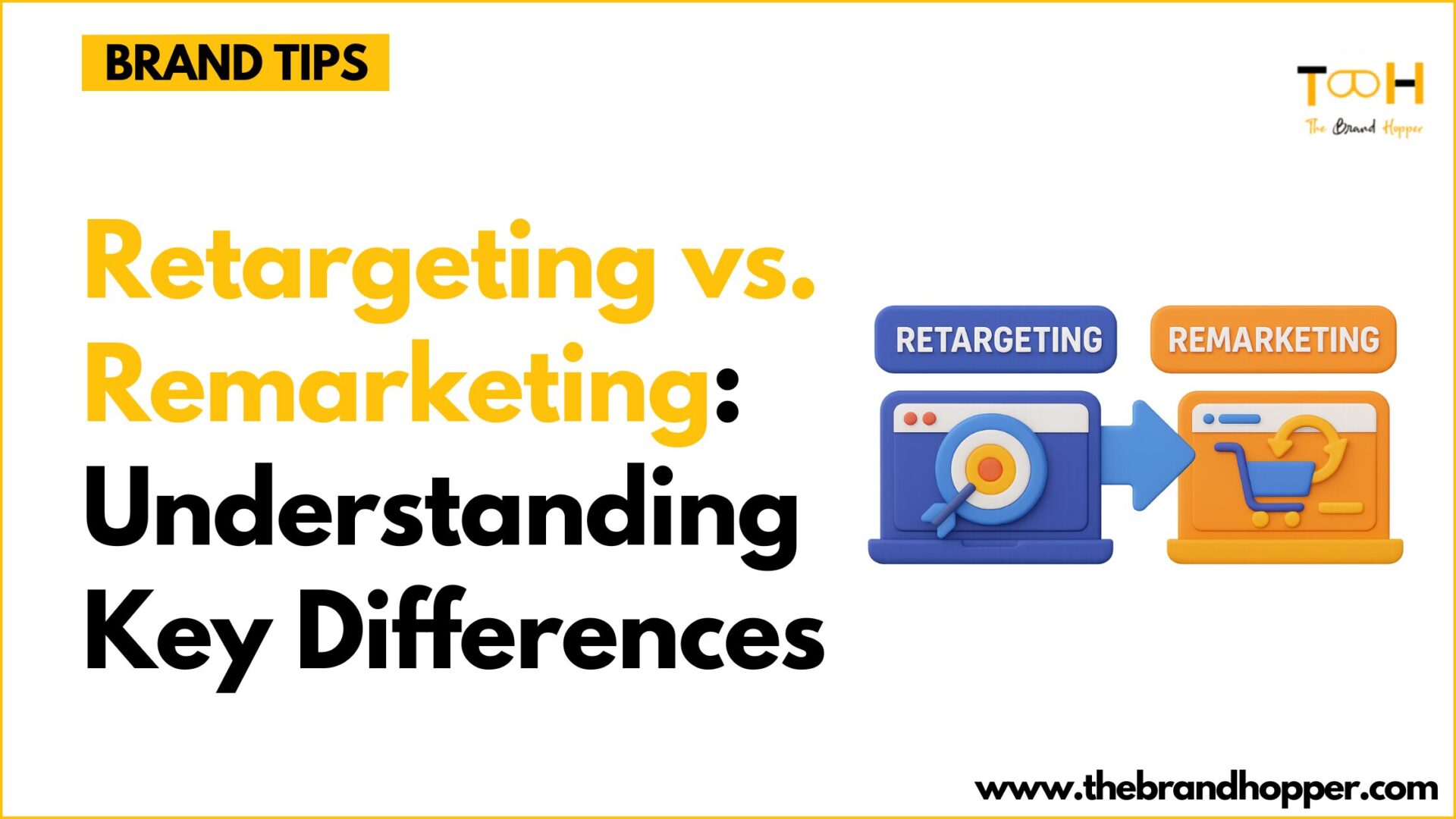
Digital marketers often use retargeting and remarketing interchangeably, but they’re actually two sides of the same coin with distinct approaches. Imagine you visit an online store and leave without buying – then you see a display ad for that product on another website; that’s retargeting. Now imagine you’re already a customer or subscriber and the brand sends you a personalized email or an offer; that’s remarketing.
Both strategies aim to re-engage audiences, but they use different channels and data to do it. In this post, we’ll explain each term clearly, compare them in a handy table, and even look at real brand examples to show how they work in practice.
What Is Retargeting?
Retargeting is a form of online advertising that reconnects with people who have already interacted with your brand but didn’t convert. In practice, a small piece of code (a tracking pixel or cookie) on your website “tags” visitors. Later, as those visitors browse the web or social media, you can show them banner ads or social media ads for products they viewed. In the words of one expert, “at its core, retargeting means showing paid ads to people who have interacted with your brand but haven’t yet converted”.
For example, suppose a shopper clicks on a pair of sneakers on your site but leaves without buying. Hours later, they might see a Facebook or Google ad reminding them of that exact pair. This tactic exploits their demonstrated interest (they visited your site) and keeps your product top-of-mind. Many major ad networks and platforms support retargeting – for instance, you can run retargeting campaigns through Google Ads or Facebook Ads by targeting “website visitors” audiences. The process is often managed programmatically, using demand-side platforms (DSPs) and real-time bidding.
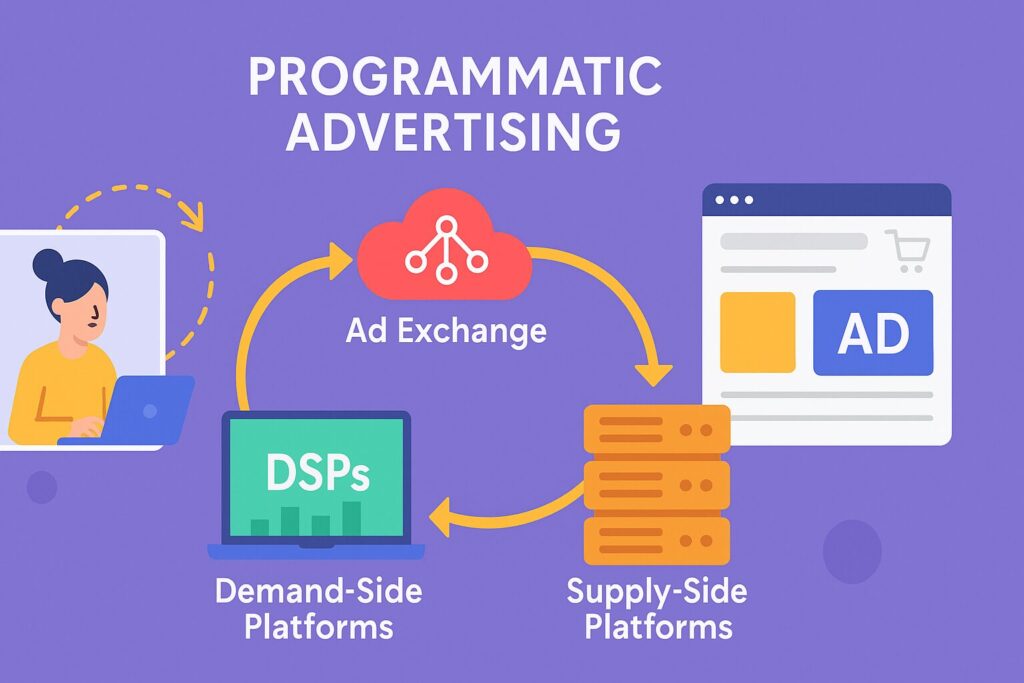
Retargeting ads are usually delivered via these programmatic ad networks so that your ad can appear almost anywhere online. The diagram above shows how advertisers connect to billions of ad placements through DSPs, SSPs and ad exchanges. In practice, a marketer might set up a retargeting campaign in Google Ads or Facebook’s Ads Manager, which will then display personalized ads to anyone who has been “tagged” by their site’s tracking pixel. The key is that the person is an anonymous visitor – you only know their browsing behavior, not their identity.
Retargeting is typically used to recover sales or leads that are one step from conversion. For instance, if Emma was browsing a skincare site and added a serum to her cart but didn’t check out, a retargeting campaign might kick in. Later that day, she could see a display ad featuring the serum and a matching moisturizer (perhaps with text like “Still deciding?”). That reminder nudged her back to the site. According to a case study, beauty brand bareMinerals ran a digital-out-of-home plus retargeting campaign that reached millions of people, achieved a 33% higher click-through rate than benchmark, and lifted store visits by over 5%. This shows how well-crafted retargeting ads (even on big screens) can turn casual browsers into buyers.
What Is Remarketing?
Remarketing, on the other hand, usually refers to re-engaging people you already know – typically customers or subscribers – using your own marketing channels. The classic example is email marketing. You have a list of customer email addresses or a CRM database (first-party data), and you send those people targeted emails or ads. As one source puts it, remarketing “refers to engaging audiences who have already interacted with your brand, to encourage them to take a desired action”. For example, you might email people who signed up for your newsletter but haven’t bought anything recently, or past buyers who might be interested in a new product.
Remarketing can also use ad platforms, but based on your own list. For instance, you could upload your customer email list to Facebook or Google Ads to create a “custom audience” and serve ads specifically to them. Because you have real identities (email addresses, purchase history, signup data), your messaging can be highly personalized. Unlike retargeting, which depends on cookies, remarketing is grounded in first-party data.
A typical remarketing scenario: Brian signs up for a free trial of a project management software but goes inactive after a few days. In a remarketing campaign, Brian (already in the system) might first see a LinkedIn or Facebook ad inviting him to a webinar (a soft re-engagement). A few days later, the company could send Brian a personalized email highlighting case studies and offering a discount to upgrade. Indeed, Criteo describes this exact flow, where Brian clicks through and converts thanks to the combined touchpoints. The point is, remarketing is reaching out to people who have been in your world already – through email, SMS, in-app messages or custom-audience ads – to rekindle interest or drive repeat action.
Key distinction: Retargeting re-engages anonymous prospects (via ads), whereas remarketing reaches known contacts (via owned channels). As one expert notes, retargeting “re-engages anonymous site visitors,” while remarketing “reconnects with known contacts” from your customer lists.
Retargeting vs. Remarketing: Side-by-Side Comparison
To keep it simple, here’s a quick comparison of the main features of each strategy:
| Feature | Retargeting | Remarketing |
|---|---|---|
| Audience | Visitors who browsed your site or app (but didn’t convert) | Existing customers, email subscribers, CRM contacts |
| Channels | Paid ads – display banners, social media ads, search ads, etc. | Owned channels – email, SMS, push notifications, plus ads via customer lists |
| Data/Tools | Tracking pixels, cookies, third-party ad networks (Google Ads, Meta Ads) | First-party data: email/CRM lists, purchase history, marketing platforms |
| Goal | Recapture interest and push visitors to convert (e.g. recover abandoned carts) | Nurture loyalty, upsell or win back existing customers (e.g. announce loyalty offers) |
| Example | Showing an ad for the exact product a user left in their cart on other sites | Sending a personalized email promo to past customers or subscribers |
Each row above highlights a fundamental difference. In fact, Criteo puts it succinctly: “Retargeting uses ads to reach anonymous visitors; remarketing uses email or CRM lists to re-engage known contacts”. In short, retargeting is all about getting people back into your funnel after they’ve shown initial interest, while remarketing is about keeping people in – rewarding and reminding your existing audience.
When to Use Retargeting vs. Remarketing
Because these tactics serve different purposes, they fit into different parts of a marketing funnel. Retargeting shines in the middle of the funnel: it’s ideal when someone has visited your site or app but didn’t finish the purchase. Use retargeting to recover abandoned carts or encourage hesitant browsers to return. For example, if someone checked out a product’s details but left, a well-timed retargeting ad can give them that extra nudge to complete the sale.
Remarketing is best used with audiences already in your system. It shines in retention and loyalty scenarios: email your newsletter subscribers with a special offer, send a win-back series to lapsed customers, or cross-sell related items to recent buyers. For instance, you might send a personalized email to last year’s customers about your holiday sale, or upgrade offers to users whose subscription is expiring. Because remarketing relies on first-party data and permissioned contacts, it’s cost-effective and perfect for long-term engagement.
In practice, the most effective re-engagement strategies often use both. A common playbook is to launch retargeting ads to bring people back to the site, and then follow up with remarketing emails once they’re in your database. Criteo’s analysis of combined strategies illustrates this flow: Emma’s skincare purchase was won back first by an ad, then by a discount email; Brian’s software sign-up was converted through an ad + email sequence. Put simply, “Retargeting brings users back with ads, while remarketing builds trust and loyalty through direct communication” – and together, they guide customers all the way to conversion.
Real-World Brand Examples
These concepts aren’t just theoretical. Many brands have successfully blended retargeting and remarketing in creative ways. For example, beauty retailer bareMinerals ran a campaign combining digital out-of-home (DOOH) ads with display retargeting. The result? They reached 22 million people and achieved click-through rates 33% above benchmark. In this case, a visitor who saw the DOOH ad for bareMinerals might later see a retargeting ad on their phone, seamlessly linking offline and online efforts.
On the email side, Stacked Marketer (a niche publishing brand) saw remarkable results with remarketing. They targeted subscribers who clicked on a recent newsletter ad and then sent a series of urgency-based follow-up emails. The outcome: their membership revenue tripled, nearly four times higher than an earlier one-off email blast. This shows how well-timed remarketing emails can dramatically boost sales from an already-interested list.
Even giants like Amazon use both tactics (though they don’t publicize the details). For example, if you add items to your Amazon cart and leave, you’ll often get an email reminder (remarketing), and you may also see ads for those items on other websites (retargeting). The synergy of these touches keeps brands and products top-of-mind.
Key takeaway: Retargeting and remarketing aren’t mutually exclusive – they complement each other. Retargeting finds those who slipped away; remarketing keeps your existing audience engaged.
Conclusion
In today’s marketing landscape, it pays to use both strategies wisely. Retargeting uses paid ads to convert warm prospects who expressed interest. Remarketing uses your own data and channels to nurture and re-activate existing customers. Understanding the distinction helps you pick the right tool for each job – whether you’re recovering abandoned carts or launching a loyalty promotion.
At the end of the day, retargeting and remarketing are really two sides of the same coin: one keeps your brand visible to people who nearly bought, and the other builds long-term relationships with people who already did. Used together in a thoughtful, brand-driven strategy, they create a powerful funnel that turns interest into sales and customers into loyal fans.
Also Read: The Future of Marketing: 10 Emerging Technologies Reshaping the Industry
To read more content like this, subscribe to our newsletter