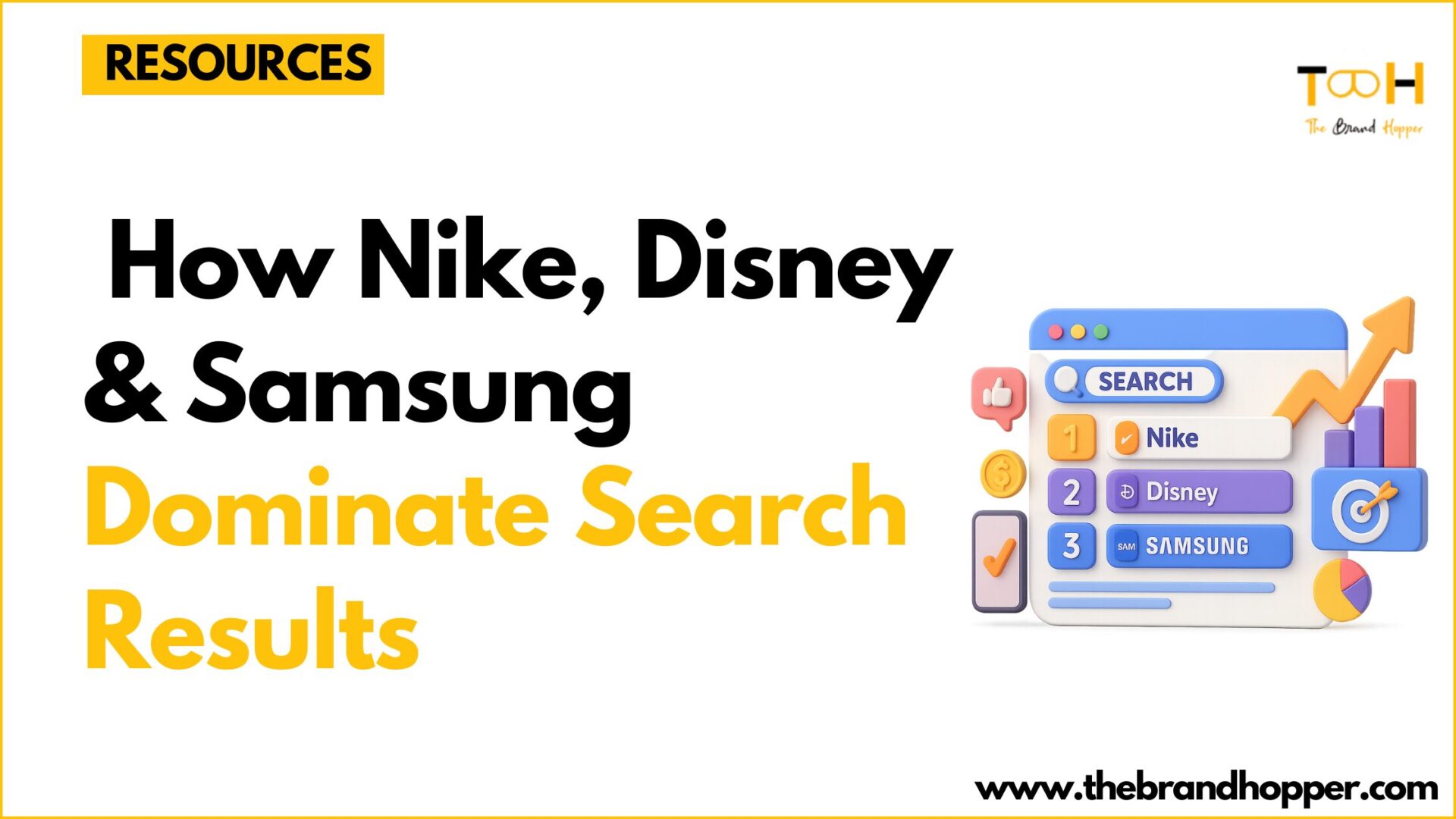
Search engine dominance is no longer optional. It’s one of the strongest competitive advantages global brands use to control conversations, influence purchase decisions, and shape market sentiment. Top industry leaders like Nike, Disney, and Samsung don’t just rely on paid ads or brand equity; they strategically use organic search engine optimization (SEO) to strengthen visibility, capture demand, and outperform competitors.
This article breaks down how these three global giants rule Google Search with data-backed strategies that every business (big or small) can learn from.
Why Big Brands Invest Aggressively in SEO
Even though these companies are household names, they still fight for search rankings because:
| Reason | Impact |
| Over 46% of product-related searches start on Google | Winning search = winning customers |
| Search intent reveals what consumers wan | Easier to build audience + loyalty |
| SEO compounds over time | Lower cost vs. continuous ads |
| Competitors target branded keywords | Need to protect brand reputation |
Top-ranking companies don’t ignore SEO — they dominate it strategically.
(Research supports this: competitive SEO directly influences market share, as outlined by industry authority Moz.)
1) Nike: Leveraging Competitors + Cultural SEO
Nike ranks not just for its products, but also for its industry and cultural search terms, capturing attention from trend-focused consumers. One effective tactic Nike benefits from (directly or indirectly) is ranking for competitor interest. When global audiences search for alternative sports brands, Nike often appears through comparison content, reviews, and search intent hijacking.
For example, search visibility around Nike’s rivals directly contributes to Nike’s organic brand presence. As highlighted in this breakdown of Nike’s top competitors and alternatives, consumer interest in competing brands doesn’t weaken Nike; it expands its organic reach.
Nike’s Core SEO Strategies
| Strategy | Example | Impact |
| Ranking for competitor terms | Adidas alternatives, Nike vs Puma | Captures high-intent research traffic |
| Massive backlink authority | Millions of links from trusted publishers | Dominates high-competition keywords |
| Product storytelling SEO | Terms around performance + lifestyle | Emotional + search-driven visibility |
| Localized SEO | Nike store near me | Foot traffic + purchase intent |
Key Learning from Nike
Target competitor keywords to capture brand research traffic.
Users comparing brands have strong purchase intent. Ranking for those searches means you influence their decision early.
2) Disney: Owning Search Intent Through Content IP & Experiences
Disney’s SEO empire is built on evergreen intellectual property + fresh experience marketing. Every character, movie, show, location, and park event becomes searchable content — and Disney dominates each one.
Disney’s SEO Ecosystem Example
| Asset | Search Value |
| Characters (Mickey, Elsa, Marvel heroes) | Millions of searches every month |
| Franchises (Star Wars, Pixar) | Franchise-level keyword domination |
| Parks (Tokyo DisneySea, Disneyland) | Global search traffic for planning + tickets |
| Merch & licensing | High-intent product searches |
Disney doesn’t wait for demand — it creates demand, then owns the search results for it.
Disney’s Core SEO Strategies
| Branded keyword monopolization | “Frozen Elsa costume”, “Star Wars rides” | Owns every IP-related query |
| Search-driven merchandising | Trending character products rank | Converts fandom into purchases |
| Evergreen + seasonal SEO | Halloween costumes, Christmas stories | Recurring annual traffic |
| Emotional & contextual blogs | Disney tips, fan theories | User retention + link-worthy content |
Key Learning from Disney
Turn every product, story, or character into searchable content.
Even small businesses can do this with:
- FAQs
- How-to-use guides
- Behind-the-scenes branding
- Community stories around products
3) Samsung: Winning Search with Product SEO + Comparisons
Unlike Nike or Disney, Samsung leans heavily on product comparison SEO. Tech consumers don’t buy instantly — they research specifications, features, and alternatives before buying. Samsung uses this behavior to dominate search with comparison-driven content.
Example Searches Samsung Ranks For
- “Samsung vs iPhone camera quality”
- “Best Android phone under $1000”
- “Samsung S25 vs Google Pixel 9”
- “Samsung Ultra review”
Samsung’s Core SEO Strategies
| Strategy | Example | Impact |
| Ranking for competitor keywords | Samsung vs iPhone | Captures undecided buyers |
| Long-tail product keyword domination | “Samsung Ultra low light test” | Wins review-style traffic |
| YouTube + search integration | SEO + video content | Boosts credibility & conversions |
| User intent-based landing pages | Comparisons, specs, prices | Converts research traffic |
Key Learning from Samsung
Create helpful comparison and review content around your products. Whether you’re selling services or merchandise, comparison SEO builds trust and captures undecided buyers.
What Do These Global Brands Have in Common? (The SEO Framework Behind Their Success)
| Brand | Shared SEO Advantage |
| Nike | Competitor + lifestyle SEO |
| Disney | Intellectual property + experience SEO |
| Samsung | Technical + comparison SEO |
Shared Pillars of Their Search Dominance
✔ Own brand + competitor keywords
✔ Turn every asset into searchable content
✔ Focus on search intent, not just keywords
✔ Invest in content ecosystems, not one-off pages
✔ Leverage high-authority backlinks through storytelling, PR, and community
How Businesses Can Apply These Strategies
Even smaller brands can adapt enterprise-level tactics:
| Global Strategy | Small Business Adaptation |
| Competitor SEO | Create “X vs Y” articles in your niche |
| Comparison SEO | Publish product/service comparisons |
| Evergreen content | Make guides that stay relevant |
| IP-style branding | Create repeatable content themes |
| Intent-led landing pages | Build pages for research queries, not just sales |
Bonus Insight: SEO is Not Just Optimization — It’s Strategic Storytelling
The biggest brands don’t rank by adding keywords; they rank by telling stories that match search intent. That’s the true SEO edge. To execute this efficiently, marketers need frameworks that connect audience behavior, content strategy, and visibility. Modern digital content isn’t just technical; it’s emotional, value-driven, and search-aligned — a combination of storytelling + strategic optimization.
For businesses looking to develop content that earns attention and authority, a detailed resource like this guide on Content Marketing for Link Building shows how valuable storytelling can naturally generate backlinks and long-term search visibility.
To read more content like this, explore The Brand Hopper
Subscribe to our newsletter